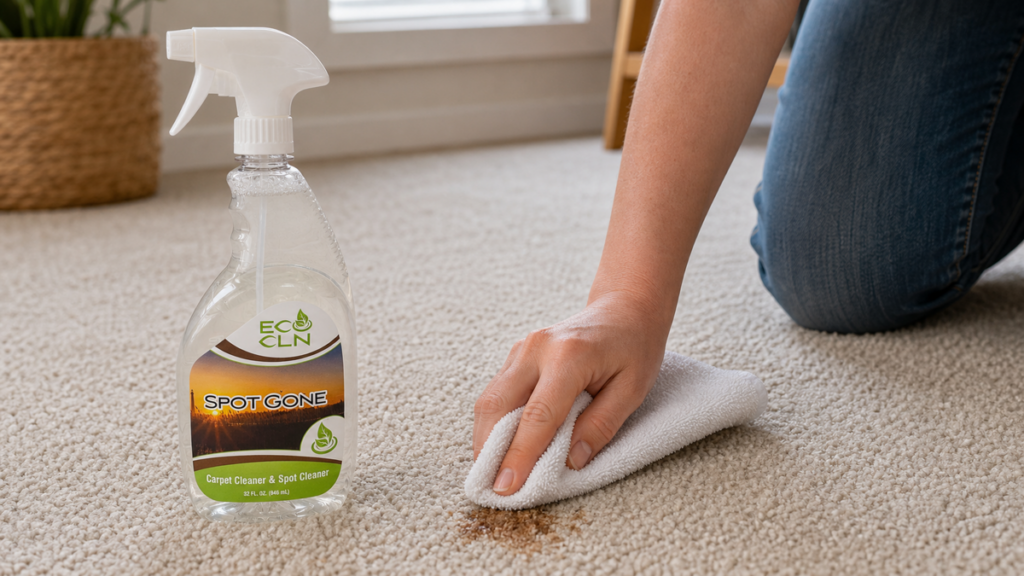
How to Remove Ink and Marker Stains From Carpet Without Making Them Bigger

Quick Answer
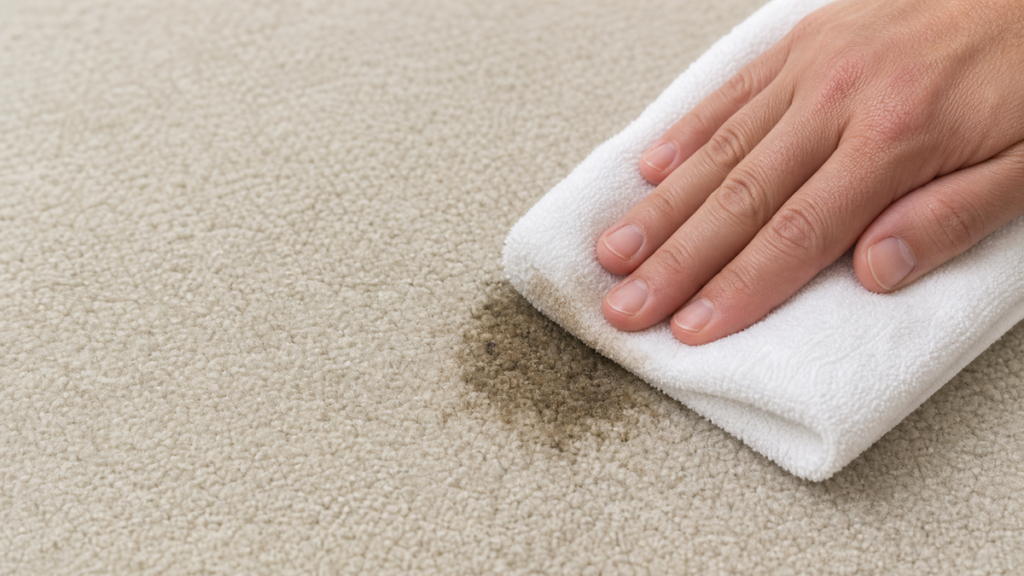
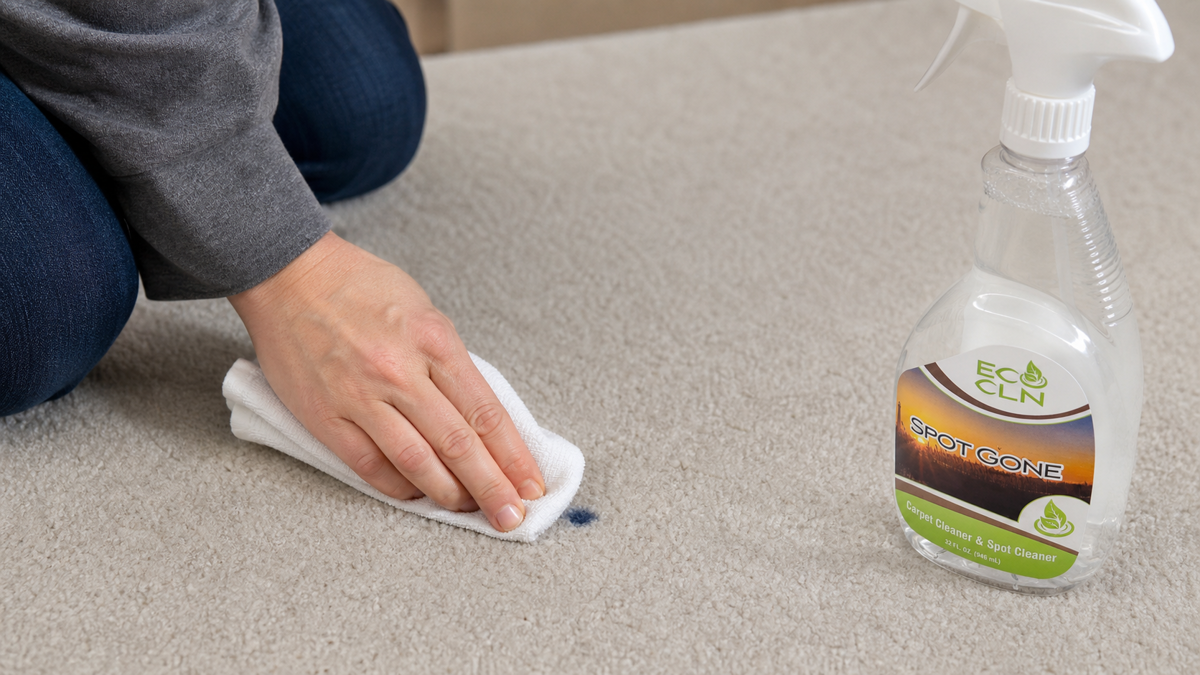
Blot fresh ink immediately with a clean white cloth. Do not rub. Identify whether the stain is washable marker, water-based ink, ballpoint ink, permanent marker, or an unknown product before choosing the next step.
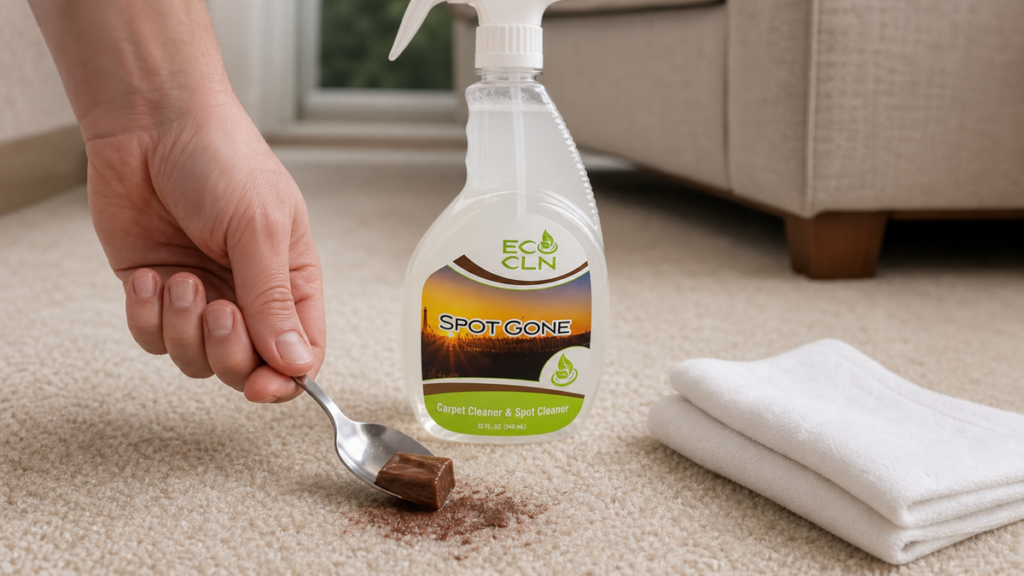
For a compatible localized carpet spot, Eco Cln Spot Gone can be tested as a controlled stain treatment, but the current Eco Cln product page does not specifically claim ink or permanent-marker removal. Do not promise that it will remove every ink formula.
The Carpet and Rug Institute notes that some ink stains require a dry-cleaning-type solvent and warns never to pour solvent directly onto carpet because it can damage the backing. Review CRI ink spot guidance.
Why Ink and Marker Spread So Easily
Ink is designed to flow. Adding a large amount of liquid can carry dye outward through the carpet pile and into the backing.
Rubbing also pushes pigment sideways, turning a small dot or pen line into a larger halo.
Step 1: Identify the Ink or Marker Type
- Washable children’s marker.
- Water-based craft marker.
- Ballpoint pen ink.
- Gel pen.
- Permanent marker.
- Printer/copier or mimeograph-type ink.
- Unknown ink.
If you still have the pen or marker, check the product label or manufacturer cleaning recommendations.
Step 2: Blot Fresh Liquid Before Adding Cleaner
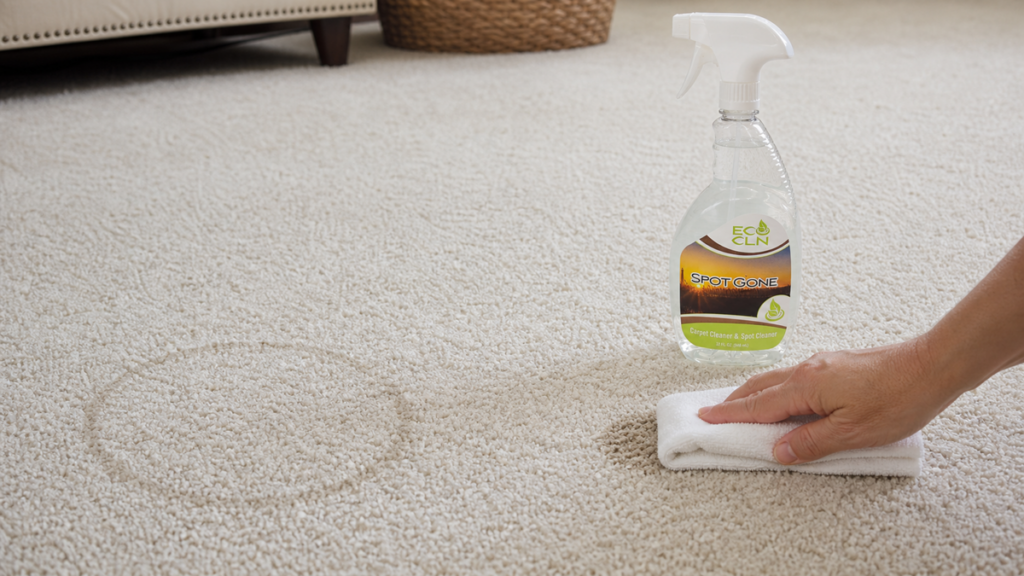
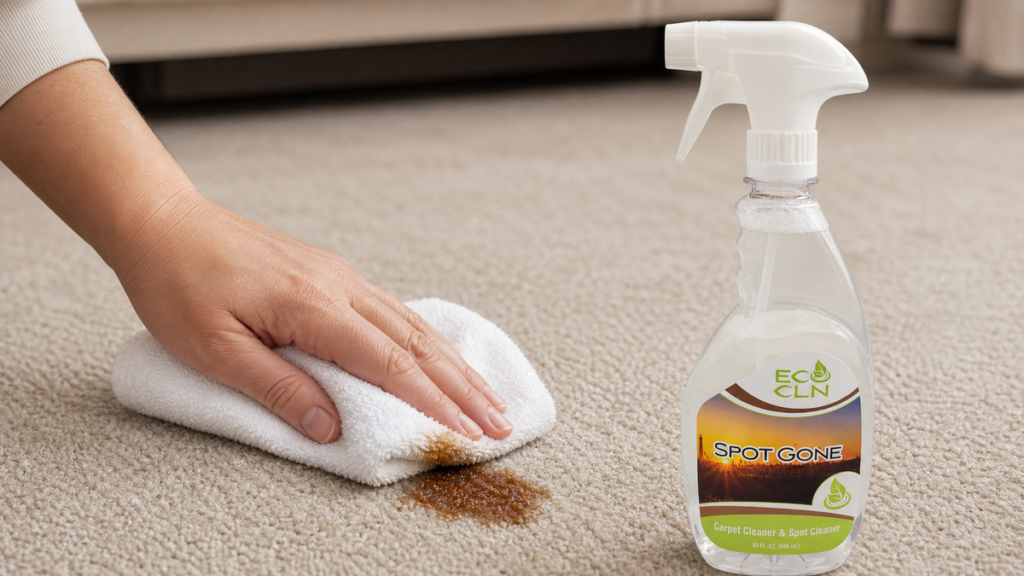
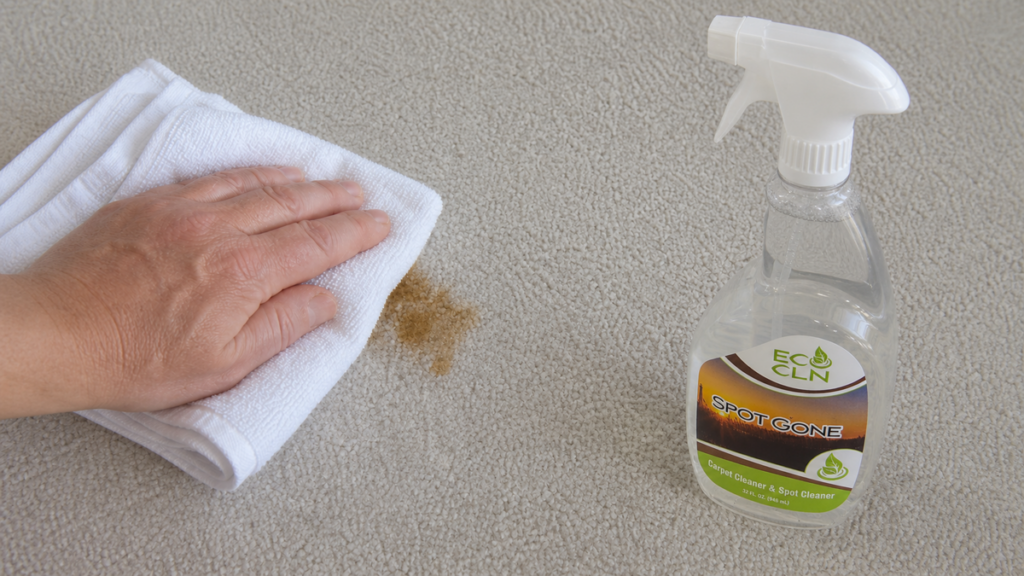
Use a clean white absorbent cloth and press straight down. Rotate to a clean section as ink transfers.
Start at the perimeter of the wet area and work inward. Do not smear the center outward.
Step 3: Hidden-Area Test the Carpet
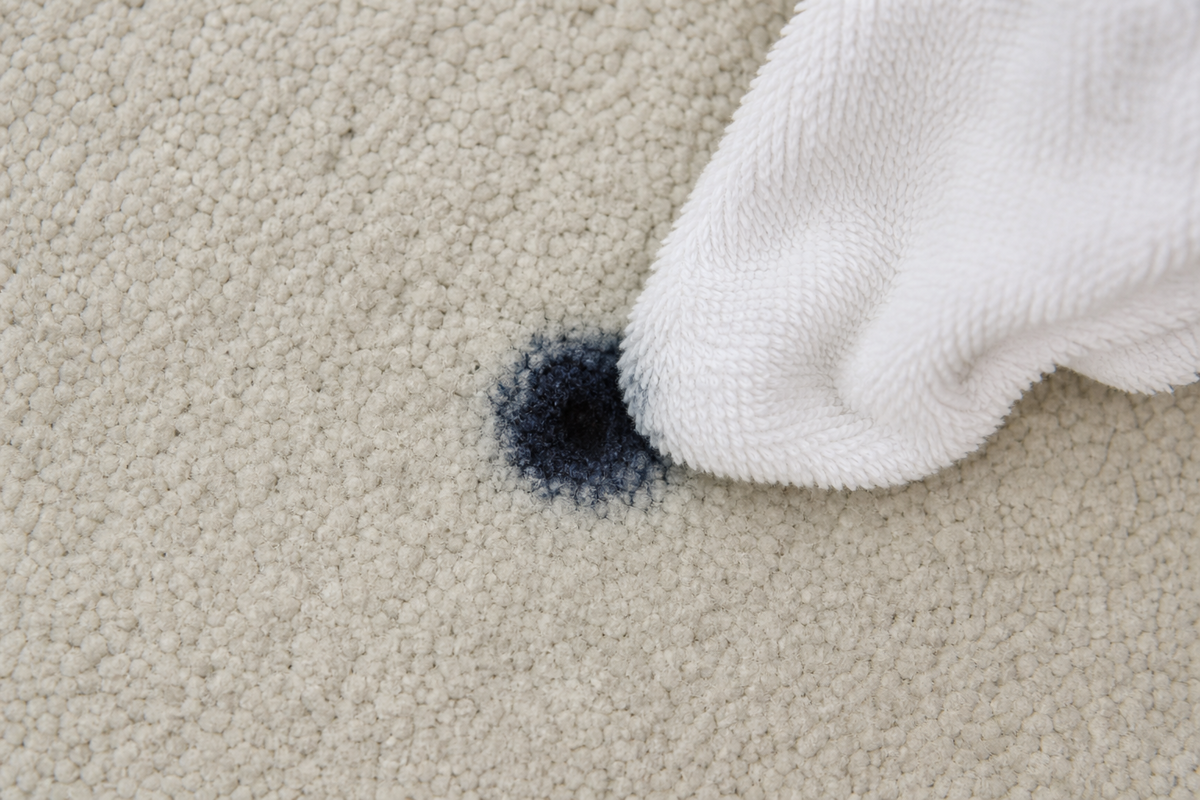
The current Spot Gone product page requires hidden-area testing on delicate carpet, older carpet, specialty rugs, and materials with unknown dye stability.
Let the test dry. Carpet can look fine while wet and still show dye change after drying.
Step 4: Use Spot Gone Only as a Compatible Targeted Spot Treatment
For washable or ordinary everyday marker-type residue on a compatible carpet, use a small controlled amount of Spot Gone according to its directions.
Blot rather than scrub. Stop if carpet dye transfers or the stain spreads.
Step 5: Do Not Keep Adding Water to Permanent Ink
If permanent marker or ballpoint ink is not responding to a controlled water-based spot treatment, stop before turning it into a larger wet stain.
CRI’s ink guidance indicates that solvent-type treatment may be needed for some ink, with strict precautions to keep solvent out of the carpet backing. See CRI Ink, Mimeo spot solver.
Step 6: Remove Residue and Dry
After any successful compatible spot treatment, remove cleaner residue as the carpet instructions allow, using minimal clean water and blotting it back out.
Allow full drying before judging the result or repeating treatment.
Why We Are Not Recommending Random Alcohol, Acetone or Hairspray
Internet ink advice often jumps straight to rubbing alcohol, nail-polish remover, hairspray, or solvent mixtures.
Those chemicals can affect carpet dye, stain-resistant treatments, adhesives, latex backing, or nearby flooring. Use manufacturer-approved spot chemistry or a professional cleaner for solvent-dependent stains.
When to Call a Carpet Professional
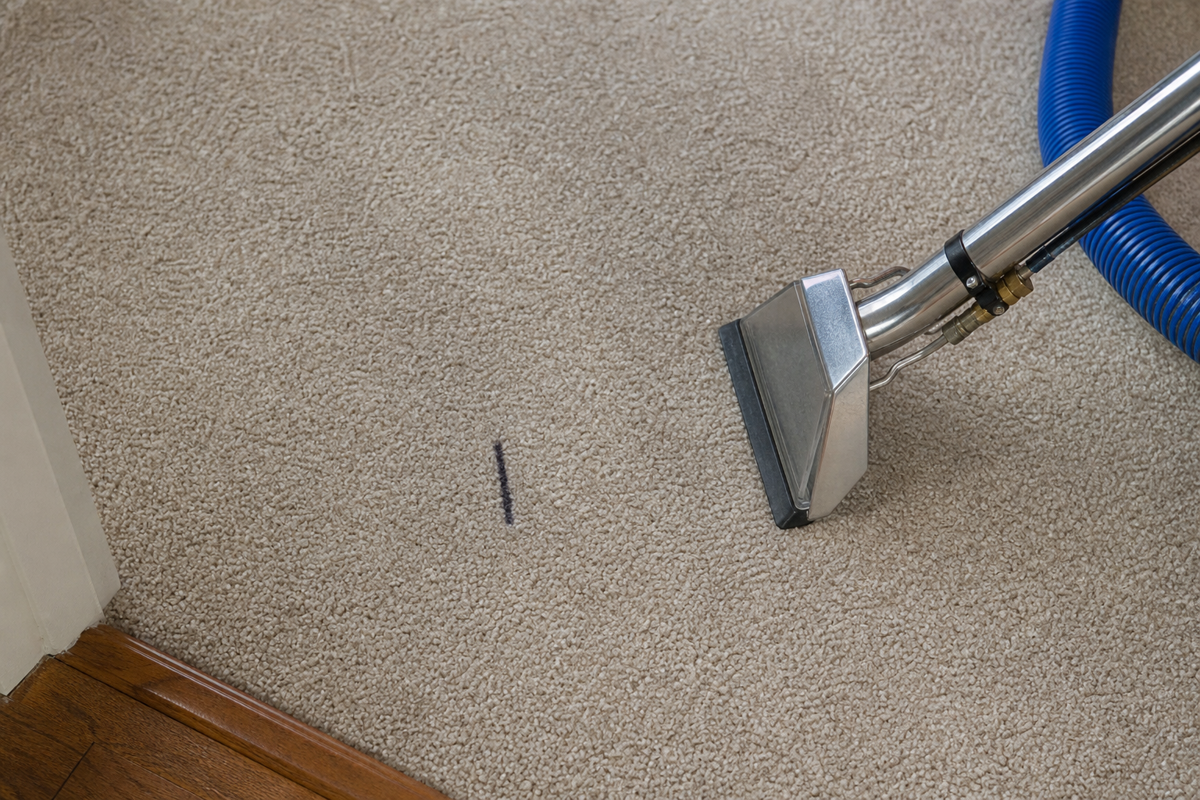
Permanent marker, large ink spills, printer ink, valuable rugs, dye movement, repeated failed treatments, or stains that have reached the backing are good reasons to stop DIY escalation.
CRI specifically recommends considering a professional cleaner for stubborn spot-removal questions. Review CRI ink guidance.
Common Ink-Stain Mistakes
- Rubbing the center of the ink spot.
- Pouring cleaner or solvent directly onto the carpet.
- Using a colored towel that can transfer dye.
- Assuming all markers are water-based.
- Using acetone, nail-polish remover, hairspray, or solvent cocktails without carpet-maker guidance.
- Repeating wet treatments before the carpet dries.
- Promising Spot Gone removes permanent ink when the current product page does not make that claim.
Where Spot Gone Fits
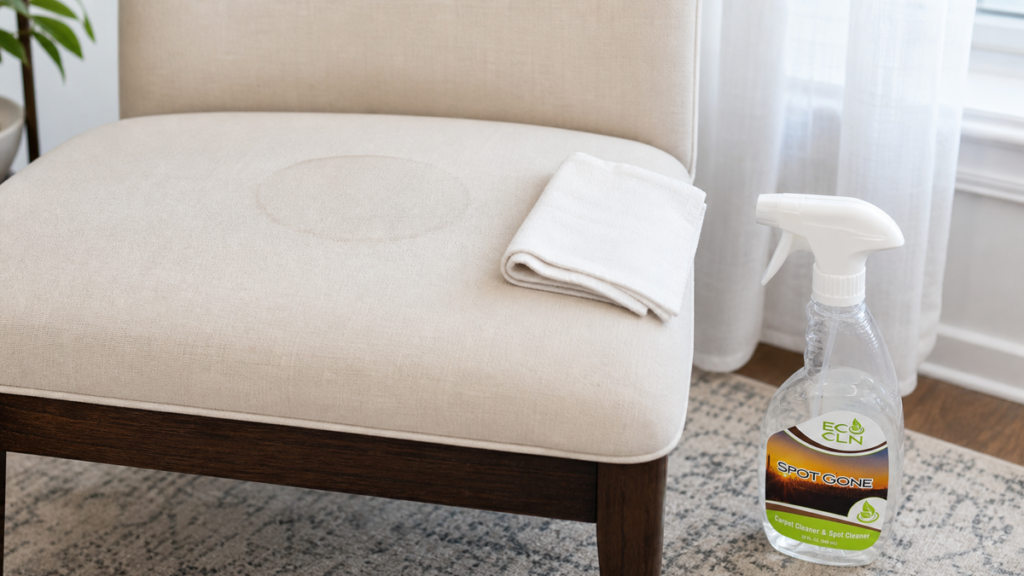
Eco Cln Spot Gone is the targeted Eco Cln cleaner for compatible carpet, rug, upholstery, and fabric spots from everyday household messes. Ink is not specifically named on the current product page, so use careful wording: Spot Gone may be tried on a compatible localized ink/marker spot after testing, while solvent-dependent inks may need professional treatment.
FAQ
Can Spot Gone remove permanent marker from carpet?
Do not guarantee it. Spot Gone is a targeted carpet/upholstery stain cleaner, but permanent-marker removal is not a current specific product claim.
Should I rub an ink stain?
No. Blot from the outer edge inward so liquid pigment is not pushed into a larger area.
Can I use rubbing alcohol on carpet ink?
Only if the carpet manufacturer or a professional spot-cleaning method supports it. Solvents can affect dye and backing.
Why did the ink stain get bigger after cleaning?
Too much liquid or rubbing can carry pigment outward through the fibers.
When should I stop DIY treatment?
Stop for permanent ink that is not responding, dye movement, large spills, valuable rugs, or when solvent-type treatment appears necessary.
The Bottom Line
Blot fresh ink immediately with a clean white absorbent cloth, rotating to a clean section while color transfers. Identify whether the mark came from a washable marker, ballpoint pen, permanent marker, printer ink, or another product, because different inks use different dyes, pigments, resins, and solvents. Check the carpet maker’s instructions, test Spot Gone in a hidden area, and let that test dry before treating the visible spot. On compatible carpet, use a small controlled amount at the outer edge and blot inward; do not rub, chase the color into a larger wet ring, or flood the backing and pad. Repeat only while transfer continues and carpet dye and texture remain stable. Remove remaining compatible cleaner residue with the minimal rinse-and-blot method the carpet instructions allow, then keep traffic off the area until it is completely dry. Do not pour acetone, paint thinner, rubbing alcohol, hairspray, or a stack of unrelated chemicals into the carpet. Some permanent or solvent-dependent inks require a trained carpet cleaner with the right spotting agent and extraction control. Stop if carpet color transfers, the spot spreads, the pile changes, adhesive or backing becomes involved, or the stain is on a valuable rug. Spot Gone can be tested for compatible localized ink soil, but it cannot guarantee removal of every ink formula or repair dye and fiber damage.
Continue with this related Eco Cln guide: Eco-friendly carpet cleaning tips.
For a small localized ink or marker spot on compatible carpet, Eco Cln Spot Gone can be tested as a targeted carpet spot cleaner. Keep the treatment small, blot instead of rub, and escalate solvent-dependent ink rather than flooding the carpet.