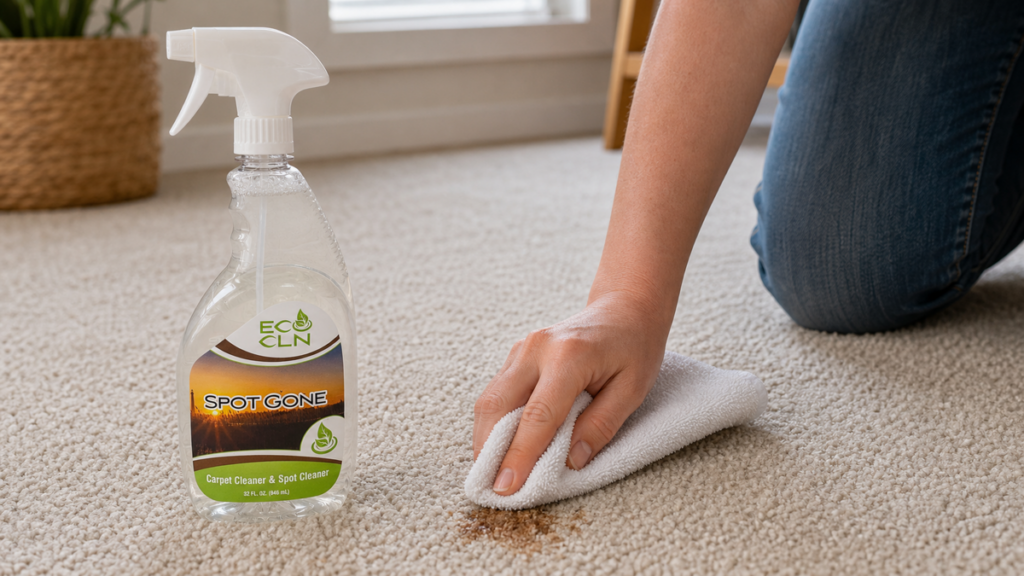
Why Upholstery Gets Water Rings After Spot Cleaning

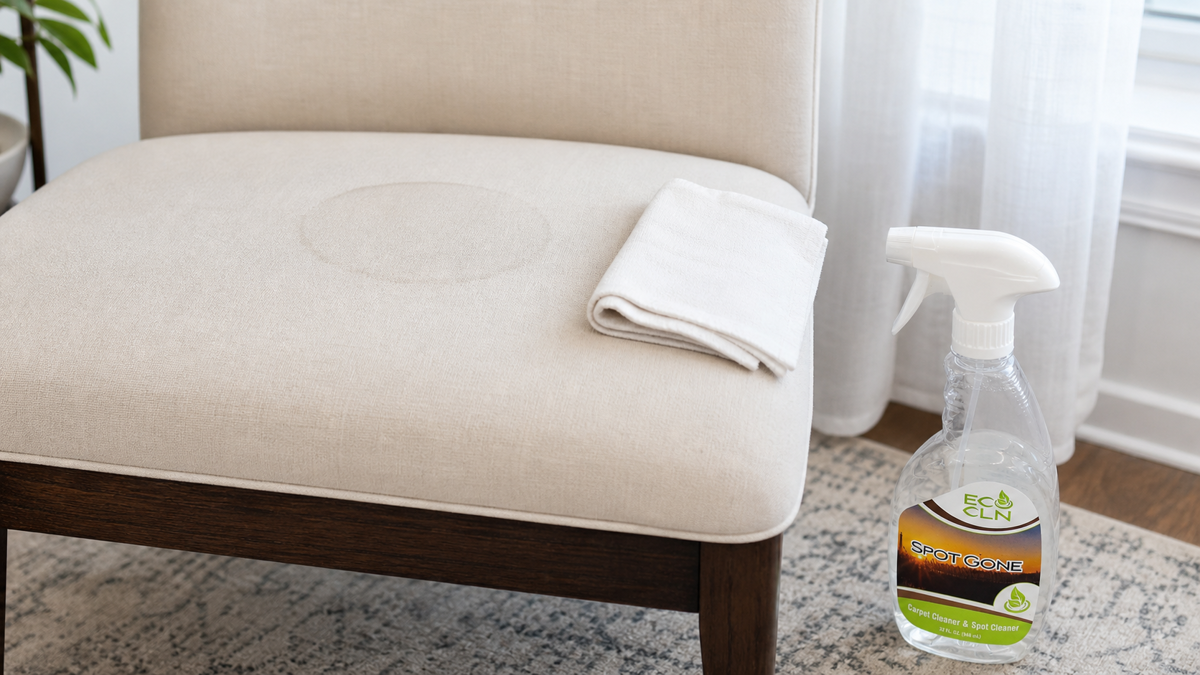
Quick Answer
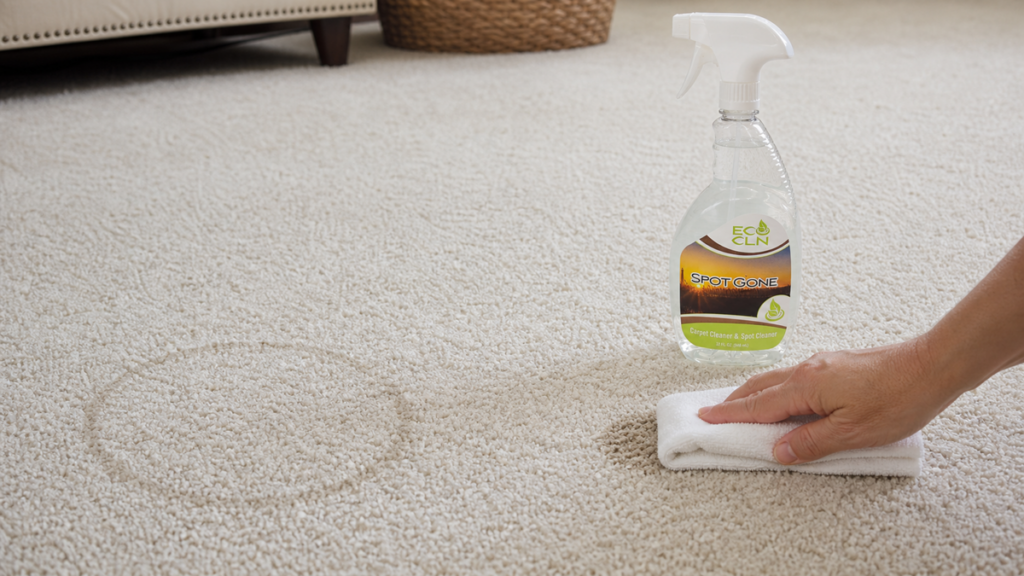
Water rings happen when one small upholstery area becomes wetter than the surrounding fabric and dries unevenly. Cleaner residue, dissolved soil, dye movement, hard-water minerals, or moisture wicking from cushion layers can concentrate at the edge of the wet zone.
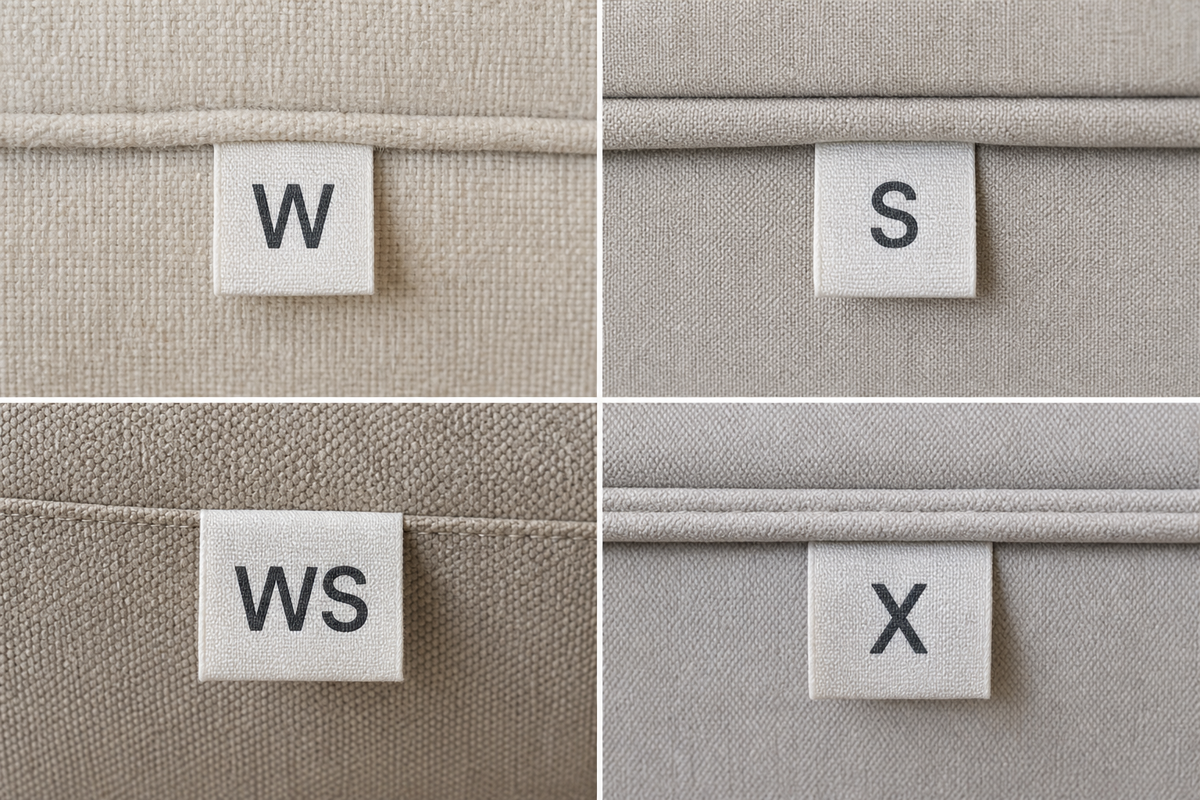
Before treating the ring again, check the upholstery cleaning code. A W fabric may allow water-based cleaning; S fabrics generally call for solvent-based cleaning; WS/SW may allow either category; X fabrics are typically vacuum-only/professional-care territory.
Ashley Furniture’s fabric-care guidance says the cleaning code on the furniture tag should determine the appropriate cleaning method. Review Ashley upholstery cleaning codes.
Use Eco Cln Spot Gone only on compatible upholstery after a hidden-area test and with controlled moisture.
Why the Ring Forms at the Edge
As a wet spot dries, moisture moves outward and upward through fabric and cushion materials. Dissolved residue can move with it.
When the center dries cleaner than the perimeter, the edge becomes a visible outline.
Cause 1: The Treatment Area Was Too Wet
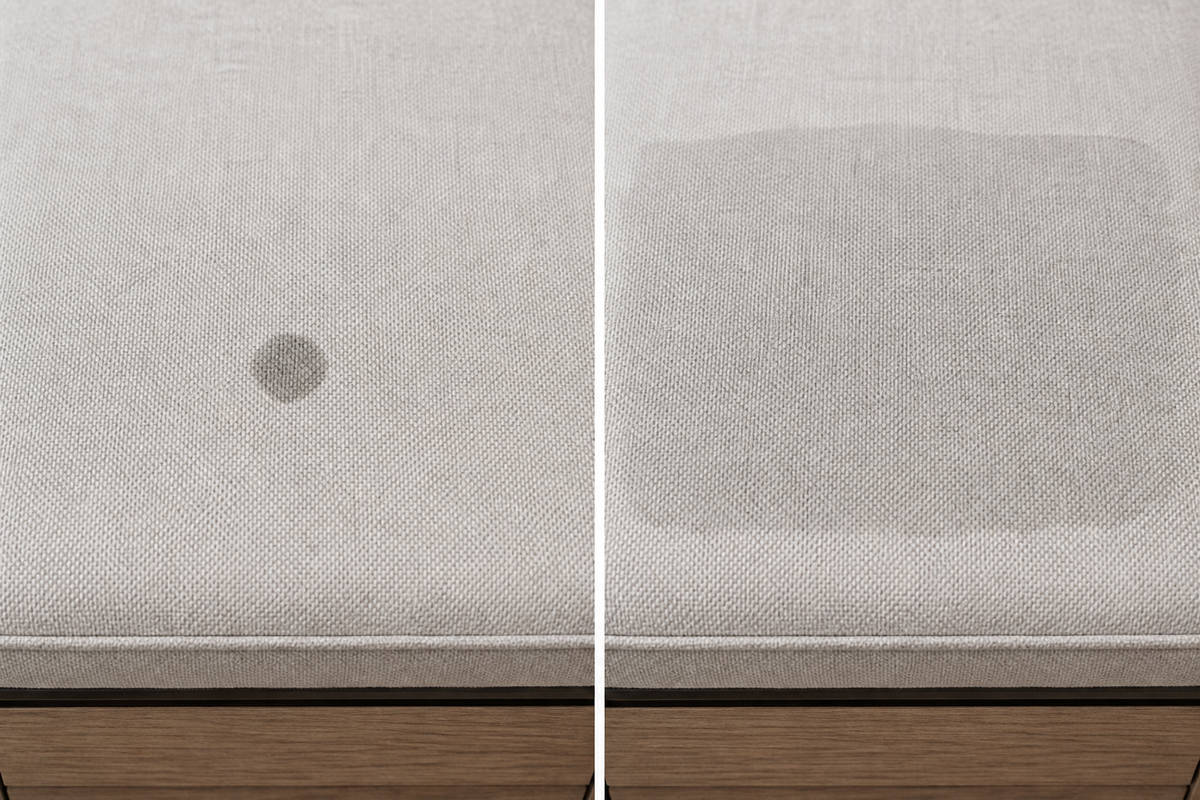
A large saturated patch creates a larger drying boundary and can move soil into surrounding fabric.
Upholstery can also hold moisture in foam or batting long after the surface looks only slightly damp.
Cause 2: Cleaner Residue Was Left Behind
A spot-cleaning product can leave residue if too much is used or the fabric-care method requires a follow-up rinse/blot that was skipped.
Residue can dry into a visible border or attract new soil later.
Cause 3: Soil or Dye Moved Outward
The original stain, body oils, dust, or fabric dye may migrate as the area becomes wet.
Dark or heavily used armrests and dining-chair seats are especially likely to contain more soil than the small visible spot suggests.
Cause 4: The Fabric Cleaning Code Was Ignored
Ashley explains that upholstery cleaning codes identify whether water-based cleaners, solvent cleaners, either, or no wet spot cleaner should be used. See Ashley care guidance.
Using a water-based cleaner on an S-only fabric can create rings, shrinkage, staining, texture change, or other damage.
Step 1: Stop Adding Liquid Until the Area Dries
Let the fabric dry completely before judging the ring. Damp upholstery can look darker even when no permanent ring exists.
Increase normal airflow, but do not use high heat unless the furniture manufacturer approves it.
Step 2: Read the Cleaning Code
Look under cushions, on the deck, or on the furniture label for W, S, WS/SW, or X.
If the code is missing, the upholstery is valuable, or the fabric is silk, velvet, viscose, antique, or unknown, professional cleaning is the safer choice.
Step 3: Hidden-Area Test Any New Treatment
Spot Gone is positioned for upholstery and fabric spots, but its current directions require hidden-area testing and warn against oversoaking. See current Spot Gone directions.
Let the test dry completely. A treatment that looks fine while wet can still leave a ring, dye shift, or texture change after drying.
Step 4: Treat a Broader Seam-to-Seam Area Only When the Fabric Code Supports It
On some W or WS fabrics, lightly and evenly cleaning the entire cushion panel or section from seam to seam can reduce a hard demarcation line.
Do not use this as a universal trick. S-only and X fabrics may be damaged by water-based cleaning.
Step 5: Use Less Product and Blot More
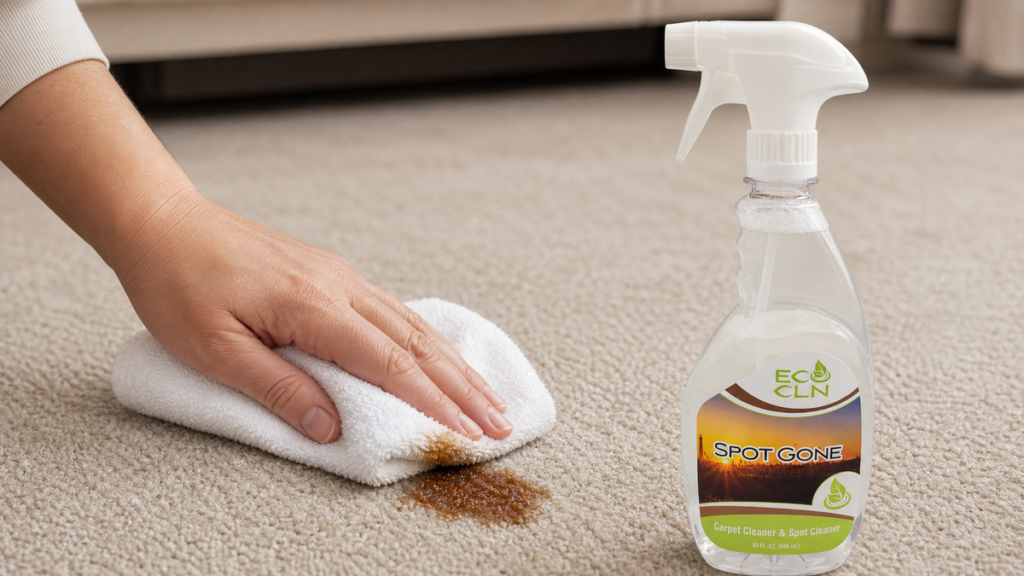
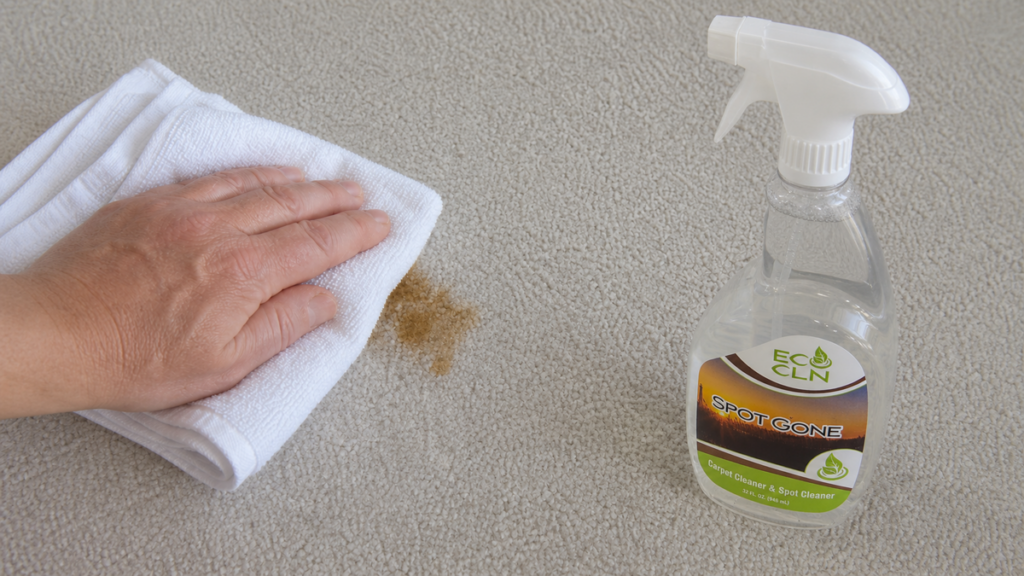
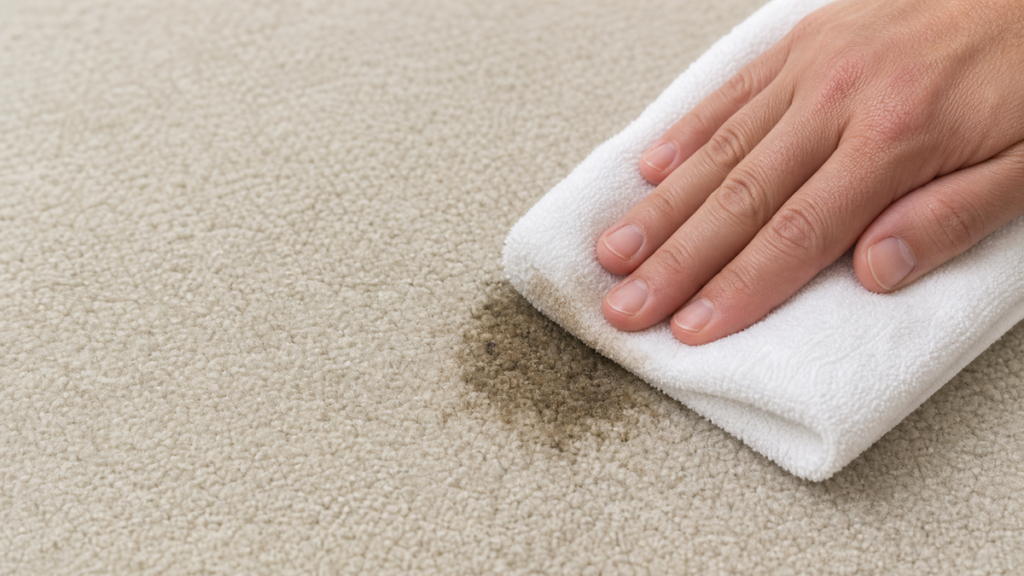
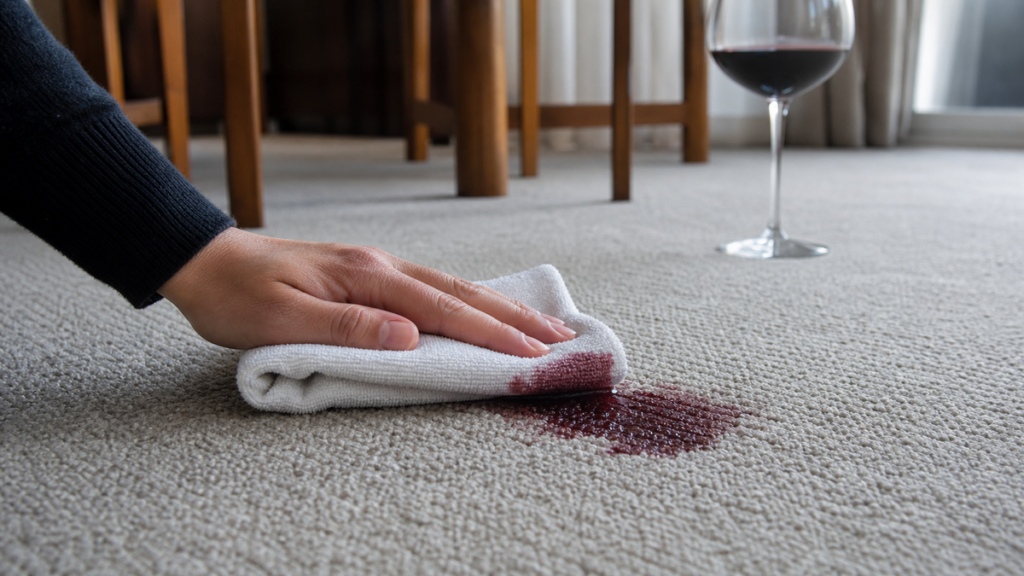
Apply cleaner to the cloth when direct spraying would oversaturate the fabric. Blot, rotate to a clean cloth face, and stop adding liquid once the stain stops transferring.
The goal is an evenly controlled damp zone, not a soaked cushion.
When the Ring May Be Permanent Damage
A ring can also be dye loss, shrinkage, nap distortion, adhesive bleed, or water-sensitive finish damage.
If the color or texture has changed and nothing transfers to a clean cloth, repeated wet cleaning may worsen the damage.
Common Upholstery Ring Mistakes
- Treating a small spot with a large spray zone.
- Ignoring the upholstery cleaning code.
- Using water-based cleaner on an S-only fabric.
- Judging the fabric while it is still damp.
- Repeatedly wetting the same ring before it dries.
- Using heat to force-dry unknown fabric.
- Assuming every ring is leftover dirt rather than possible dye or finish damage.
Where Spot Gone Fits
Eco Cln Spot Gone is the Eco Cln spot cleaner for compatible upholstery, carpet, rugs, fabric, food stains, grease, mud, dirt, and everyday household spots. The furniture cleaning code and hidden-area test determine whether a water-based spot cleaner is appropriate.
FAQ
Will an upholstery water ring disappear when it dries?
Sometimes. Damp fabric often looks darker. Let it dry fully before deciding whether a ring remains.
Can I use Spot Gone on a sofa?
Spot Gone is positioned for upholstery and fabric spots, but only when the furniture cleaning code and hidden-area test support that type of cleaner.
What does an S cleaning code mean?
S generally means use a dry-cleaning or solvent-based product rather than a water-based cleaner. Follow the furniture manufacturer’s exact code guidance.
Should I wet the entire cushion to remove a ring?
Only if the furniture maker and cleaning code support a seam-to-seam water-based cleaning method. It is not safe for every fabric.
When should I call an upholstery professional?
For X-coded fabric, missing care codes, valuable or delicate upholstery, repeated rings, dye movement, shrinkage, or texture change.
The Bottom Line
Let the upholstery dry completely before deciding that a ring remains, because damp fabric often looks darker than the surrounding panel. Then read the furniture tag: W generally supports water-based care, S generally calls for solvent-based care, WS or SW may allow either category, and X is commonly vacuum-only or professional-care territory. If the code is missing, the fabric is valuable or delicate, or dye and texture already changed, stop before adding more liquid. On compatible water-cleanable upholstery, hidden-area test Spot Gone and let the test dry fully. Use a small controlled amount, blot with clean cloth faces, and avoid turning the cushion into a saturated patch. A broader seam-to-seam treatment can sometimes reduce a hard drying boundary, but only when the furniture maker and care code explicitly support that water-based method. Improve normal airflow and give moisture in the fabric, batting, or foam time to leave; do not force-dry unknown upholstery with high heat. If the outline returns, consider cleaner residue, soil migration, hard-water minerals, dye movement, adhesive bleed, shrinkage, or nap distortion before repeating the same pass. Stop when color transfers, the pile changes, the panel shrinks, or the ring does not transfer and may be finish or dye damage. Spot Gone can treat compatible upholstery soil, but it cannot guarantee ring removal or repair damaged fabric.
Continue with this related Eco Cln guide: Spot Gone stain-remover guide.
For compatible W or WS/SW upholstery spots, Eco Cln Spot Gone can be a targeted option after a hidden-area test. The water-ring fix starts with the furniture cleaning code, controlled moisture, even drying, and patience.