Eco-Friendly Carpet Cleaning Tips for Spills, Stains, and Pet Messes


Carpet messes are easier to handle when you act quickly, keep the area from getting too wet, and choose the cleaner based on the type of mess. The best eco-friendly carpet cleaning tips are not complicated: blot first, lift loose material, avoid aggressive scrubbing, test before treating a visible spot, and let the carpet dry fully before judging the result. Always follow the carpet manufacturer’s care guidance and the cleaner’s label directions before treating a visible stain.
This guide covers practical carpet care for spills, food stains, mud, grease, pet messes, sticky residue, and everyday spots. It also explains when Eco Cln Spot Gone makes sense, when Eco Cln PAWS is the better fit, and where a basic carpet routine can backfire.
Quick Answer
For most carpet spills and spots:
- Lift or blot up as much of the mess as possible.
- Do not scrub hard, because that can spread the stain and rough up carpet fibers.
- Use only enough moisture or cleaner to treat the spot.
- Test first in a hidden area, especially on specialty rugs, older carpet, or unknown fibers.
- Use Spot Gone for targeted carpet, rug, upholstery, fabric, food, mud, grease, and everyday spots.
- Use PAWS for pet accident cleanup, urine odors, organic stains, and repeat pet mess areas.
- Let the carpet dry fully before walking on it, covering it, or deciding whether it needs another pass.
What To Do First After A Carpet Spill
The first few minutes matter. Fresh spills are usually easier to lift than spots that have dried, spread, or settled lower into the carpet.
Start by removing anything solid. For food spills, use a dull spoon, scraper, or folded paper towel to lift the loose material. Work carefully so you do not press the mess deeper into the pile.
Next, blot liquid with a clean white cloth or plain white paper towel. Press down, lift, and move to a clean section of the cloth. Keep blotting until the cloth is picking up less moisture. Avoid colored towels on light carpet because dye transfer can become a second problem.
If the spot is already dry, gently loosen the surface residue first and vacuum up what you can before adding any moisture. Wetting a dry, crusted mess too quickly can spread it outward.
Blotting Beats Scrubbing
Scrubbing feels productive, but it often makes carpet stains worse. Hard rubbing can spread a food stain into a larger circle, push liquid deeper into the backing, and make the carpet fibers look fuzzy or worn.
Blotting gives you more control. Work from the outside edge of the spot toward the center so the stain does not grow. For textured rugs, upholstery, or delicate carpet, use even less pressure and test first.
If a stain needs more work, repeat a controlled cleaning step after the area dries instead of soaking the carpet all at once. Multiple careful passes are usually better than one flood-and-scrub attack.
What Not To Use On Carpet Without Thinking First
Some older carpet-cleaning advice recommends vinegar, hydrogen peroxide, baking soda, essential oils, steam cleaners, and carpet shampoo as if every carpet reacts the same way. That is too broad.
Vinegar can leave odor behind and may not be right for every fiber, backing, or stain type. Hydrogen peroxide can lighten or discolor some materials. Baking soda can be hard to remove if it gets damp and settles deep into the carpet. Essential oils can leave residue or fragrance that some households do not want. Too much carpet shampoo can leave sticky buildup if it is not removed well.
That does not mean every DIY method is always wrong. It means carpet care should be cautious. Check the carpet manufacturer’s guidance when you have it, test in a hidden area, and avoid mixing random cleaning recipes on a visible stain.
Regular Vacuuming Still Matters
Routine vacuuming is one of the simplest carpet care habits because it removes dry soil before it gets ground into the fibers. Pay extra attention to entryways, hallway paths, living room traffic lanes, and areas near pet beds or dining areas.
Use slow passes instead of racing the vacuum over the carpet. If your vacuum has height settings, use the setting that matches the carpet pile so it can pick up dirt without dragging too hard.
Vacuuming will not remove every stain, but it keeps everyday soil from becoming part of the next spill. Dry dirt plus a new liquid spill can turn a small spot into a bigger carpet mark.
Food Stains, Mud, And Grease Need Different Handling
Food stains are not all the same. A dry crumb spill, a greasy sauce, and a red tomato stain need different first steps.
For loose food, lift the pieces first, then blot any remaining moisture. For thick sauce, remove the extra sauce before treating the stain. For greasy food, avoid spreading the oil outward with too much water. For muddy footprints, let heavy mud dry enough to vacuum loose dirt first, then treat the remaining mark.
For red sauce stains, use the dedicated Eco Cln guide on how to get tomato sauce out of carpet. That page covers tomato sauce, spaghetti sauce, marinara, pizza sauce, and tomato juice in more detail.
When Spot Gone Fits
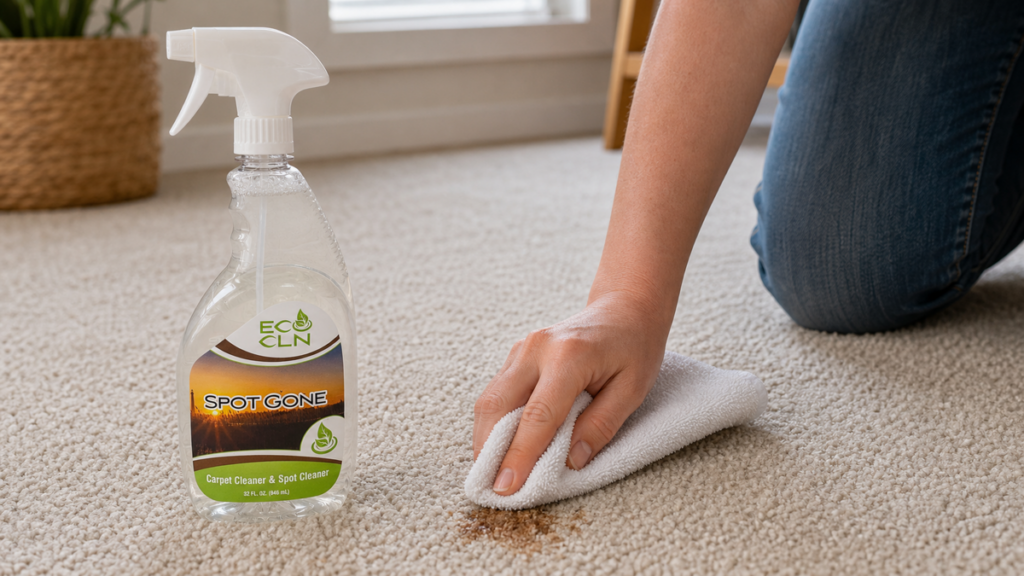
Eco Cln Spot Gone is the better fit for targeted carpet, rug, upholstery, fabric, food stain, grease, mud, dirt, and everyday household spots. Use it after you remove loose material and blot up extra liquid.
Spot Gone should not replace the first cleanup step. If there is sauce, dirt, mud, or food sitting on top of the carpet, lift that first. Then apply Spot Gone according to the product directions and focus on the stained area.
Use enough product to treat the spot, but do not flood the carpet. Controlled application helps keep the cleaner where the mess is. After treatment, blot with a clean cloth and let the area dry fully.
For more detail on where this product fits, see the Spot Gone stain remover guide. For product details, use the Spot Gone fabric and surface cleaner page or shop Eco Cln Spot Gone.
When PAWS Fits
Eco Cln PAWS is the better fit for pet accident cleanup, urine odors, organic stains, pet bedding, kennel areas, litter box areas, and repeat pet mess spots.
Pet accidents are different from ordinary food or dirt stains because odor-causing residue can remain even after the visible spot looks better. That is why pet messes need their own lane instead of being treated like every other carpet stain.
Use PAWS according to the product directions and avoid over-wetting carpet, rugs, cushions, or bedding. For repeat accidents in the same spot, remember that the issue may extend below the carpet surface.
Drying And Residue Matter More Than People Think
A carpet spot can look clean at first and then come back later. Two common reasons are sticky residue and wicking.
Sticky residue happens when leftover cleaner or soil remains in the carpet and attracts new dirt. Wicking happens when moisture pulls deeper material back up toward the surface as the carpet dries.
To reduce that risk, use controlled moisture, blot thoroughly, and let the area air dry completely. Do not cover a damp spot with furniture, rugs, pet beds, boxes, or cushions. Once dry, vacuum the area to lift fibers and remove loosened residue.
If stains keep returning in the same place, read the Eco Cln guide on why carpet stains come back. That article explains sticky residue, overwetting, and repeat cleaning in more detail.
When A Carpet Cleaner Or Professional Cleaning Makes Sense
Some carpet jobs are bigger than a spot treatment. Large traffic lanes, whole-room dinginess, old mystery stains, heavy pet contamination, or water-damaged carpet may need a carpet cleaning machine or a professional cleaner.
If you rent or use a carpet cleaner, follow the machine directions carefully. Avoid using too much solution, and make sure the carpet has enough airflow to dry. Overwet carpet can create a bigger problem than the one you started with.
Call a professional if the carpet has a strong recurring odor, a stain that keeps spreading, possible padding contamination, delicate fibers, wool or specialty rugs, or manufacturer warranty concerns.
Common Carpet Cleaning Mistakes
Avoid these mistakes:
- Scrubbing in circles
- Pouring cleaner directly into the carpet
- Using too much water
- Treating pet urine like a normal food stain
- Skipping the hidden-area test
- Covering the carpet before it dries
- Using colored towels on light carpet
- Mixing DIY cleaning recipes on the same spot
- Assuming every stain can fully disappear
The goal is to lift the mess without creating a larger wet area, sticky residue, fiber damage, or odor issue.
Eco-Friendly Carpet Cleaning FAQs
What is the best first step for a carpet spill?
Lift solids first, then blot liquid with a clean white cloth. Do not scrub. Once the extra mess is removed, choose the cleaner based on the type of stain.
Can I use Spot Gone on carpet stains?
Yes, Spot Gone is positioned for targeted carpet, rug, upholstery, fabric, food stain, grease, mud, dirt, and everyday household spots when used as directed. Always test first in a hidden area.
When should I use PAWS instead of Spot Gone?
Use PAWS for pet accident cleanup, urine odors, organic stains, pet bedding, kennel areas, litter box areas, and repeat pet mess spots. Use Spot Gone for more general carpet, rug, upholstery, fabric, food, mud, grease, and everyday spots.
Should I use vinegar or hydrogen peroxide on carpet?
Be careful. Vinegar can leave odor and may not be right for every carpet. Hydrogen peroxide can lighten some materials. Test first, follow carpet care guidance when available, and avoid mixing random DIY recipes.
Why do carpet stains come back after cleaning?
Stains can come back because sticky residue attracts new dirt or because moisture pulls deeper residue back to the surface as the carpet dries. Controlled moisture, thorough blotting, full drying, and vacuuming after drying can help reduce that risk.
How long should carpet dry after spot cleaning?
Let the area dry fully before walking on it, covering it, or judging the result. Drying time depends on carpet thickness, airflow, moisture level, and room conditions.
Can every carpet stain be removed?
No. Older stains, dye-based stains, heat-set marks, deep padding contamination, and delicate materials can be harder to clean. If the stain spreads, the carpet texture changes, or odor keeps returning, stop and consider a professional cleaner.
The bottom line
Eco-friendly carpet cleaning is most useful when it is practical, careful, and matched to the mess. Blot spills quickly, avoid scrubbing, use the right cleaner for the mess, control moisture, and let the carpet dry fully before judging the result.
For food stains, mud, grease, upholstery spots, and everyday carpet messes, Eco Cln Spot Gone is the product to consider. For pet accidents, urine odors, and organic pet messes, Eco Cln PAWS is the better fit. Keep the method simple, test first, and let the carpet tell you whether it needs another careful pass.