

How to Clean Everyday Dirt and Scuff Marks From Washable Hard Surfaces

A scuff can be transferred rubber, hand grime, dirt, cleaner residue, or actual finish damage. Start with the least aggressive compatible method and stop if the surface gets shinier, duller, softer, or loses color.
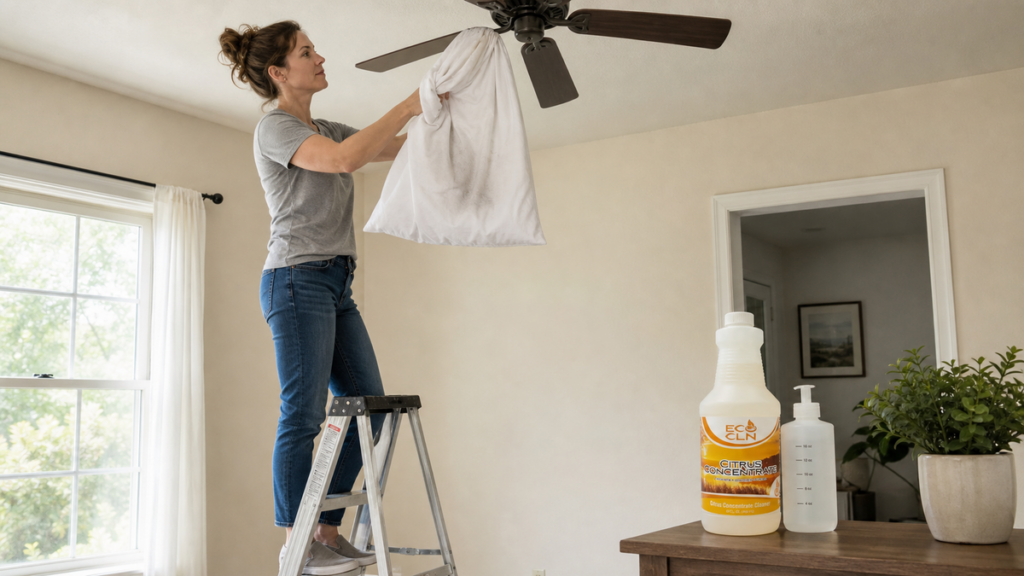
How to Clean Ceiling Fan Blades Without Dropping Dust Everywhere
The trick to cleaning ceiling fan blades without snowing dust onto the room is containment: stop the fan, capture loose dust before wet cleaning, support the blade gently, and keep cleaner away from the motor and electrical housing.
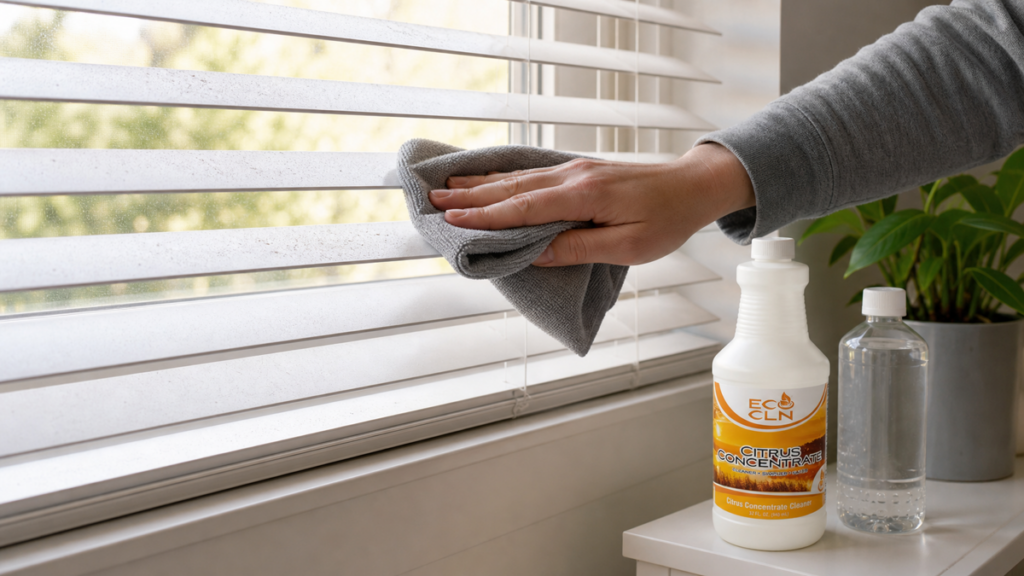
How to Clean Dusty Blinds Without Making a Bigger Mess
Blinds become a bigger mess when dry dust meets too much cleaner. Start with dusting or a vacuum brush, then decide whether the material actually tolerates wet cleaning before you reach for a spray bottle.
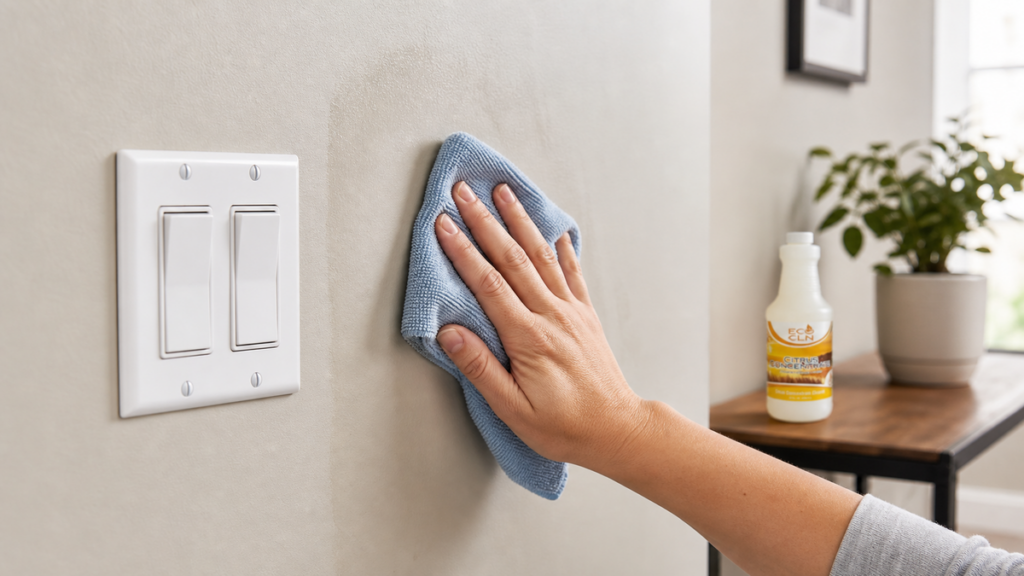
How to Clean Light Switches and High-Touch Areas Without Overspraying
Light switches collect fingerprints fast, but they are electrical devices - not just another plastic surface. Keep liquid out of the switch, follow the device maker's cleaning instructions, and use Citrus only on compatible surrounding washable surfaces.
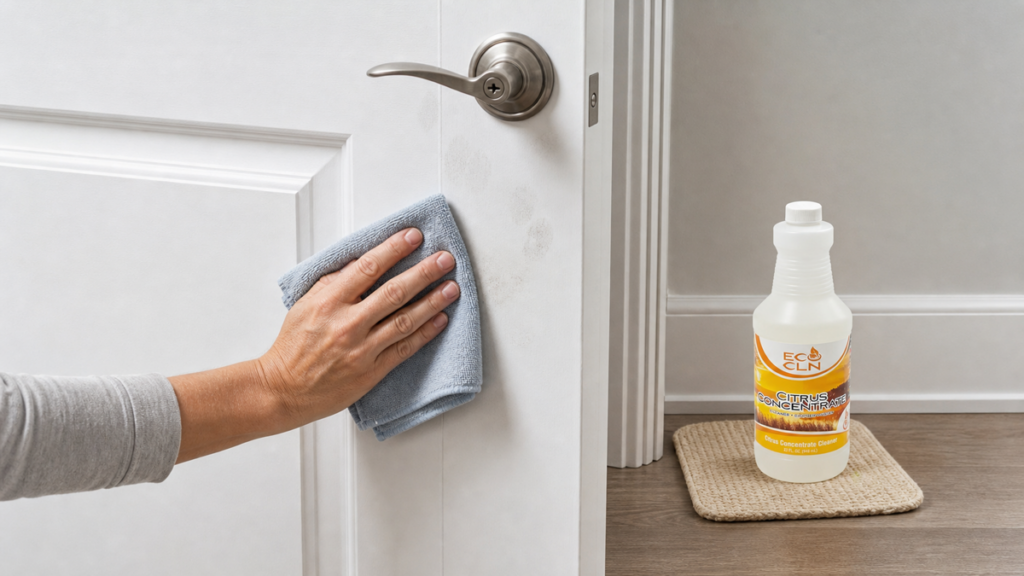
How to Clean Doors, Door Frames and Painted Trim
Doors and trim collect fingerprints, hand oils, shoe scuffs, dust, and grime exactly where people touch them. Clean the high-contact zones without turning a washable painted finish shiny or dull.
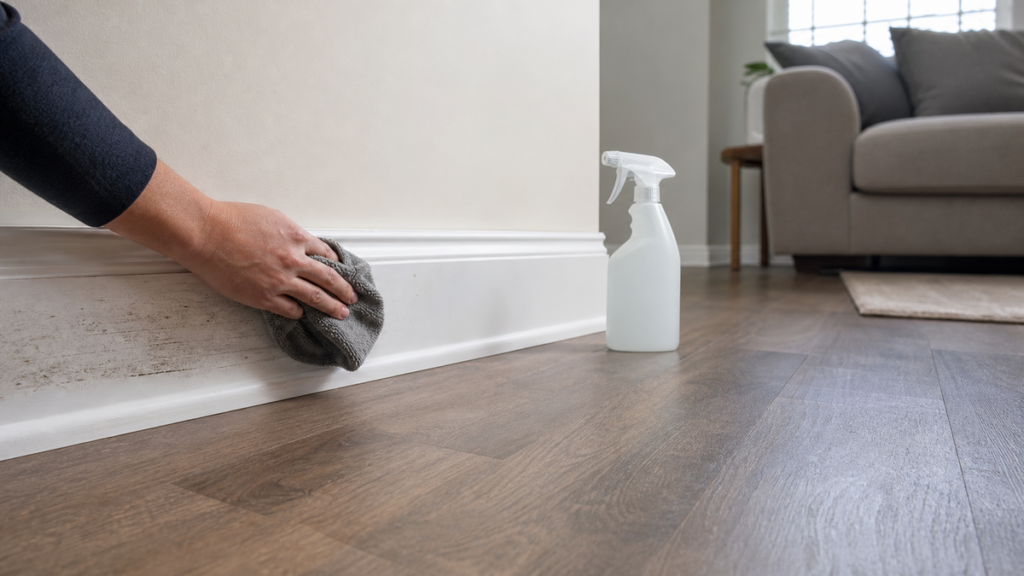
How to Clean Dirty Baseboards Without Damaging the Paint
Baseboards collect dust, shoe marks, pet hair, floor-cleaner splash, and fingerprints at exactly the height nobody wants to scrub. A dry-first, lightly damp method can clean painted trim without flooding seams or polishing the paint off.