How to Spot Clean a Light-Colored Carpet Without Leaving a Ring

Quick Answer
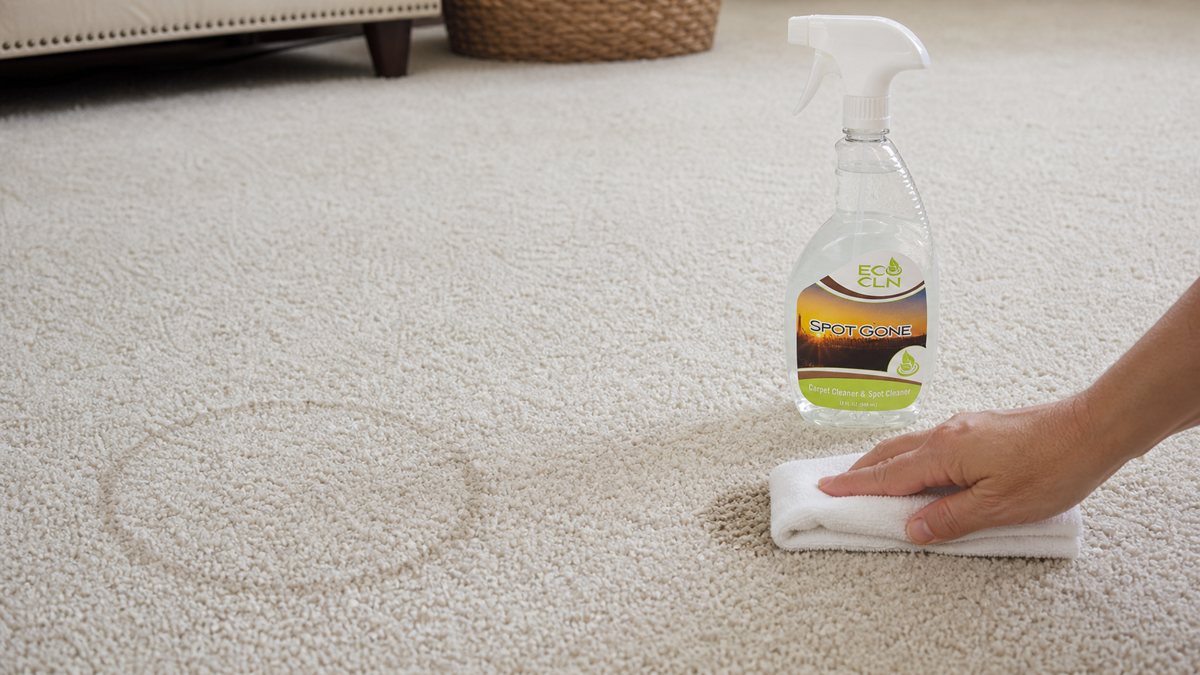
Vacuum loose soil first, spot-test the carpet, and treat a small area with a controlled amount of Eco Cln Spot Gone rather than soaking a large circle. Blot from the outside edge toward the center with clean white towels.
After the stain improves, remove remaining cleaner with minimal clean water if the carpet/product instructions allow it, blot the moisture back out, feather the damp edge gently instead of leaving a hard wet boundary, and dry the area with good airflow.
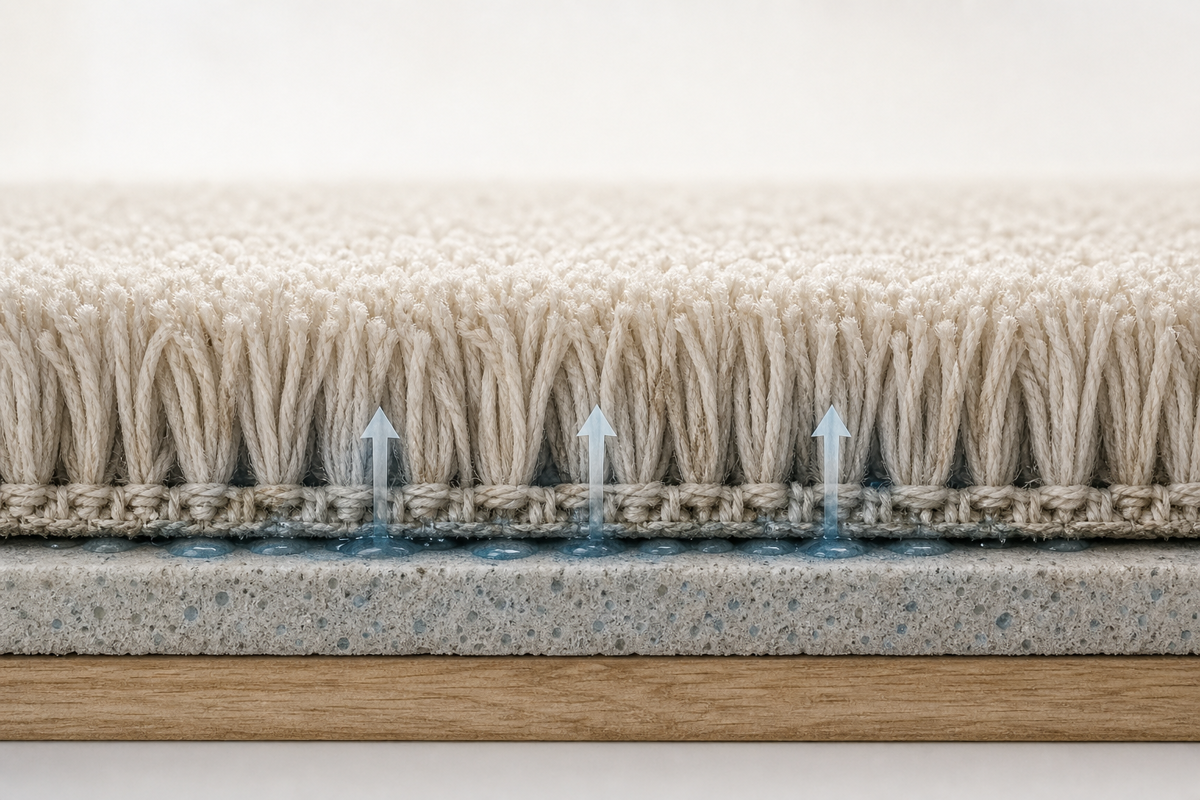
CRI defines wicking as liquid, soil, or residual contaminants moving from carpet backing toward the fiber tips during drying. Review CRI wicking guidance.
Why Rings Show Up More on Light Carpet
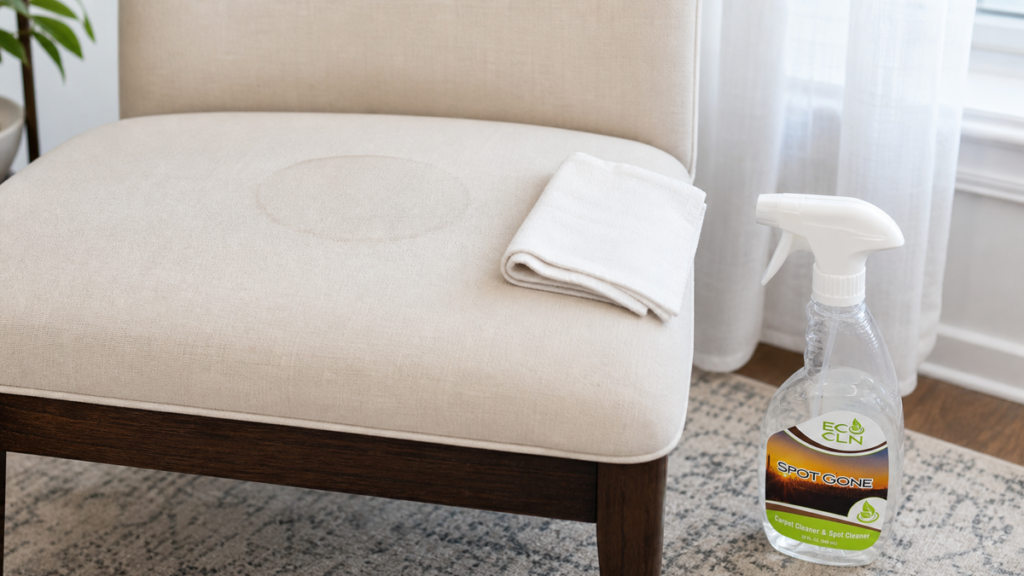
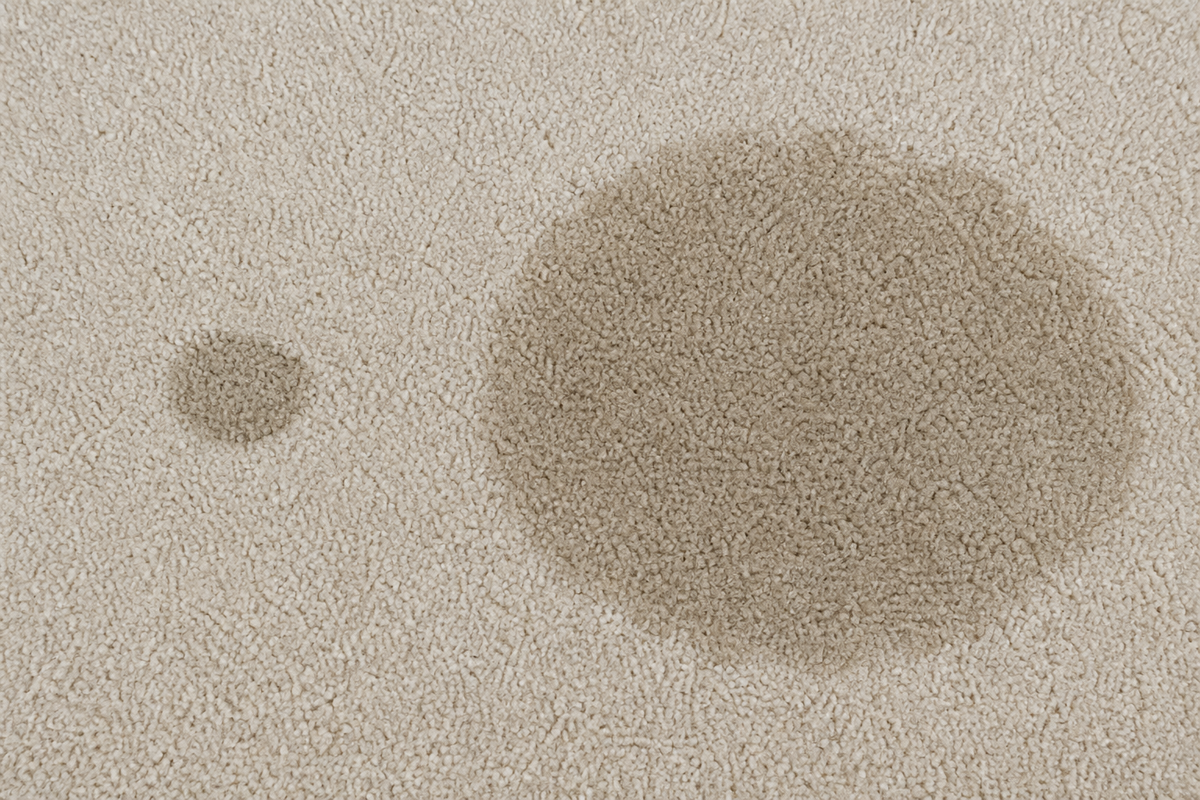
Light carpet makes small differences in moisture, residue, and soil much easier to see. A spot that would disappear visually on dark carpet can leave a gray or tan outline on cream or beige pile.
The ring can come from the original stain, soil outside the spot, cleaner residue, water mineral residue, or material wicking upward from deeper carpet layers.
Step 1: Vacuum Before You Wet the Carpet
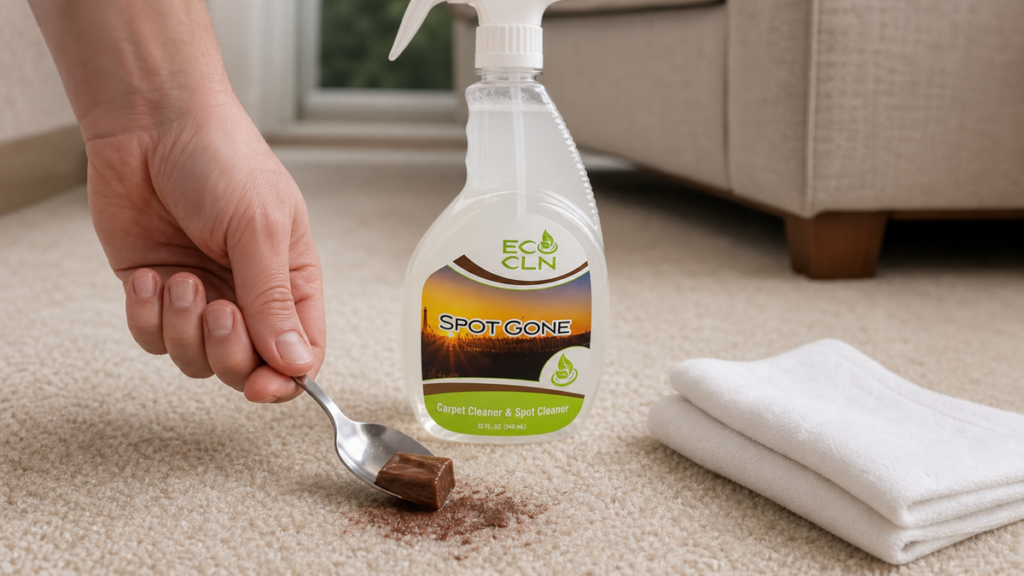
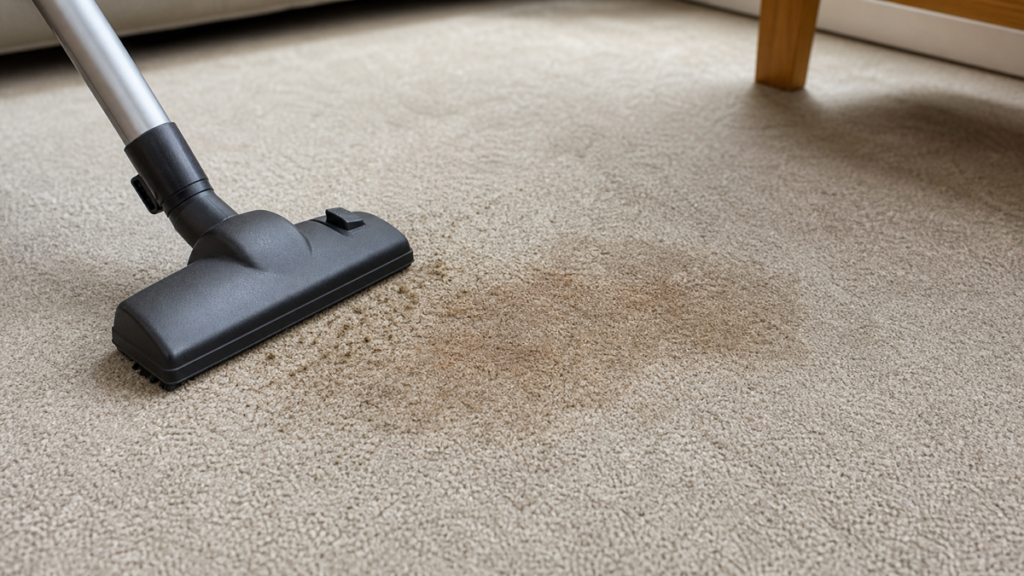
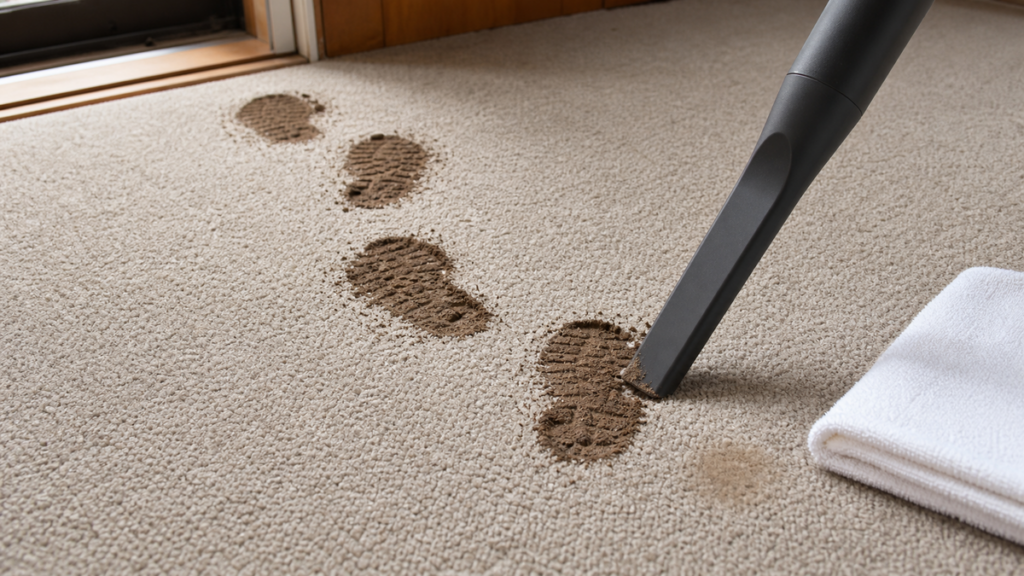
Remove dry dust, crumbs, and loose soil first. Wetting dry soil can create a larger gray boundary around the spot.
Use a clean vacuum attachment and avoid grinding debris deeper.
Step 2: Hidden-Area Test Spot Gone
Eco Cln positions Spot Gone for targeted carpet, rug, upholstery, food, grease, mud, dirt, and everyday household spots. It also directs users to test first and avoid oversoaking.
Let the hidden test dry completely before deciding the carpet is colorfast.
Step 3: Use Less Product Than Your Instinct Says
A small targeted treatment is easier to blot out evenly. A large soaked circle creates a large drying edge and increases the chance of wicking.
CRI emphasizes that more cleaner is not better and recommends small amounts with blotting instead of scrubbing. See CRI spot-cleaning guidance.
Step 4: Work From the Outside Toward the Center
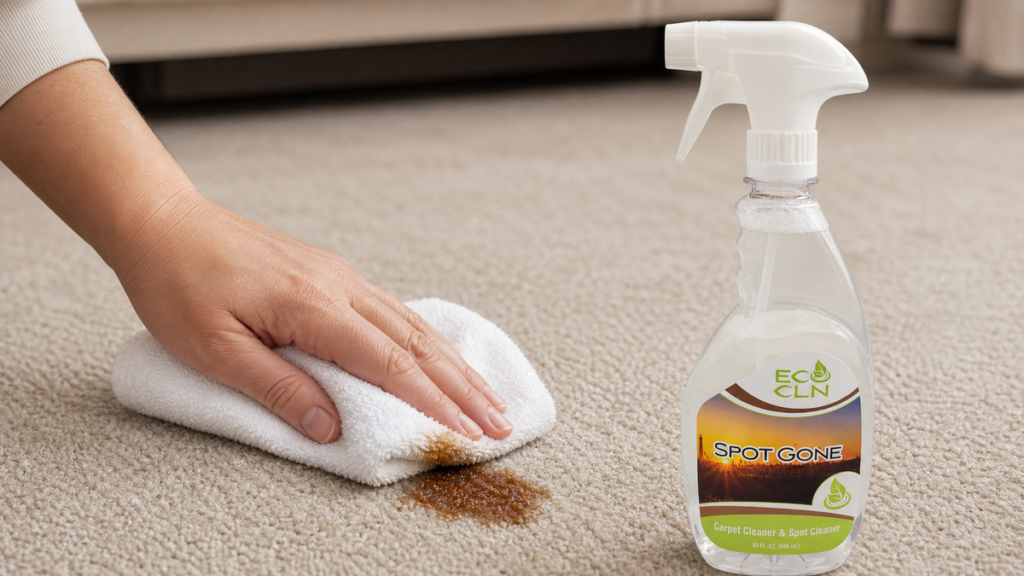
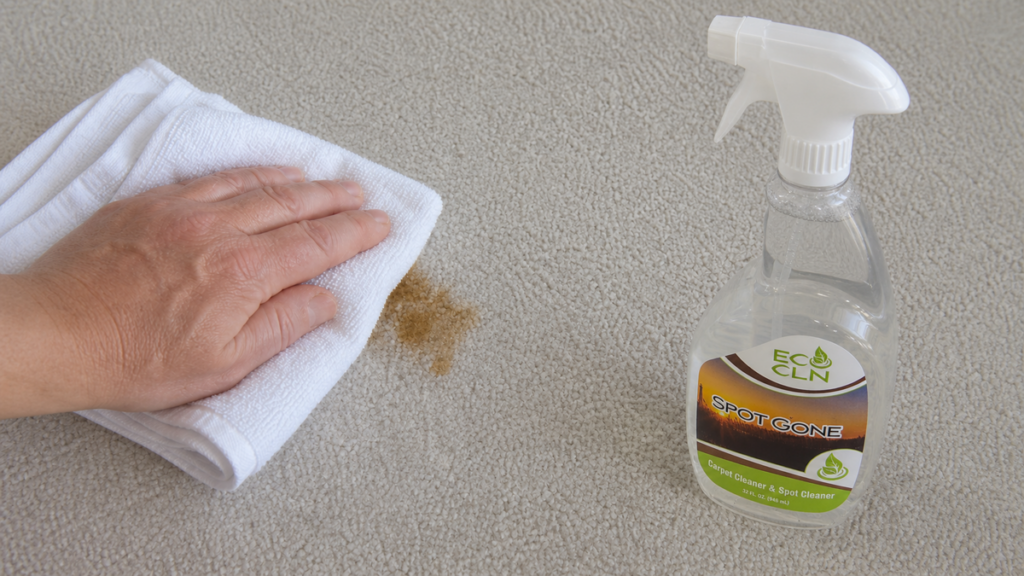
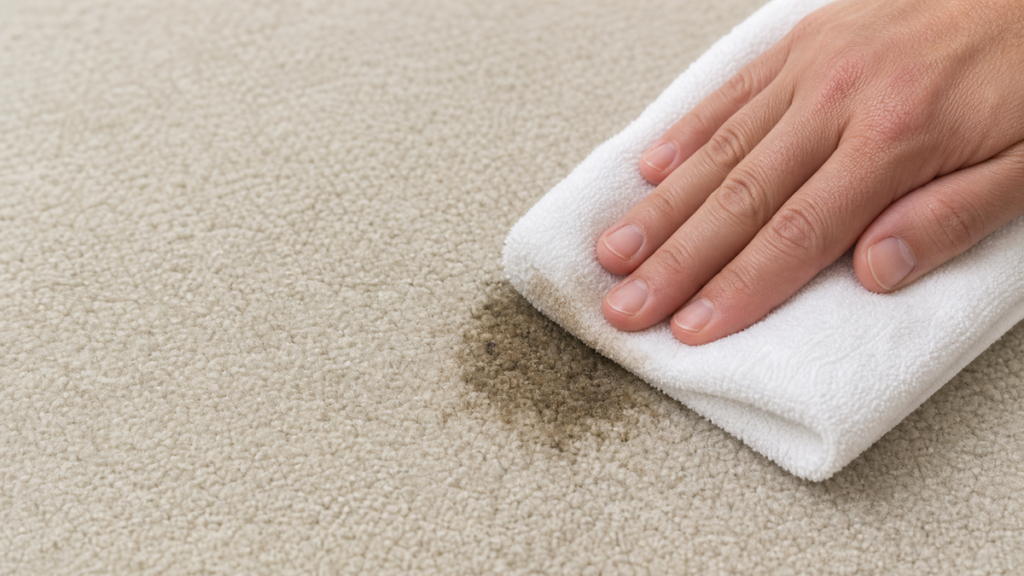
Blot the perimeter first, then move inward. Rotate to a clean white towel section as residue transfers.
Do not rub outward in circles. That can physically enlarge the visible stain.
Step 5: Remove Cleaner Residue
CRI notes that spot-cleaning residue can attract soil and recommends a clean-water rinse followed by blotting when appropriate. Review CRI best practices.
Use minimal water. You are trying to remove residue, not create a second flood.
Step 6: Feather the Damp Edge
Instead of leaving a sharply saturated circle, use a clean barely damp cloth to even the transition immediately around the treated zone when the carpet instructions permit it.
Then blot the whole damp area uniformly with dry white towels. The goal is even moisture removal, not a wider wet patch.
Step 7: Dry Fast and Do Not Judge It Wet
Increase normal airflow and keep traffic off the area. A damp spot will often look darker than the surrounding carpet even when it is clean.
Wait until the carpet is fully dry before deciding a ring remains.
If the Ring Reappears After Drying
Wicking may be carrying old soil or stain material upward from the backing or pad. Another small controlled treatment may help.
For repeated rings, large wet spots, or contamination below the carpet face, professional extraction can be more effective than repeated surface wetting.
Common Ring-Causing Mistakes
- Soaking a large circle around a small stain.
- Skipping dry vacuuming first.
- Using too much spot cleaner.
- Scrubbing outward.
- Leaving cleaner residue behind.
- Using a dirty or colored towel.
- Judging color while the carpet is still damp.
- Repeating wet treatments before the prior one fully dries.
Where Spot Gone Fits
Eco Cln Spot Gone fits small targeted non-pet carpet and upholstery stains. On light carpet, the technique matters as much as the cleaner: test first, use a small amount, blot, remove residue, and dry evenly.
FAQ
Why did a ring appear after spot cleaning?
Uneven wetting, cleaner residue, original soil, or wicking from deeper carpet layers can create a visible edge after drying.
Can Spot Gone be used on light carpet?
Potentially, yes. Test a hidden area first and avoid oversaturation.
Should I rinse carpet after spot cleaner?
When the carpet and product instructions allow it, a minimal clean-water rinse can help remove residue. Blot the water back out.
Why does the spot look darker while wet?
Wet fibers naturally reflect light differently. Wait until the area is fully dry before judging the result.
When should I call a professional?
If rings repeatedly reappear, the spot reached the pad, the carpet is valuable or dye-unstable, or multiple home treatments have failed.
The Bottom Line
Vacuum loose soil before adding moisture, then spot-test the light-colored carpet and let the test dry completely. Treat the smallest practical area with a controlled amount of Eco Cln Spot Gone where the carpet and current product directions allow it. Blot from the outer boundary toward the center with clean white towels, rotating to fresh sections as material transfers, and avoid circular rubbing that enlarges the visible edge. Remove remaining cleaner residue with only the minimal rinse-and-blot method approved for the carpet, because excess product and water can both create a new ring. When permitted, use a barely damp clean cloth to even the immediate transition at the edge, then blot the whole damp area uniformly rather than leaving a sharply saturated circle. Increase normal airflow, keep traffic off the spot, and wait until the fibers are fully dry before judging color or darkness. Stop if carpet dye transfers, the pile changes, the wet boundary keeps expanding, or repeated rings suggest contamination in the backing or pad. Light carpet exposes small differences in soil, residue, minerals, and drying, so patient moisture control matters more than hard scrubbing or repeated heavy applications. For valuable carpet, unstable dye, large spots, or rings that repeatedly return after full drying, a qualified carpet cleaner is the safer next step. Document the products and moisture already used before the appointment.
Continue with this related Eco Cln guide: Spot Gone stain-remover guide.
For a localized non-pet stain on compatible light-colored carpet, Eco Cln Spot Gone gives you a targeted treatment. The ring-prevention trick is restraint: small amount, white towels, clean-water residue removal when appropriate, and complete drying.