How to Remove Grease and Oil Stains From Carpet

Quick Answer
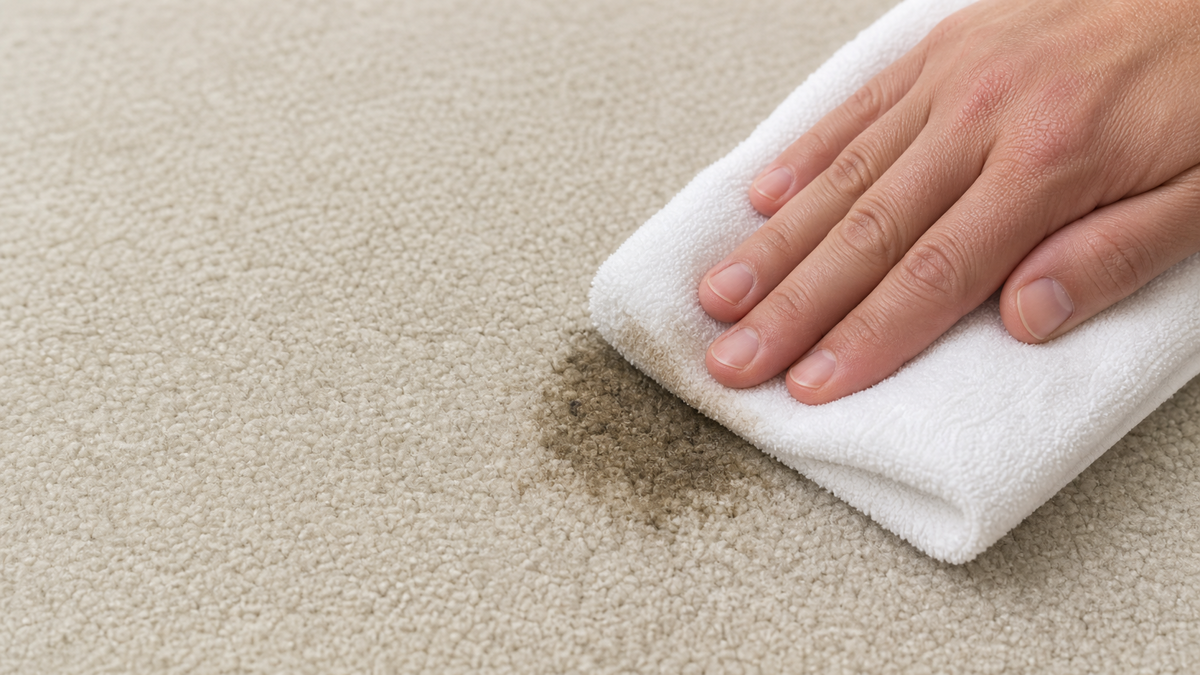
For a fresh grease or oil spot on carpet, remove any solid or semi-solid material first, then blot—do not rub. Test the cleaner in a hidden area, apply only a small controlled amount to the stain, and work from the outside edge toward the center.
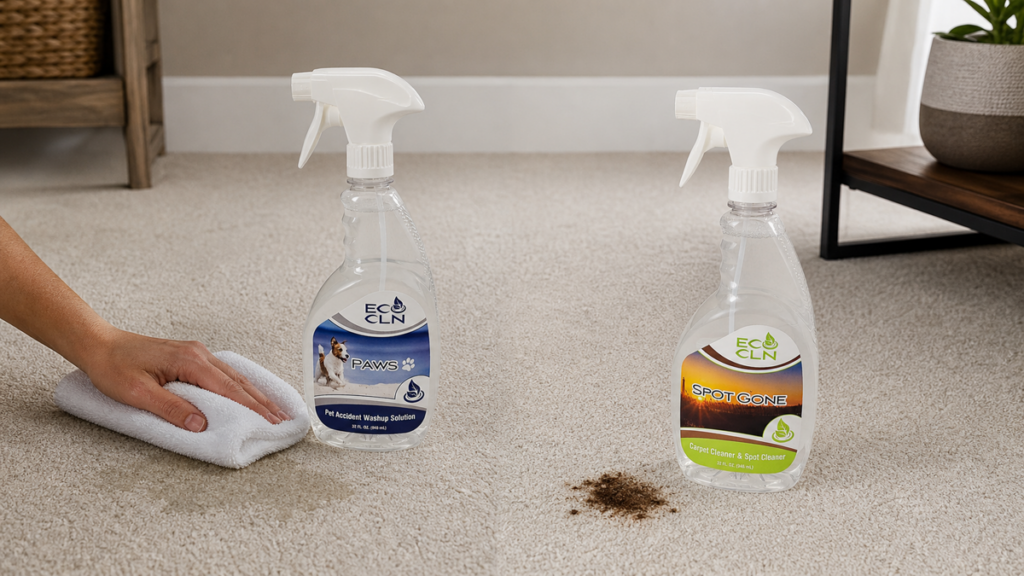
Eco Cln Spot Gone is the targeted Eco Cln stain remover for grease spots, food stains, dirt, mud, and everyday carpet, rug, upholstery, and fabric messes when used as directed. After treatment, blot away the loosened residue and remove remaining cleaner as appropriate for the carpet, then let the area dry fully.
Why Grease and Oil Stains Are Different
Water-based spills tend to wick and spread quickly, while oils cling to fibers and can leave a dark translucent mark. Cooking grease, butter, salad dressing, cosmetics, machine oil, and other oily substances also attract dust. Even if the original color fades, an oily residue can keep collecting soil and make the spot look dirty again.
That is why a grease stain needs two goals: lift the oily material and avoid leaving a new cleaner residue behind.
Step 1: Remove Loose Grease Without Smearing It
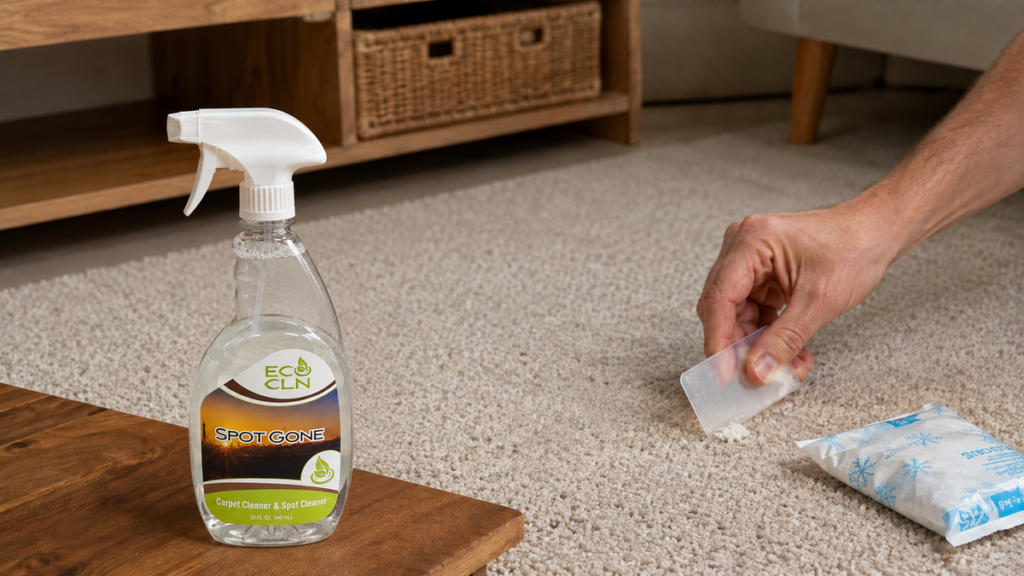
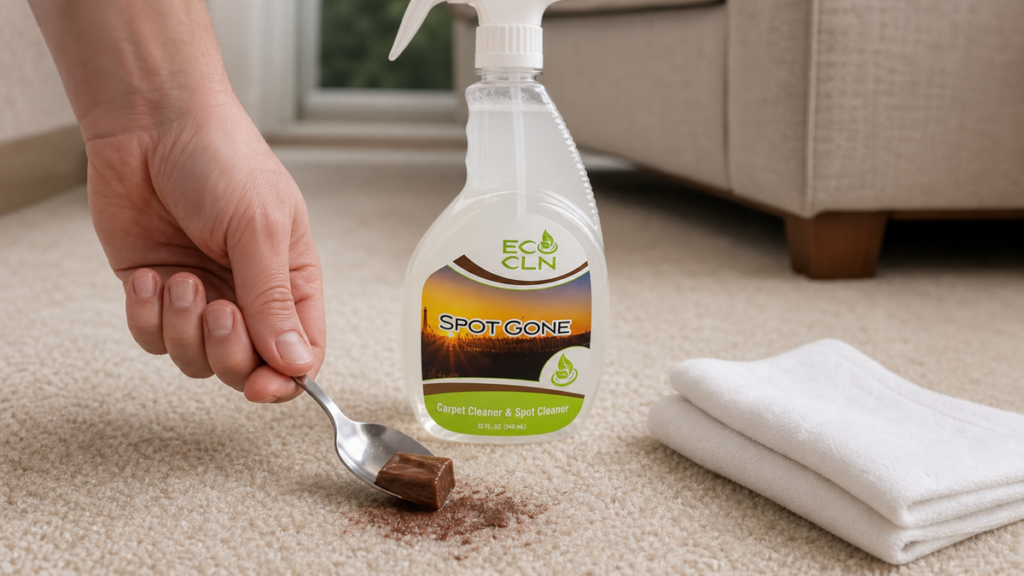
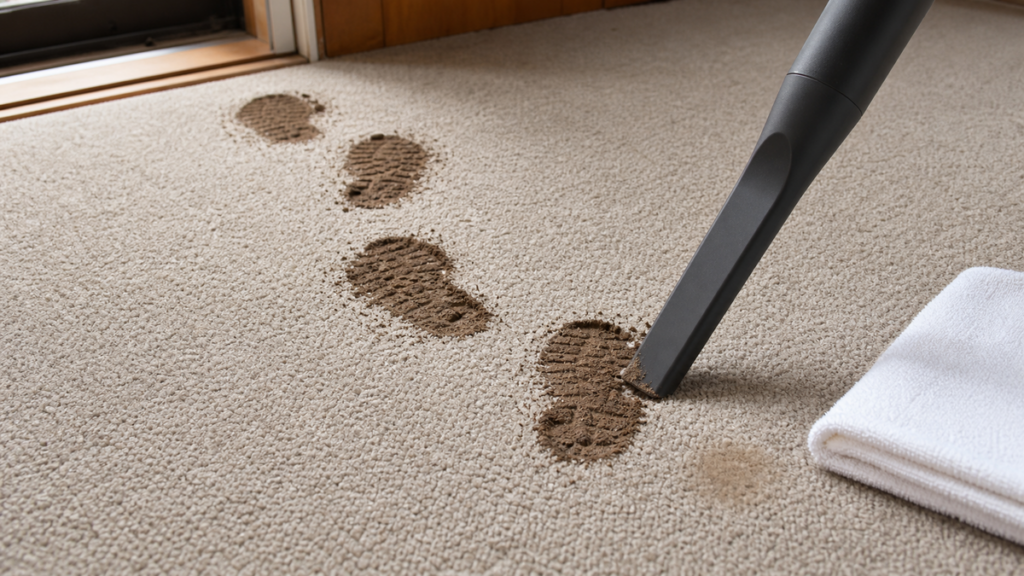
If the spill includes solid or semi-solid grease, gently lift it with the edge of a spoon or dull plastic scraper. Do not grind it into the carpet. If the material is liquid, blot with a clean white absorbent towel.
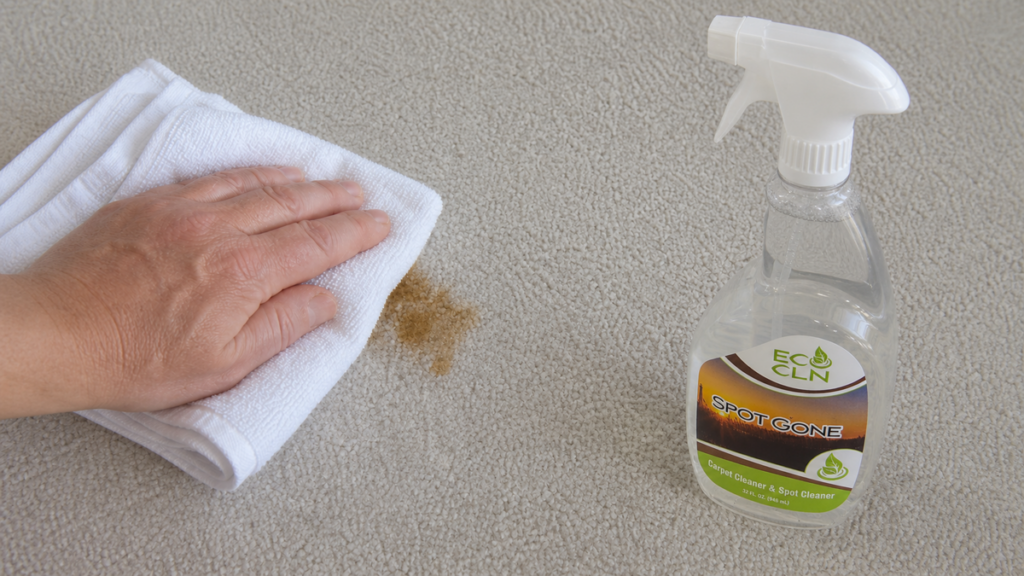
The Carpet and Rug Institute recommends blotting and working from the edges toward the center for spot cleaning. Scrubbing can damage carpet texture and spread the stain.
Step 2: Use a White Cloth and Work From Outside In
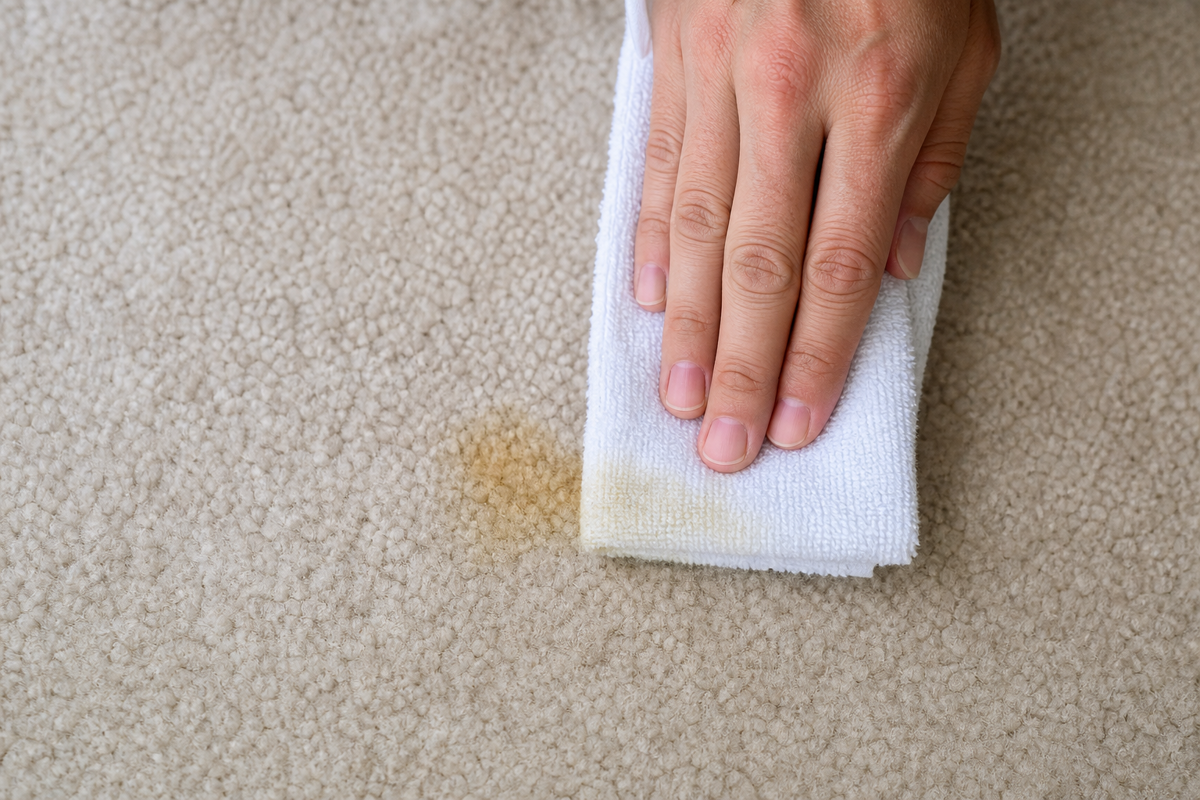
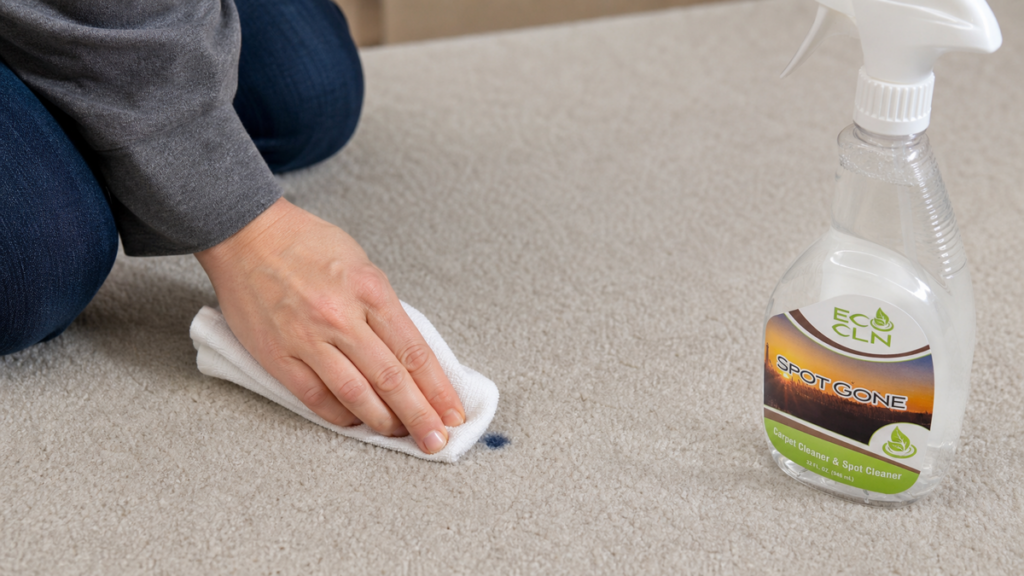
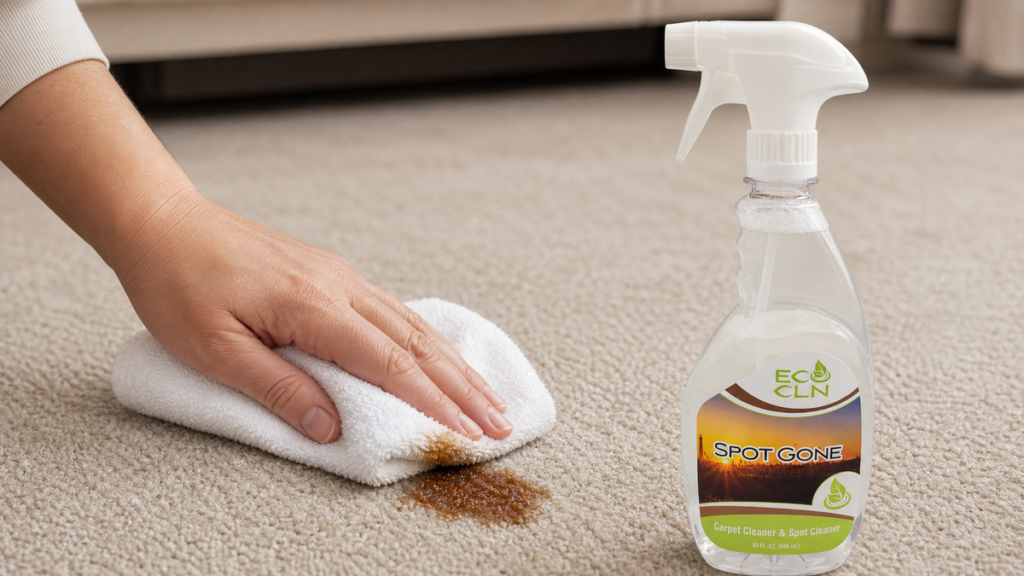
Use white towels so you can see whether the grease is transferring and so colored towel dyes are not introduced to damp carpet. Press, lift, rotate to a clean section, and repeat.
Keep the outside edge of the spot under control. If you scrub outward, a two-inch stain can become a six-inch greasy haze.
Step 3: Spot-Test Spot Gone
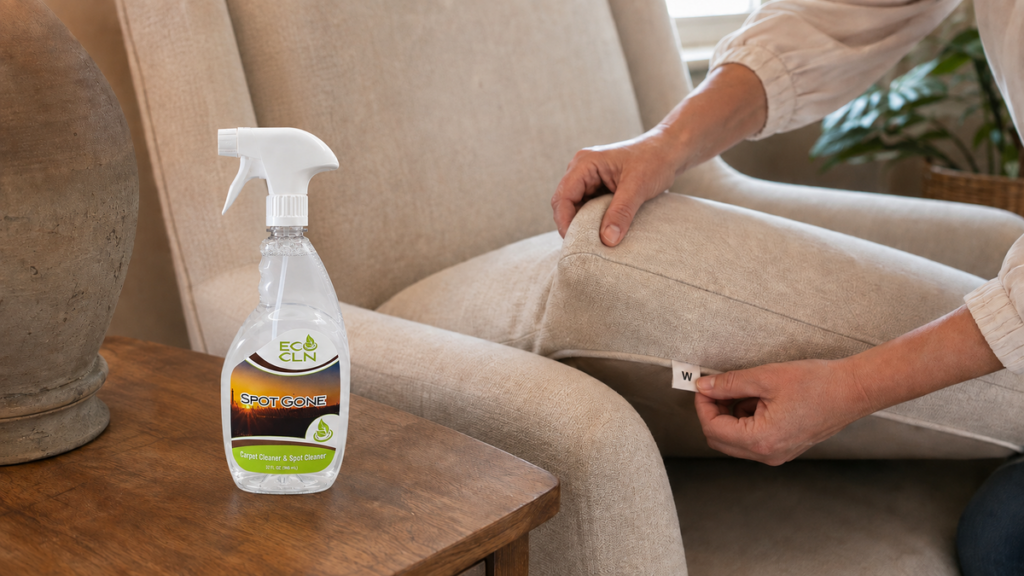
Test the cleaner in an inconspicuous area, especially on older carpet, wool, patterned carpet, specialty rugs, or carpet with unknown dye stability. Let the test dry before judging the final color.
Step 4: Apply a Small Amount of Spot Gone
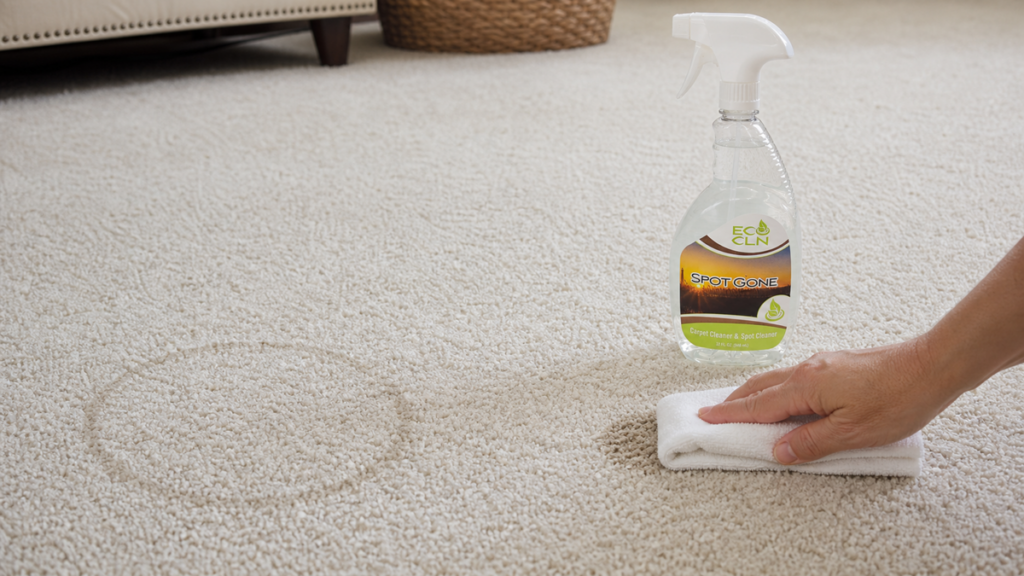
Apply Spot Gone according to the product directions to the stained fibers. Do not saturate the surrounding carpet. The product is made for targeted spot treatment, so keep the treatment area close to the actual stain.
Allow brief contact according to the directions, then blot with a clean white cloth. Rotate the towel as grease transfers out.
Step 5: Repeat Controlled Passes Instead of One Big Soak
Oily stains may need more than one treatment. A second small application is usually easier to control than one heavy application that reaches the carpet backing.
Stop if the carpet color, texture, or backing seems to change. Delicate or valuable rugs should be handed to a professional cleaner rather than treated through repeated experimentation.
Step 6: Remove Residue and Dry
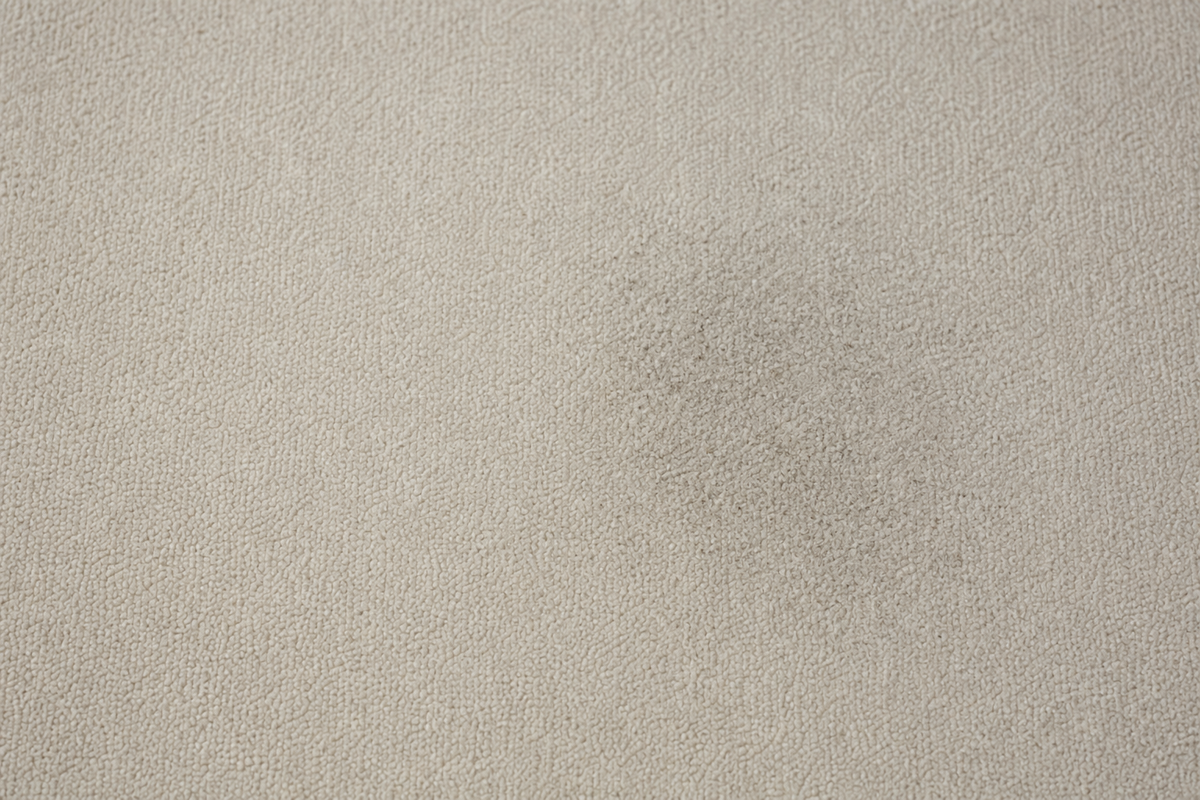
Once the visible grease has lifted, remove remaining spot-cleaning residue according to the carpet or product guidance. Use minimal water and blot rather than pouring a rinse onto the carpet.
CRI oil-stain guidance warns that many spot-removal products can leave residues that attract soil and stresses thorough residue removal without overwetting.
Use dry towels to pull out as much moisture as possible and improve ordinary airflow. Judge the spot after the carpet is fully dry.
Fresh Grease vs. Old Oil Stains
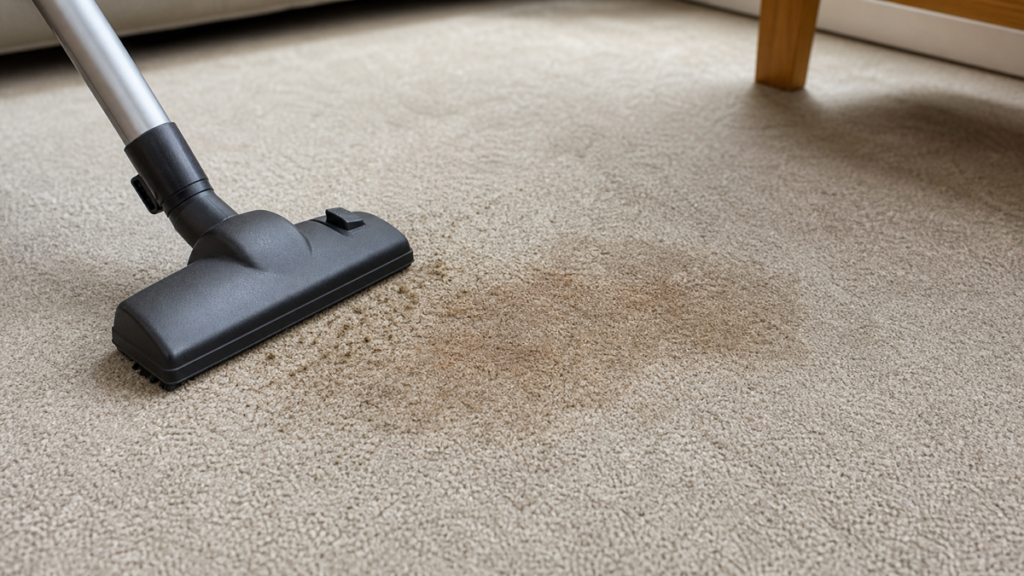
A fresh stain still has material available to blot away, so speed helps. An old stain may have bonded more strongly to the fiber, collected dirt, or moved deeper into the pile. Start an old spot by vacuuming loose soil, then use the same hidden-area test and controlled treatment approach.
Do not assume an old dark patch will disappear completely. Some oils can permanently discolor or alter carpet fibers.
What If Spot Gone Does Not Remove a Heavy Oil Stain?
Stop before improvising with random solvents. The Carpet and Rug Institute notes that oil stains can require specialty solvent-based treatment and specifically cautions against pouring solvent directly onto carpet or allowing it to reach the backing, where it can cause damage.
For motor oil, heavy machine grease, large spills, valuable rugs, or a stain that has already resisted careful spot treatment, a professional carpet cleaner is the safer next step.
Greasy Food Stains vs. Pure Oil
A dropped piece of greasy food may include oil, protein, seasoning, dye, and crumbs at the same time. Remove the solid food first, then treat the remaining localized spot. Pure machine or automotive oil can be more persistent and may require professional solvent-based methods.
Common Mistakes With Grease and Oil Carpet Stains
- Rubbing the stain in circles and spreading oil into clean carpet.
- Pouring cleaner or solvent directly onto the carpet backing.
- Using too much product because the stain is dark.
- Skipping the hidden-area test.
- Leaving cleaner residue behind, which can attract soil.
- Using heat before the stain has been safely removed.
- Mixing multiple stain removers or solvents together.
Where Spot Gone Fits
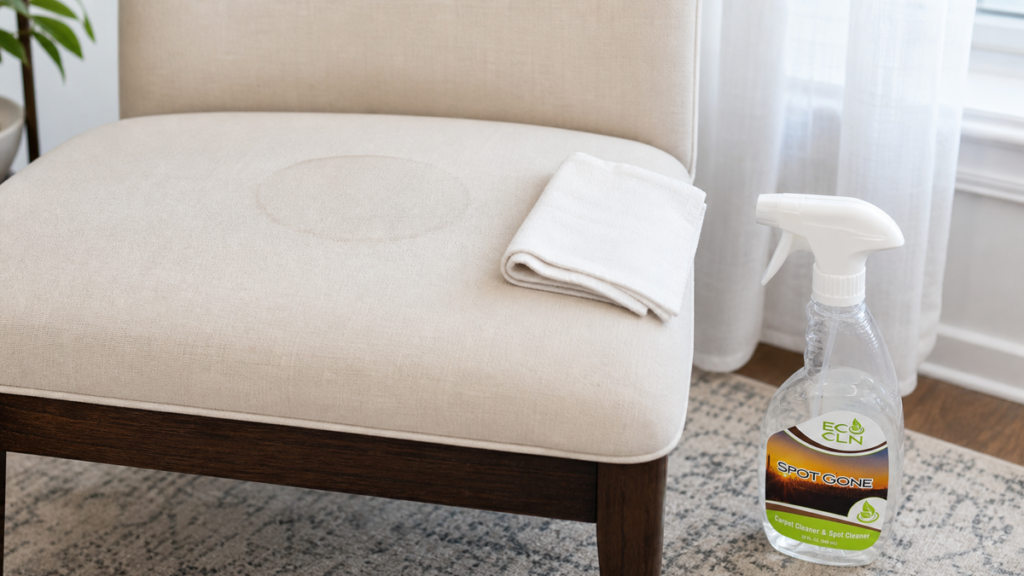
Eco Cln Spot Gone is positioned for grease and oil marks, food stains, dirt, mud, tomato sauce, and everyday localized spots on carpets, rugs, upholstery, and fabric surfaces. It is the correct Eco Cln lane for a small non-pet grease stain.
For general Spot Gone technique and product selection, see the Spot Gone stain-remover guide.
FAQ
Should I scrub an oil stain out of carpet?
No. Scrubbing can spread the oil and damage carpet pile. Blot and work from the outside edge toward the center.
Can Spot Gone be used on grease stains?
Yes. Eco Cln positions Spot Gone for grease and oil marks as well as food, dirt, mud, and other targeted carpet and upholstery spots when used as directed.
Why did the stain come back after the carpet dried?
Oil may remain deeper in the pile, or cleaner residue may be attracting soil. Let the spot dry fully, then reassess before another controlled treatment.
Can I pour a solvent onto an oil stain?
No. CRI cautions that solvents should not be poured directly onto carpet or allowed to reach the backing. Heavy oil stains may be better handled by a professional.
When should I call a professional carpet cleaner?
For motor oil, large spills, valuable rugs, repeated failed treatments, or stains requiring specialty solvents, professional cleaning is a sensible next step.
The Bottom Line
For a fresh grease or oil spot, lift solids first, blot from the outside edge inward, and use small controlled treatments instead of one large soak. Remove leftover cleaner so the carpet does not attract new soil, then judge the stain only after it is fully dry. Motor oil, large spills, valuable rugs, or stains that need specialty solvents belong with a professional rather than another round of home chemistry.
For a localized grease or oil mark on compatible carpet, rug, or upholstery, Eco Cln Spot Gone gives you a targeted stain-removal option so you can treat the spot without soaking the entire area.