How to Clean Food Spills From Upholstered Dining Chairs

Quick Answer
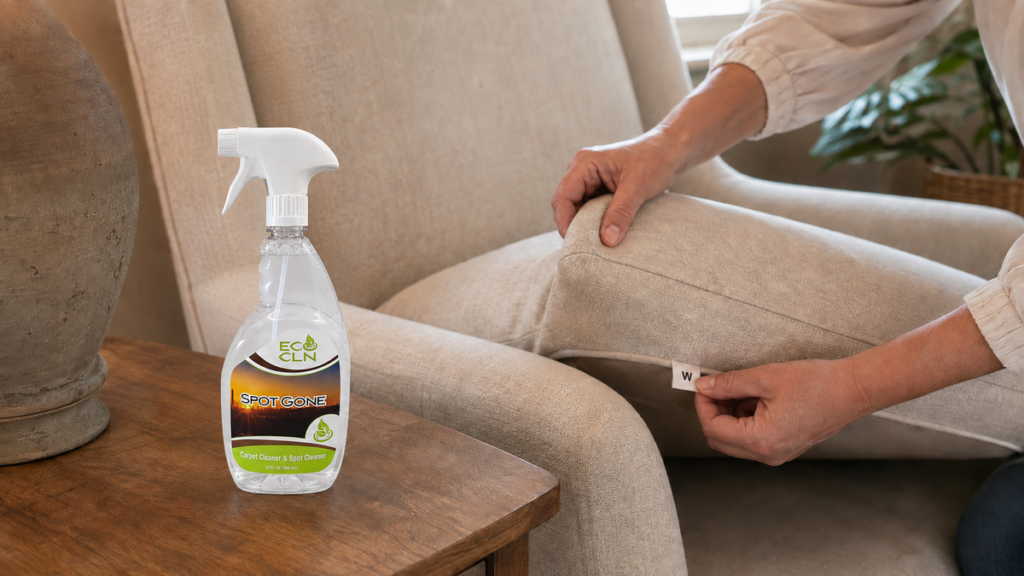
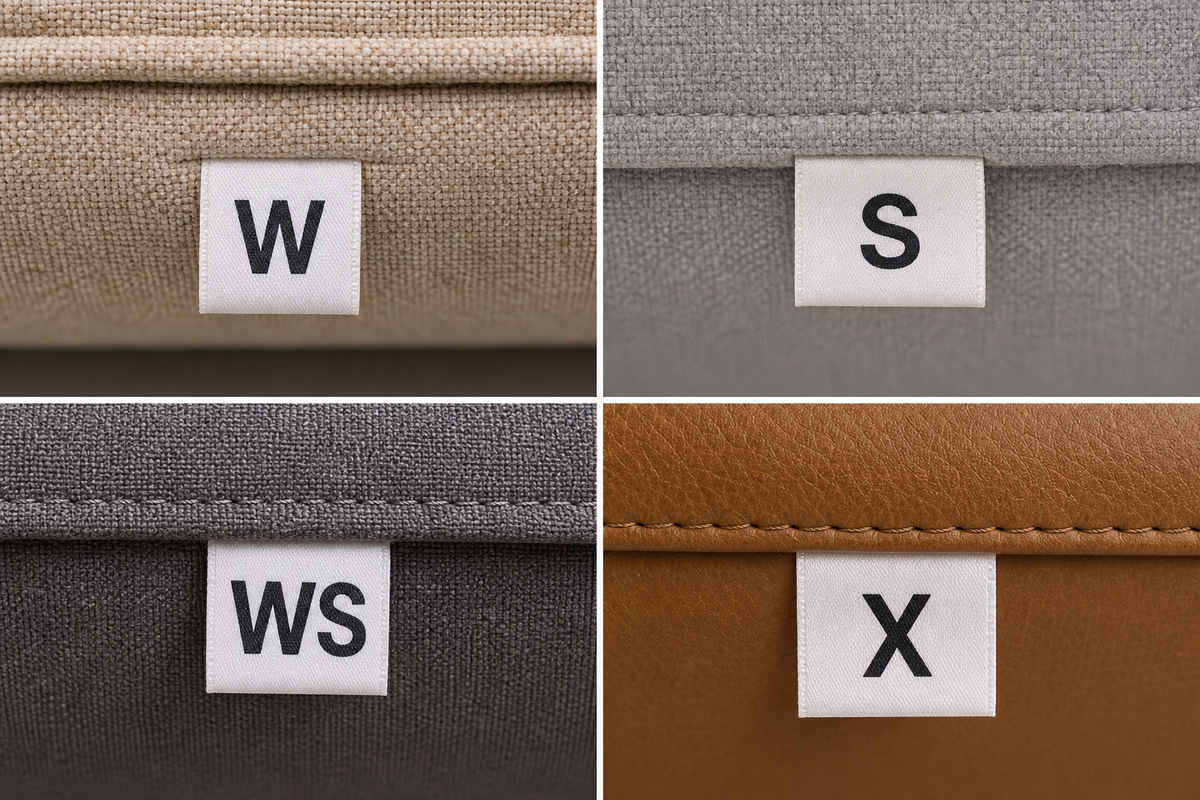
For food spills on upholstered dining chairs, lift solid food first, blot liquid with a clean white cloth, and check the chair care label before adding cleaner. The upholstery code matters: W generally allows water-based cleaner; S calls for solvent-based methods; WS/SW allows either category; X means no liquid spot cleaning.
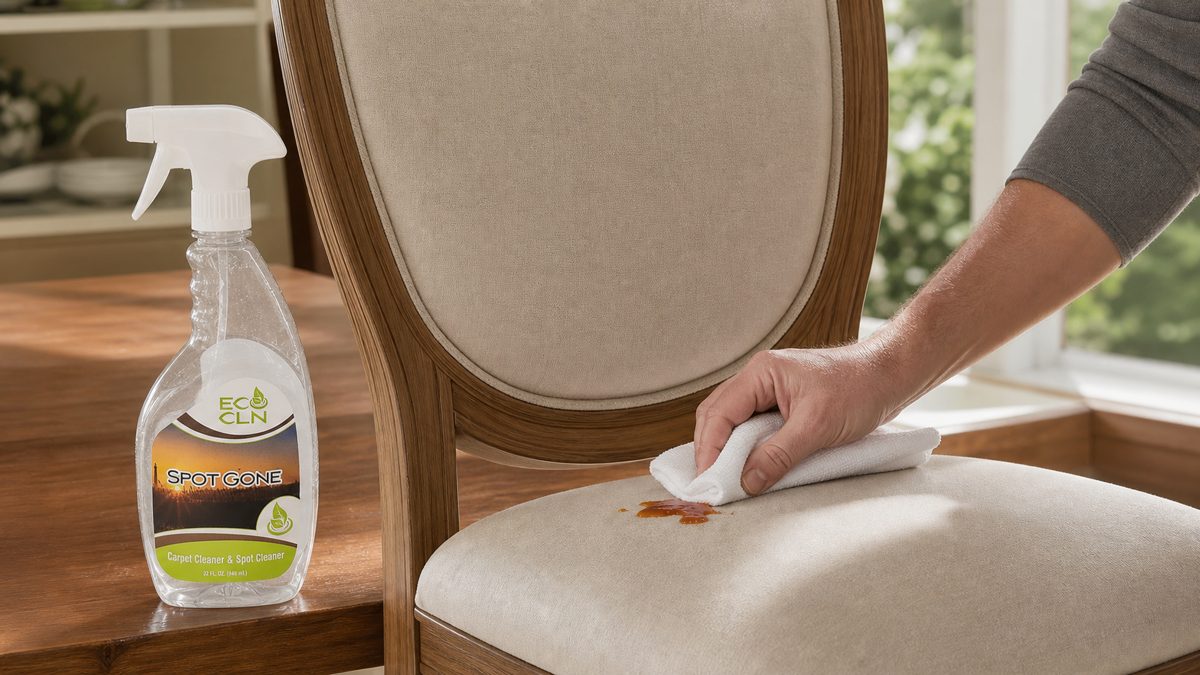
Eco Cln Spot Gone is a water-based targeted carpet/upholstery stain cleaner, so use it only when the chair code and manufacturer allow that type of cleaning. Test a hidden area, apply a small amount, blot from the outside inward, remove residue as appropriate, and dry evenly.
Ashley Furniture care guidance explains the common upholstery cleaning codes and is a useful example of why the care tag comes first.
Step 1: Remove Solids Before Liquid
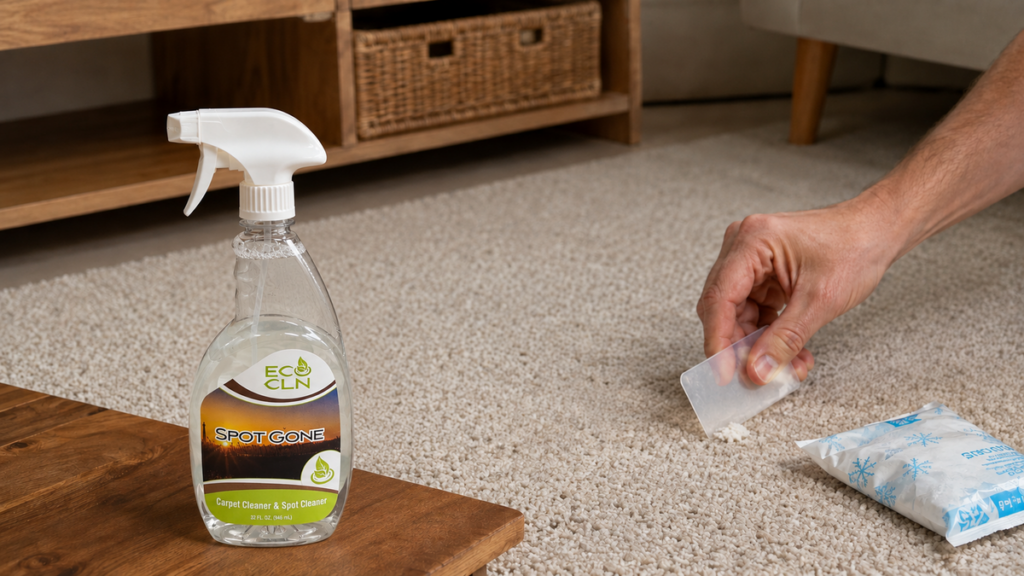
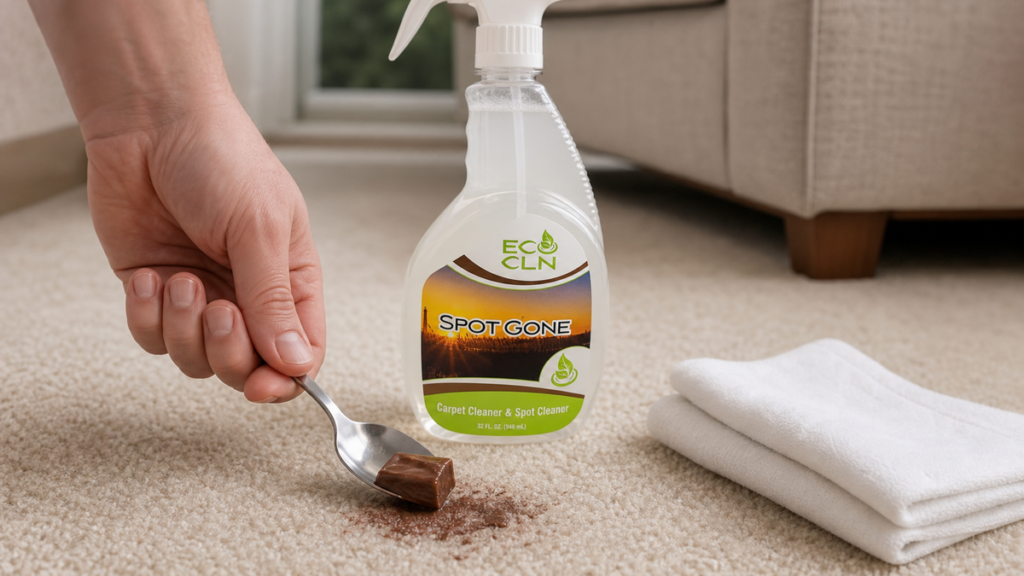
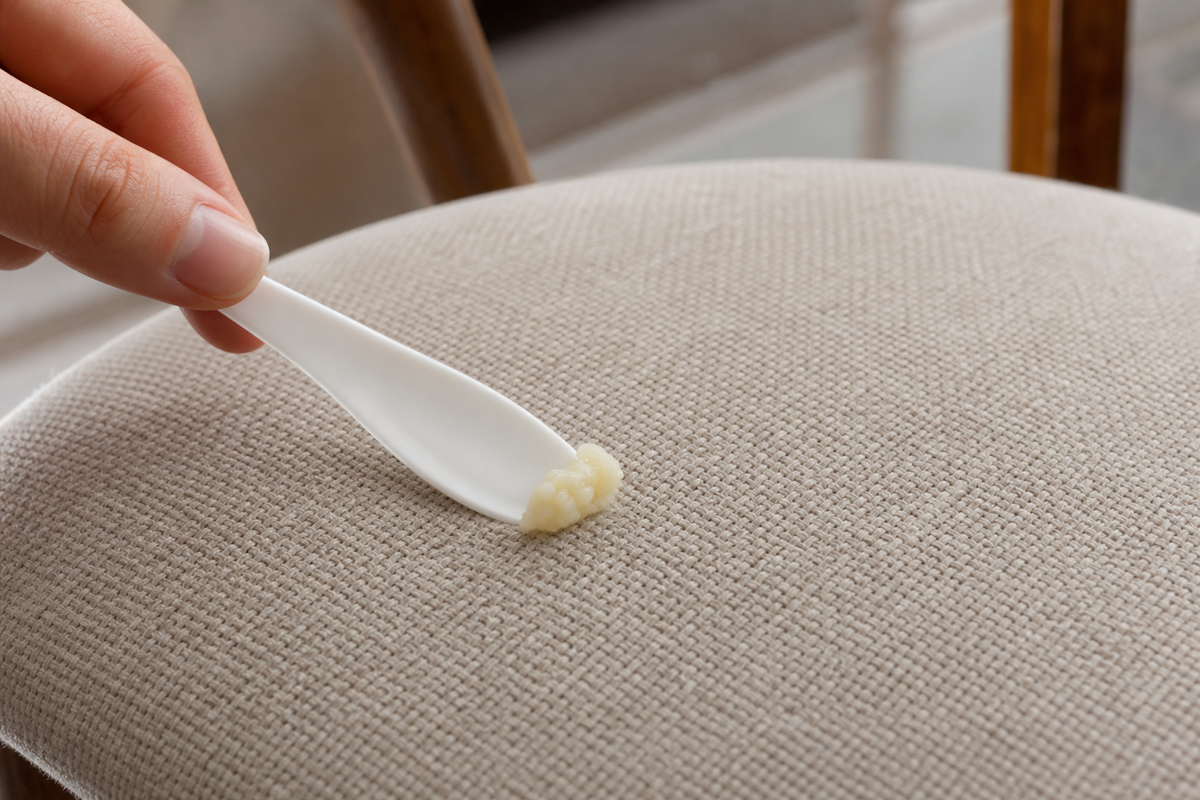
For food spills with sauce, frosting or crumbs, use a spoon or dull plastic edge to lift solids before blotting. Vacuum loose dry debris if appropriate.
Do not grind food into the fabric with a towel.
Step 2: Blot Fresh Liquid
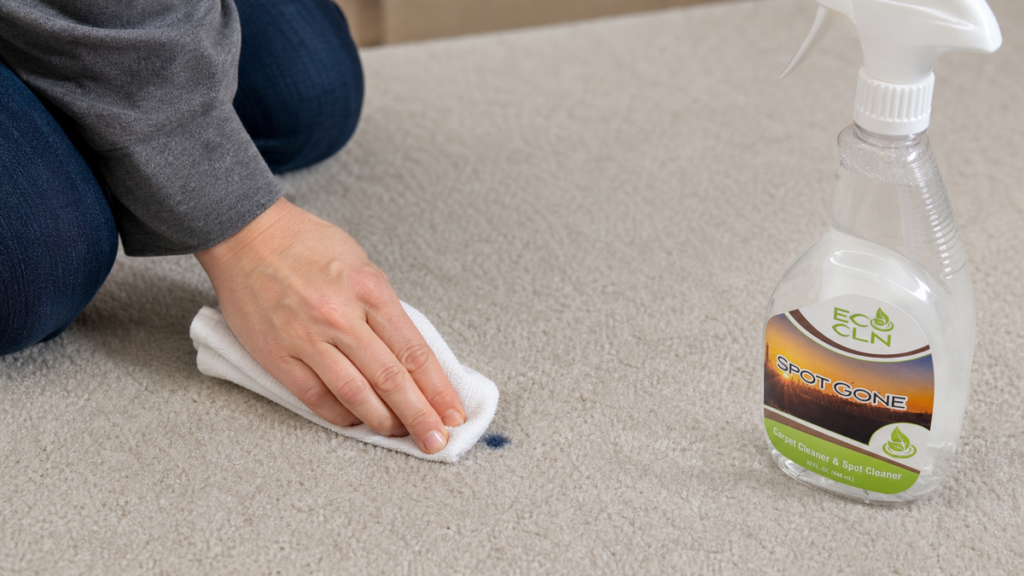
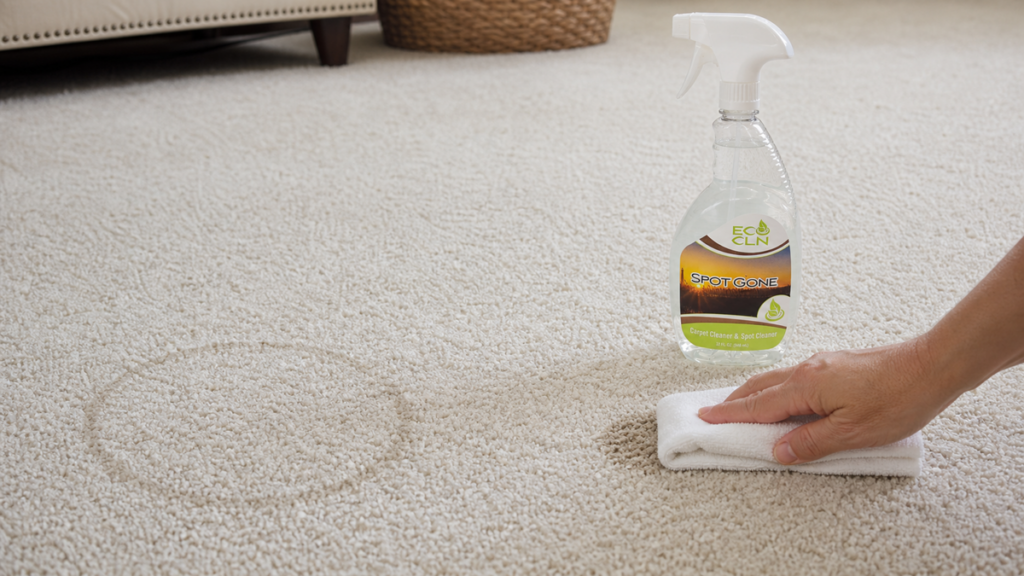
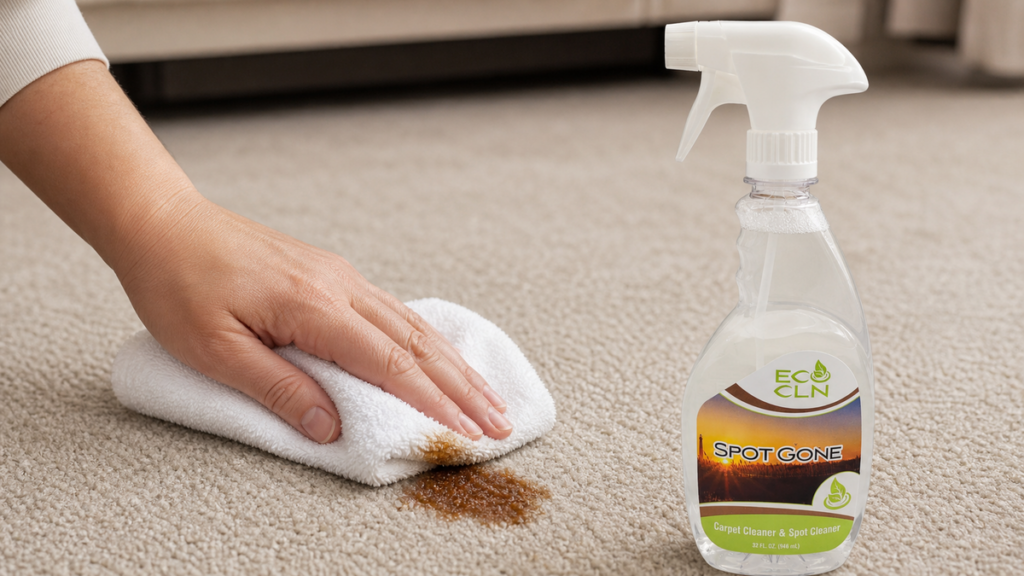
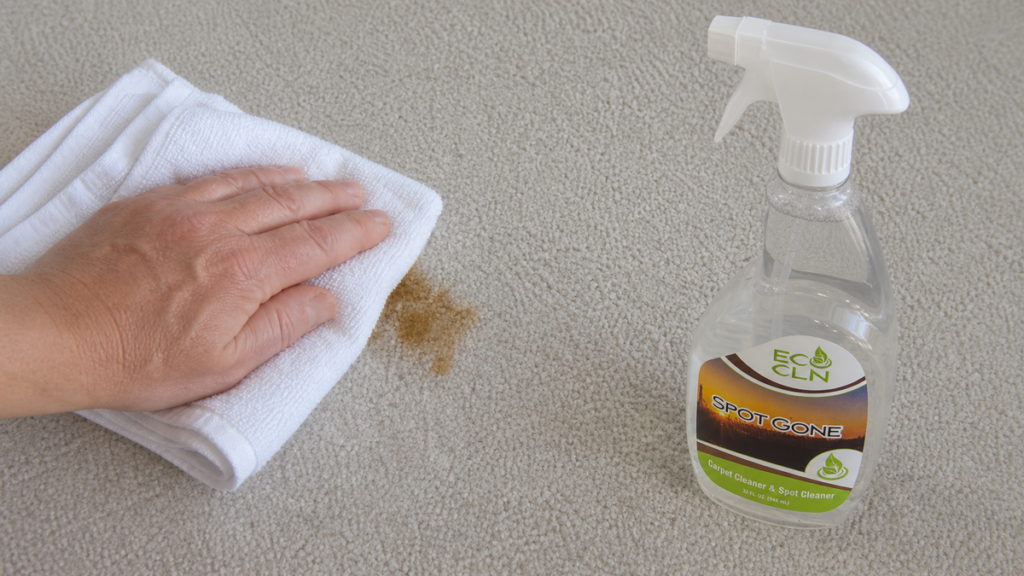
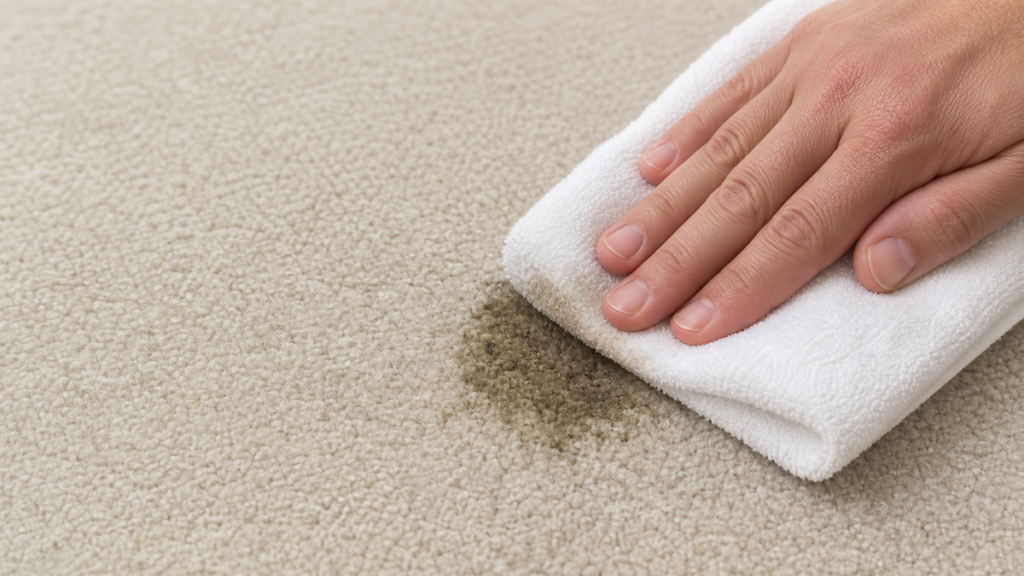
Use a clean white towel and press straight down. Rotate to a dry section and repeat.
Work from the outside edge toward the center to keep the spill contained.
Step 3: Read the Chair Cleaning Code
- W: water-based cleaning is generally allowed.
- S: solvent-based cleaning only.
- WS/SW: water- or solvent-based methods may be allowed.
- X: vacuum/brush only; professional care for stains.
The chair manufacturer instructions control if they differ from this general code summary.
Step 4: Hidden-Area Test Spot Gone
Spot Gone is positioned for compatible upholstery, fabric, food stains, grease, dirt, mud, carpet, and rugs. Test first and avoid oversaturation.
Let the test dry before judging color, ring formation, texture, or dye transfer.
Step 5: Use a Small Controlled Amount
Apply Spot Gone to the spot or cloth according to current directions. Dining chair seats often have foam underneath, so do not saturate the cushion trying to reach a deeper stain.
Repeat small passes instead of one large soak.
Step 6: Blot, Then Remove Residue
Press and lift with clean white towels while the stain transfers. If the code/manufacturer allows a light water rinse, use minimal moisture and blot it back out.
Cleaner or food residue left behind can create a sticky edge or water ring later.
Step 7: Dry the Whole Treated Panel Evenly
Increase normal airflow and keep people off the chair until it is fully dry. Avoid high heat unless the furniture maker approves it.
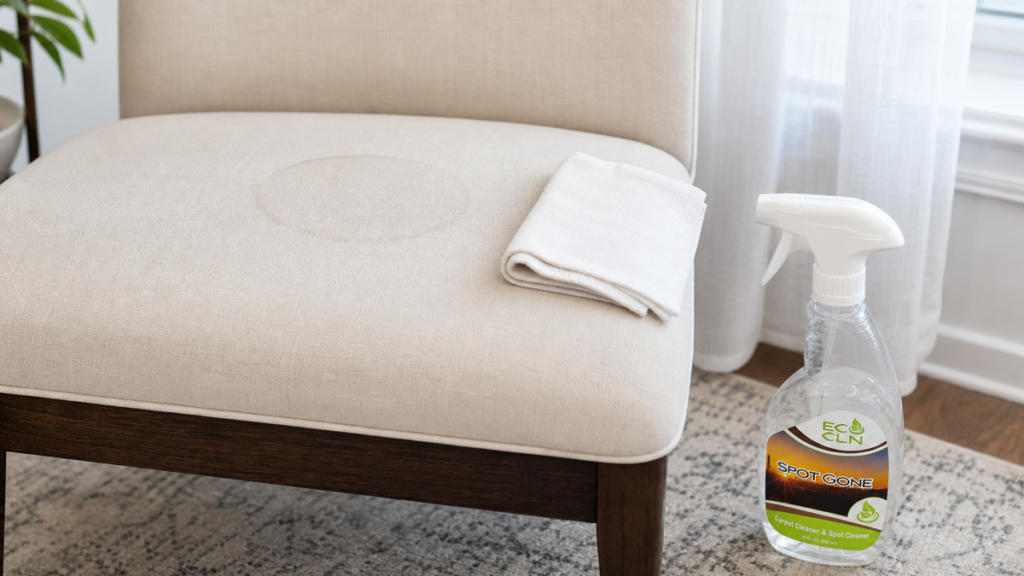
A damp spot will look darker than dry fabric, so do not judge the final result early.
Treat Seams, Piping and Cushion Foam Conservatively
Dining-chair spills rarely stay on the flat center of the seat. Liquid can wick into piping, button tufts, stitched seams and the foam below, where aggressive wetting is difficult to extract. Blot those edges with the folded corner of a white towel and work in short passes. Do not keep adding cleaner simply because the seam still looks darker while damp.
For a removable seat cushion, check whether the manufacturer allows the cover to be removed before unzipping anything; some covers are not designed for separate washing and can shrink or distort. On fixed seats, protect nearby wood, metal trim and decorative nailheads from runoff. If food reached deep foam, dye transfers to the towel, or a ring grows beyond the original spill, stop the home treatment. A professional upholstery cleaner can control extraction and drying more reliably than repeated surface applications.
Common Dining-Chair Spill Mistakes
- Adding cleaner before lifting solid food.
- Using water-based cleaner on an S-only or X fabric.
- Scrubbing outward.
- Oversaturating cushion foam.
- Using colored towels that can transfer dye.
- Sitting on the chair before it dries.
- Trying to clean permanent dye loss or texture damage as though it were residue.
Where Spot Gone Fits
Eco Cln Spot Gone is the Eco Cln product for compatible upholstery, fabric, food stains, grease, mud, dirt, and everyday non-pet spots. The chair care code and hidden-area test decide whether it belongs on a particular dining chair.
FAQ
Can I use Spot Gone on upholstered dining chairs?
Yes when the chair manufacturer and care code allow a water-based upholstery cleaner. Test a hidden area first.
What does S mean on a dining-chair tag?
S generally means solvent-based cleaning only, so a water-based product like Spot Gone should not be used unless the manufacturer specifically says otherwise.
How do I avoid a water ring?
Use controlled moisture, treat only a compatible fabric, remove residue, and dry the area evenly before re-treating.
Should I scrub dried food?
Lift or vacuum dry material first, then blot after applying a compatible cleaner. Avoid aggressive scrubbing.
When should I call an upholstery professional?
For X-coded fabric, delicate or valuable upholstery, large spills, dye movement, persistent rings, or stains that reached deep into foam.
The Bottom Line
Lift solid food first with a spoon or dull plastic edge, then blot liquid with a clean white absorbent cloth so crumbs, sauce, oil, and dye are not pushed deeper into the upholstery. Read the chair’s care code before adding cleaner: water-based treatment may fit a W or some WS/SW fabrics, while S and X codes can require a different method or professional care. When the material permits water-based spot cleaning, test Spot Gone in a hidden area and let that test dry completely. Treat a small controlled zone, work from the outer edge toward the center, rotate to clean cloth faces as soil transfers, and protect wood trim, seams, piping, buttons, backing, and cushion fill from excess moisture. Do not scrub the pile, flood the seat, use heat, or stack several unrelated stain chemicals. If the food contained oil, dye, dairy, egg, or another protein, repeat light passes only while transfer continues and the fabric remains stable. Let the chair air-dry with normal ventilation before judging the result; damp upholstery can look darker and trapped moisture can create a new ring. Stop when dye transfers, texture changes, an outline expands, adhesive or fill begins to show through, or odor returns from below the face fabric. Valuable, vintage, delicate, solvent-only, or repeatedly stained chairs belong with a qualified upholstery cleaner. Spot Gone can treat compatible localized food soil, but it cannot guarantee full removal of every pigment or repair fabric, dye, foam, seams, or finish already damaged by the spill.
Continue with this related Eco Cln guide: Cleaning upholstered furniture.
For food, grease, and everyday non-pet stains on compatible W or WS/SW dining-chair upholstery, Eco Cln Spot Gone gives you a targeted option. Read the tag, test first, keep moisture controlled, and let the chair dry completely.