How to Remove Mud and Dirty Footprints From Carpet

Quick Answer
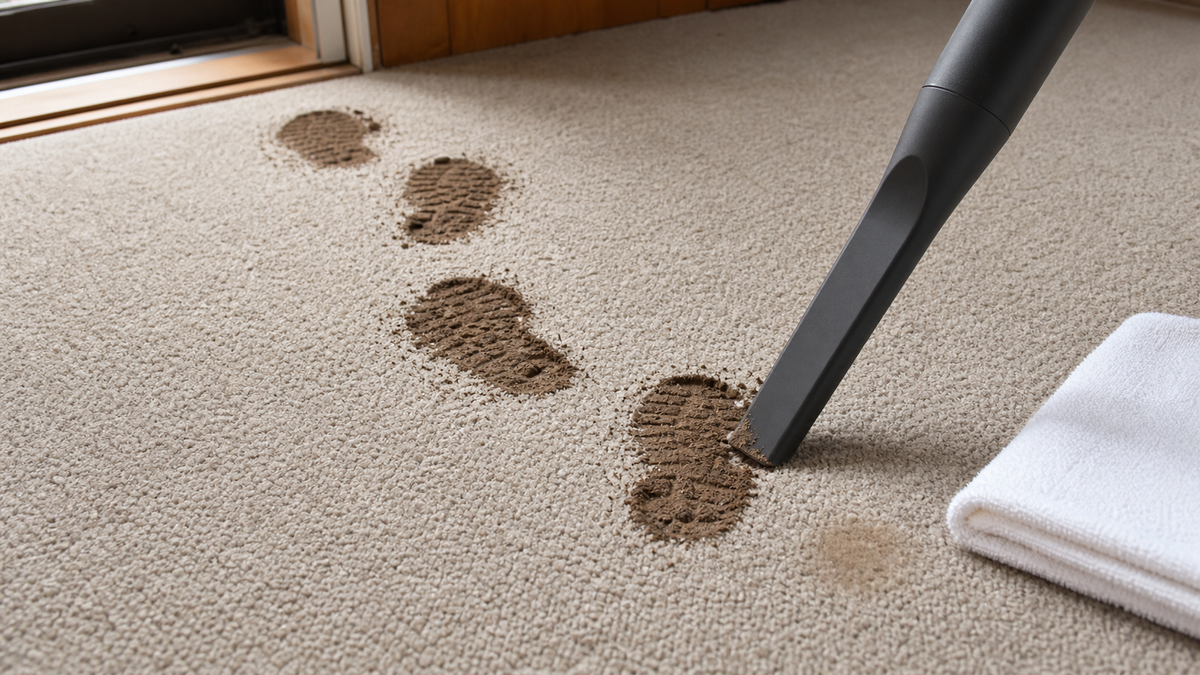
For dirty footprints on carpet, let heavy mud become removable soil before treating the remaining mark. If the mud is thick and wet, do not scrub it deeper into the carpet. Lift any clumps, let the remaining heavy mud dry enough to become removable soil, then vacuum thoroughly. Spot-test the carpet, apply a small amount of Eco Cln Spot Gone to the remaining mark, and blot from the outer edge toward the center. Remove remaining cleaner as appropriate and let the carpet dry completely.
For a fresh watery muddy footprint, blot excess moisture first. For thick tracked-in mud, patience usually beats scrubbing: remove the dry soil before you turn the stain into a wet cleaning job.
Why Mud Is Different From a Drink Spill
Mud is water plus soil. When it is wet, aggressive rubbing pushes mineral particles and fine dirt deeper into carpet pile. When heavy mud dries, much of that material becomes removable dry soil that can be vacuumed away before you ever use stain remover.
The remaining discoloration may still need spot treatment, but starting dry reduces the amount of dirt your cleaner has to move.
Step 1: Stop Foot Traffic Across the Mud
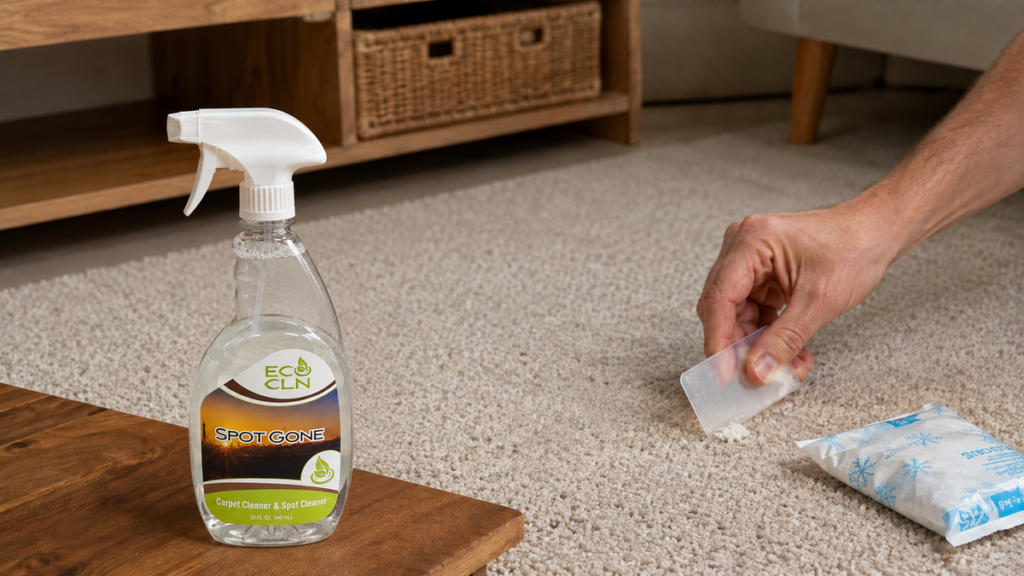
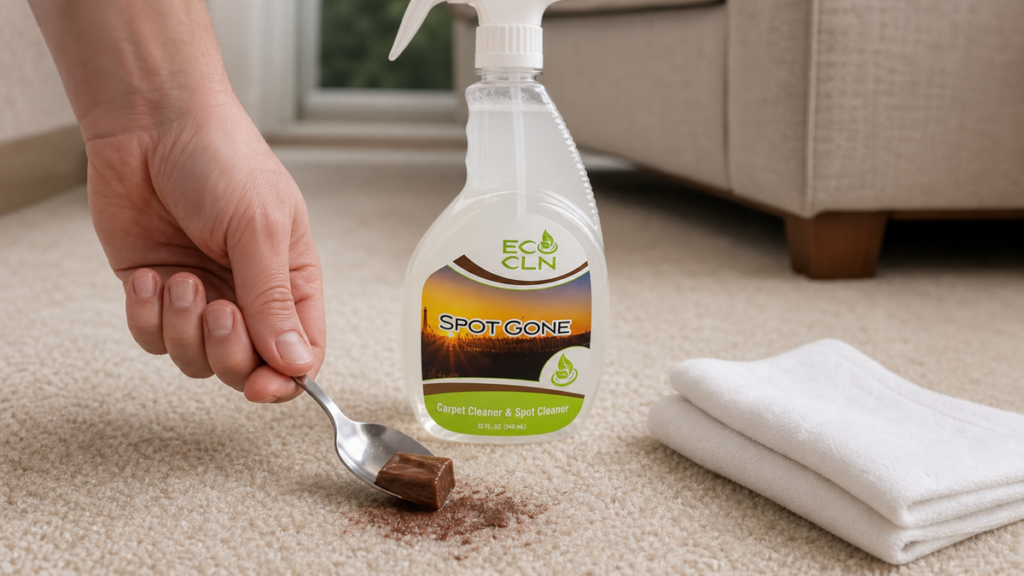
Keep people and pets off the area so one footprint does not become a hallway trail. If the mud is piled or clumped, gently lift the excess with a spoon or dull plastic edge without grinding it into the carpet.
Do not use a stiff brush on wet mud. You can fray the carpet and spread brown water beyond the original print.
Step 2: Let Heavy Mud Dry Enough to Vacuum
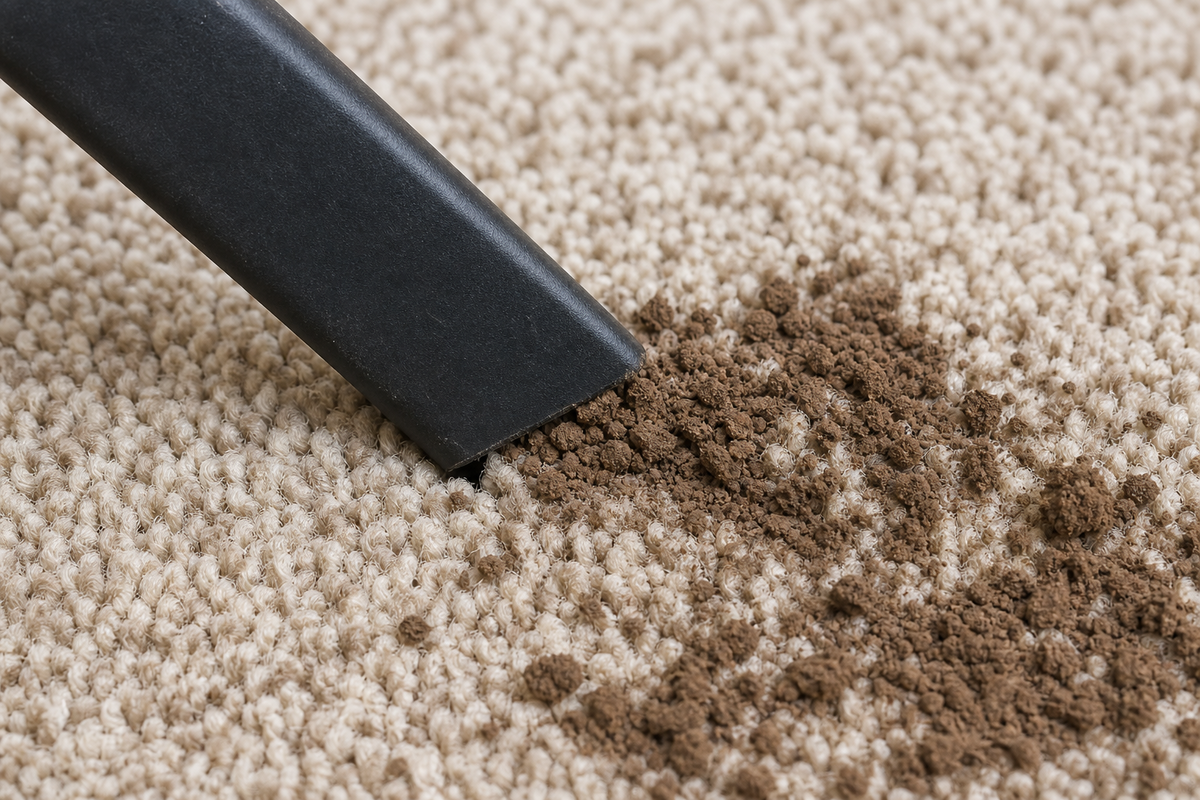
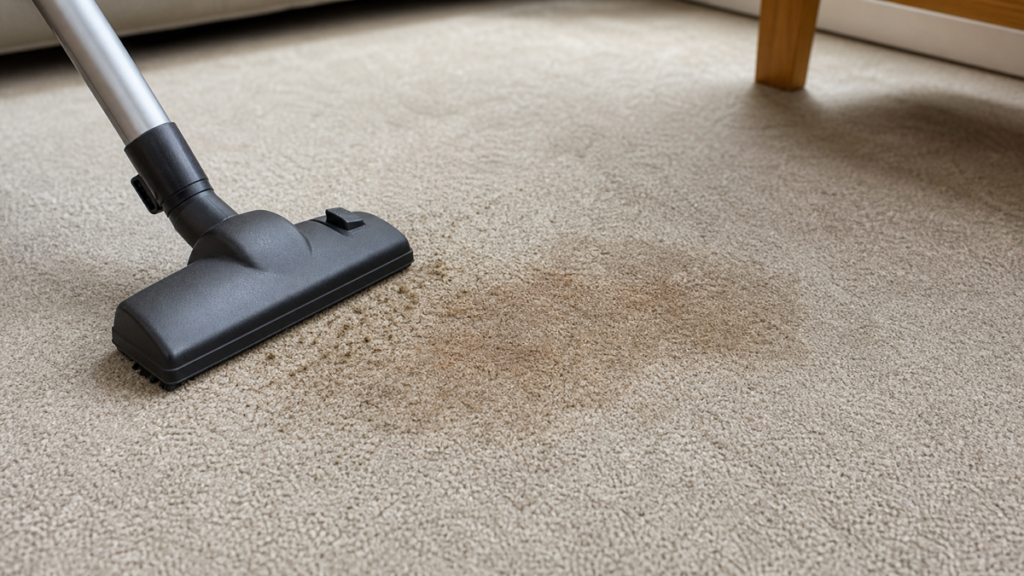
For thick mud, allow the remaining surface soil to dry. Once it is dry and crumbly, vacuum slowly from several directions. Use attachments at edges if needed.
The Carpet and Rug Institute notes that solid dried material can be vacuumed and warns against scrubbing or brushing carpet spots because texture damage can result.
Step 3: Spot-Test the Remaining Stain
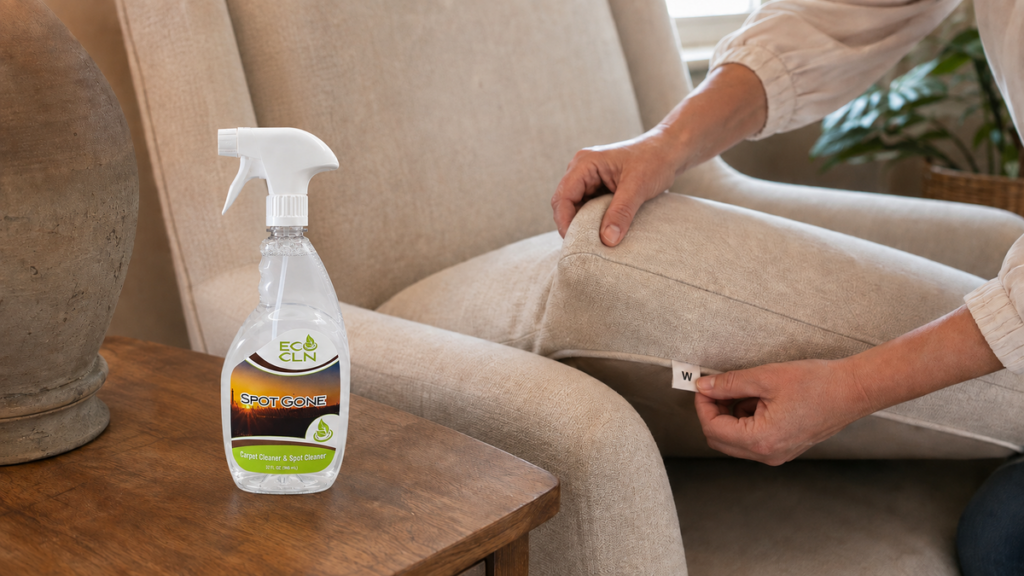
Test Spot Gone in a hidden area or on a carpet sample. Let the test dry before judging color or texture. This matters especially on wool, older carpet, rugs, and unknown fibers.
If the test changes the dye or pile, stop and follow the carpet manufacturer or a professional cleaner.
Step 4: Apply a Small Amount of Spot Gone
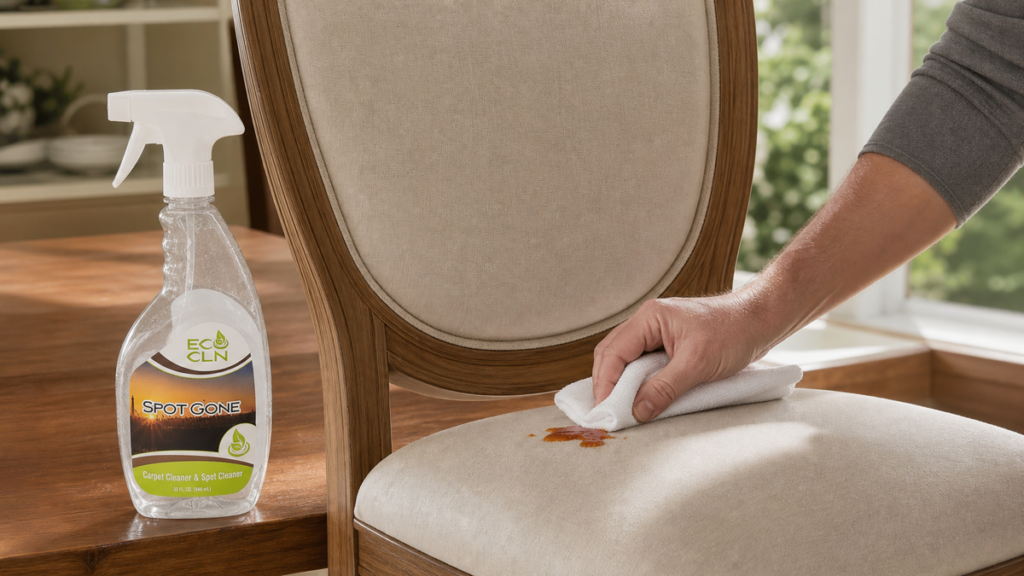
Spot Gone is positioned for mud, dirt, food stains, grease spots, carpets, rugs, upholstery, and fabric surfaces. Apply it according to the product directions to the remaining stain—not the whole surrounding carpet.
More product is not automatically better. Keep the treatment close to the footprint or stained zone.
Step 5: Blot From the Outside Toward the Center
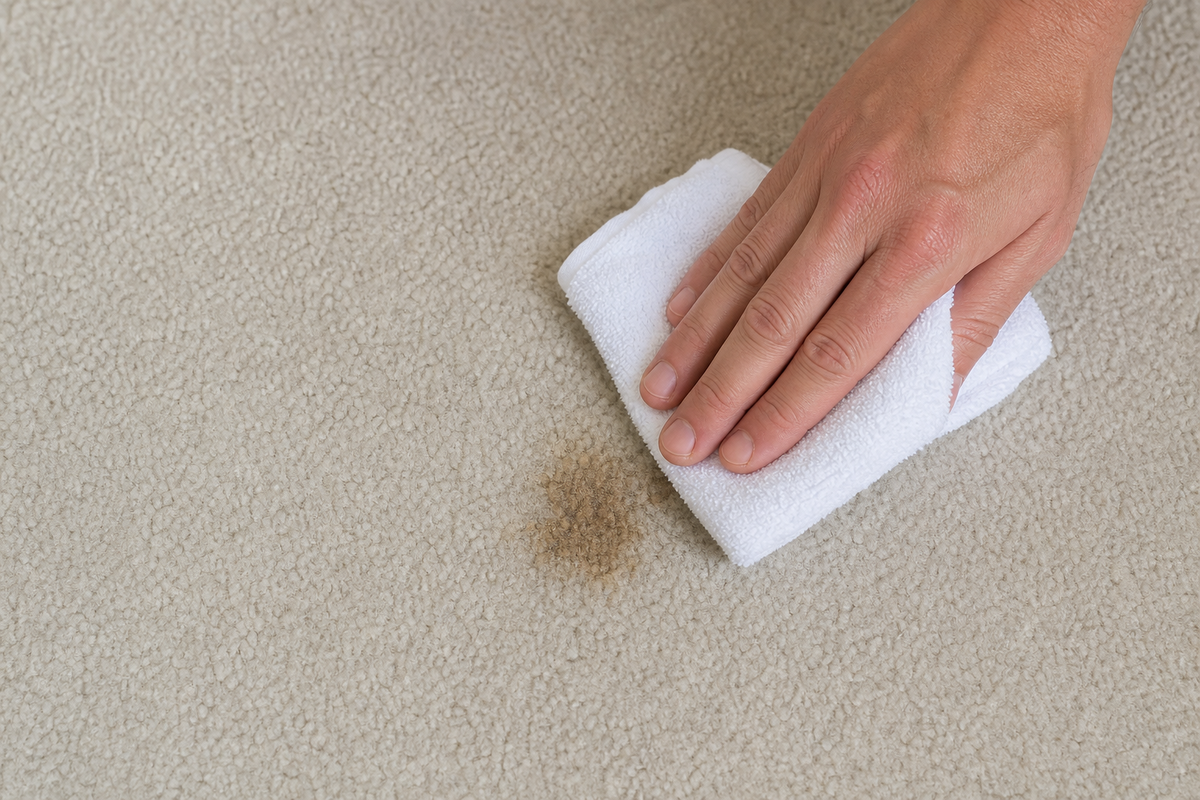
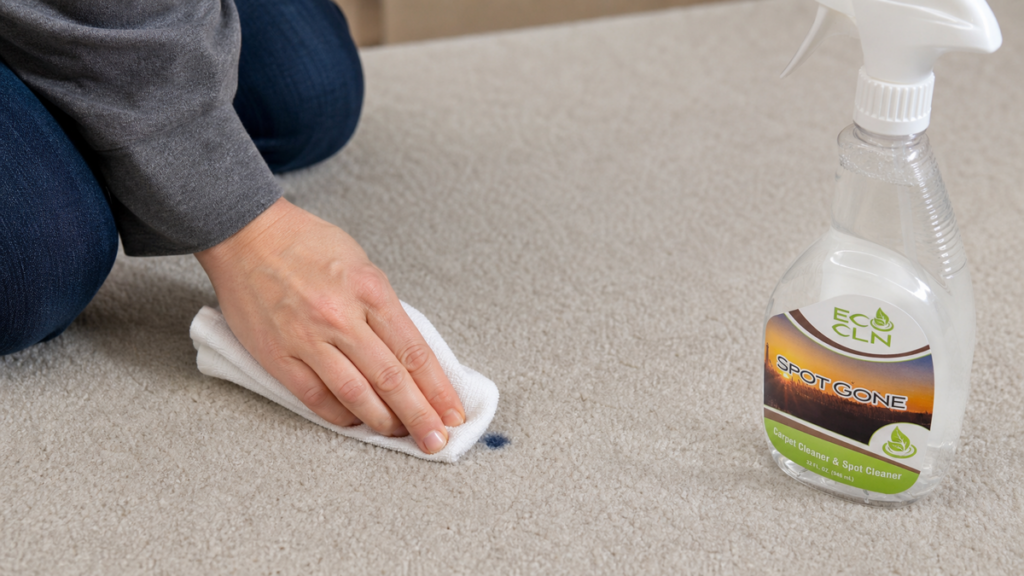
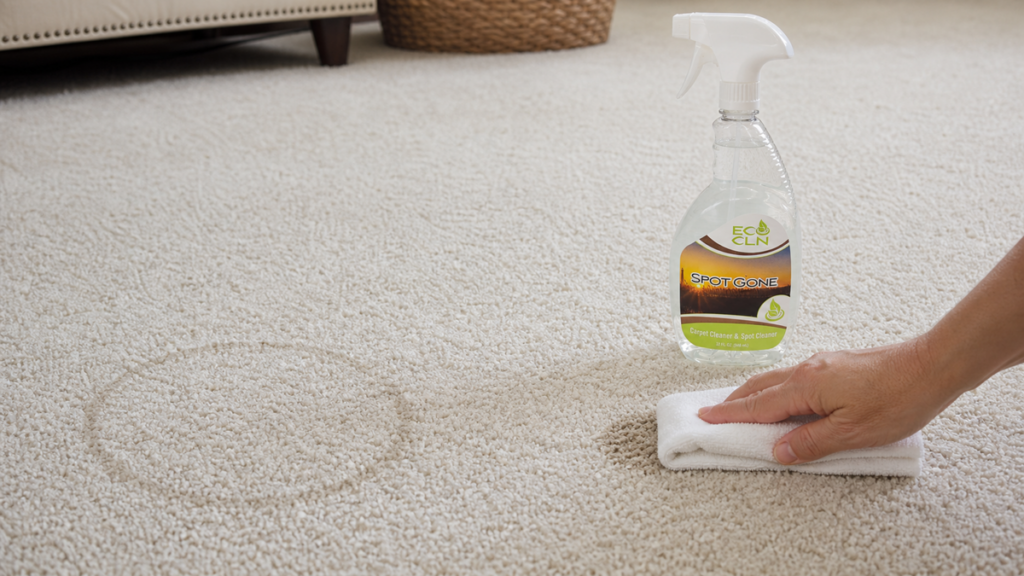
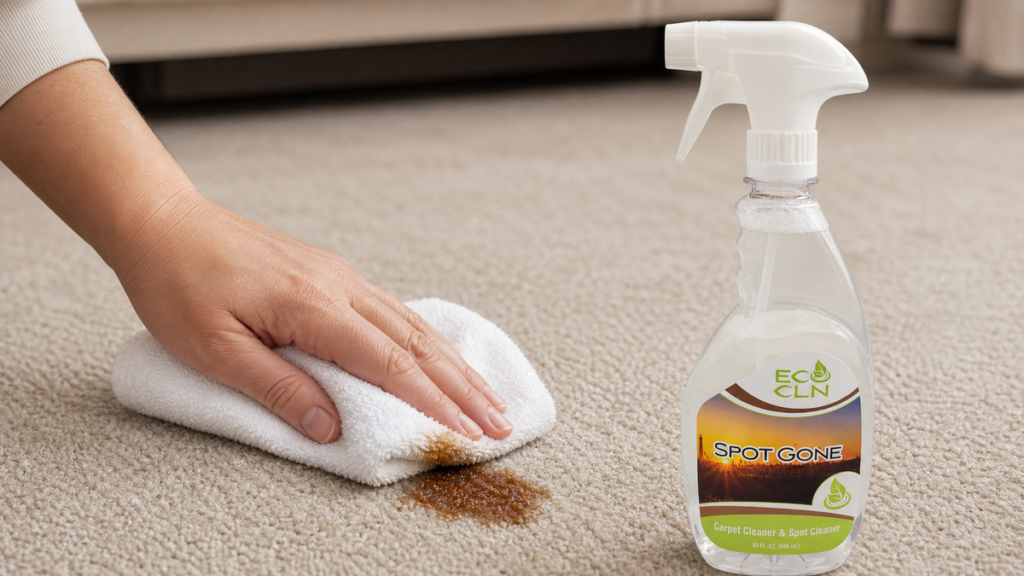
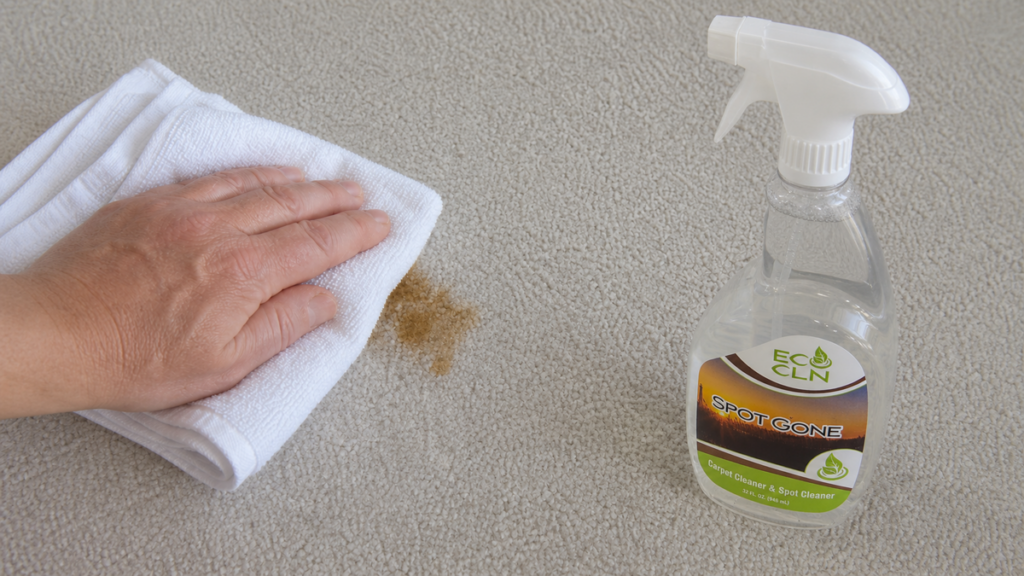
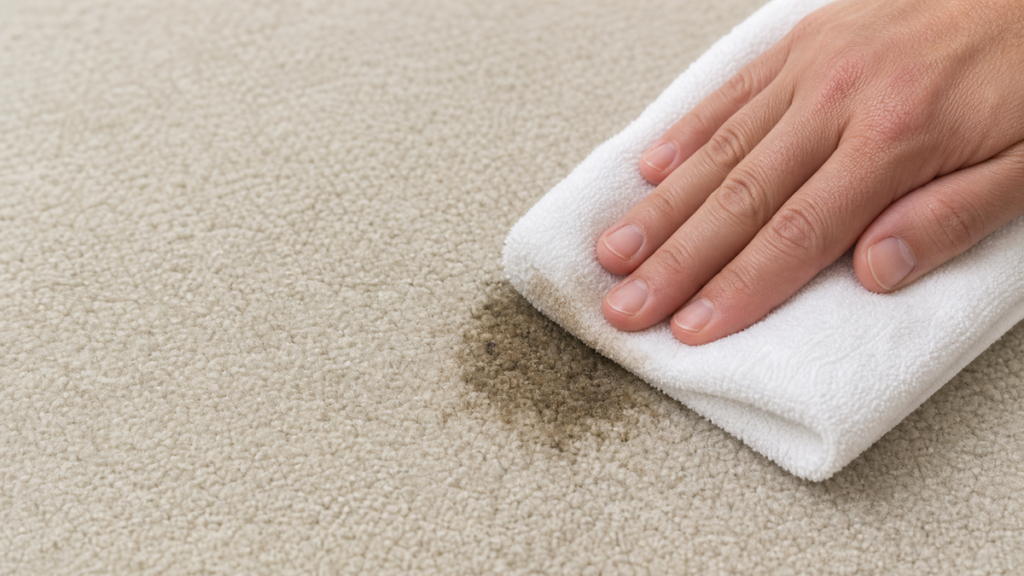
Use a clean white absorbent cloth. Press, lift, rotate to a clean section, and repeat. Work from the perimeter toward the middle so the muddy mark does not spread.
If the towel becomes brown or saturated, replace it. A dirty towel stops removing soil and starts redistributing it.
Step 6: Remove Remaining Cleaner and Dry
After the stain improves, remove cleaner residue as appropriate for the carpet and product. CRI recommends blotting with clear water to remove remaining spot-cleaning product, then blotting dry.
Keep foot traffic off the area until it is completely dry. Vacuum the dry pile afterward if needed to restore texture.
What If the Muddy Print Comes Back After Drying?
A darker ring can reappear if soil or cleaner residue remained lower in the pile and wicked upward as moisture dried. Let the spot dry fully before deciding whether it needs another treatment.
A second controlled pass is better than one large soak. Before re-treating, vacuum the dry spot again and compare the pile from several angles; tracked-in grit can remain even when the stain looks gone head-on. Use fresh white towels so you can see whether soil is still transferring, and keep each pass within the original footprint. If several muddy prints overlap, work one small zone at a time instead of wetting the entire traffic lane. Stop if the carpet color changes, the backing stays damp, or the pile begins to distort. If the same spot keeps returning, professional extraction may be more effective than repeated surface wetting.
Common Mud-Carpet Mistakes
- Scrubbing wet mud into the carpet.
- Adding cleaner before vacuuming removable dry soil.
- Using a colored towel that may transfer dye.
- Pouring cleaner or rinse water into the carpet backing.
- Working from the center outward and enlarging the stain.
- Walking on the spot before it has fully dried.
Where Spot Gone Fits
Eco Cln Spot Gone is the targeted Eco Cln product for mud, dirt, food stains, grease spots, and everyday localized carpet, rug, upholstery, and fabric messes. For pet urine or organic pet accidents, use PAWS instead of treating the mess as ordinary dirt.
FAQ
Should I let mud dry before cleaning carpet?
For thick tracked-in mud, yes—let enough of the surface soil dry so you can vacuum it away first. If the mess is mostly watery, blot the excess moisture immediately.
Can I scrub muddy footprints with a brush?
Avoid aggressive scrubbing. Carpet fibers can fray or change texture, and wet mud can spread outward.
Can Spot Gone be used for mud?
Yes. The current Eco Cln product page specifically positions Spot Gone for mud, dirt, carpets, rugs, upholstery, and fabric spots when used as directed.
Why did the mud stain return after drying?
Soil or cleaner residue may have wicked upward as the carpet dried. Let it dry fully, vacuum, then use another controlled treatment if needed.
When should I call a carpet professional?
For large tracked-in areas, valuable rugs, dye changes, repeated returning stains, or contamination that reached the pad, professional cleaning is sensible.
The Bottom Line
If the mud is thick and wet, do not scrub it deeper into the carpet. Keep moisture and pressure controlled, follow the material’s care instructions and stop if the finish or fabric reacts poorly.
Continue with this related Eco Cln guide: Carpet cleaning tips.
Once the loose dirt is out, Eco Cln Spot Gone gives you a targeted way to treat the muddy mark that remains—without turning one footprint into a whole-room carpet shampoo job.