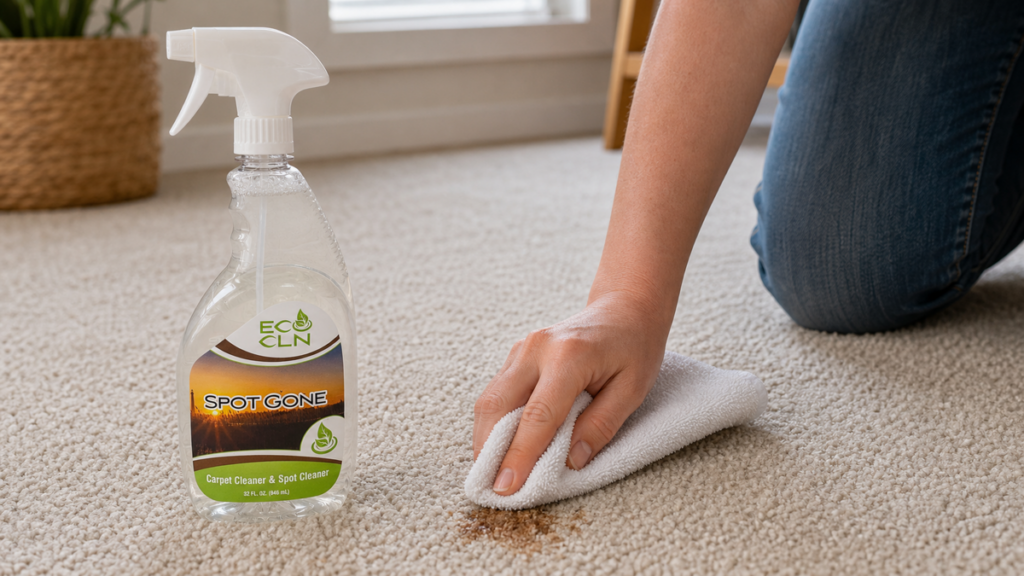
How to Remove Makeup and Foundation From Carpet

Quick Answer
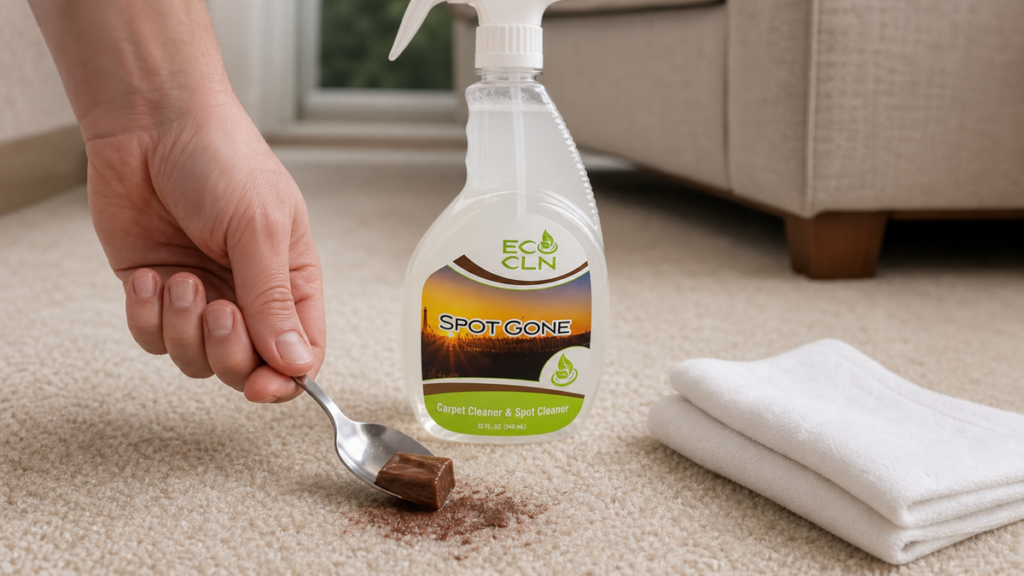
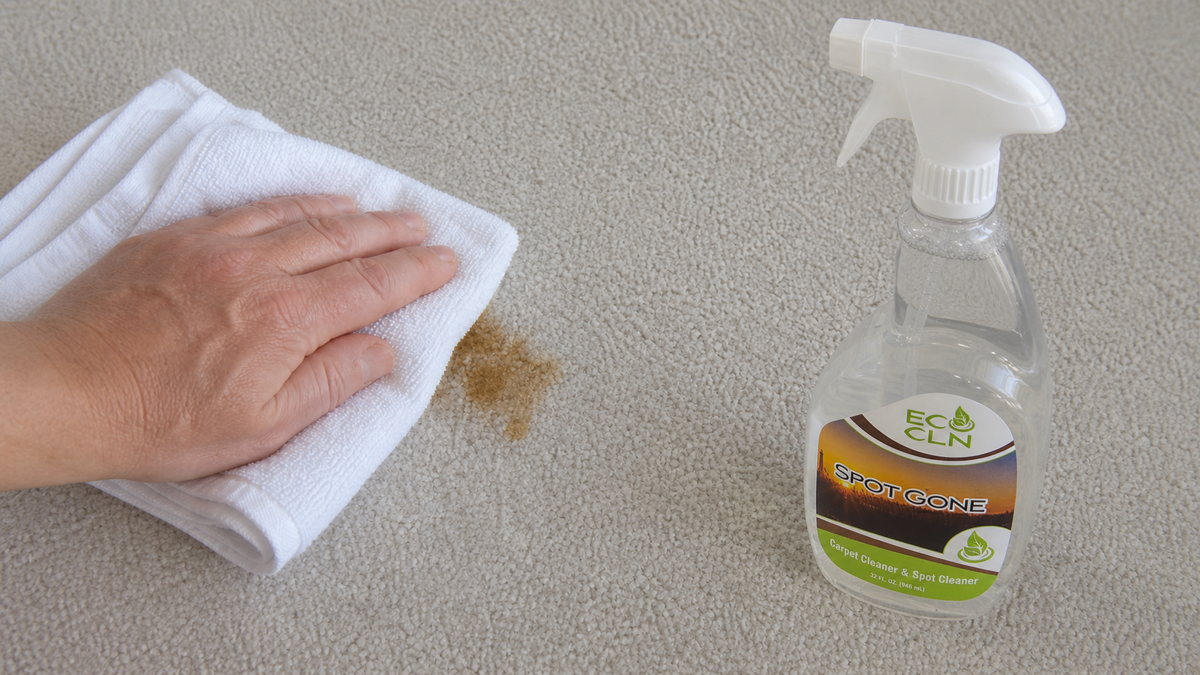
If the makeup is dry powder, remove loose product with a spoon edge or vacuum before adding liquid. If it is liquid or cream foundation, blot excess with a clean white cloth without rubbing. Test a hidden carpet area, then apply a small controlled amount of Eco Cln Spot Gone to the remaining stain according to the product directions. Work from the edges toward the center, blot, remove cleaner residue as appropriate, and dry fully.
Do not automatically reach for hairspray, rubbing alcohol, acetone, nail-polish remover, or a cocktail of solvents. Makeup formulas vary, and aggressive solvents can damage carpet dye, backing, or stain-resistant treatments.
Why Makeup Stains Spread So Easily
Liquid and cream foundation combine fine pigment with ingredients that help the product spread and stay on skin. That same spreadability can make a carpet stain expand when you rub it.
Powder foundation creates a different problem: adding liquid before removing loose powder can turn a dry spill into a paste.
Step 1: Identify Powder, Cream, or Liquid Makeup
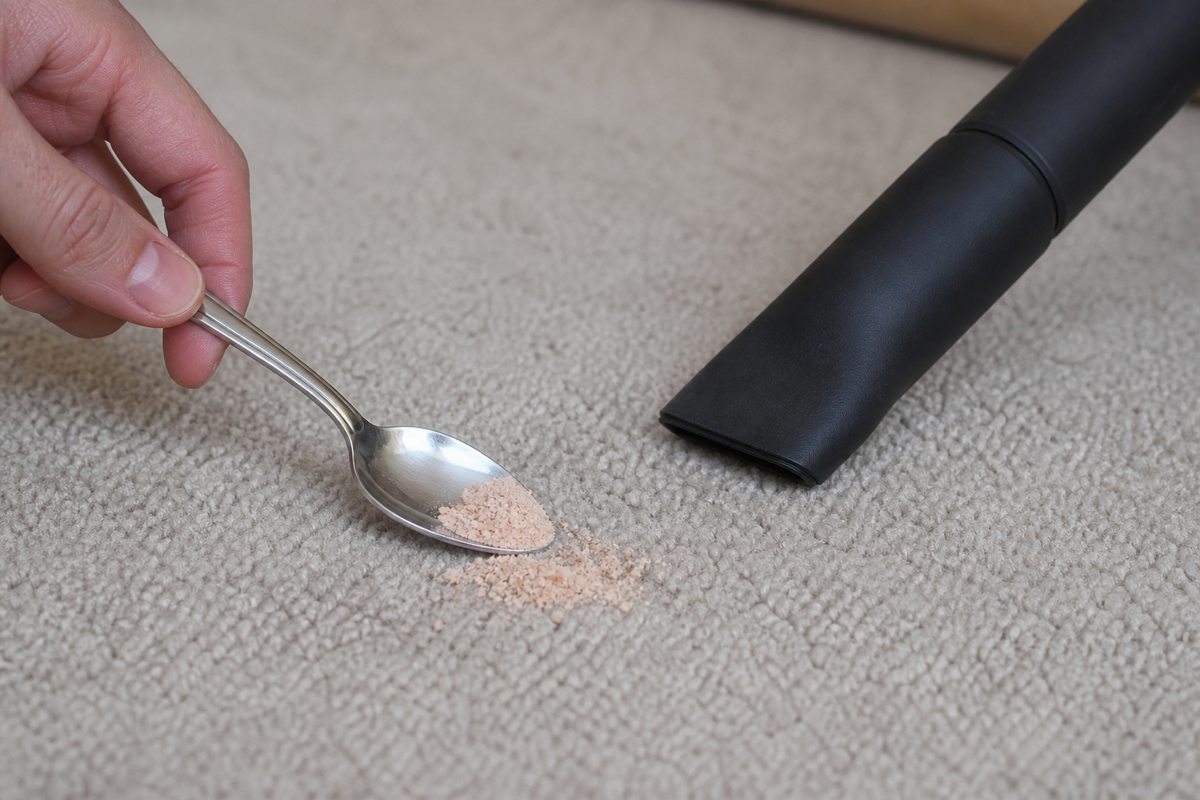
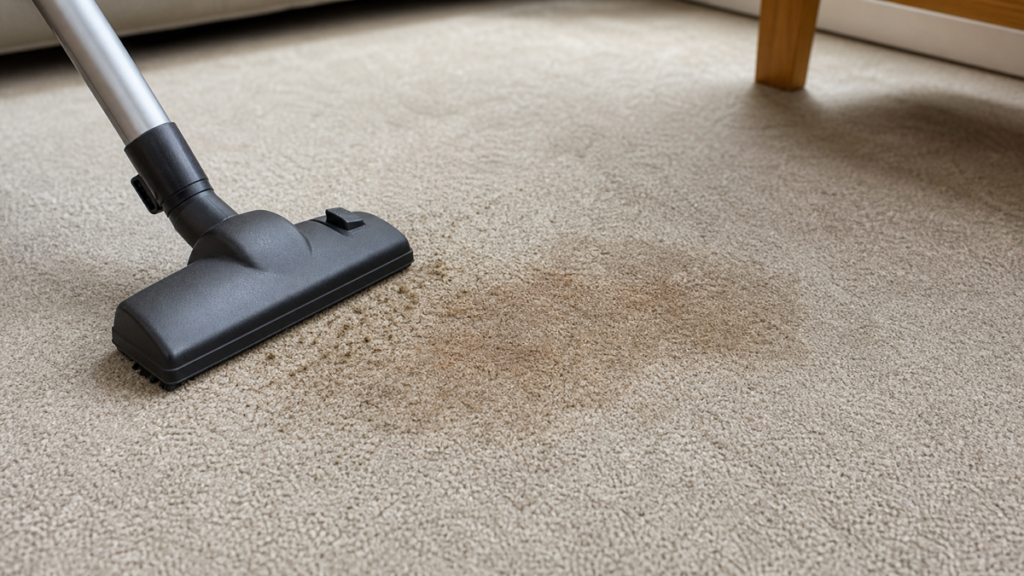
Powder makeup: keep it dry initially and remove loose product first.
Cream or stick makeup: gently lift excess semi-solid product with a rounded spoon or dull plastic edge.
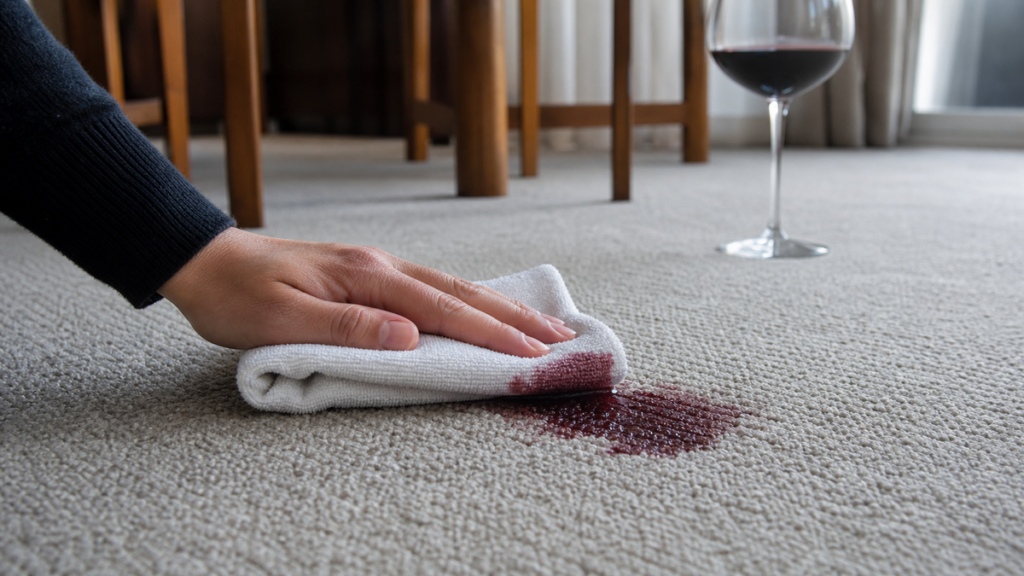
Liquid foundation: blot immediately with a clean white absorbent cloth.
Step 2: Remove as Much Product as Possible Before Cleaner
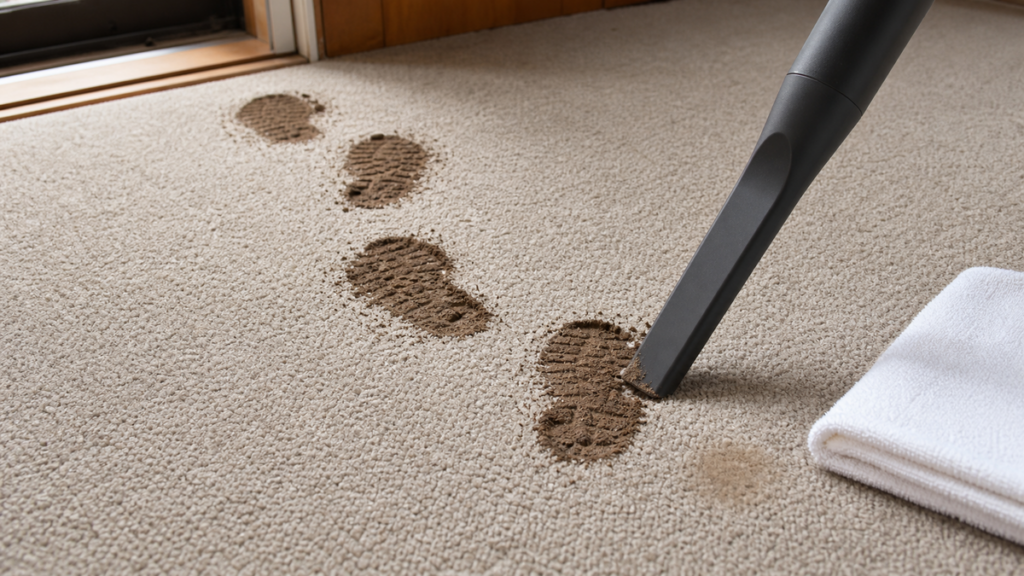
Do not grind makeup deeper into the pile. Work upward and inward.
The Carpet and Rug Institute recommends blotting liquids, lifting semisolids, vacuuming dry solids, and avoiding scrubbing. Review CRI carpet spot-care guidance.
Step 3: Spot-Test the Carpet
Test Spot Gone in an inconspicuous area and let the test dry before judging color or texture.
This matters on wool, dark carpet, patterned carpet, older carpet, specialty rugs, and any material with unknown dye stability.
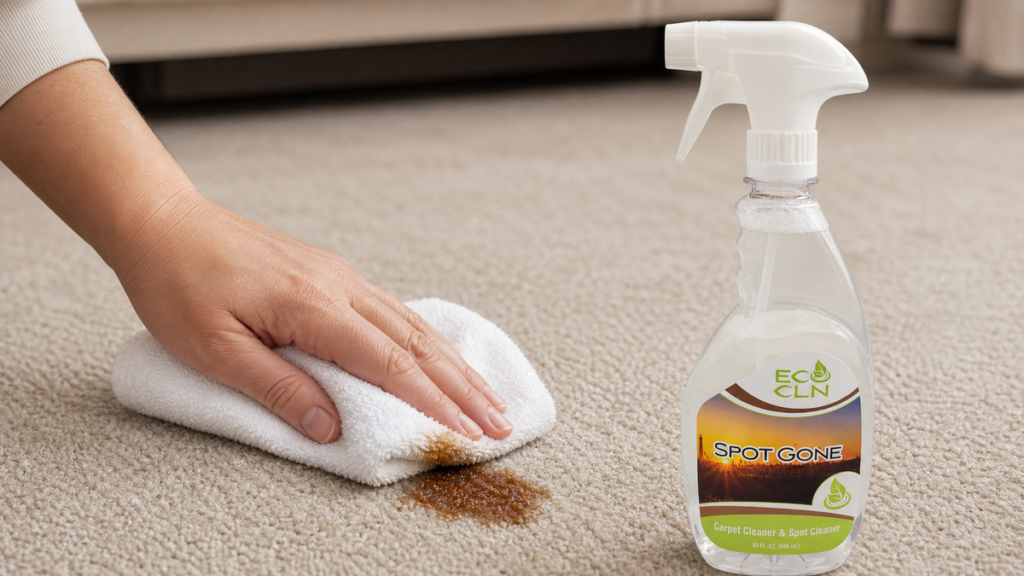
Step 4: Apply a Small Amount to the Stain
Treat the makeup mark rather than soaking the surrounding carpet. Give the cleaner brief contact time according to the product instructions.
More product can create a larger wet area without necessarily removing more pigment.
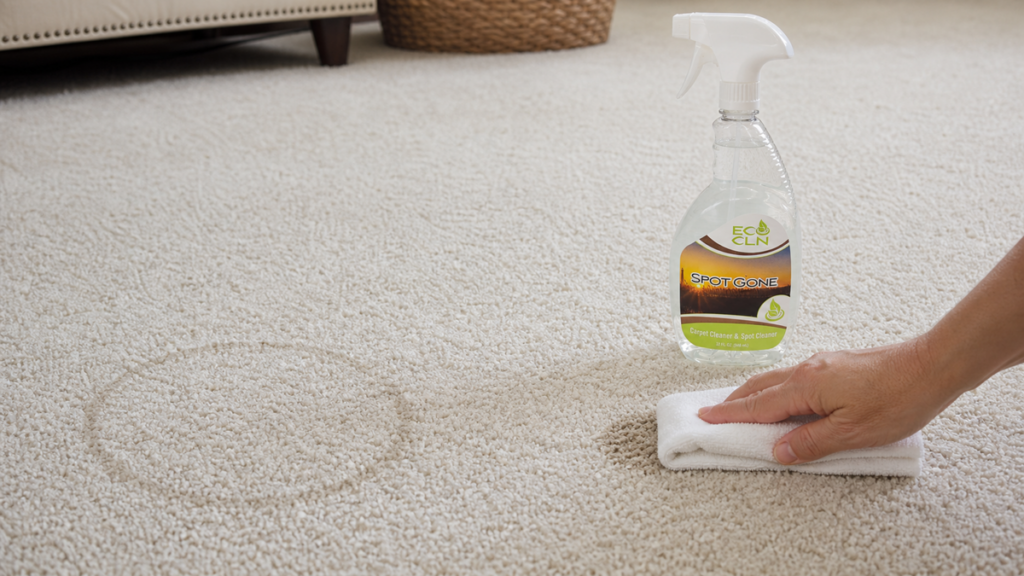
Step 5: Blot From the Outside In
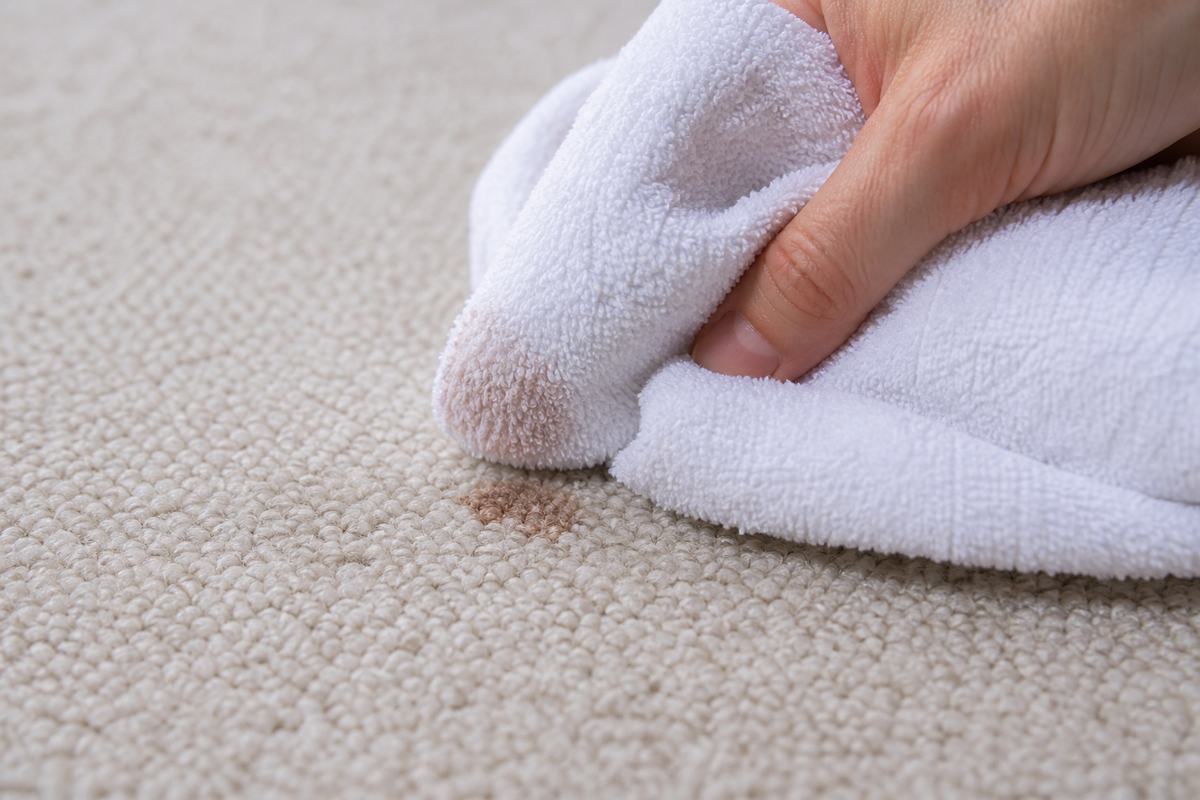
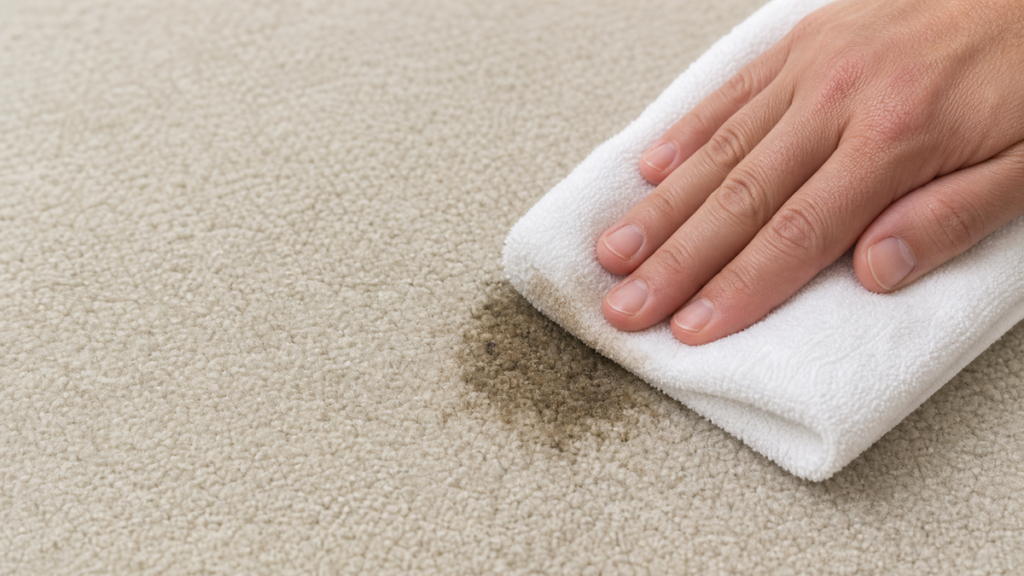
Use a white towel. Press, lift, rotate to a clean section, and repeat. Continue while color is transferring to the cloth.
CRI’s lip-gloss stain guidance uses the same edges-to-center, do-not-rub approach and emphasizes patience with oily cosmetic residue. See CRI cosmetic spot guidance.
Step 6: Repeat Controlled Passes
Makeup can need more than one small treatment because pigment and oily residue may release at different rates.
Let the carpet dry between major attempts if the area is becoming too wet. Stop if carpet dye starts transferring or the texture changes.
Step 7: Remove Cleaner Residue
Once the visible makeup has improved, remove remaining spot-cleaning residue as the carpet/product instructions allow.
Use minimal water and blot it back out. Residue left behind can attract soil and make the area look dark again later.
What If the Foundation Was Long-Wear or Waterproof?
Long-wear formulas may be more persistent because they are designed to resist moisture and transfer. That does not mean random household solvents are safe for your carpet.
If careful spot treatment does not change the stain, professional carpet cleaning is safer than escalating through stronger DIY chemicals.
Powder Makeup Needs a Different First Step
Loose powder, blush, bronzer, and setting powder should be vacuumed or lifted while dry. Liquid can turn loose pigment into a larger stain.
Once the dry material is gone, treat only the residue that remains.
Common Makeup-Stain Mistakes
- Rubbing liquid foundation into a larger halo.
- Wetting loose powder before vacuuming it.
- Using acetone or nail-polish remover without carpet-manufacturer approval.
- Mixing multiple stain removers or solvents.
- Using colored towels that can transfer dye.
- Oversaturating carpet backing.
- Assuming long-wear makeup will disappear in one pass.
Where Spot Gone Fits
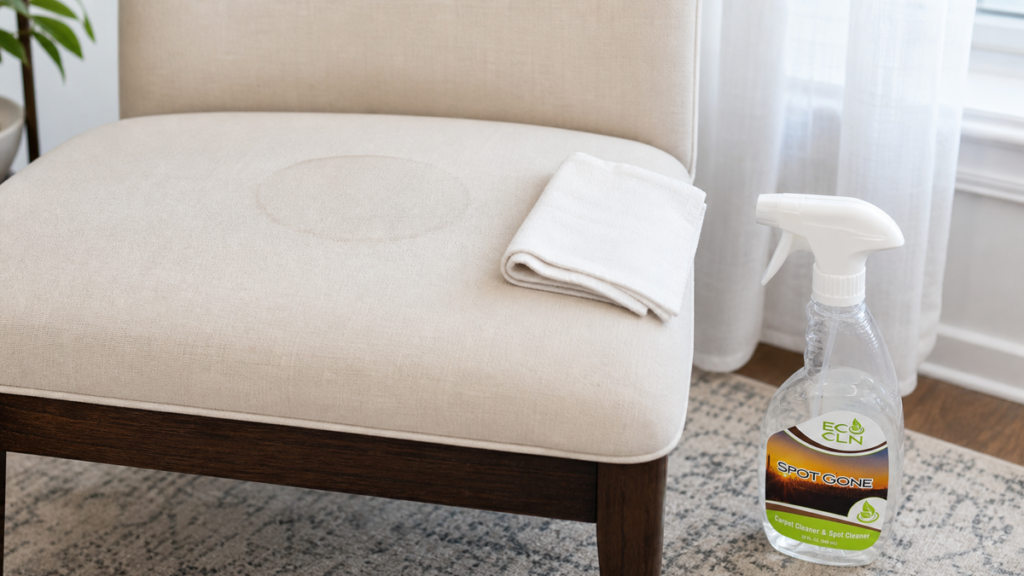
Eco Cln Spot Gone is the targeted Eco Cln cleaner for localized carpet, rug, upholstery, and fabric spots from everyday household messes. Makeup is not specifically named on the current product page, so frame Spot Gone as a compatible targeted spot-treatment option after testing – not as a guaranteed cosmetic-stain remover.
FAQ
Should I vacuum powder foundation before using cleaner?
Yes. Remove as much loose dry powder as possible before adding liquid.
Can Spot Gone remove foundation?
Spot Gone is a targeted carpet/upholstery stain cleaner that may fit a compatible makeup spot after testing. Do not promise guaranteed removal.
Can I use rubbing alcohol or nail-polish remover?
Do not use strong solvents unless the carpet manufacturer specifically supports that method. They can damage dye, backing, or finishes.
Why did the makeup stain get bigger when I rubbed it?
Foundation spreads easily. Rubbing pushes pigment and oily residue outward and deeper into fibers.
When should I call a professional?
For large spills, valuable carpet or rugs, waterproof/long-wear makeup that resists treatment, dye changes, or stains requiring specialty solvents.
The Bottom Line
If the makeup is dry powder, lift loose product with a spoon edge or vacuum before adding liquid so pigment does not turn into paste. For liquid or cream foundation, blot excess with a clean white cloth and avoid rubbing the color deeper into the pile. Check the carpet maker’s care guidance, test Spot Gone in a hidden area, then treat only the remaining stain with a controlled amount. Work from the outside toward the center, press and lift with clean cloth sections, and pause between passes to see whether pigment is still transferring. Remove cleaner residue as the carpet instructions allow and dry the spot completely before deciding whether a faint oily shadow remains. Do not stack hairspray, alcohol, acetone, nail-polish remover, or several stain products; cosmetic formulas and carpet dyes react differently, and solvent experiments can damage color, backing, adhesive, or stain-resistant treatment. Stop if dye moves, the pile texture changes, the spot spreads, or the backing becomes overly wet. Large spills, valuable rugs, unknown fibers, or stains that keep returning after drying should be handled by a professional carpet cleaner.
Continue with this related Eco Cln guide: Spot Gone stain-remover guide.
For a small makeup or foundation spot on compatible carpet, Eco Cln Spot Gone gives you a controlled carpet-and-upholstery stain-treatment option. Remove loose product first, test, blot instead of scrub, and keep the wet area small.