How to Treat Old Carpet Stains That Have Already Dried

Quick Answer
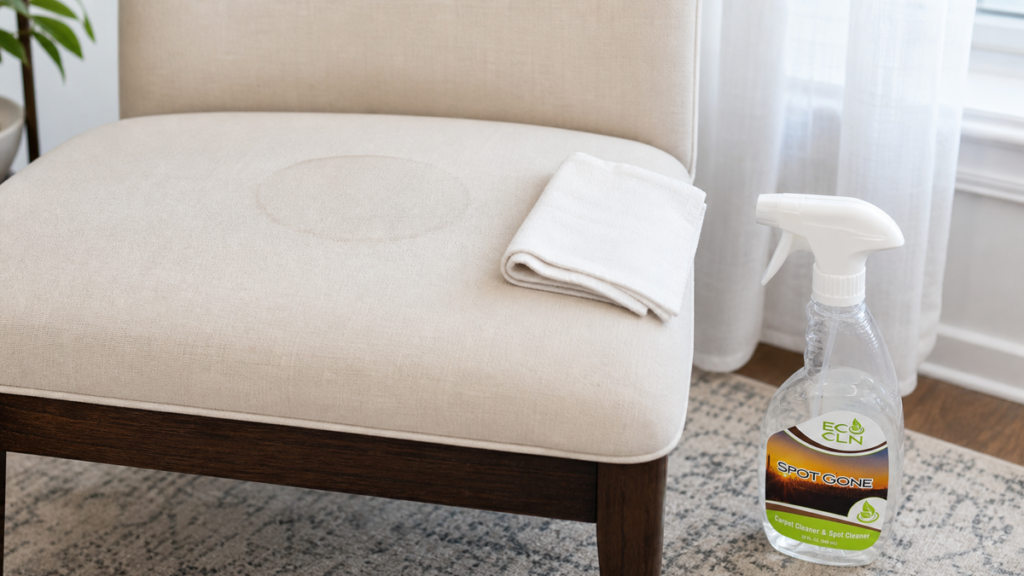
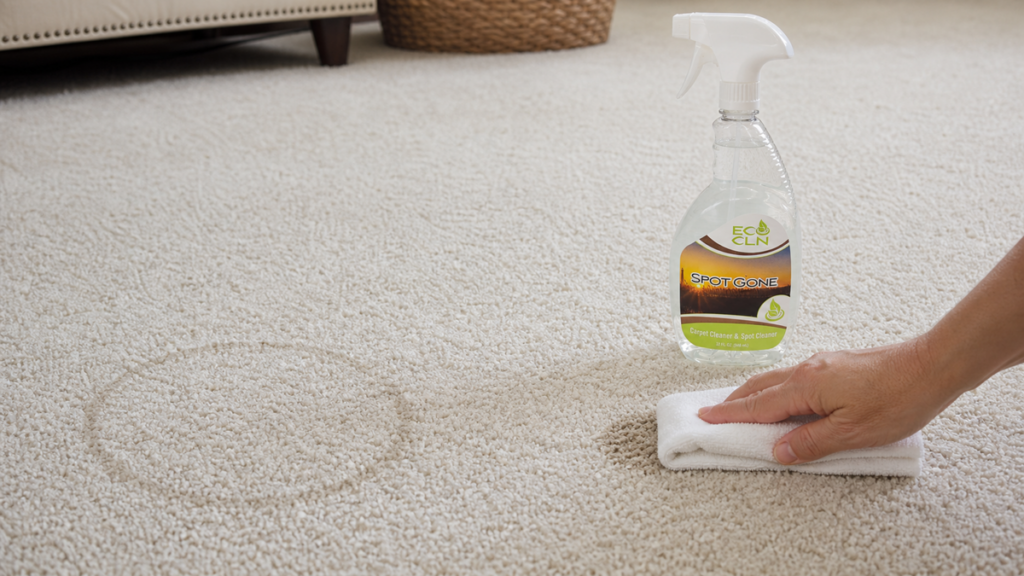
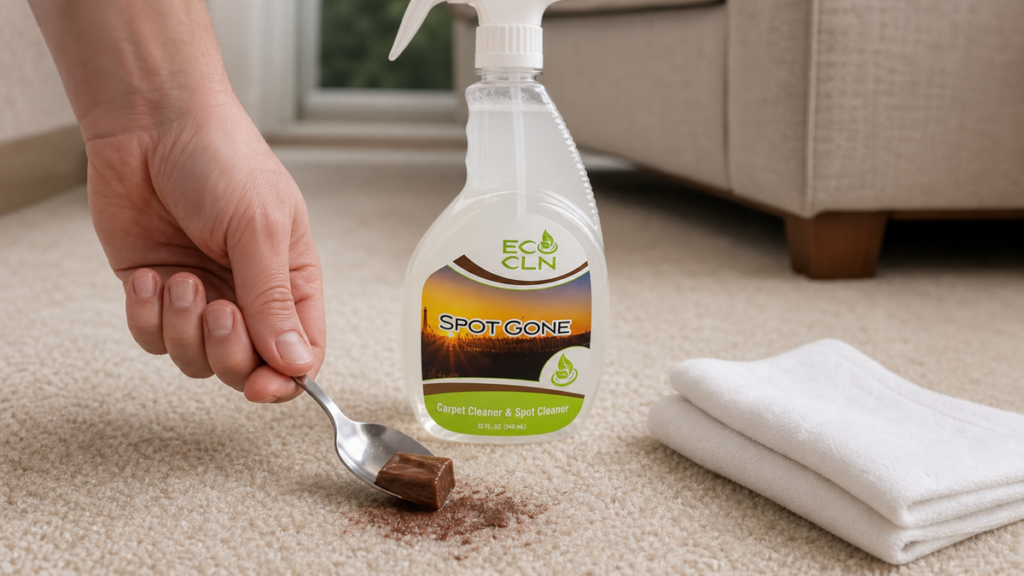
For an old dried carpet stain, start by vacuuming loose material and inspecting the spot before adding liquid. If you know what caused the stain, use that information to choose the right treatment. Spot-test first, then apply a small amount of Eco Cln Spot Gone to a compatible carpet or rug spot according to the product directions. Let it work briefly, blot with a clean white cloth from the edges toward the center, remove remaining cleaner as appropriate, and let the area dry fully.
Do not flood an old stain because it looks stubborn. Old residue may already be in the backing or pad, and more moisture can create wicking, rings, slow drying, or a larger visible patch.
Why Old Carpet Stains Are Harder Than Fresh Spills
A fresh spill still has material you can blot away. An old stain has had time to dry, bind to fibers, collect dirt, or move lower into the carpet construction. The visible color may also be only part of the problem.
Some old marks are no longer removable soil at all. Dye loss, bleaching, fiber damage, rusting from furniture, or permanent discoloration can look like a stain even after the removable residue is gone.
Step 1: Start Dry and Vacuum First
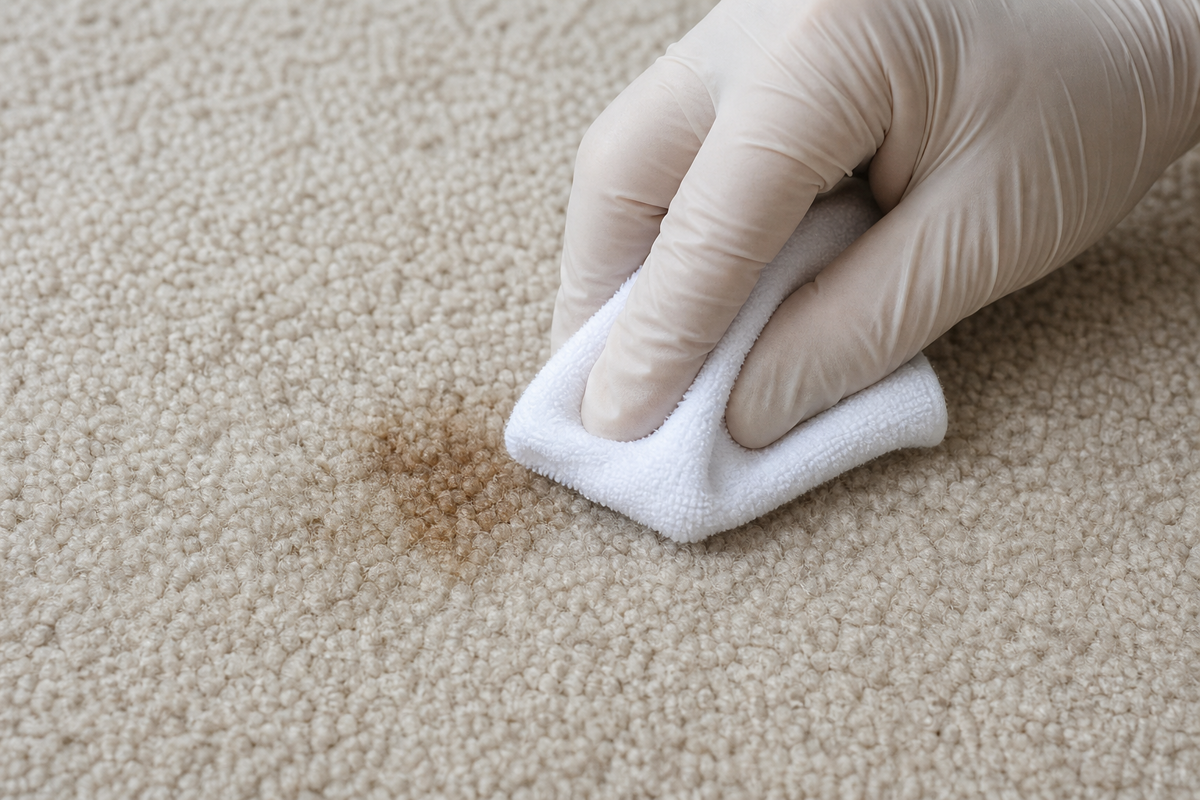
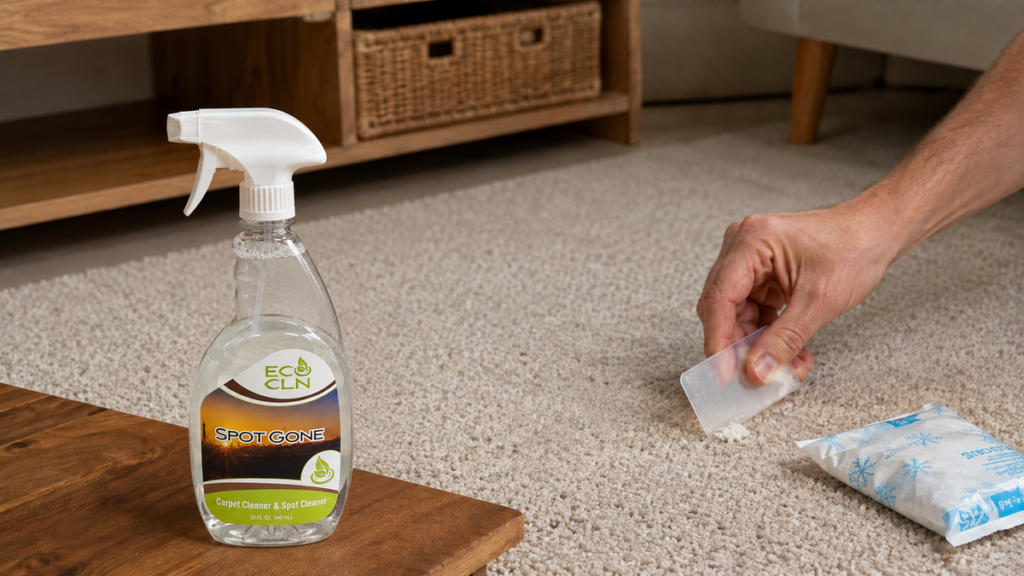
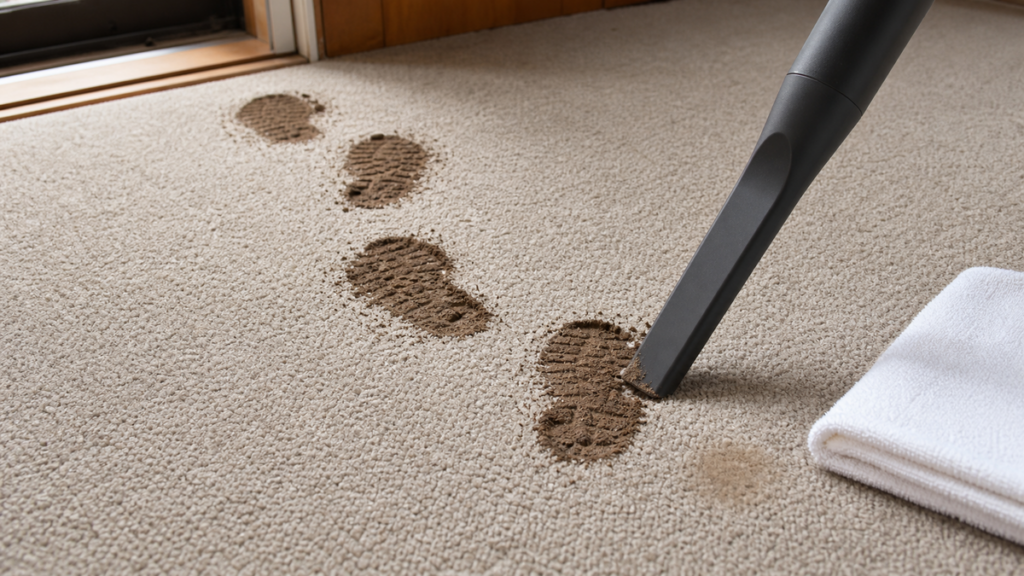
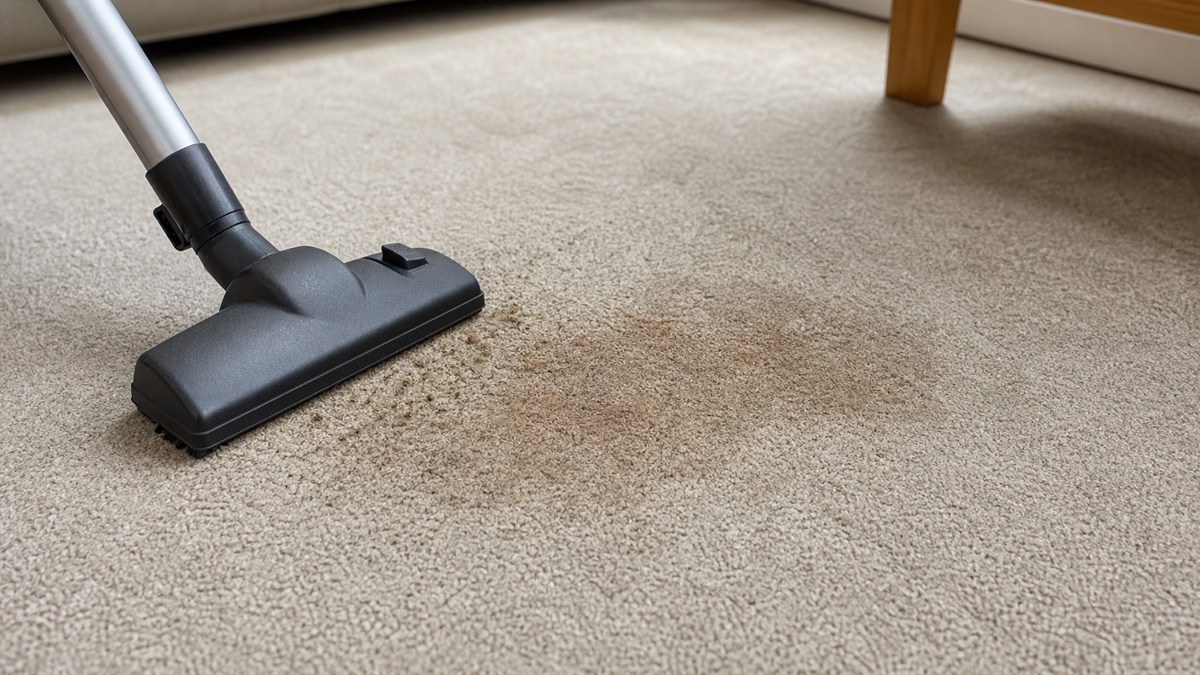
Vacuum the stained area and the surrounding carpet slowly. If there is dried food, crusted residue, or loose soil, break up only what comes away without scraping the fibers and vacuum it up.
The Carpet and Rug Institute recommends removing dry solids first and warns against scrubbing or brushing spots because aggressive agitation can fray fibers and change carpet texture. Review CRI carpet spot-care guidance.
Step 2: Try to Identify the Original Stain
Ask what happened in that location: food or drink, grease, mud, makeup, pet accident, ink, paint, or something unknown. Different stains behave differently, and a general spot cleaner should not be treated like a universal solvent.
If the source is unknown, start with the mildest compatible method and stop if the carpet color or texture changes. Avoid combining multiple stain products in a trial-and-error cocktail.
Step 3: Check the Carpet and Spot-Test
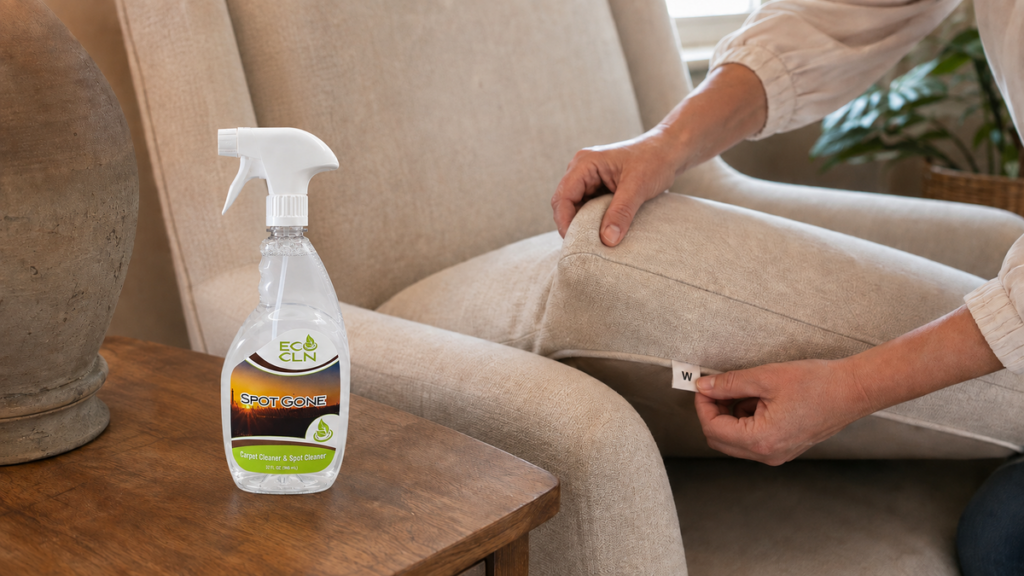
Look for fiber type, rug-care tags, age, color stability, and whether the carpet is specialty, wool, handmade, antique, or otherwise sensitive. Test Spot Gone in an inconspicuous area and let the test dry before deciding it is safe.
Spot Gone is positioned for food stains, grease spots, dirt, mud, tomato sauce, carpets, rugs, upholstery, and fabric surfaces. The current product page also says to test delicate materials and avoid oversoaking. See current Spot Gone directions.
Step 4: Apply a Small Controlled Amount
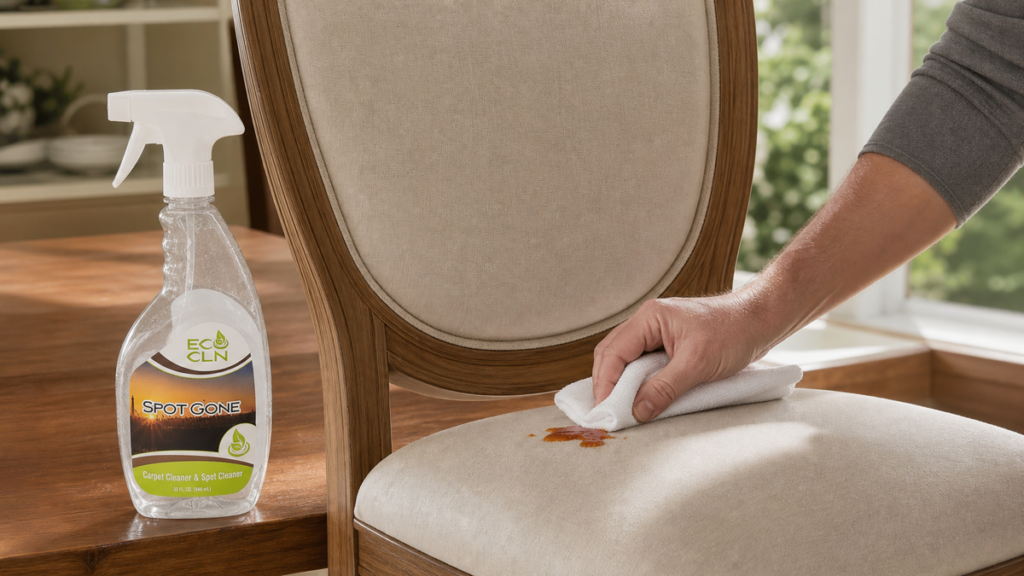
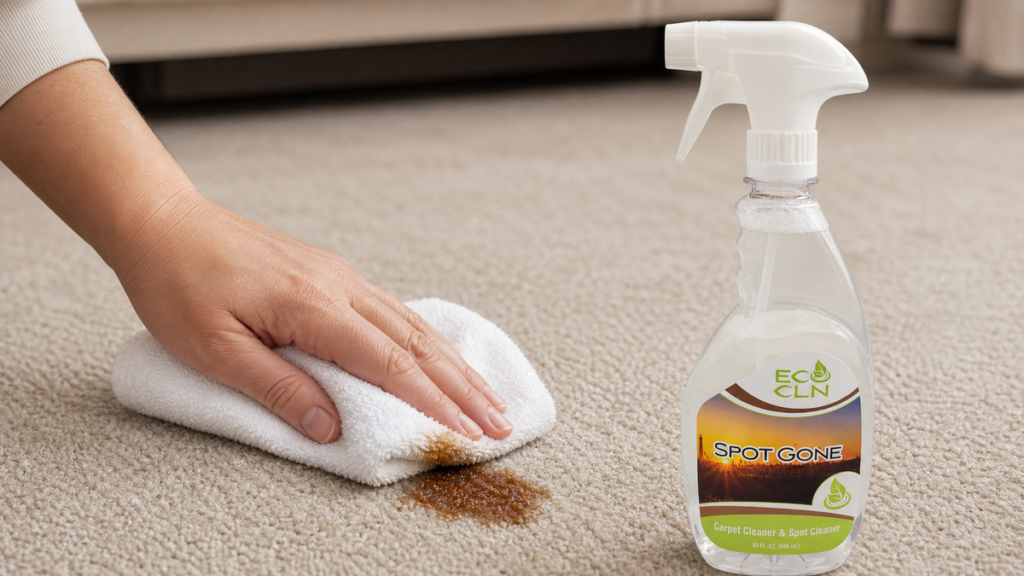
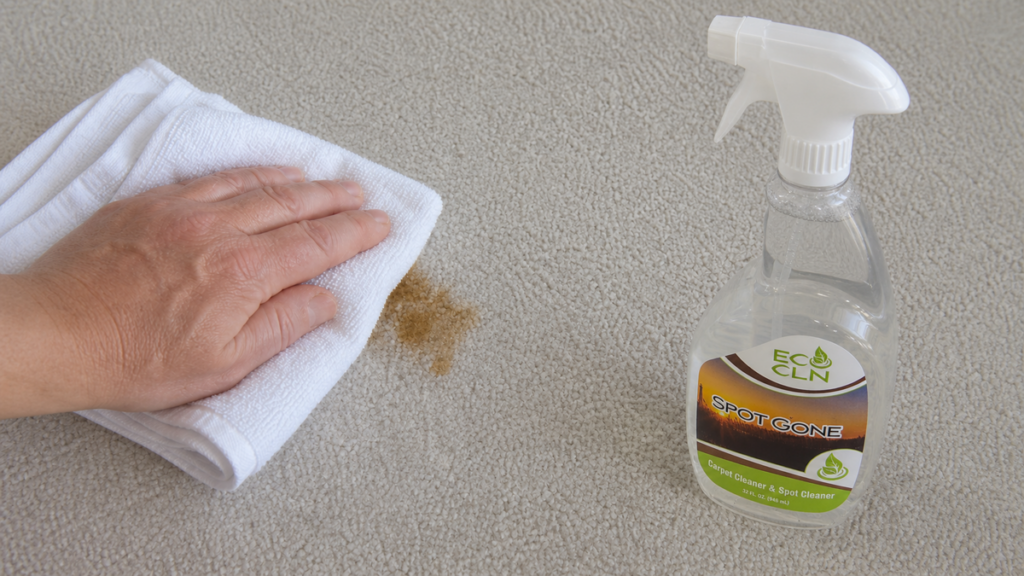
Apply Spot Gone only to the stained zone according to the label directions. Give it brief contact time, then blot rather than scrub.
For a dried stain, two or three small controlled treatments are usually easier to manage than one large soak. The goal is to lift what is still removable without pushing moisture deep into the backing.
Step 5: Blot From the Outside Toward the Center
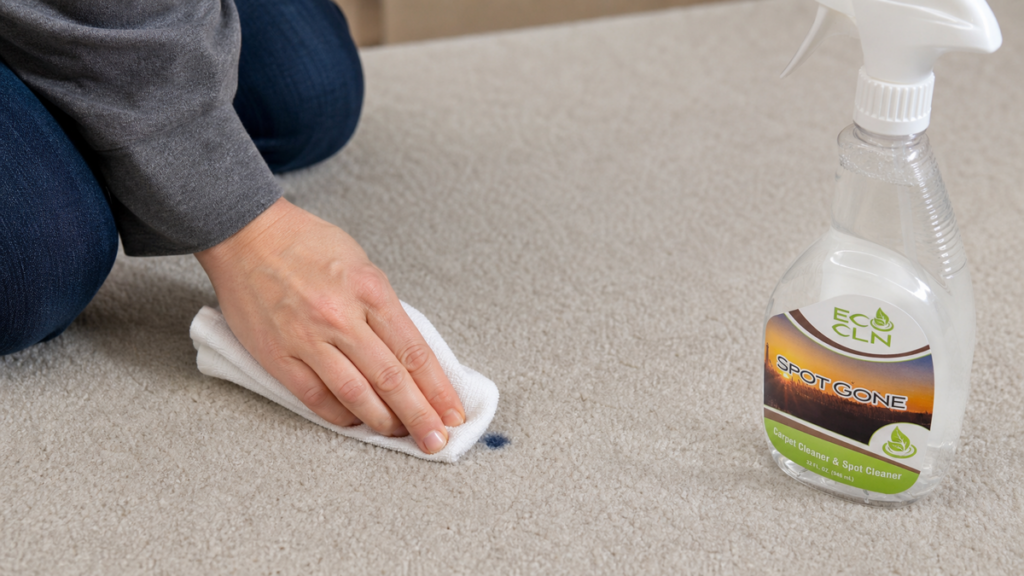
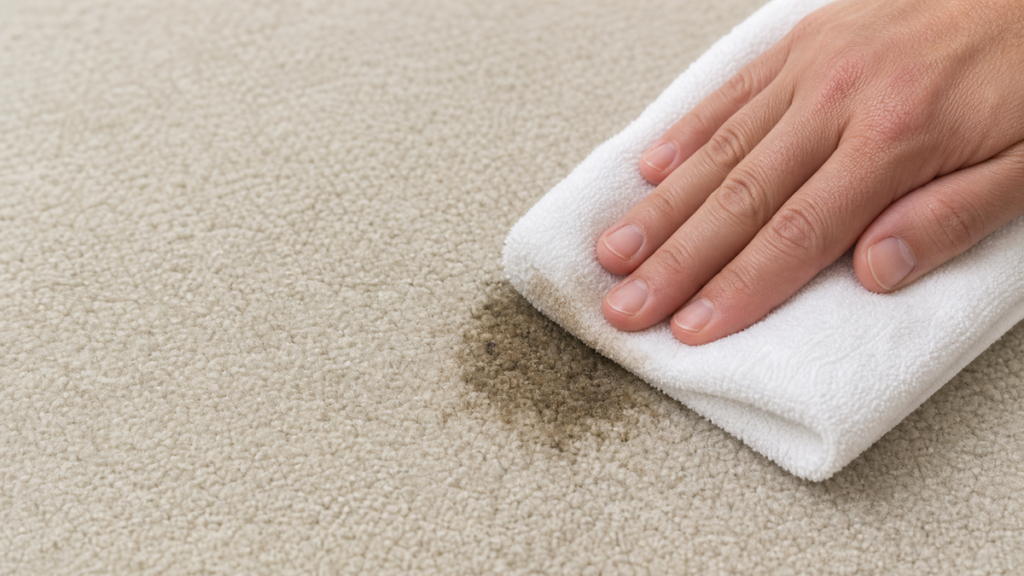
Use a clean white absorbent towel. Press, lift, rotate to a clean section, and repeat. Work the perimeter first so loosened stain does not spread outward.
If the cloth stops picking up anything and the mark is not changing, more rubbing is unlikely to help. Let the carpet dry before deciding whether to repeat the process.
Step 6: Remove Cleaner Residue
When the stain has improved, remove remaining spot-cleaning product in the way the carpet and product instructions allow. CRI notes that cleaner residue can attract soil and make a spot appear dirty again.
Use minimal moisture and blot it back out rather than pouring rinse water into the carpet. CRI also recommends residue removal and thorough drying.
Step 7: Let the Carpet Dry Before Judging the Result
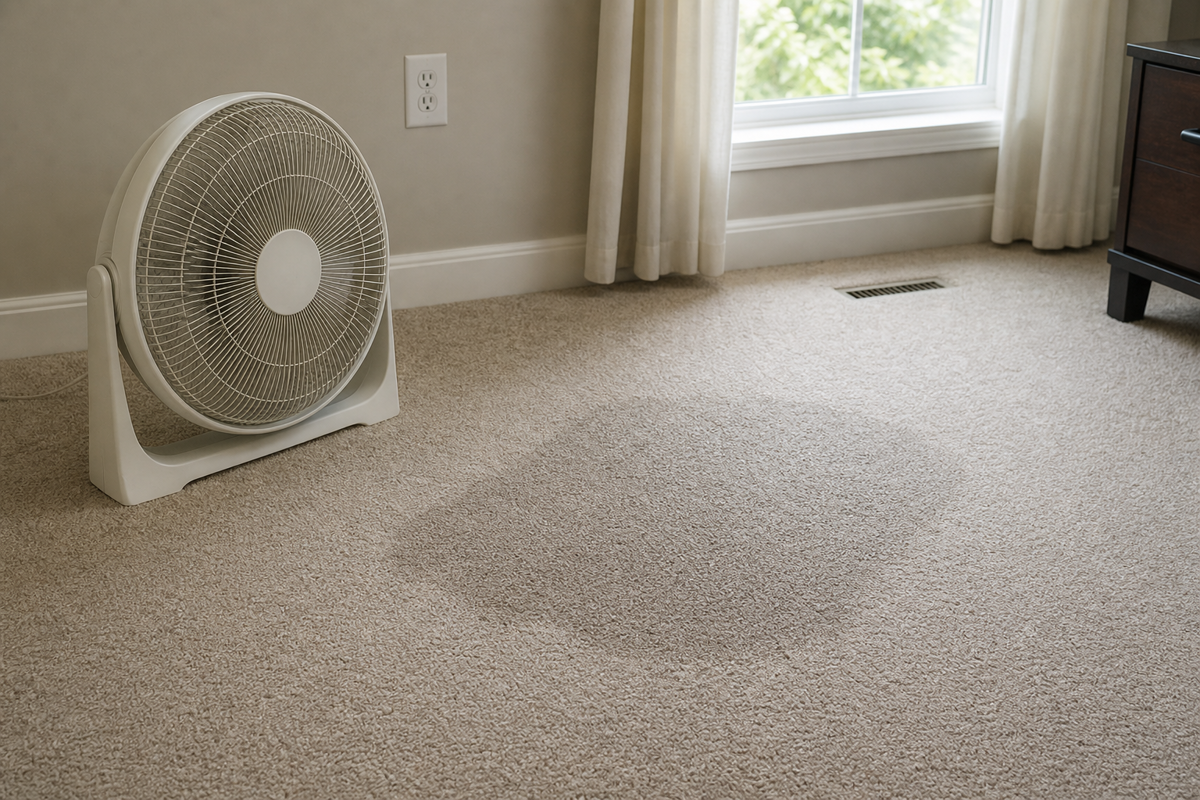
Keep foot traffic off the area and allow it to dry fully. A damp carpet spot can look darker than the surrounding floor, and deeper residue may wick upward as the moisture evaporates.
If a ring reappears only after drying, that is a clue that residue may remain deeper in the pile or backing. Another controlled pass or professional extraction may be more appropriate than adding a large amount of cleaner.
When an Old Stain May Be Permanent
Stop treating if the carpet has lost color, changed texture, become stiff, or shows damage that does not transfer to the towel. Bleaching, dye loss, melted fibers, old pet damage, or deeply set pigments may not be reversible with household spot cleaning.
For valuable rugs, large old stains, unknown chemical spills, or repeated failed treatments, a professional carpet cleaner is the safer escalation path.
Common Mistakes With Old Carpet Stains
- Scrubbing harder because the stain is old.
- Soaking the carpet to try to reach deeper residue.
- Using several unrelated stain removers on top of one another.
- Skipping the hidden-area test.
- Leaving cleaner residue behind.
- Judging the result while the carpet is still damp.
- Assuming permanent dye loss is removable dirt.
Where Spot Gone Fits
Eco Cln Spot Gone is the targeted Eco Cln product for non-pet carpet, rug, upholstery, and fabric stains such as food, grease, dirt, mud, tomato sauce, and everyday spots. If the old stain is actually a pet urine or organic accident, PAWS is the better product category.
FAQ
Can an old carpet stain still come out?
Sometimes. Results depend on the stain type, carpet fiber, previous cleaning attempts, how long it sat, and whether it permanently changed the carpet dye or texture.
Should I soak a dried stain before cleaning it?
No as a default. Use controlled moisture. Oversoaking can move residue into the backing, create rings, and extend drying time.
Why did an old stain come back after it dried?
Residue may have wicked upward from deeper in the carpet, or cleaning product may remain in the fibers. Let it dry completely and use another controlled treatment if appropriate.
Can Spot Gone be used on old stains?
Spot Gone is positioned for targeted carpet and upholstery spots, and stubborn spots may require repeat treatment. Always spot-test and avoid oversaturation.
When should I call a professional?
For valuable rugs, large or unknown stains, repeated reappearing spots, dye changes, or contamination that may have reached the pad or subfloor.
The Bottom Line
For an old dried carpet stain, vacuum away loose material and identify what you can before adding liquid. Spot-test the cleaner, work from the outside edge toward the center, blot instead of scrubbing, and use repeated controlled passes rather than soaking the carpet backing or pad. Remove remaining residue as the carpet maker recommends and let the area dry completely before judging the result.
Continue with this related Eco Cln guide: Why carpet stains come back after cleaning.
For a localized old carpet or upholstery stain that still appears to be removable residue, Eco Cln Spot Gone gives you a targeted treatment option without turning the entire room into a wet-cleaning project.