How to Clean Vinyl Plank Floors Without Leaving a Sticky Film

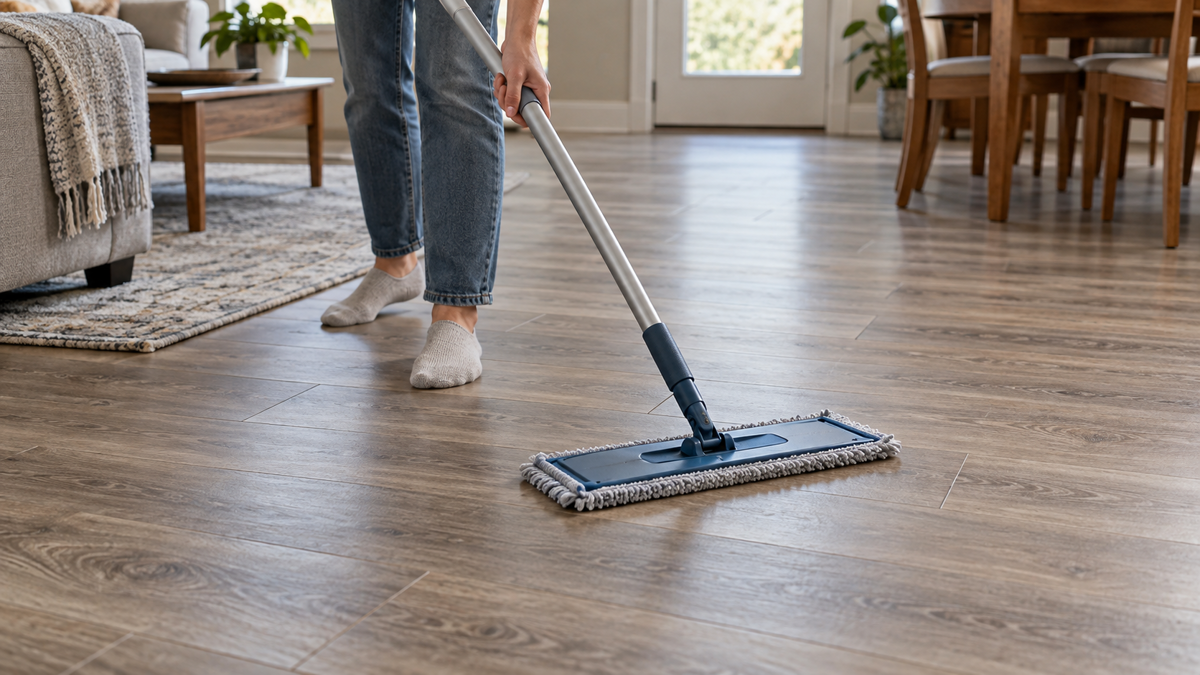
Sticky vinyl plank flooring is usually not asking for a stronger cleaner. The film often comes from too much product, an over-wet mop, dirty cleaning solution or residue left to dry on top of the wear layer. Remove loose grit first, use the flooring maker’s approved method, and work with a clean damp—not dripping—mop.
If the floor is already tacky, do not keep layering fresh cleaner over it. Make one controlled residue-removal pass, pick up the loosened film with clean material, and let the planks dry before deciding whether they need another round.
Quick Answer
• Vacuum or sweep grit from plank edges and bevels before wet cleaning.
• Confirm the floor maker’s cleaner and moisture restrictions.
• Measure concentrate rather than pouring by eye.
• Use a clean microfiber pad that is damp, not saturated.
• Work in small lanes and change dirty water or pads promptly.
• Pick up remaining solution instead of letting a heavy layer air-dry.
• Keep liquid from pooling at seams, perimeter gaps and transitions.
• Judge stickiness only after the floor is completely dry.
Why Vinyl Plank Floors Feel Sticky After Cleaning
Cleaner residue is the most common explanation. A formula mixed stronger than directed can leave surfactants on the wear layer. Reusing cloudy mop water puts suspended soil back onto the floor, while a loaded microfiber pad spreads the same film from room to room. Polish, wax, oil soap and incompatible “shine” products can also create a coating the flooring manufacturer never intended.
Moisture control matters even though vinyl itself resists water. Liquid can sit in click-lock joints, reach cut edges at walls or move below a loose plank. That is why the solution is not a flooded rinse. It is a sequence of lightly damp passes with clean pickup material.
The broader guide to sticky floors after mopping
explains how excess product, soil redeposition and incomplete pickup create tackiness on several floor types.
Check the Vinyl Floor Before You Mop
Identify whether the flooring is glue-down sheet or plank vinyl, rigid-core click flooring, or another resilient product. Look for lifted corners, open joints, loose transition strips and damaged wear layers. Stop wet cleaning around an open seam or active installation problem.
Read the care instructions for the exact brand when they are available. Some manufacturers prohibit steam, wax, abrasive pads or particular cleaner categories. A hidden-area test is especially useful on matte, embossed or dark planks because dried haze shows differently across finishes.
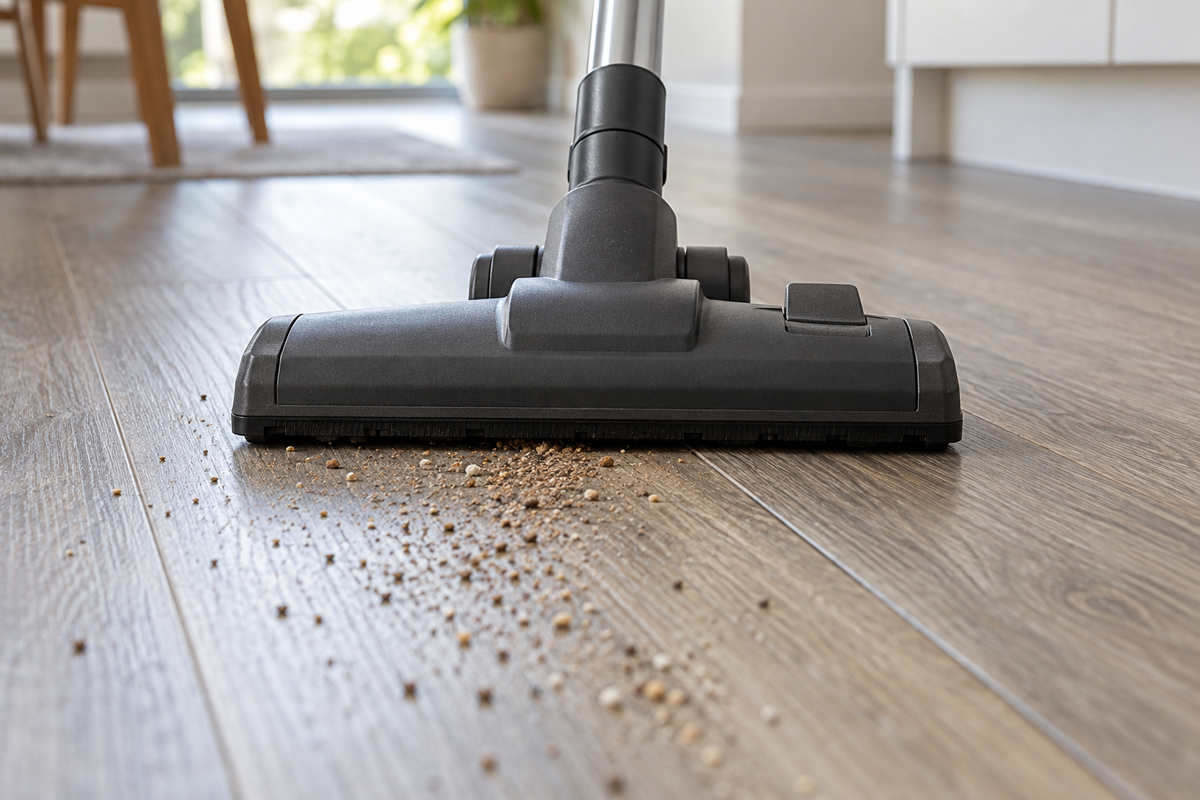
Use a vacuum setting approved for hard floors or a soft broom. A rotating beater bar can scatter or scratch grit. Detail the bevels and perimeter with a crevice tool without forcing the nozzle into a joint.
Step-by-Step: Clean Vinyl Plank Floors Without Sticky Residue
1. Remove dry soil. Vacuum or sweep the complete area, including under movable mats and along baseboards. Sand and crumbs become abrasive slurry when wet.
2. Inspect seams and transitions.
Note lifted edges, gaps or damaged planks before adding moisture. Clean around—not into—an opening that may lead below the wear surface.
3. Prepare the lightest approved solution.
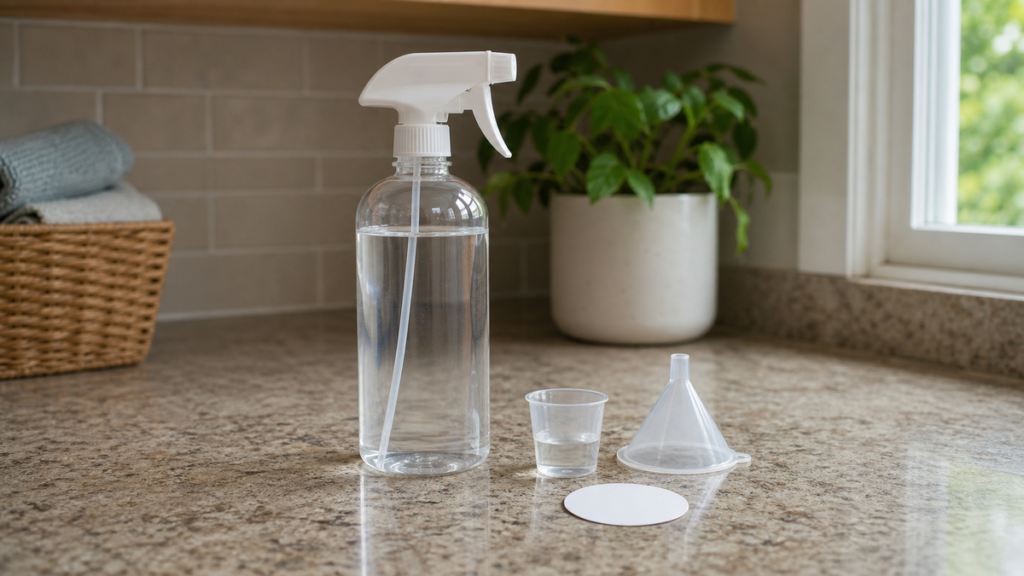
Follow the flooring and cleaner directions exactly. Measure concentrate with a dedicated tool instead of estimating from the bottle.
4. Dampen a clean microfiber pad.
The pad should clean the plank face without leaving puddles or a trail of standing liquid. Wring it more thoroughly near room edges and transitions.
5. Mop in short lanes.
Follow the plank direction so you can see overlap and avoid repeatedly crossing the same wet section. Keep each lane small enough to pick up before it dries.
6. Change loaded material.
Replace or rinse a pad when it looks gray, feels greasy or begins leaving marks. Change dirty water rather than dipping a clean pad into suspended soil.
7. Make the required follow-pass.
If the product or flooring directions call for residue pickup, use a fresh lightly damp pad. Do not flood the room in an attempt to rinse it.
8. Dry and inspect.
Promote normal airflow and keep traffic off the floor until it is dry. Check the floor from a low angle for haze, streaks and tacky lanes.
How to Remove Existing Sticky Film
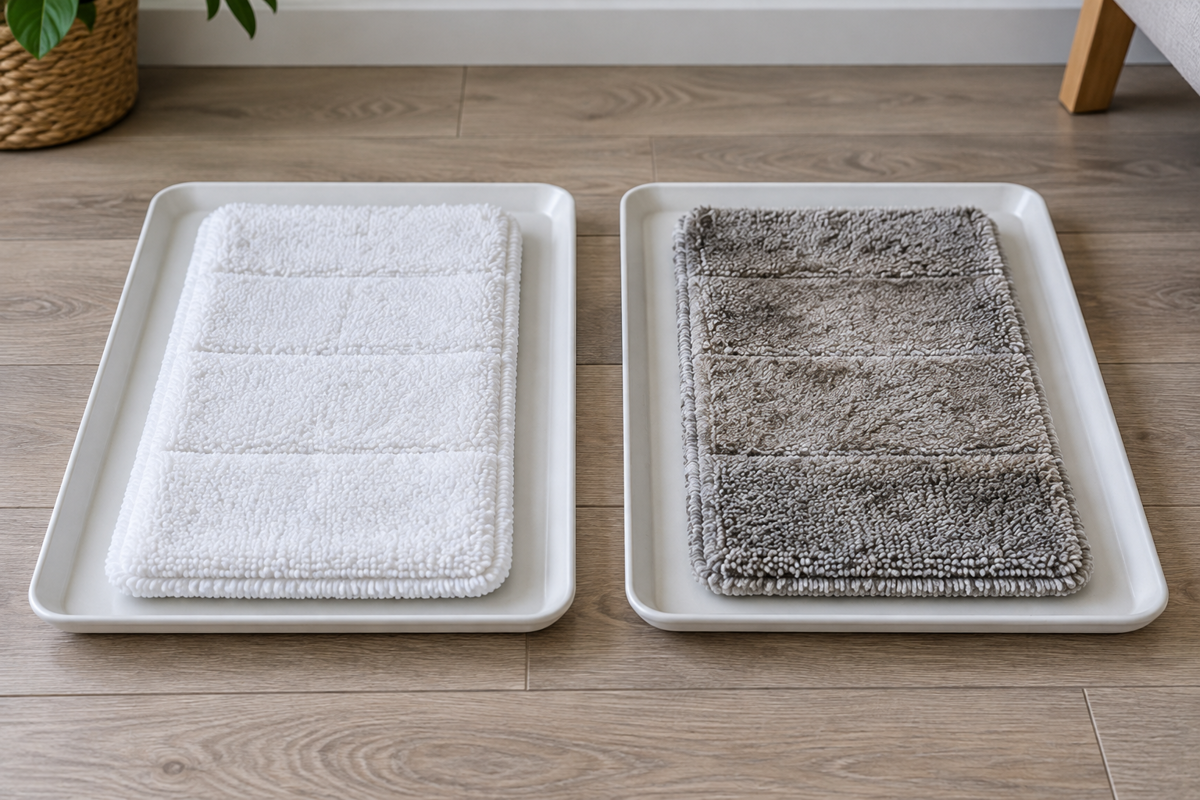
Start with one small test section. Vacuum it, then wipe with a clean microfiber pad dampened according to the flooring maker’s residue-removal instructions. Use a second clean pad for pickup and let the patch dry. If that test feels normal, repeat in manageable lanes.
Do not add polish or a second unknown cleaner to hide the film. The seven cleaner dilution mistakes guide
covers overconcentration, bottle size errors and the temptation to “add a little extra.” If the floor stays tacky after controlled passes, identify any old coating or maintenance product before trying more chemistry.
Sherwin-Williams’ flooring stain and care guide
emphasizes prompt attention to spills and includes separate guidance for sticky spots on vinyl and other flooring. The floor manufacturer’s instructions still control the final method.
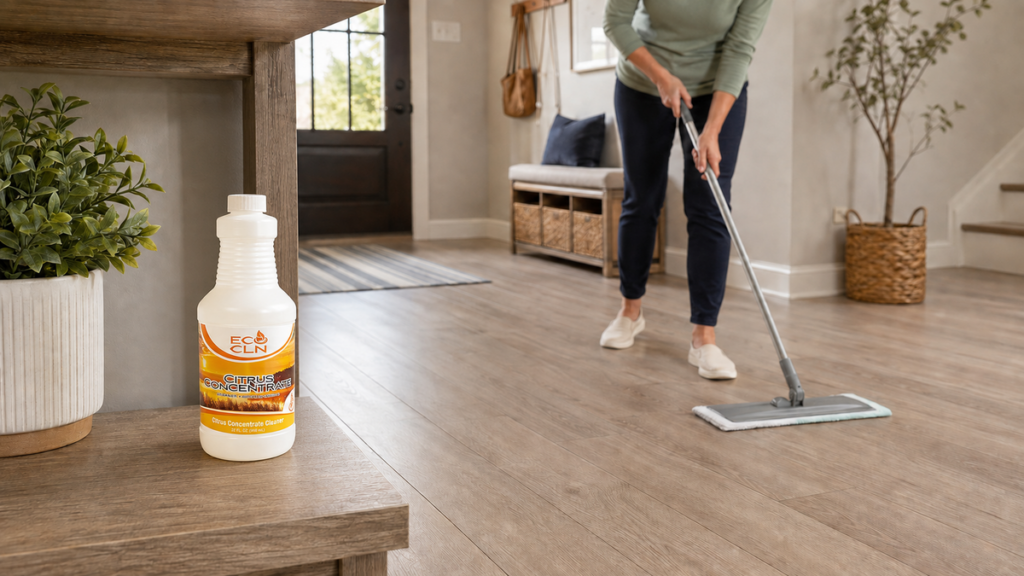
Where Eco Cln Citrus Concentrate Fits
is a dilution-based all-purpose cleaner for compatible floors and household grime. Current directions are 1 ounce per quart of water for light-duty cleaning, 2 ounces per quart for all-purpose cleaning and 8 ounces per quart for heavy-duty cleaning.
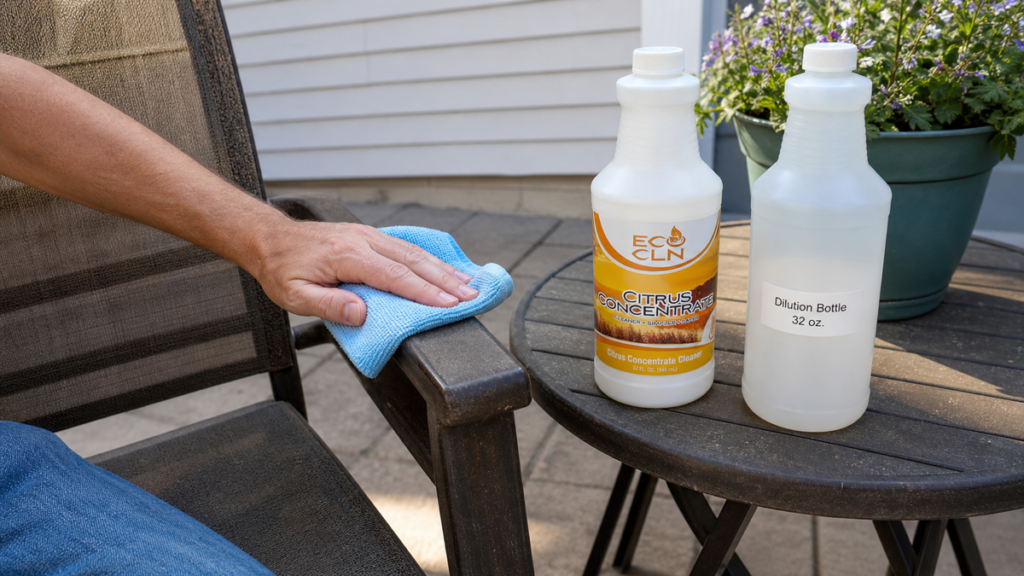
For routine vinyl plank care, use only the concentration allowed by both the product and flooring instructions; “heavy duty” does not mean appropriate for every floor. Add water to the dilution bottle first, measure the concentrate, and test a hidden section before cleaning a large area. The Citrus Concentrate dilution guide
provides the mixing details.
Common Vinyl-Floor Cleaning Mistakes
• Pouring concentrate by eye.
• Mopping with cloudy water or a loaded pad.
• Using a steam mop without manufacturer approval.
• Flooding click joints, wall gaps or transition strips.
• Applying wax, polish or oil soap to a floor that does not allow it.
• Scrubbing an embossed wear layer with an abrasive pad.
• Adding more cleaner before identifying the existing residue.
• Walking on the floor before the final pass has dried.
When Cleaning Will Not Fix the Floor
Cleaning cannot reverse a worn wear layer, heat damage, adhesive failure, swollen underlayment or planks that have separated. A dull patch that remains after the residue is gone may be physical wear rather than dirt. Photograph the dry area and contact the flooring maker or installer before continuing with stronger products.
Frequently Asked Questions
Why is my vinyl plank floor sticky after mopping?
Too much cleaner, dirty mop water, a loaded pad or incomplete residue pickup are common causes. Let the floor dry, then test a controlled cleanup on one small section.
Should I rinse vinyl plank flooring with plain water?
Only if the floor and cleaner directions call for a follow-pass. Use a lightly damp clean pad and avoid flooding seams or perimeter gaps.
Can I use a steam mop on vinyl plank floors?
Do not assume so. Heat and moisture restrictions vary, so follow the exact flooring manufacturer’s care instructions.
Does a stronger cleaner remove sticky film faster?
Not necessarily. More concentrate can create additional residue. Identify the film and use the lightest compatible method that transfers it to clean material.
How often should I change the mop pad?
Change it as soon as it becomes visibly dirty, greasy or unable to pick up solution cleanly. Large or heavily soiled rooms may require several pads.
The bottom line
Clean vinyl plank floors with measured product, minimal moisture and genuinely clean pickup material. Vacuum first, protect seams, work in short lanes and inspect only after drying. When Citrus Concentrate is compatible, use the published dilution—never an improvised stronger mix.