How to Clean Grease and Fingerprints From an Oven Door Exterior and Handle

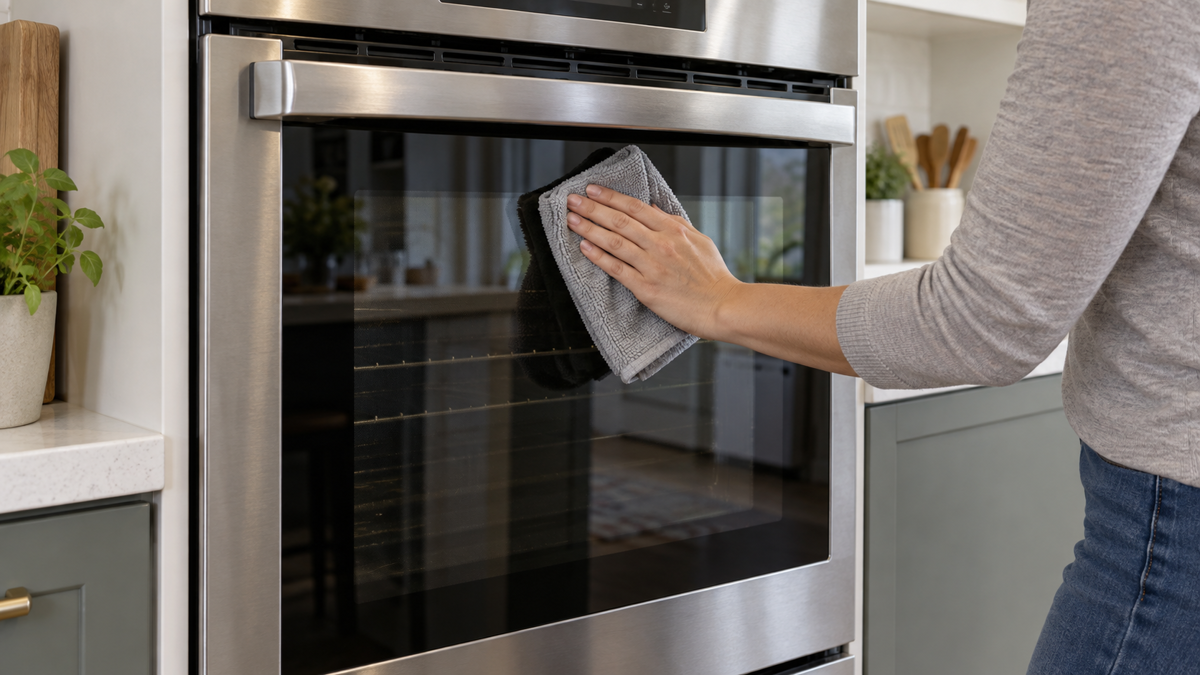
Clean an oven door exterior only after the appliance is cool. Remove crumbs from the handle and trim, identify whether each section is glass, stainless steel, painted enamel or coated metal, and apply cleaner to the cloth near vents, controls and door seams. Grease needs lifting; fingerprints on the final glass surface need a clean finishing pass.
The door is a mixed-material assembly, not one flat washable panel. A method that suits stainless steel may not suit black glass, printed control markings or a coated handle. Check the appliance manual before choosing the cleaner.
Quick Answer
• Turn the oven off and wait until every exterior surface is cool.
• Unplug the appliance if its manual requires that step for cleaning.
• Brush crumbs from the handle ends, trim lip and door edge.
• Identify glass, stainless steel, enamel, plastic and control areas separately.
• Apply cleaner to a soft cloth around vents, displays and seams.
• Lift greasy film in short passes and change cloth faces often.
• Use a clean glass-finishing cloth only after grease is removed.
• Dry the handle, trim and lower door edge before using the oven.
Map the Oven Door Before Cleaning
Stand in front of the closed, cool oven and trace the parts: outer window, metal or painted frame, handle, handle mounts, upper vent, gasket boundary and nearby control panel. Do not put cleaner into the vent or attempt to clean between door-glass layers through an opening.
Grease often collects along the handle underside and where the handle meets its mounts. Fingerprints dominate the front face. Drips may dry at the lower trim edge. Treat these zones separately so a grease-loaded cloth does not smear the whole window.
For stainless sections, the appliance maker may specify wiping with the grain. The guide to stainless steel appliance smudges
explains why abrasive pads and circular polishing can leave visible changes.
Choose the Cleaner for Each Oven-Door Material
Exterior glass
Use a glass cleaner permitted by the oven manufacturer. Avoid flooding the frame, vent or trim. A clean low-lint microfiber cloth matters as much as the product; a towel already carrying cooking oil will leave arcs and haze.
Stainless steel
Follow the manual’s approved cleaner list and grain direction. Test coated or fingerprint-resistant stainless because it may not behave like bare stainless steel.
Painted enamel or coated metal
Use a soft cloth and the least aggressive compatible cleaner. Hard scrubbing can change gloss or expose a lighter patch even when the soil is gone.
Handle, controls and printed markings
Spray the cloth, not the appliance. Wipe around button edges and handle mounts without forcing liquid behind trim. Avoid repeated rubbing over printed labels.
GE Appliances’ oven-exterior cleaning guidance
says exterior surfaces should be cool, warns against letting water or soap drip into the door vent, and advises against oven cleaner and abrasive tools on exterior surfaces. Your own model’s manual takes priority.
Step-by-Step: Clean an Oven Door Exterior and Handle
1. Make the oven safe. Turn it off, let it cool fully and follow the manual’s power-disconnection instructions. Move towels and cleaner away from hot burners.
2. Remove crumbs and grit.
Brush or vacuum the handle underside, top trim and lower ledge. Dry particles can scratch glass or become greasy paste.
3. Test each finish.
Choose an inconspicuous patch on glass, metal or enamel. Let it dry before checking color and sheen.
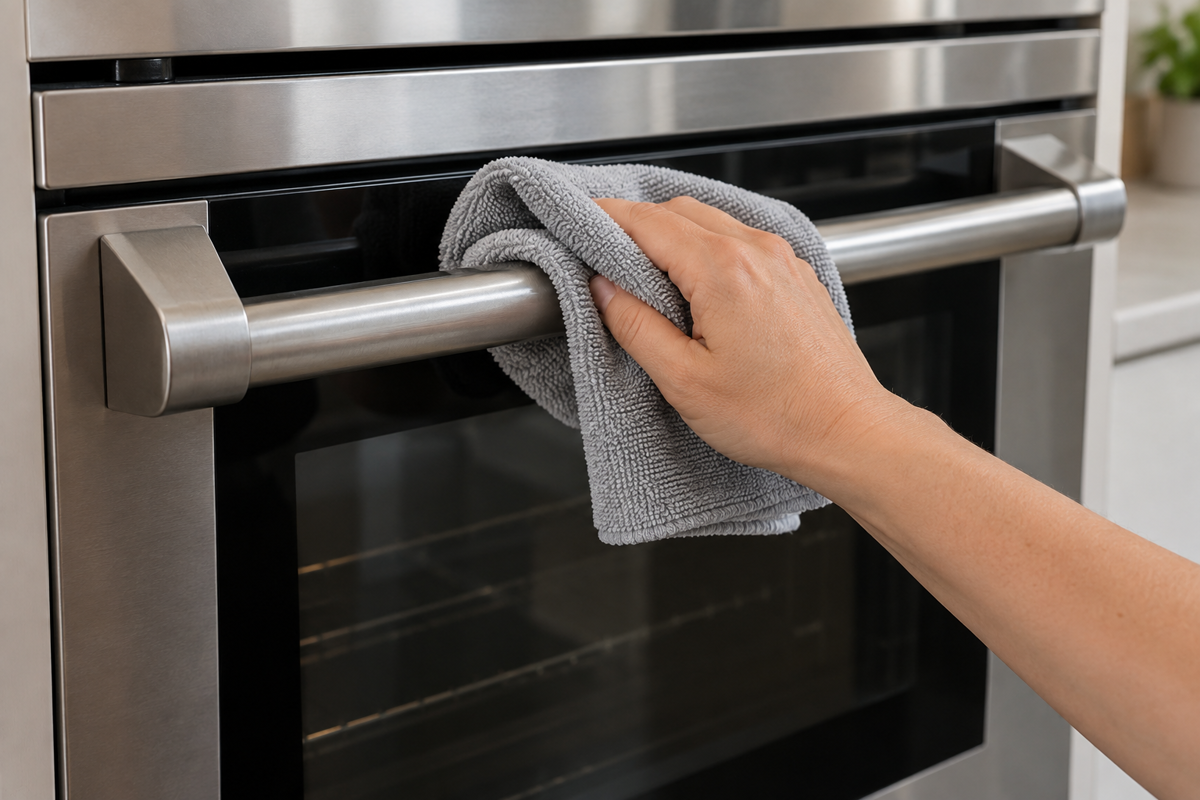
4. Clean the handle first.
Put a small amount of compatible cleaner on a cloth, wrap it around the handle and wipe from the center toward each mount. Detail the joints with a fresh cloth corner.
5. Lift grease from the door frame.
Work in small sections. Hold the cloth flat, turn it as oil transfers and keep liquid away from the upper vent and door edge.
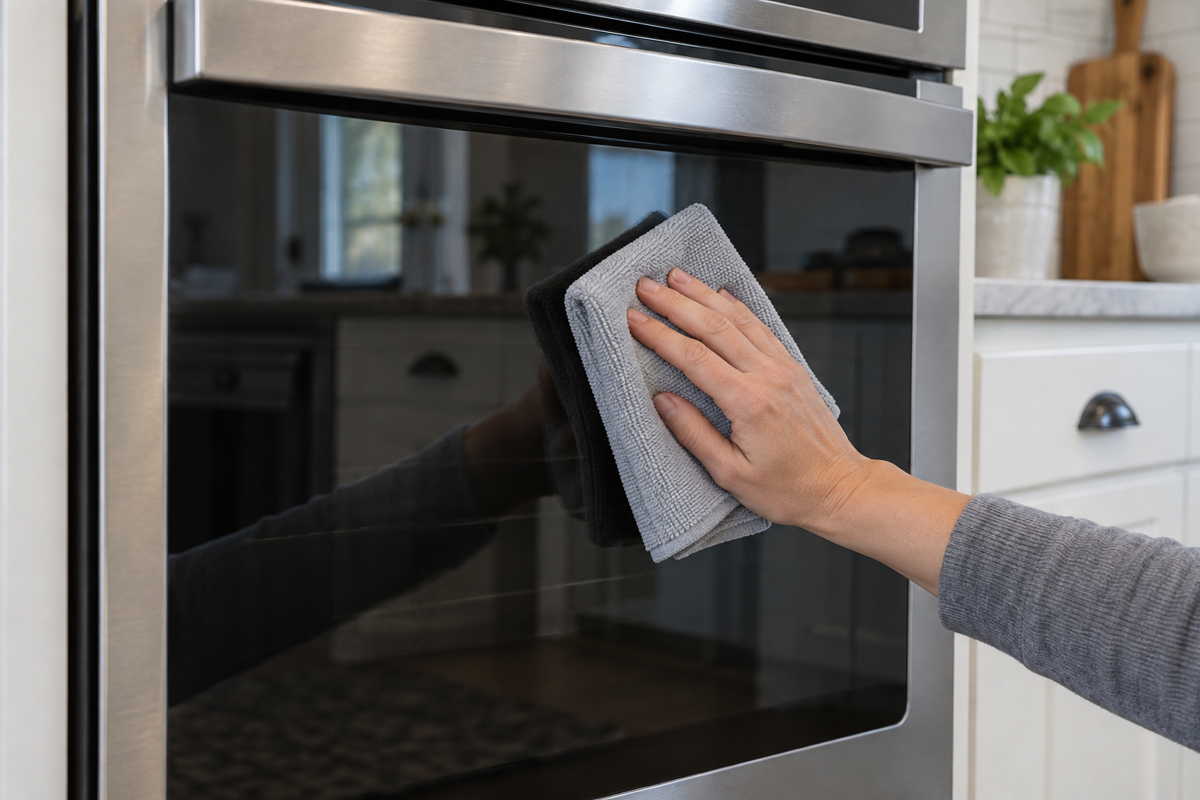
6. Clean the outer glass.
Use a separate clean cloth and the glass method allowed by the manufacturer. Wipe edge to edge without pushing product into the frame.
7. Buff the visible surfaces.
Use a dry low-lint cloth on the glass and compatible shiny metal. Follow the grain on stainless when required.
8. Inspect seams and controls.
Check the handle mounts, trim corners, vent boundary and printed panel for remaining moisture. Dry them before restoring power or heat.
Where Shine-It and See-Clear Fit
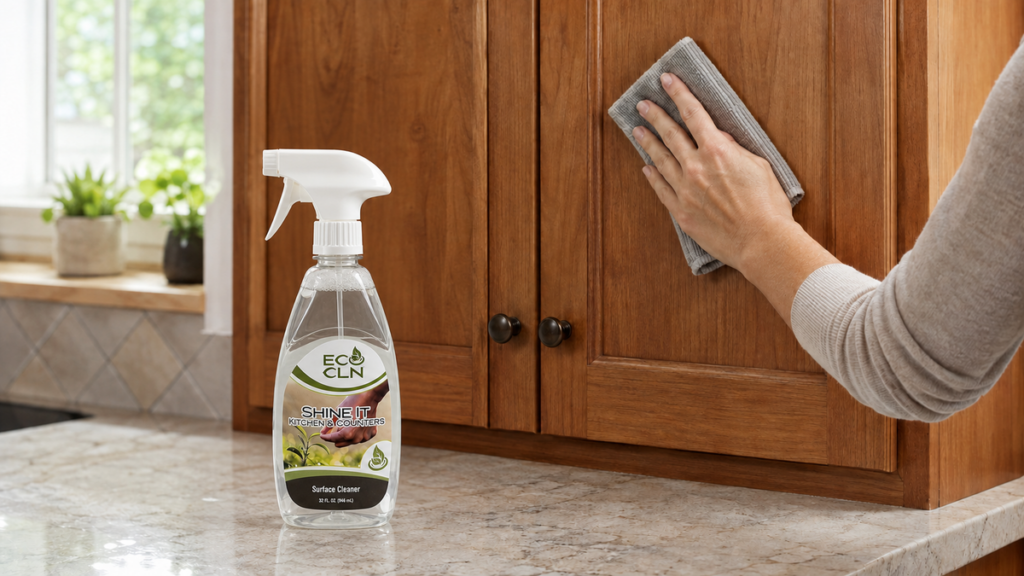
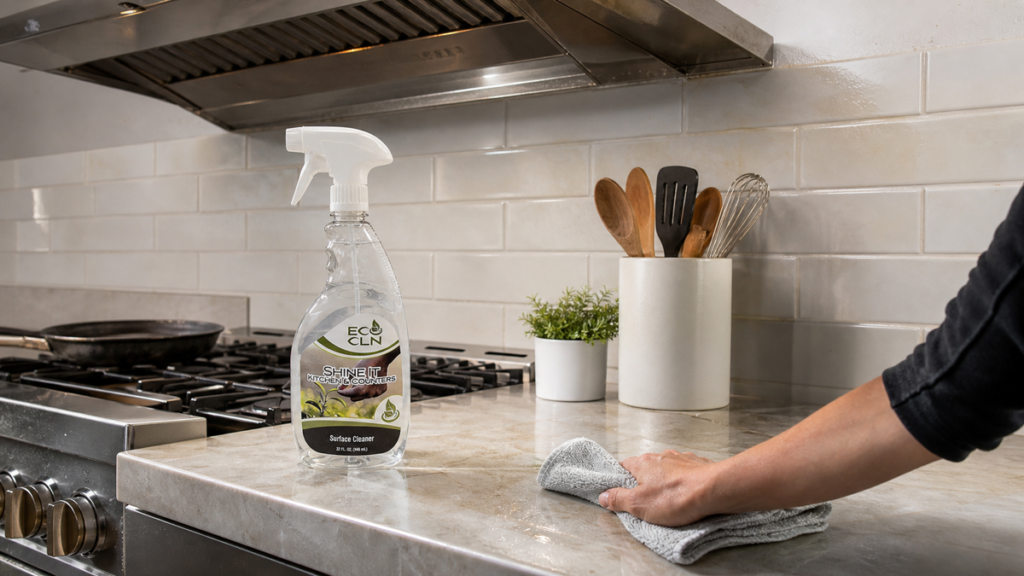
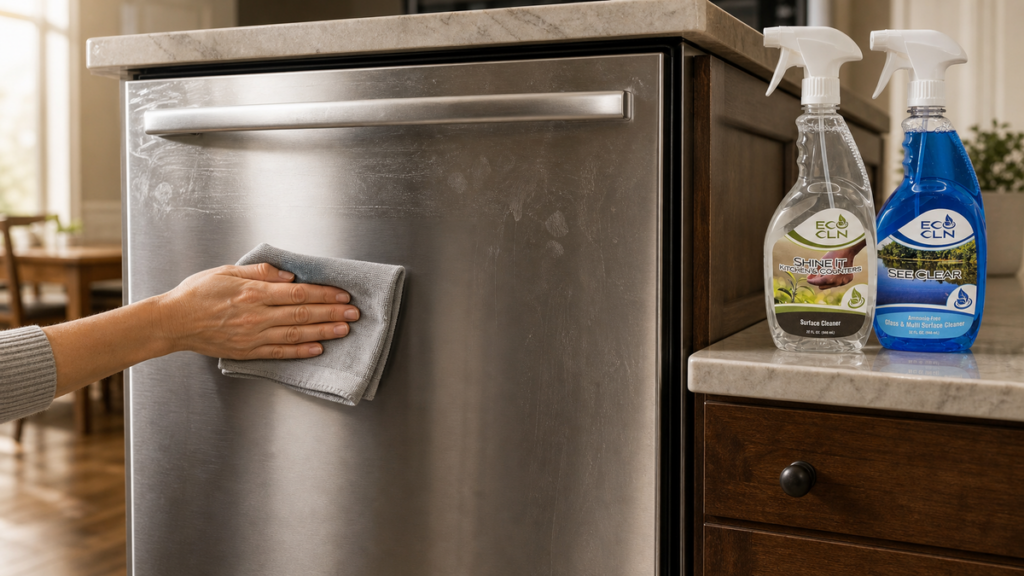
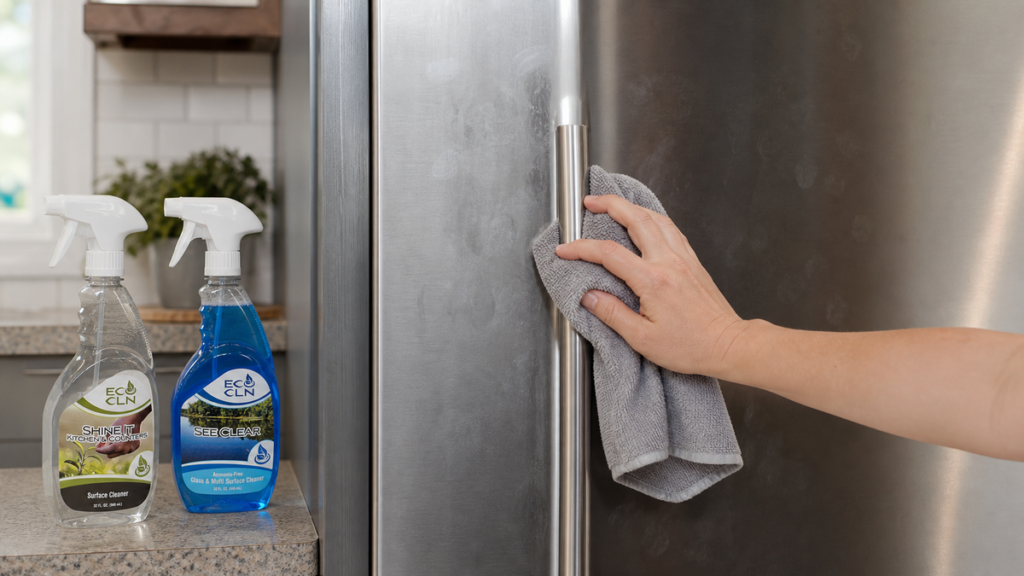
is a ready-to-use kitchen surface cleaner for compatible appliance exteriors, grease spots, cooking residue and fingerprints. It is the first Eco Cln lane for oily film on a cool, washable oven-door surface.
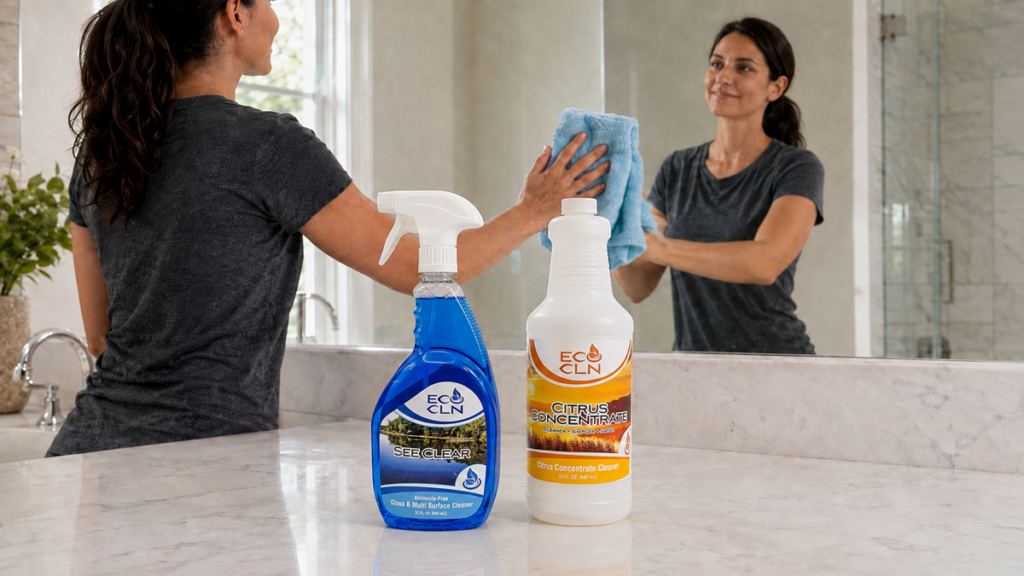
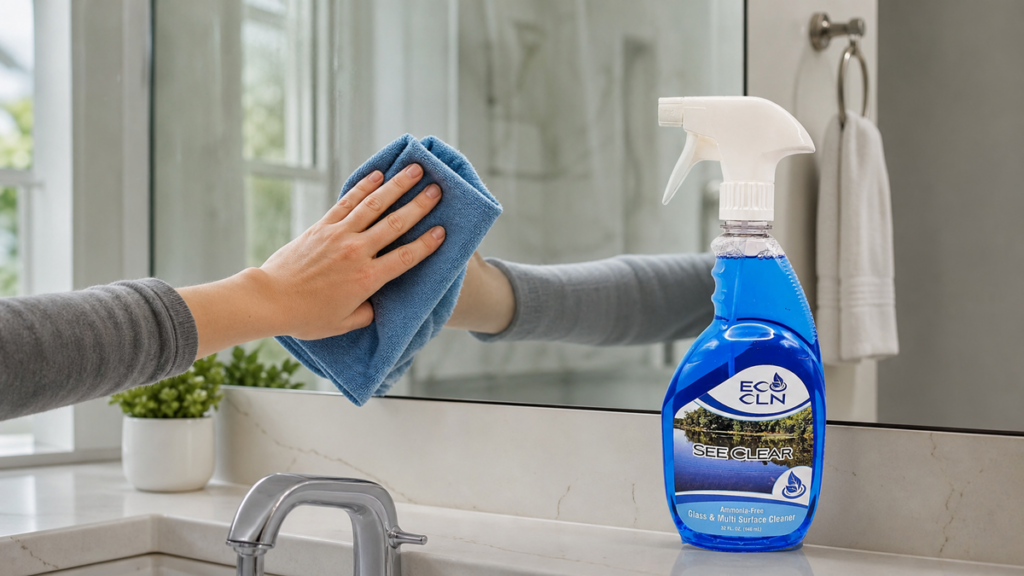
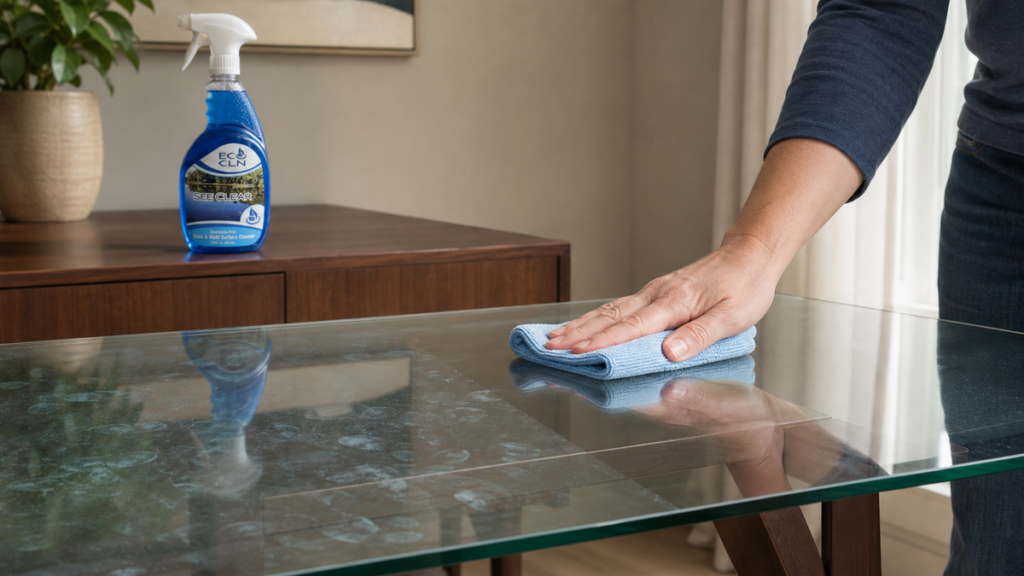
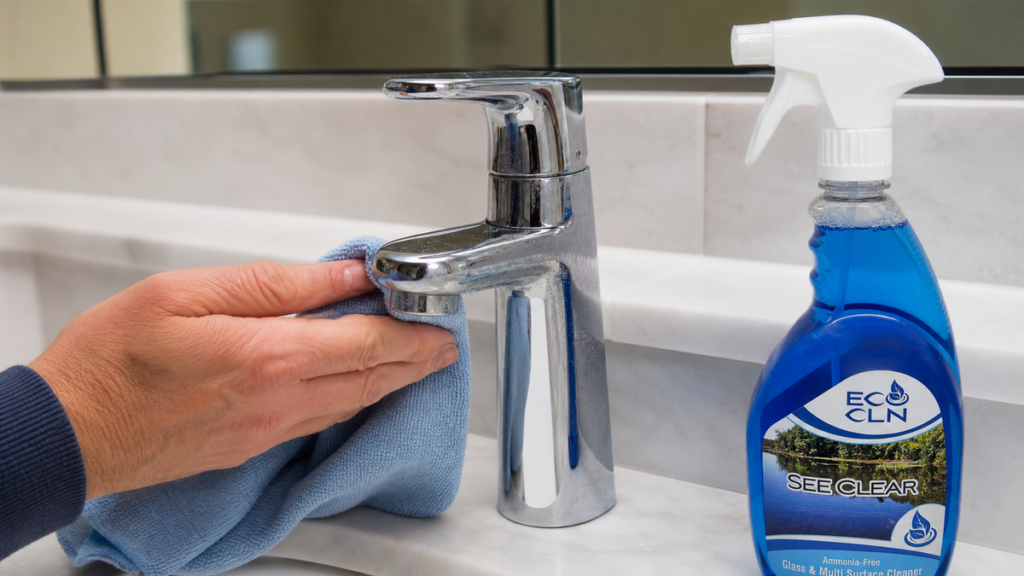
is the ammonia-free glass and shiny-surface cleaner. Use it as a finishing option on compatible exterior glass or stainless steel only when the oven maker allows that category. Do not treat either cleaner as permission to wet vents, controls or the space between glass panes.
For greasy areas beside the appliance, see how to clean grease off a stovetop without scratching it
. Keep the stovetop method separate from the oven door because coatings, heat zones and openings differ.
Common Oven-Door Cleaning Mistakes
• Cleaning while the oven or handle is still warm.
• Using interior oven cleaner on the exterior door.
• Spraying directly toward a vent, display or control seam.
• Scrubbing glass or enamel with steel wool or abrasive pads.
• Treating coated stainless as bare stainless.
• Reusing one grease-loaded cloth for the final glass pass.
• Forcing liquid into handle mounts or trim gaps.
• Trying to reach between door panes without model-specific service instructions.
When Surface Cleaning Is Not Enough
Streaks trapped between the glass panes, a loose handle, chipped enamel, damaged wiring or a broken door seal is not a stronger-cleaner problem. Stop and consult the model manual or an authorized appliance technician. Do not disassemble a door based on generic instructions.
Frequently Asked Questions
Can I use oven cleaner on the outside of the oven door?
Do not assume so. Many manufacturers prohibit oven cleaner on exterior glass, enamel, controls and trim. Follow the model manual.
How do I clean greasy fingerprints from an oven handle?
Let it cool, apply compatible cleaner to a soft cloth, wipe around the underside and mounts, then dry. Avoid spraying into the handle joints.
Why does my oven glass look streaky after cleaning?
A grease-loaded cloth, excess product or incomplete drying can leave haze. Remove the oil first, then finish with a separate clean glass cloth.
Can I clean between the oven-door glass panes?
Only through a model-specific procedure from the manufacturer or qualified service provider. Do not push liquid or tools into vents to improvise access.
Is See-Clear suitable for every oven door?
No. It is for compatible glass and shiny surfaces, but the appliance manufacturer’s directions determine whether it belongs on that exact exterior.
The bottom line
Wait for a cool oven, clean each door material according to its own care rules, and keep moisture out of vents, controls and trim. Shine-It can handle compatible greasy exterior film; See-Clear can finish compatible glass or shiny metal after the grease is gone.