How to Clean Dog Nose Prints and Handprints Off Sliding Glass Doors

Quick Answer
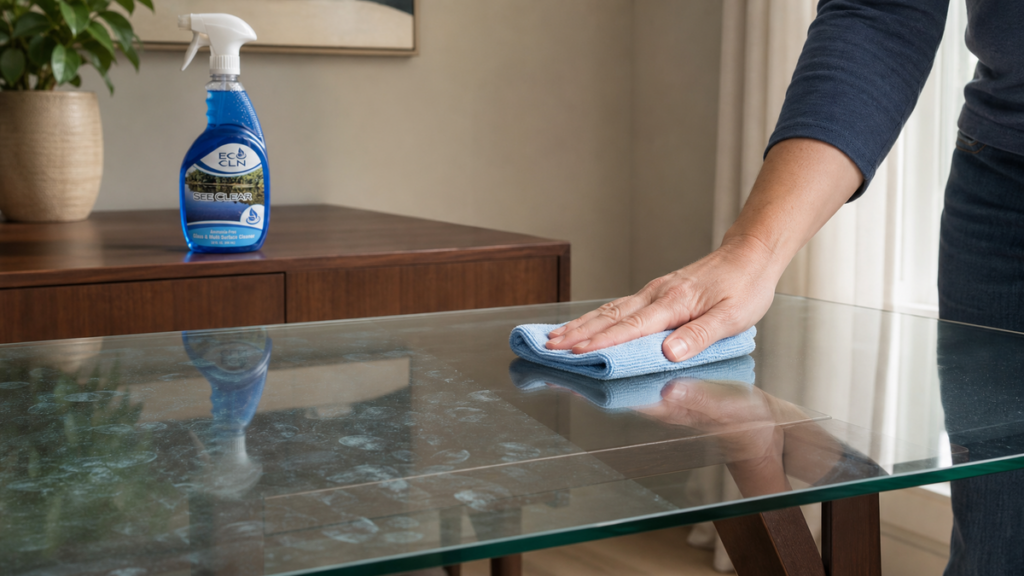
Remove loose dust first, then use a small amount of Eco Cln See-Clear on the glass or a clean microfiber cloth. Wipe from the top of the pane downward, paying extra attention to the lower section where dog nose prints cluster. Rotate to a clean side of the cloth as it becomes damp, then buff the glass dry.
Check for aftermarket tint, privacy film, specialty coatings, or manufacturer restrictions before cleaning. Treat the glass pane separately from the track, frame, weatherstripping, and door hardware.
Why Sliding Glass Doors Get So Smudgy
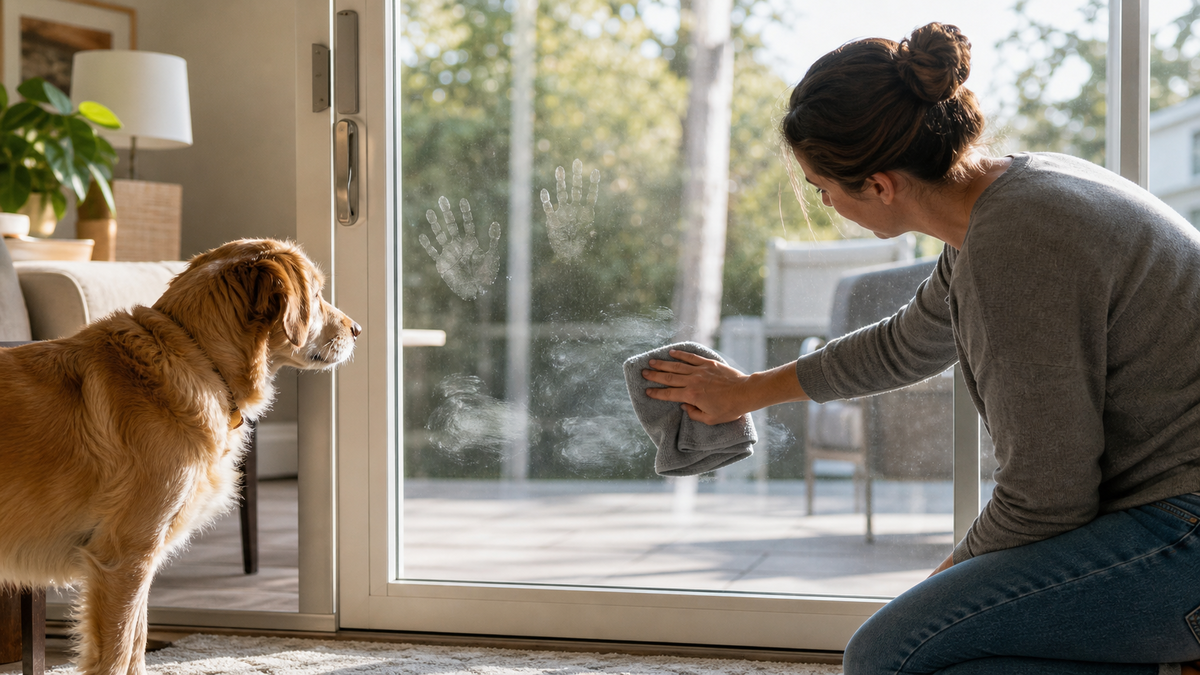
Human handprints leave skin oils on the glass. Dogs add moist nose contact, light saliva residue, and dust from the lower part of the door. Because the door is backlit, even a thin film becomes highly visible when sunlight hits it.
The lower pane often needs more cloth changes than the upper pane. If you keep using the same damp towel, you can turn concentrated nose prints into a larger cloudy haze.
Step 1: Check for Tint, Film, or Specialty Glass
If the door has aftermarket tint, privacy film, decorative coating, or special manufacturer care instructions, follow those rules first. Some films have restrictions on cleaners and abrasive tools.
Also inspect the glass for scratches, failed insulated-glass seals, or haze between panes. Surface cleaner cannot fix a problem trapped inside the glass unit.
Step 2: Dust the Glass Edge, Frame, and Lower Pane
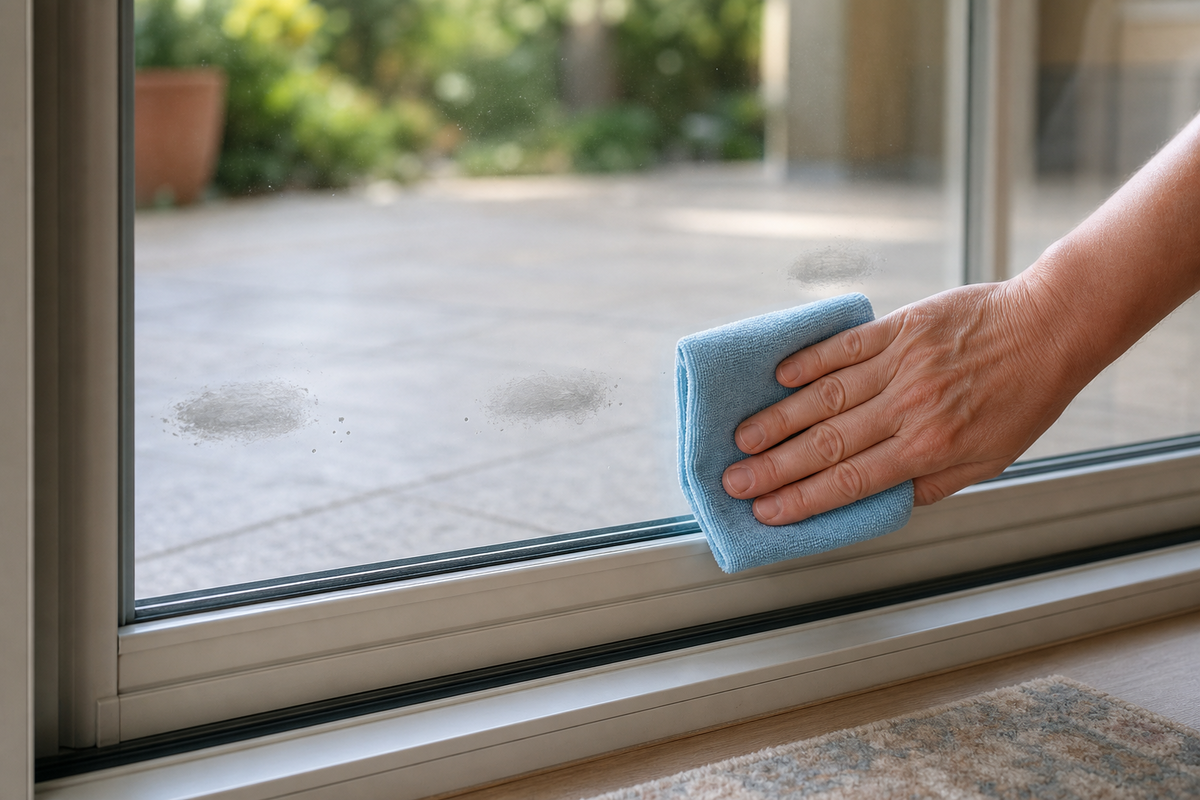
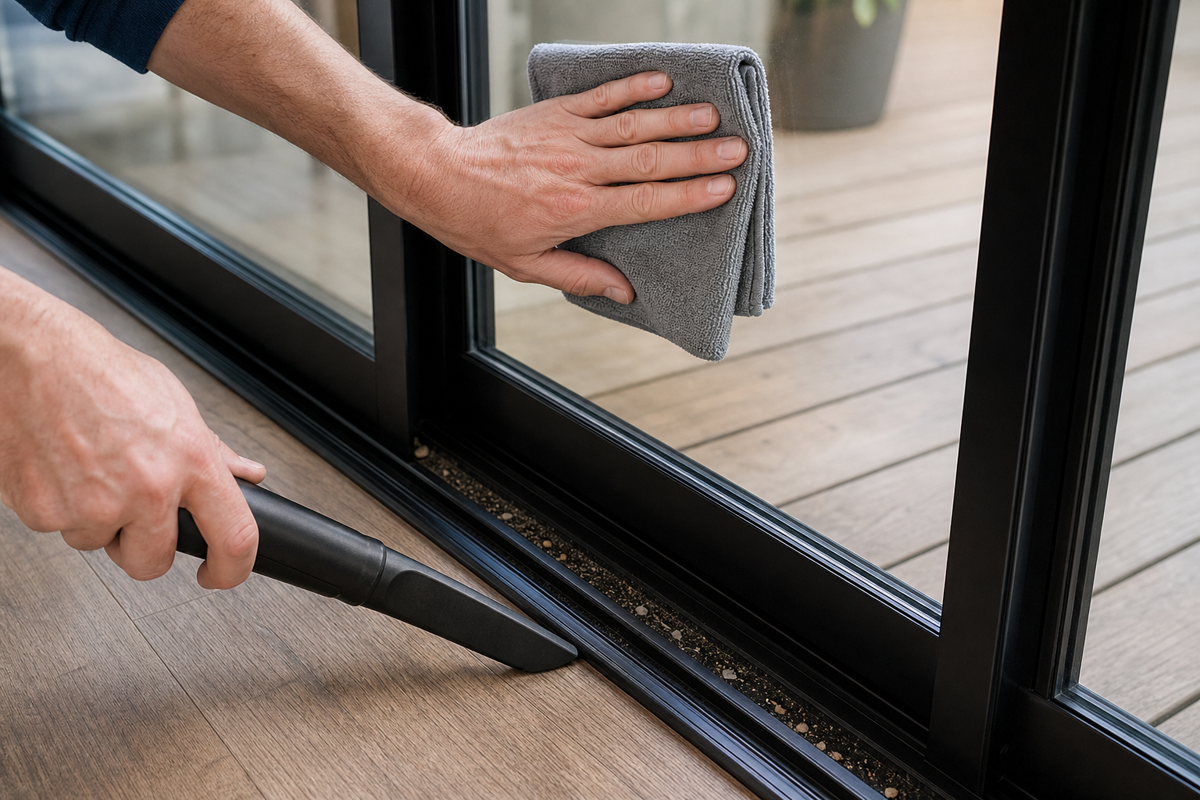
Use a dry microfiber cloth or soft brush to remove loose dust, hair, and grit from the glass edge and lower area. This prevents dry debris from dragging across wet glass.
Do not start by spraying the track full of glass cleaner. The track is a separate maintenance area with rollers, drainage paths, and collected dirt.
Step 3: Use a Light Amount of See-Clear
Use See-Clear according to the product directions. On a door with sensitive trim, film, or lots of frame material around the glass, applying the cleaner to the cloth gives you more control than heavy spraying.
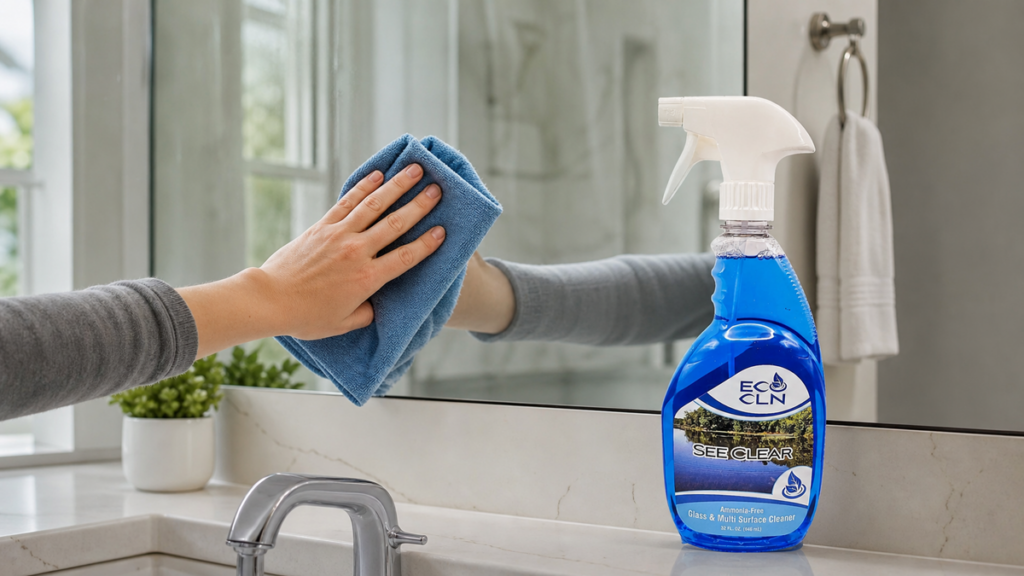
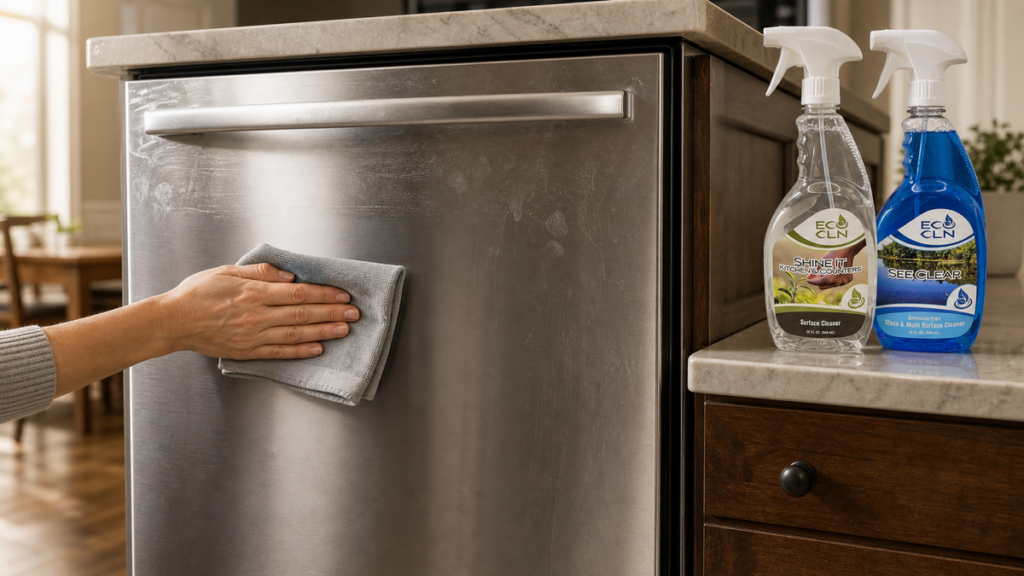
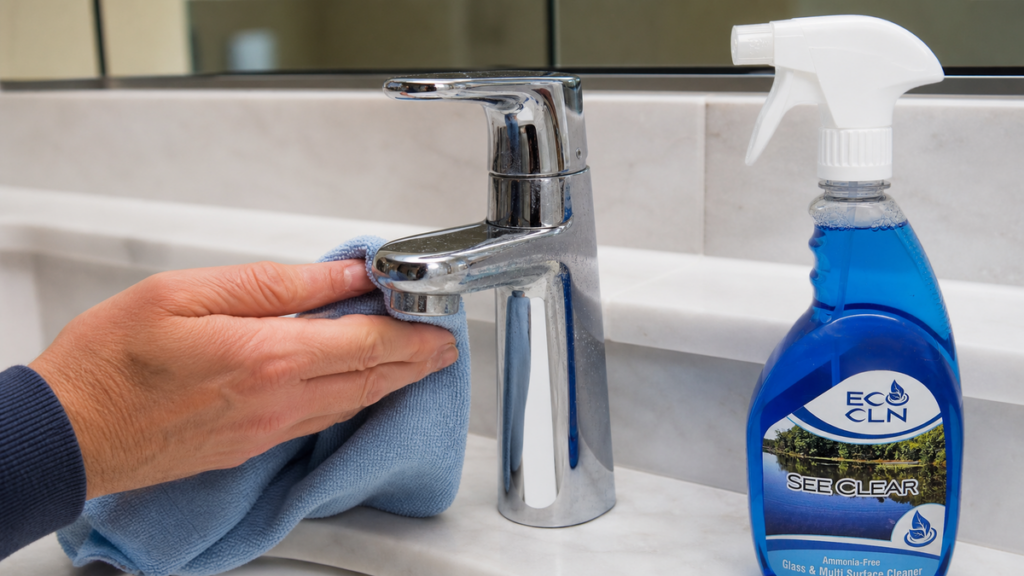
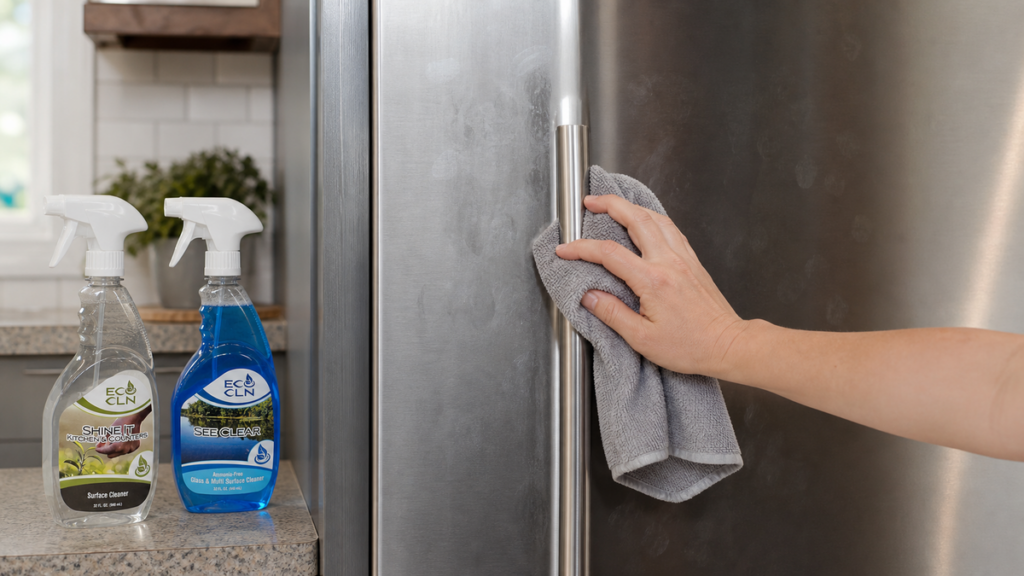
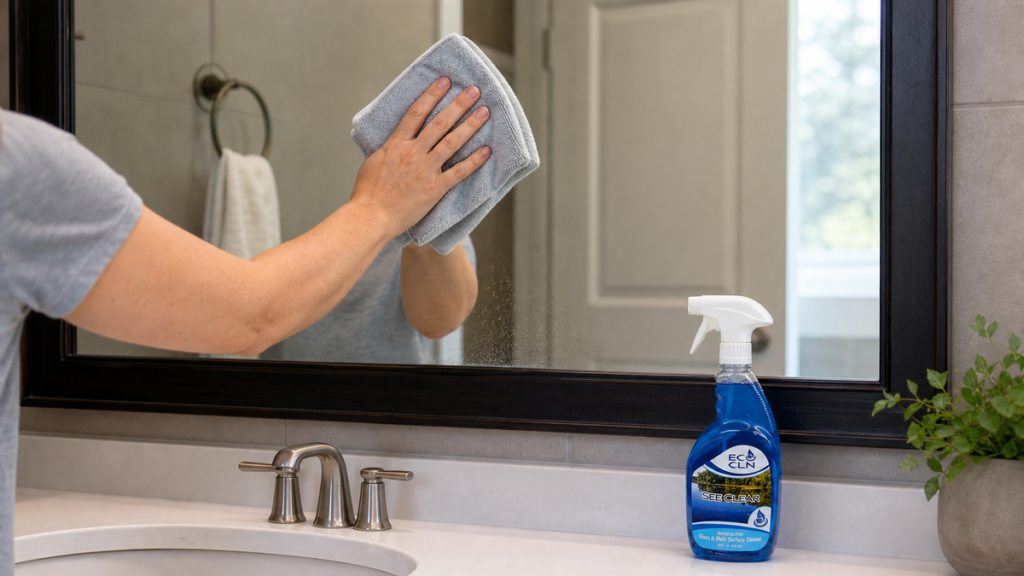
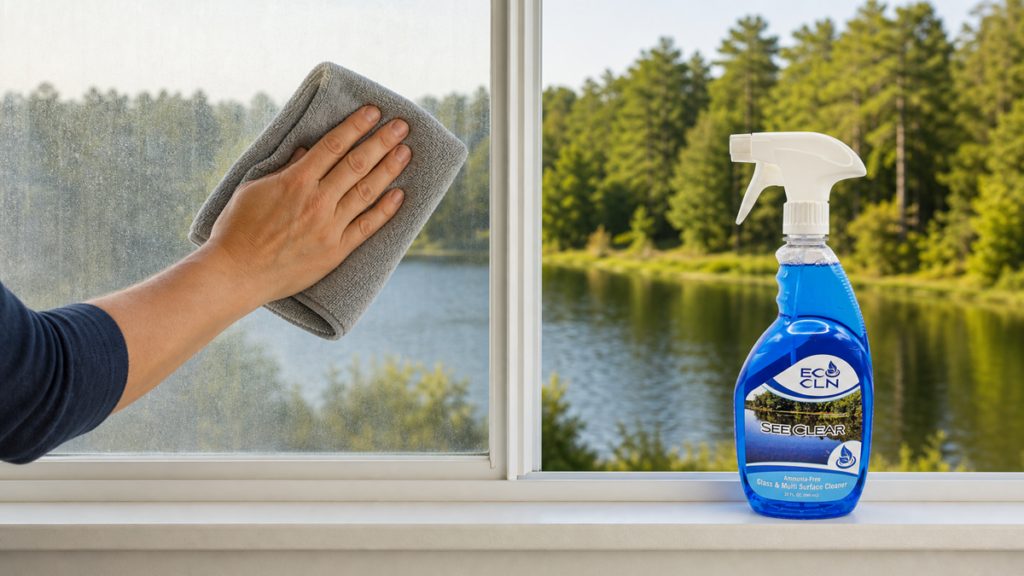
See-Clear is the ammonia-free Eco Cln product for windows, mirrors, glass doors, chrome, stainless steel, appliances, and other shiny surfaces. It is intended for fingerprints, smudges, haze, and light residue—not heavy bathroom scale or pet urine.
Step 4: Clean the Lower Nose-Print Zone Separately
Start with the dirtiest lower zone using a clean cloth face. Wipe the smudges in overlapping passes, then switch to a fresh cloth surface before moving upward.
If the dog repeatedly touches one exact area, clean a little beyond the visible print because a thin oily film may extend farther than the most obvious mark.
Step 5: Work Top to Bottom on the Full Pane
Once the concentrated nose prints are under control, clean the pane from top to bottom. This keeps drips moving into areas that still need cleaning instead of across finished glass.
Use light product. A sliding door is a large pane, so over-spraying can create a lot of solution to chase before it dries.
Step 6: Buff Dry With a Fresh Microfiber Cloth
Use a dry lint-free microfiber cloth for the final pass, especially around edges and in side light where streaks become visible.
If you see a cloudy film, do not automatically add more cleaner. First switch to a clean dry cloth and see whether the haze is simply leftover solution.
Do Not Confuse Nose Prints With a Pet Accident
Dog nose prints on glass are a See-Clear job. If there is an actual urine or organic pet accident on the floor, rug, baseboard, or adjacent door area, that belongs in the PAWS pet-accident lane instead.
Matching the cleaner to the mess keeps the glass cleaner from being asked to solve odor problems it was never designed for.
What About the Sliding Door Track?
Vacuum or wipe track debris separately. Andersen’s gliding-door and retractable-screen care guidance recommends removing visible debris from tracks and cautions that oil-based lubricants can attract more dirt. Review Andersen track care.
A separate planned Eco Cln article covers dirty window sills and tracks in more detail, so keep this post focused on the glass.
Common Mistakes
- Using one saturated cloth on the entire door.
- Over-spraying until cleaner runs into the track and weatherstripping.
- Using paper or fabric that leaves lint behind.
- Scrubbing film or tinted glass with an abrasive pad.
- Cleaning the glass but ignoring dirty cloth edges that re-smear the lower pane.
- Treating every pet-related mess as a PAWS problem even when the mess is only glass smudges.
Where See-Clear Fits
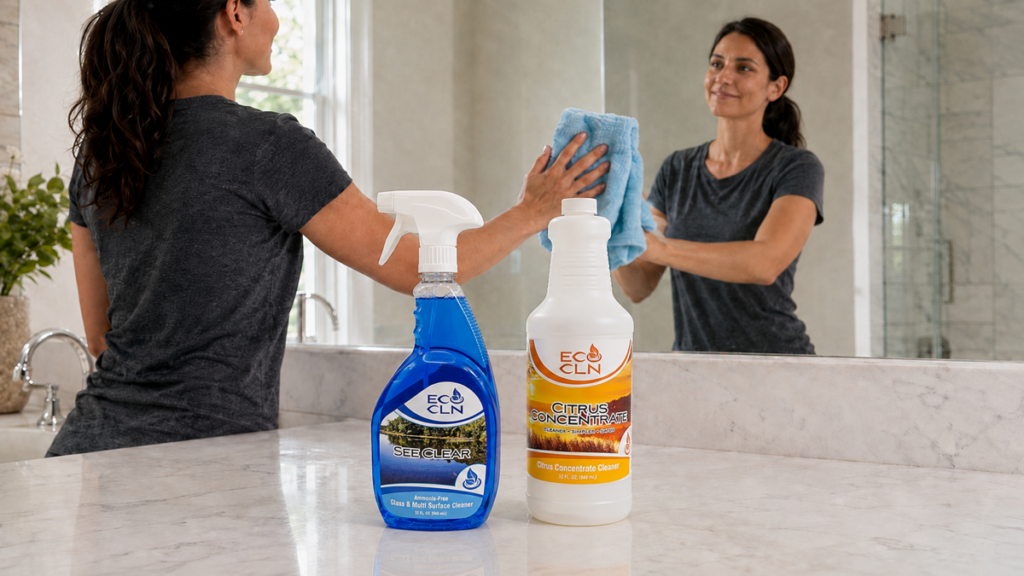
Eco Cln See-Clear is the ammonia-free glass and surface cleaner for windows, mirrors, sliding glass doors, chrome, stainless steel, appliances, and shiny touch-prone surfaces. It is the right lane for nose prints, handprints, haze, and routine glass smudges.
FAQ
Why do dog nose prints streak when I clean them?
The lower glass can hold a concentrated oily film. If the cloth is already damp or dirty, it may redistribute the residue instead of removing it. Use light cleaner and rotate to clean microfiber often.
Can I use See-Clear on sliding glass doors?
Yes, See-Clear is positioned for windows and glass doors. Follow the product directions and any special instructions for tint, film, coatings, or the door manufacturer.
Should I spray the whole door at once?
Usually no. Large panes are easier to control in sections so cleaner does not dry before you remove it.
Is See-Clear ammonia-free?
Yes. The ammonia-free claim belongs to See-Clear in the Eco Cln lineup.
Should I use PAWS for dog nose prints?
No. Nose prints and handprints are glass-smudge problems. PAWS is for pet urine odors, organic stains, and pet accidents.
The Bottom Line
Remove loose dust first, use only a small amount of Eco Cln See-Clear on the glass or a clean microfiber cloth, and work from top to bottom. Rotate to a clean section and buff dry so oily nose prints and handprints do not become streaks. Treat the track separately so dirty debris does not get smeared back onto the pane.
Continue with this related Eco Cln guide: Ammonia-free glass cleaner guide.
For the fingerprints, nose prints, haze, and everyday smudges that make sliding glass doors look dirty five minutes after you clean them, Eco Cln See-Clear gives you an ammonia-free glass cleaner made for that exact visible-surface problem.