
Kitchen Degreaser vs. All-Purpose Cleaner: Which One Fits the Mess?


A kitchen degreaser is the better fit for oily cooking residue, sticky splatter and grease film. An all-purpose cleaner is the broader choice for compatible counters, floors, cabinet fronts and everyday grime that is not dominated by oil. The useful question is not which product is strongest; it is what kind of soil is present and what finish is underneath it.
Fresh fingerprints on a refrigerator handle, dried oil beside a stovetop and crumbs on a laminate counter are three different jobs. Classify the mess first, then use the least aggressive compatible product and tool that will transfer it to the cloth.
Quick Answer
• Choose a kitchen-focused degreasing cleaner for oily film, cooking splatter and sticky residue.
• Choose an all-purpose cleaner for routine dirt on compatible washable counters, floors and cabinet fronts.
• Remove crumbs and dry grit before applying either cleaner.
• Check the appliance, cabinet or countertop care instructions.
• Apply cleaner to a cloth around controls, vents, seams and unfinished edges.
• Wipe in small sections and change cloth faces as grease transfers.
• Treat raw-meat food-safety cleanup as a separate task requiring current official guidance.
Degreaser vs. All-Purpose Cleaner at a Glance
Kitchen-focused degreasing cleaner
This category is intended for grease spots, oil splatter, cooking film and sticky residue on compatible kitchen surfaces. It is useful around backsplashes, range-hood exteriors, appliance handles and cabinet fronts where airborne oil combines with dust.
All-purpose cleaner
This category covers wider routine cleaning: ordinary fingerprints, light soil, washable floor grime and general counter cleanup. A concentrate may offer several published dilution levels, but a stronger mix does not override the material maker’s restrictions.
When either category can work
For light, fresh soil on a durable compatible surface, both categories may overlap. Start with the product designed for the dominant mess. If the cloth becomes oily immediately or leaves a smear behind, switch to a compatible kitchen-focused option after removing the first product as directed and letting the surface dry. Never mix formulas.
Identify the Kitchen Mess Before Cleaning
Cooking oil spreads as fine droplets. It settles on cabinet rails, the range-hood lip, backsplash texture, microwave undersides and refrigerator handles, then captures dust. The resulting film feels tacky and often smears under a damp cloth.
Food crumbs, dried beverage marks and ordinary hand soil may not need a degreasing step. A broad all-purpose cleaner can make more sense for those compatible surfaces. Burned-on residue inside an oven, grease inside a vent housing and contamination on raw-meat contact surfaces are separate jobs with their own appliance or food-safety directions.
USDA Food Safety and Inspection Service kitchen cleanliness guidance
explains that surfaces contacting raw meat, poultry, fish or eggs require thorough cleaning before the next food-preparation step. Do not describe routine visible-soil removal as sanitizing or disinfecting unless the exact product and method support that claim.
Match the Method to the Kitchen Finish
Painted or finished cabinets
Test the inside edge of a door. Use a soft cloth and very little moisture around joints, hinge cups and raw lower edges. Stop if color transfers or the sheen changes.
Laminate counters and cabinet fronts
Protect seams, sink cutouts and chipped corners from standing liquid. Wipe the face, then dry the edge immediately. A swollen substrate is damage, not stubborn grease.
Stainless steel appliances
Follow the appliance maker’s approved products and grain direction. Stainless-looking panels may have fingerprint-resistant coatings with different restrictions. Avoid abrasives and keep spray out of controls and dispenser openings.
Glass and coated control panels
Let the appliance cool and unplug it when the manufacturer directs. Put cleaner on the cloth rather than the panel. Printed labels and edge coatings can be more fragile than the glass center.
Natural stone and specialty counters
Use only the cleaner approved for the exact stone, sealer or engineered surface. Do not assume a citrus-based or general degreasing formula is compatible merely because the soil is grease.
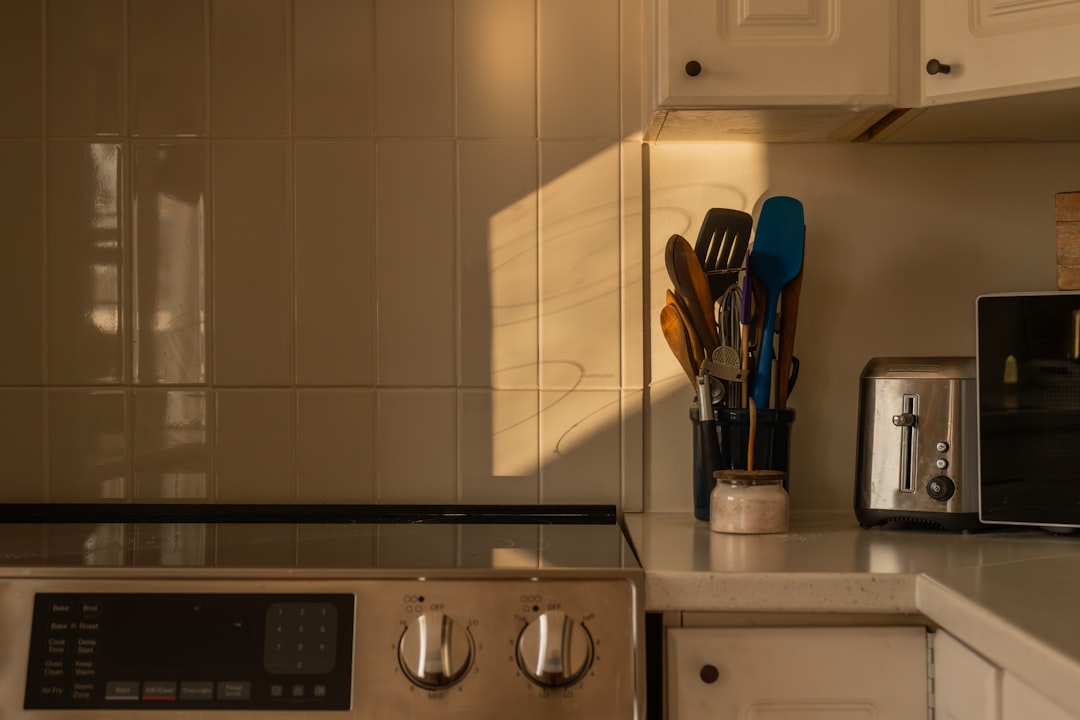
Kitchen Scenarios That Clarify the Choice
Fresh fingerprints versus airborne cooking film
Fingerprints on a compatible refrigerator handle may need only a light all-purpose wipe, followed by drying. The tacky film on the cabinet above the stove contains cooking oil mixed with dust and is more likely to benefit from a kitchen-focused cleaner. Start with separate cloth sections and compare the fully dry results instead of spreading cabinet grease onto the handle.
One greasy backsplash patch versus the whole floor
A kitchen degreaser may fit a small compatible backsplash zone behind a pan, while a published all-purpose dilution may be the practical choice for a larger compatible floor. The backsplash and floor can have different finishes, grout, seams and slip concerns. Do not carry the same concentration, tool or amount of moisture from one surface to the other without checking both sets of directions.
Cabinet faces with residue around the pulls
Dark buildup around pulls often combines hand oils, food residue and dust. Remove loose debris, apply a compatible cleaner to the cloth and detail one handle area at a time. Avoid soaking hinge holes, door edges and unfinished wood. If paint color transfers or a clear coat becomes tacky, stop; that is a finish warning, not a request for a stronger degreaser.
A coated appliance beside an uncoated metal trim piece
Two stainless-looking parts may not share the same care rules. A fingerprint-resistant door can have a coating, while an adjacent trim strip may be bare metal. Check the appliance manual, test discreetly and clean each component within its own boundary. Direct spray near a display, dispenser or seam can create a larger problem than the smudge.
Counter cleanup after raw-food preparation
Visible grease and crumbs still need removal, but routine cleaning language does not establish a sanitizing or disinfecting claim. Follow current food-safety guidance and the exact product label for any required step after raw meat, poultry, fish or eggs. Keep that task distinct from the everyday choice between a degreasing cleaner and an all-purpose cleaner.
Step-by-Step: Choose the Right Kitchen Cleaner
1. Make the appliance or work area safe. Cool cooking surfaces and unplug appliances when the manual instructs. Move food, utensils and cords away from the cleaning zone.
2. Remove dry debris.
Brush or vacuum crumbs and dust so they do not become abrasive paste.
3. Identify the finish.
Confirm painted wood, laminate, stainless steel, coated metal, glass, tile, quartz, natural stone or another material.
4. Classify the soil.
Oily, tacky film points toward a kitchen-focused cleaner. Light hand soil and general dirt may need only an all-purpose product.
5. Read and test.
Check the product and material directions. Test a hidden area and let it dry before judging gloss or color.
6. Apply with control.
Spray the cloth near buttons, vents, seams, cabinet edges and backsplash outlets. Use only enough cleaner to wet the soil.
7. Work in small sections.
Wipe the greasy zone, fold to a clean cloth face and repeat. One saturated cloth simply moves oil across the surface.
8. Detail handles and edges separately.
Wrap a clean cloth around the handle and wipe joints without forcing liquid behind trim or into screw holes.
9. Make any required follow-wipe.
Remove released residue according to the product and surface instructions.
10. Dry and inspect.
Buff with a clean dry cloth and view the area from the side. Streaks may indicate transferred grease or excess product rather than a need for stronger scrubbing.

Where Shine-It and Citrus Concentrate Fit
is a ready-to-use kitchen surface cleaner for compatible counters, cooking residue, grease spots, appliance exteriors, cabinet fronts, backsplashes and routine kitchen grime. It fits focused kitchen cleanup when you do not need to mix a concentrate.
is the dilution-based all-purpose option for compatible counters, floors, general messes and larger cleaning jobs. The current directions are 1 ounce per quart of water for light duty, 2 ounces per quart for all-purpose cleaning and 8 ounces per quart for heavy duty. Use the published mix and verify the finish first.
The kitchen surface cleaner guide
covers routine wipe-downs, while the guide to greasy kitchen counters and appliance smudges
focuses on common oil-and-fingerprint zones. For broader cleaner selection, see all-purpose cleaner uses and limits
.
Common Degreaser and All-Purpose Cleaner Mistakes
• Asking which product is stronger without identifying the soil.
• Spraying appliance displays, control panels, vents or outlets directly.
• Cleaning a hot or energized appliance against its manual.
• Using the same oily cloth across every cabinet and counter.
• Flooding laminate seams or unfinished cabinet edges.
• Scrubbing fingerprint-resistant coatings with abrasive pads.
• Mixing products or increasing concentration beyond directions.
• Treating ordinary cleaning as an unsupported sanitizing step.
When Cleaning Is Not Enough
Stop if paint softens, a coating lifts, laminate swells, stone etches or a display becomes cloudy. Grease inside a range hood motor, appliance housing or electrical control is a service task, not an exterior-cleaning problem.
Deeply carbonized oven residue and raw-meat contact cleanup also require the appliance or food-safety method written for that job. A general comparison cannot replace those directions.
Frequently Asked Questions
Is a degreaser stronger than an all-purpose cleaner?
Not in a universally useful sense. A degreaser is selected for oily soil; an all-purpose cleaner is selected for broader compatible routine grime.
Can I use all-purpose cleaner on a greasy stovetop?
Only if both the stovetop and cleaner directions allow it. Heavy oily film may respond better to a kitchen-focused cleaner after the surface is cool.
Can I spray cleaner directly on an appliance?
Avoid direct spray near controls, vents, seams and openings. Apply it to the cloth unless the appliance and product directions say otherwise.
Which cleaner should I use on stainless steel?
Follow the exact appliance or surface instructions. Coated and fingerprint-resistant stainless finishes can have different restrictions from uncoated steel.
How do I stop greasy streaks?
Use less product, work in smaller sections, change to a clean cloth face as oil transfers and finish with the required follow-wipe and drying pass.
What is the heavy-duty Citrus Concentrate ratio?
The current ratio is 8 ounces of Citrus Concentrate per quart of water. Confirm surface compatibility and do not invent a stronger mix.
The bottom line
Choose a kitchen-focused cleaner when oily cooking film dominates and an all-purpose cleaner for compatible routine grime and larger general-cleaning jobs. Shine-It and Citrus Concentrate fill those distinct roles. Remove dry debris, protect controls and seams, and let the finish—not marketing bravado—set the limit.
Photo credits: Franco Debartolo, Smart Renovations via Unsplash.