How to Remove Water Spots From a Bathroom Mirror

Quick Answer
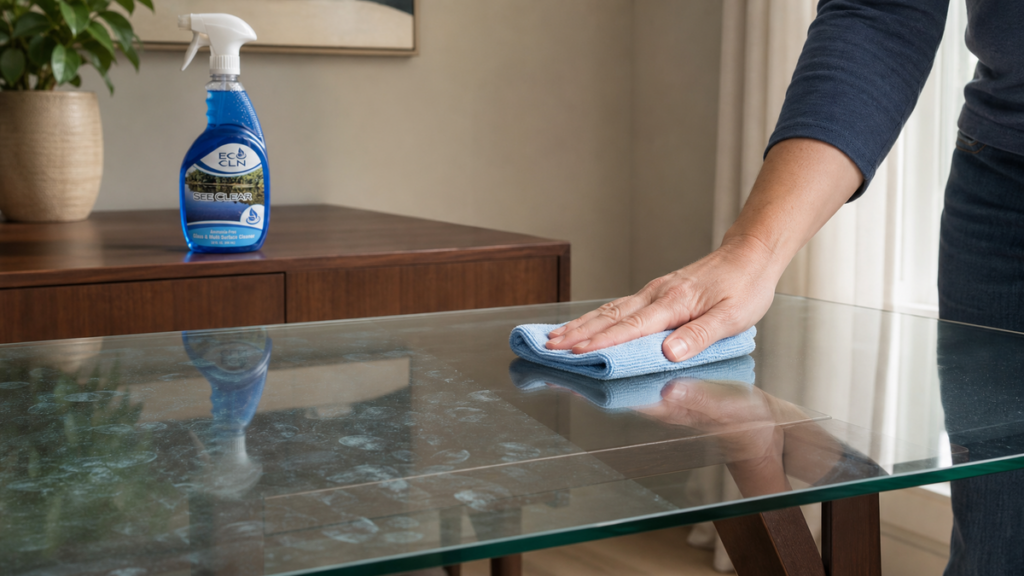
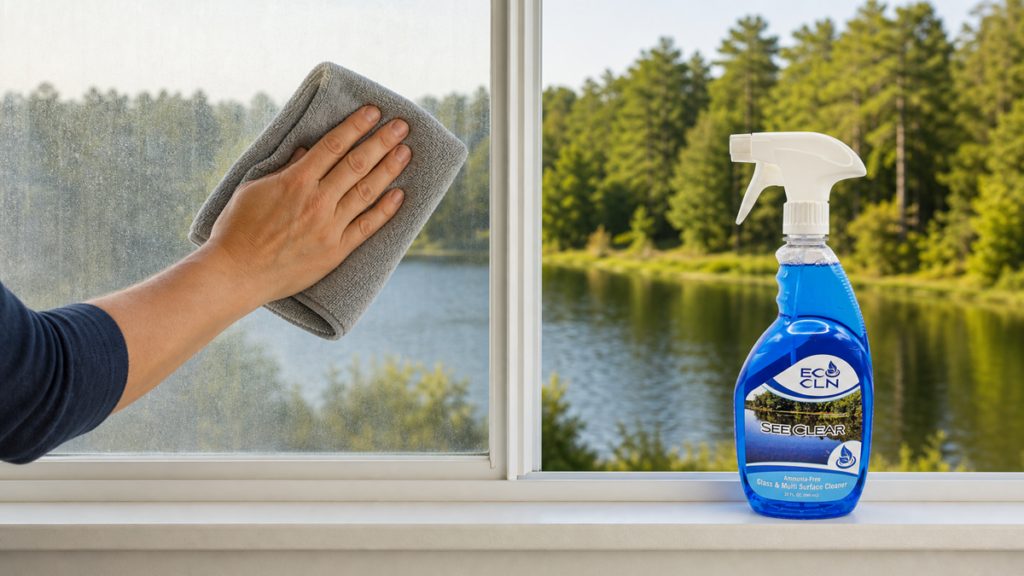
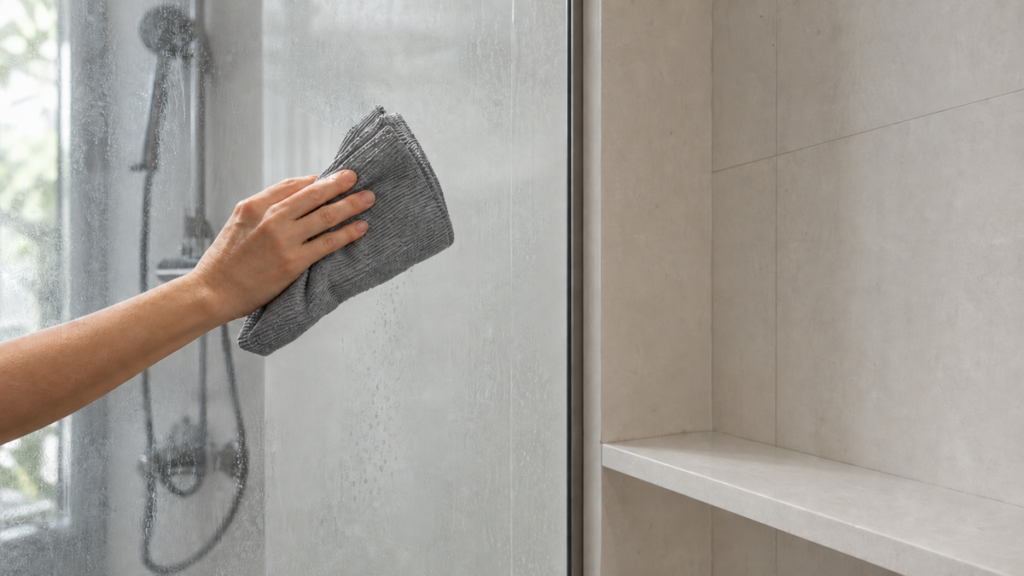
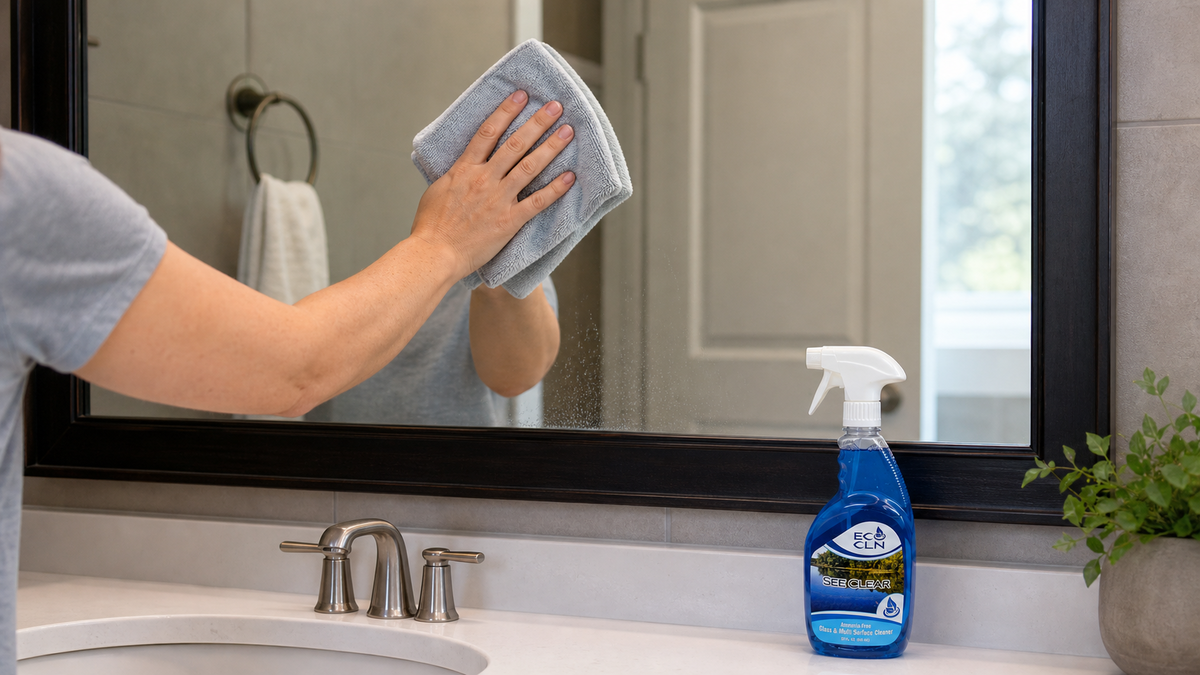
For light dried water spots and sink splashes on a bathroom mirror, put a small amount of Eco Cln See-Clear on a clean microfiber cloth rather than spraying the mirror edge heavily. Wipe the spots in overlapping passes, switch to a clean cloth face as residue lifts, and buff the mirror completely dry.
If the marks are thick mineral scale, etched glass, or dark streaks at the mirror edges, routine glass cleaner may not solve the problem. Do not keep soaking the perimeter or escalating with acidic DIY cleaners.
Why Bathroom Mirrors Get Water Spots
Sink splashes and steam droplets dry on the mirror and leave behind minerals, toothpaste mist, soap residue, skin-care aerosol, or cleaner film.
Hard-water droplets are especially visible because the water evaporates while minerals remain on the glass.
Step 1: Make Sure the Spot Is on the Surface
Wipe a small central area with a clean dry microfiber cloth. If the mark changes, it is likely surface residue.
Dark edge spots, blackened streaks, or silver-looking damage behind the glass can be desilvering rather than dirt.
Step 2: Protect the Mirror Edges
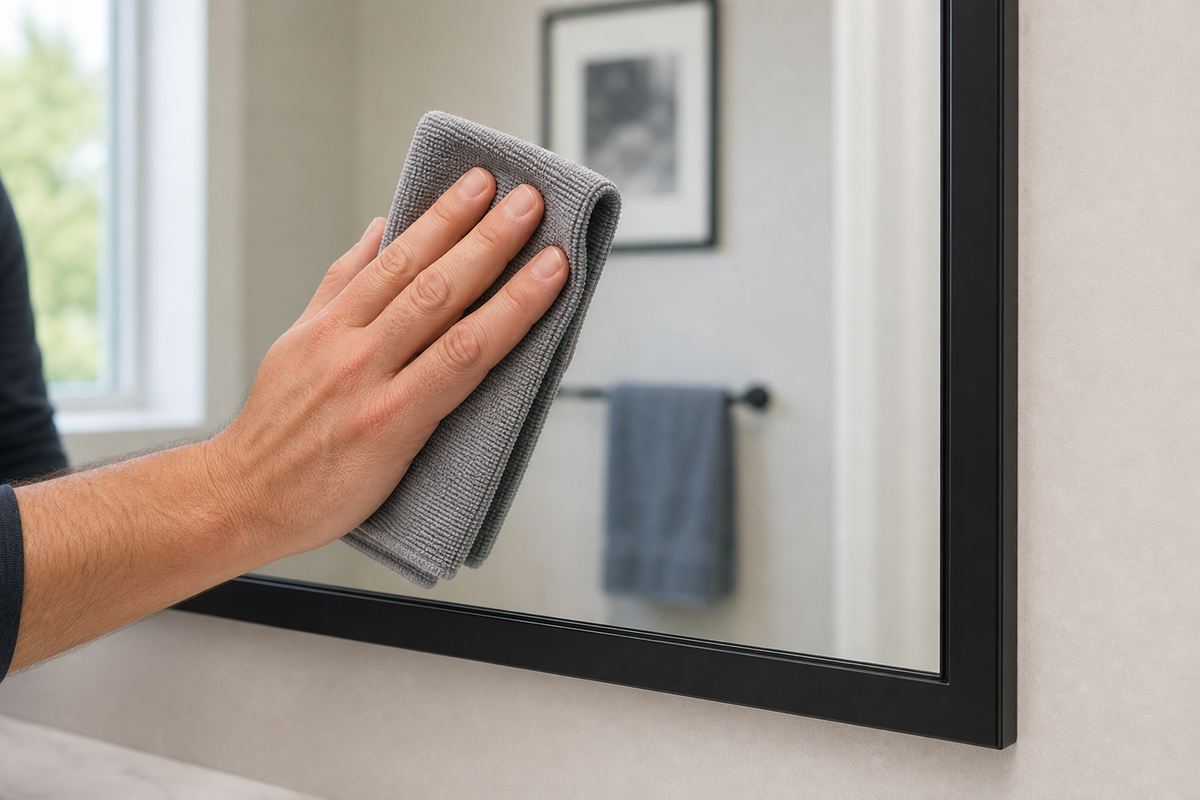
Kohler’s mirror-care guidance says moisture is a major cause of desilvering and recommends spraying cleaner onto a towel rather than directly onto the mirror. Review Kohler mirror desilvering guidance.
That is especially important along the bottom edge, corners, and any unfinished mirror perimeter where liquid can reach the backing.
Step 3: Use a Light Amount of See-Clear
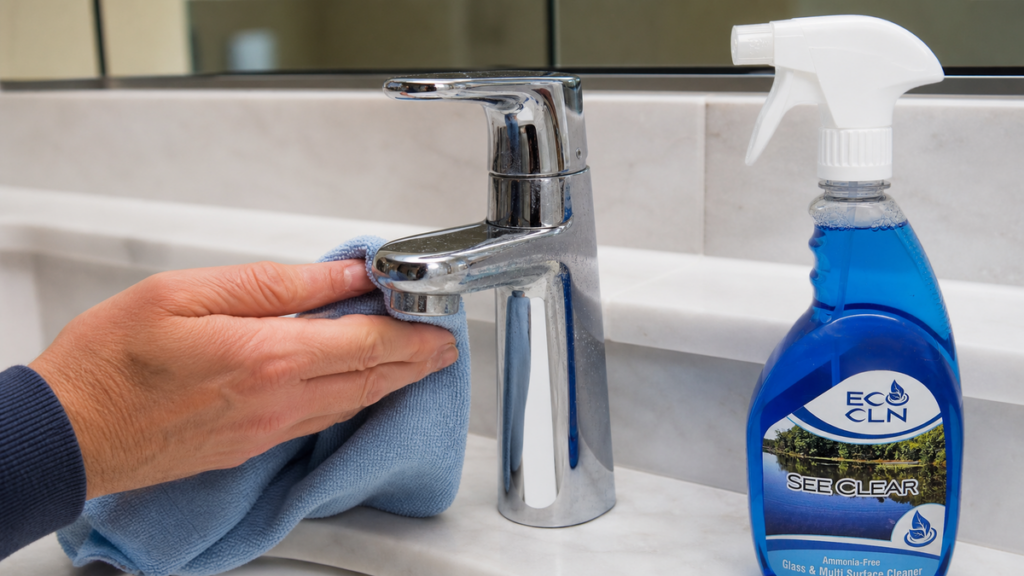
The current See-Clear product page lists bathroom mirrors and is ammonia-free. Apply it to the cloth for better control near mirror edges.
Use a clean microfiber cloth. Too much product can leave a new film and make the mirror look streaky even after the original spots are gone.
Step 4: Work the Water Spots in Small Sections
Wipe one small section at a time in overlapping passes. For a stubborn dried droplet, hold the dampened cloth against the spot briefly rather than repeatedly spraying the whole mirror.
Do not scrape the mirror with metal blades or abrasive pads unless the mirror manufacturer specifically approves that method.
Step 5: Switch to a Dry Cloth

Buff the mirror dry with a second clean microfiber cloth, especially around the edges and lower splash zone.
Inspect from an angle. Side light makes remaining mineral spots and cleaner film much easier to see.
Light Water Spots vs. Heavy Mineral Buildup
Eco Cln positions See-Clear for haze, fingerprints, smudges, and light residue. The related soap scum vs. hard water guide explains that heavier mineral deposits are a different type of bathroom buildup.
Do not claim See-Clear is a heavy mineral-scale remover. If thick deposits remain, check the mirror maker’s approved cleaning method or consult a glass professional.
Why We Are Not Recommending Vinegar on Mirror Edges
Kohler specifically warns that vinegar-based cleaners and ammonia-containing cleaners can accelerate mirror desilvering. See Kohler mirror guidance.
See-Clear is ammonia-free, but you should still keep moisture controlled and away from vulnerable mirror edges.
What If the Spots Never Change?
If a cloudy area does not respond to appropriate glass cleaning, it may be etched, scratched, coated, or otherwise physically altered.
If dark spots or streaks appear behind the glass at edges, cleaning will not restore the silver backing. Mirror repair or replacement may be required.
How to Slow New Water Spots
Dry large sink splashes before they evaporate, keep faucet spray aimed into the basin, and wipe the lower mirror edge after messy handwashing or toothbrushing.
Routine light cleaning is easier on a mirror than repeatedly attacking heavy dried deposits.
Common Bathroom-Mirror Mistakes
- Spraying cleaner heavily along mirror edges.
- Using vinegar or ammonia-based DIY solutions around vulnerable mirror backing.
- Using too much glass cleaner and leaving film behind.
- Using dirty microfiber that redistributes residue.
- Scraping with metal blades or abrasive pads.
- Trying to clean away desilvering or backing damage.
- Assuming every cloudy mark is removable hard-water scale.
Where See-Clear Fits
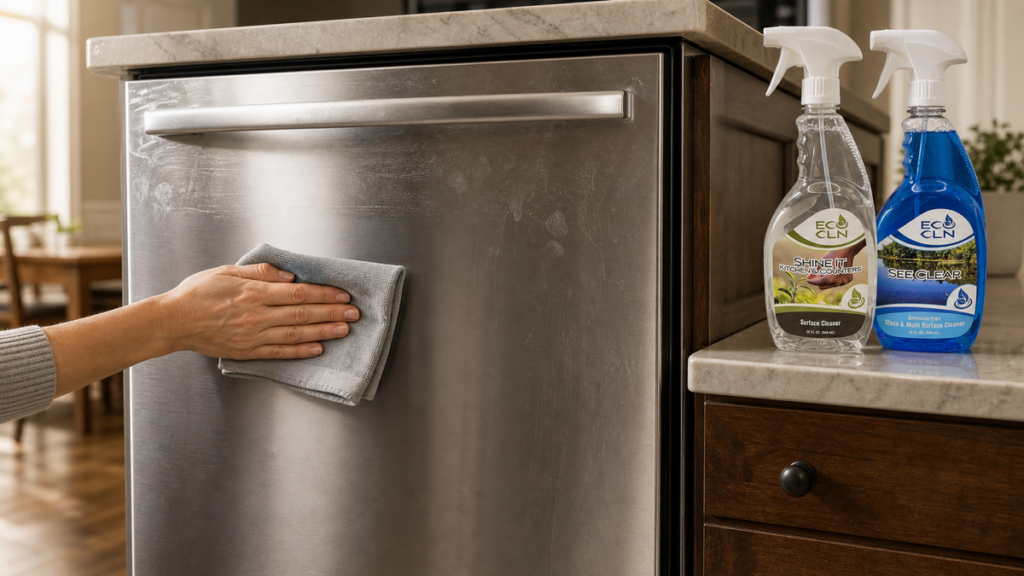
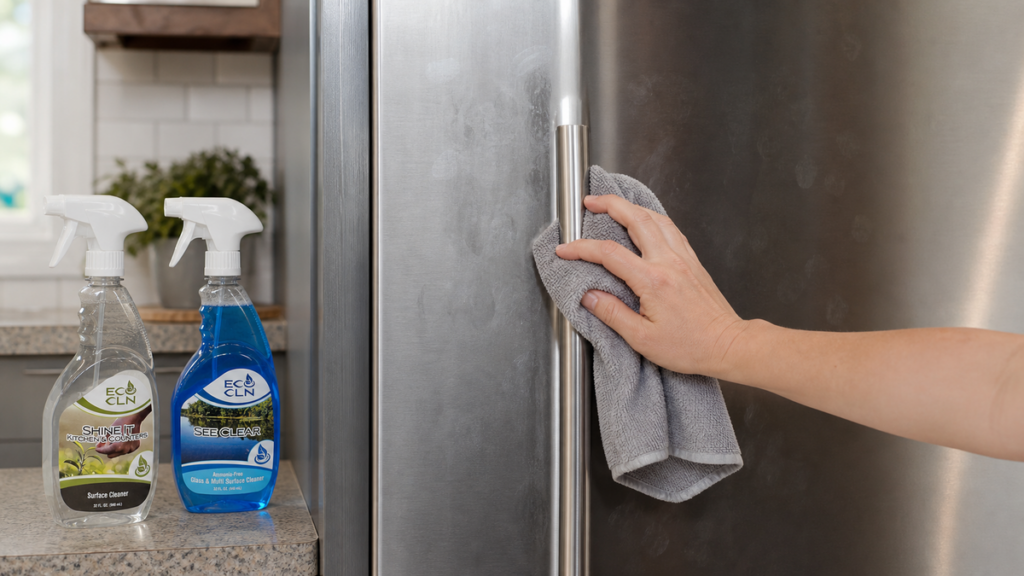
Eco Cln See-Clear is the ammonia-free Eco Cln cleaner for mirrors, windows, glass doors, chrome, stainless steel, appliances, and shiny surfaces. It fits routine bathroom-mirror water spots, splash marks, haze, and smudges when used lightly and buffed dry.
FAQ
Can I spray See-Clear directly on a bathroom mirror?
You can when the mirror maker allows it, but spraying the cloth first gives better control and helps protect the mirror edges and backing.
Is See-Clear ammonia-free?
Yes. The ammonia-free claim belongs to See-Clear.
Can vinegar damage a mirror?
Some mirror manufacturers warn that vinegar-based cleaners can accelerate desilvering, especially when moisture reaches the backing or edges.
Why are there black spots around the edge of my mirror?
That can be desilvering, where the reflective backing is deteriorating. Cleaning cannot restore damaged silver backing.
What if the water spots are thick and crusty?
Treat them as a heavier mineral-deposit problem and follow the mirror manufacturer’s approved method. Do not promise See-Clear removes heavy scale.
The Bottom Line
For light dried water spots and sink splashes on a bathroom mirror, put a small amount of Eco Cln See-Clear on a clean microfiber cloth rather than spraying the mirror edge heavily. Work on the central glass first, use overlapping passes, rotate to a clean cloth face as residue lifts, and finish with a separate dry microfiber cloth. Keep liquid away from unsealed edges, frame gaps, mounting hardware, and the reflective backing. If a mark is thick, crusty mineral scale, follow the mirror manufacturer’s approved deposit-removal method instead of escalating automatically with vinegar or another acid. Dark edge spots, black streaks, silver loss, or marks that appear behind the glass may be desilvering rather than dirt; surface cleaning cannot restore damaged backing. Stop if moisture collects at the perimeter, the reflective layer changes, or the spot does not respond to a small controlled test. A safe finish means clear surface glass and dry edges—not a soaked mirror that looks temporarily better while liquid works behind it. Check the result after the mirror reaches room temperature so lingering steam is not mistaken for leftover mineral haze.
For everyday sink splashes, light water spots, haze, and fingerprints on a compatible bathroom mirror, Eco Cln See-Clear gives you the ammonia-free glass-cleaning lane. Put it on the cloth, protect the edges, and buff the mirror fully dry.