How to Clean Chrome Faucets Without Leaving Spots or Streaks

Quick Answer
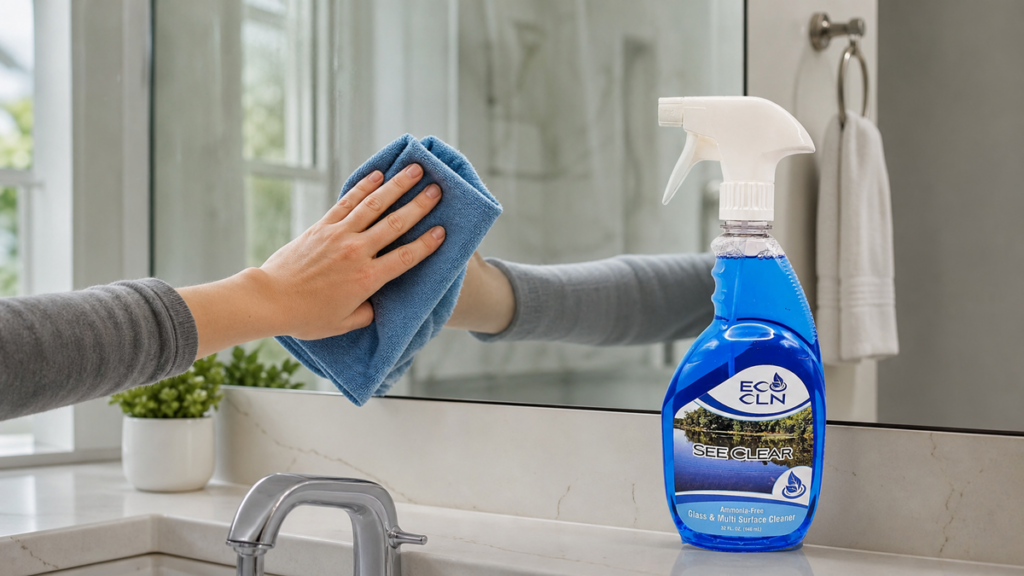
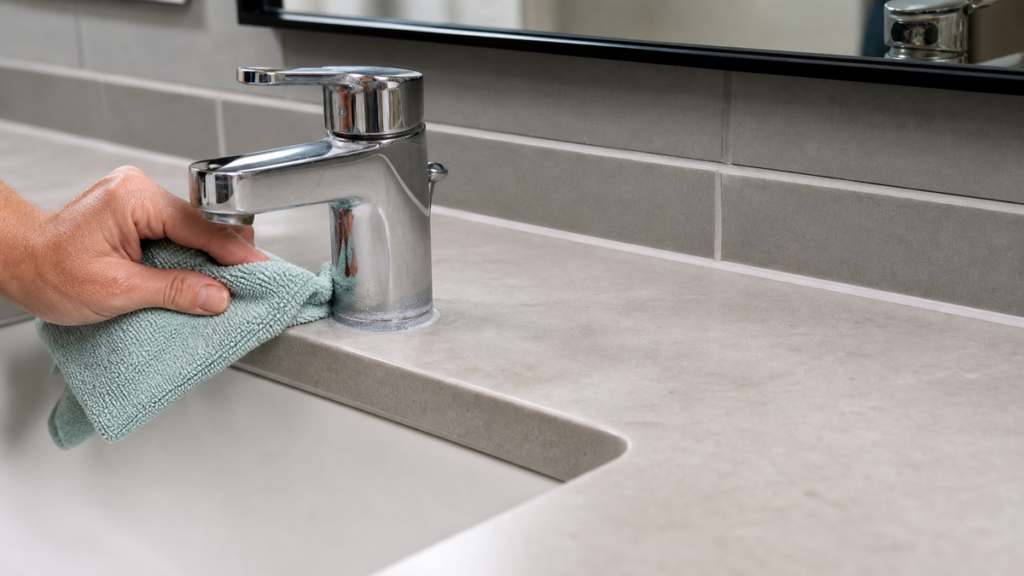
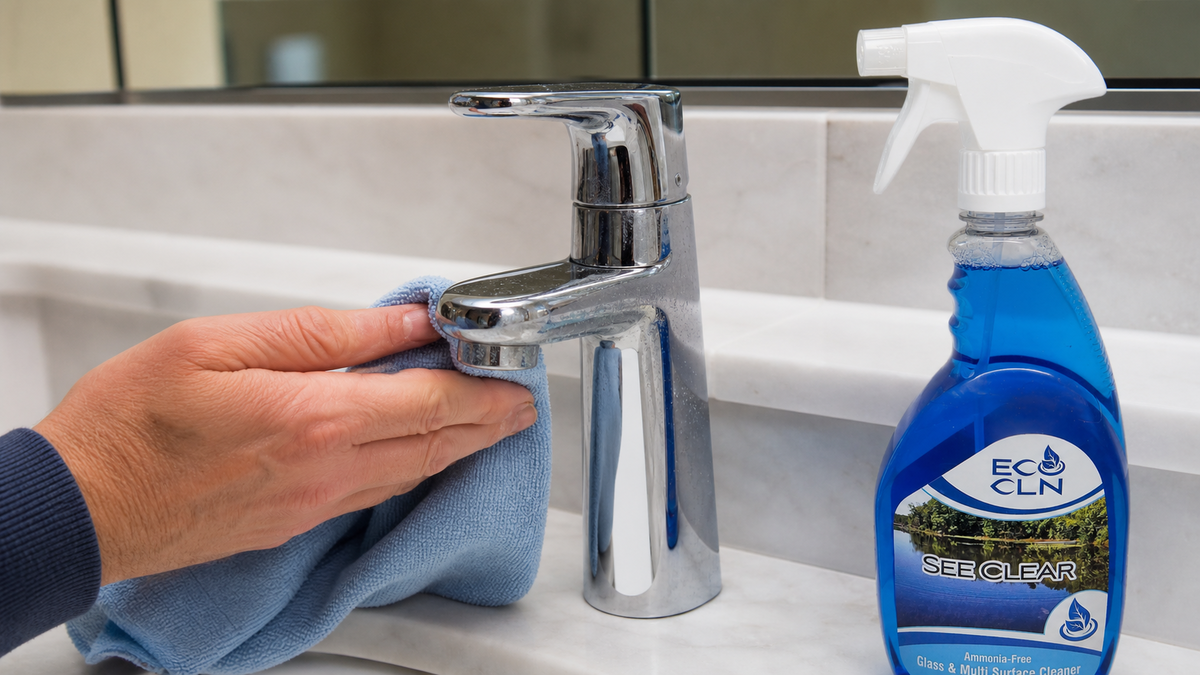
Dust or rinse away loose debris, then use a small amount of Eco Cln See-Clear on a soft microfiber cloth for compatible chrome fixtures. Wipe the faucet body, handle, and spout gently, then buff completely dry with a second cloth.
Kohler recommends a soft-cloth approach on chrome finishes and says to test unfamiliar surfaces in an inconspicuous area first. Review Kohler chrome-finish care.
If the chrome has heavy mineral scale rather than light water spots, follow the faucet manufacturer’s approved hard-water method rather than escalating with abrasives.
Why Chrome Gets Spotty So Fast
Chrome is highly reflective, so dried water droplets and wipe marks are visible from multiple angles. Faucet bases also catch soap residue, toothpaste mist, hand oils, and minerals from splashing water.
If cleaner or rinse water is left to evaporate, the faucet can look dirtier after cleaning even though the residue was loosened.
Step 1: Identify the Finish
Confirm the fixture is actually polished chrome. Brushed nickel, polished nickel, brass, matte black, bronze, and specialty coatings can have different care rules.
Use the faucet manufacturer instructions for specialty finishes and any finish-specific warranty restrictions.
Step 2: Remove Loose Residue First
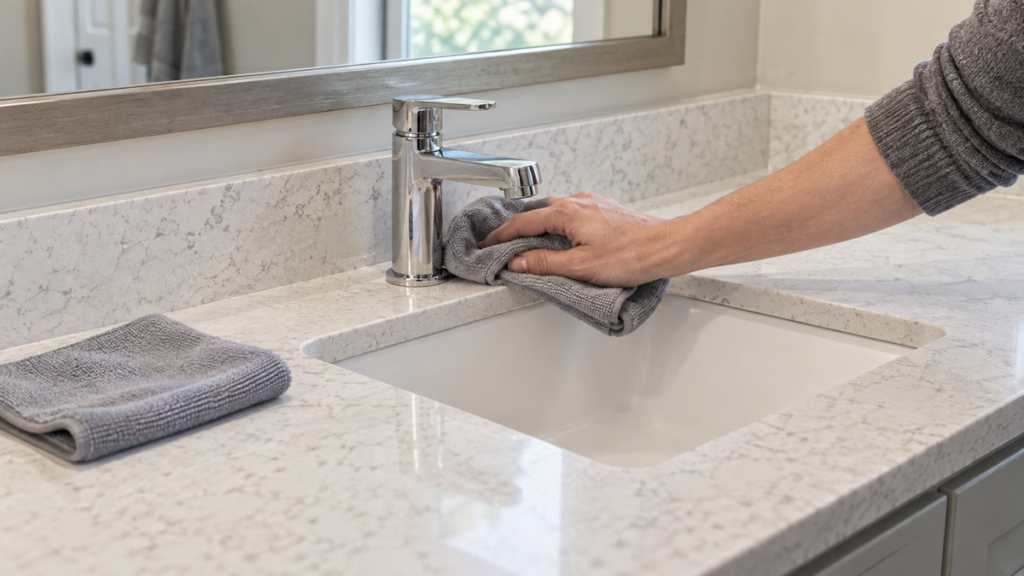
Use a damp soft cloth to remove toothpaste specks, dust, and loose soap residue. Do not drag gritty debris across the chrome.
Pay attention to the faucet base and the underside of the handle, where splash residue hides.
Step 3: Use See-Clear Lightly
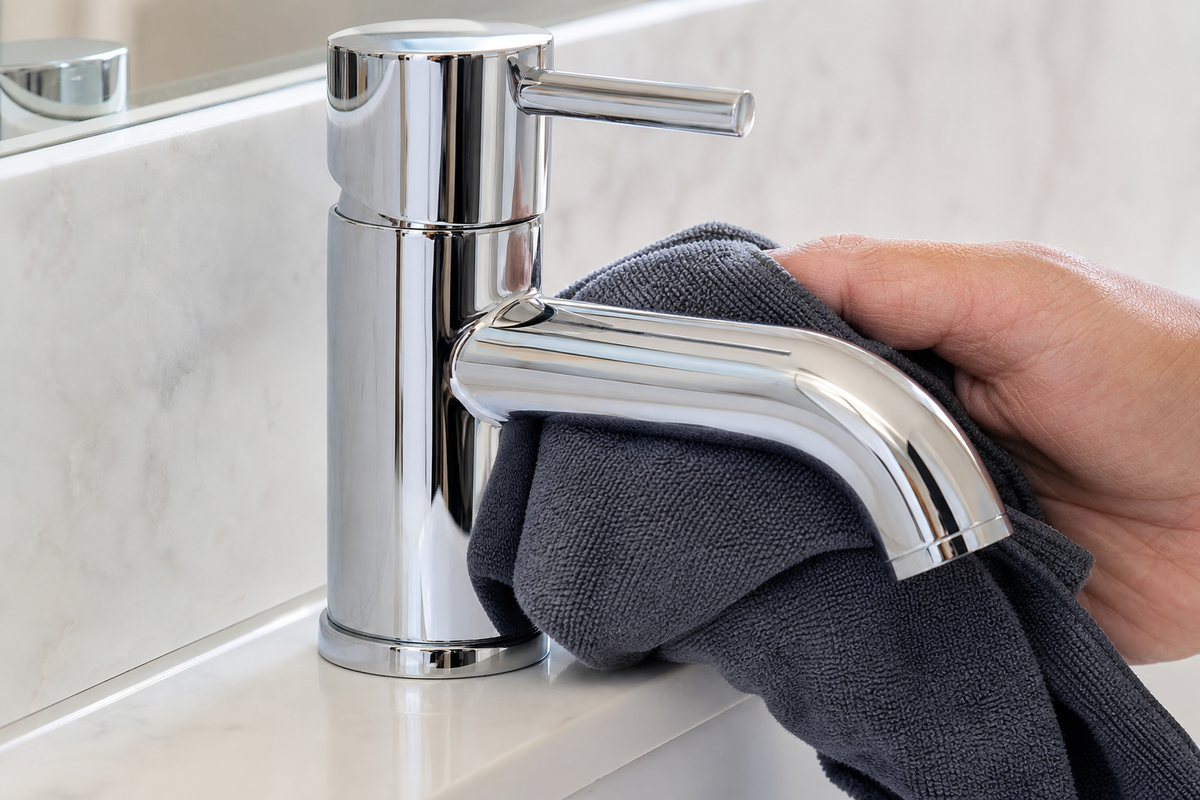
The current See-Clear product page specifically lists chrome and bathroom fixtures and recommends light passes instead of overspraying.
Apply the product to microfiber when you want maximum control around seams, aerators, sensor windows, electronic faucets, or porous countertop edges.
Step 4: Wipe Without Abrasion
Use a soft microfiber cloth and light pressure. Avoid rough sponges, scouring powder, metal polish, or abrasive pads unless the faucet manufacturer specifically calls for them.
Chrome is a finish, not a surface you should mechanically scour to remove every spot.
Step 5: Buff Completely Dry
Use a second clean dry microfiber cloth and buff the faucet body, handle, and base until no moisture film remains.
Drying is the step that prevents many new spots and streaks. If the faucet still looks hazy, switch to a fresh cloth before adding more cleaner.
Light Water Spots vs. Heavy Mineral Buildup
Light dried droplets and routine haze are appropriate for See-Clear when the finish allows it.
Heavier chalky mineral deposits are a different bathroom-buildup problem. The Eco Cln soap scum vs. hard water guide explains why routine glass/shiny-surface cleaning and mineral-deposit treatment are not the same job.
Do not promise See-Clear removes thick scale.
Protect Seams, Aerators and Specialty Coatings
Chrome faucet bodies are often paired with materials that need different care. Keep cleaner out of the aerator opening, motion-sensor window, handle joint and gaps around the faucet base. If the fixture has a living finish, plated accent or manufacturer-applied coating, the care sheet may rule out products that ordinary polished chrome tolerates. Apply cleaner to the cloth near those transitions instead of spraying the whole assembly.
After wiping, inspect the underside of the spout and the narrow ring around the base. Residue collects there and can run back onto a freshly buffed faucet. Use a clean corner of microfiber for the seam, then dry the counter edge so water does not sit against caulk, stone or laminate. If spotting returns within hours, check for a dripping aerator or splash pattern before repeating cleaner.
Common Chrome-Faucet Mistakes
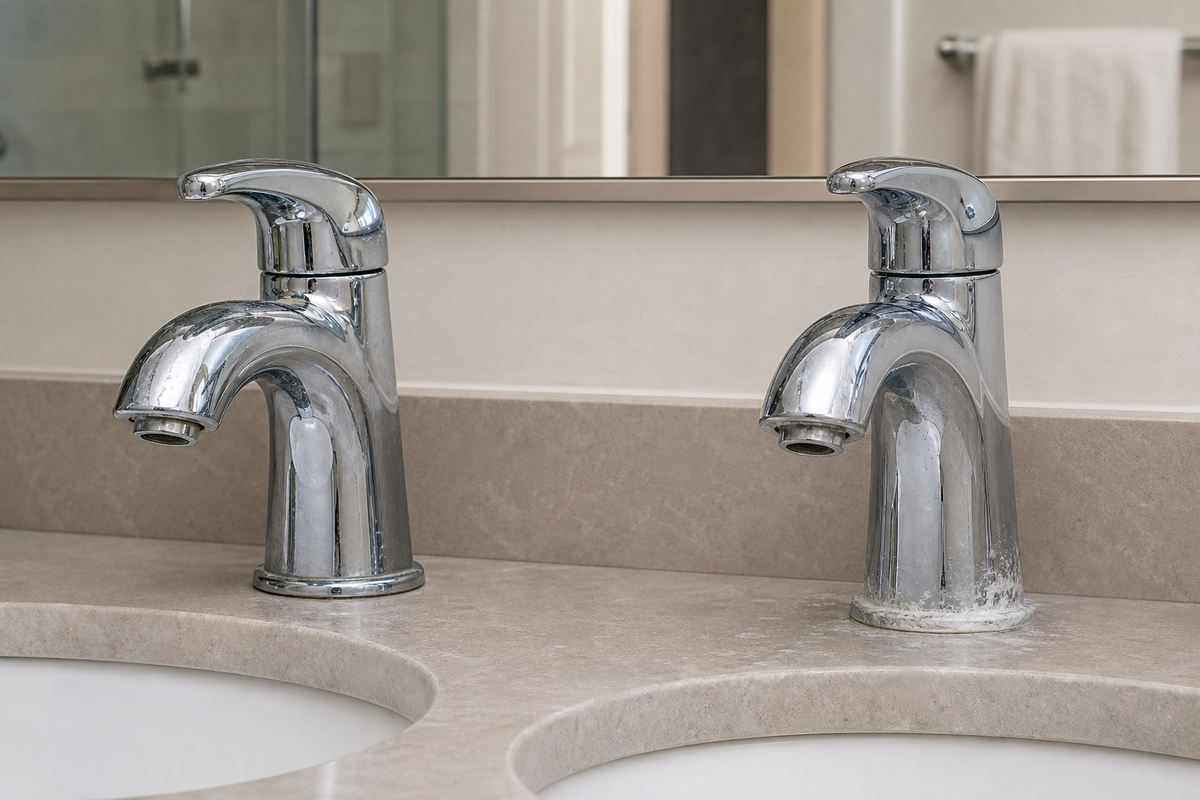
- Leaving rinse water to air-dry on chrome.
- Using an abrasive pad to chase water spots.
- Using too much cleaner and leaving film behind.
- Cleaning a specialty finish as if it were polished chrome.
- Spraying directly into sensor windows or electronic faucet seams.
- Using one greasy cloth for both the faucet and surrounding countertop.
Where See-Clear Fits
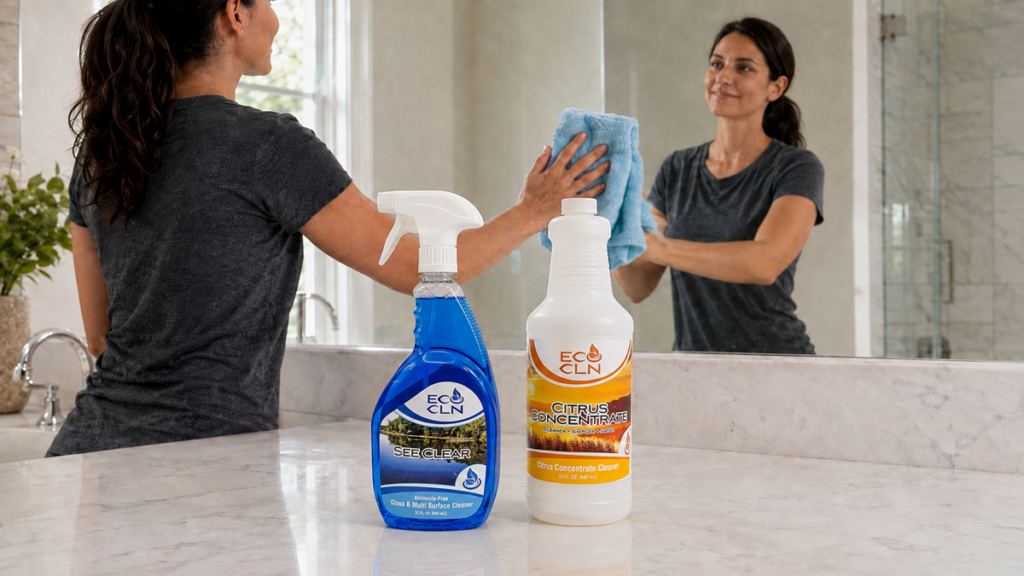
Eco Cln See-Clear is the ammonia-free Eco Cln product for chrome, mirrors, glass, stainless steel, appliances, and shiny surfaces. It fits light water spots, fingerprints, haze, and routine fixture smudges when the faucet finish is compatible.
FAQ
Can I use See-Clear on chrome faucets?
Yes, See-Clear is positioned for chrome and shiny bathroom fixtures. Test first and follow the fixture maker.
Is See-Clear ammonia-free?
Yes. Keep the ammonia-free claim specific to See-Clear.
Why does chrome look streaky after cleaning?
Too much cleaner, a dirty cloth, or water left to evaporate can leave visible film. Use light product and buff dry.
Can I use a scrub sponge on chrome?
Avoid abrasive pads unless the manufacturer specifically approves them.
What if the white spots will not come off?
They may be heavier mineral deposits. Use the faucet manufacturer’s approved hard-water method instead of stronger random abrasives.
The Bottom Line
Confirm that the faucet is polished chrome rather than nickel, brass, bronze, matte black, or another specialty finish, then follow the fixture maker’s care instructions. Remove toothpaste specks, dust, and loose soap residue with a soft damp cloth before wiping the reflective surface so grit is not dragged across the finish. For compatible chrome, put a small amount of Eco Cln See-Clear on a clean microfiber cloth and work in light, controlled passes around the body, handle, spout, and base. Keep liquid out of sensor windows, electronic controls, aerator openings, seams, and porous countertop edges. Switch cloth faces as soil transfers, then use a second clean dry microfiber cloth to buff away the remaining moisture film. Inspect from two angles before adding more cleaner; many apparent streaks are simply residue from an overloaded cloth or water allowed to evaporate. Treat stubborn chalky deposits as a separate mineral-buildup problem and use only the faucet manufacturer’s approved deposit-removal method. Do not escalate to scouring powder, rough pads, metal polish, acids, or improvised abrasives just because routine cleaning did not remove a white mark. Stop if the finish changes color, develops fine scratches, flakes, or reveals pitting. Light spots and haze may improve with routine cleaning, but already damaged chrome plating cannot be restored by cleaner. Gentle repetition beats force on a reflective finish.
For light water spots, fingerprints, and everyday haze on compatible chrome fixtures, Eco Cln See-Clear gives you the ammonia-free shiny-surface cleaning lane. Use a little, wipe gently, and buff dry.