Why Your Mirror Is Still Streaky After Cleaning — and How to Fix It

Quick Answer
If your mirror is still streaky after cleaning, the usual causes are too much cleaner, a dirty or linty cloth, dust that was never removed first, residue from previous products, or moisture left on the glass.
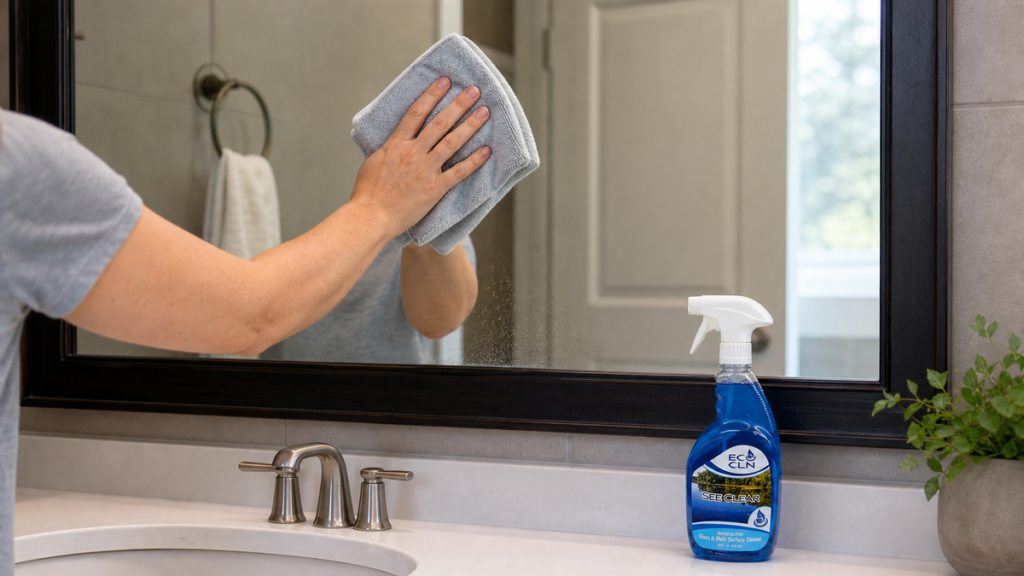
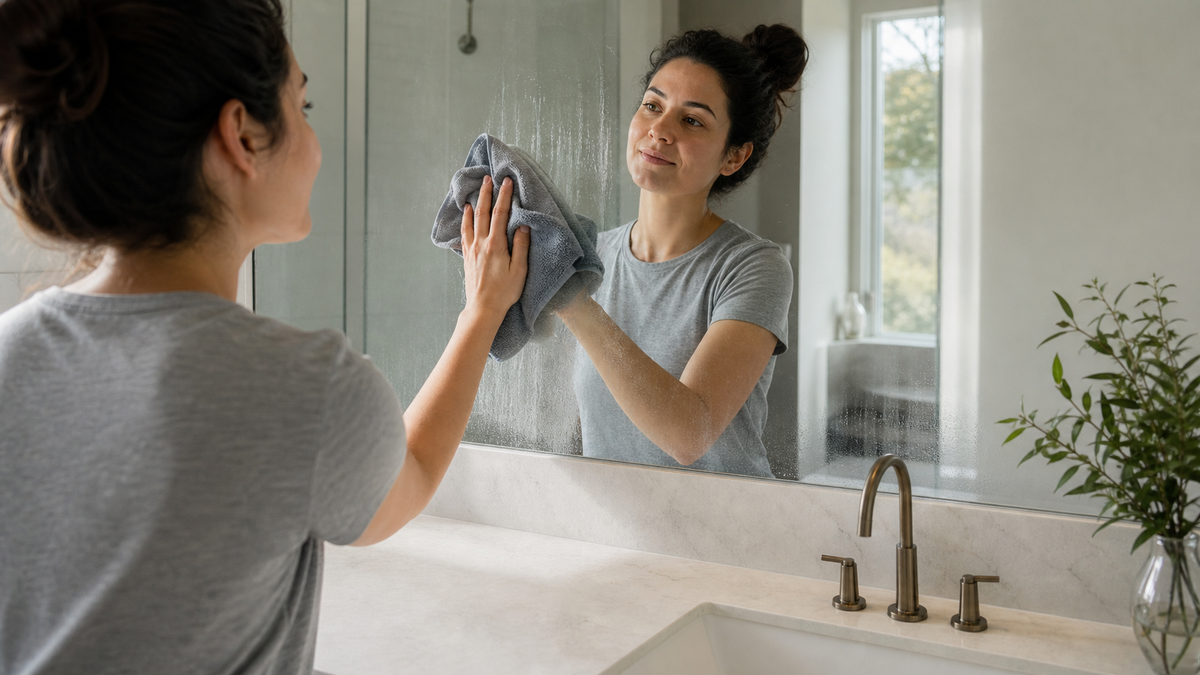
The fix is simple: start with a clean dry mirror, remove dust first, apply a small amount of glass cleaner to a clean microfiber cloth, wipe in an organized pattern, then finish with a second dry section of cloth or a separate dry microfiber towel.
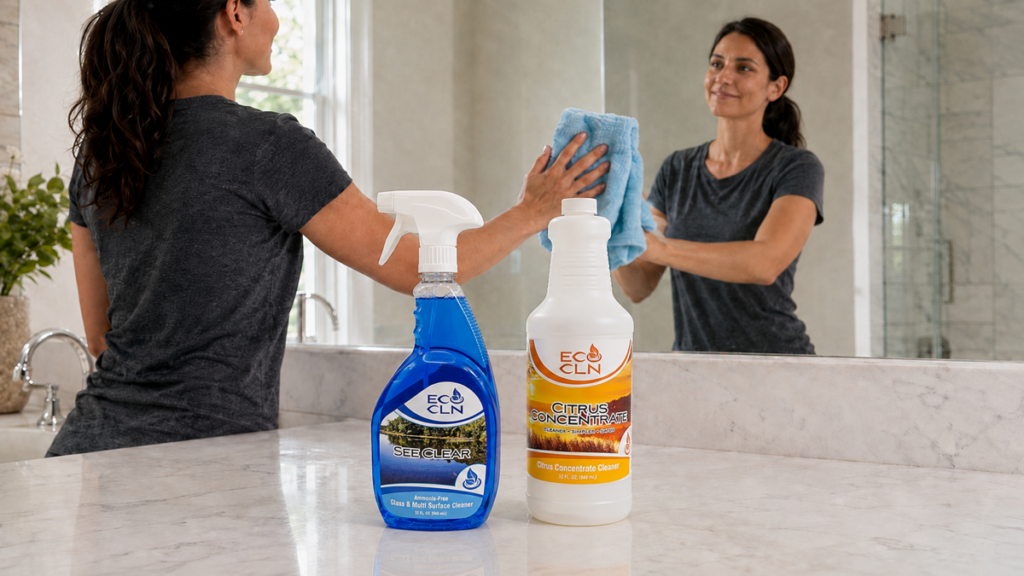
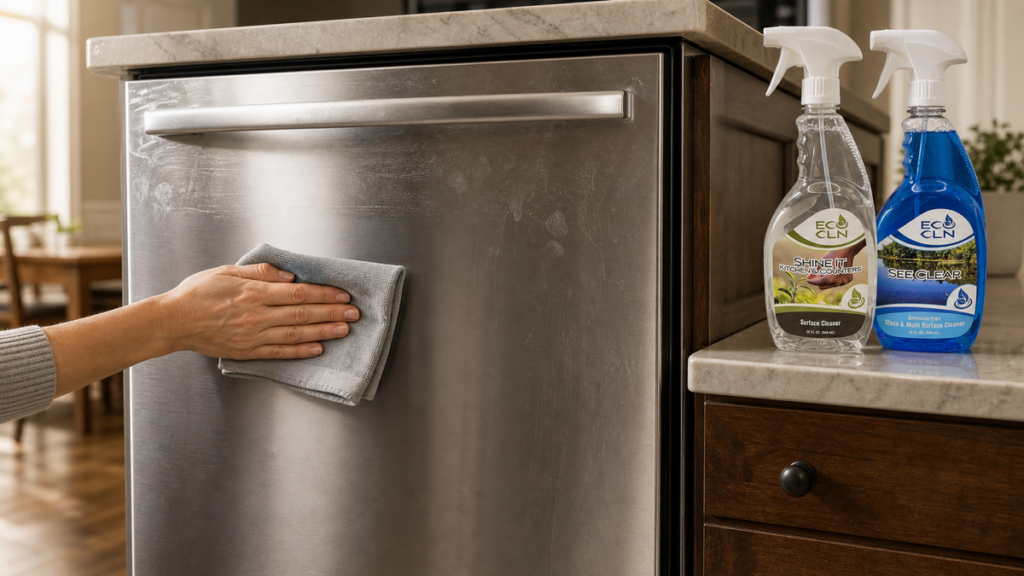
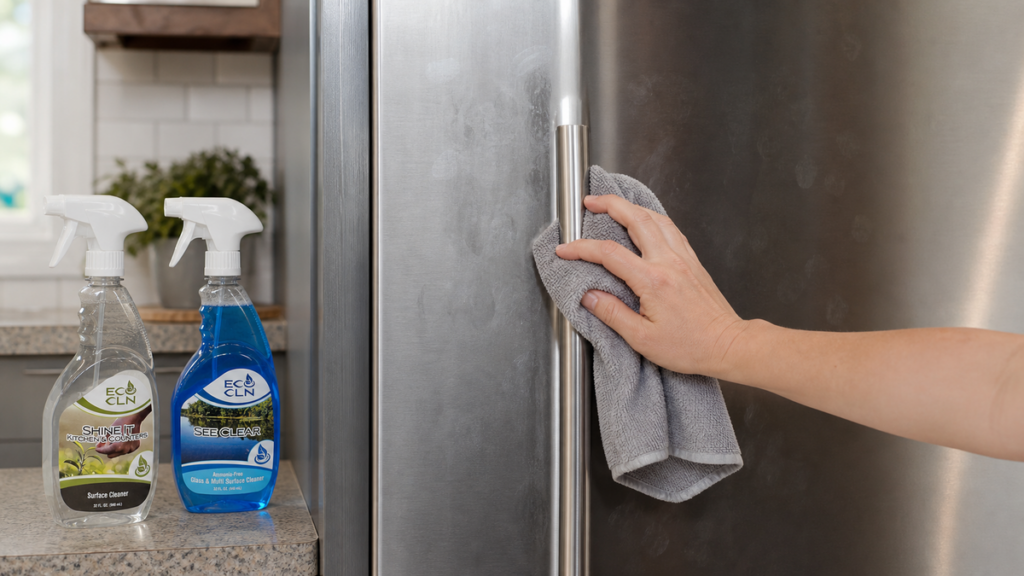
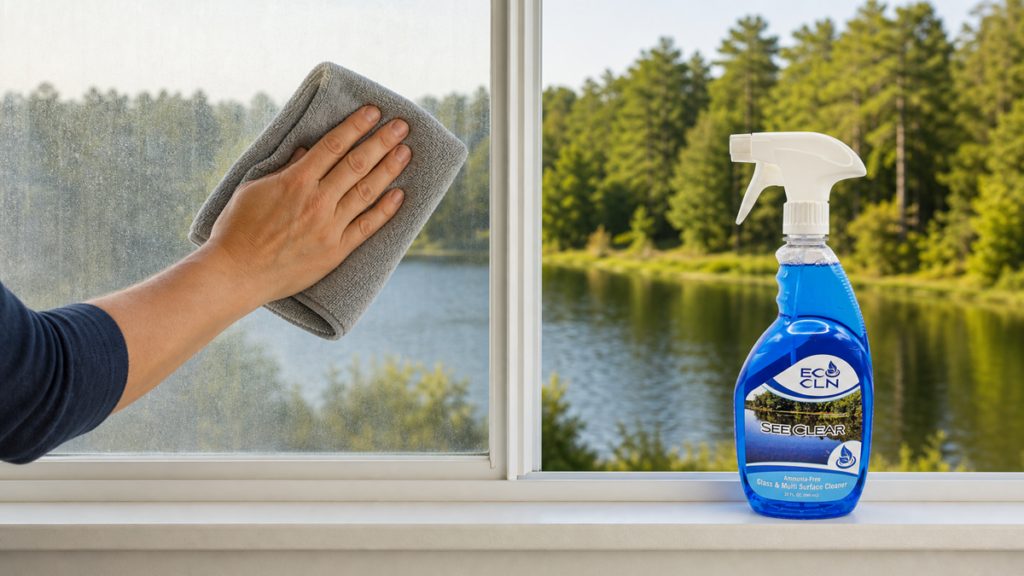
Eco Cln See-Clear is the ammonia-free glass and surface cleaner in the Eco Cln lineup for mirrors, windows, glass doors, chrome, stainless steel, appliance smudges, display cases, and shiny surfaces when used as directed.
Reason 1: You Are Using Too Much Cleaner
More glass cleaner can create more work.
If the mirror is heavily sprayed, your cloth has to remove both the dirt and a larger volume of cleaning solution. Any product left behind can dry into visible lines, especially under bright bathroom lighting.
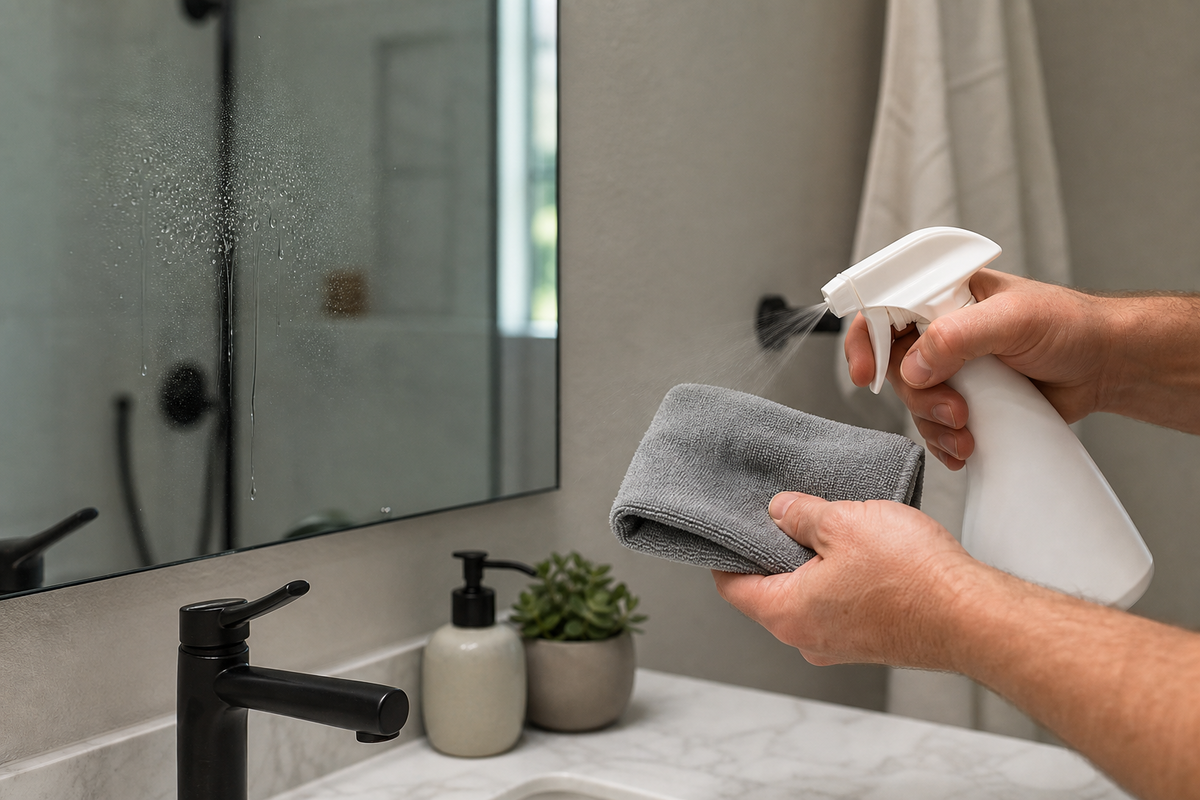
Good Housekeeping’s mirror-cleaning guidance recommends applying glass cleaner to a clean microfiber cloth or paper towel rather than soaking the mirror. That controlled approach is especially useful around framed mirrors and edges where liquid can run.
What to do: Use a light application. You want enough cleaner to loosen smudges and residue, not enough to make the mirror drip.
Reason 2: The Cloth Is Already Dirty
A microfiber cloth only works well while it has clean surface area.
If you use the same towel on the sink, counter, faucet, and mirror, it may carry skin oils, toothpaste residue, dust, grease, or cleaner from one surface to another.
What to do: Use a clean cloth reserved for glass. Fold it into quarters and rotate to a fresh section as it becomes damp. For the final pass, use a dry section or a second dry cloth.
Reason 3: You Skipped the Dry Dusting Step
Bathroom mirrors collect fine dust, hair spray, cosmetic powder, lint, and tiny droplets.
When you spray cleaner on top of dry dust, the liquid can turn it into a film that smears as you wipe.
What to do: Give the mirror a quick dry pass with a clean microfiber cloth first. Then use the glass cleaner.
This is especially useful on mirrors that have not been cleaned in a while.
Reason 4: You Are Wiping in Random Circles Until It “Looks Done”
Random wiping can keep moving residue around.
A consistent pattern makes it easier to see what you have already cleaned and where streaks remain.
What to do: Start at the top and work down in overlapping horizontal or S-shaped passes. Keep your pressure light and consistent. Do not chase every streak while the mirror is still wet.
Finish the entire surface, then inspect it once it is dry.
Reason 5: You Are Not Doing a Dry Finishing Pass
The final dry pass is what separates “clean” from “clear.”
After the cleaning cloth has lifted fingerprints and residue, use a dry microfiber cloth to buff away remaining moisture and faint lines.
Switch cloths if the first one is too damp. Trying to polish glass with a saturated towel often creates new streaks.
Reason 6: Old Product Residue Is Still on the Mirror
Sometimes the streaks are not from the cleaner you are using today.
Previous sprays, furniture-polish overspray, hair spray, cosmetic residue, or a cleaner that left a film can build up over time. The first pass loosens that layer, but does not remove all of it.
What to do: Clean the mirror in small sections and use fresh cloth surfaces often. A second controlled pass may be needed on problem areas, followed by a dry buff.
Do not keep layering more and more product over the same wet mirror.
Reason 7: You Are Spraying Too Close to the Edges
Directly saturating the perimeter of a mirror can send cleaner behind a frame or into edge seams.
Good Housekeeping and other mirror-care guidance recommend applying cleaner to the cloth when you want more control. That reduces drips and keeps liquid away from places where it can collect.
What to do: Spray the cloth first around frame edges, lighting, electrical components, seams, or delicate surrounding materials.
A Simple Streak-Free Mirror Routine
Start with a clean, dry microfiber cloth and remove loose dust.
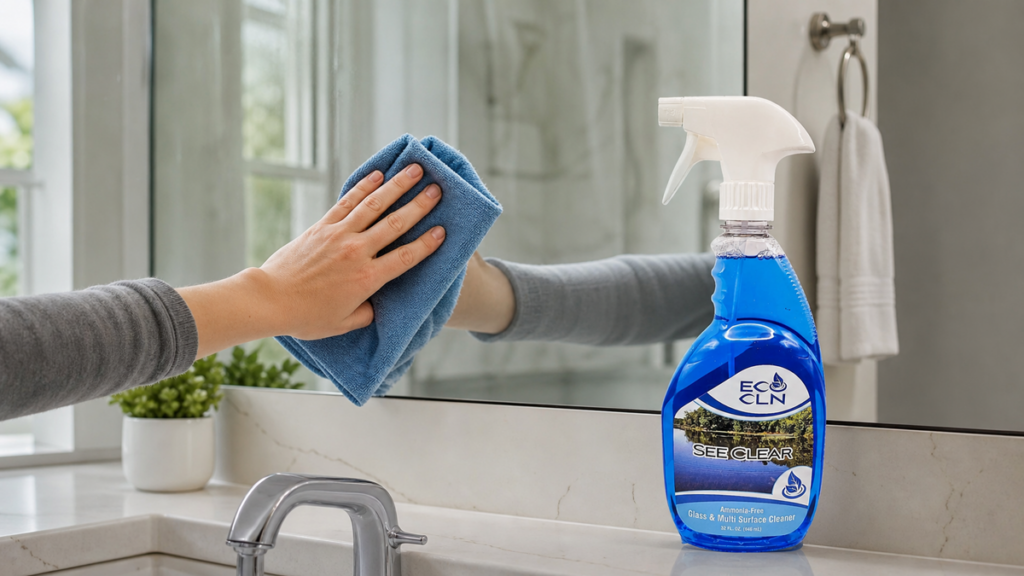
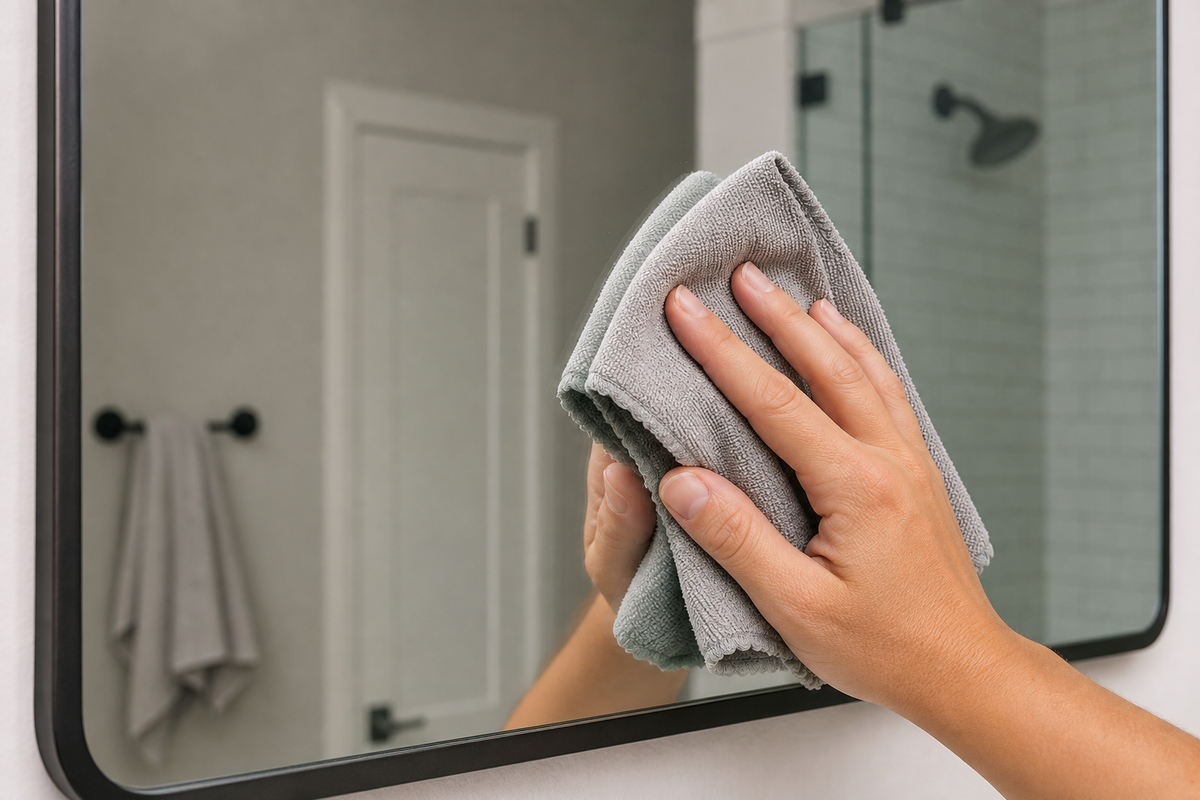
Apply a small amount of See-Clear to a second clean microfiber cloth. Wipe the mirror from top to bottom in overlapping passes, turning the cloth as it becomes damp or dirty.
Pay extra attention to toothpaste specks, fingerprints, and cosmetic residue. If a stubborn spot needs another pass, treat that spot rather than soaking the entire mirror.
Finish with a dry microfiber cloth and inspect the mirror from an angle.
Bright side lighting makes remaining streaks easier to see.
Why See-Clear Fits This Job
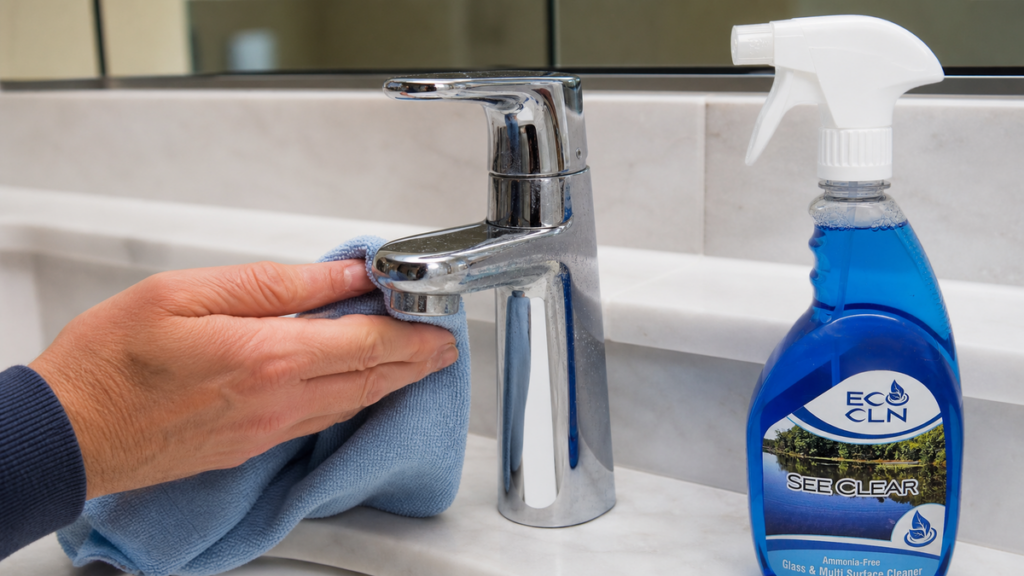
See-Clear is Eco Cln’s ammonia-free glass and surface cleaner for mirrors, windows, glass doors, chrome, stainless steel, appliances, display cases, and other shiny surfaces.
It is the product to use when the problem is fingerprints, haze, smudges, and routine glass cleaning—not heavy kitchen grease, carpet stains, pet urine, or soap-scum buildup.
For heavy shower-door buildup, use the bathroom-cleaner lane first. For a bathroom mirror that is simply streaky, See-Clear is the more direct fit.
Common Mirror-Cleaning Mistakes
Using too much cleaner is the big one.
Other common problems are using a dirty rag, cleaning with a paper product that sheds lint, spraying directly into mirror edges, wiping the entire bathroom with one cloth, skipping the dry buff, and using a product that is not meant for glass.
Another mistake is cleaning while the mirror is hot from strong direct light or a nearby heat source. Fast uneven drying can make streaks easier to see. Clean when the surface is at a normal room temperature.
What If the Mirror Still Looks Cloudy?
First make sure you are seeing residue and not damage.
If repeated controlled cleaning does not change a cloudy patch, inspect the mirror for scratches, edge deterioration, backing damage, or a coating issue. Cleaning cannot fix physical damage behind or within the mirror.
If the haze is actually on a shower door rather than a mirror, it may be soap scum or mineral buildup and needs a different cleaning approach.
How to Keep Mirrors Clearer Longer
Use less product, not more.
Keep a glass-only microfiber cloth handy. Wipe toothpaste or cosmetic splatter before it dries hard. Avoid spraying hair products toward the mirror. In a busy bathroom, do a quick dry microfiber pass between full cleanings.
A mirror that receives small maintenance wipes is easier to clean than one carrying weeks of layered residue.
FAQ
Why does my mirror streak even with glass cleaner?
Usually because too much product remains on the glass, the cloth is dirty or too wet, or old residue is being smeared rather than removed.
Is microfiber better for mirrors?
A clean microfiber cloth is a strong choice because it can pick up fine residue and moisture without the lint some paper products leave behind.
Should I spray cleaner directly on the mirror?
You can when the product and mirror setup allow it, but spraying the cloth first gives better control and helps keep liquid away from edges, frames, electrical components, and seams.
Why does my mirror look clean straight on but streaky from the side?
Side lighting reveals thin films and moisture lines that are hard to see head-on. A dry finishing pass usually makes the difference.
Can I use See-Clear on bathroom mirrors?
See-Clear is positioned for mirrors and other glass/shiny surfaces and is ammonia-free. Use it as directed.
The Bottom Line
If your mirror is still streaky after cleaning, the usual causes are too much cleaner, a dirty or linty cloth, dust that was never removed first, residue from previous products, or moisture left on the glass. Correct the cause before repeating the same cleaning pass, then use the matching Eco Cln product only where its current directions fit.
Continue with this related Eco Cln guide: How to defog a bathroom mirror.
For additional material or process limits, review the Good Housekeeping mirror-cleaning guidance.
For fingerprints, haze, smudges, and everyday mirror cleanup, Eco Cln See-Clear is the ammonia-free glass and surface cleaner built for the job.