How Often Should You Clean Windows and Mirrors?

Quick Answer
Clean mirrors whenever fingerprints, haze, toothpaste mist, or water spots become visible – often weekly in busy bathrooms and much less often in guest rooms.
Spot-clean interior window fingerprints as needed. For a complete window clean that includes glass, frames, tracks, and screens, a practical baseline is at least twice per year, with more frequent cleaning in dusty, coastal, high-pollen, smoky, or high-traffic conditions.
Pella recommends cleaning all parts of windows at least twice a year and says more frequent cleaning can be done as needed. Review Pella window-cleaning guidance.
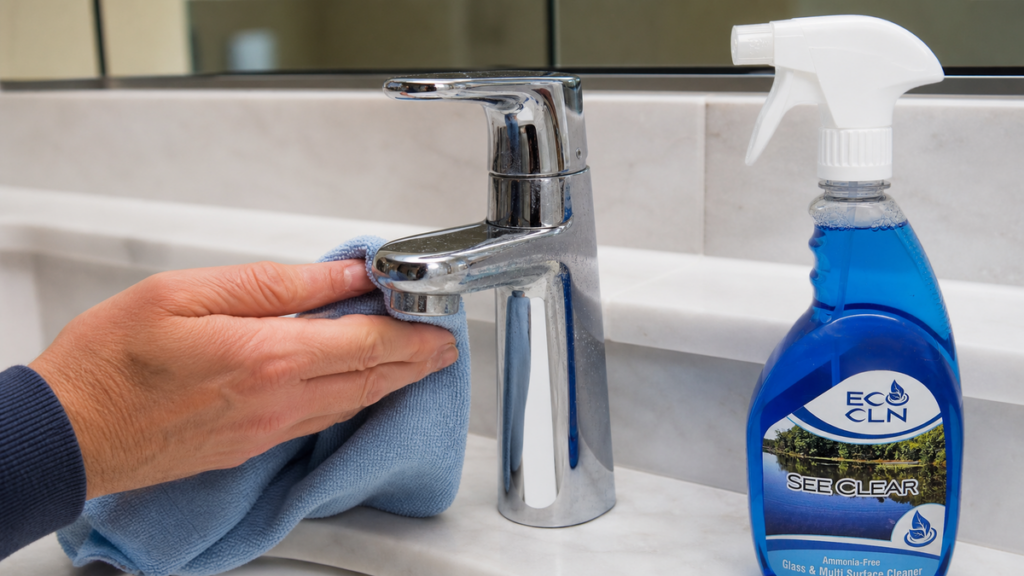
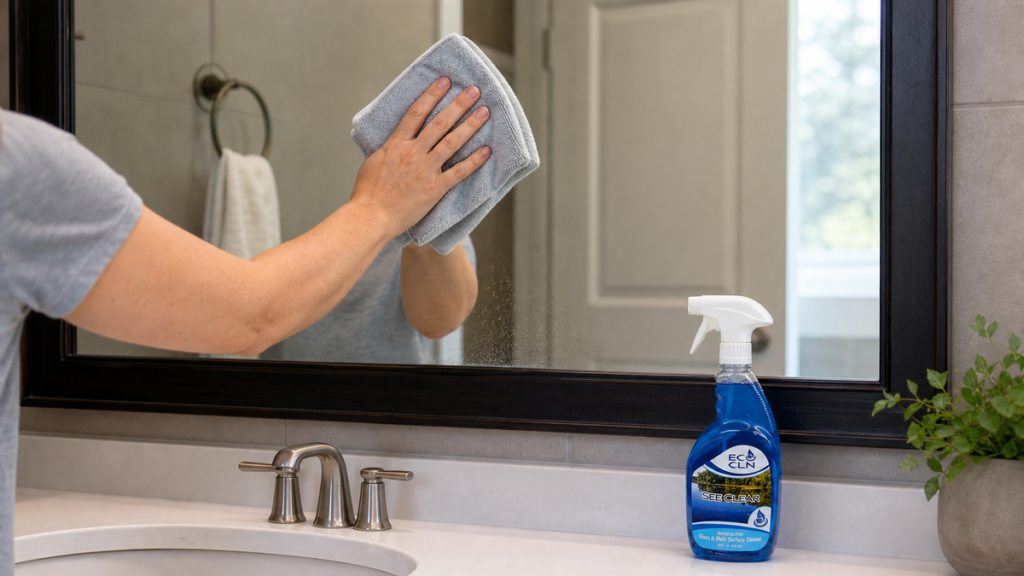
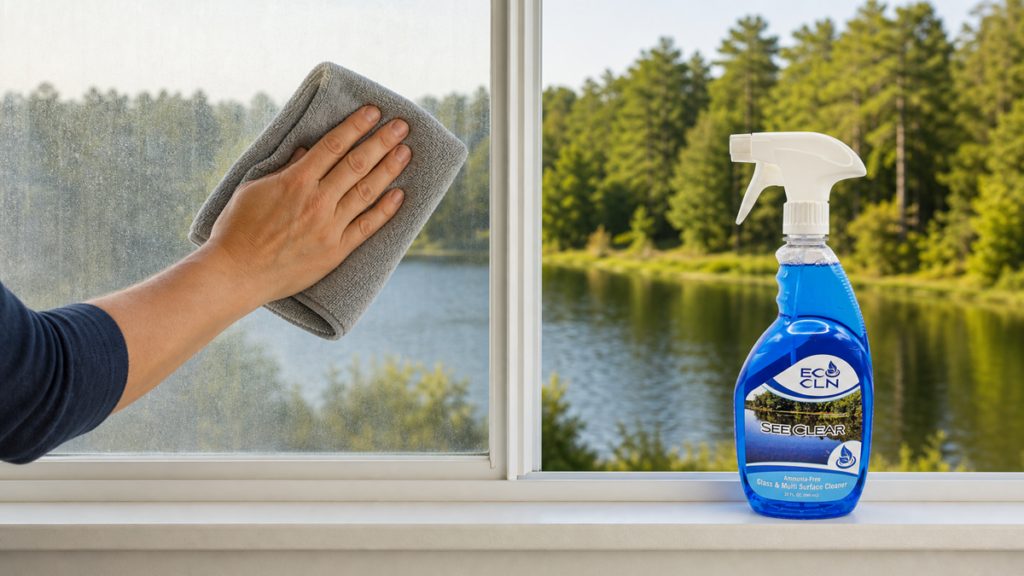
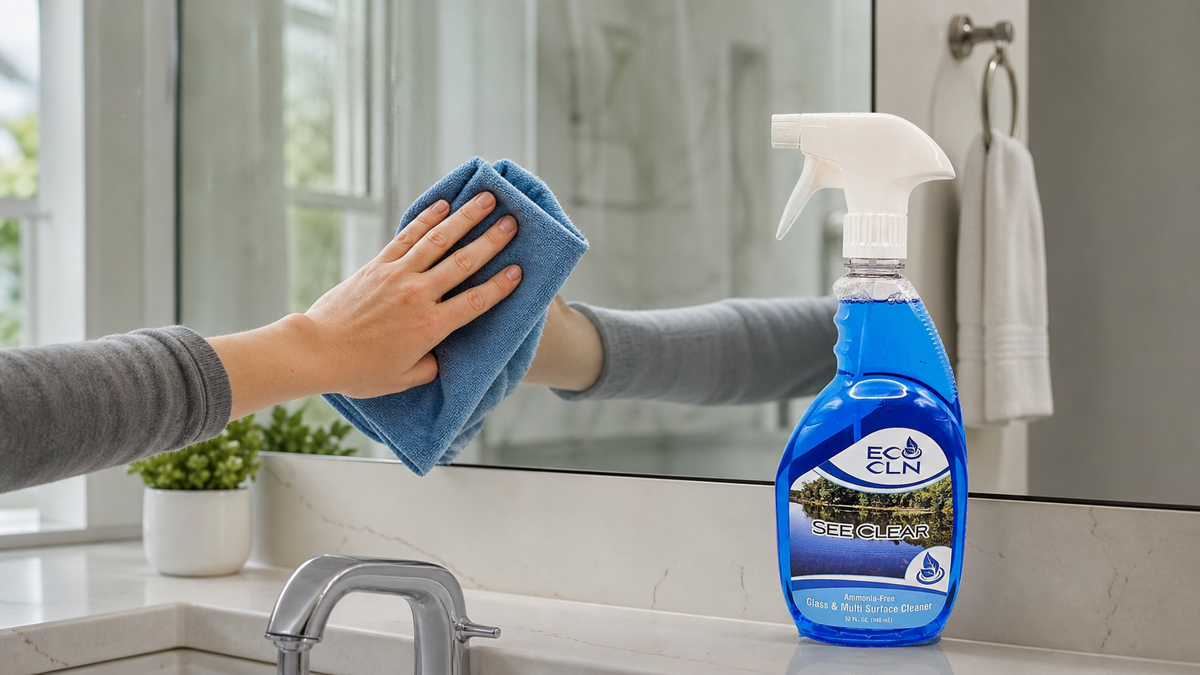
Eco Cln See-Clear is the ammonia-free Eco Cln product for compatible windows, mirrors, glass doors, chrome, stainless steel, appliances, fingerprints, haze, and shiny surfaces.
Mirrors: Clean by Visibility and Use
Bathroom mirrors show splashes quickly. A weekly light pass is practical in a heavily used bathroom, while a guest-room mirror may only need occasional dusting and fingerprint cleanup.
Use cleaner lightly and protect vulnerable mirror edges and backing from repeated soaking.
Interior Windows: Spot Clean Monthly or As Needed
Fingerprints, pet nose prints, cooking film, candle smoke, and indoor dust can collect long before the exterior looks dirty.
Rather than washing every pane weekly, spot-clean touch zones and obvious haze, then do full interior glass cleaning when buildup becomes visible.
Full Window Cleaning: At Least Seasonally or Twice a Year
Pella’s current guide recommends all window parts at least twice a year for maintenance. See Pella window cleaning guide.
Spring and fall are convenient times to clean glass, frames, sills, tracks, and screens together. Homes with heavy pollen, coastal salt, construction dust, or roadside grime may need more frequent exterior attention.
Frames and Tracks Should Be Cleaned Before the Glass
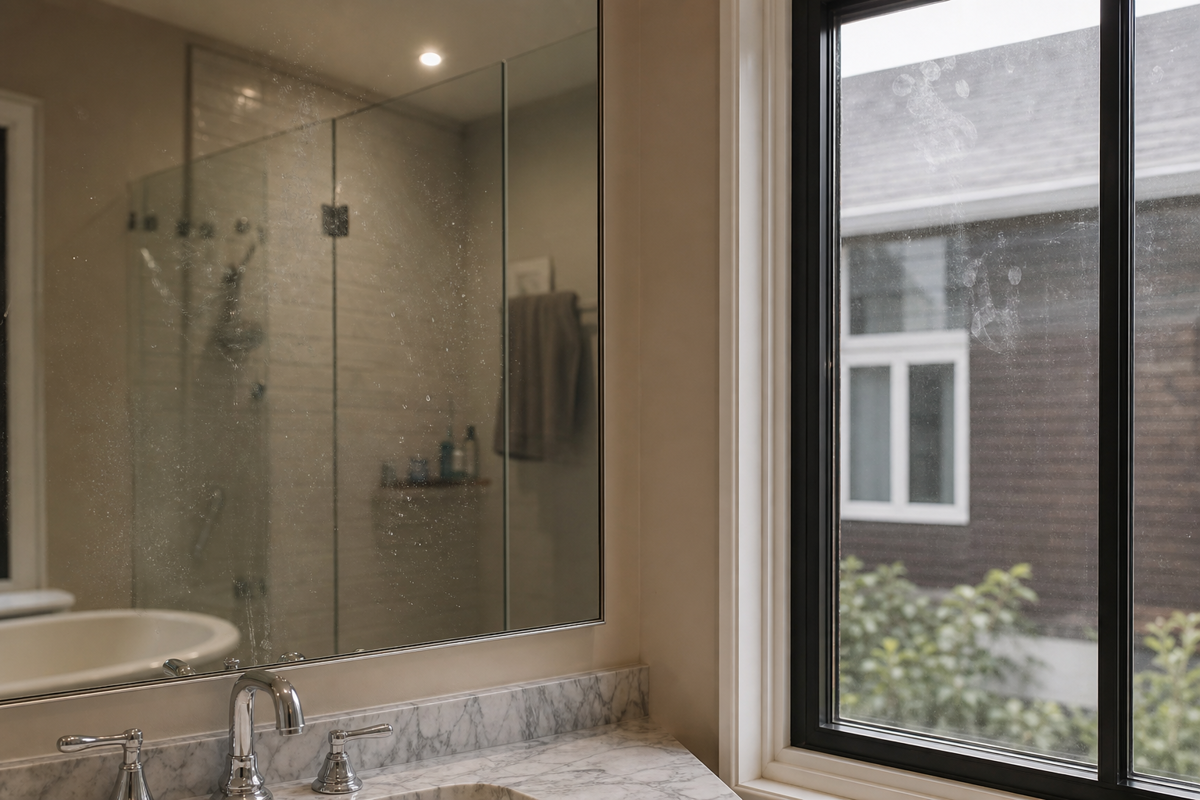
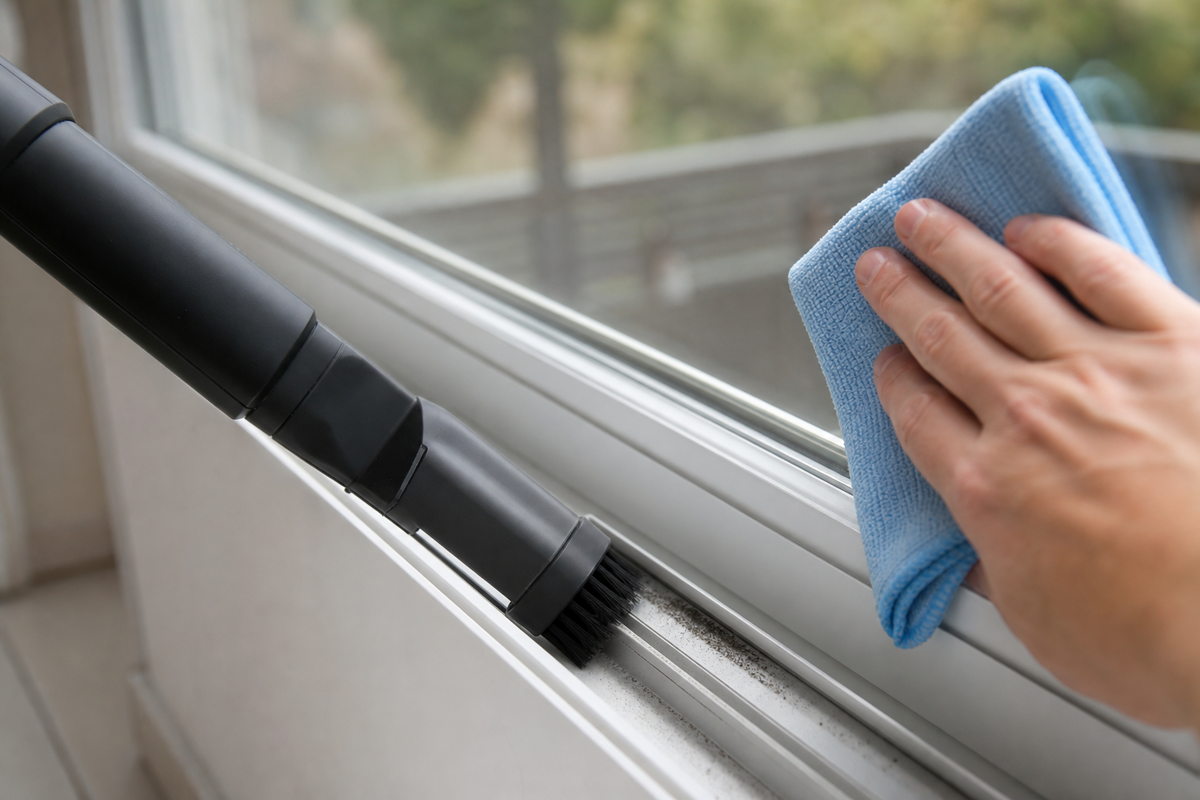
Vacuum dry debris from tracks and sills first. Wiping muddy track residue after polishing the glass creates extra work.
Use the window manufacturer’s method for frames, coatings, weatherstripping, and hardware.
Avoid Direct Sun When Possible
Marvin advises avoiding glass cleaning in direct sunlight, especially on tinted and coated surfaces, to reduce streaking and protect components. Review Marvin glass-care guidance.
Cooler glass gives you more time to wipe the cleaner away before it dries into film.
A Practical Cleaning Schedule
- Bathroom mirrors: weekly or whenever splashes and haze become visible.
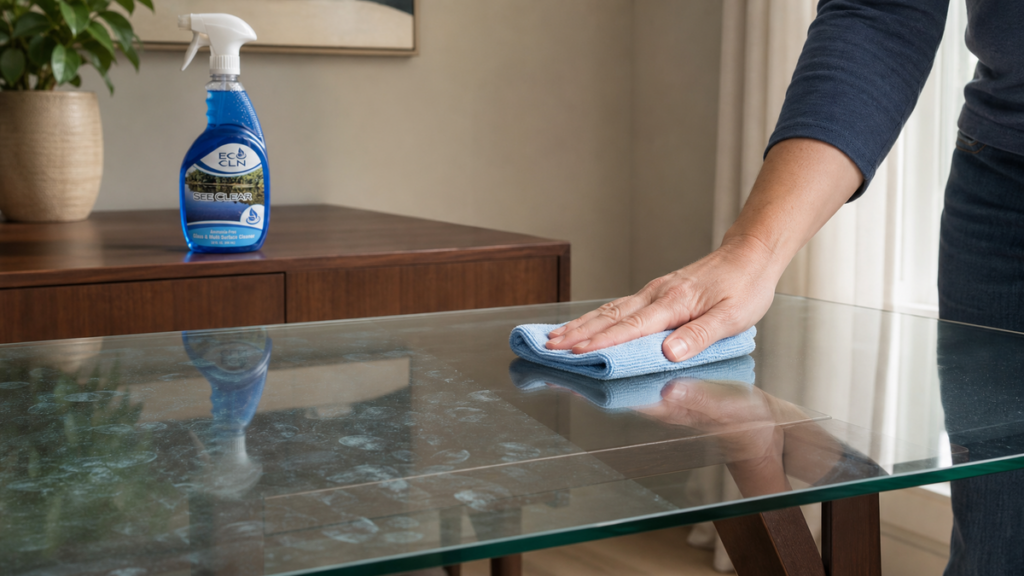
- Entry mirrors and glass tables: as-needed fingerprint cleanup.
- Interior windows: spot-clean monthly/as needed; full glass cleaning seasonally or at least twice yearly.
- Exterior windows: seasonally or when pollen, salt, dust, or water spotting becomes visible.
- Tracks and sills: vacuum during seasonal/full window cleaning and whenever debris interferes with drainage or operation.
- Screens: clean during seasonal maintenance or when visibly dusty.
How to Use See-Clear Without Creating More Streaks
Use See-Clear in light passes on compatible glass or apply it to microfiber where overspray is a concern.
Use a clean cloth, then finish with a separate dry microfiber cloth. A saturated or greasy towel is a common reason glass looks hazy after cleaning.
Coated, Tinted and Specialty Glass Need Their Own Rules
Low-E coatings, films, tint, anti-glare surfaces, decorative glass, and specialty mirrors may have cleaner restrictions.
Never let a general cleaning schedule override the glass/window manufacturer.
Common Window-and-Mirror Schedule Mistakes
- Cleaning hot glass in direct sunlight.
- Using the same greasy cloth on kitchen surfaces and glass.
- Polishing window glass before cleaning dirty tracks and sills.
- Overspraying mirror edges, window frames, electronics, or seals.
- Using abrasive pads or metal scrapers on coated glass.
- Assuming every window needs the same frequency regardless of environment.
- Using ammonia-free as a universal compatibility guarantee.
Where See-Clear Fits
Eco Cln See-Clear is the ammonia-free Eco Cln cleaner for compatible windows, mirrors, glass doors, chrome, stainless steel, appliances, fingerprints, haze, and shiny surfaces. Use it when the surface needs clarity – and let the manufacturer dictate specialty-glass care.
FAQ
How often should I clean bathroom mirrors?
Clean when splashes, haze, and fingerprints become visible. Weekly is a practical rhythm for busy bathrooms.
How often should I wash all my windows?
A full clean at least twice a year is a useful baseline, with more frequent cleaning for pollen, coastal salt, smoke, dust, or high-touch glass.
Is See-Clear ammonia-free?
Yes. The ammonia-free claim belongs specifically to See-Clear.
Should I clean tracks before the glass?
Yes. Vacuum or wipe dry track and sill debris first so dirty residue does not splash onto freshly polished glass.
Can I use the same cleaner on tinted windows?
Only if the tint or window manufacturer permits it. Specialty coatings and films can have specific restrictions.
The Bottom Line
Set the cleaning frequency by use, exposure, and visible soil instead of forcing every glass surface onto the same calendar. Busy bathroom mirrors may need a quick weekly pass for fingerprints, haze, toothpaste mist, and light water spots, while a guest-room mirror may go much longer. Entry glass, patio doors, and children’s hand-height panes need attention when touch marks interfere with the view; interior windows often need a fuller seasonal pass, with spot cleaning between. Start by dusting frames, sills, and tracks so dry grit does not migrate onto the glass. Check the window or mirror maker’s instructions, protect mirror edges and backing from excess moisture, and avoid flooding wood, seals, hardware, screens, films, tints, coatings, or electronics. On compatible plain glass and shiny surfaces, apply a small amount of See-Clear to clean microfiber, work in manageable sections, and finish with a separate dry cloth before the cleaner evaporates unevenly. Clean in shade or when the glass is cool, rotate cloth faces as they soil, and inspect from more than one angle after drying. Do not treat condensation between insulated panes, failed mirror silvering, scratches, etched mineral damage, loose seals, or coating failure as ordinary removable haze. Shorten the schedule when cooking film, smoke, pets, pollen, or frequent touch makes buildup return quickly. Stop if a tint, film, printed marking, finish, or mirror edge reacts. Routine maintenance should keep compatible glass clear without turning every minor smudge into a full-window project.
Continue with this related Eco Cln guide: Ammonia-free glass cleaner guide.
For the light fingerprints, haze, smudges, and routine glass maintenance in this schedule, Eco Cln See-Clear is the ammonia-free Eco Cln option for compatible windows, mirrors, glass doors, chrome, stainless, and shiny surfaces.