How to Clean a Dishwasher Exterior Without Leaving Streaks

Quick Answer
Check the dishwasher manual and finish first. A traditional stainless door, fingerprint-resistant coating, black stainless, painted panel, and custom wood front can have very different cleaning restrictions.
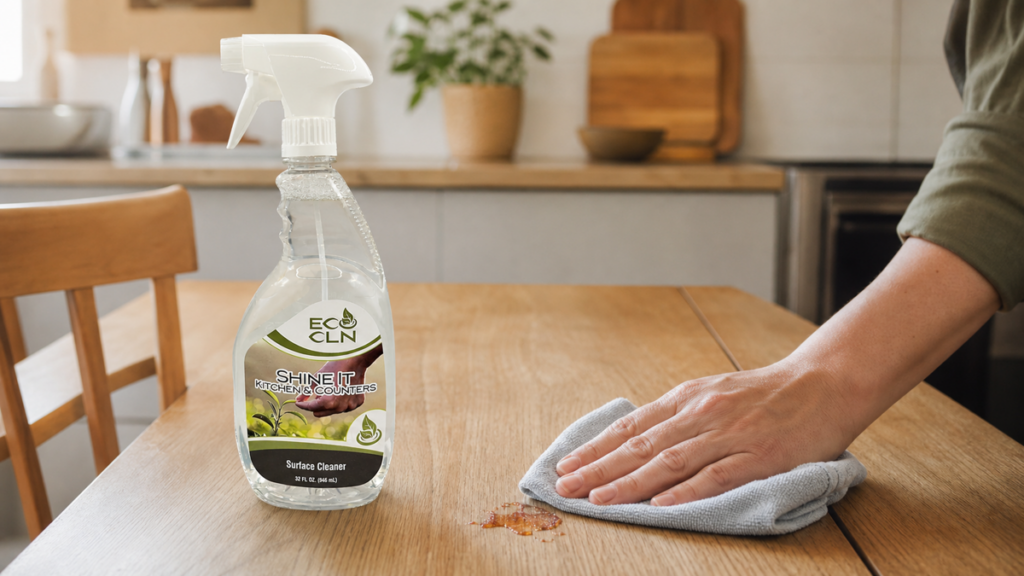
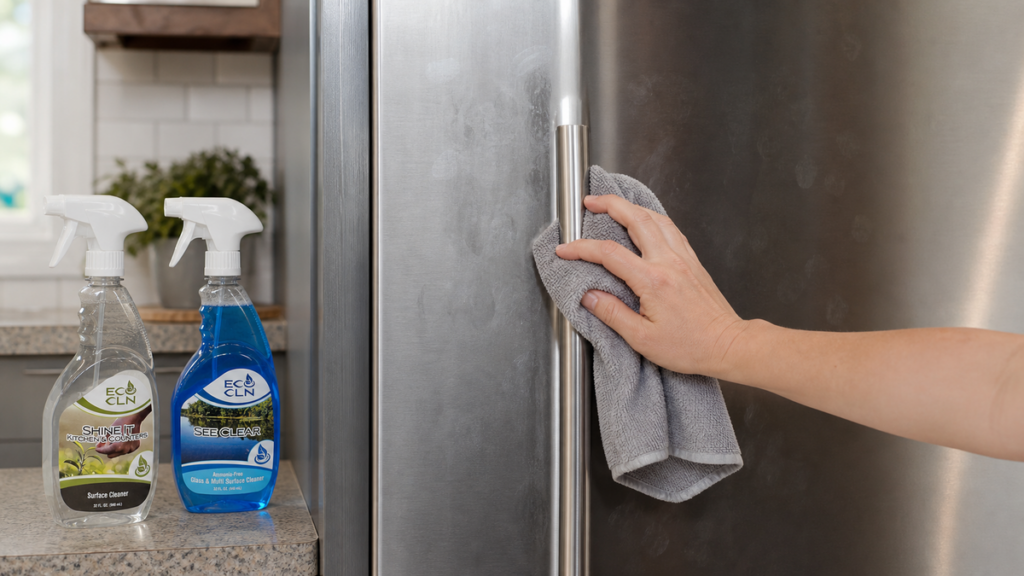
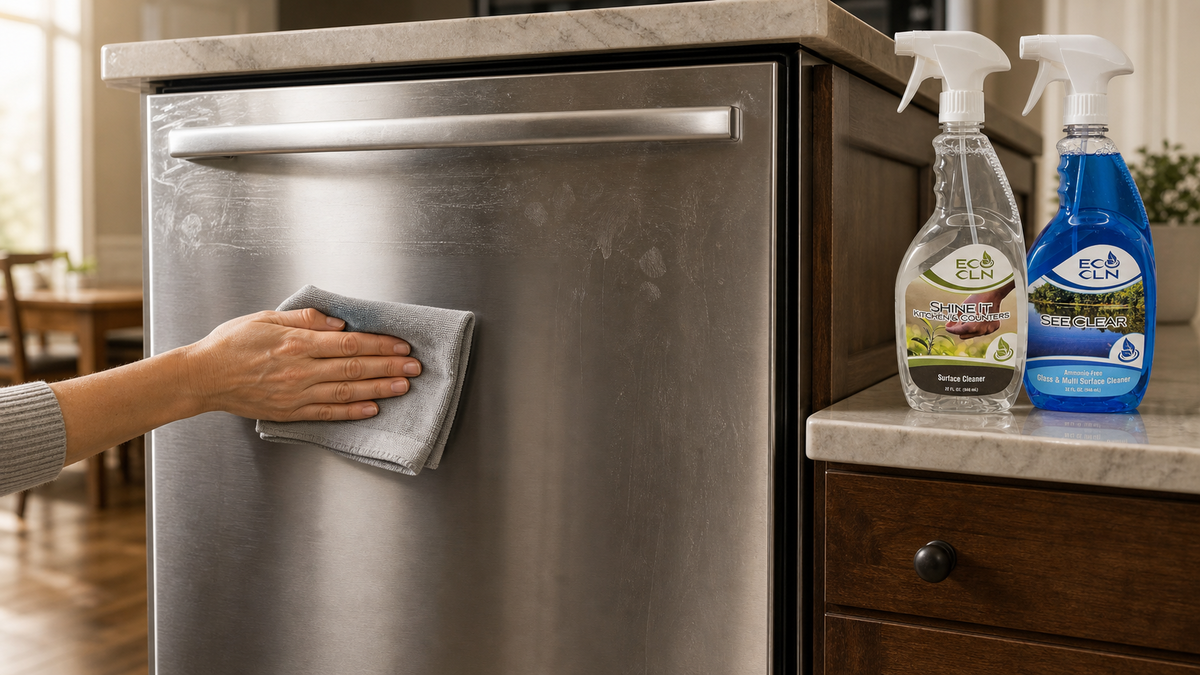
For actual grease on a compatible appliance exterior, Eco Cln Shine-It is the kitchen-grease option. For light fingerprints or shiny-surface haze on a compatible finish, Eco Cln See-Clear is the ammonia-free shiny-surface option.
Apply cleaner to microfiber instead of spraying into controls, handle seams, vent gaps, display edges, or the door latch. Wipe traditional brushed stainless with the grain when the manufacturer recommends it, then dry completely.
Why Dishwasher Doors Streak
Dishwashers get touched with wet, greasy, soapy hands. Water droplets dry into spots, while fingerprints and kitchen film create a thin oily layer.
Streaks often come from using too much product, a dirty cloth, wiping a coated finish with the wrong cleaner, or failing to dry the final film.
Step 1: Identify the Door Finish
Whirlpool recommends a soft damp cloth and mild detergent for general dishwasher exteriors, with specific care for stainless steel. Review Whirlpool dishwasher exterior guidance.
Fingerprint-resistant and black stainless finishes can be coatings rather than bare stainless. Follow the exact model manual before using a general kitchen or glass cleaner.
Step 2: Start With a Clean Microfiber Cloth
Remove dry dust and light fingerprints first. A clean dry cloth may solve simple touch marks without any liquid.
Do not start with a grease-loaded cloth from the countertop.
Step 3: Separate Grease From Light Smudges

If the lower handle area or door edge feels tacky, treat that as kitchen grease. If the panel only shows fingerprints or haze, use a lighter shiny-surface method.
This keeps stronger degreasing limited to the places that actually need it.
Step 4: Use Shine-It Only on Compatible Greasy Exterior Areas
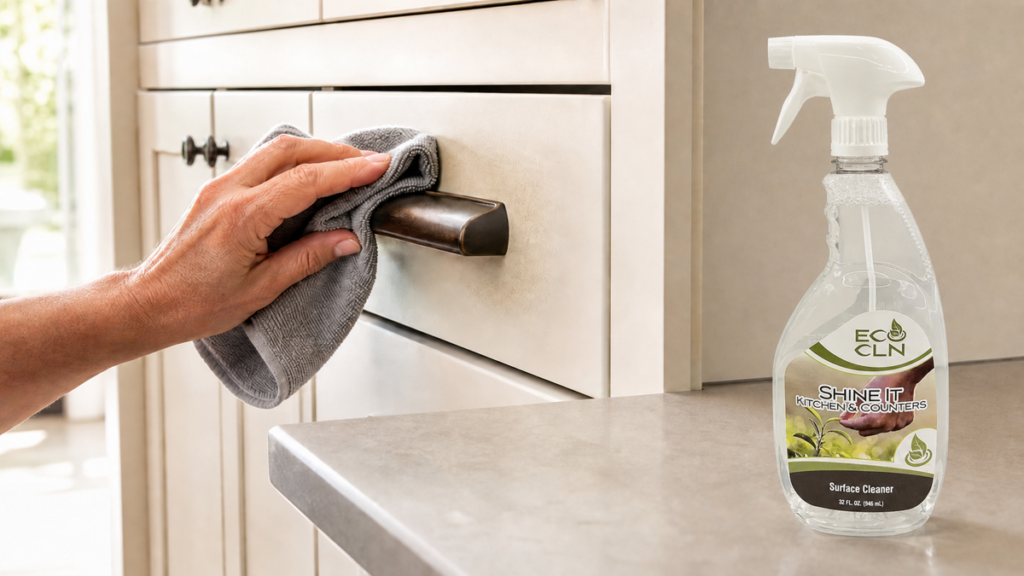
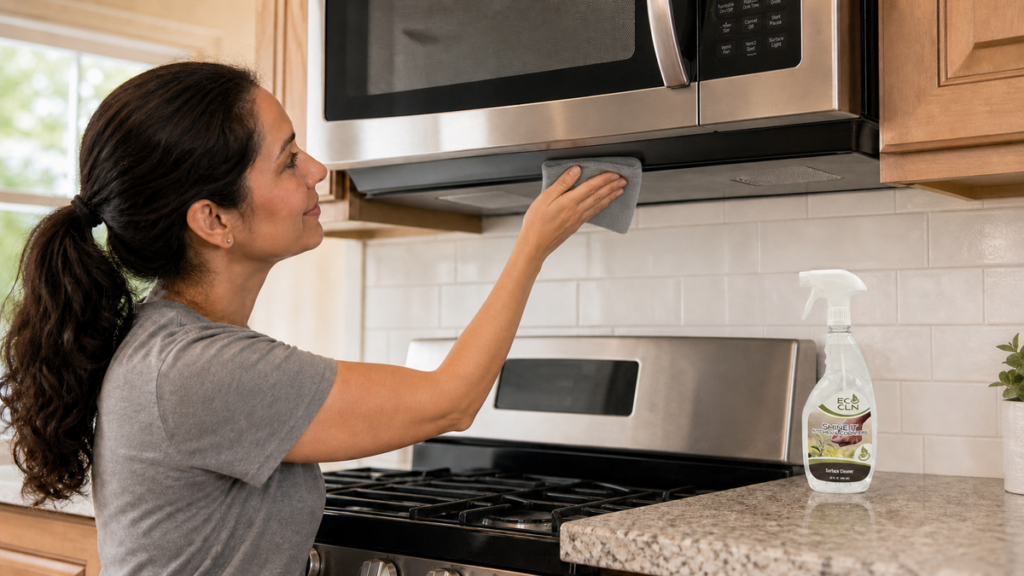
Eco Cln positions Shine-It for grease, stainless steel, appliance exteriors, cabinet fronts, and everyday kitchen messes.
Spray the cloth first near electronic controls, vent openings, recessed handles, seams, and display panels.
Step 5: Use See-Clear for Compatible Shiny-Surface Smudges
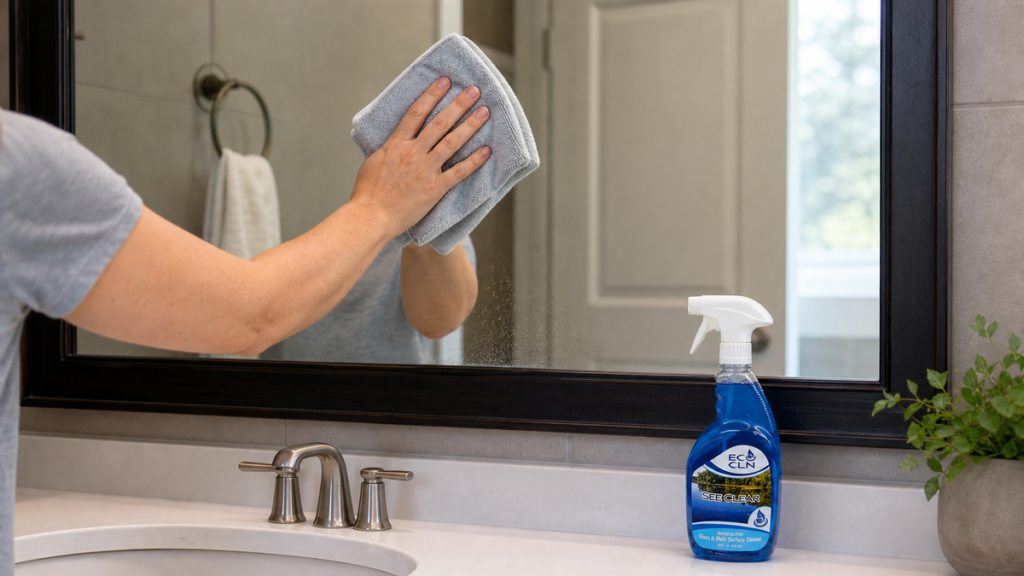
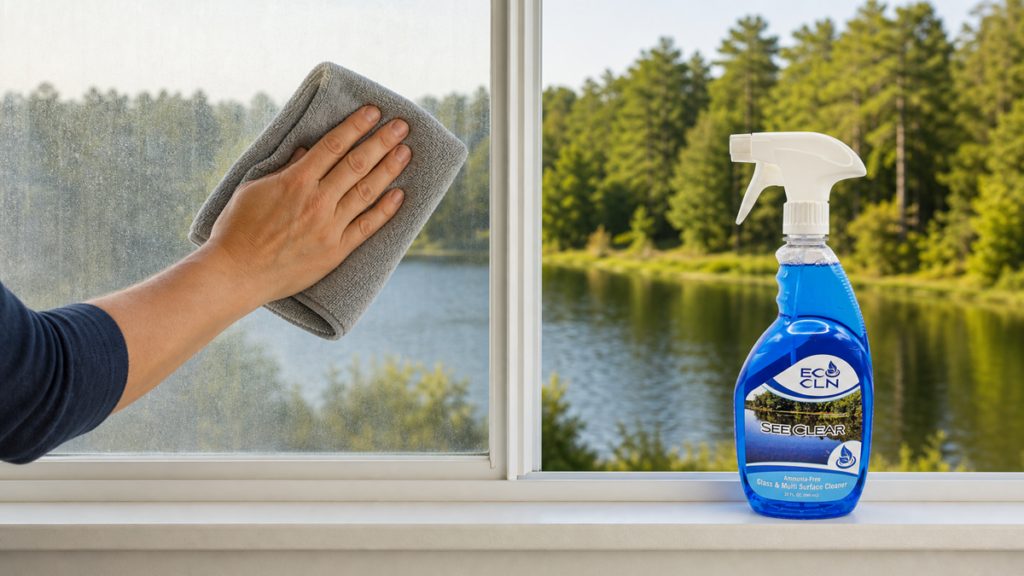
Eco Cln positions See-Clear for stainless steel, appliances, glass, chrome, fingerprints, haze, and shiny surfaces. It is ammonia-free.
That does not override an appliance manual that prohibits window sprays, ammonia, citrus-based cleaners, or other cleaner categories on a specialty coating.
Step 6: Follow Grain Direction Where Appropriate
Whirlpool recommends wiping traditional stainless with the grain and drying with a clean soft cloth. See Whirlpool stainless care.
Coated stainless-look finishes may not use the same polishing method, so do not assume every silver door should be treated like bare stainless.
Step 7: Dry Thoroughly
Use a fresh microfiber cloth and buff away remaining moisture and cleaner film.
Pay attention to the bottom edge and handle, where drips can collect and leave visible lines.
Avoid Controls, Vents and Custom Panels
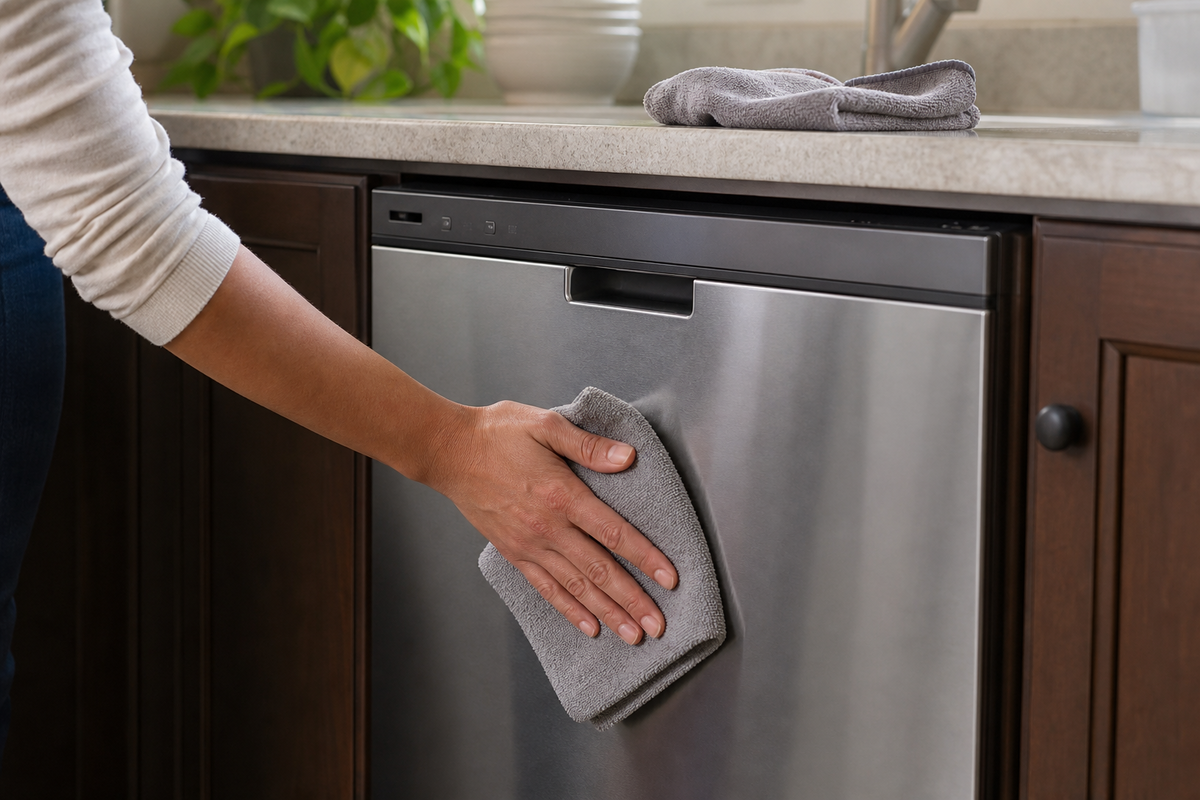
GE dishwasher exterior guidance recommends soft cloth cleaning and notes custom wood panels should follow the cabinet manufacturer’s instructions. Review GE dishwasher exterior guidance.
Do not spray cleaner into top controls, side controls, vents, latch openings, or seams.
Common Dishwasher-Exterior Mistakes
- Assuming every stainless-looking finish is traditional stainless steel.
- Using abrasive pads or powders.
- Spraying cleaner directly into controls, vents, seams, or display edges.
- Using the same greasy cloth on the whole door.
- Using See-Clear on a specialty coating whose manual prohibits glass/window sprays.
- Using Shine-It on a finish whose manual allows only soap and water.
- Leaving the final moisture film to air-dry into spots.
Where Shine-It and See-Clear Fit
Use Shine-It for compatible greasy kitchen residue on the dishwasher exterior. Use See-Clear for compatible light fingerprints, haze, glass, stainless, chrome, and shiny-surface touch marks. The dishwasher manufacturer always has final say on finish care.
FAQ
Can I use Shine-It on a dishwasher exterior?
Shine-It is positioned for appliance exteriors and grease, but use it only if the dishwasher finish and manual allow that cleaner type.
Can I use See-Clear on stainless dishwasher doors?
See-Clear is positioned for stainless and appliances, but specialty coatings may restrict glass cleaners. Check the manual first.
Why is my dishwasher streaky after cleaning?
Too much cleaner, a dirty cloth, leftover moisture, or wiping against the grain on traditional stainless can all show as streaks.
Should I spray cleaner directly on top controls?
No. Spray the cloth instead and keep liquid out of controls, vents, seams, and latch openings.
What if the dishwasher has a custom wood panel?
Follow the cabinet or panel manufacturer’s care instructions rather than a general appliance-cleaning method.
The Bottom Line
Check the dishwasher manual and identify the exterior finish before choosing a cleaner. Traditional stainless, fingerprint-resistant stainless, black stainless, painted metal, plastic trim, and integrated cabinet panels can have different care rules even when they collect the same fingerprints. Turn the dishwasher off when the controls are likely to be touched and keep cleaner away from buttons, display edges, latch openings, vents, seams, and the door gasket. Begin with a clean dry microfiber cloth, especially when the marks are light. For a compatible exterior, use Shine-It only where greasy kitchen film or tacky handle residue needs it, and use See-Clear lightly where the issue is ordinary shiny-surface fingerprints or haze. Put cleaner on the cloth for better control, work in small sections, follow visible grain on traditional brushed stainless when the maker recommends it, and rotate to a clean cloth face as residue transfers. Finish with a separate dry microfiber cloth and inspect from an angle before adding more product. If streaks remain, check for an overloaded cloth, excess cleaner, or leftover moisture. Stop if the finish changes sheen, color transfers, a coating lifts, or the mark is actually a scratch or worn coating. Cleaning can remove compatible surface soil; it cannot repair damaged appliance finishes, control panels, or protective coatings.
For compatible dishwasher exteriors, use Eco Cln Shine-It where the problem is greasy kitchen residue and Eco Cln See-Clear where the problem is light shiny-surface smudging. Match the product to both the mess and the finish.