Ammonia-Free Glass Cleaner for Windows, Mirrors, and Shiny Surfaces


An ammonia-free glass cleaner is useful when you want windows, mirrors, chrome, stainless steel, appliance smudges, and shiny surfaces to look clear without sharp ammonia smell. The trick is not just choosing the cleaner. The trick is using the right amount, the right cloth, and the right wiping pattern so you do not trade fingerprints for streaks.
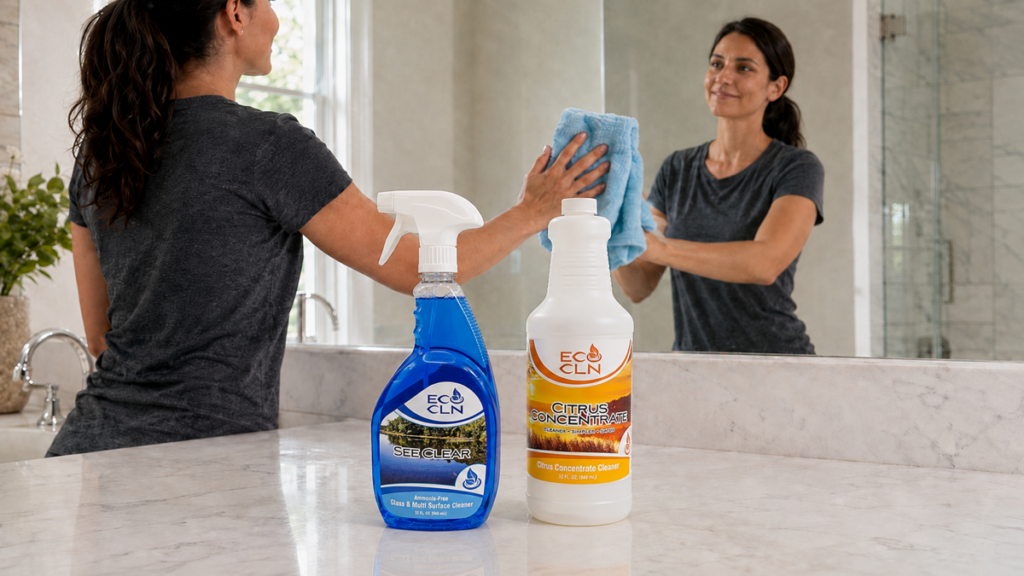
Eco Cln See-Clear is the ammonia-free cleaner in the Eco Cln lineup for glass, mirrors, windows, chrome, stainless steel, appliances, display cases, and shiny touch-prone surfaces when used as directed.
Quick Answer
Use an ammonia-free glass cleaner when the job is glass, mirrors, windows, chrome, stainless steel, appliance smudges, or shiny surfaces that show haze and fingerprints quickly. Spray lightly, wipe with a clean microfiber cloth, flip the cloth as it loads up, and buff dry with a second cloth or dry section to reduce streaks.
For Eco Cln, use See-Clear for glass and shiny surfaces. Use a different Eco Cln product when the mess is heavy grease, soap scum, carpet stains, pet odor, or fabric spots.
What Makes a Glass Cleaner Ammonia-Free?
An ammonia-free glass cleaner is a cleaner made without ammonia as the main glass-cleaning ingredient. People often look for ammonia-free options because they want to avoid the sharp smell that traditional ammonia glass cleaners can leave behind.
That does not mean every ammonia-free cleaner is right for every surface. Glass, mirrors, chrome, stainless steel, tinted surfaces, coated finishes, electronics, appliance panels, and specialty surfaces can all have different care requirements.
The safe move is simple: read the product label, check the surface manufacturer guidance when needed, and test first on uncertain finishes.
When to Use See-Clear
Use Eco Cln See-Clear when the cleaning goal is clarity, shine, and smudge removal.
- Windows and glass doors
- Bathroom mirrors
- Vanity mirrors
- Chrome fixtures
- Stainless steel appliance touch marks
- Shiny appliance surfaces
- Display cases
- Glass tabletops
- Light haze on glass shower doors after heavier soap scum has already been handled
See-Clear is especially useful when the problem is visible haze, fingerprints, dog nose prints, light residue, or streaking rather than thick buildup.
How to Clean Glass Without Streaks
Streaks usually come from too much cleaner, a dirty cloth, leftover moisture, or cleaning in hot direct sun. A cleaner can help, but technique still matters.
- Remove loose dust first.
Dry-wipe loose dust, lint, or grit so it does not turn into a smear when cleaner is added.
- Spray lightly.
Use enough cleaner to dampen the area, not soak it. Too much product can run into edges, tracks, seams, or controls and can make streaking worse.
- Use microfiber.
Wipe with a clean microfiber cloth in overlapping passes. On windows and mirrors, work top to bottom or side to side so you can see where you already cleaned.
- Flip the cloth.
Once a cloth is loaded with fingerprints, dog nose residue, dust, or bathroom haze, it starts moving grime around. Flip to a clean side often.
- Buff dry.
Use a second dry microfiber cloth or a dry section of cloth to remove leftover moisture. This final buff is what usually makes the surface look clear instead of just less dirty.
- Rework only the problem area.
If one corner or handle area still looks streaky, target that spot. Do not keep spraying the whole window unless the whole surface needs another pass.
Windows and Glass Doors
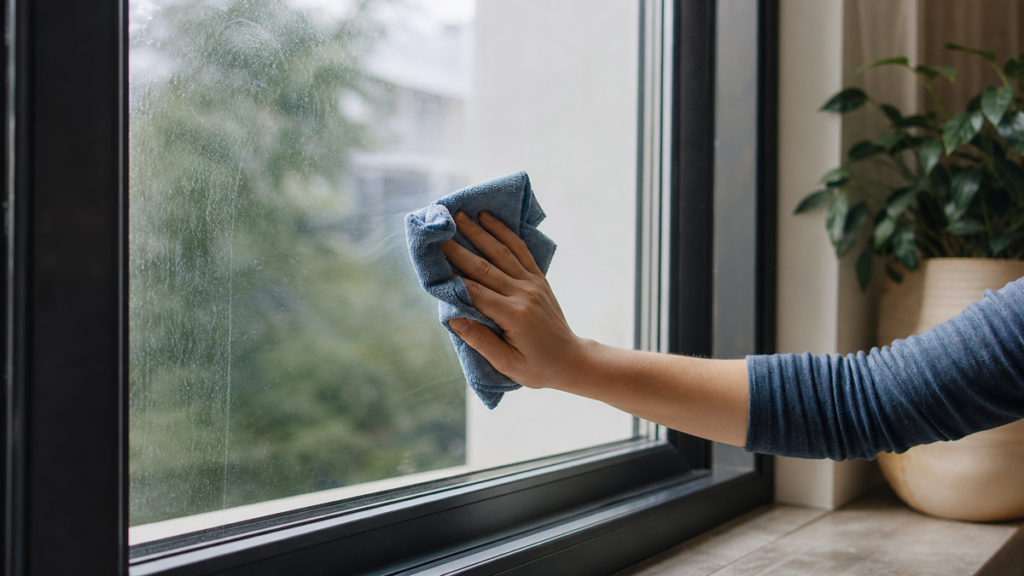
Windows and glass doors show streaks fast, especially in bright light. Start with light product and clean cloths. If one side still looks cloudy after cleaning, check the other side before adding more cleaner to the same surface.
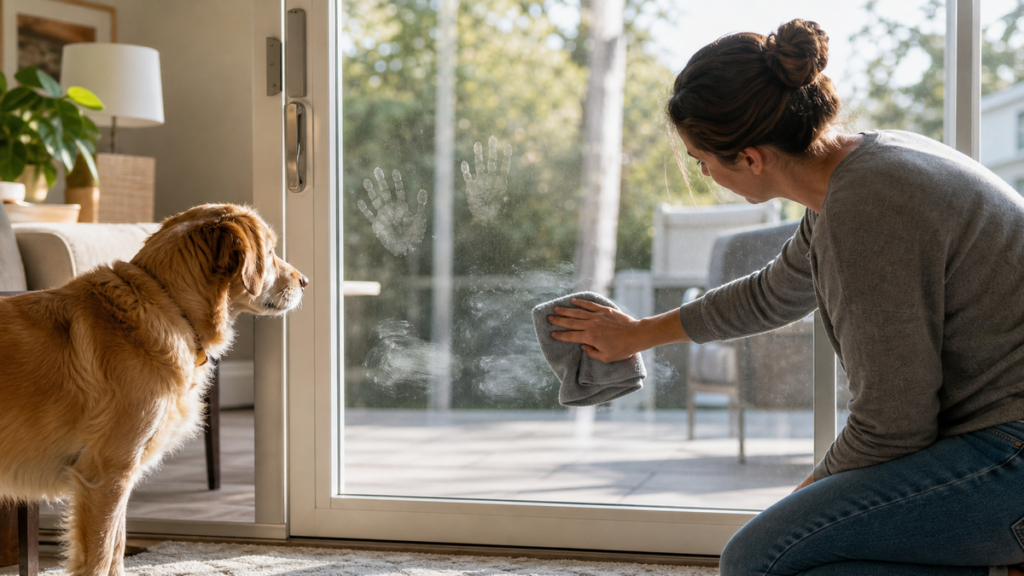
For dog nose prints, fingerprints, and patio-door smudges, clean the dirtiest area first, then do a final full-pane pass. That keeps the heavy residue from spreading across the whole window.
Dog Nose Prints and Fingerprints on Glass Doors
The current article already has dog nose print relevance, so keep that strength in the refresh. Dog nose prints and fingerprints are not always dry marks. They can include moisture, oils, dust, and dried residue that smear when wiped with a dirty cloth or too much cleaner.
For glass doors, start with the heaviest nose-print area. Mist See-Clear lightly onto the glass or onto a microfiber cloth, wipe the smudged section first, flip the cloth, then clean the full pane. Finish by buffing dry so the door looks clear in daylight instead of streaky from an angle.
Bathroom Mirrors
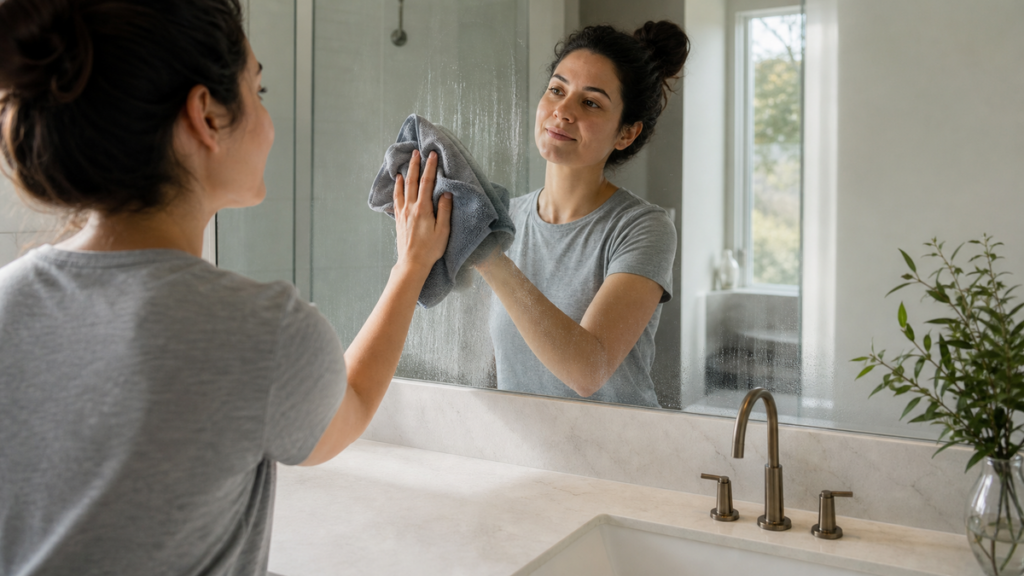
Bathroom mirrors collect toothpaste mist, fingerprints, hairspray haze, humidity marks, and towel lint. If the mirror is dusty, wipe loose debris first. Then apply See-Clear and buff dry.
Avoid overspraying around mirror edges, frames, light fixtures, outlets, and medicine-cabinet seams. Spray the cloth first when you need more control.
Chrome Fixtures and Shiny Surfaces
Chrome and shiny fixtures can look clean from one angle and streaky from another. Use a light touch and dry the surface after wiping. Around faucet bases, towel bars, fixture edges, and trim, avoid flooding gaps where liquid can sit.
If the surface has heavy soap scum, hard water buildup, or bathroom grime, Powerhouse Bathroom may be the better first Eco Cln product. See-Clear fits best after the heavy buildup is handled and the goal is shine.
Stainless Steel and Appliances
See-Clear can fit stainless steel appliance touch marks and shiny appliance surfaces when the appliance manual and surface finish allow it. For stainless steel, spray the cloth first instead of spraying directly onto the appliance panel. Wipe with the grain if the grain is visible, then buff dry.
Do not spray into seams, vents, ports, buttons, speaker openings, display panels, or appliance controls. Avoid abrasive pads and rough towels.
If the mess is greasy cooking residue, Shine-It may be the better Eco Cln match. If the mess is light fingerprints or smudges on a shiny appliance surface, See-Clear is the cleaner to consider.
What Not to Use See-Clear For
See-Clear is for glass and shiny-surface cleaning. It is not the right match for every mess.
- Heavy soap scum or shower buildup: use Powerhouse Bathroom first.
- Kitchen grease and cooking residue: use Shine-It when the surface allows it.
- Broad washable-surface cleaning or dilution jobs: use Citrus Concentrate.
- Pet urine odor or organic pet accidents: use PAWS.
- Carpet, fabric, upholstery, and targeted spots: use Spot Gone.
This keeps the product match clean and avoids asking one cleaner to do jobs it was not built to do.
Surfaces to Test First
Always test first before using any cleaner on delicate, coated, specialty, or unknown surfaces.
Be especially careful with:
- tinted or treated glass
- anti-glare coatings
- specialty mirror coatings
- damaged chrome
- worn fixture finishes
- electronics and screens
- appliance controls
- unfinished or specialty materials
If the manufacturer says to use a specialty cleaner only, follow that guidance.
Why Ammonia-Free Matters
Ammonia-free matters most when people want glass and shiny surfaces cleaned without the sharp ammonia smell. That can be useful for frequently used rooms, bathrooms, kitchens, pet areas, glass doors, and touch-prone surfaces where you clean often.
Keep the claim specific: See-Clear is the Eco Cln ammonia-free glass and surface cleaner. Do not assume every Eco Cln product is ammonia-free unless the product label or approved product copy says so.
Where Eco Cln See-Clear Fits
Shop Eco Cln See-Clear when the job is glass, mirrors, windows, chrome, stainless steel, appliances, display cases, fingerprints, smudges, haze, or light residue on shiny surfaces.
For product-use details, see the See-Clear glass and surface cleaner guide. To compare cleaning options, Browse all Eco Cln cleaning products.
FAQ: Ammonia-Free Glass Cleaner
Is See-Clear ammonia-free?
Yes. Eco Cln See-Clear is an ammonia-free glass and surface cleaner. Keep that ammonia-free claim specific to See-Clear.
What surfaces is See-Clear best for?
See-Clear is best for glass, mirrors, windows, chrome, stainless steel, shiny appliances, display cases, and other shiny surfaces when used as directed.
How do I avoid streaks on windows?
Use less product than you think, wipe with clean microfiber, flip the cloth often, and buff dry with a second cloth or dry section. Streaks often come from too much cleaner, dirty cloths, leftover moisture, or hot direct sun.
Can I use See-Clear on stainless steel appliances?
Yes, when the appliance manual and surface finish allow it. Spray the cloth first, wipe with the grain if visible, avoid seams and controls, and dry with microfiber.
Can I use See-Clear on shower glass?
Yes, for glass cleaning and light haze when the surface allows it. For heavy soap scum or bathroom buildup, use Powerhouse Bathroom first, then use See-Clear when the goal is clear glass and shine.
Does See-Clear disinfect glass?
Do not use See-Clear as a disinfecting claim. If a job requires disinfecting, clean first, then use an EPA-registered disinfectant according to that product’s label directions.
Should I spray See-Clear directly onto the surface?
Direct spraying works for many glass and mirror surfaces. Spray the cloth first near appliance controls, electronics, chrome edges, seams, vents, ports, buttons, or anywhere overspray could be a problem.
Final Tip
The best ammonia-free glass cleaner routine is simple: use the right Eco Cln product, spray lightly, wipe with microfiber, and buff dry. See-Clear is the fit when the job is glass, mirrors, windows, chrome, stainless steel, appliance smudges, display cases, and shiny surfaces that need a clearer finish without ammonia.