
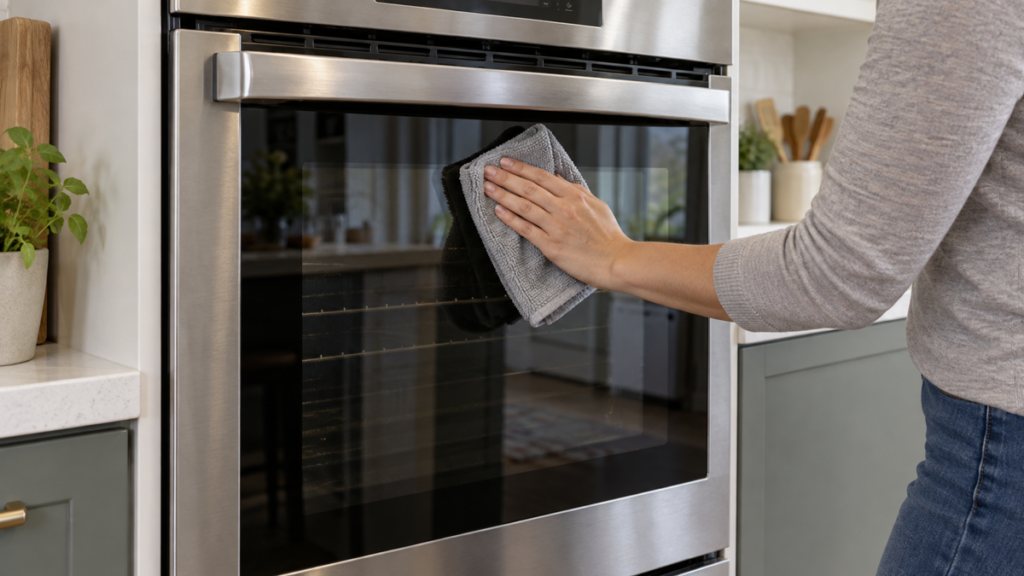
How to Clean Grease and Fingerprints From an Oven Door Exterior and Handle

Cool the oven, remove dry crumbs, match the cleaner to glass, stainless steel or enamel, and wipe the handle and door seams with controlled moisture.
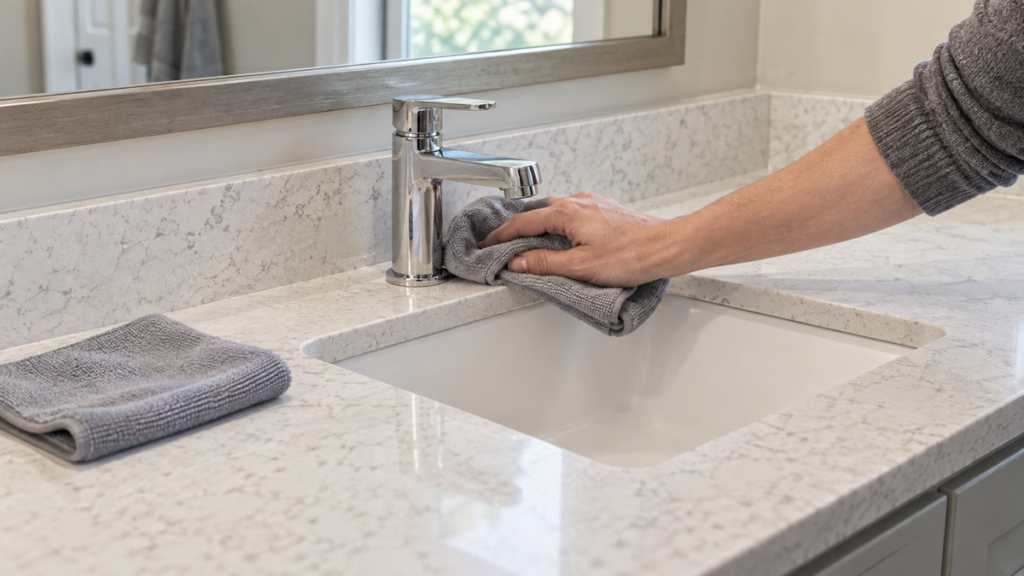
How to Clean a Bathroom Vanity Top Without Damaging the Surface
Identify the vanity material, remove loose debris and clean toothpaste, soap film and water spots without harming seams, coatings or stone.
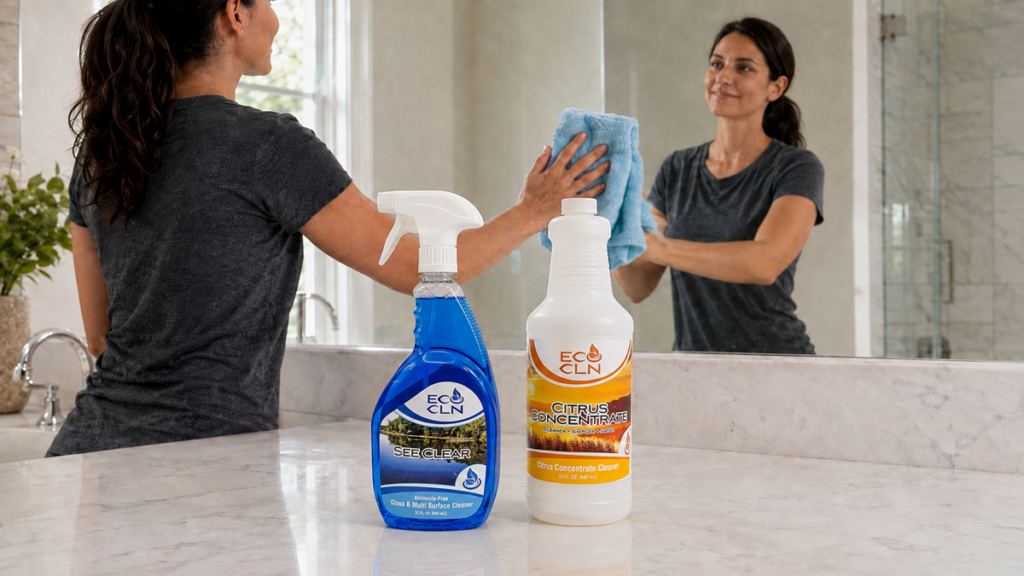
Glass Cleaner vs. All-Purpose Cleaner: Which One Should You Use?
Choose glass cleaner for clear, low-residue finishing and all-purpose cleaner for broader washable-surface soil, grease and routine grime.
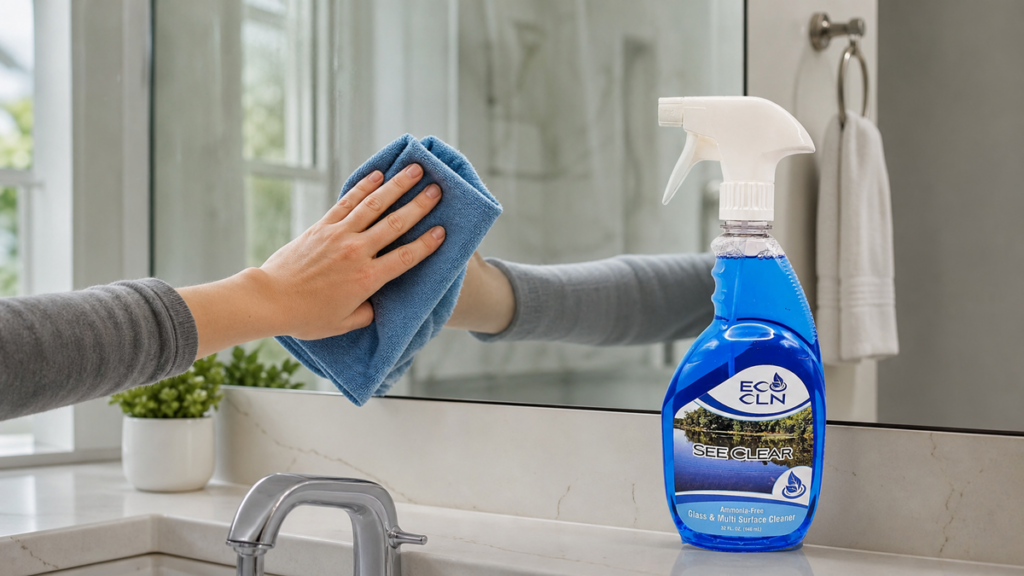
How Often Should You Clean Windows and Mirrors?
Mirrors usually need attention more often than full windows because fingerprints, toothpaste mist, and sink splashes show immediately. Windows can be spot-cleaned as needed and given a more complete glass, frame, track, and screen cleaning seasonally.
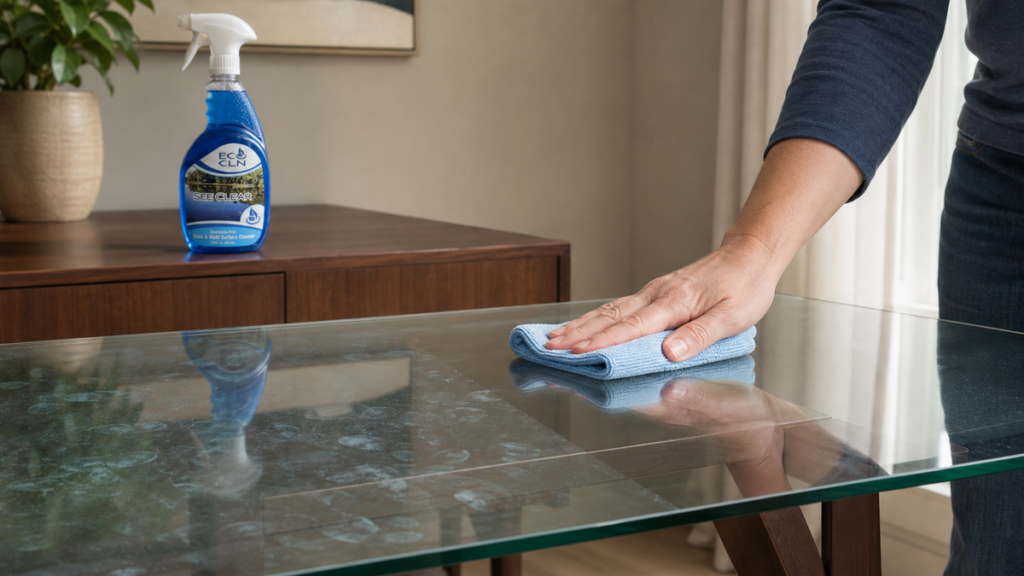
How to Clean Fingerprints and Smudges From a Glass Table
Glass tables show fingerprints from across the room. The solution is not more spray - it is clean microfiber, light product, a dry finishing cloth, and knowing whether the tabletop has a tint, coating, print, or damaged tempered glass.
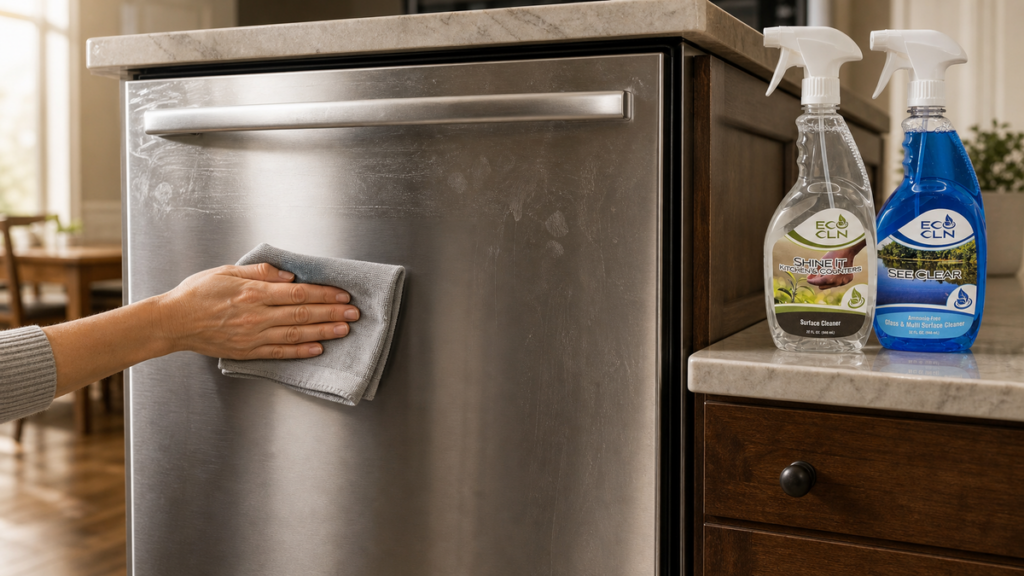
How to Clean a Dishwasher Exterior Without Leaving Streaks
Dishwasher doors collect drips, fingerprints, food residue, and greasy hand marks - but fingerprint-resistant, black stainless, custom wood, and traditional stainless finishes do not all take the same cleaner.
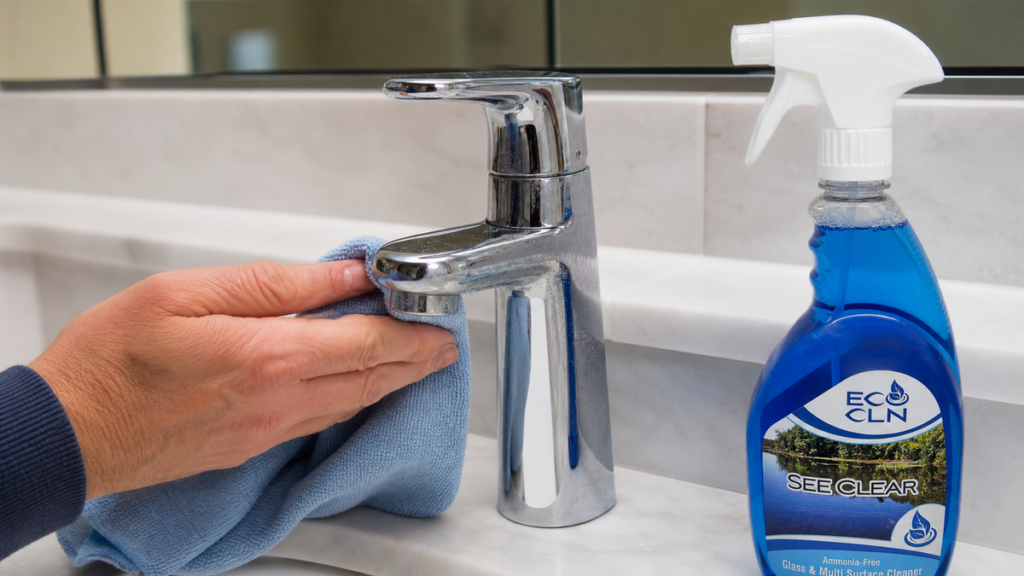
How to Clean Chrome Faucets Without Leaving Spots or Streaks
Chrome shows fingerprints, splash marks, mineral spots, and cleaner film fast. The trick is using very little product, a soft cloth, and a dry finish instead of leaving liquid to evaporate on the metal.
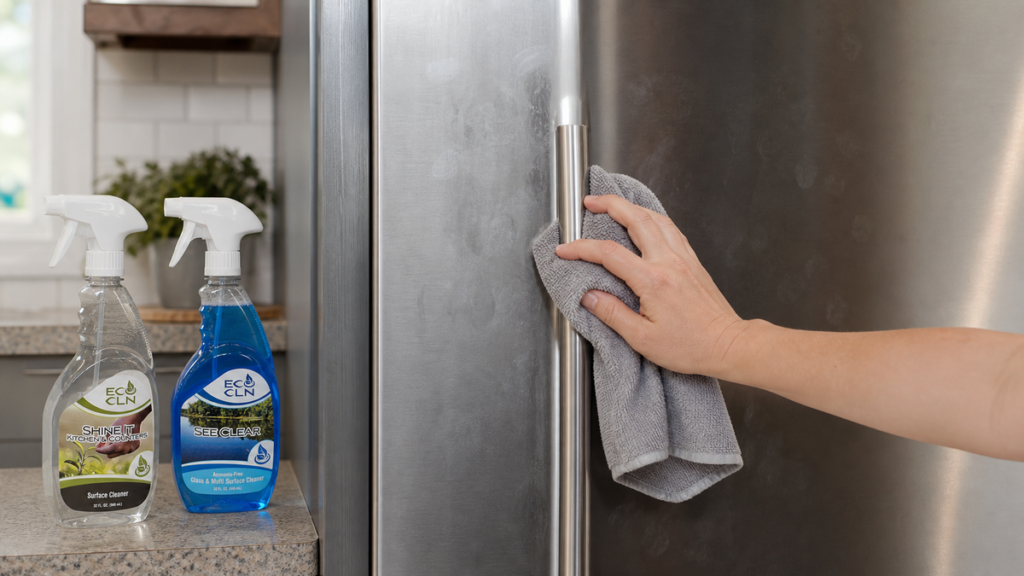
How to Clean Refrigerator Door Smudges, Grease and Fingerprints
Refrigerator doors collect two different messes in the same place: oily kitchen grease around handles and visible fingerprints across shiny panels. Identify the finish first, then use the lightest cleaner that matches the actual residue.
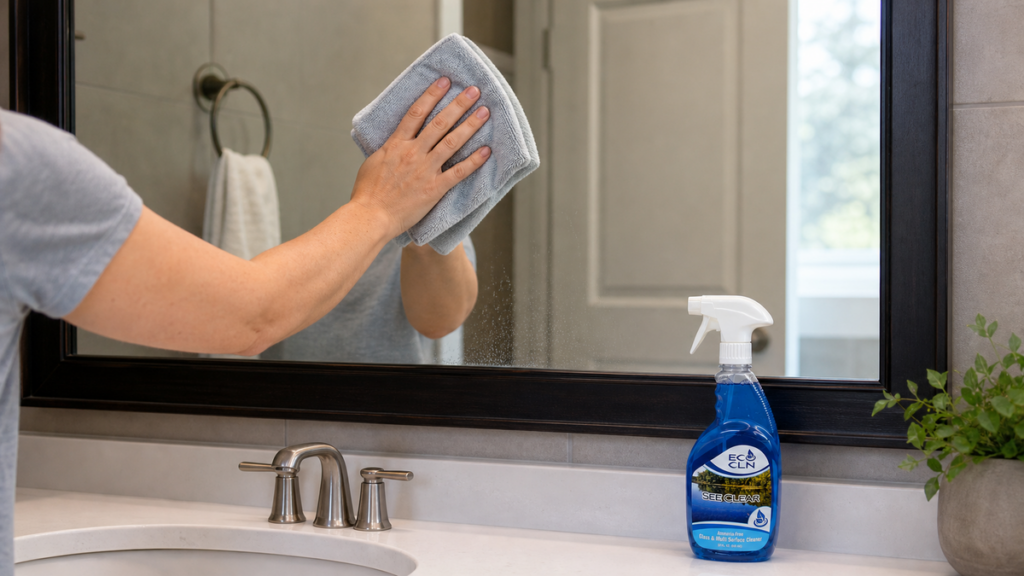
How to Remove Water Spots From a Bathroom Mirror
Bathroom mirrors catch sink splashes, toothpaste mist, hard-water droplets, and steam. Clean the glass, but protect the edges: repeatedly soaking a mirror perimeter can damage the silver backing and create dark spots that no glass cleaner can remove.
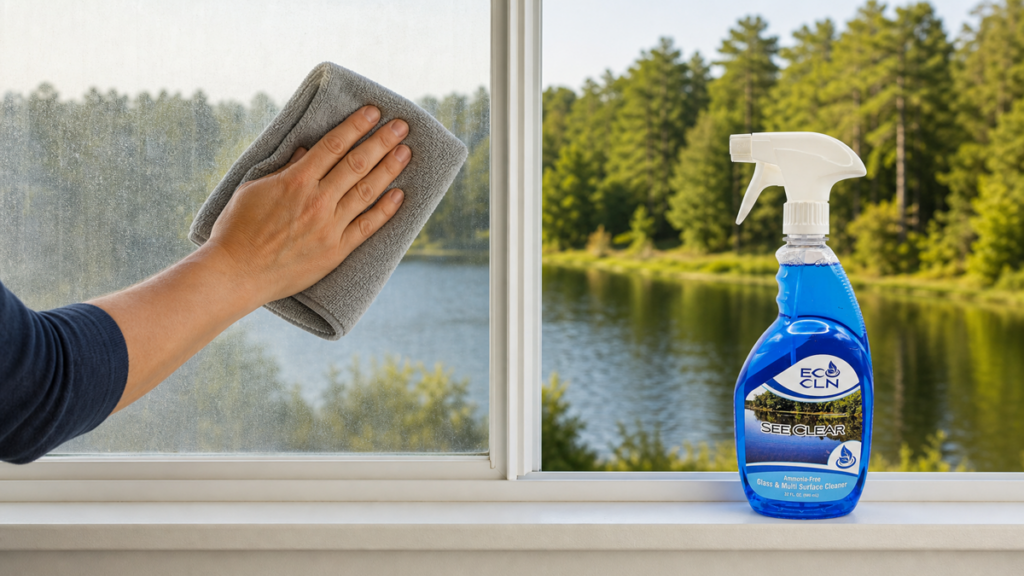
Why Glass Looks Hazy After Cleaning
If glass looks cloudier after you clean it, the problem is often residue rather than dirt. Use less product, cleaner microfiber, a dry finishing pass, and a quick check to make sure the haze is actually on the surface.
