How to Clean Fingerprints and Smudges From a Glass Table

Quick Answer
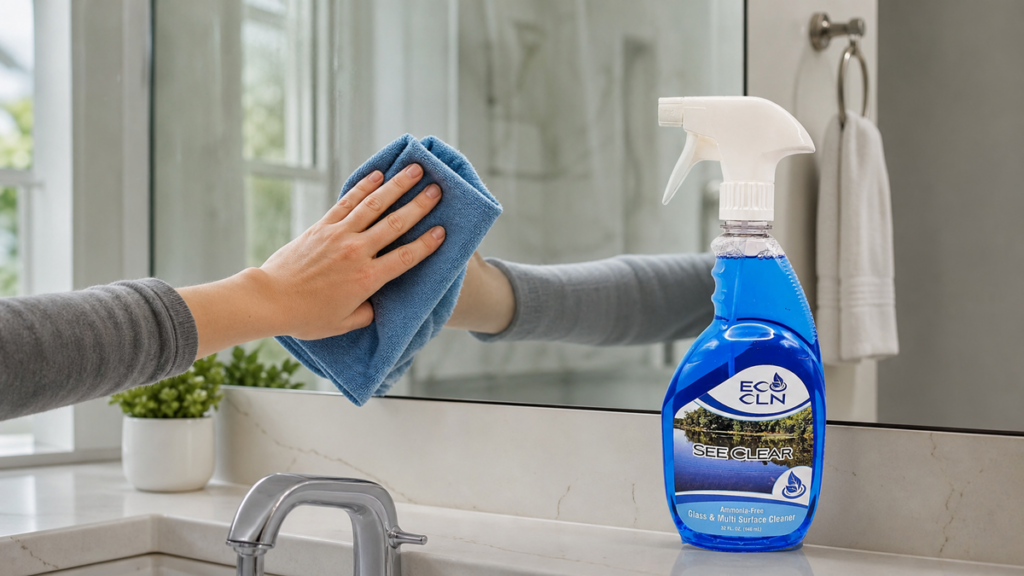
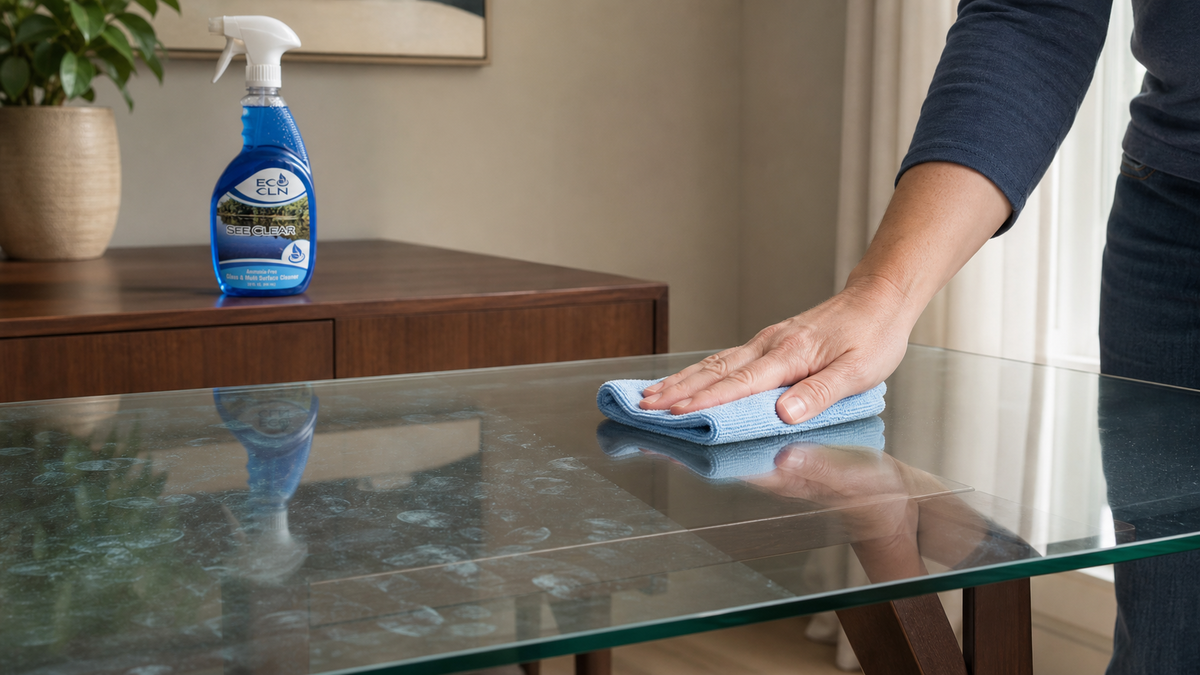
Remove crumbs and grit first. If the tabletop is compatible plain glass, apply a small amount of Eco Cln See-Clear to the glass or a clean microfiber cloth, wipe in overlapping passes, rotate to a clean cloth face, then buff completely dry with a second microfiber cloth.
Check the furniture maker first if the table has tinted, frosted, printed, anti-glare, coated, or specialty glass. If tempered glass is chipped, cracked, or badly scratched, stop using the table and follow the furniture manufacturer’s safety guidance rather than trying to polish the damage away.
Why Glass Tables Show Every Fingerprint
Skin oils create a thin film that catches side light. Food grease, drink rings, dust, and fabric-softener residue from cleaning cloths can make the film even more visible.
A single dirty cloth can move fingerprints into a full-table haze.
Step 1: Remove Dry Debris
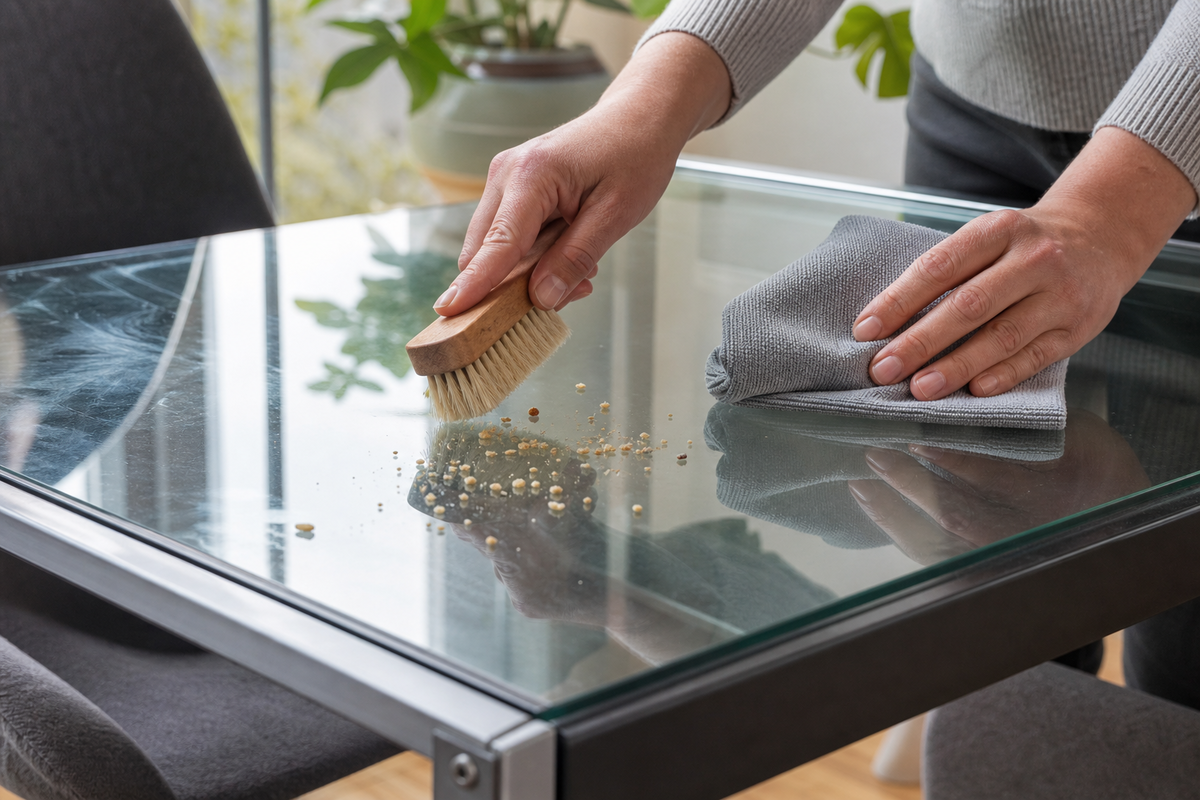
Lift crumbs and grit before wet cleaning. Use a clean soft brush or microfiber cloth.
Dragging grit under a towel can create fine scratches, especially on a table that already has surface damage.
Step 2: Inspect the Glass and Edges
Check for chips, cracks, deep scratches, loose supports, and exposed edges.
IKEA advises handling tempered glass carefully and keeping it scratch-free, including avoiding metal scrubbers. Review tempered-glass care guidance.
Step 3: Check for Coatings or Decorative Finishes
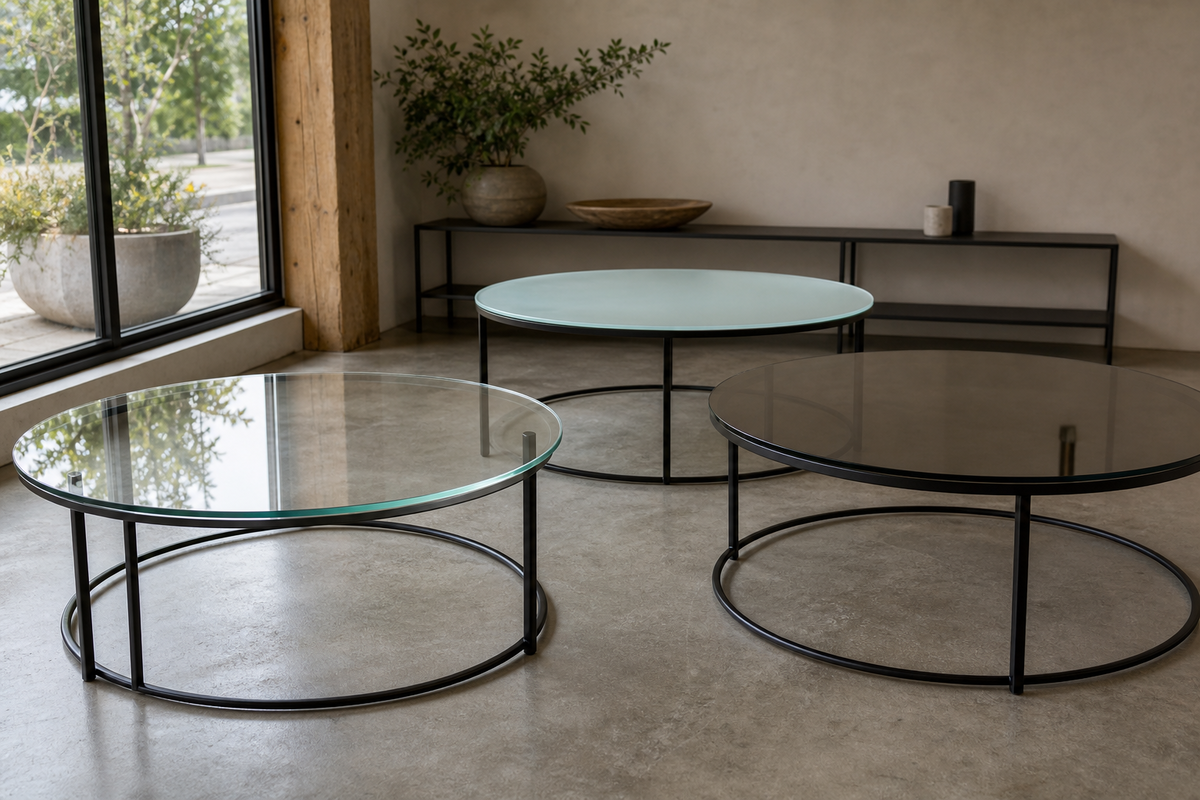
Frosted glass, printed undersides, tint, anti-glare coatings, protective films, and mixed-material tables may need specialty cleaning.
The See-Clear page also directs users to test specialty or coated surfaces and defer when the manufacturer specifies a specialty cleaner. See current See-Clear directions.
Step 4: Use Light See-Clear
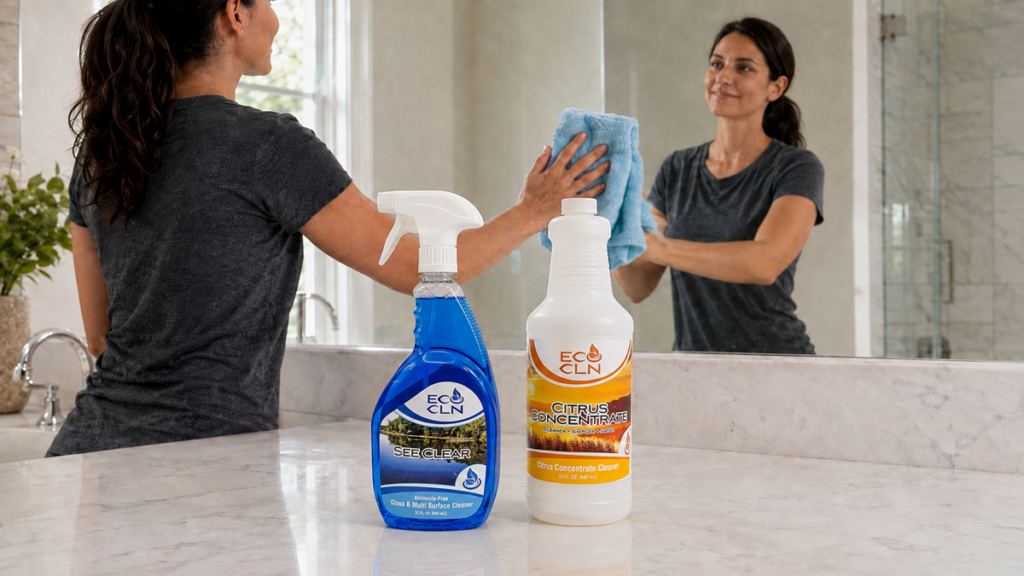
See-Clear is Eco Cln’s ammonia-free cleaner for glass, mirrors, chrome, stainless steel, appliances, and shiny surfaces. It is positioned for fingerprints, smudges, haze, and light residue.
Use light passes. Too much product leaves more solution to remove and can make streaking more likely.
Step 5: Work in Manageable Sections
Wipe one section at a time instead of soaking the entire tabletop. Fold microfiber into several clean faces and rotate as it becomes oily.
On a large table, start at one end and work methodically so you do not keep touching cleaned glass.
Step 6: Buff Dry With a Second Cloth
Use a dry microfiber cloth for the final pass. Inspect from an angle for film or missed fingerprints.
Ashley Furniture recommends wiping glass furniture with a damp clean cloth and immediately drying with a second cloth for routine care. Review furniture glass-care guidance.
What About Food Grease?
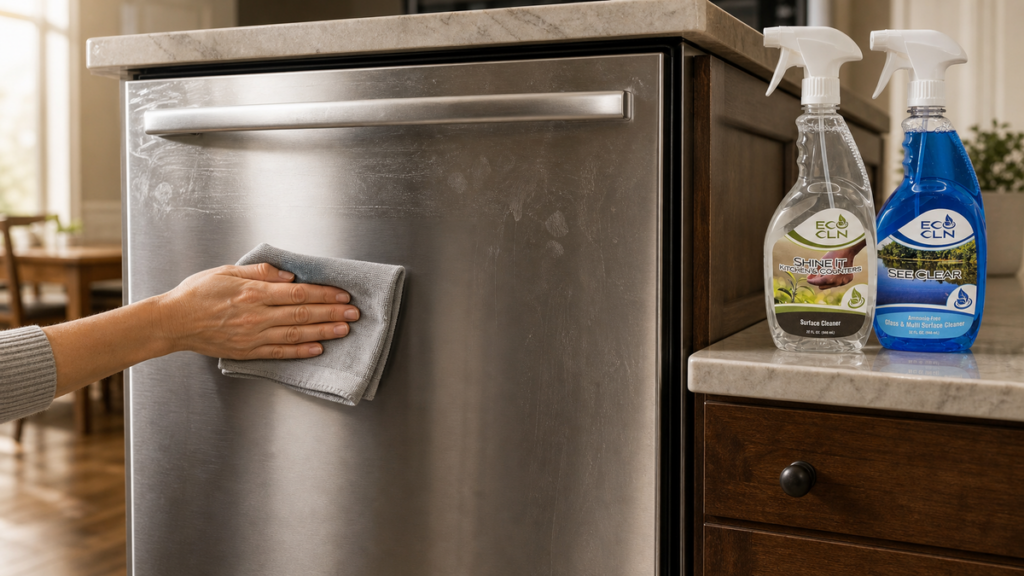
See-Clear handles light smudges and everyday residue. If the table has heavier food grease and the furniture manufacturer permits a kitchen cleaner on the glass, a different Eco Cln product may fit the grease better.
Do not spray cleaner into wood joints, metal fasteners, electronics, lighting, or unfinished edges on mixed-material tables.
Common Glass-Table Mistakes
- Using one oily cloth for the entire tabletop.
- Leaving crumbs or grit under the cleaning cloth.
- Over-spraying the glass.
- Using metal scrubbers, abrasive pads, or gritty powders.
- Assuming frosted, printed, tinted, or coated glass is the same as plain glass.
- Trying to clean away chips, cracks, or deep scratches.
- Putting hands or objects back on the glass before it is fully dry.
Where See-Clear Fits
Eco Cln See-Clear is the ammonia-free Eco Cln product for compatible glass tables, mirrors, windows, glass doors, chrome, stainless steel, appliances, and shiny surfaces. For fingerprints and smudges, light application plus a dry buff is usually the cleaner-looking approach.
FAQ
Can I use See-Clear on a glass table?
Yes on compatible glass surfaces when used as directed. Check the furniture maker first for specialty coatings, tint, frost, or decorative finishes.
Is See-Clear ammonia-free?
Yes. The ammonia-free claim belongs to See-Clear.
Why is my glass table streaky after cleaning?
Too much cleaner, a dirty microfiber cloth, grease residue, or skipping the dry finishing pass can leave streaks.
Can I use a scrub pad on tempered glass?
Avoid abrasive pads and metal scrubbers. Tempered glass should be kept scratch-free and handled carefully.
What if the glass is chipped or cracked?
Stop using the table and follow the furniture manufacturer’s safety/replacement guidance. Cleaning cannot repair structural glass damage.
The Bottom Line
Remove crumbs, grit, and anything that could scratch the glass before adding cleaner. Confirm whether the table is plain glass, tempered glass, tinted glass, coated glass, frosted glass, or a specialty surface, and follow the furniture maker’s instructions for the top, frame, fasteners, and edge supports. Inspect both the upper and lower surfaces because a smudge seen through the top can tempt you to repeat-clean the wrong side. For compatible plain glass, use a light See-Clear application on a clean microfiber cloth instead of flooding the tabletop. Work in manageable sections, stabilize the table rather than leaning heavily on it, and keep liquid out of laminated edges, chips, cracks, seams, wood joints, metal hardware, and porous stone or wood bases. Change cloth faces as fingerprints and food film transfer, then finish with a separate dry microfiber cloth using overlapping passes. Check the result from two angles and against side light before applying more product; many apparent streaks come from a loaded cloth, excess cleaner, or moisture left to evaporate. Clean the underside only when it can be reached safely without crawling under unstable glass or stressing the supports. Stop if the table rocks, the glass is chipped or cracked, a coating changes appearance, or a mark does not transfer and may be a scratch or etching. Routine cleaning can remove compatible surface soil and haze, but it cannot repair damaged glass, failed edge bonds, or structural hardware.
Continue with this related Eco Cln guide: Ammonia-free glass cleaner guide.
For compatible glass tables with fingerprints, smudges, haze, and everyday touch marks, Eco Cln See-Clear gives you the ammonia-free glass-cleaning lane. Use it lightly and finish with a clean dry microfiber cloth.