What Is That Pink Residue in Your Shower – and How Should You Clean It?

Quick Answer
Pink residue in shower areas tends to appear where moisture, soap residue and organic material stay damp. Pink or pink-orange shower residue tends to develop where moisture, soap residue, and organic material stay damp. CDC notes that Serratia marcescens is abundant in damp environments and can appear as pink-orange-red discoloration in bathroom shower corners and basins.
However, you cannot identify a microorganism from color alone. Treat the article as visible-residue cleanup, not a diagnosis.
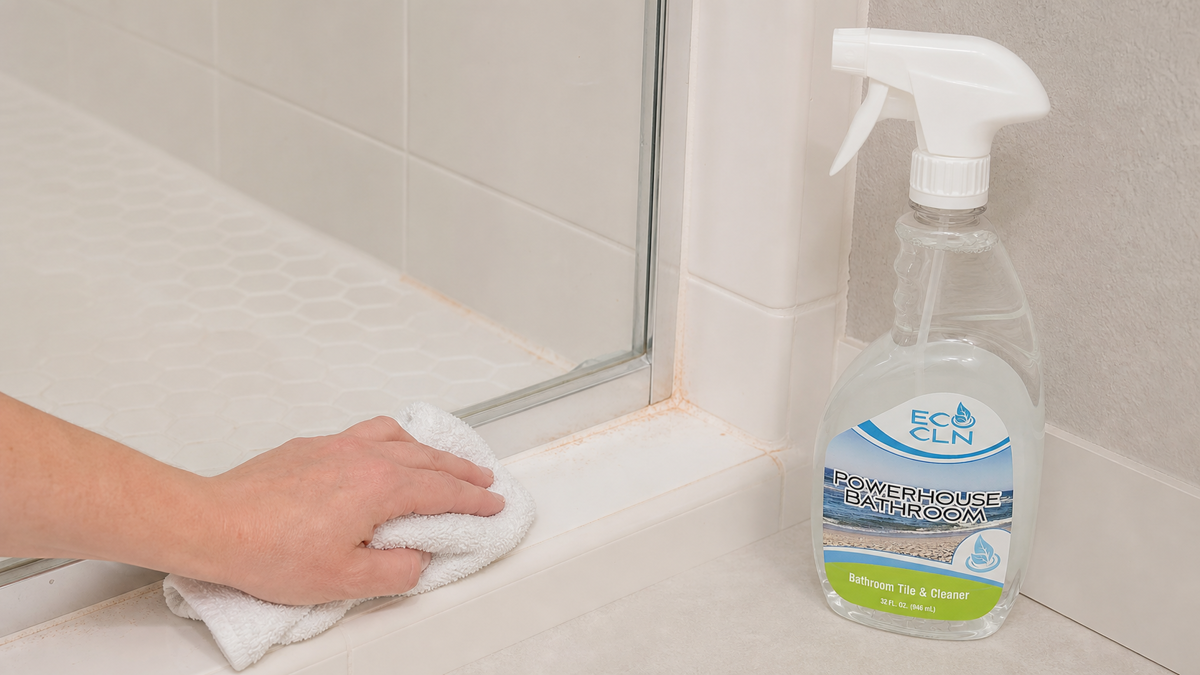
Eco Cln Powerhouse Bathroom can be used for compatible bathroom grime, tubs, showers, tile, sinks, fixtures, soap scum, and hard-water buildup. Use it to clean visible buildup according to the label, but do not describe it as disinfecting, sanitizing, or killing Serratia.
Why Pink Residue Likes Showers
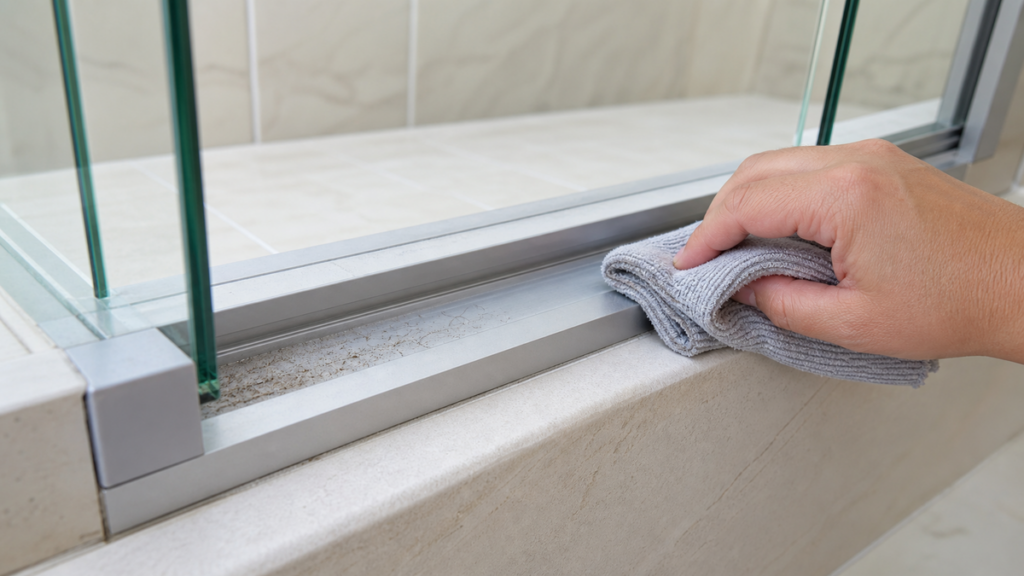
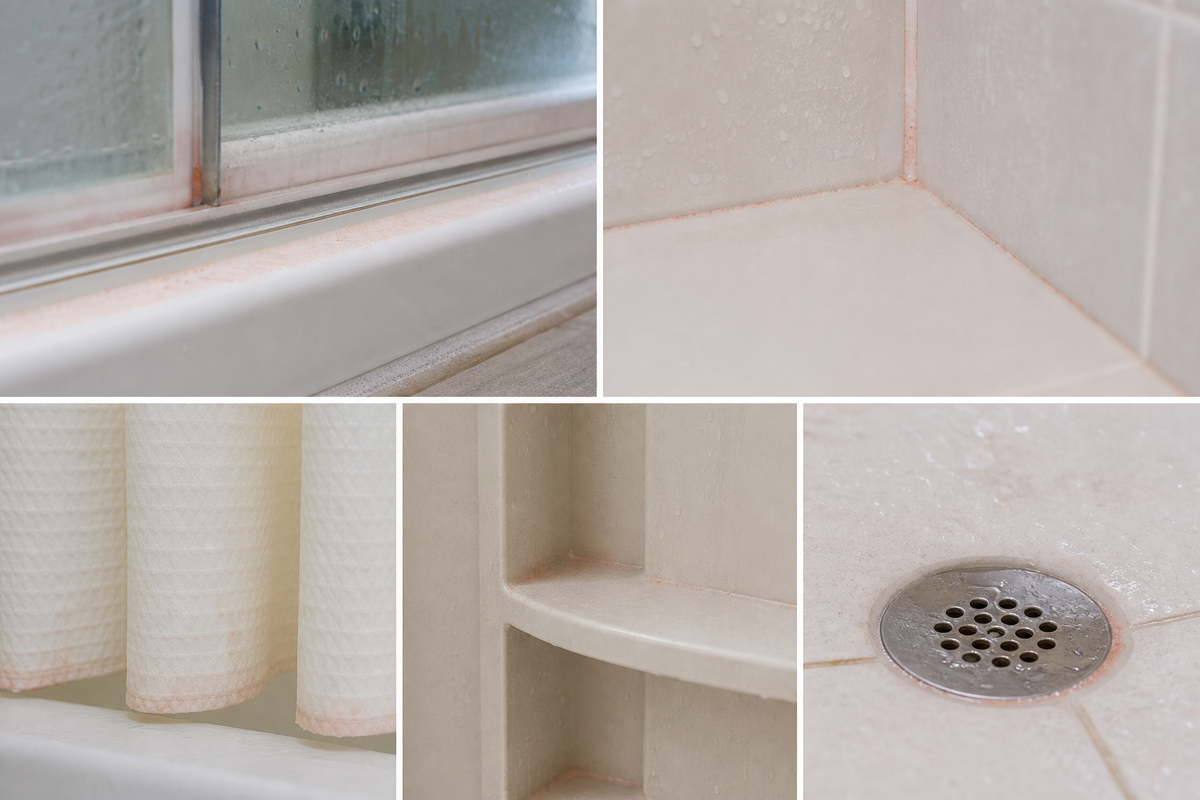
Shower corners, grout, tracks, drains, curtain folds, and bottle shelves stay damp longer than open wall surfaces.
Soap film, body-care residue, and water provide a surface where visible biofilm-like residue can develop. Drying and ventilation help reduce the conditions that let buildup return quickly.
Step 1: Identify the Surface Before Cleaning
Check whether the residue is on glazed tile, grout, acrylic, fiberglass, natural stone, caulk, metal track, glass, or another material.
Surface compatibility matters more than the color of the residue. Follow manufacturer care for specialty finishes and natural stone.
Step 2: Remove Loose Hair and Debris
Rinse or wipe away loose hair, soap chunks, and surface debris so the cleaner contacts the residue directly.
Avoid aerosolizing dried residue with aggressive dry brushing.
Step 3: Clean the Visible Residue
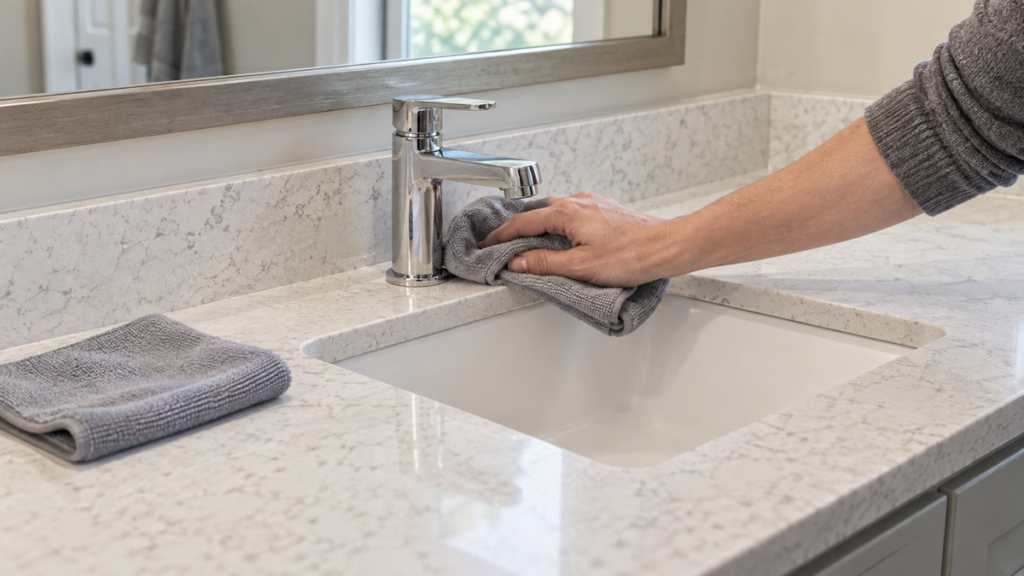
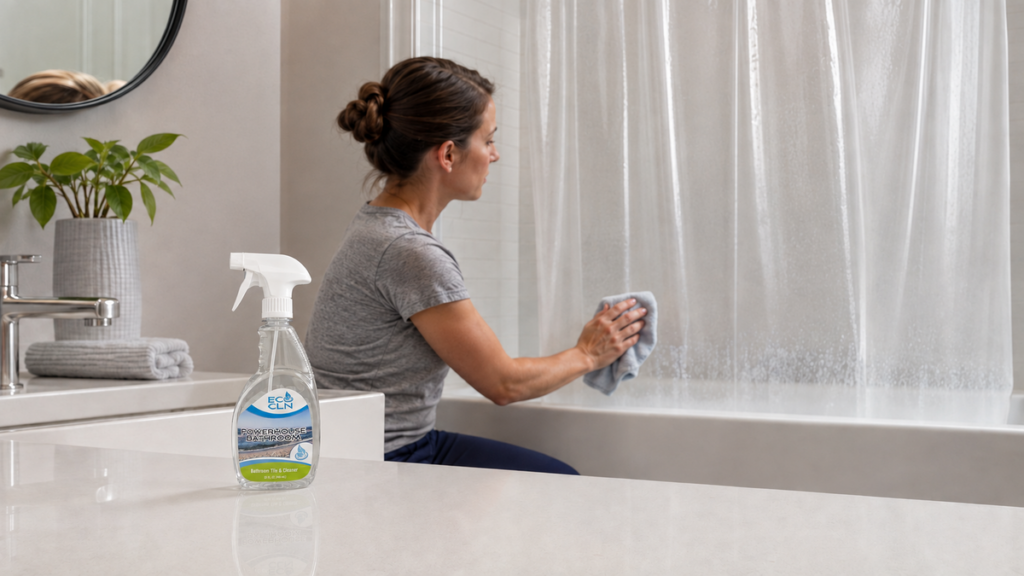
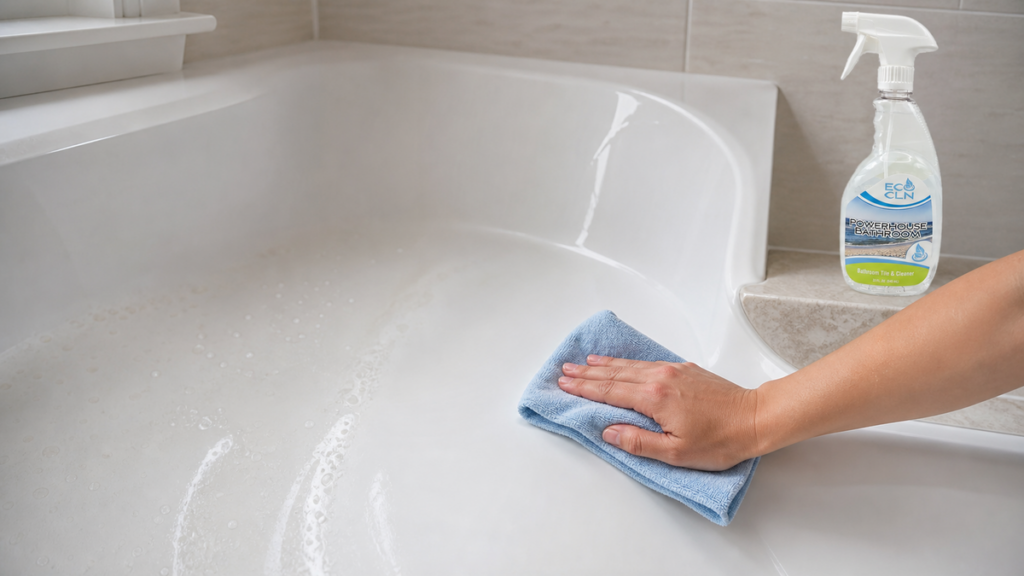
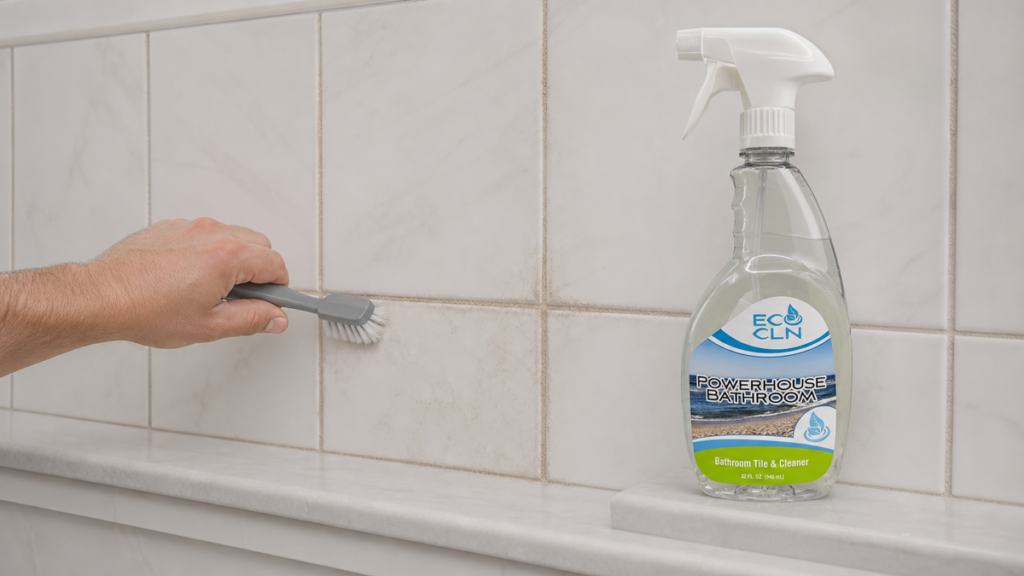
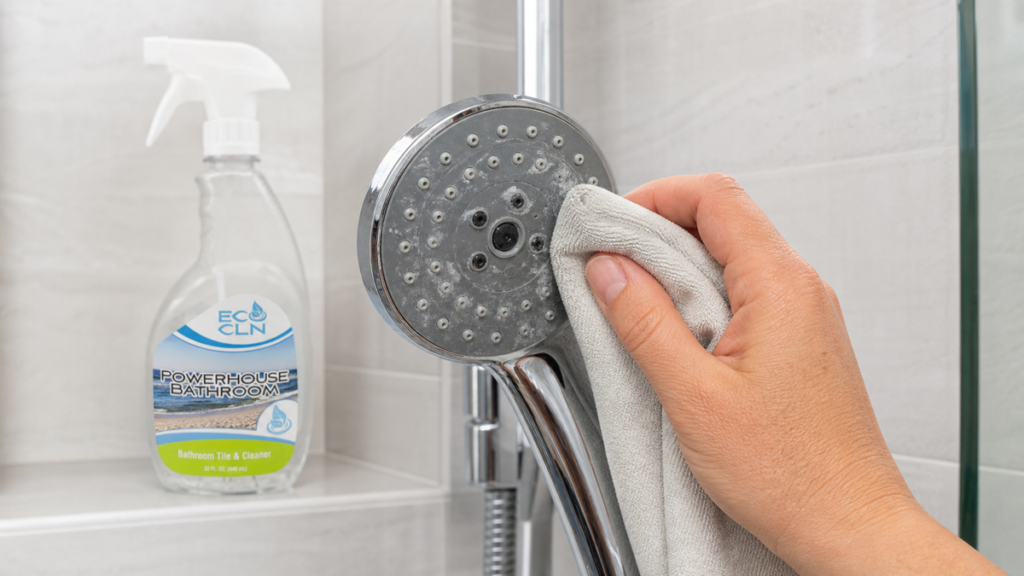
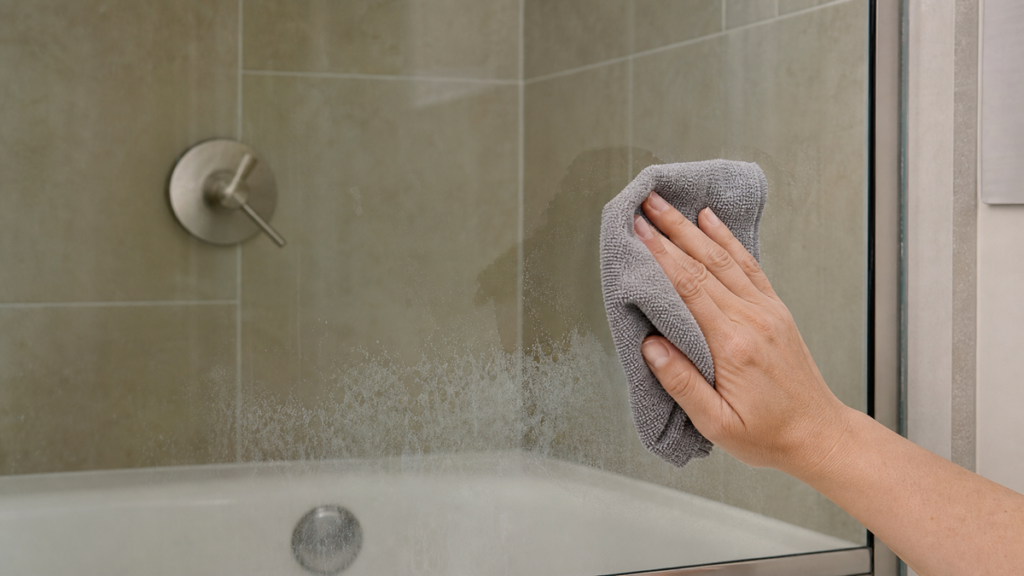
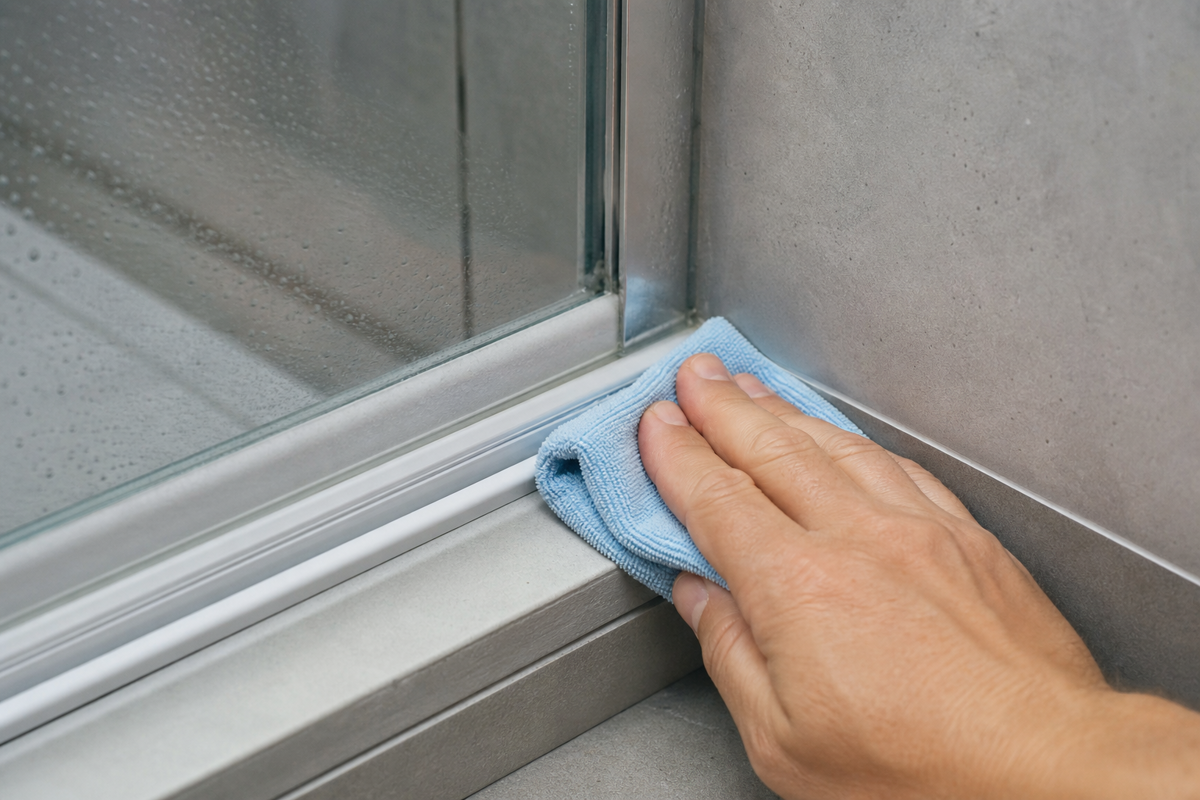
Use Powerhouse Bathroom according to its current directions on compatible bathroom surfaces: apply to the area, allow brief contact with buildup, wipe with a clean cloth/sponge/appropriate tool, then rinse or wipe clean.
Use a soft, non-abrasive tool appropriate for the material.
Step 4: Rinse or Wipe Away the Dirty Solution
Remove loosened residue instead of spreading it around the enclosure. Use clean cloths and fresh water where the surface instructions allow it.
Dry the area after cleaning, especially tracks, grout edges, curtain folds, and lower corners.
Step 5: Reduce the Damp Conditions
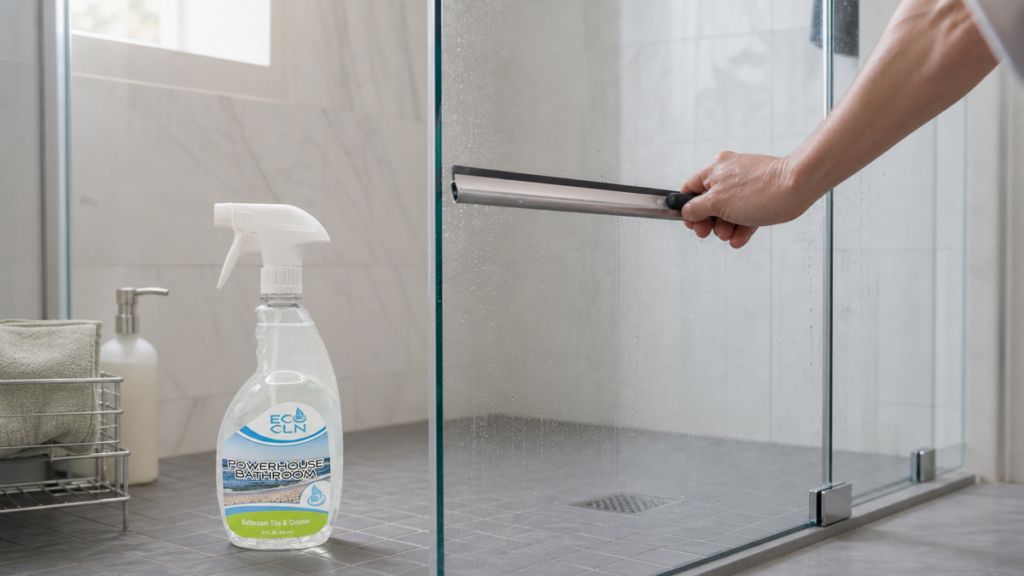
Use normal bathroom ventilation, squeegee compatible glass, wipe heavy water from ledges and tracks, and avoid leaving wet bottles or mats pressed against the same surface for long periods.
These habits can slow visible buildup, but do not promise permanent prevention.
Cleaning vs. Disinfecting
This Eco Cln article is about cleaning visible residue. Powerhouse Bathroom is not being presented as an EPA-registered disinfectant or a product that kills bacteria, mold, mildew, or germs.
If a situation specifically requires disinfection, follow an appropriate registered product label and the surface manufacturer instructions as a separate step. Never mix cleaning chemicals.
When the Pink Color Is Actually the Material
Some caulk, grout, stone, metal, and coatings can discolor permanently. If the color does not transfer or change after careful compatible cleaning, it may be staining or material damage rather than removable residue.
Common Pink-Residue Cleaning Mistakes
- Calling every pink mark Serratia with certainty.
- Claiming a normal bathroom cleaner kills bacteria or mold without label support.
- Using abrasive pads on acrylic, fiberglass, chrome, or coated surfaces.
- Flooding failed caulk or cracked grout.
- Leaving cleaner and dirty residue to dry back onto the surface.
- Ignoring persistent moisture or leaks.
- Mixing bleach, acids, or other cleaning chemicals.
Where Powerhouse Bathroom Fits
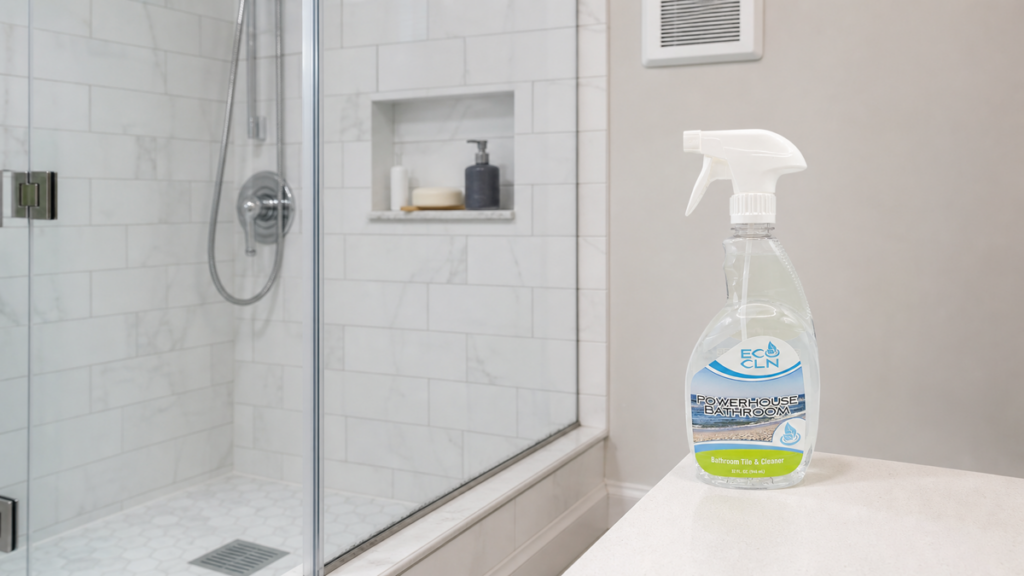
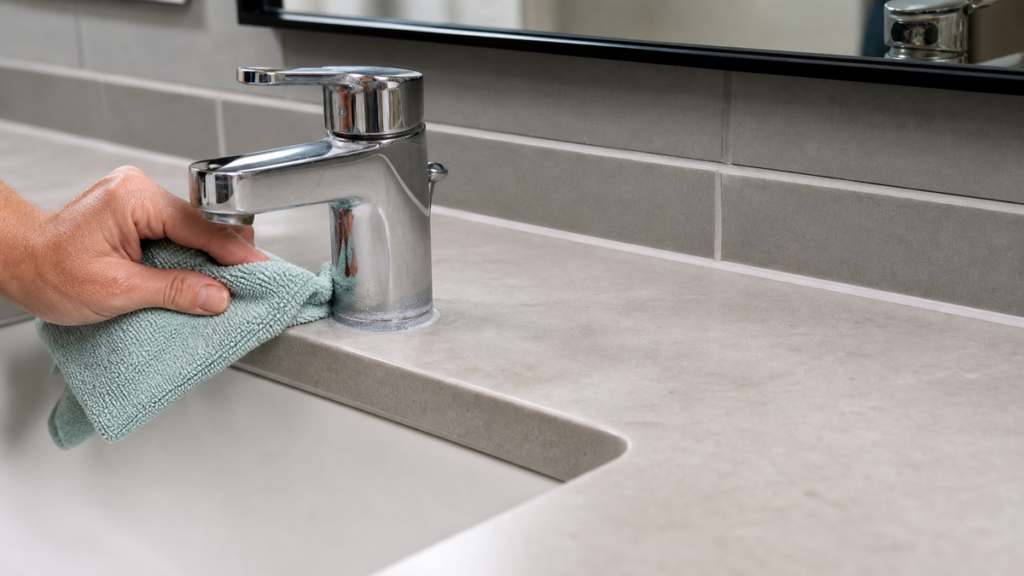
Eco Cln Powerhouse Bathroom is the bathroom-focused cleaner for compatible tubs, showers, tile, sinks, fixtures, soap scum, hard-water buildup, and everyday bathroom grime. Use it to remove visible residue, not to make unsupported antimicrobial claims.
FAQ
Is pink shower residue always Serratia marcescens?
No. Serratia is commonly associated with pink-orange-red bathroom discoloration, but color alone cannot identify an organism.
Can Powerhouse clean pink residue?
Powerhouse is positioned for bathroom grime and buildup on compatible surfaces. Use it for visible cleaning according to the label, without claiming it disinfects or kills Serratia.
Why does the pink residue come back?
Persistent moisture and residue in corners, tracks, grout, drains, and folds can let visible buildup return. Drying and ventilation can slow it.
Should I use a hard scrub brush?
Use the softest non-abrasive tool that the surface manufacturer allows. Aggressive scrubbing can damage grout, acrylic, fiberglass, chrome, and coatings.
When should I investigate beyond cleaning?
If there is a leak, failed caulk, crumbling grout, persistent moisture behind materials, or discoloration that does not behave like surface residue.
The Bottom Line
Pink or pink-orange shower residue commonly becomes visible where water, soap film, and organic material remain damp, especially around drains, grout lines, caulk, bottle shelves, door tracks, curtains, and textured bases. Treat the visible film as a cleaning and moisture-control problem, not as a color diagnosis made from a photo. Put on gloves, ventilate the room, remove bottles and loose debris, and check the shower maker’s instructions before choosing a product or tool. On compatible bathroom surfaces, hidden-area test Powerhouse Bathroom, use a controlled amount, give it only the label-directed working time, and agitate gently with a non-scratch cloth or brush suited to the material. Rinse or wipe away loosened residue completely and dry the area so cleaner and moisture do not remain in corners. Do not mix Powerhouse with bleach, ammonia, acids, or another bathroom chemical, and do not use abrasive pads simply because the color is stubborn. Shorten the cleaning interval when the film returns quickly, improve normal ventilation, spread out wet curtains, remove standing water, and keep soap residue from collecting around bottles and seals. Inspect caulk, grout, drains, and hidden edges after cleaning. Stop if the color appears to come from behind caulk, the surface is porous or damaged, growth covers a large area, there is a persistent musty odor, or anyone in the home has a health concern that requires professional guidance. Repeated residue may signal a leak, failed seal, drainage issue, or inaccessible moisture source that surface cleaning cannot solve. Powerhouse can remove compatible bathroom soil, but it is not a disinfectant claim, a laboratory identification, or a repair for failed grout, caulk, coatings, or water-damaged construction.
Continue with this related Eco Cln guide: Soap scum vs. hard-water stains.
For additional material or process limits, review the CDC Emerging Infectious Diseases reference.
For visible pink residue mixed with soap film and everyday bathroom grime on compatible surfaces, Eco Cln Powerhouse Bathroom is the targeted cleaning option. Remove the residue, rinse or wipe clean, and keep damp corners drier between cleanings.