Why Kitchen Counters Feel Sticky After Cleaning

Quick Answer
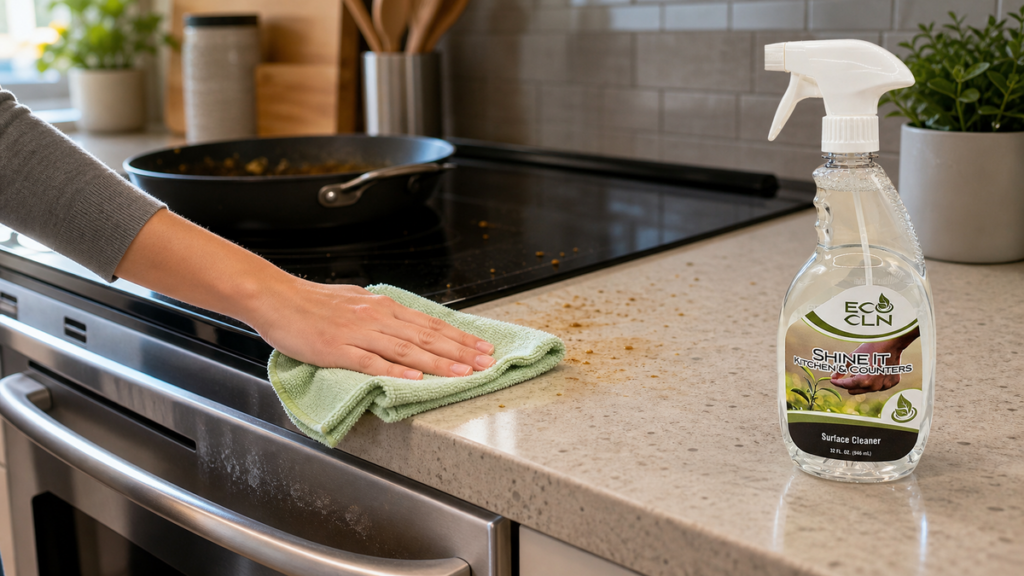
Sticky counters after cleaning usually come from one of five things: grease was smeared instead of removed, too much cleaner was used, the cloth was already grease-loaded, cleaner residue was not wiped away, or the product was not appropriate for the countertop material. Start by identifying the surface, then use a clean damp cloth to remove loose residue if the manufacturer allows it. For compatible washable kitchen surfaces with actual cooking grease, Eco Cln Shine-It is the targeted Eco Cln cleaner.
Use less product than you think you need, change cloth faces often, and finish with a clean residue-removal pass when the countertop care instructions permit it.
Why a Clean Counter Can Still Feel Sticky
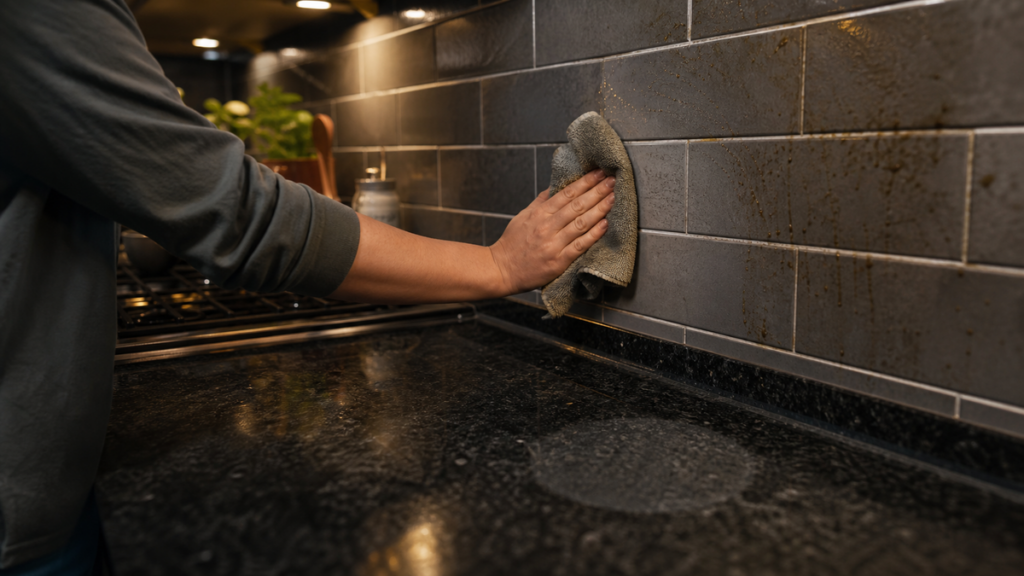
Cleaning is supposed to remove residue, but the wiping process can also redistribute it. A greasy film may get spread over a larger area, or excess cleaner can dry on the surface after the dirt is gone.
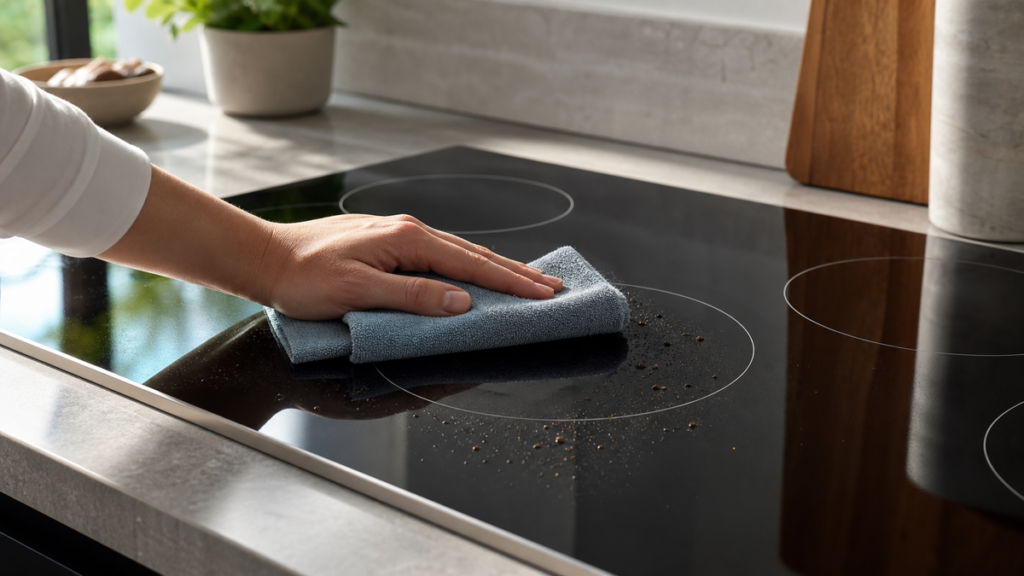
Sticky feel is especially common around cooktops, prep zones, appliance edges, coffee stations, and cabinet-side counter areas where airborne cooking oils and food residue accumulate.
Cause 1: The Grease Was Moved, Not Removed
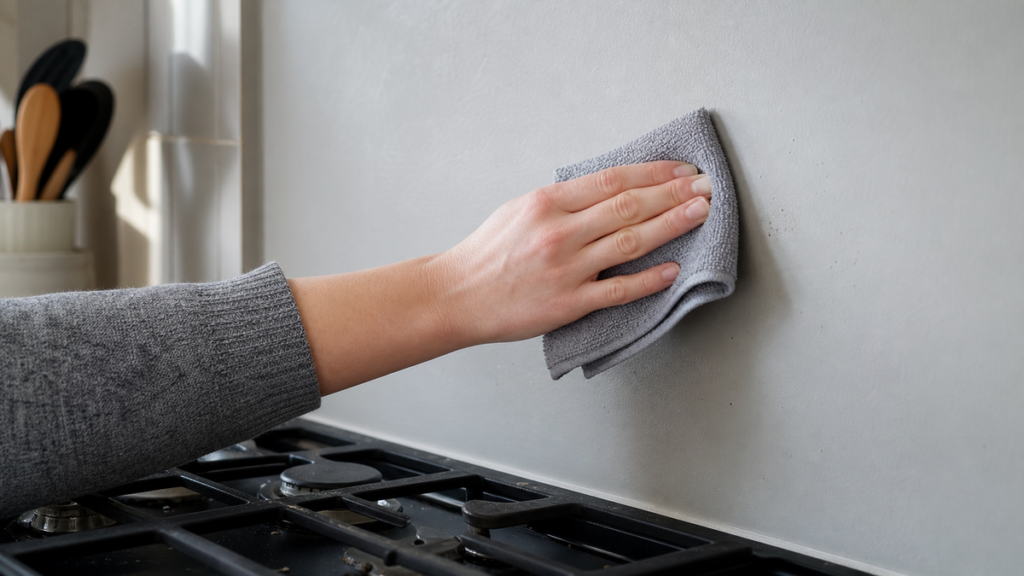
If the counter feels sticky mainly near the stove, cooking grease may still be present. One damp cloth can load up with oil quickly and then smear that oil across the rest of the surface.
The existing Eco Cln guide on greasy kitchen counters recommends changing cloth sides often and using controlled product rather than spreading grease around the kitchen.
Cause 2: Too Much Cleaner Was Used
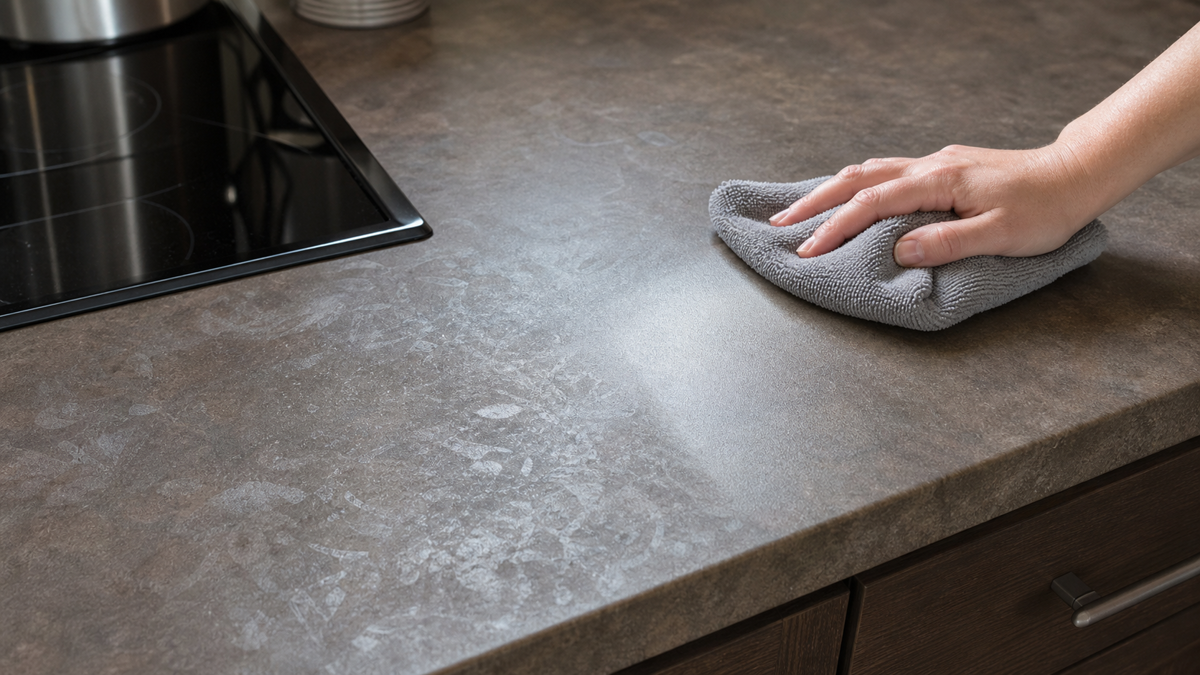
A heavy spray creates more product that has to be removed. If the cleaning solution is left on a dark, glossy, laminate, or smooth surface, the dried film may feel tacky or look dull even after the original mess is gone.
More cleaner is not automatically more cleaning. Apply enough to work on the mess, then wipe the loosened residue away.
Cause 3: The Final Rinse or Wipe Was Skipped
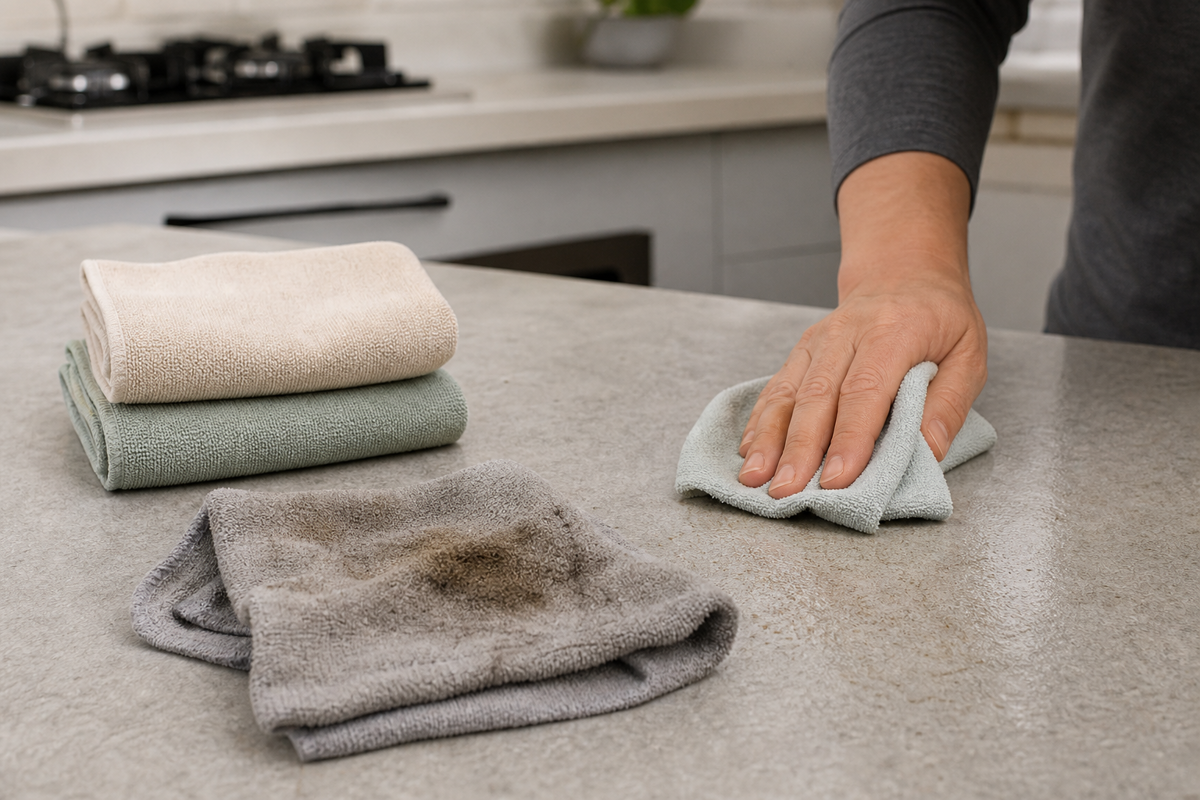
Some countertop materials and care instructions call for a clean-water wipe after cleaner use. For example, Formica care guidance specifically tells users to rinse laminate with clean water and then dry it so cleaner traces are removed.
Countertop materials vary, so follow the manufacturer for your surface. See Formica laminate care as one example.
Cause 4: The Cloth Is Dirty or Saturated
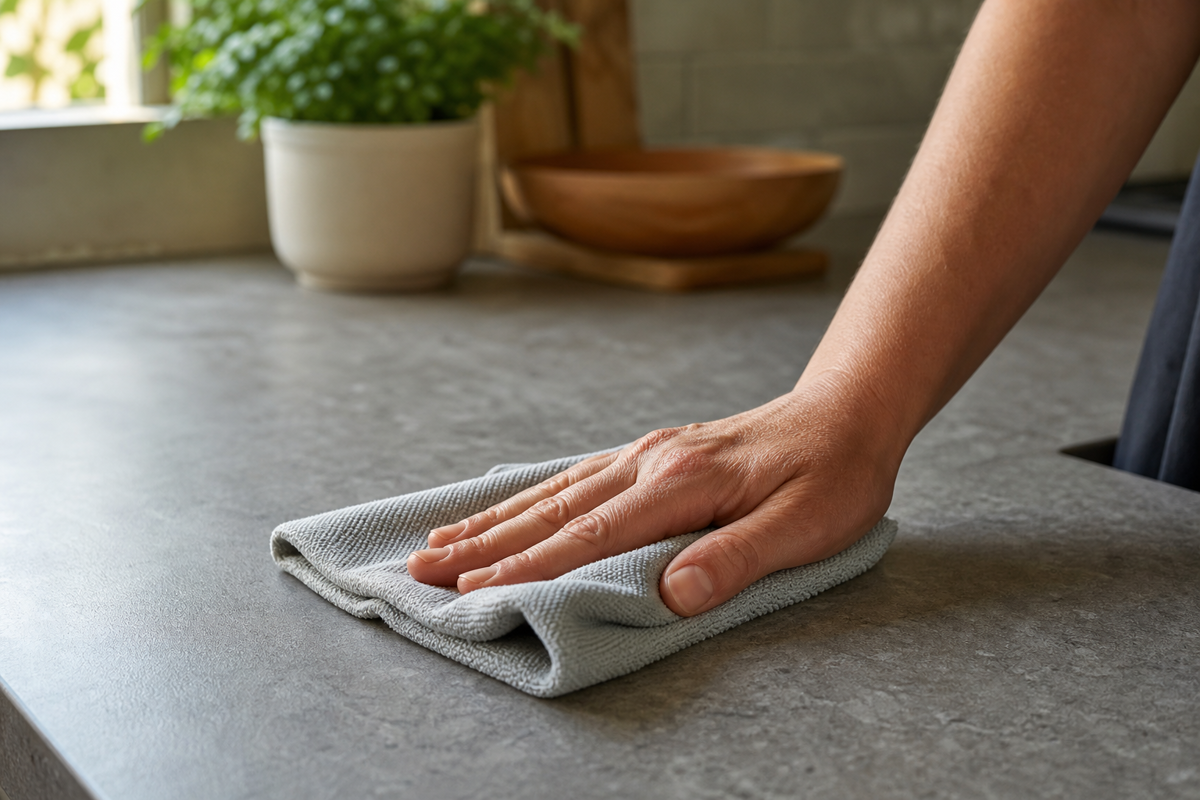
A microfiber cloth is only useful while it still has a clean working surface. Once it is loaded with grease, food residue, or cleaner, it stops picking material up efficiently.
Fold the cloth into sections and rotate often. For a large counter, switch to a second clean cloth rather than trying to finish the whole surface with one greasy towel.
Cause 5: The Cleaner and Countertop Material Are a Bad Match
Laminate, quartz, granite, marble, butcher block, sealed concrete, stainless counters, and specialty composites all have different care rules. A product that works well on one can leave film, dulling, or damage on another.
Shine-It is intended for counters and other compatible washable kitchen surfaces, but the current product page says to test delicate finishes, painted surfaces, specialty coatings, unsealed natural stone, unfinished wood, and unknown materials first. Review current Shine-It directions.
How to Fix a Sticky Counter
- Identify the countertop material and check its care instructions.
- Remove crumbs and loose debris.
- Use a fresh clean damp cloth to see whether the stickiness is removable residue.
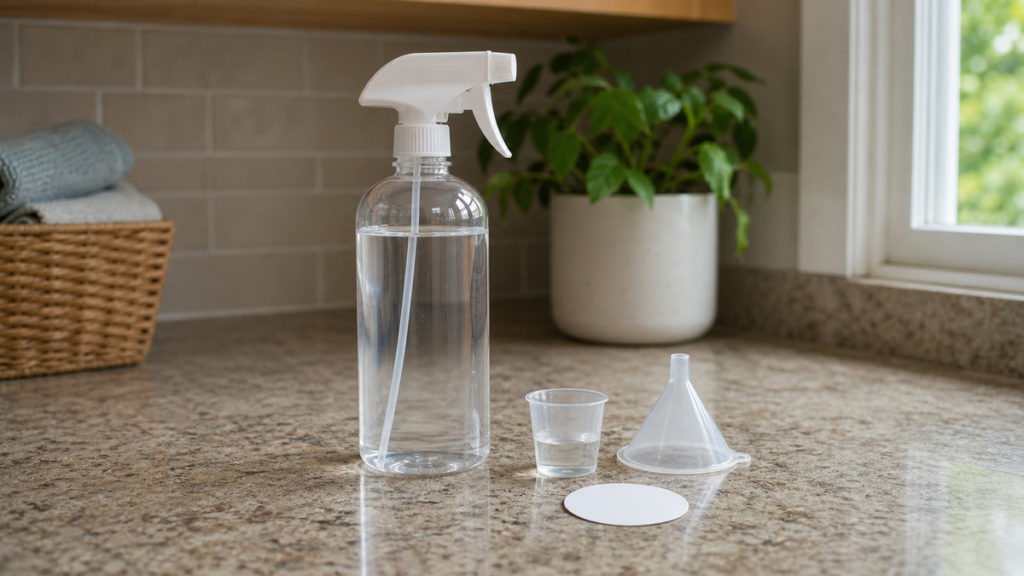
- If grease remains and the surface is compatible, apply a small amount of Shine-It to the counter or cloth.
- Wipe in small sections with a clean microfiber cloth.
- Use a separate clean damp cloth for a final residue-removal pass if the surface instructions allow it.
- Dry the counter and reassess once it is fully dry.
What If the Counter Still Feels Sticky?
If the counter is clean and dry but still feels tacky, the issue may be a damaged finish, failing sealer, old coating, adhesive residue, or another material problem rather than ordinary dirt.
Stop escalating with stronger cleaners. Check the countertop manufacturer or installer, especially for natural stone, wood, refinished surfaces, or specialty coatings.
Common Sticky-Counter Mistakes
- Spraying the counter until it is visibly wet.
- Using one grease-loaded cloth for the entire kitchen.
- Skipping a clean final wipe when the surface instructions call for one.
- Using a kitchen degreaser on unsealed natural stone or unfinished wood without approval.
- Judging the surface while it is still wet.
- Trying to fix damaged sealers or coatings with more cleaner.
Where Shine-It Fits
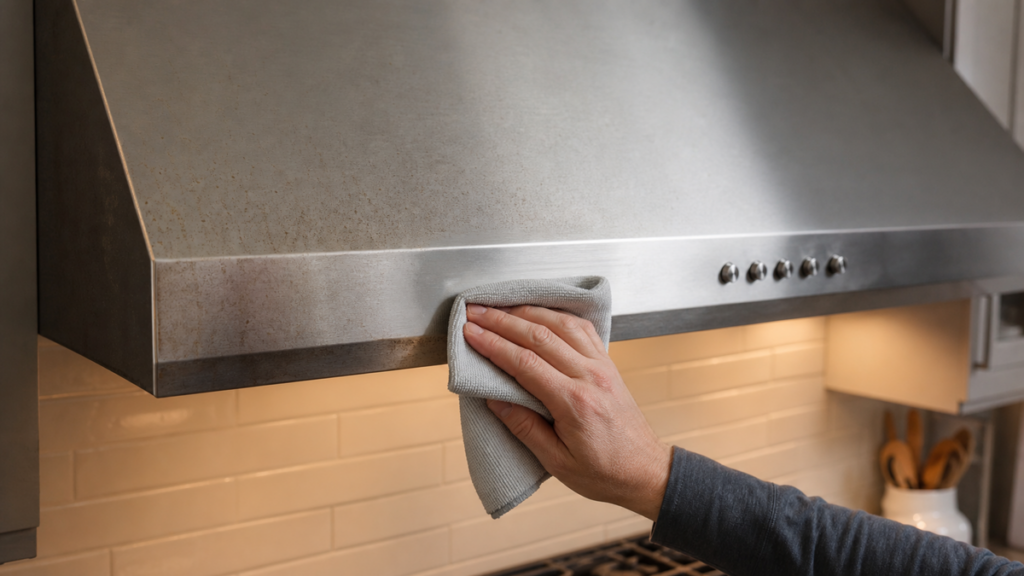
Eco Cln Shine-It is the ready-to-use Eco Cln cleaner for kitchen counters, cooking residue, grease spots, stainless steel appliance exteriors, cabinet fronts, tables, and other compatible washable kitchen surfaces. If the counter is sticky because of grease or everyday kitchen residue, it is the correct product lane – provided the countertop material supports that use.
FAQ
Why is my counter sticky even after I wiped it?
The most common reasons are leftover grease, too much cleaner, a dirty cloth, or cleaning solution that dried on the surface.
Should I use more cleaner on a sticky counter?
Not automatically. First try a clean damp residue-removal pass if the countertop manufacturer allows it. More product can make residue worse.
Can Shine-It be used on every countertop?
No cleaner should be assumed safe for every material. Shine-It is for compatible washable kitchen surfaces; test first and avoid unsealed natural stone, unfinished wood, or specialty finishes unless their care instructions allow it.
Why does the counter feel sticky only near the stove?
That pattern often points to airborne cooking oil or grease film rather than cleaner residue alone.
What if the stickiness never goes away?
If the surface is clean and dry but remains tacky, investigate a coating, sealer, adhesive, or finish problem rather than continuing to add cleaner.
The Bottom Line
Sticky counters after cleaning usually come from one of five things: grease was smeared instead of removed, too much cleaner was used, the cloth was already grease-loaded, cleaner residue was not wiped away, or the product was not appropriate for the countertop material. Correct the cause before repeating the same cleaning pass, then use the matching Eco Cln product only where its current directions fit.
For sticky kitchen residue that turns out to be cooking grease or everyday food film on a compatible washable surface, Eco Cln Shine-It gives you the focused kitchen cleaner – just pair it with clean cloths and a complete residue-removal pass.