How to Clean Pet Urine From a Mattress Without Oversoaking It

Quick Answer
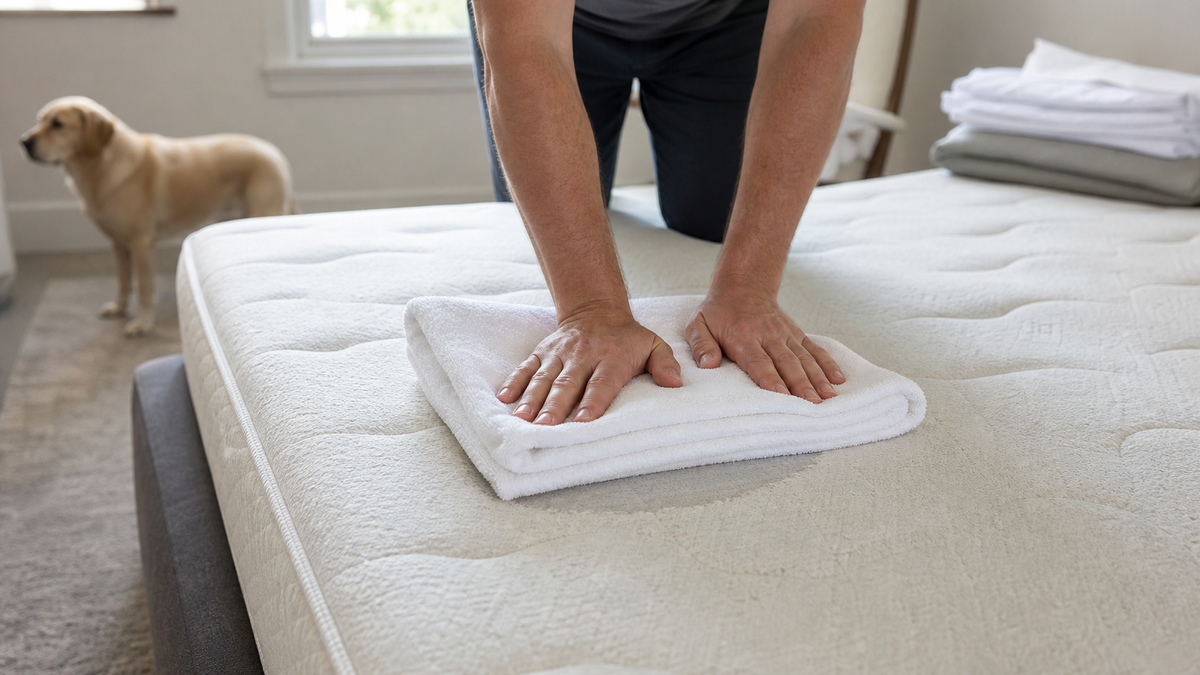
Strip the bedding and blot up as much urine as possible with clean absorbent towels. Check the mattress care label before using any wet cleaner. If the cover or surface is compatible with spot cleaning, use a very small, controlled amount of a pet-accident cleaner such as Eco Cln PAWS on the affected fabric only, then blot again and let the mattress air-dry completely with strong airflow.
Do not saturate the mattress. Foam and layered mattress materials can hold moisture deep inside long after the surface feels dry. Mattress-manufacturer instructions take priority over generalized cleaning advice.
Why a Mattress Is Different From Carpet
A mattress is thick, layered, and difficult to rinse or extract. Urine can move through the cover into quilting, foam, batting, or other interior materials, while added cleaning liquid can spread the wet zone farther than the original accident.
That means the goal is not to make the mattress ‘as wet as the accident was.’ The goal is to remove available liquid, treat only the accessible soiled area if the manufacturer allows it, and get the mattress dry again as quickly and completely as possible.
Step 1: Remove Bedding and Protect the Floor
Strip sheets, blankets, mattress protectors, and washable covers immediately. Follow their care labels separately. Put towels under or around the mattress edge if runoff is possible.
If the mattress has a removable washable cover, follow the manufacturer’s instructions rather than assuming the cover can be machine-washed.
Step 2: Blot Before You Add Anything
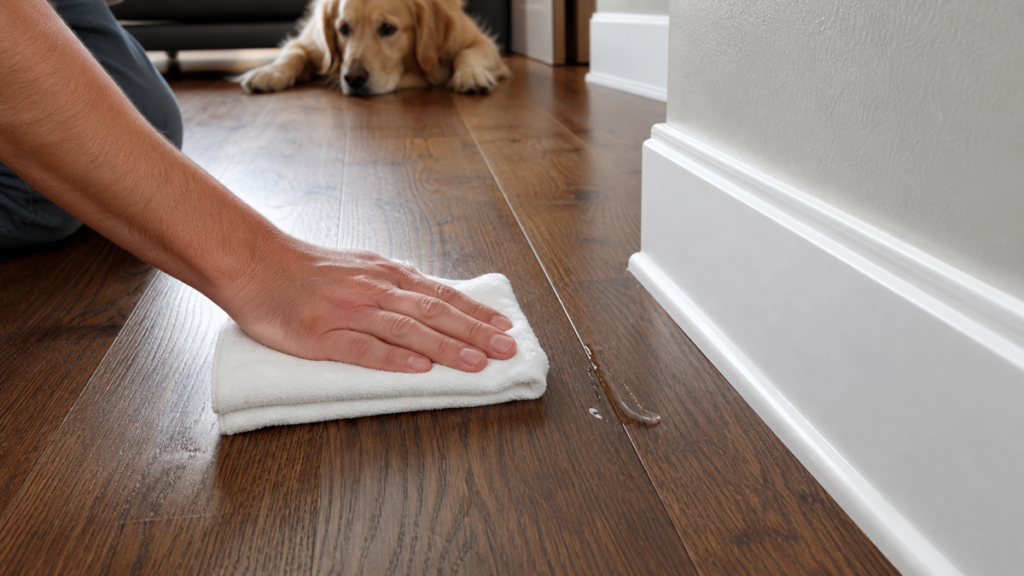
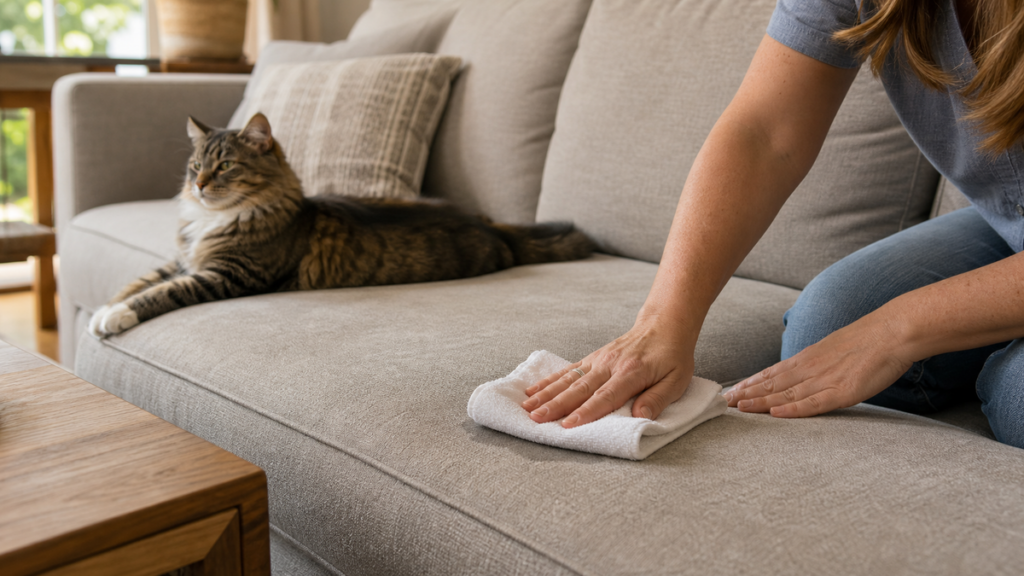
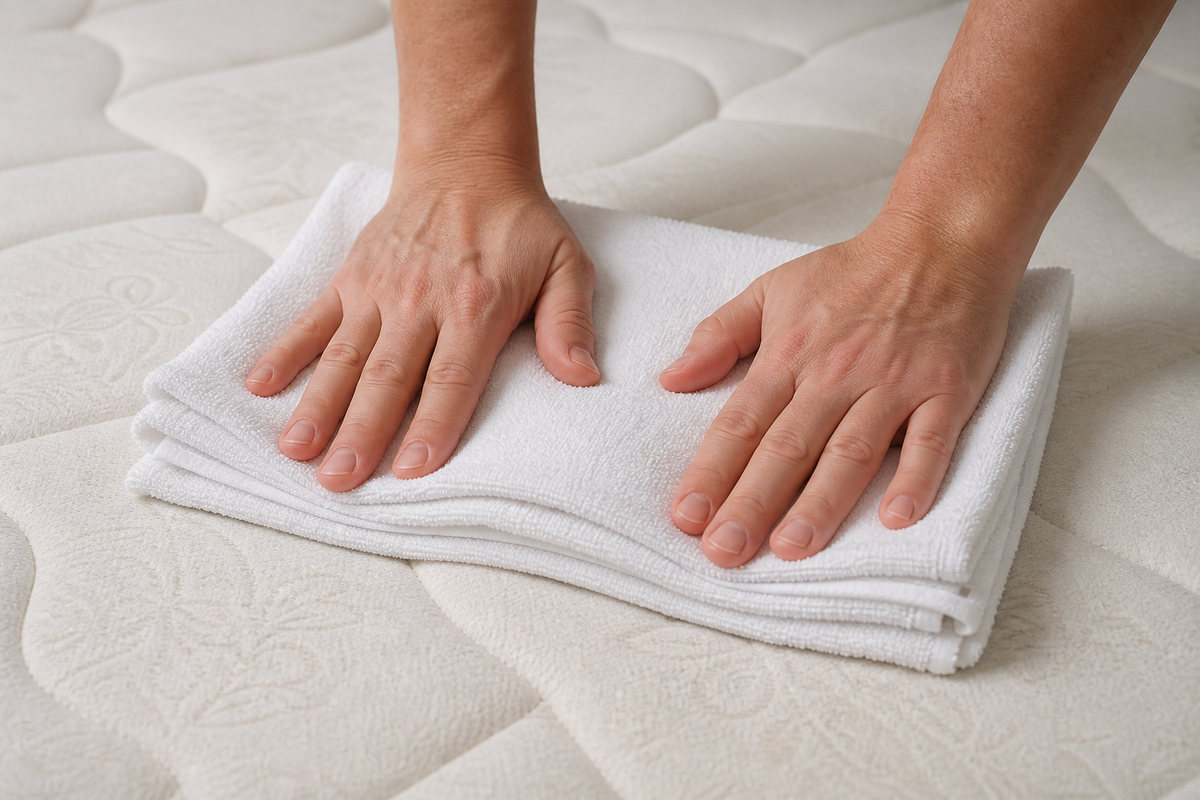
Press clean dry towels into the wet area and lift. Rotate to a dry towel surface and repeat until you are pulling out much less moisture. Do not scrub; rubbing can spread liquid laterally and drive it deeper.
Tuft & Needle spill-care guidance
Step 3: Read the Mattress Care Label
Look for instructions on removable covers, spot cleaning, foam exposure, allowed cleaners, and drying. Some mattresses tolerate only limited spot cleaning; some foams should not become wet at all.
If the care instructions say not to wet the mattress core, do not try to force a deep-cleaning method through the top fabric. A professional mattress/upholstery cleaner may be the safer next step for a large or deep accident.
Step 4: Hidden-Area Test Before Treating the Visible Spot
If wet spot cleaning is allowed, test PAWS or the chosen cleaner on an inconspicuous section of fabric first. Let the test dry and check for color transfer, texture change, watermarking, or finish change.
PAWS is positioned for pet urine odors, organic stains, upholstery, pet beds, carpets, rugs, hard floors, and repeat accident spots. A mattress is not specifically listed on the current product page, so use should depend on the mattress care instructions and a successful spot test.
Step 5: Use the Smallest Effective Amount
Apply enough product to contact the soiled surface fibers without flooding the mattress. On a small spot, applying cleaner to a cloth can give more control than spraying broadly.
Allow only the contact time supported by the cleaner and mattress instructions. Do not cover a wet mattress with plastic or bedding; trapped moisture slows drying.
Step 6: Blot Again — Do Not Scrub
Press clean towels into the treated area to remove loosened residue and moisture. Continue changing to dry towel sections.
If the spot is larger than a small localized accident, if liquid reached deep foam, or if the odor is strongest inside the mattress rather than on the cover, stop adding liquid. Surface treatment may not reach the source.
Step 7: Dry Completely Before Remaking the Bed
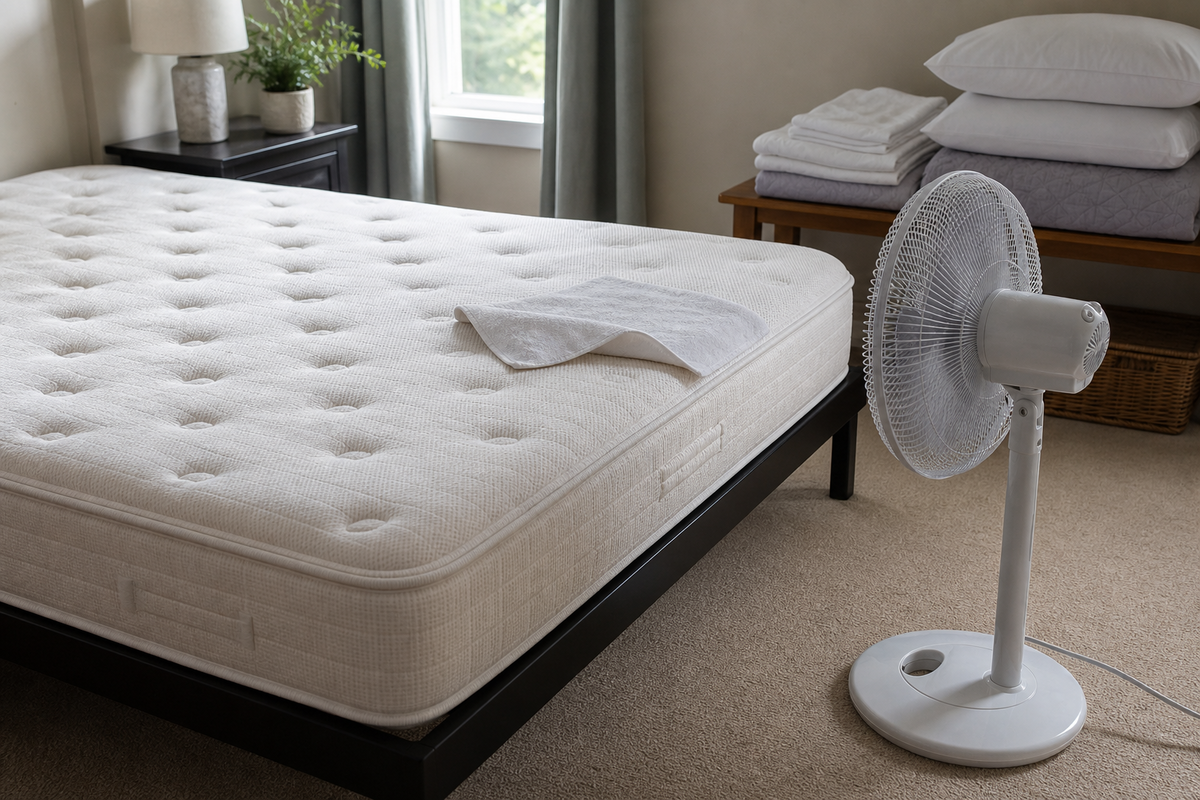
Use normal room airflow and a fan directed across the surface. Keep bedding off until the mattress is fully dry. Drying may take much longer than the surface appearance suggests.
If the mattress remains damp, develops a musty odor, or has visible moisture deep in the material, discontinue use until it is properly assessed. Moisture damage is a mattress problem, not a reason to keep adding cleaner.
Fresh Accident vs. Old Odor
A fresh accident gives you liquid to blot. An old odor may mean residue is already inside the mattress layers. Repeated wet treatments can make an old problem bigger if the liquid cannot be extracted.
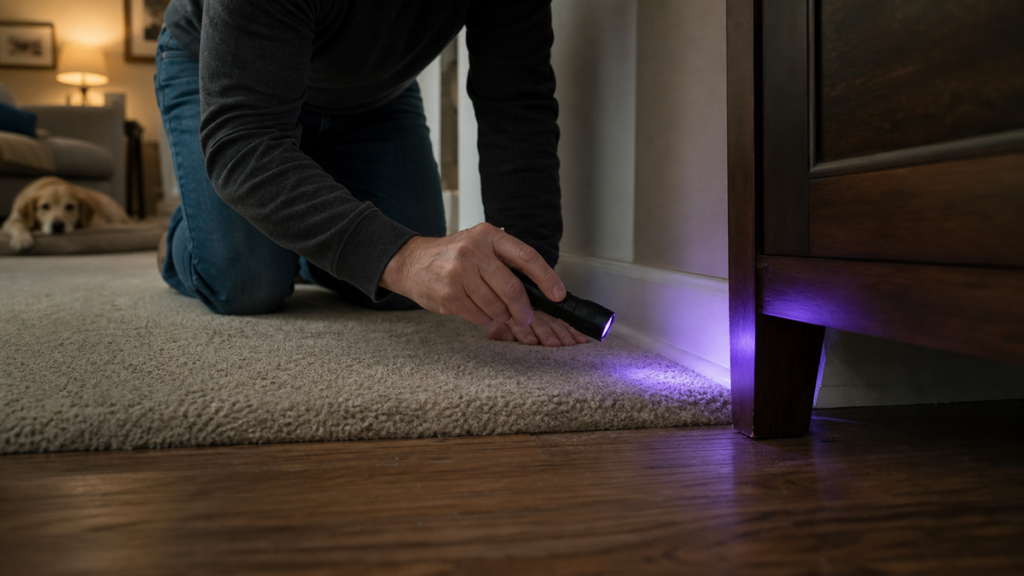
For an old odor with no visible wetness, first confirm the source. Check bedding, protector seams, bed frame, carpet below the bed, nearby baseboards, and pet bedding before assuming the mattress core is the only source.
Common Mattress Pet-Accident Mistakes
- Soaking the mattress because the original accident soaked it.
- Scrubbing instead of blotting.
- Using bleach, strong solvents, or mixed cleaning recipes without mattress approval.
- Putting sheets back on while the mattress is still damp.
- Assuming a removable-looking cover is machine washable.
- Repeating wet treatments when odor appears to be deep inside the mattress.
Where PAWS Fits
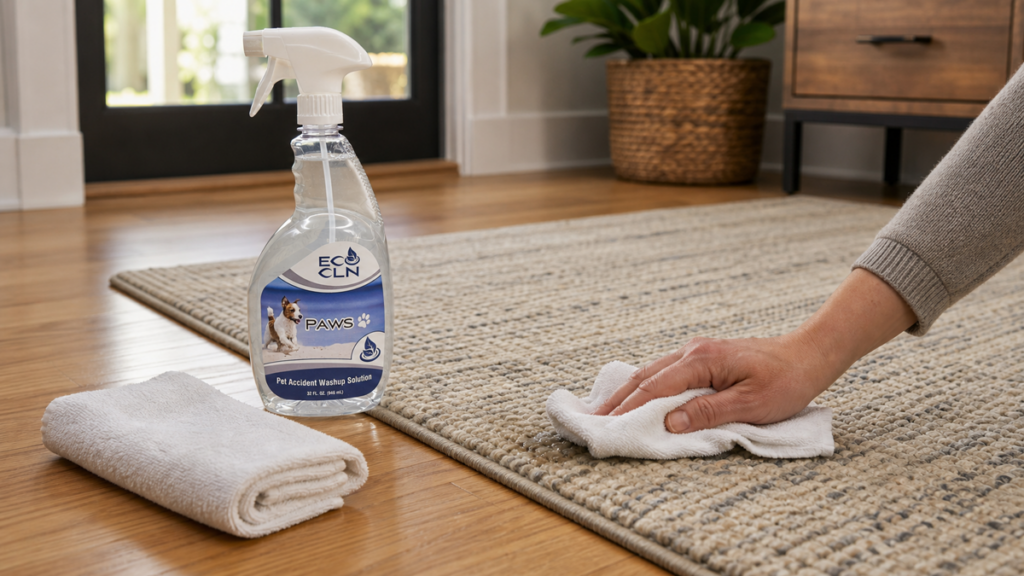
Eco Cln PAWS is the pet-accident product for urine odors, organic stains, upholstery, pet beds, carpet spots, hard floors, and repeat accident zones. For a mattress, treat PAWS as a possible spot-cleaning option only when the mattress care instructions permit wet cleaning and a hidden-area test succeeds.
FAQ
Can I spray PAWS directly onto a mattress?
Only if the mattress care instructions permit spot cleaning and the fabric passes a hidden-area test. Use controlled application and avoid saturating foam or interior layers.
Should I soak the mattress to reach the urine?
No. Mattress manufacturers commonly warn against saturation because foam and internal layers can hold moisture. Blot first and use the smallest amount of compatible cleaner.
How do I know when the mattress is dry?
The surface should feel fully dry and cool-normal, with no dampness or moisture odor. Strong airflow helps, but thick materials can stay wet below the surface longer than expected.
What if the urine smell comes back after the mattress dries?
The urine may have reached deeper layers or another nearby material. Re-check the protector, bed frame, carpet, baseboards, and mattress underside before adding more liquid.
Can a deep urine-soaked mattress always be saved?
No. A large or repeated accident can reach materials that cannot be safely rinsed or extracted at home. Professional cleaning or replacement may be the practical option.
The Bottom Line
Strip the bedding and blot up as much urine as possible with clean absorbent towels. Keep moisture and pressure controlled, follow the material’s care instructions and stop if the finish or fabric reacts poorly.
Continue with this related Eco Cln guide: Mattress cleaning tips.
For compatible washable pet-bed and upholstery-type surfaces, Eco Cln PAWS is designed for pet urine odors and organic accident residue. On a mattress, keep the treatment conservative and let the mattress manufacturer decide how much moisture the material can safely handle.