How to Clean a Bathroom Vanity Top Without Damaging the Surface

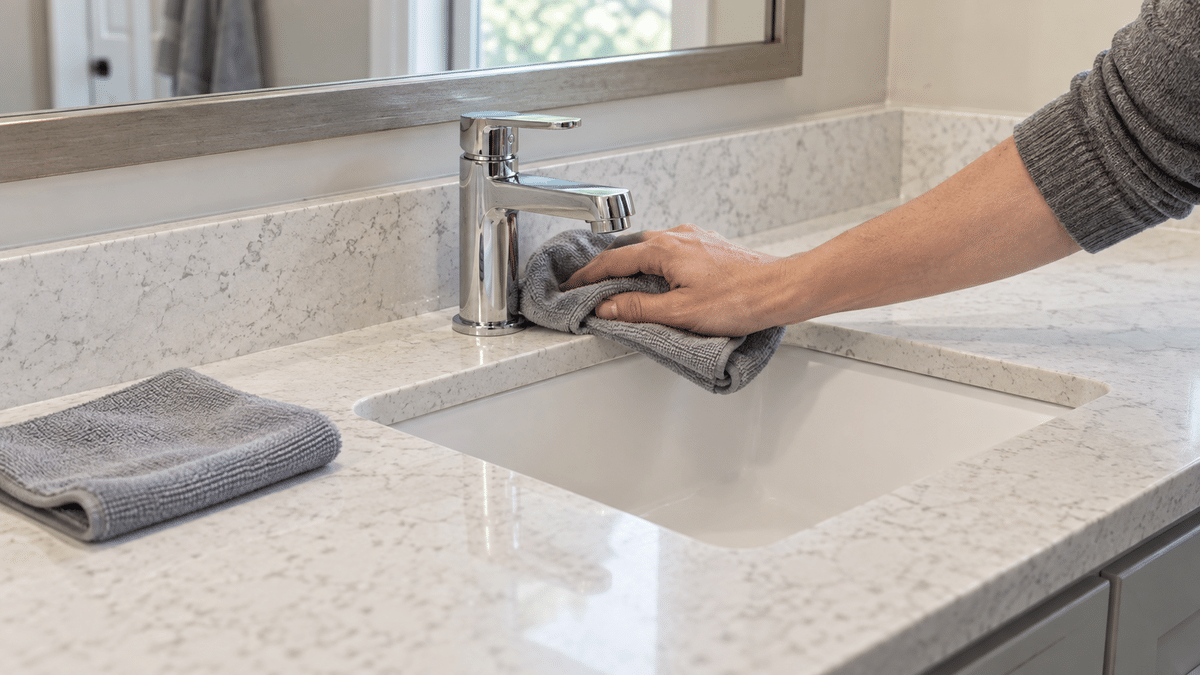
To clean a bathroom vanity top without damaging it, identify the material first, remove loose debris and use a soft cloth with the least aggressive compatible cleaner. Work around the faucet, sink rim, backsplash and seams in small sections, then make any required clean-water follow-wipe and dry the top completely.
Quartz, cultured marble, natural stone, solid-surface material and laminate can look similar from across the bathroom. They do not share the same limits. A method that removes mineral film from one vanity can dull a gel coat, etch marble or swell the substrate beneath a laminate seam.
Quick Answer
• Check the purchase record, underside label or manufacturer guide to identify the vanity material.
• Remove hair, powder, grit and dried cosmetic flakes before wet cleaning.
• Test the exact cleaner in a hidden area and use a soft non-scratch cloth.
• Treat toothpaste, soap film and mineral spots as different soils.
• Keep liquid away from faucet holes, sink seams, backsplash joints and chipped laminate edges.
• Follow-wipe or rinse only as directed, then dry the entire top and hardware.
Identify the Vanity-Top Material First
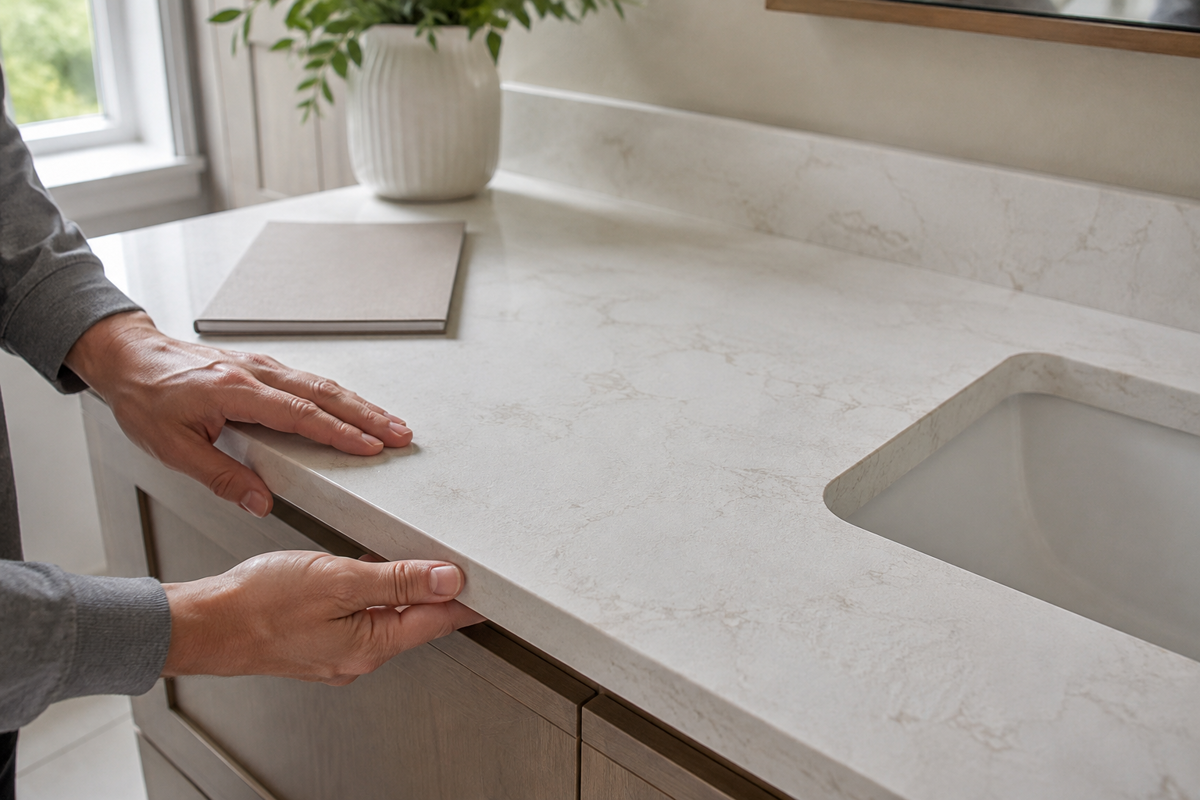
Engineered quartz: Quartz combines mineral material with binders. Many makers recommend mild detergent, warm water and a soft cloth for routine care, but cleaner limits vary by brand. Caesarstone’s quartz and mineral surface care guide is one example of manufacturer-specific guidance using mild, non-abrasive care.
Cultured marble: This molded product usually has a glossy gel coat over a resin-and-mineral body. The finish can scratch or dull before the solid body underneath is affected. Treat it as a coated surface, not as a slab of natural marble.
Natural stone: Marble, limestone, travertine, granite, quartzite and soapstone have different mineral properties and sealer needs. The Natural Stone Institute’s stone-care guidance notes that calcium-carbonate stones are sensitive to acids. Do not use vinegar or another acidic shortcut on an unidentified stone top.
Solid-surface material: Acrylic or polyester solid surface is consistent through its thickness, but gloss level and repair procedures vary. Routine care is usually gentle; abrasives can create a mismatched dull patch.
Laminate: A decorative sheet is bonded to a wood-based substrate. The face is cleanable, while sink cutouts, seams, backsplash joints and chipped edges are vulnerable to moisture. Formica’s laminate care guidance emphasizes gentle cleaning and drying so moisture does not linger.
Porcelain, ceramic or glass: These hard surfaces may tolerate different cleaners from the caulk, metal faucet, sink rim or vanity cabinet attached to them. Treat each adjoining material separately.
Match the Cleaner to the Bathroom Soil
Loose powder, hair and grit: Remove these dry. Wetting makeup powder or dusty hair creates paste and increases scratching risk.
Toothpaste and soap film: Soften the dried edge with a lightly damp compatible cloth, then lift it rather than scraping. Thick residue around the faucet base may need more than one controlled pass.
Water spots and mineral buildup: A chalky ring may be mineral residue, but an etched or dulled patch can look similar. Use only a method approved for the identified material. Do not assume an acidic product is suitable.
Cosmetics and oily skin-care residue: Blot liquid, lift solids and test a compatible cleaner. Pigmented makeup can move into caulk or a damaged coating if scrubbed outward.
Rust-colored marks: Check the source before treating. A corroding metal item, leaking faucet part or mineral deposit may require repair or a material-specific product.
What to Prepare Before Cleaning
Clear bottles, jewelry, toothbrushes and electrical grooming tools from the vanity. Unplug appliances and move cords away from the sink. Remove loose debris with a dry microfiber cloth or gentle vacuum attachment that will not scratch the top.
Gather several clean soft cloths, cotton swabs for accessible exterior creases, a dry towel and any manufacturer-approved cleaner. Use separate cloths for the counter and the floor or toilet area. Never mix bathroom products, and do not claim routine surface cleaning disinfects or sanitizes unless a specific legally supported product direction says so.
Inspect the sink rim, faucet holes, backsplash joint and front edge. Cracked caulk, a loose sink, swollen laminate or a cloudy gel coat changes the task from routine cleaning to a possible repair.
Step-by-Step: Clean a Bathroom Vanity Top
1. Confirm the material and finish. Use paperwork, an underside mark or the fabricator’s guidance. If the top remains unidentified, choose only the gentlest reversible test or stop and ask the maker.
1. Remove loose debris. Wipe up hair, dust, powder and dry cosmetic fragments. Pay attention to the faucet base, backsplash ledge and the narrow strip behind the sink.
1. Blot fresh spills. Lift mouthwash, liquid makeup, hair product or medication residue before it spreads into caulk and seams. Do not rub colored liquid across the whole counter.
1. Test the cleaner. Apply the exact planned amount to a hidden area and let it dry. Check for changed gloss, color transfer, tackiness or a visible edge.
1. Apply with control. Put cleaner on the cloth near faucet holes, an undermount-sink seam, backsplash caulk or laminate joints. Work one small section at a time.
1. Lift residue without abrasives. Hold the dampened cloth over a compatible dried toothpaste spot briefly, then wipe. Fold the cloth around a fingertip for the faucet base rather than using a metal scraper.
1. Treat adjoining parts separately. Clean the faucet, drain trim, sink bowl, counter and backsplash according to their own materials. Avoid sweeping mineral residue from metal hardware onto sensitive stone.
1. Make the required follow-wipe. If the product or manufacturer calls for it, wipe with a fresh lightly damp cloth. Keep water from pooling at the wall joint, sink cutout or front seam.
1. Dry from the backsplash forward. Buff the counter with a clean dry cloth, then dry around the faucet and sink rim. Good drying exposes haze, etched areas and leaks that were hidden while wet.
1. Inspect the joints. Look for recurring moisture, cracked caulk, a lifted laminate edge or discoloration under clear sealant. Fix the water source instead of repeatedly cleaning around it.
Adjust the Method for Each Vanity Material
Engineered quartz
Use the quartz brand’s approved cleaner and non-abrasive tool. Do not treat every engineered surface as chemically identical. Rinse or follow-wipe as directed and dry so residual film does not create a dull patch.
Cultured marble
Protect the gel coat with soft cloths and approved non-abrasive products. Avoid hard scraping around the sink and drain. Fine scratches, worn gloss and yellowing are finish problems; aggressive cleaner can make them more obvious.
Marble, limestone and other natural stone
Use a stone-approved, non-acidic method. Vinegar, lemon and acidic bathroom descalers can etch calcium-based stone. Also check whether the top’s sealer has its own restrictions.
Laminate
Clean the face lightly and dry seams immediately. Keep liquid out of the sink cutout, backsplash joint and chipped front edge. A swollen substrate cannot be flattened through cleaning.
Solid surface
Follow the maker’s instructions for the installed sheen. A scrub that is permitted on a matte finish may leave an obvious dull area on a high-gloss top.
Where Powerhouse Bathroom and See-Clear Fit
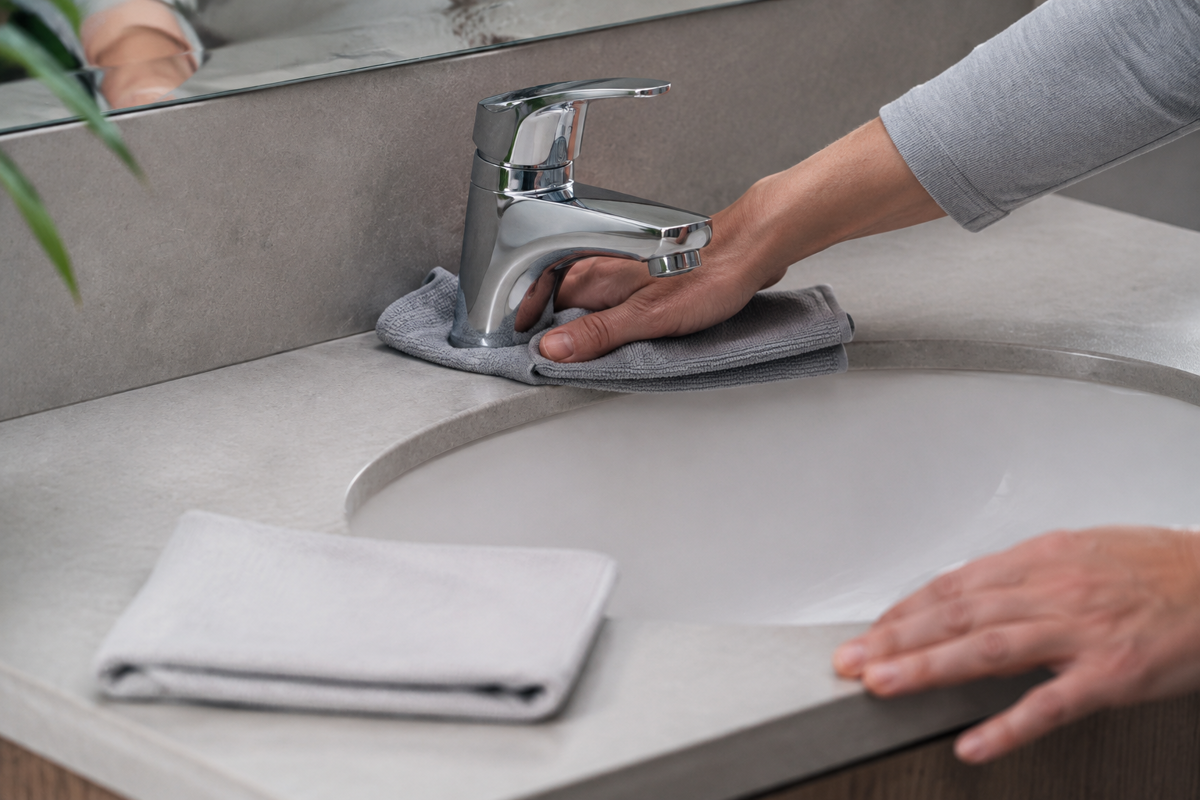
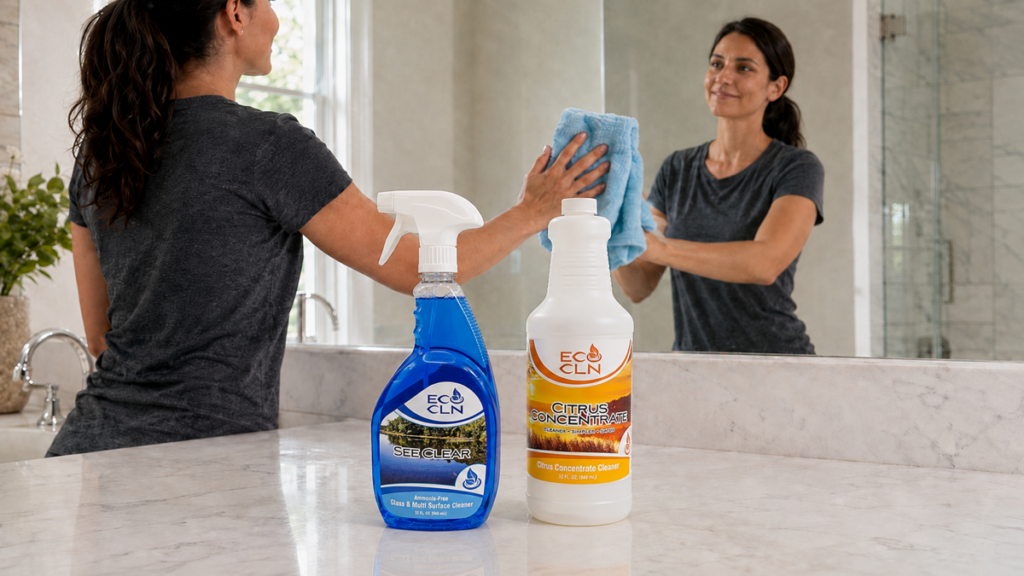
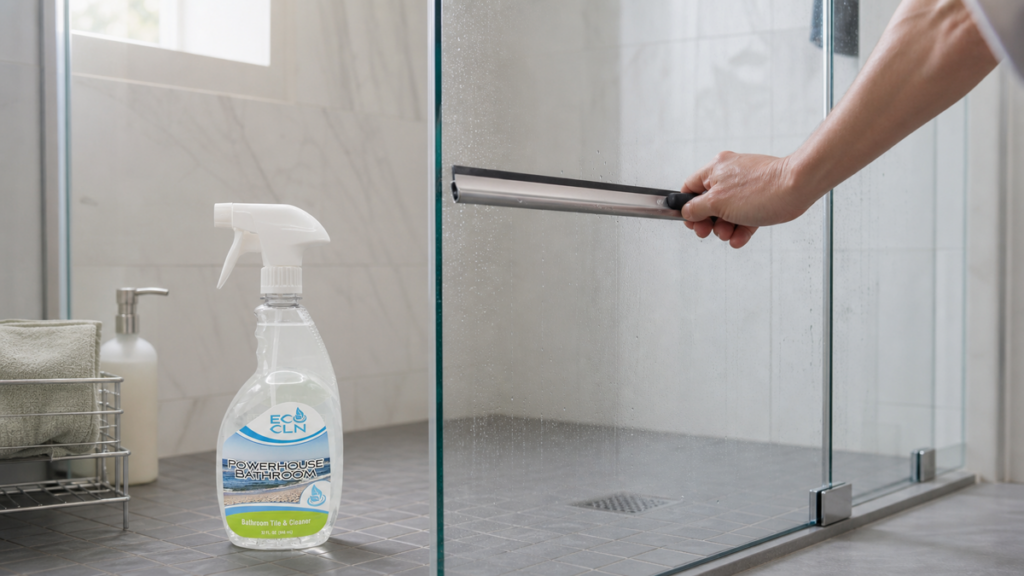
For compatible bathroom counters, sinks, fixtures and everyday bathroom residue, Eco Cln Powerhouse Bathroom is the bathroom-focused option. It is especially relevant to soap scum, hard-water buildup, toothpaste marks and daily grime when the vanity material permits it. Test first, use controlled passes and follow both the product and surface directions.
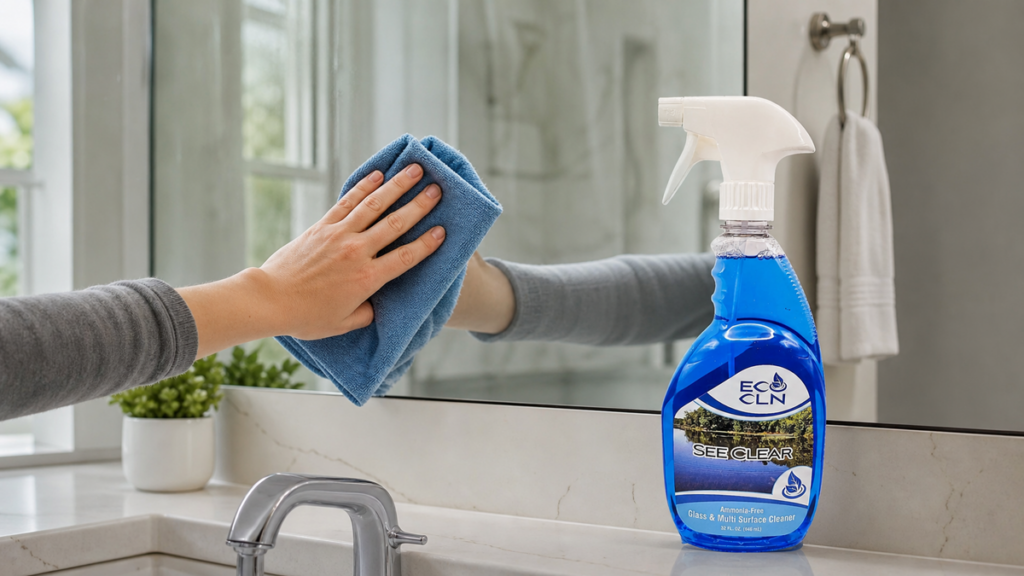
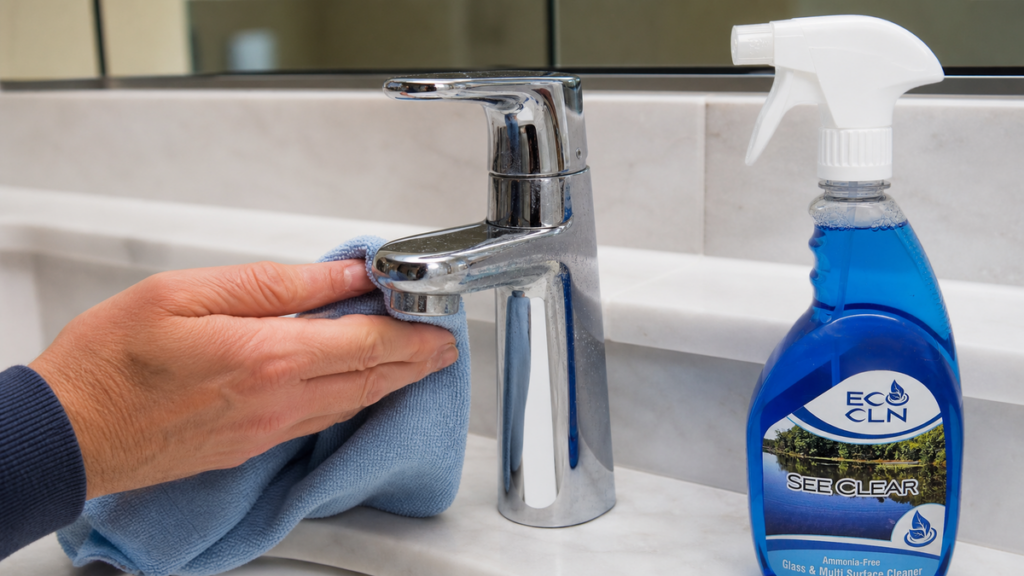
Eco Cln See-Clear is the ammonia-free Eco Cln option for compatible mirrors, chrome, stainless steel and shiny surfaces. On a vanity, its role may be the faucet or nearby mirror rather than the entire counter. Do not use the word “ammonia-free” for Powerhouse, and do not use See-Clear as a default cleaner for natural stone or specialty coatings.
For a chalky faucet ring, the hard-water buildup guide helps separate removable minerals from finish damage. For light finishing on compatible chrome, see the chrome faucet cleaning guide.
Common Vanity-Top Cleaning Mistakes
• Using vinegar on unidentified or acid-sensitive natural stone.
• Scrubbing cultured marble until the gel coat turns dull.
• Flooding laminate seams or an unsealed sink cutout.
• Treating the counter, faucet, caulk and mirror as one material.
• Spraying broadly around electrical grooming tools and outlets.
• Scraping dried toothpaste with a razor or metal putty knife.
• Mixing bathroom cleaners to attack a stubborn ring.
• Assuming a cloudy or etched patch is removable dirt.
When Cleaning Is Not Enough
Etching, worn gel coat, deep scratches, cracked caulk, swollen particleboard and a lifted laminate edge are changes to the material. More cleaner will not reverse them. A leak beneath the faucet or sink rim also needs repair before repeated moisture damages the cabinet below.
If a stain appears beneath a clear coating or inside caulk, ask the vanity maker, stone fabricator or repair professional about the correct next step. Avoid sealing over dampness or trapped discoloration.
Frequently Asked Questions
Can I use vinegar on a bathroom vanity top?
Not without identifying the material. Vinegar can etch marble, limestone and other acid-sensitive stone and may conflict with coatings or sealers.
How do I know whether my vanity is cultured marble or natural stone?
Check the purchase record, underside label or fabricator information. Cultured marble often has an integrated sink and gel-coated molded appearance, but visual clues are not conclusive.
Can Powerhouse Bathroom be used on quartz?
Only if the quartz manufacturer and current product directions allow it and a hidden-area test passes. Quartz brands can have different cleaner restrictions.
Should I spray cleaner around the faucet base?
Apply it to the cloth first when spray could enter faucet holes, backsplash caulk or an open sink seam. Controlled application protects vulnerable joints.
Why does the vanity still look cloudy after cleaning?
Cleaner residue, mineral film, fine scratches, etching or worn coating can all look cloudy. Dry the top, inspect the pattern and identify the material before repeating.
Can See-Clear be used on the vanity faucet?
It may fit compatible chrome, stainless steel and shiny fixtures when the manufacturer allows it. Spray the cloth near seams and buff with a clean dry section.
The bottom line
Identify the vanity material before choosing a cleaner, then remove dry debris and clean toothpaste, soap film and water spots in controlled passes. Powerhouse Bathroom can fit compatible bathroom residue, while See-Clear belongs on compatible shiny components. Etched stone, worn gel coat, failed caulk and swollen laminate need repair—not a more aggressive wipe-down.