How to Clean Dog Urine From a Concrete Garage or Basement Floor

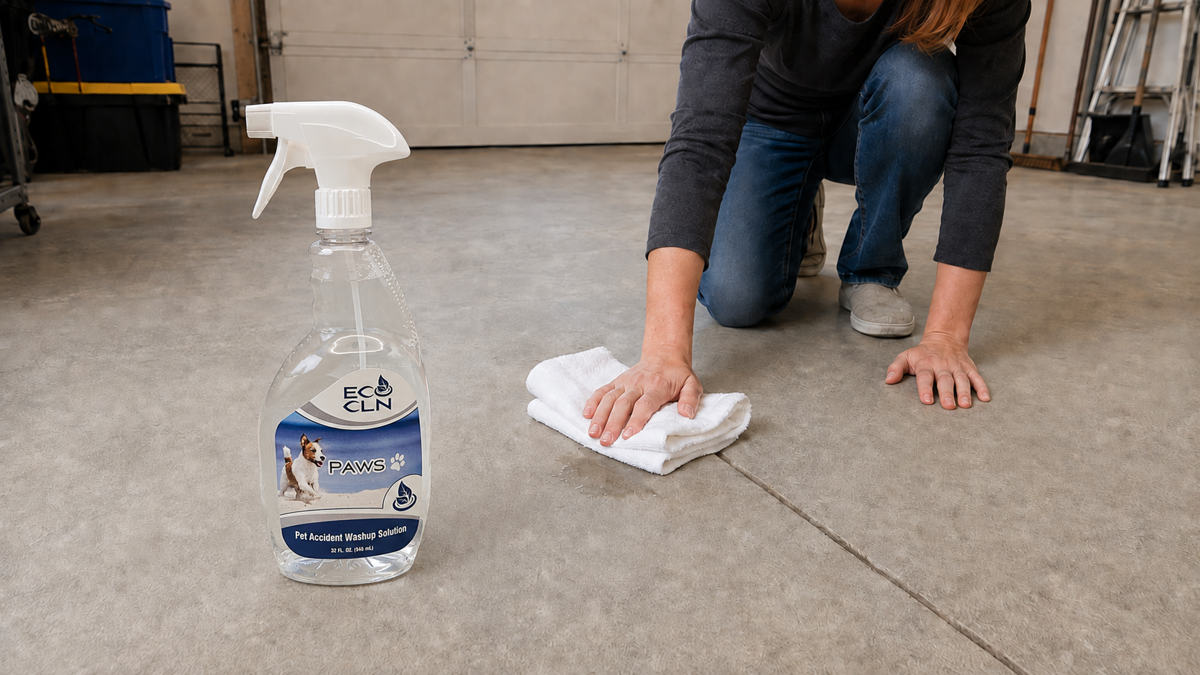
To clean dog urine from a concrete garage or basement floor, remove as much liquid as possible first, determine whether the slab is sealed, coated or bare, then treat the entire affected zone with a compatible pet cleaner. Keep the treatment within the urine footprint, allow the instructed contact time and dry the concrete completely before judging odor.
Bare concrete is porous, so the visible edge may not show the full area reached by urine. Sealed concrete is easier to wipe, but its coating can have product restrictions. The first job is identifying which floor you actually have—not automatically reaching for the stiffest brush in the garage.
Quick Answer
• Keep pets and people out of the area and ventilate an enclosed garage or basement.
• Blot fresh urine before it spreads through pores, control joints or wall edges.
• Check whether water beads on an intact sealer or quickly darkens bare concrete.
• Remove loose grit before using cleaner so it does not become abrasive slurry.
• Treat the full affected zone according to the cleaner and floor-finish directions.
• Dry completely, then inspect for odor, darkening, coating damage or a larger hidden area.
Sealed, Coated and Bare Concrete Behave Differently
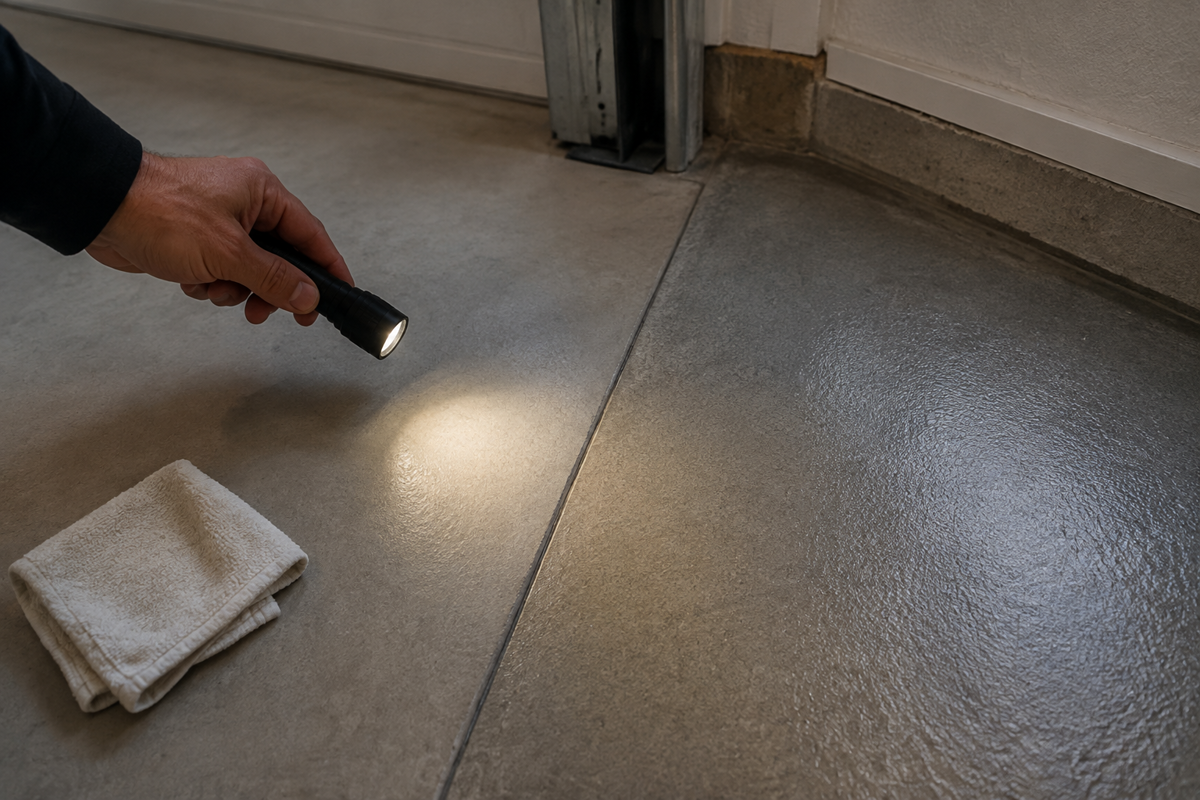
Bare concrete has open pores that can take in urine. A fresh puddle may darken the slab quickly, and older contamination may extend below the face. Surface wiping can improve the accessible area without guaranteeing that every absorbed residue is reached.
Penetrating-sealer concrete may still look natural and absorb some liquid more slowly. Compatibility depends on the exact sealer and its condition.
Topically coated concrete includes painted floors, epoxy systems and other film-forming finishes. The coating can keep liquid near the surface, but harsh cleaner, hard scrubbing or prolonged contact may dull or soften it. Peeling and pinholes also let urine reach concrete beneath the film.
The Concrete Network’s cleaning and sealing overview explains that sealers can make concrete easier to clean and reduce stain penetration. That is why the same puddle can require a different response on a glossy garage coating than on an unfinished basement slab.
Prepare the Garage or Basement Safely
Move vehicles, tools, storage boxes and pet bedding away from the spot. Provide normal ventilation, especially in a basement or closed garage, and keep ignition sources and electrical equipment clear of wet work. Do not let runoff enter a floor drain, yard or street unless local rules and the product directions specifically allow it.
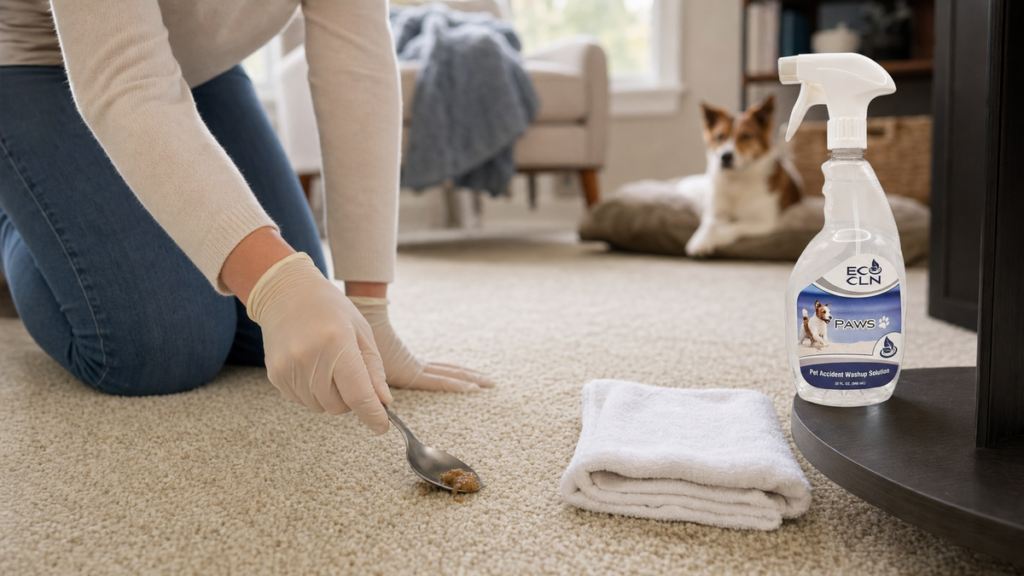
Use disposable absorbent towels, white cloths, a soft or medium brush approved for the finish, a small controlled applicator and dry towels. Wear gloves when handling a pet accident. Sweep or vacuum dry grit around the area before applying liquid.
Never mix cleaning products. In particular, do not combine a pet cleaner with bleach, ammonia, acids or another garage chemical. If an unknown product was used earlier, stop and identify it before adding anything else.
Step-by-Step: Clean Dog Urine From Concrete
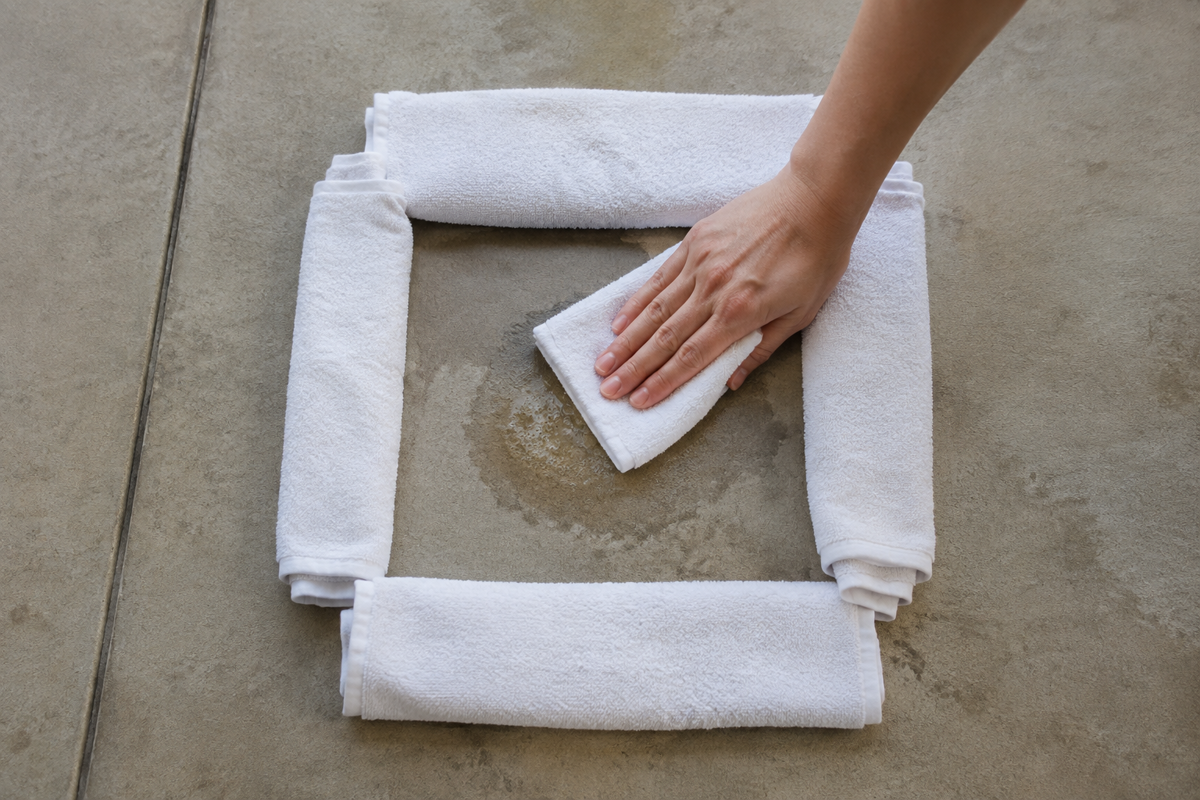
1. Contain and blot the fresh puddle. Ring the outside with absorbent towels, then press fresh towels into the center. Replace them until they stop picking up liquid; do not hose the urine across a larger part of the slab.
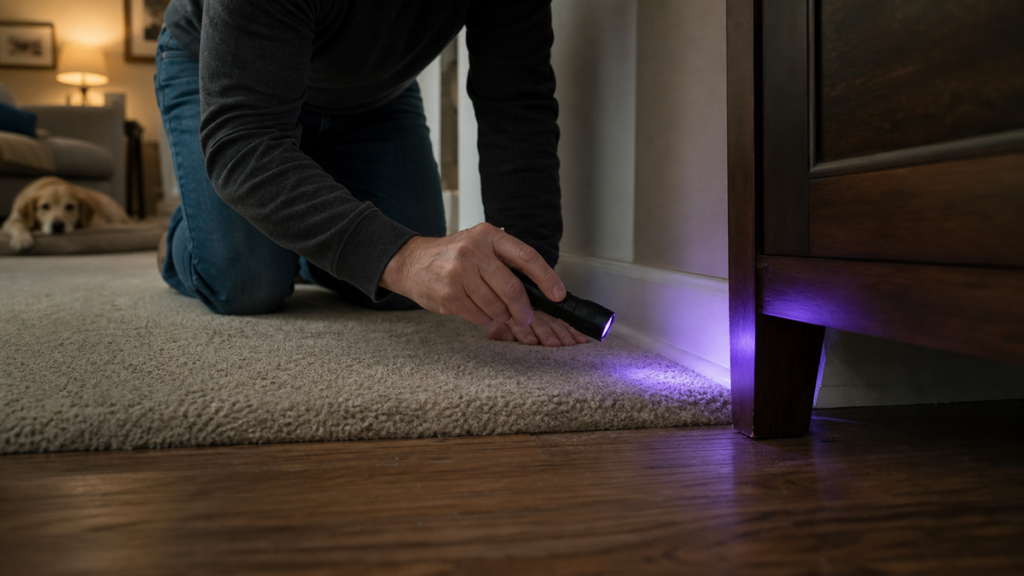
1. Map the full affected zone. Inspect beyond the wet center, including control joints, cracks, the wall-floor junction, expansion material and the base of stored objects. Older marks may be easier to locate by odor after the room has aired out.
1. Identify the finish. Look for gloss, paint, epoxy, flaking sealer or past maintenance records. In an inconspicuous dry area, the floor manufacturer or coating installer may permit a small water-drop check, but do not rely on that alone if the coating is unknown.
1. Remove dry debris. Sweep or vacuum grit, hair and loose residue. Scrubbing over sand can scratch a topical coating and muddy the cleaner.
1. Test the exact treatment. Apply the intended cleaner to a hidden area of the same finish. Stop if the color, gloss or coating changes after drying.
1. Treat the whole accident footprint. Apply a compatible pet-accident cleaner according to its current directions. On coated concrete, keep the pass controlled. On bare concrete, make sure the visible face of the affected pores is treated without creating uncontrolled runoff.
1. Agitate only when allowed. Use a compatible soft or medium brush if the floor and product directions call for it. Work from the outer boundary inward and avoid forcing liquid into cracks or beneath a failing coating.
1. Lift residue and follow the rinse directions. Blot or wipe the treated area as directed. If a clean-water follow-wipe is required, use the smallest practical amount and capture it rather than sending it to a drain.
1. Dry the slab completely. Promote normal airflow and keep the area open. Concrete can look dry at the surface before deeper moisture has equalized, so wait before deciding the odor remains.
1. Reinspect the edges. Check cracks, wall joints and coating defects. A returning smell or expanding dark patch may indicate contamination below the accessible surface.
Where Eco Cln PAWS Fits
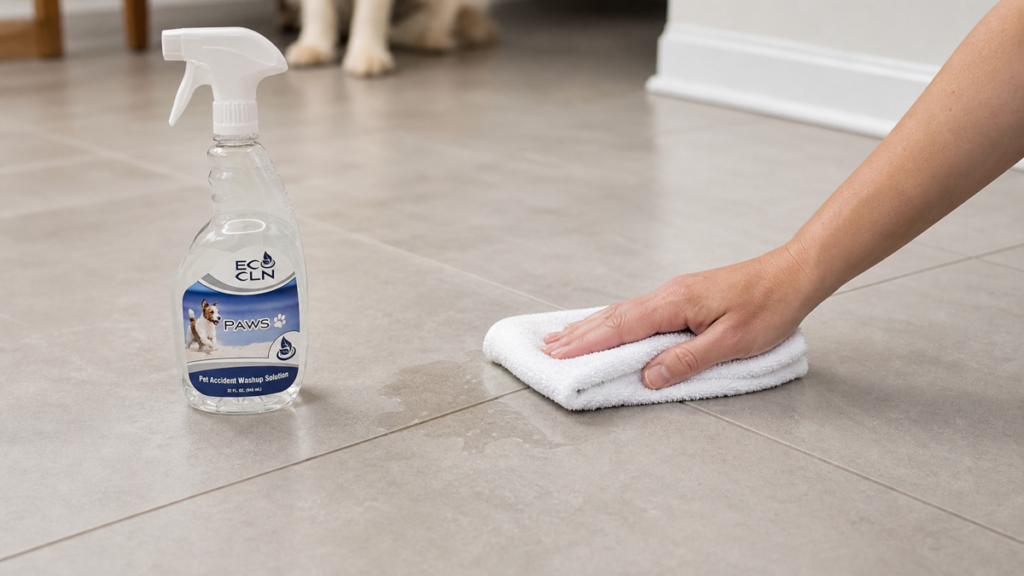
Eco Cln PAWS is the relevant Eco Cln option for pet urine, organic residue and repeat accident spots on compatible sealed hard floors and other approved materials. Blot the excess first, follow the current PAWS directions and test the concrete finish before treating the full area.
On bare concrete, PAWS can treat the accessible accident zone, but a surface application is not a promise that deeply absorbed residue will be fully reached. On epoxy, paint or another coating, the coating maker’s restrictions remain the gate.
The article on finding hidden pet urine can help map repeat accidents along walls and stored items before another treatment begins.
Common Concrete Pet-Accident Mistakes
• Hosing one spot across the rest of the garage floor.
• Treating bare concrete and an epoxy coating as the same material.
• Scrubbing grit into a glossy or painted finish.
• Cleaning only the dark center while missing cracks and wall edges.
• Mixing products in an attempt to overpower odor.
• Sending cleaner and urine residue into a floor or storm drain.
• Sealing over contamination before the slab is clean and dry.
• Judging the result while concrete still holds treatment moisture.
When Odor Comes Back From the Slab
If odor returns after full drying, confirm that the entire accident footprint was treated. A crack, control joint, unsealed wall edge or item that sat in the puddle can be the overlooked source. The pet-urine odor return guide explains why hidden residue becomes noticeable again with moisture and humidity.
Widespread old contamination, a failing coating or urine that has soaked deeply into bare concrete may need professional assessment. A coating should not be applied merely to trap odor; the slab must be prepared within the coating manufacturer’s system, and moisture conditions must be checked first.
Frequently Asked Questions
How can I tell whether a concrete floor is sealed?
Look for a coating, sheen or maintenance record and check with the installer when possible. Water often beads longer on intact sealed concrete and darkens bare concrete faster, but a worn sealer can make the test inconclusive.
Should I hose dog urine off a garage floor?
Not as a default. Hosing can spread residue into cracks, wall edges and drains. Blot first and use a contained treatment that follows the product and local disposal directions.
Can PAWS be used on painted or epoxy concrete?
Only when the coating manufacturer and current PAWS directions allow it and a hidden-area test passes. Coatings vary in chemical and scratch resistance.
Why does bare concrete still smell after cleaning?
Urine may have penetrated below the treated face or reached a crack or wall joint. Let the slab dry completely and map the full source before repeating.
Should I seal the concrete after a pet accident?
Do not seal over odor or dampness. The concrete must be properly cleaned, dried and prepared for the chosen system; ask the sealer manufacturer or a concrete professional about suitability.
The bottom line
Blot dog urine promptly, identify the concrete finish and treat the full accident zone without spreading runoff. PAWS can support compatible surface cleanup, but bare concrete, cracks and failed coatings can hold residue below the face. A recurring odor needs source location and possibly professional slab preparation—not a stronger random chemical mix.