How to Clean Pet Urine From Laminate Flooring Without Swelling the Edges

To clean pet urine from laminate flooring, blot the puddle immediately, trace every seam it crossed and use only a small amount of a compatible cleaner. Work on the plank faces and along the top of the joints, then dry the area promptly. Do not pour cleaner into seams or wet-mop the room to treat one accident.
Laminate has a durable wear surface, but the joints and cut edges can expose a moisture-sensitive core. A clean-looking floor can still develop raised edges or recurring odor if urine reaches an open seam, expansion gap, baseboard or underlayment.
Quick Answer
• Block paws and foot traffic, then blot from the outside of the puddle toward the center.
• Follow each plank joint the liquid crossed, including bevels, end seams and the wall perimeter.
• Check the installed floor’s care instructions before choosing a cleaner.
• Put a compatible cleaner on a cloth near joints instead of pouring or broadly spraying it.
• Wipe parallel to each seam, dry immediately and inspect again after complete drying.
• Stop repeated wet cleaning if an edge lifts, the core swells or odor returns from below.
Why Laminate Flooring Edges Can Swell
Most laminate planks combine a hard decorative wear layer with a wood-fiber core. The face may tolerate routine wiping, but exposed or damaged edges can take in liquid. Once the core swells, the plank edge may peak, curl or feel rough even after the accident is gone.
Beveled joints create shallow channels where urine can sit. End seams, chipped corners and gaps beside transition strips are more vulnerable than the center of an intact plank. At the room perimeter, liquid can pass under quarter-round or contact the raw lower edge of medium-density fiberboard baseboard.
Water-resistant or waterproof marketing does not replace the warranty and care instructions for the exact installed product. Mohawk’s laminate care and maintenance guidance is a useful reminder to use product-specific care and avoid leaving unnecessary moisture on the floor.
What to Check Before Cleaning the Accident
Find the flooring brand and product line if possible. Note whether the planks are click-lock or glued, whether joints are tight and whether the floor already has chipped edges, raised corners or water damage. Manufacturer instructions override a general cleaning routine.
Gather white absorbent towels, clean microfiber cloths, a soft detail cloth, a flashlight and a dry towel. White materials make it easier to see transferred soil or finish color. Keep pets out of the area until it is clean and fully dry.
Do not use a steam mop, abrasive pad, stiff seam brush or sharp tool unless the flooring maker specifically permits it. Never mix cleaning products. If another product was already applied, remove its residue only as the floor-care directions allow and let the area dry before changing methods.
Step-by-Step: Clean Pet Urine From Laminate Flooring
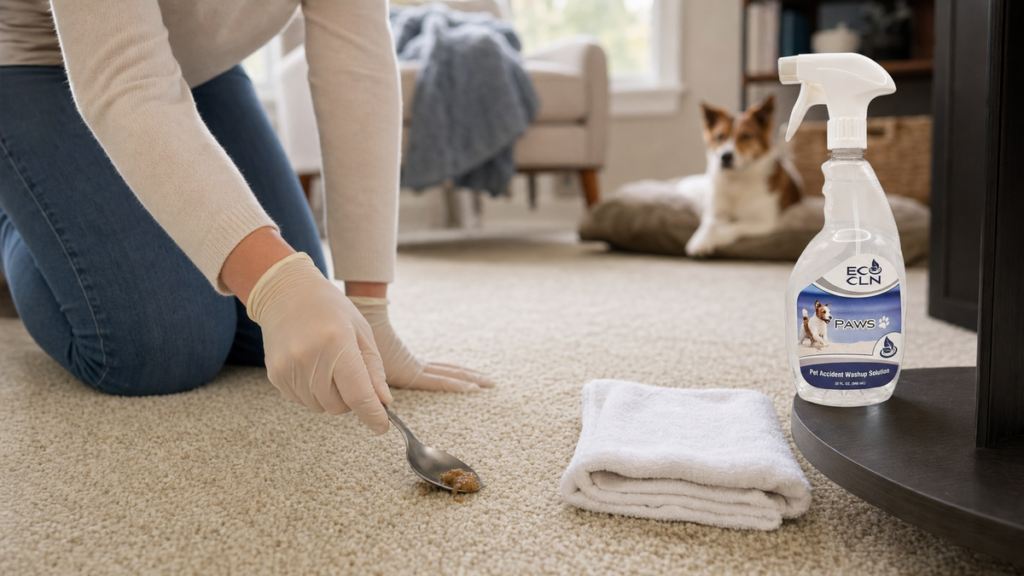
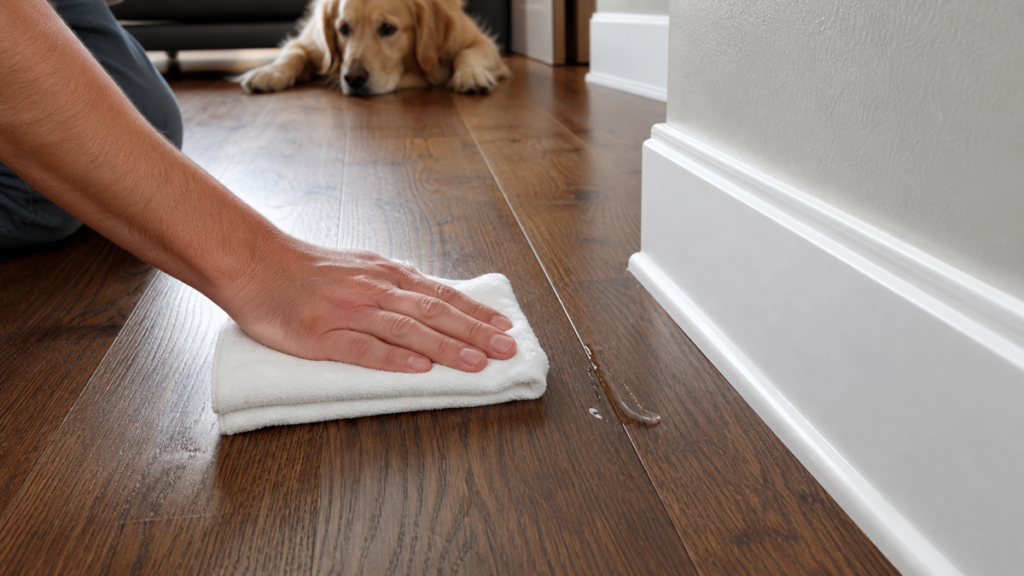
1. Contain the puddle. Place folded towels at the outside edge, then press fresh towels into the center. Lift and replace them rather than wiping urine across additional plank joints.
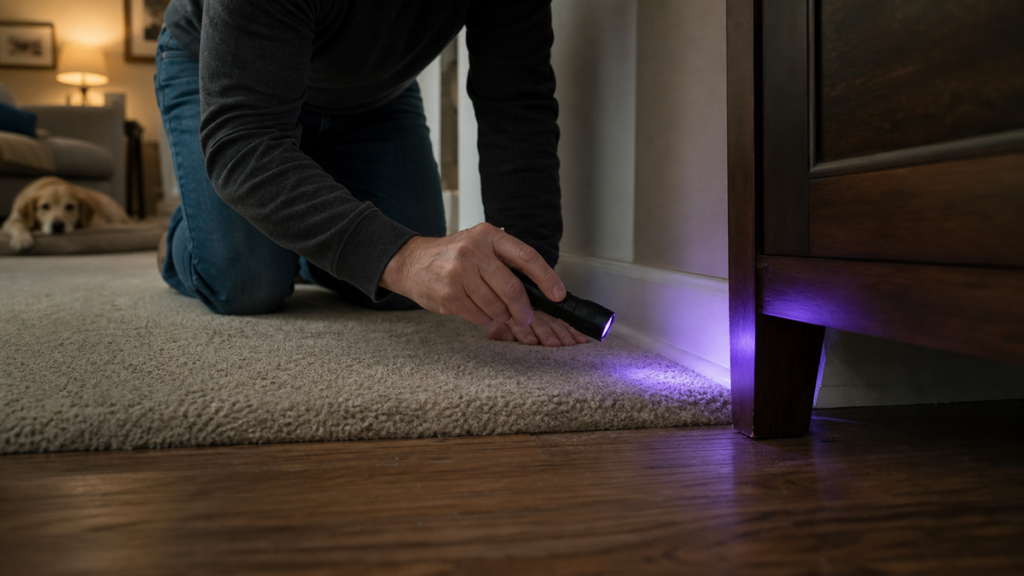
1. Trace every affected seam. Follow the long joints and end seams in both directions. Check bevels, the baseboard edge, floor vents, door thresholds and the gap beneath nearby cabinet toe-kicks.
1. Confirm the laminate-care limits. Review the installed product’s instructions and warranty. Test the intended cleaner in an inconspicuous area if the wear layer, texture or prior treatment is uncertain.
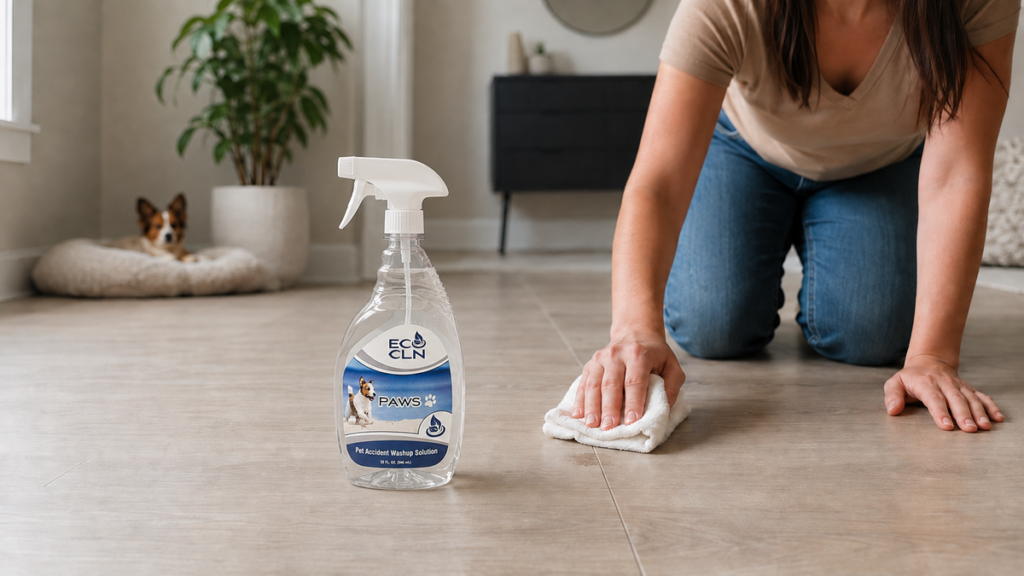
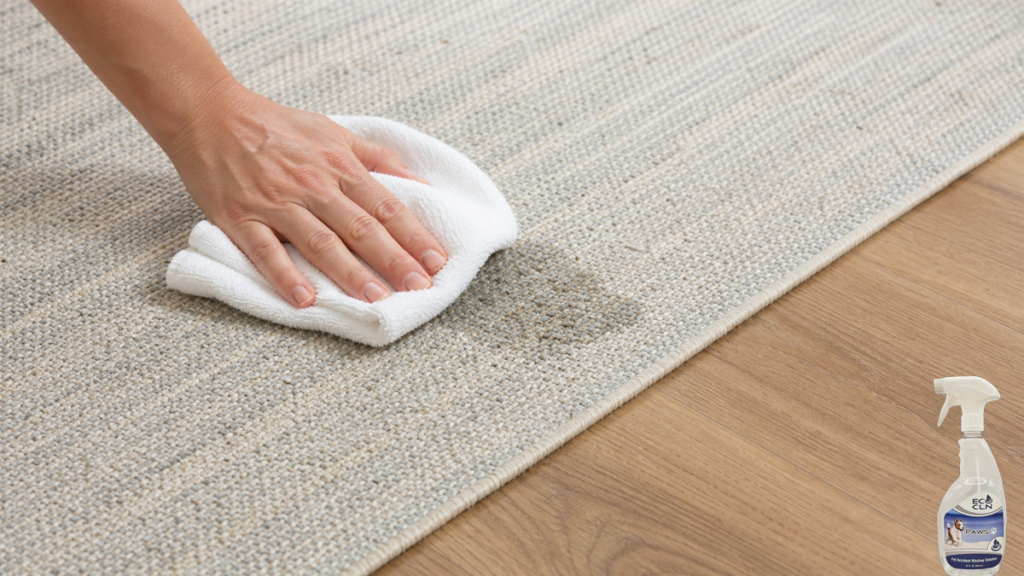
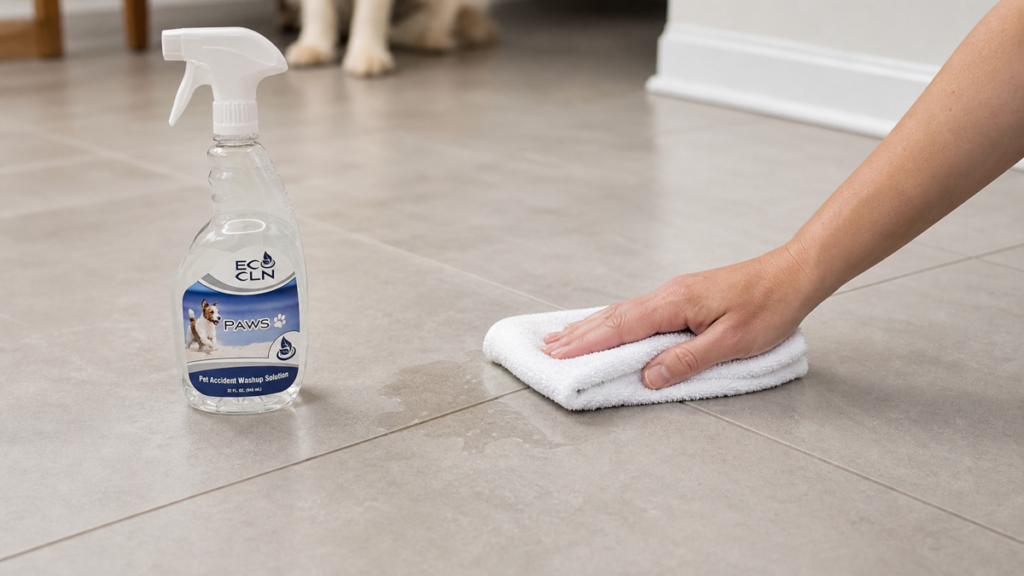
1. Clean the plank faces first. Put a controlled amount of compatible cleaner on a cloth. Wipe the flat faces toward the affected area so residue is lifted rather than spread across the room.
1. Detail the top of each joint. Fold a clean cloth into a narrow edge and wipe parallel to the seam. Clean the visible bevel without pressing a tool or liquid beneath the locking joint.
1. Make any required follow-wipe. If the product or flooring instructions call for a clean-water pass, use a barely damp fresh cloth. Do not flood the area in an attempt to rinse it.
1. Dry the edges promptly. Press a dry towel along plank ends, transition strips and the wall perimeter. Allow normal airflow and keep shoes and paws off the area.
1. Inspect after complete drying. Use low side lighting to look for a dark seam, haze, raised edge or residue. Recheck for odor only after the floor reaches its normal dry condition.
Clean the Baseboard and Transition Separately
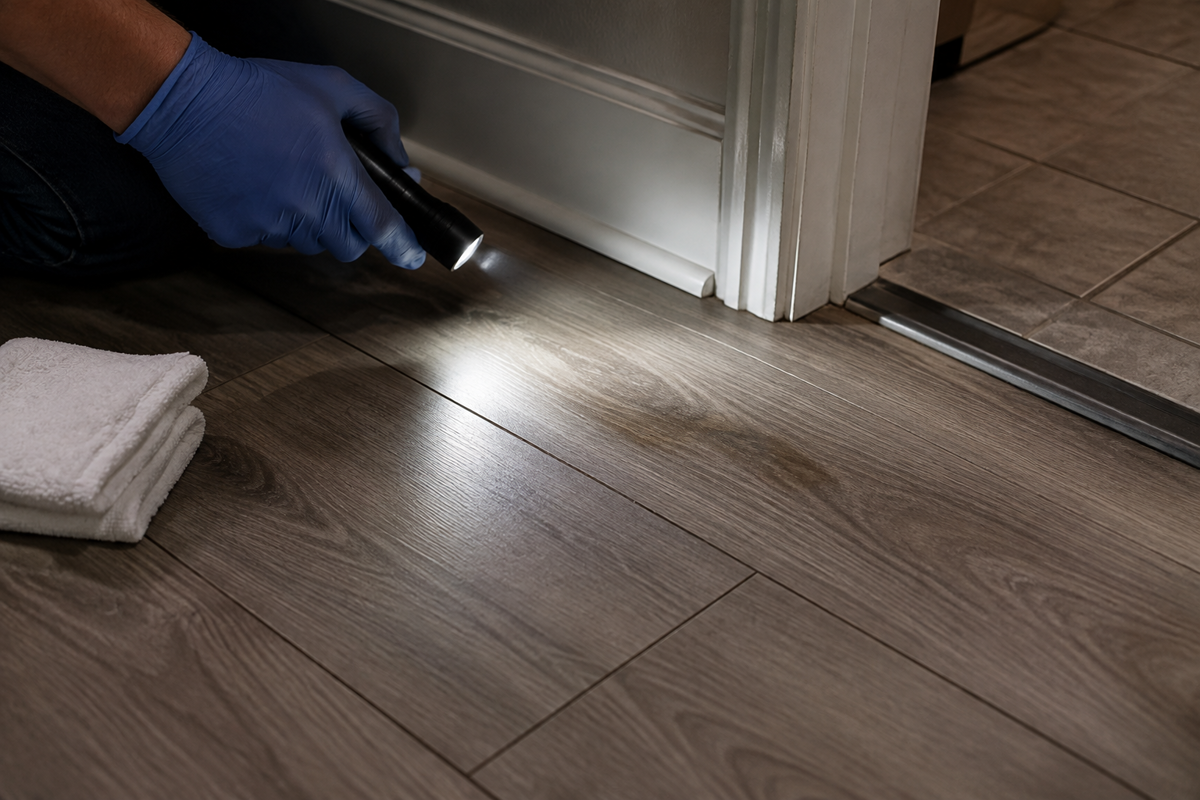
A puddle at the wall can affect laminate, painted trim and an expansion gap at the same time. Put cleaner on the cloth near the baseboard and keep liquid out of the gap. A swollen fiberboard baseboard, dark raw edge or peeling paint is material damage, not ordinary floor soil.
At a doorway, treat a metal, vinyl or wood transition according to its own finish. Do not pry up a transition or click-lock plank merely to look underneath unless a flooring professional or the installation instructions call for it.
Where Eco Cln PAWS Fits
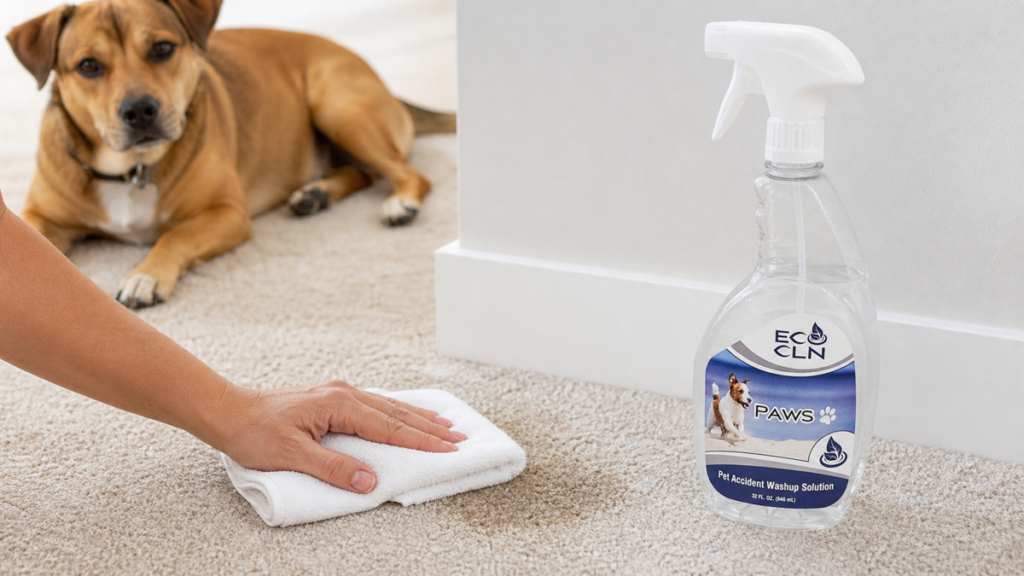
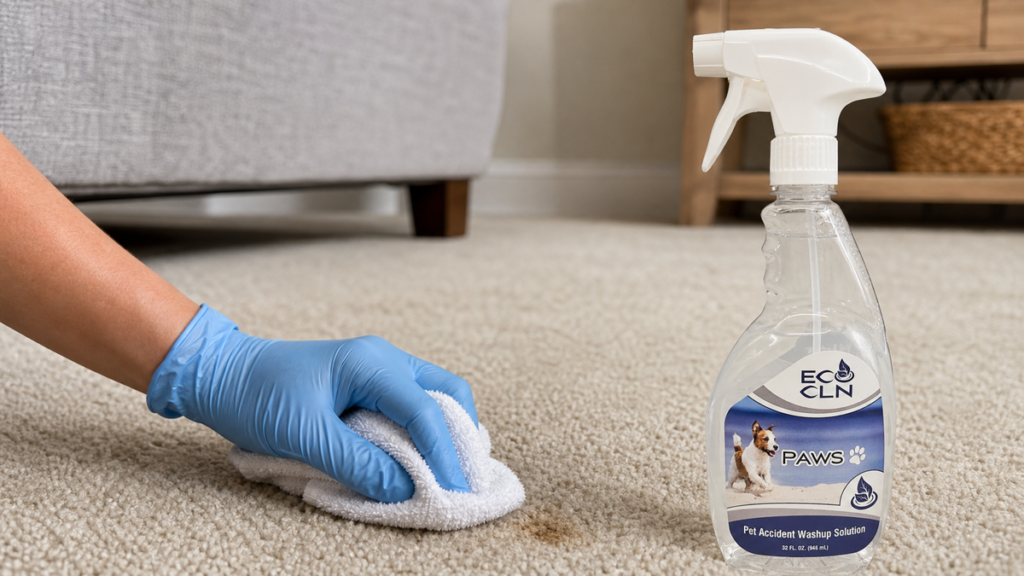
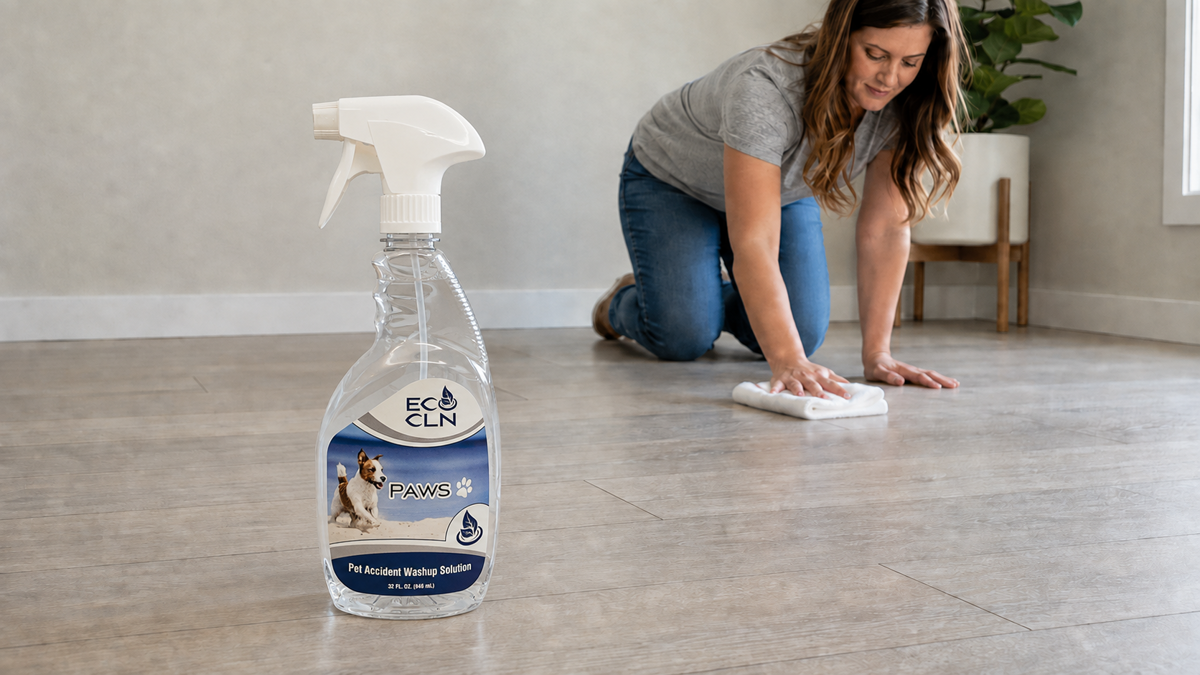
On compatible sealed hard floors, Eco Cln PAWS is the Eco Cln option for pet-accident residue and odor cleanup. Blot first, apply it according to the current directions and the laminate manufacturer’s limits, and use cloth-based control around open or damaged seams.
PAWS can support cleaning the accessible floor surface. It cannot reverse a swollen fiber core or reach contamination sealed beneath a floating floor. For broader material differences, the hard floors versus carpet pet-cleanup guide explains why moisture and hidden layers change the method.
Common Laminate-Floor Cleaning Mistakes
• Mopping the entire room to treat one localized accident.
• Pouring cleaner into a seam to chase odor beneath the plank.
• Scrubbing across beveled joints and spreading residue farther.
• Assuming a waterproof claim covers cut edges, wall gaps and damaged locks.
• Leaving a wet towel over the accident for an extended period.
• Using steam, abrasive powder or a sharp seam tool without approval.
• Judging odor or swelling before the floor is completely dry.
When Surface Cleaning Is Not Enough
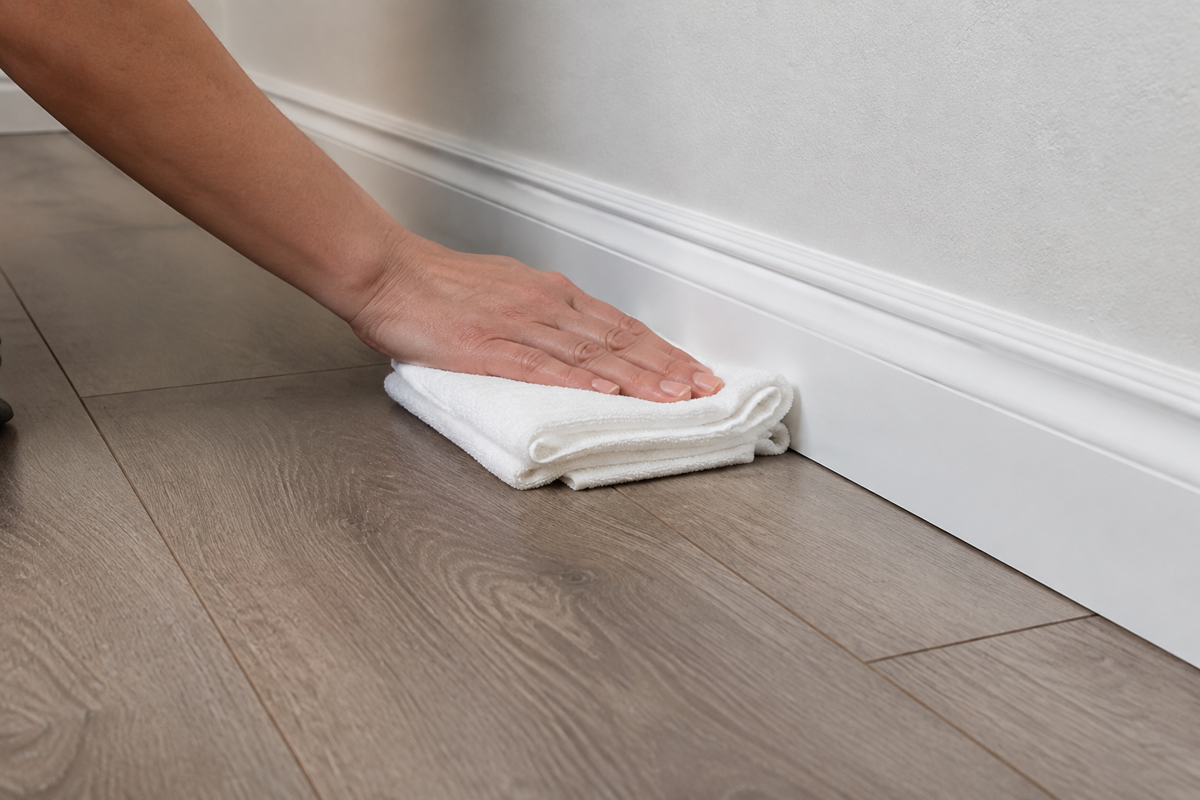
Stop adding liquid if a plank edge rises, feels soft, stays dark or separates from the next plank. Odor that returns during humid weather may indicate urine in the underlayment, subfloor or perimeter gap. Repeatedly wetting the face can enlarge the problem without reaching the source.
Document the affected joints and installation type. A flooring professional can determine whether a plank can be lifted or replaced and whether the underlayment or subfloor needs attention. The related article on why pet urine smell comes back covers hidden residue and incomplete drying in more detail.
Frequently Asked Questions
Can pet urine soak through laminate flooring?
It can reach the core or material below through open, chipped or damaged seams and perimeter gaps. The wear layer may resist moisture while the joints remain vulnerable.
Should I pour pet cleaner into the seam?
No. Use a controlled cloth-based application unless both the flooring and cleaner manufacturers direct otherwise. Pouring liquid into the joint can worsen swelling.
Can I use a steam mop after a pet accident?
Only if the exact flooring manufacturer expressly permits it. Heat and moisture can affect joints and the wood-fiber core.
Why does the floor still smell after the top is clean?
Urine may be under a plank, inside the perimeter gap or in the underlayment. Let the floor dry fully, then inspect adjacent seams and trim instead of flooding the spot again.
When should a laminate plank be replaced?
Seek a flooring evaluation when an edge swells, lifts, crumbles, remains discolored or releases odor from below. Cleaning cannot restore a deformed core.
The bottom line
Blot pet urine before it crosses more laminate seams, clean with minimal controlled moisture and dry every joint and perimeter edge promptly. PAWS can be a practical option for compatible accessible surfaces. Swelling or returning odor from below needs a flooring or repair decision—not another wet pass.