How to Clean an Acrylic Bathtub Without Scratching the Finish

Quick Answer
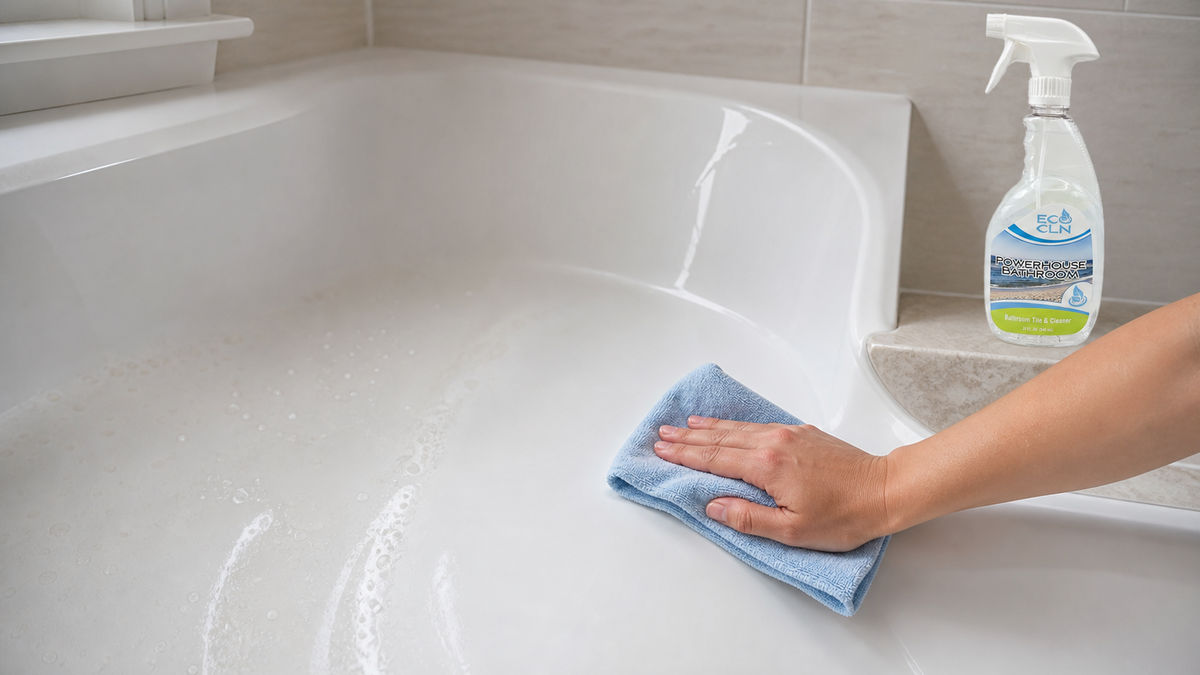
An acrylic bathtub needs a soft, non-abrasive approach that follows the manufacturer care instructions. Check the acrylic tub manufacturer’s care instructions first. Remove loose hair and debris, then use only a non-abrasive cleaner and soft cloth or non-scratch sponge approved for acrylic.
Eco Cln Powerhouse Bathroom is positioned for tubs, soap scum, hard-water buildup, and bathroom grime, but acrylic compatibility should be confirmed by the tub maker and a hidden-area test. Apply a controlled amount, let it work briefly, wipe gently, rinse completely, and dry the tub.
MAAX recommends non-abrasive cleaners that are explicitly safe for acrylic and warns against abrasive cleansers, scrapers, and metal brushes. Review MAAX acrylic-care guidance.
Why Acrylic Needs a Lighter Touch
Acrylic is non-porous and relatively easy to maintain, but the glossy surface can be scratched or dulled by abrasive powders, rough pads, scrapers, and metal brushes.
Once the finish is visibly scratched or hazed, stronger cleaning cannot restore the original gloss.
Step 1: Confirm It Is Acrylic
Do not assume every white tub is acrylic. Fiberglass, porcelain enamel, cast polymer, stone resin, and other materials can look similar.
Find the brand/model if possible and use the manufacturer’s approved-care list.
Step 2: Remove Loose Debris First
Rinse or wipe away hair, dust, and loose soap residue. A clean surface reduces the chance of dragging grit across acrylic.
Remove bath mats, toys, bottles, and other items so grime is not trapped behind them.
Step 3: Choose a Non-Abrasive Cleaner
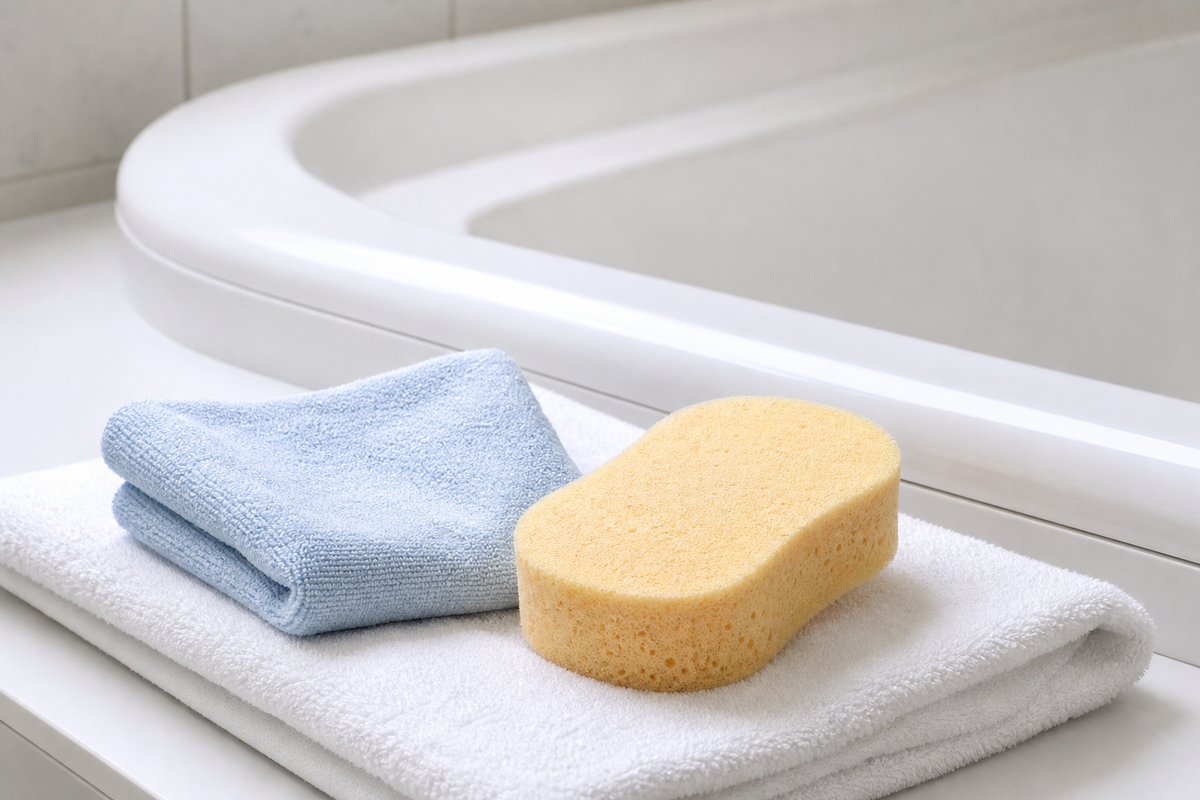
MAAX says acrylic bathware should be cleaned with non-abrasive products and that any cleaner labeled safe for acrylic may be used on its acrylic products. See MAAX maintenance instructions.
Powerhouse Bathroom is the Eco Cln bathroom cleaner for tubs and bathroom buildup. Test it first on an inconspicuous acrylic area and use it only if the tub manufacturer permits a compatible non-abrasive bathroom cleaner.
Step 4: Use Soft Tools Only
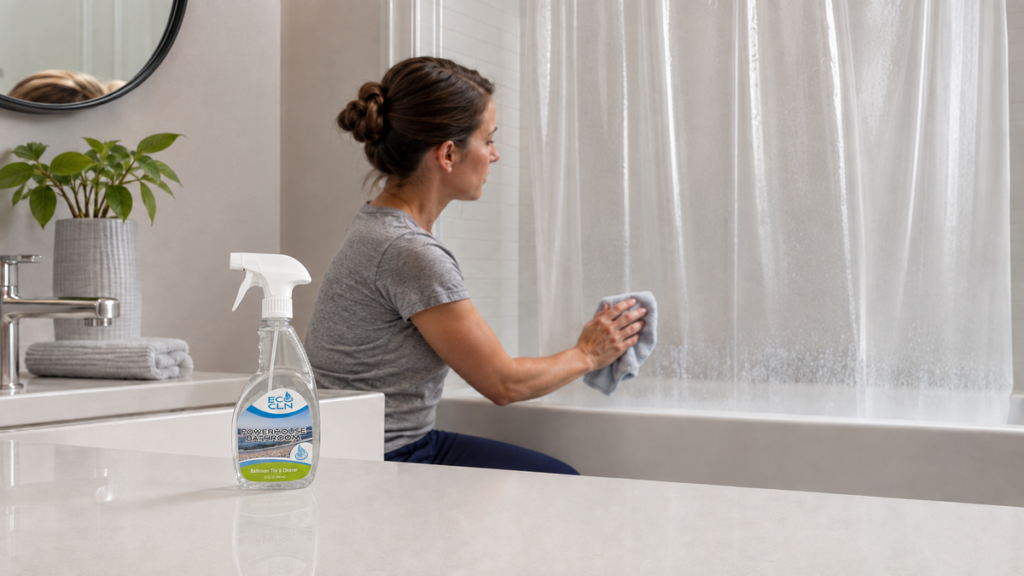
Use microfiber, a soft cloth, or a non-scratch sponge approved for acrylic. Avoid steel wool, scouring powders, stiff brushes, melamine-type abrasive blocks unless the tub maker specifically approves them, and any hard scraper.
Your cleaning tool matters just as much as the cleaner.
Step 5: Work in Small Sections
Apply a controlled amount of cleaner to a manageable area. Give it brief contact time according to the product instructions, then wipe with light pressure.
For soap film that does not release in one pass, repeat the gentle process rather than increasing abrasion.
Step 6: Rinse Thoroughly
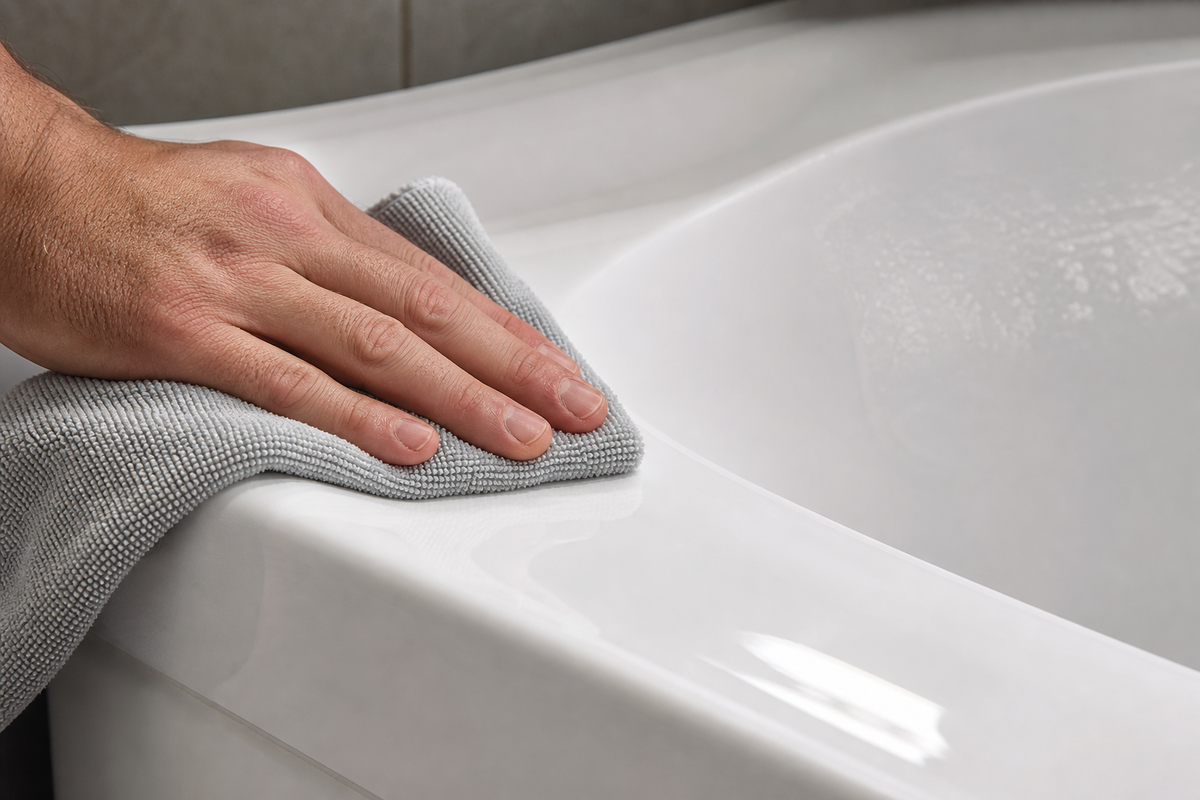
Rinse cleaner and loosened residue away completely. Cleaner left behind can create a dull film that looks like the acrylic has lost shine.
Use a clean cloth to wipe corners, ledges, and the lower tub wall where runoff collects.
Step 7: Dry and Inspect the Finish
Dry the tub with a soft microfiber cloth. Side lighting makes remaining soap film and actual scratches easier to distinguish.
If the surface is clean but still looks dull or scratched, the issue may be finish damage rather than residue.
Soap Scum vs. Hard Water on Acrylic
The Eco Cln soap scum vs. hard water guide explains the difference between waxy soap film and mineral deposits.
Both can appear on acrylic, but do not escalate to acidic or abrasive cleaning without the tub maker’s approval.
What About Bath Oils and Salts?
MAAX warns that bath oils, salts, and bubble-bath products can affect some acrylic finishes. Review acrylic maintenance guidance.
If a sticky or dull area started after a bath product, clean gently and consult the tub manufacturer before using stronger chemistry.
Common Acrylic-Tub Cleaning Mistakes
- Using abrasive powder or steel wool.
- Scraping soap scum with metal tools.
- Using rough pads because the tub feels ‘hard.’
- Skipping the hidden-area test on an unknown acrylic finish.
- Letting cleaner dry on the tub.
- Leaving cleaning residue behind and mistaking the film for damaged acrylic.
- Trying to polish out scratches with random household cleaners.
Where Powerhouse Bathroom Fits
Eco Cln Powerhouse Bathroom is the Eco Cln product for soap scum, hard-water buildup, tubs, tile, sinks, fixtures, and bathroom grime. On an acrylic tub, the correct use depends on the tub manufacturer’s compatibility guidance and a successful hidden-area test.
FAQ
Can I use Powerhouse Bathroom on an acrylic tub?
Powerhouse is positioned for tubs, but acrylic compatibility should be confirmed by the tub manufacturer and a hidden-area test.
Can I use a scrub pad on acrylic?
Only a non-scratch pad or tool approved for acrylic. Rough pads can dull or scratch the finish.
Why does my acrylic tub look dull after cleaning?
Cleaner residue can create haze, but abrasive damage can also dull acrylic. Rinse and dry first; if the dullness remains, stop escalating.
Can I scrape hard-water buildup off acrylic?
Avoid hard scrapers or metal tools unless the tub manufacturer specifically approves a method.
Does Powerhouse disinfect the tub?
This article should not make that claim. Powerhouse is a bathroom cleaner for buildup and grime, not a disinfecting or germ-killing product.
The Bottom Line
Check the bathtub manufacturer’s care instructions and confirm the surface is acrylic before choosing a cleaner or tool. Remove loose hair and grit, test a hidden area, and use Powerhouse Bathroom only when the tub maker permits the product category and the test leaves the gloss unchanged. Apply a controlled amount, allow only brief contact, wipe with a soft microfiber cloth or acrylic-approved non-scratch sponge, then rinse completely and dry the surface. Work in small sections so loosened soap film and mineral residue do not dry back onto the tub. Avoid abrasive powders, rough pads, hard scrapers, metal brushes, and improvised polishing compounds; they can turn a cleanable deposit into permanent haze or scratches. If dullness remains after a complete rinse and dry, inspect it under angled light before adding more cleaner. A cloudy film may be residue, but an unchanged matte patch can be abrasion or chemical damage that routine cleaning will not reverse. Stop if the gloss changes, color transfers, the surface feels rougher, or cracks and crazing appear. Heavy scale, unknown tub material, or existing finish damage should follow the manufacturer or a qualified refinisher rather than stronger scrubbing.
For compatible acrylic tubs with soap film and everyday bathroom buildup, Eco Cln Powerhouse Bathroom can be the bathroom-cleaning option – as long as the tub maker permits the cleaner and you stick to soft tools, controlled contact time, and a complete rinse.