How to Clean a Fiberglass Shower Without Scratching the Finish


Fiberglass showers need a gentler cleaning routine than ceramic tile or porcelain. If you are learning how to clean a fiberglass shower without scratching the finish, remove loose debris first, use a compatible nonabrasive cleaner with a soft cloth or non-scratch sponge, work in small sections, rinse thoroughly, and dry the walls and base. Stubborn buildup usually responds better to controlled dwell time and a second pass than to harder scrubbing.
The details matter because a fiberglass enclosure is often protected by a smooth gelcoat or similar finished surface. Abrasive powder, steel wool, stiff brushes, and aggressive scouring can leave that finish dull, scratched, or harder to keep clean.
Quick answer: how to clean a fiberglass shower
- Confirm that the enclosure is fiberglass and check the manufacturer’s care instructions if they are available.
- Clear bottles, hair, and loose debris from the walls, ledges, corners, drain area, and textured floor.
- Test the cleaner in a hidden spot.
- Apply a fiberglass-compatible, nonabrasive cleaner to a small section and let it work briefly without drying.
- Wipe with a soft microfiber cloth or non-scratch sponge. Use a soft detail brush only where the shower manufacturer permits it.
- Rinse away loosened soap film, minerals, and cleaner residue.
- Dry the shower with a clean towel or squeegee and repeat gently where buildup remains.
Confirm the shower material before cleaning
Many one-piece tubs and shower surrounds look similar even when they are made from fiberglass, acrylic, cultured marble, or a proprietary composite. Fiberglass units often have molded shelves, rounded corners, and a gelcoat surface, but appearance alone is not always enough to identify the material.
Before deciding how to clean a fiberglass shower, look for a manufacturer’s label, installation paperwork, model number, or care guide. If the material or coating is unknown, use the least aggressive method and test an inconspicuous area near the lower outside edge. Repaired, refinished, painted, cracked, or badly worn enclosures may require different care than factory-finished fiberglass.
For example, Aquatic Bath and MAAX both recommend nonabrasive products and gentle cleaning methods in their maintenance guidance. The instructions for your exact shower model remain the final authority.
What makes a fiberglass shower look dirty?
Knowing how to clean a fiberglass shower starts with identifying the residue. A cloudy enclosure is not always dealing with one kind of mess, and that distinction helps you choose the right amount of cleaning instead of attacking everything with the strongest tool in the closet.
Soap scum and body-oil film
Bar soap, body wash, shampoo, skin oils, and conditioner can collect on the lower walls, molded ledges, corners, and shower pan. This film may feel slick when wet and chalky or cloudy after it dries.
Hard-water buildup
Minerals left behind by evaporating water often appear as white spots, crust near the faucet or drain, or a dull haze. Soap scum and mineral deposits frequently overlap, which is why our guide to soap scum versus hard-water stains recommends identifying the buildup before increasing cleaning pressure.
Rust-colored or dark stains
Orange or brown staining may come from iron in the water, a metal shaving, a rusty can, or corroding hardware. Dark marks along caulk can indicate mildew growth, staining behind failed caulk, or moisture entering a seam. Those problems need diagnosis rather than endless scrubbing.
A worn or damaged finish
An older fiberglass surface can become chalky, yellowed, scratched, or uneven as its finish wears. Cleaning may remove residue sitting on top, but it cannot replace missing gelcoat, repair a crack, or reverse permanent discoloration.
Supplies for cleaning fiberglass shower walls and floors
Before you decide how to clean a fiberglass shower, gather these tools without wetting the enclosure:
- a fiberglass-compatible nonabrasive bathroom cleaner
- two or more clean microfiber cloths
- a clearly labeled non-scratch sponge
- a soft nylon detail brush, only if the shower manufacturer allows it
- a cup, handheld shower sprayer, or other controlled way to rinse
- a squeegee or dry microfiber towel
- gloves if desired for comfort and label-directed use
Avoid steel wool, pumice stones, razor blades, abrasive powders, stiff wire brushes, rough green scouring pads, and unapproved solvent cleaners. Do not combine bathroom cleaners, bleach, acids, vinegar mixtures, or other products. Mixing cleaners can create dangerous fumes or unpredictable surface reactions.
How to clean a fiberglass shower in 8 steps
1. Empty the shower and inspect the finish
Remove bottles, razors, mats, hanging caddies, and loose items. Check the walls, shelves, pan, drain, caulk, and hardware for cracks, chips, peeling repairs, open seams, or badly worn areas. Stop and ask the manufacturer or a repair professional before soaking damaged fiberglass.
2. Remove hair and loose debris
Pick up hair around the drain and sweep or wipe dry grit from the textured floor. Cleaning over loose sand, grit, or metal fragments can drag those particles across the gelcoat and create scratches.
3. Rinse with warm—not extremely hot—water
Use a light rinse to wet the walls and base and loosen fresh residue. Warm water can help soften soap film, but very hot water is unnecessary. Keep the rinse controlled around open seams, failed caulk, repair patches, and wall penetrations.
4. Test the cleaner in a hidden area
Apply a small amount where a change in gloss or color would be easy to spot but not prominent. Follow the product directions, rinse, dry, and inspect the test area under good light. If the fiberglass becomes tacky, dull, discolored, or rough, stop using that cleaner.
5. Clean one section at a time
The safest way to approach how to clean a fiberglass shower is to start high enough to manage drips while keeping the working area small. Apply the compatible cleaner evenly and give it the label-directed dwell time. Do not let it dry on the shower wall, ledge, or pan.
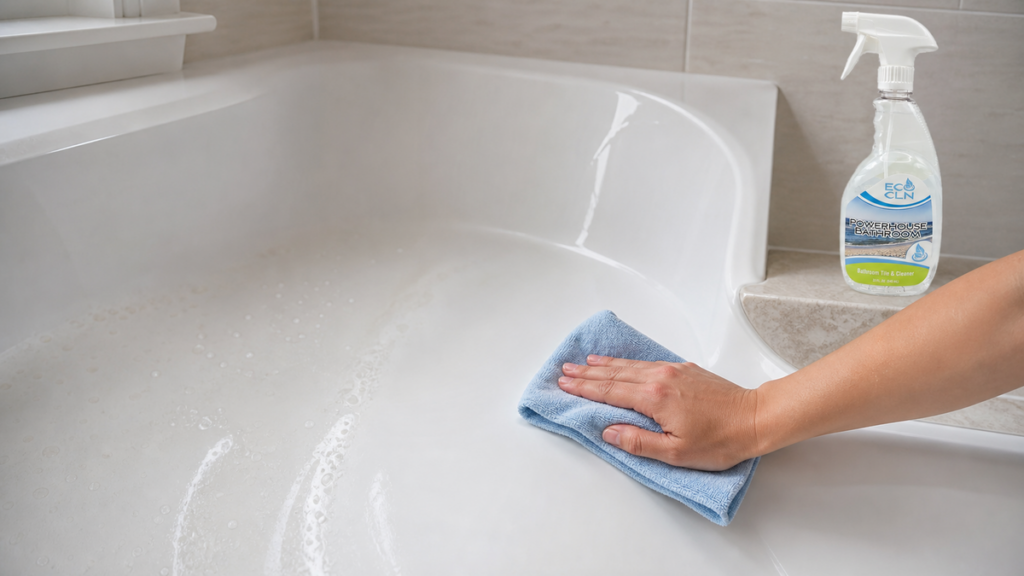
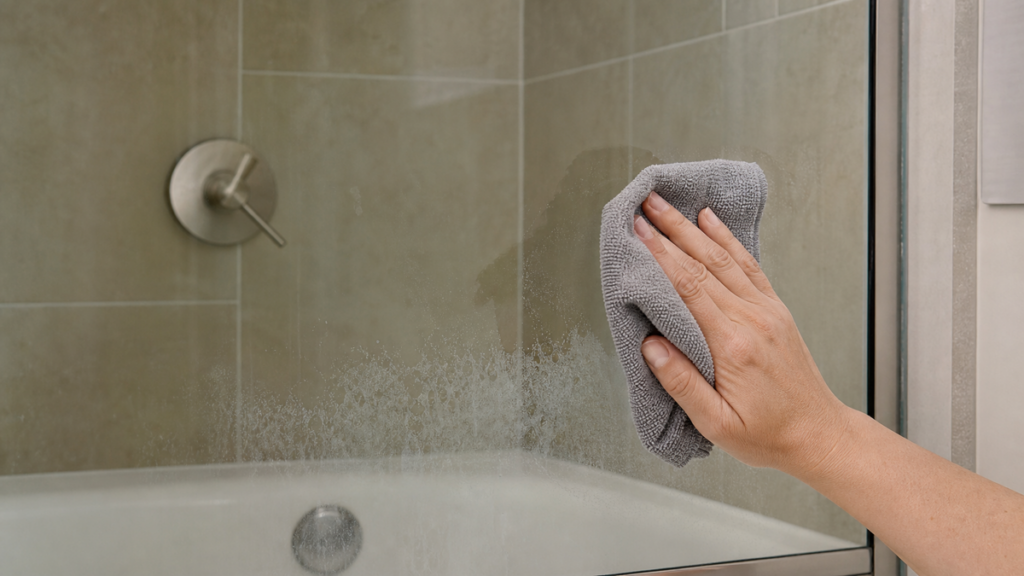
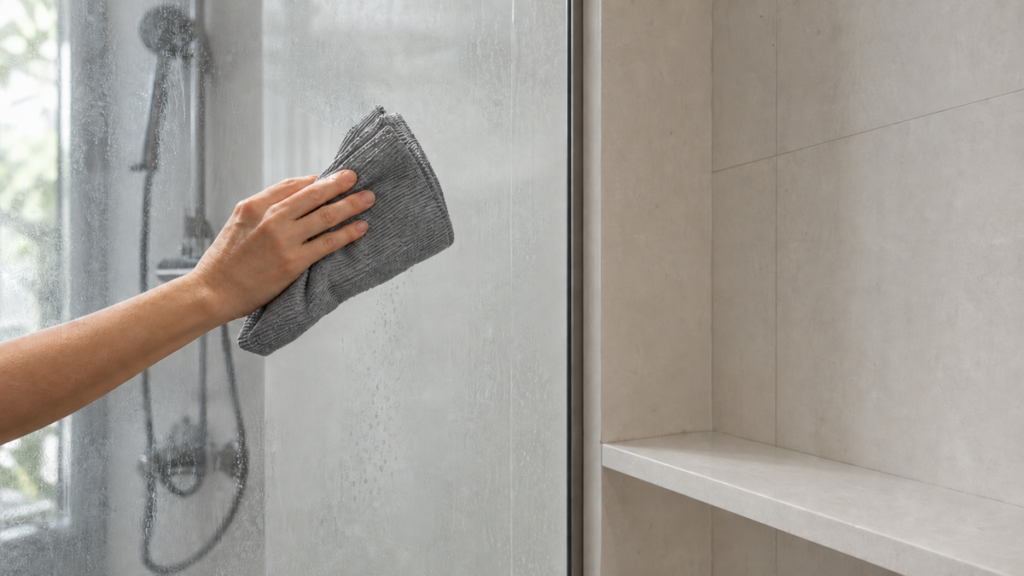
6. Wipe with a soft cloth or non-scratch sponge
Use light, overlapping passes rather than heavy pressure. Follow the molded contours around shelves and rounded corners. For textured shower floors, let the cleaner soften the film first, then use the softest manufacturer-approved tool that reaches the low spots without grinding the raised texture.
7. Rinse thoroughly and check the result
Rinse away loosened soap scum, mineral residue, and cleaner. Pay attention to ledge edges, the drain ring, corners, and the bottom of the wall, where dirty solution can collect. A clean follow-wipe should not leave the fiberglass slippery, gummy, or hazy.
8. Dry the fiberglass and repeat only where needed
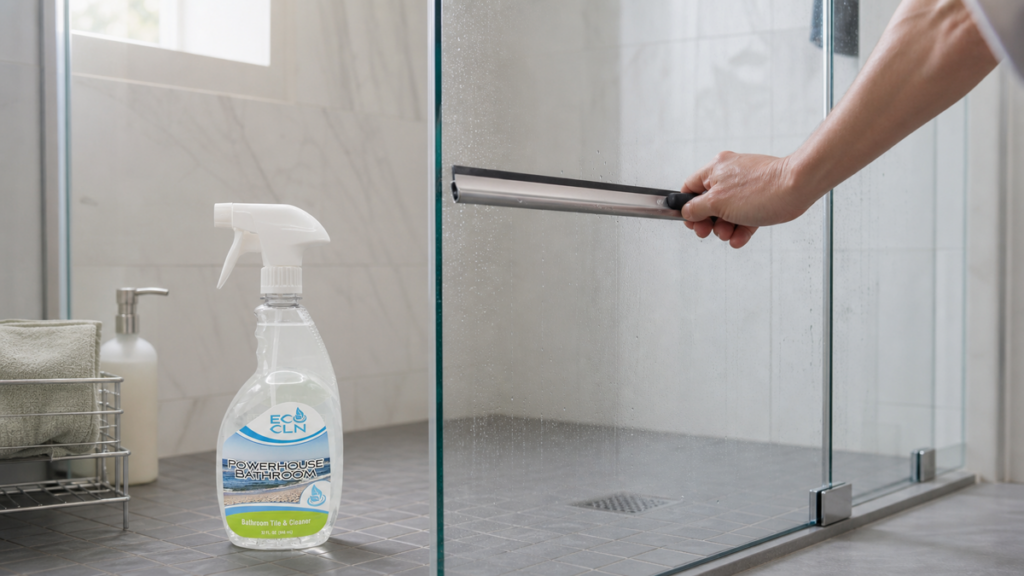
Use a squeegee on broad walls and a dry microfiber towel on ledges, corners, fixtures, and the pan edge. Inspect the dry surface before deciding whether more cleaning is necessary. A second controlled pass is usually kinder to the finish than one aggressive round of scrubbing.
Adjust the method for fiberglass walls, bases, and trouble spots
Broad shower walls
When deciding how to clean a fiberglass shower wall, use long, light passes with a microfiber cloth or non-scratch sponge. Work around molded shelves rather than flooding them. If a cloudy film remains only after drying, confirm whether it is residue, mineral buildup, or finish wear before repeating the same treatment.
Textured shower floor or pan
How to clean a fiberglass shower floor depends on its texture because low points trap soap film, oils, hair, and rinse water. Apply cleaner in a controlled amount, allow brief dwell time, and wipe across the texture from more than one direction. A soft nylon brush may help in grooves only when the shower manufacturer permits it; a stiff brush can dull raised areas.
Corners, ledges, and door tracks
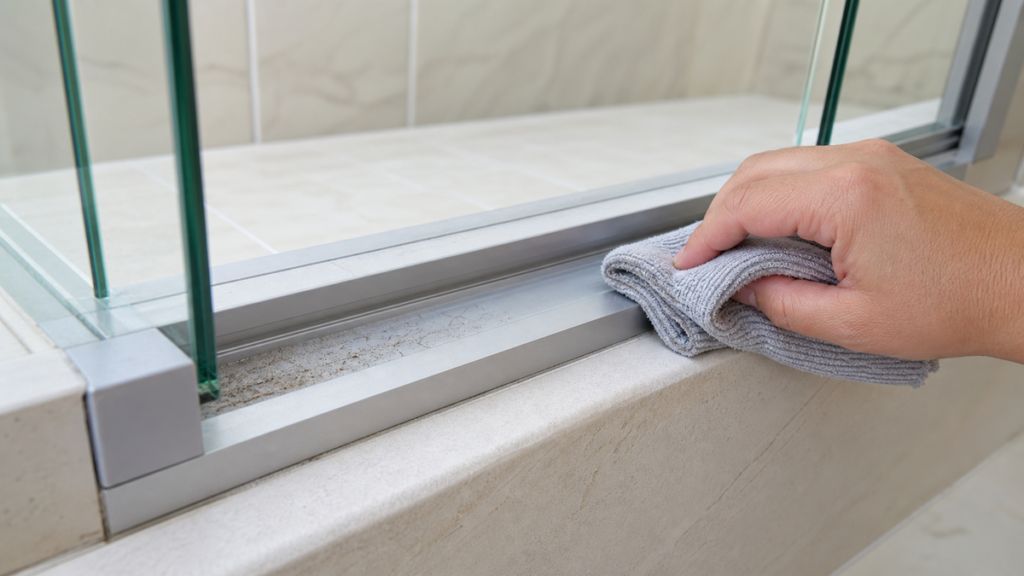
These areas collect heavier residue because water drains slowly. Fold a microfiber cloth around a fingertip or use a soft detail tool instead of scraping with a blade. Door tracks may contain metal, caulk, or coated components that need different care than the fiberglass wall.
Faucets, trim, and glass doors
Do not assume a cleaner approved for the fiberglass wall also fits every chrome, coated metal, glass, or stone component. Clean each material according to its own directions. A shower is a collection of surfaces, not one giant permission slip.
Where Powerhouse Bathroom fits on fiberglass
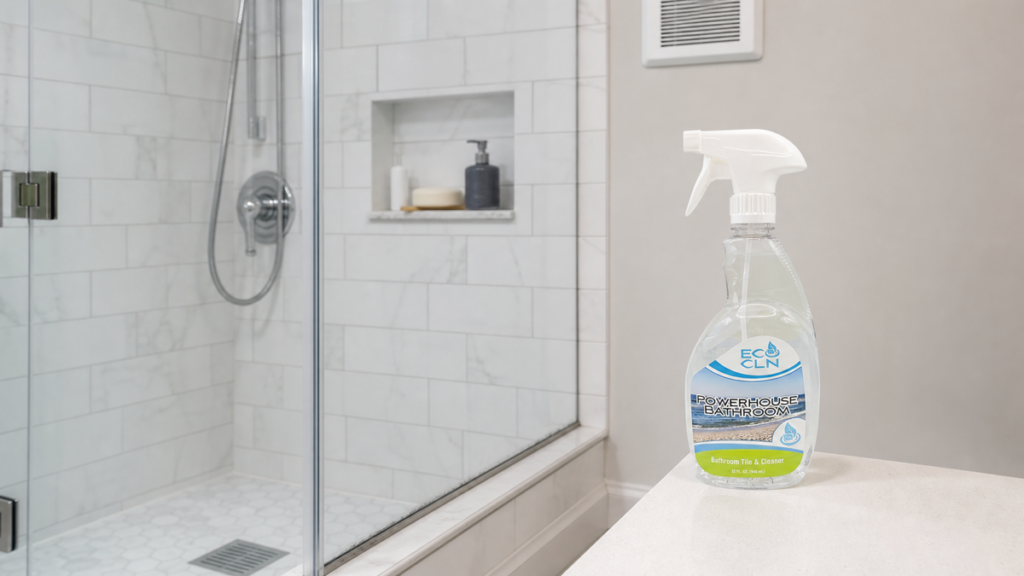
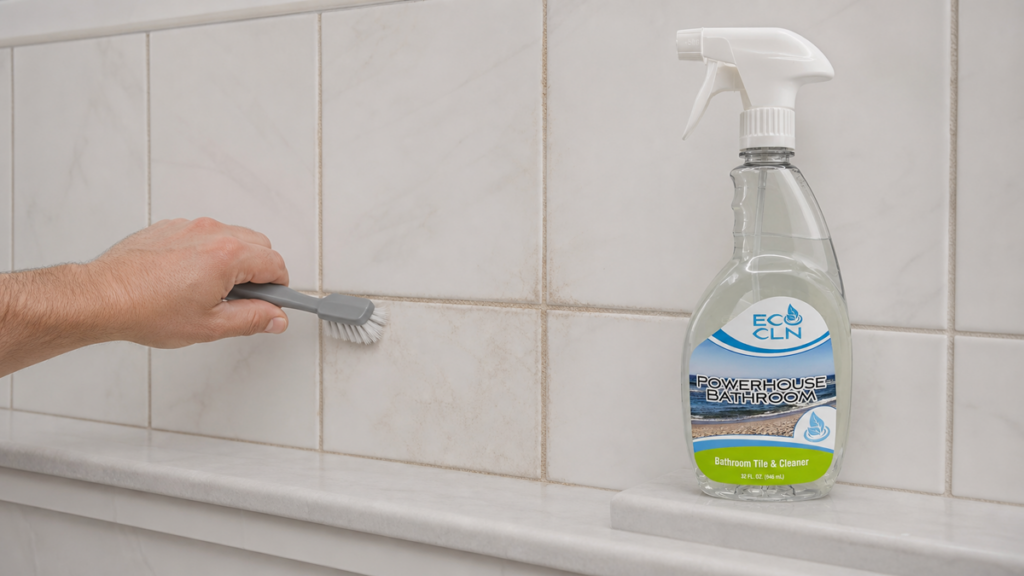
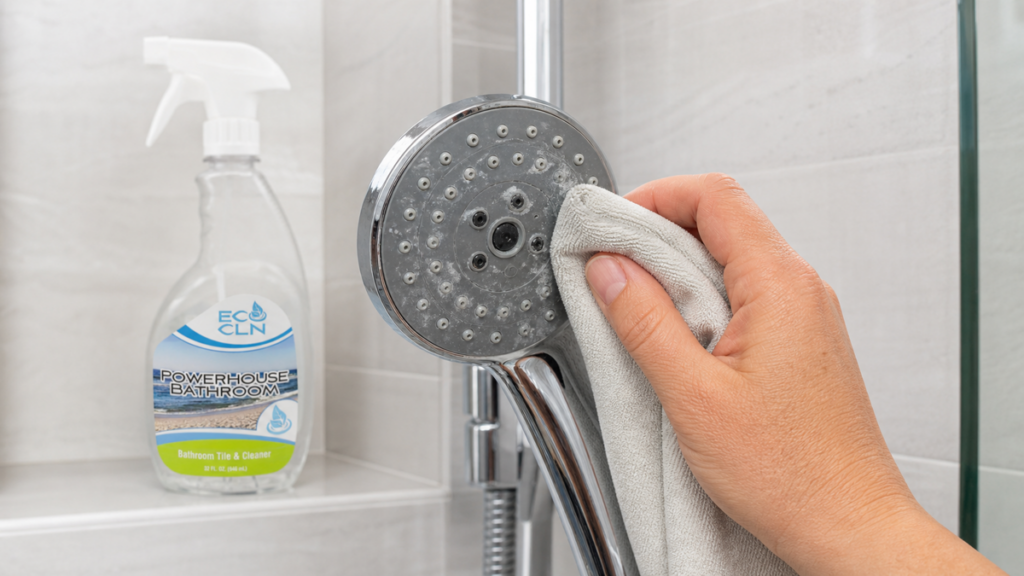
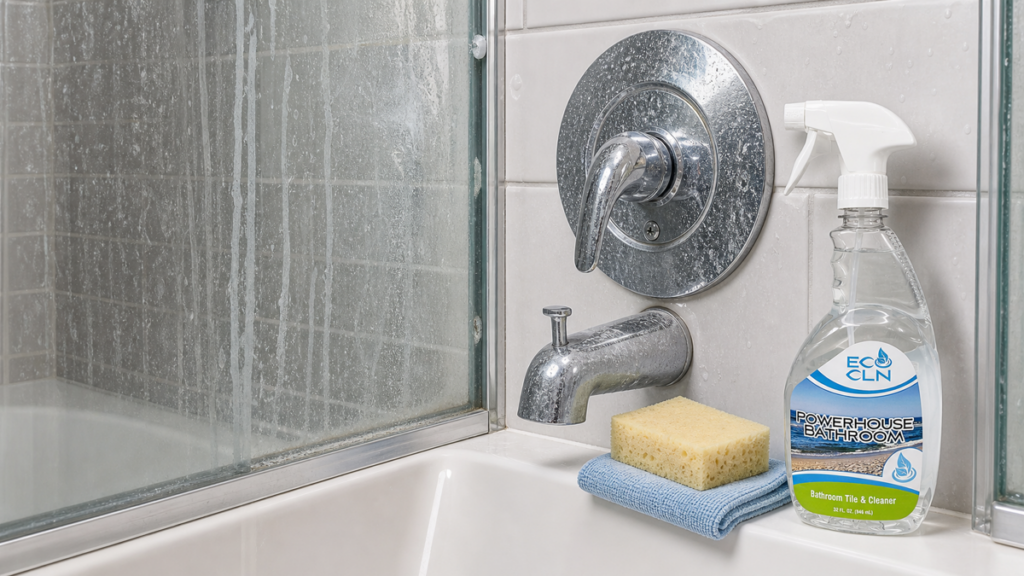
When deciding how to clean a fiberglass shower with a product, Eco Cln Powerhouse Bathroom is compatible with fiberglass when used as directed and may fit areas dealing with soap scum, everyday bathroom grime, and mineral-related residue. Test a hidden area first, spray a controlled section, allow only the contact time permitted by the label, and wipe with a clean microfiber cloth or non-scratch sponge. Rinse thoroughly and dry the fiberglass before judging the result. For stubborn buildup, repeat the controlled treatment only when the product directions allow it. Our Powerhouse Bathroom cleaning guide explains where the product fits across common bathroom messes.
The shower manufacturer’s care instructions and the condition of the finish still matter. Use extra caution on refinished units, repair patches, unknown coatings, open cracks, and worn gelcoat.
Common fiberglass shower cleaning mistakes
Using abrasive powder or a rough pad
Visible grit and aggressive scouring can leave fine scratches or dull the finish. Once the surface is rougher, new soap film and minerals may cling more readily.
Scrubbing harder instead of allowing dwell time
More pressure is not the same as more cleaning. Give a compatible cleaner time to loosen the film, keep it from drying, then use a soft wiping pass.
Treating every stain as soap scum
Mineral deposits, rust-colored marks, caulk discoloration, and worn gelcoat need different decisions. Repeating the same soap-scum routine can waste time or damage the finish without fixing the underlying problem.
Mixing cleaners
Never combine bathroom cleaner with bleach, ammonia, acids, vinegar mixtures, or another product. Rinse thoroughly before changing products, and follow every label.
Skipping the rinse and dry steps
Cleaner residue can leave a fresh haze, while standing water creates more mineral spotting. Rinsing and drying are part of the method, not decorative bonus steps.
When cleaning is not enough
Stop and consider repair or professional evaluation when the fiberglass has deep scratches, cracks, flexing, bubbling, delamination, peeling refinishing material, exposed fibers, or failed seams. Persistent dark staining under caulk may require caulk removal and replacement after the moisture source is addressed.
If a yellow, gray, or chalky area remains unchanged after a gentle test clean, the issue may be aging or finish wear rather than removable dirt. Cleaning can improve residue on top of the fiberglass; it cannot rebuild the surface underneath it.
How to keep a fiberglass shower cleaner between deep cleanings
- Squeegee broad walls after use.
- Dry molded ledges, corners, and the pan edge with a microfiber towel.
- Remove hair and empty bottles before they create trapped wet spots.
- Clean light soap film before it becomes a thick layered deposit.
- Keep the bathroom ventilated during and after showers.
- Repair failed caulk and plumbing drips promptly.
- Use only manufacturer-compatible products and soft tools.
A short maintenance wipe is easier on the finish than waiting until the shower needs heroic levels of scrubbing. Fiberglass does not hand out medals for elbow grease.
Frequently asked questions
What is the best way to clean a fiberglass shower?
The best answer to how to clean a fiberglass shower is to use a compatible nonabrasive cleaner, a soft microfiber cloth or non-scratch sponge, controlled dwell time, thorough rinsing, and drying. Repeat gently for stubborn buildup instead of using rough tools or heavy pressure.
Can I use Powerhouse Bathroom on fiberglass?
Yes. Eco Cln has confirmed that Powerhouse Bathroom is compatible with fiberglass when used as directed. Test a hidden spot first, use a soft tool, do not let the cleaner dry, rinse thoroughly, and follow the shower manufacturer’s care instructions.
Can I use a magic eraser on a fiberglass shower?
Do not assume it is safe for the finish. Melamine foam can act like a fine abrasive and may dull some glossy or refinished surfaces. Use it only if the fiberglass manufacturer specifically permits it and a hidden-area test shows no change.
How do I remove soap scum from a fiberglass shower floor?
Apply a compatible cleaner to a manageable section, allow brief dwell time, then wipe across the textured base with a non-scratch sponge. Use a soft nylon detail brush only if the manufacturer allows it, then rinse and dry the floor.
What should I use for hard-water stains on fiberglass?
Start with a fiberglass-compatible product labeled for mineral buildup and follow its directions. Avoid improvised acids or abrasive powders unless the shower manufacturer explicitly approves them. Heavy or recurring deposits may need repeated controlled treatments and better drying between showers.
Why does my fiberglass shower still look dull after cleaning?
The remaining dullness may be mineral film, cleaner residue, fine scratches, aging gelcoat, or a worn refinished coating. Rinse and dry a test area first. If gentle cleaning does not change it, more scrubbing may make the finish worse rather than better.
The bottom line
The bottom line on how to clean a fiberglass shower is to protect the finish while removing the residue: clear away grit, test first, use a compatible nonabrasive cleaner, work in small sections, wipe with soft tools, rinse thoroughly, and dry. Treat walls, textured bases, seams, and fixtures according to their materials instead of scrubbing the entire enclosure the same way.
Powerhouse Bathroom may fit compatible fiberglass shower areas dealing with soap scum, mineral-related residue, and everyday bathroom grime. Use it as directed, follow the label’s contact-time limits, rinse thoroughly, and repeat only when the directions allow it.