How Often Should You Clean Your Shower? A Practical Schedule

Quick Answer
A practical shower routine has three levels: after-use drying, a weekly cleaning pass, and a monthly detail check. Increase frequency when the shower gets heavy daily use, has hard water, poor ventilation, or visible buildup.
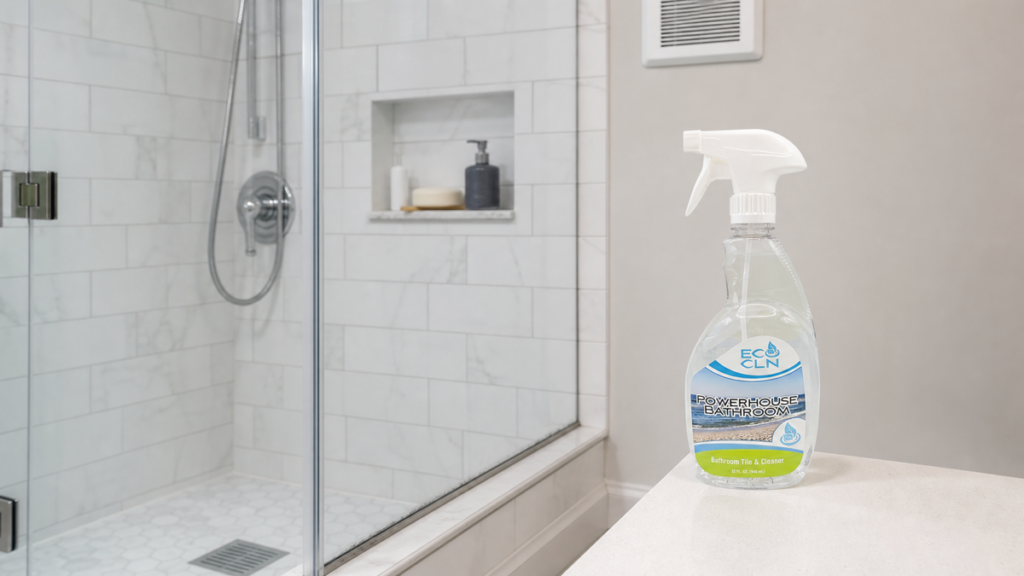
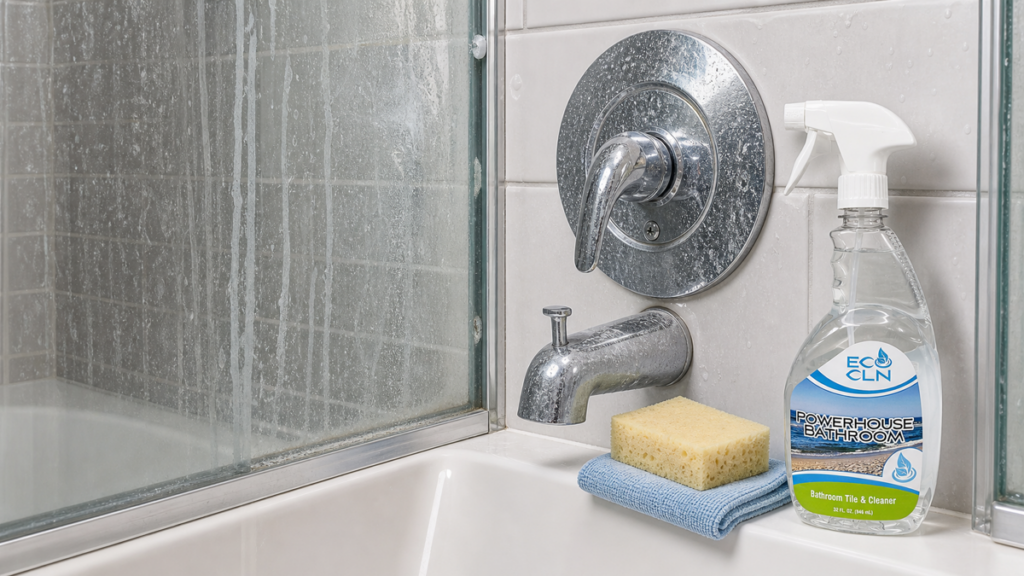
For compatible shower areas with soap scum, hard-water buildup, tile, tubs, sinks, fixtures, and bathroom grime, Eco Cln Powerhouse Bathroom is the targeted Eco Cln cleaner.
There is no universal magic number for every shower material. Manufacturer instructions and the actual amount of use matter more than forcing every household onto the same calendar.
After Every Shower: 30-60 Seconds
Rinse obvious soap or shampoo residue away before it dries.
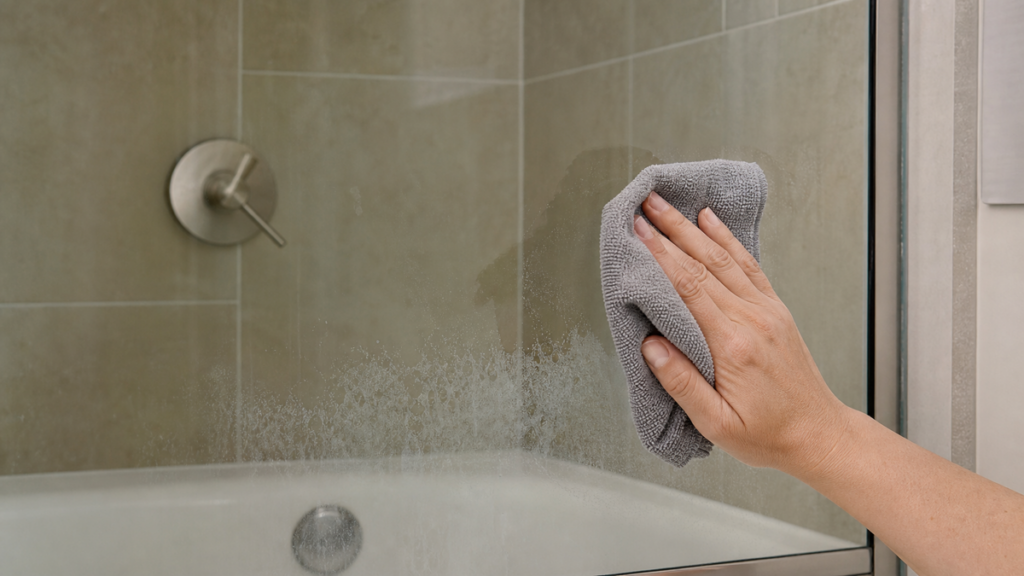
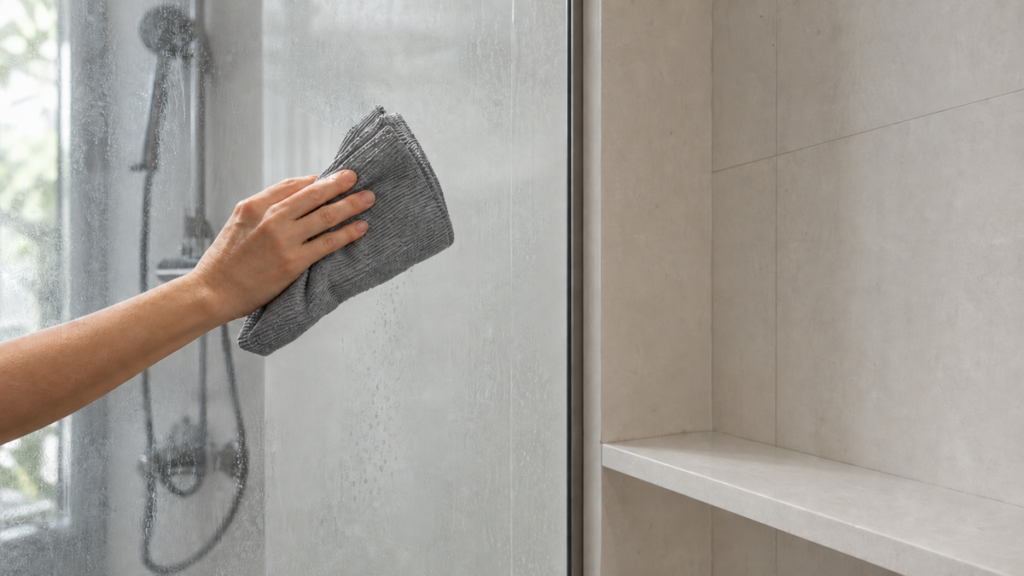
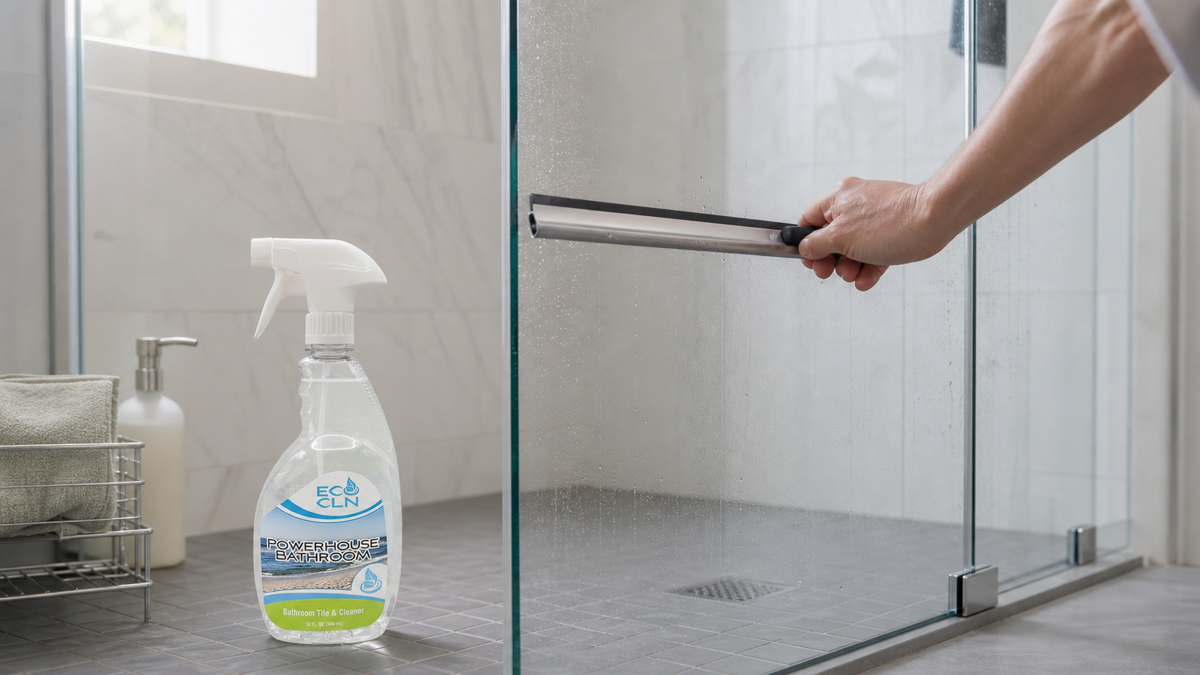
Use a squeegee on compatible glass or smooth walls and wipe heavy water off the lower edges and tracks.
Sterling/Kohler recommends using a shower squeegee after showering and wiping shower doors dry to reduce water spots, soap deposits, and lime buildup. Review Sterling shower-door care.
Leave the enclosure ventilated in the normal manner recommended for the bathroom.
Once a Week: The Main Cleaning Pass
Remove hair and loose debris first. Then clean the surfaces that show soap film, water spots, body-oil residue, and fixture buildup.
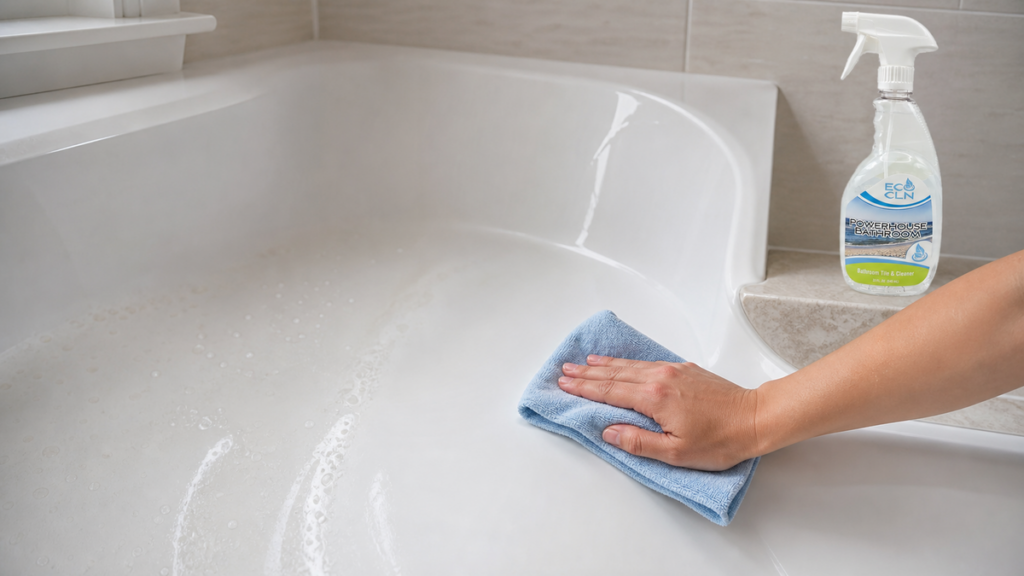
Use Powerhouse Bathroom on compatible bathroom surfaces according to its directions. Test specialty materials and natural stone before broader use.
Wipe or rinse away loosened residue and dry reflective fixtures or glass so cleaner film does not become next week’s haze.
Every 2-4 Weeks: Detail the Areas That Hide Buildup
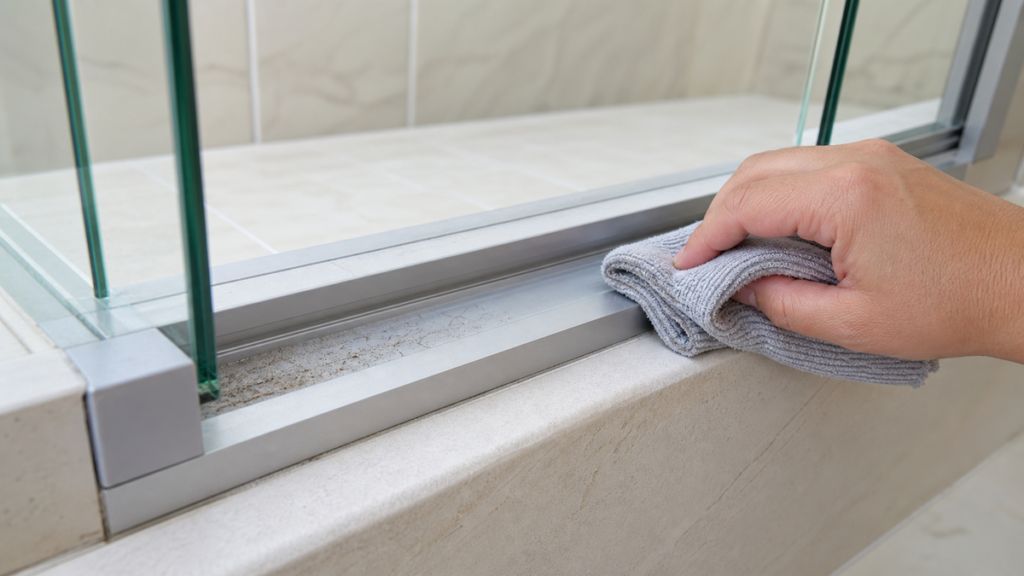
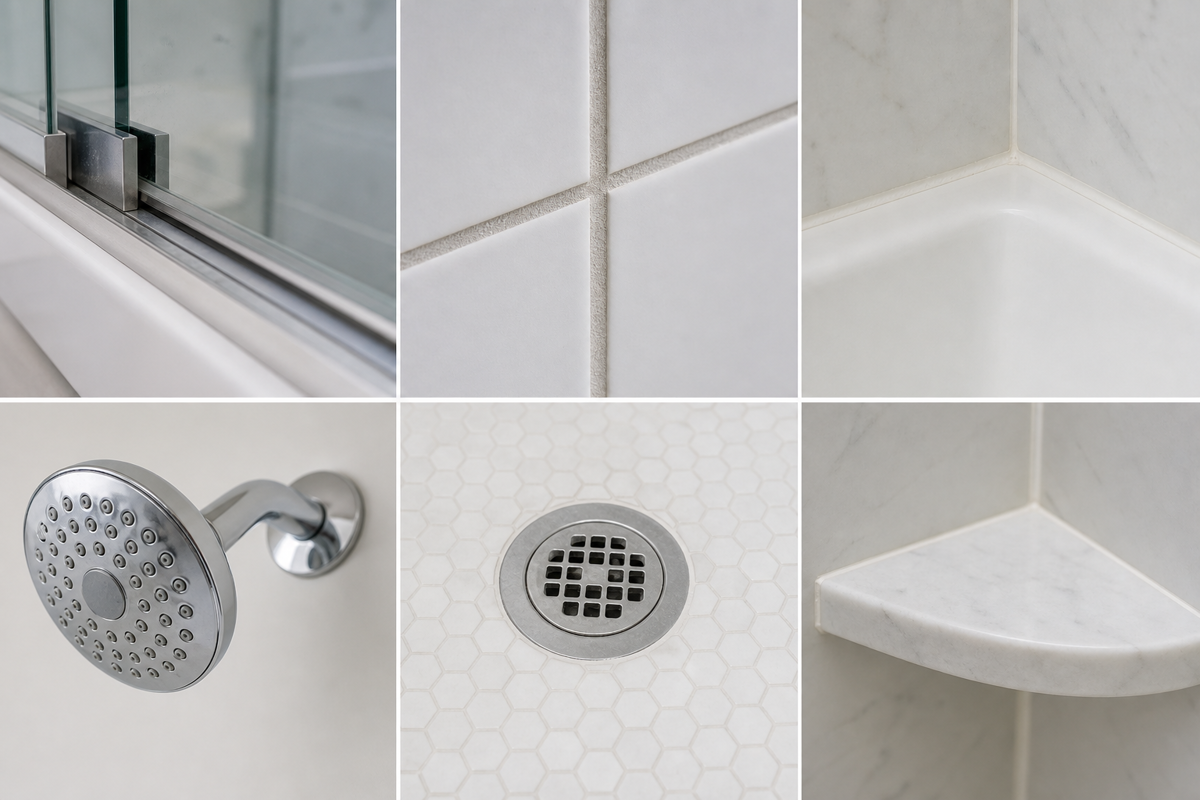
- Shower-door tracks and corners.
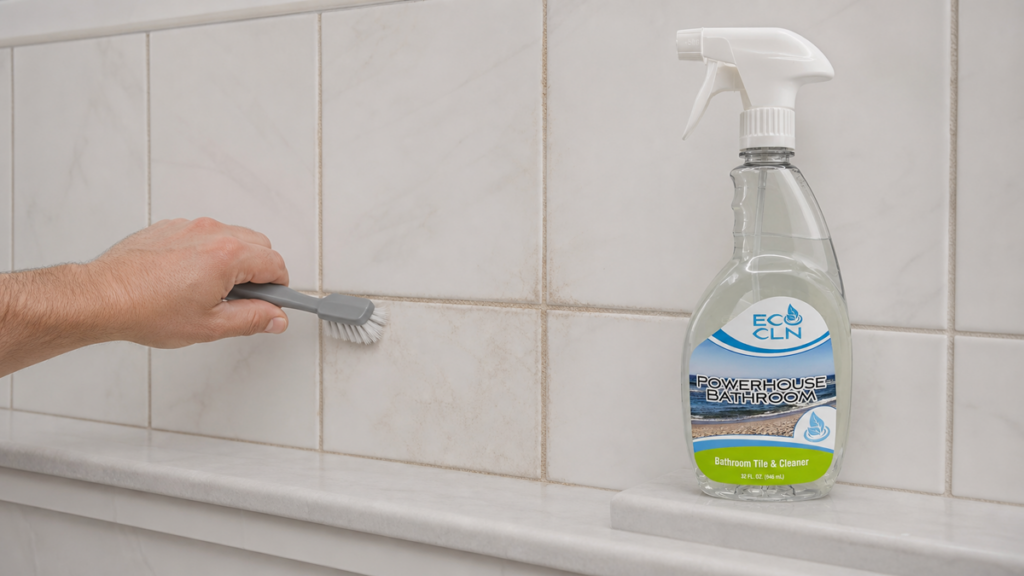
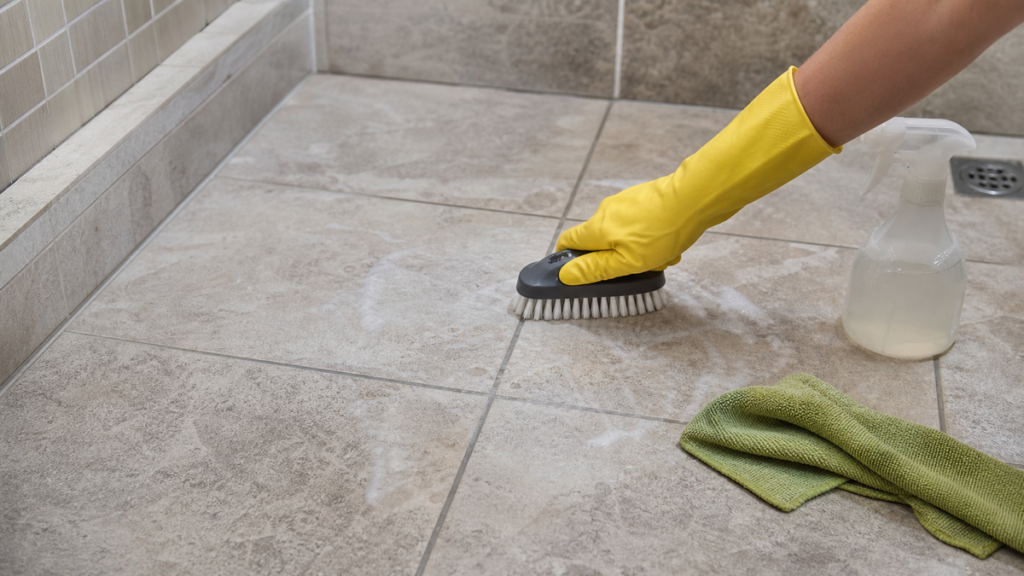
- Grout lines and caulk edges.
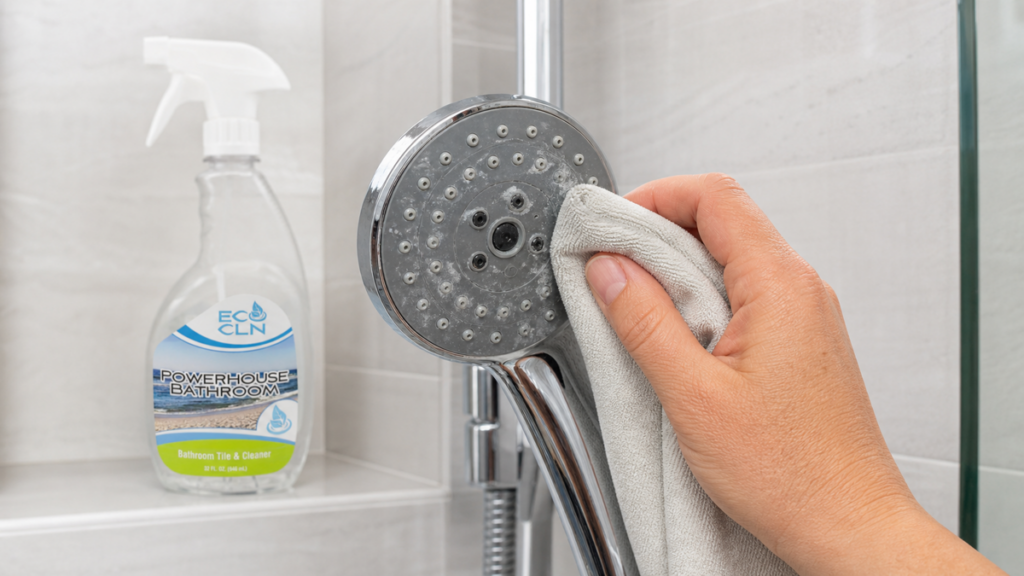
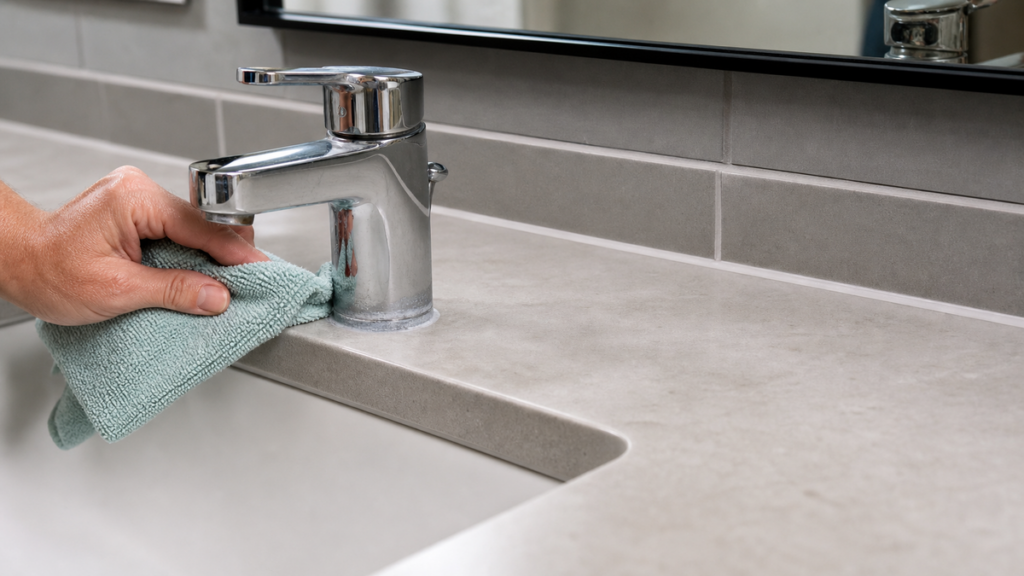
- Showerhead face and fixture bases.
- Lower wall seams and shelf corners.
- Drain cover and surrounding surface.
- Door seals and bottom edges.
- Areas behind bottles, caddies, and bath products.
If these areas are already visibly dirty every week, move them into the weekly routine.
Monthly: Inspect, Don’t Just Clean

Look for failed caulk, cracked grout, loose hardware, persistent dark residue, finish damage, slow drainage, or leaks.
Cleaning is not a repair. If residue appears to come from behind caulk, grout, or wall materials, investigate the moisture source instead of simply spraying more cleaner.
Hard Water May Need More Frequent Maintenance
The Eco Cln soap scum vs. hard water guide distinguishes waxy soap film from chalky mineral buildup.
When hard-water spotting appears quickly, drying glass and fixtures after use can reduce how much mineral residue remains after evaporation.
Use surface-compatible cleaning rather than aggressive abrasives that can damage glass, fiberglass, acrylic, chrome, or specialty coatings.
Busy Household vs. Light-Use Guest Shower
A shower used by several people every day may need a weekly full pass plus frequent spot maintenance.
A guest shower used a few times per month may need only after-use drying when occupied and a scheduled inspection/cleaning before guests arrive.
Use visible residue and actual usage to adjust the schedule.
A Simple Shower Schedule
- After use: squeegee or wipe heavy water and visible residue.
- Weekly: clean walls, tub/base, fixtures, door/glass, and obvious grout or soap-film zones.
- Every 2-4 weeks: detail tracks, corners, seals, showerhead face, and behind products.
- Monthly: inspect caulk, grout, drainage, leaks, finish damage, and persistent problem areas.
- As needed: increase cleaning in hard-water, high-use, or poor-ventilation conditions.
Common Schedule Mistakes
- Waiting for thick buildup before cleaning anything.
- Deep-cleaning daily with harsh scrubbing when simple drying would prevent much of the residue.
- Using abrasive tools on acrylic, fiberglass, chrome, or coated glass.
- Ignoring tracks and corners because the open wall looks clean.
- Treating cracked grout or failed caulk as a cleaning problem.
- Making disinfecting or mold-killing claims for a bathroom cleaner.
Where Powerhouse Bathroom Fits
Eco Cln Powerhouse Bathroom is the Eco Cln bathroom cleaner for soap scum, hard-water buildup, tubs, tile, sinks, fixtures, shower areas, and everyday bathroom grime. It fits the weekly or as-needed cleaning pass when the shower material is compatible.
FAQ
Do I need to clean my shower every day?
Not with a full cleaner-and-scrub routine. A quick rinse, squeegee, or wipe after use can reduce residue; a weekly cleaning pass is a practical starting point for many regularly used showers.
How often should I clean shower glass?
Drying or squeegeeing after use helps prevent spots. Do a proper cleaning whenever fingerprints, haze, soap film, or mineral spotting becomes visible.
How often should I clean grout?
Inspect it weekly and clean visible residue as needed. A more detailed grout pass every few weeks is practical, but cracked or failing grout needs repair rather than stronger cleaning.
Does hard water mean I should clean more often?
Often, yes. Mineral spots can build faster, so after-use drying and more frequent light maintenance can prevent heavier deposits.
Does Powerhouse disinfect the shower?
This article should not make that claim. Powerhouse is positioned for bathroom buildup and grime, not as a disinfectant or germ-killing product.
The Bottom Line
Build the shower routine around use and buildup instead of forcing every bathroom onto one calendar. After each shower, rinse visible soap or shampoo residue, squeegee compatible glass or smooth walls, wipe heavy water from lower edges, and use the room’s normal ventilation. Once a week, remove hair and loose debris, then clean the wall, base or tub, fixtures, door, glass, and visible soap-film or mineral zones. Powerhouse Bathroom fits that weekly or as-needed pass only where the shower material and manufacturer instructions allow it. Every two to four weeks, detail tracks, corners, seals, grout, the showerhead face, drain cover, and areas behind bottles. Once a month, inspect caulk, grout, drainage, hardware, leaks, and finish condition rather than treating every problem as removable soil. Move any area into the weekly routine when it becomes visibly dirty sooner, and shorten the interval for high-use showers, hard water, or poor ventilation. Use soft surface-compatible tools, rinse or wipe away loosened residue, and dry glass and reflective fixtures so the maintenance pass does not leave a new film. Stop and address the underlying problem when caulk fails, grout cracks, water leaks, drainage slows, or residue appears to come from behind the finished surface. Cleaning controls compatible buildup; it does not repair moisture damage or make a disinfecting claim.
For the weekly or as-needed cleanup of compatible shower surfaces, Eco Cln Powerhouse Bathroom is the targeted Eco Cln product for soap scum, hard-water buildup, fixtures, tile, tubs, shower areas, and bathroom grime.