How to Clean Soap Scum From a Shower Curtain or Liner

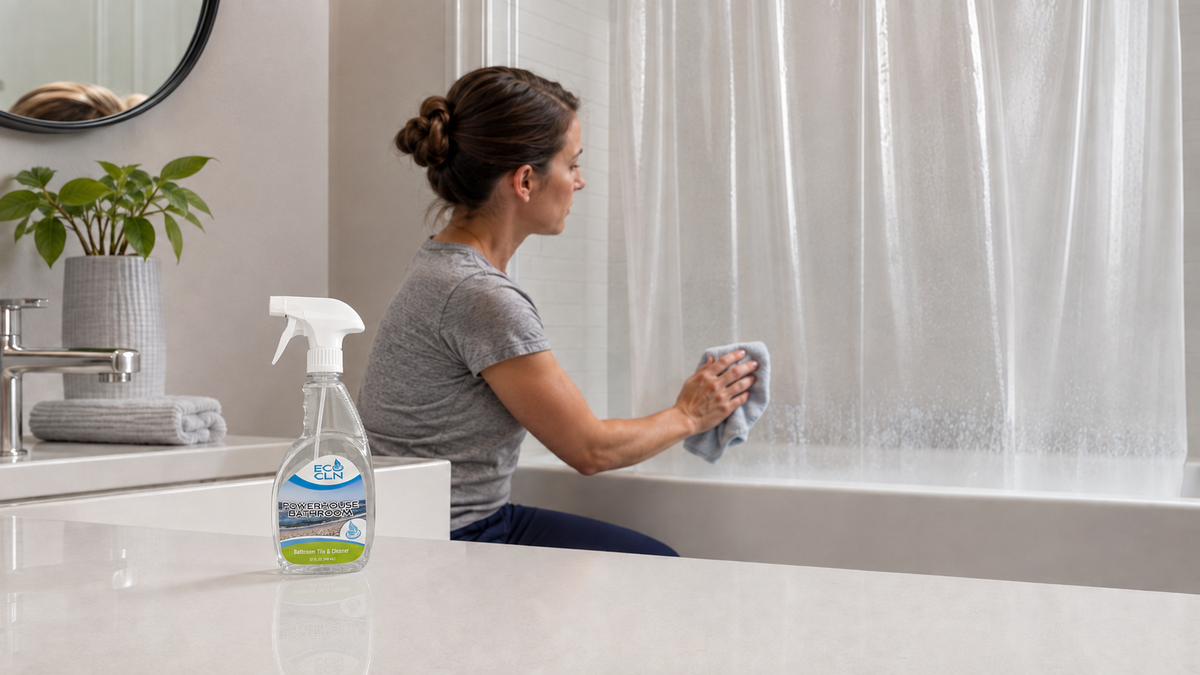
Soap scum on a shower curtain or liner comes off best when you first identify the material, remove the curtain from the rings and treat the cloudy hem and folds without creasing or overheating them. A washable fabric curtain may go in a machine; a plastic or PEVA liner may require gentle hand cleaning or a care-label-approved cycle.
Do not treat every hanging panel the same. Check the sewn label and packaging instructions before adding cleaner, and replace a brittle, cracked or peeling liner instead of trying to scrub it back to new.
Quick Answer
• Separate the decorative curtain from the water-facing liner.
• Read both care labels; fabric, vinyl and PEVA have different heat and washing limits.
• Remove rings and shake off loose hair and debris.
• Focus on the bottom hem, folded edges and the side nearest the shower head.
• Rinse away released soap film and hang the panel fully open to dry.
• Clean rings and the rod separately before rehanging.
Why Soap Scum Builds Up on Curtains and Liners
Bar soap, body oils, skin residue and minerals in water combine into a film that clings to the wet side of the liner. The bottom hem stays damp longer, while folds trap runoff and block airflow. A decorative fabric curtain can collect dust on the room side and moisture on the shower side, creating a different soil mix from the liner.
Soap film is often cloudy, slick or waxy. Chalky mineral deposits may feel harder and concentrate where droplets dry. Pink, black or fuzzy growth is not ordinary soap scum and may require separate property or material guidance. This article addresses removable soap film, not a damaged coating or failed bathroom ventilation.
Whirlpool’s shower curtain and liner washing guide distinguishes plastic and fabric care, which is the essential first decision. The panel’s own label still wins when it gives different instructions.
Identify Fabric, Vinyl or PEVA Before Washing
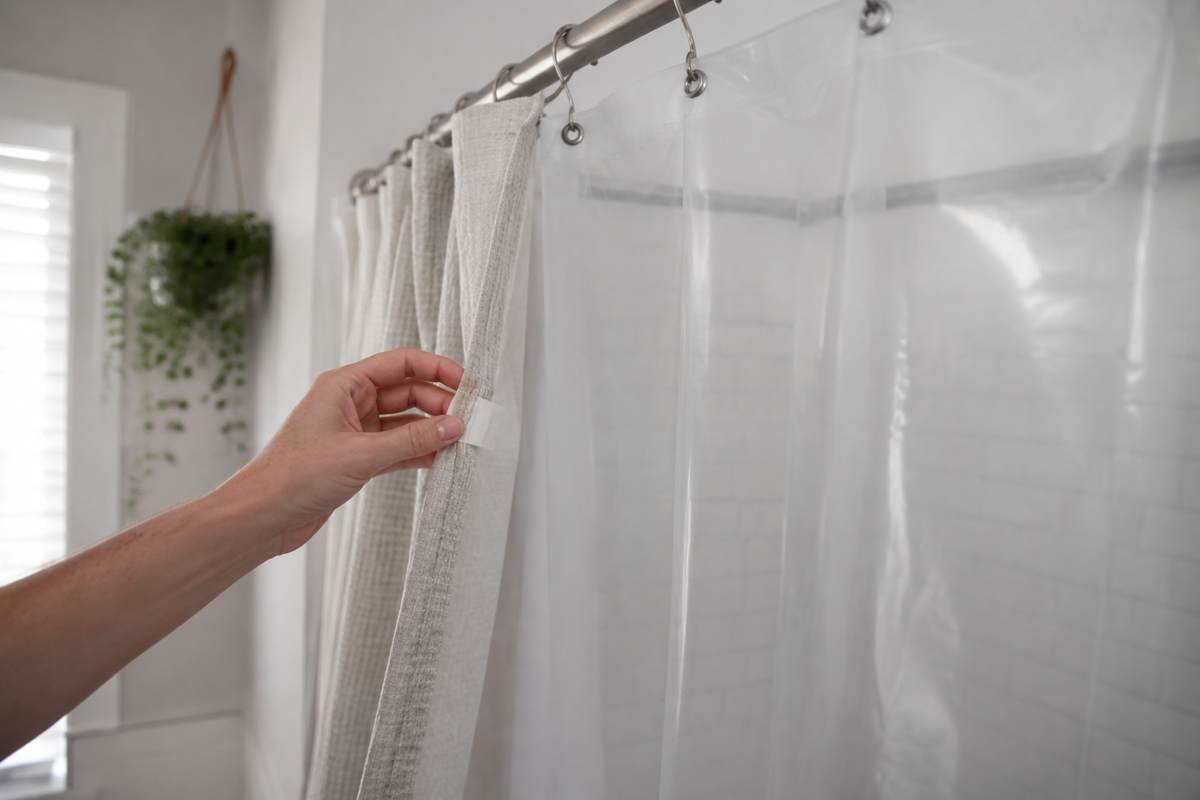
Fabric curtain: Cotton, polyester and blended curtains may be washable, but temperature, cycle and drying rules vary. Remove hooks and check whether decorative trim, a waterproof backing or metal grommets require gentler handling.
Vinyl liner: Vinyl can crease, stiffen or react to heat. Follow the liner’s label and avoid hot drying unless expressly allowed.
PEVA or EVA liner: These flexible plastic alternatives also have product-specific temperature and machine-wash limits. Do not assume a method for vinyl applies automatically.
Coated decorative panel: Some textile curtains have a bonded water-resistant backing. Cracking, bubbles or peeling indicate coating failure; aggressive washing can make it worse.
Step-by-Step: Clean Soap Scum From the Curtain or Liner
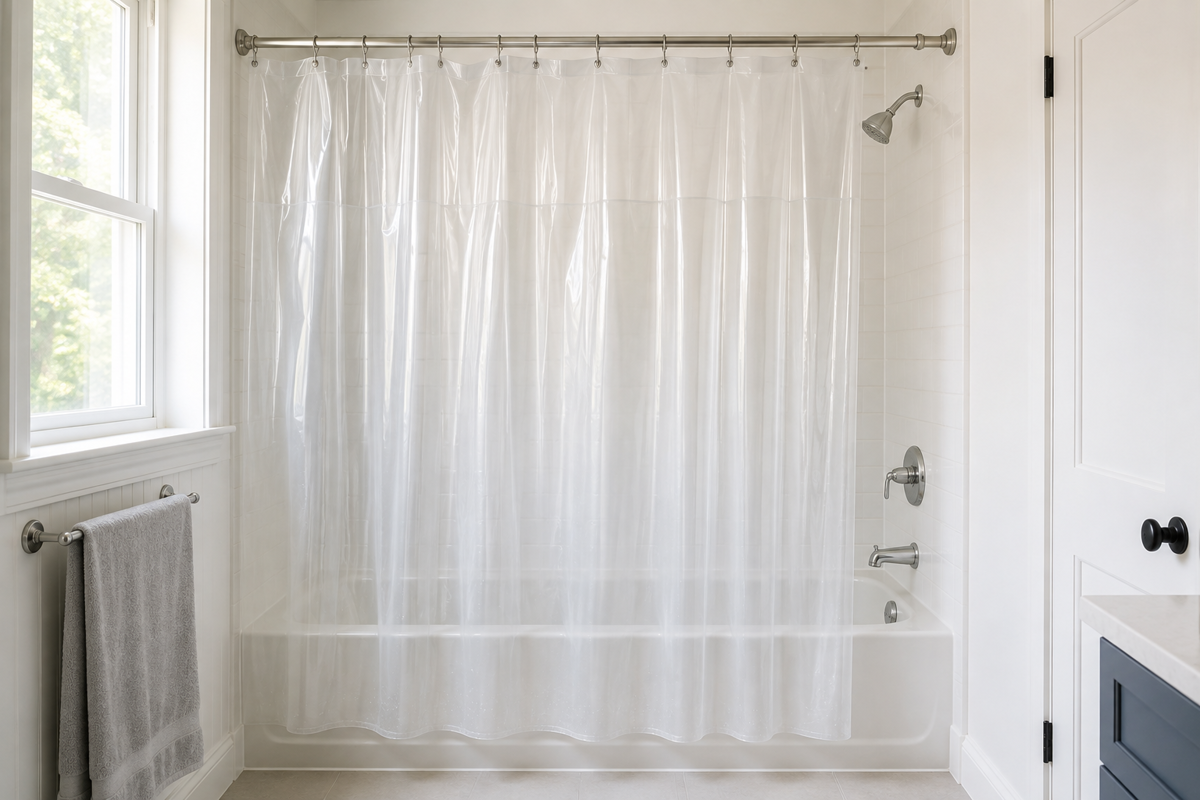
1. Ventilate and clear the tub. Remove bath products and rinse loose debris from the tub so the curtain does not pick it up during cleaning.
1. Take down one panel at a time. Photograph ring placement if needed, remove the liner and keep it from dragging across the floor. Separate it from the decorative curtain.
1. Read the care label. Confirm whether hand washing or machine washing is allowed, along with water temperature, cycle and drying restrictions.
1. Inspect the hem, folds and grommets. Note heavy soap film, tears, brittle areas and peeling coatings. Replace structurally failed material rather than scrubbing it.
1. Pre-treat a compatible panel. Test a small hidden area. Apply a controlled amount of compatible bathroom cleaner to the soap-film zone and work gently with a soft cloth.
1. Wash as the label directs. For hand cleaning, support the liner in the tub and wipe both sides without sharply creasing it. For a permitted machine cycle, follow the curtain and washer instructions rather than improvising heat or agitation.
1. Rinse away released film. Soap residue and cleaner left on the panel can dry cloudy and attract new soil. Rinse or follow-wipe as directed.
1. Clean rings and the rod. Wipe the ring grooves, hook joints and underside of the rod separately. Dry metal parts to reduce spotting.
1. Hang fully open to dry. Spread the panel across the rod so folds do not trap water. Keep the lower edge inside the tub but off standing water.
Where Eco Cln Powerhouse Bathroom Fits
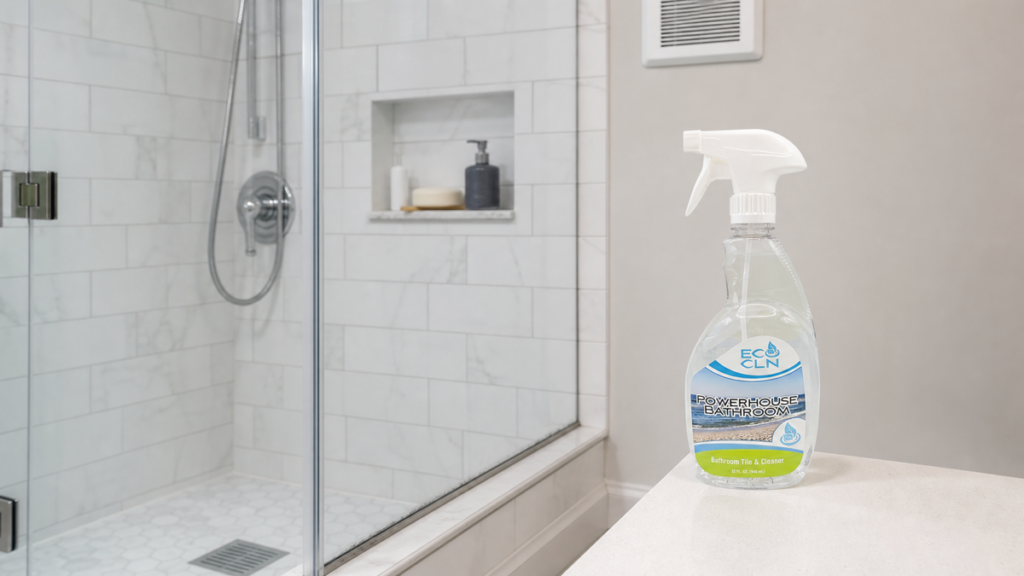
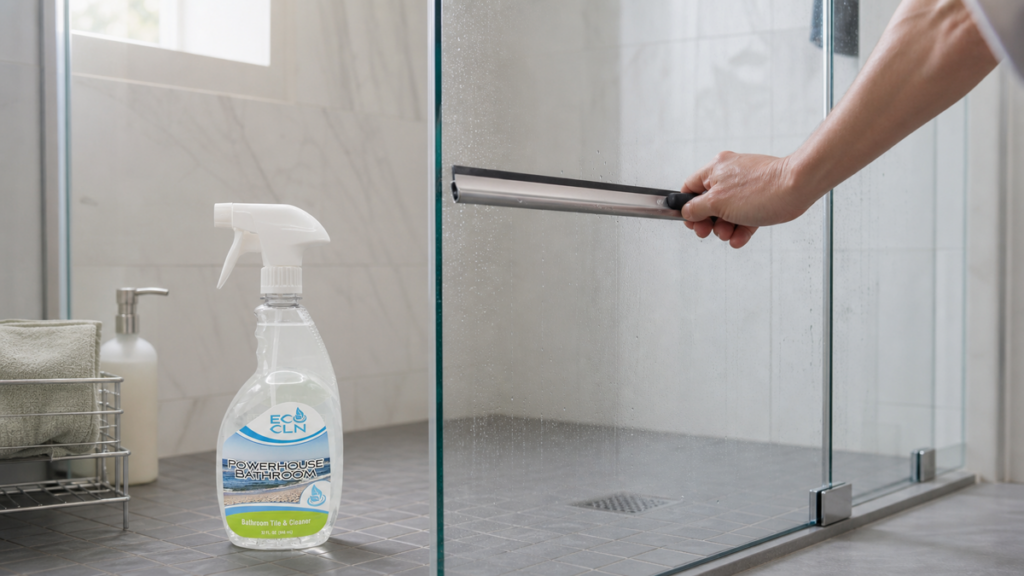
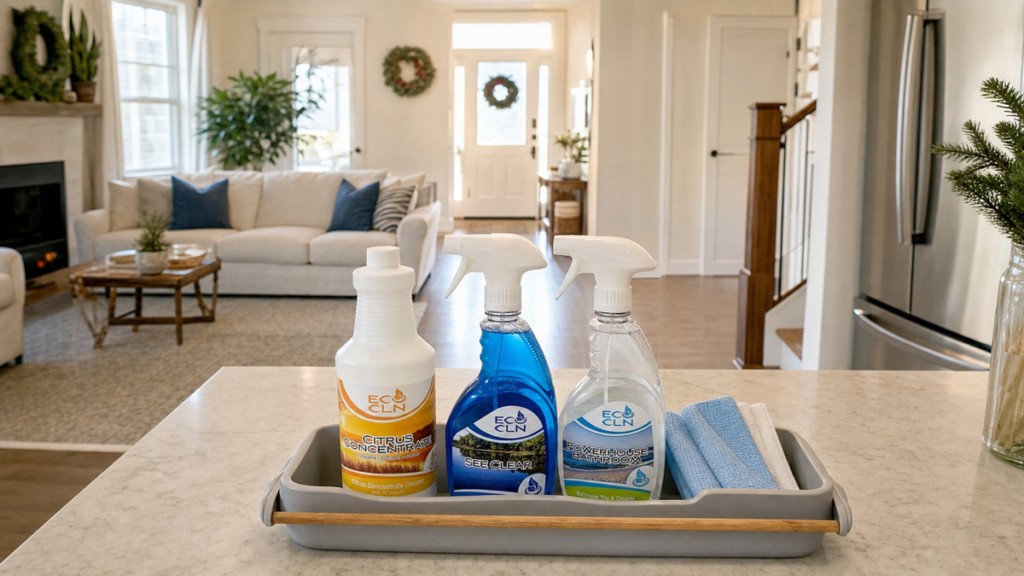
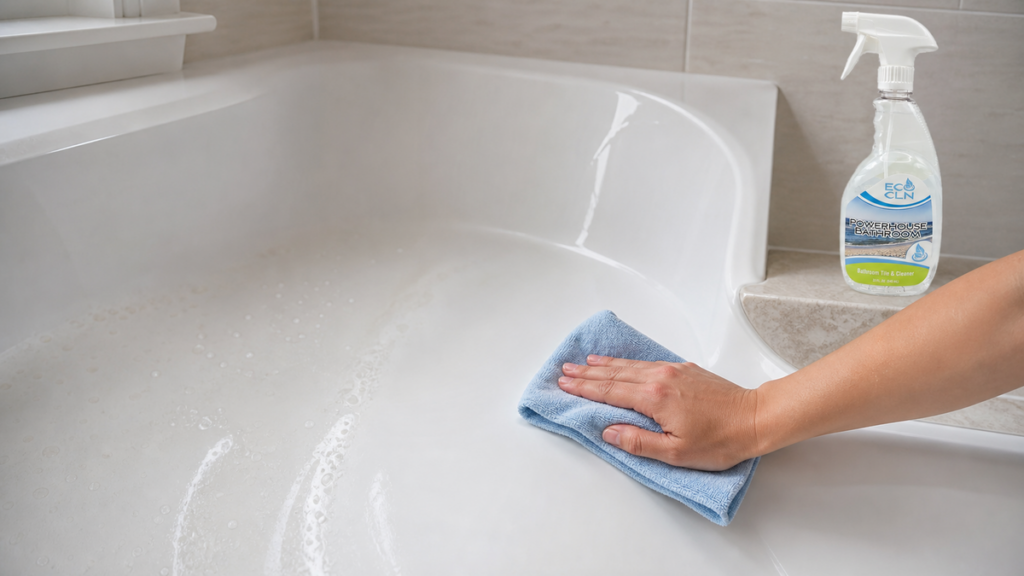
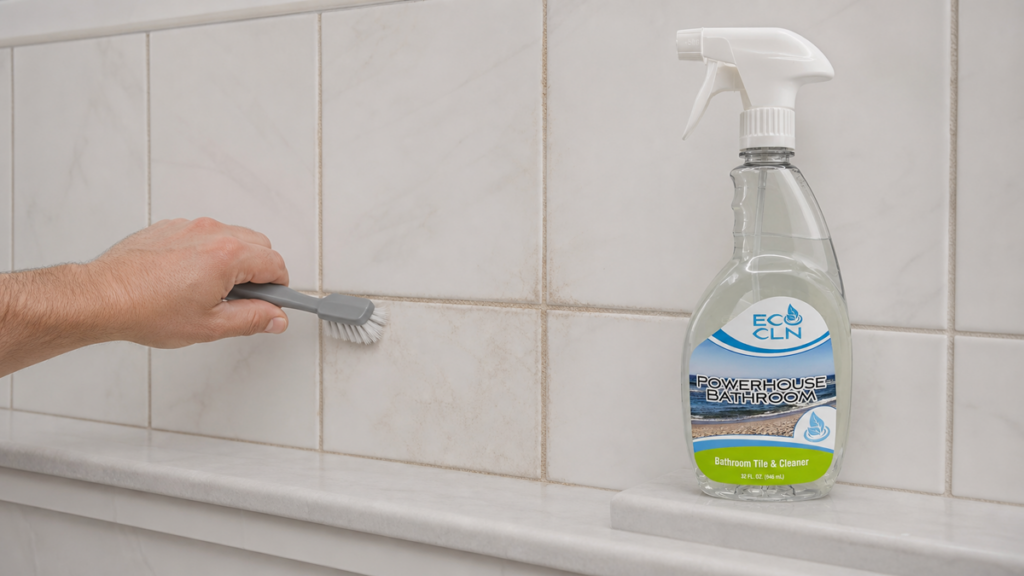
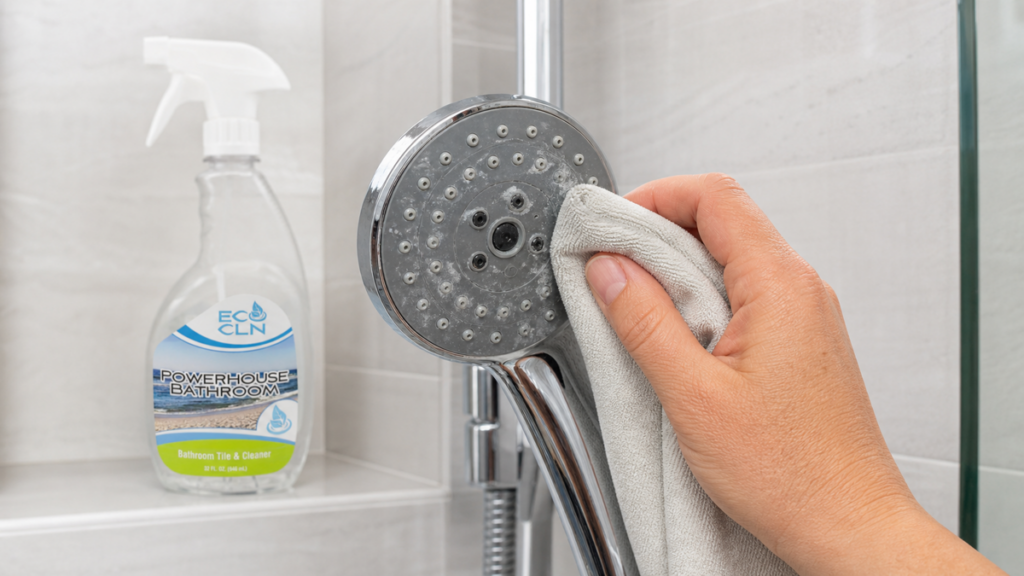
For a compatible hand-cleanable liner or curtain surface, Eco Cln Powerhouse Bathroom is the relevant option for soap scum and bathroom residue. Test first, follow the current product directions and keep the panel’s care label in charge.
Powerhouse is not a reason to machine-wash a panel whose label forbids it, and it cannot repair a peeling coating. Use it for controlled treatment of removable film on compatible material, then rinse or wipe as directed and dry the panel open.
The related article on why soap scum keeps coming back explains how soap choice, water and drying habits affect recurrence.
Common Shower-Curtain Cleaning Mistakes
• Leaving the liner on the rings and missing folds around each hole.
• Using hot water or a heated dryer without label approval.
• Scrubbing brittle plastic until it cracks.
• Washing a coated decorative panel as if it were plain polyester.
• Mixing bathroom products.
• Rehanging a damp fabric curtain bunched tightly against the wall.
• Ignoring dirty rings and a coated rod.
Slow Down New Soap Film
After each shower, pull the curtain closed across the rod so it can dry with fewer folds. Shake water from the hem and keep it out of pooled water. Improve normal bathroom airflow and address leaks or a shower spray pattern that constantly soaks the same edge.
Wipe fresh film before it becomes a stiff gray band. A consistent light-cleaning schedule is easier on the panel than rare aggressive scrubbing. For the rest of the enclosure, compare the residue with the soap scum versus hard-water guide.
When to Replace the Liner
Replace a liner that is cracked, torn at the grommets, permanently sticky, brittle or peeling. Deep discoloration inside a coating is not the same as removable surface film. If odor or visible growth returns immediately despite washing and full drying, inspect the bathroom’s moisture sources and the wall or tub contact points.
Frequently Asked Questions
Can a plastic shower liner go in the washing machine?
Only when its care label allows it. Check the cycle, temperature and drying rules; plastic materials can crease or deform with heat and agitation.
Should the shower curtain and liner be washed together?
Not by default. They may have different materials and care limits. Separate them unless both labels permit the same process.
Why is the bottom of the liner the dirtiest?
The hem catches runoff, soap and hair and stays wet inside folds. Focus cleaning and drying there first.
Can Powerhouse Bathroom be used on a PEVA liner?
Only if the current product directions and liner care instructions allow it and a hidden-area test passes. Use controlled application and rinse or follow-wipe as directed.
How should a shower curtain dry after cleaning?
Hang it fully open across the rod with the hem out of standing water. Do not bunch damp fabric or plastic against the wall.
The bottom line
Separate the curtain from the liner, identify the material and clean the soap-heavy hem and folds within the care-label limits. Rinse away released film and hang the panel open until dry. Powerhouse Bathroom can support compatible hand cleaning, but brittle plastic and failed coatings belong in the replacement pile, not under a harder scrub brush.