How to Remove a Hard Water Ring From a Toilet Bowl

Quick Answer
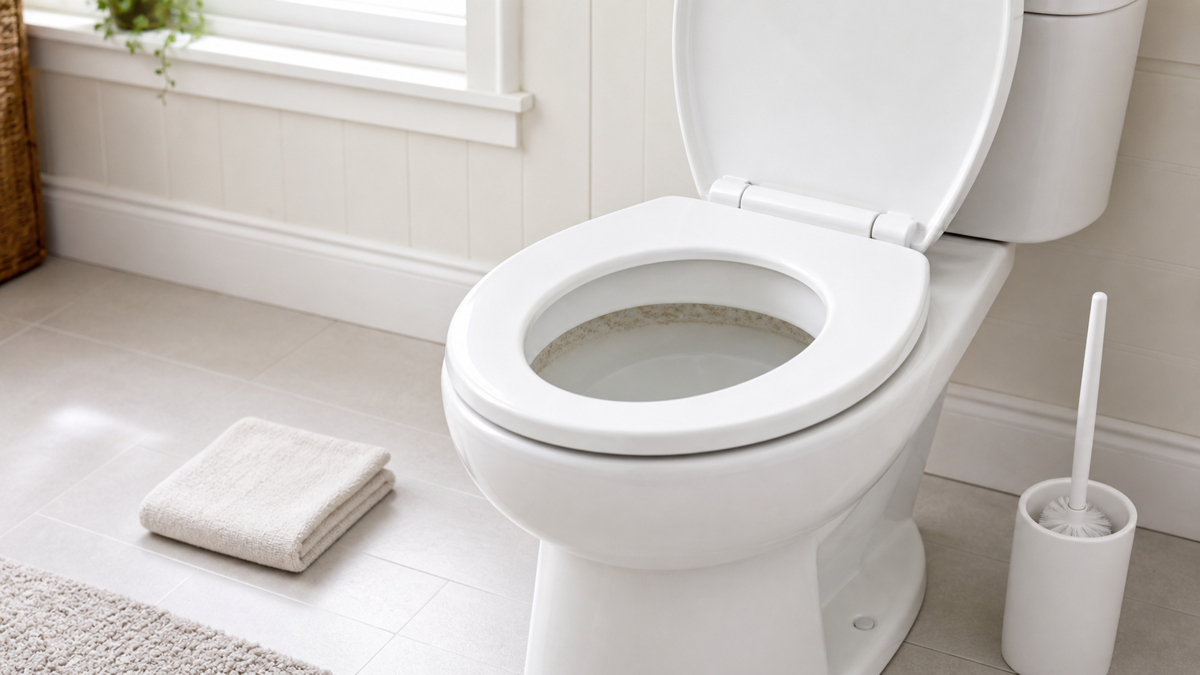
For a hard-water ring inside a vitreous-china toilet bowl, lower the waterline enough to expose the ring, then use a commercial hard-water or toilet-bowl cleaner that is specifically labeled for the bowl material. Let it work according to the label, brush gently with a toilet brush or manufacturer-approved tool, flush/rinse completely, and repeat if necessary instead of escalating immediately to strong abrasives.
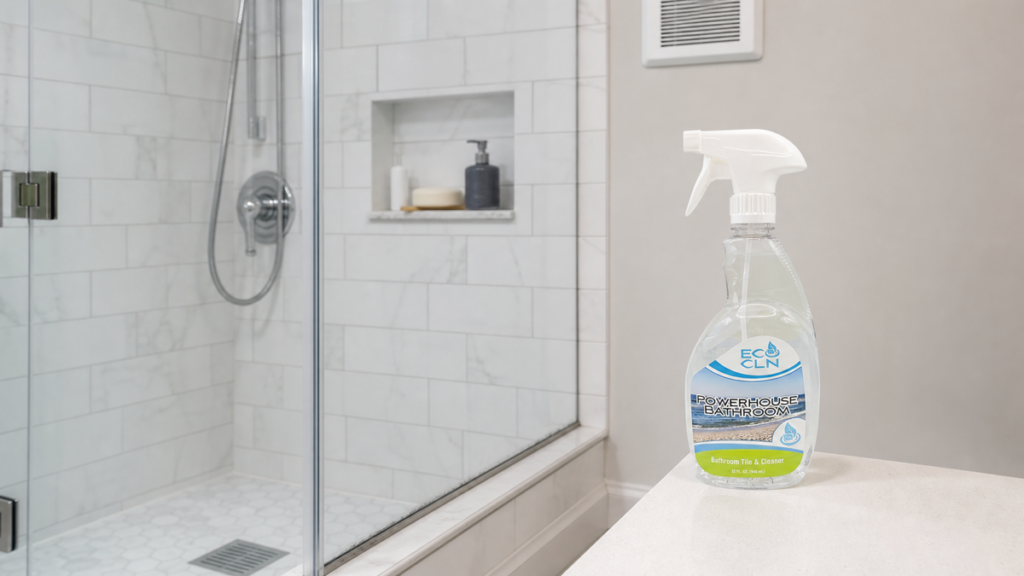
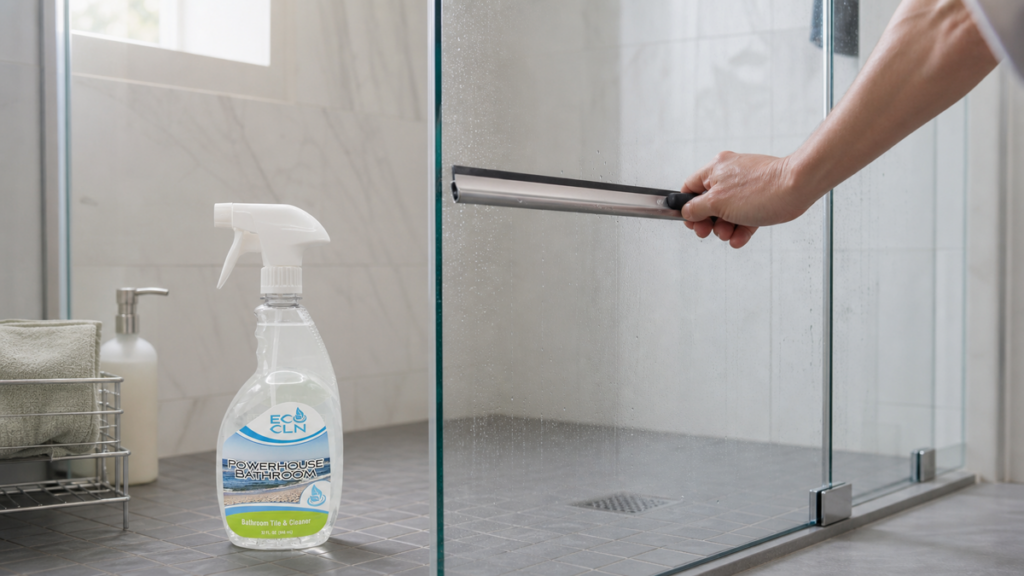
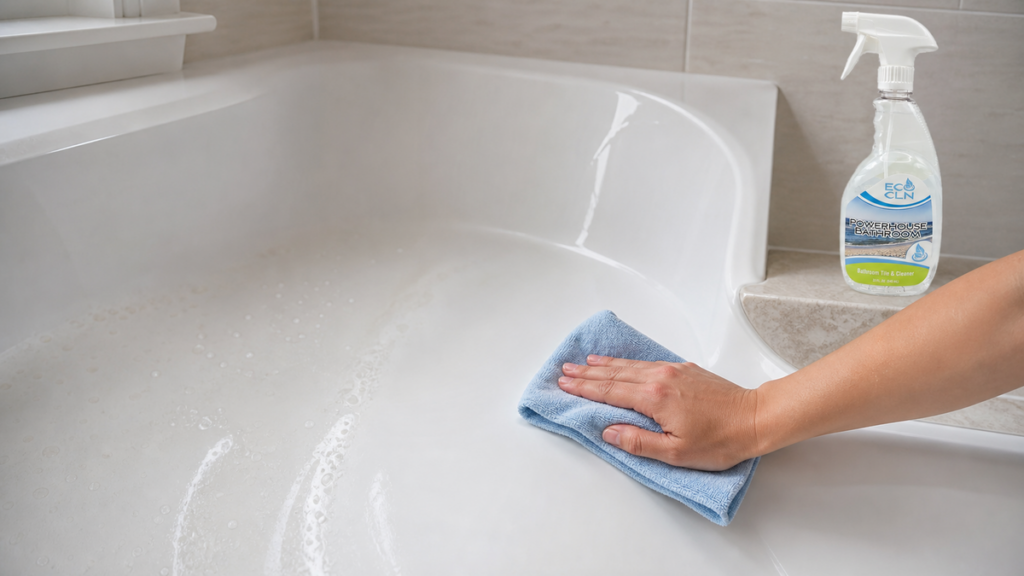
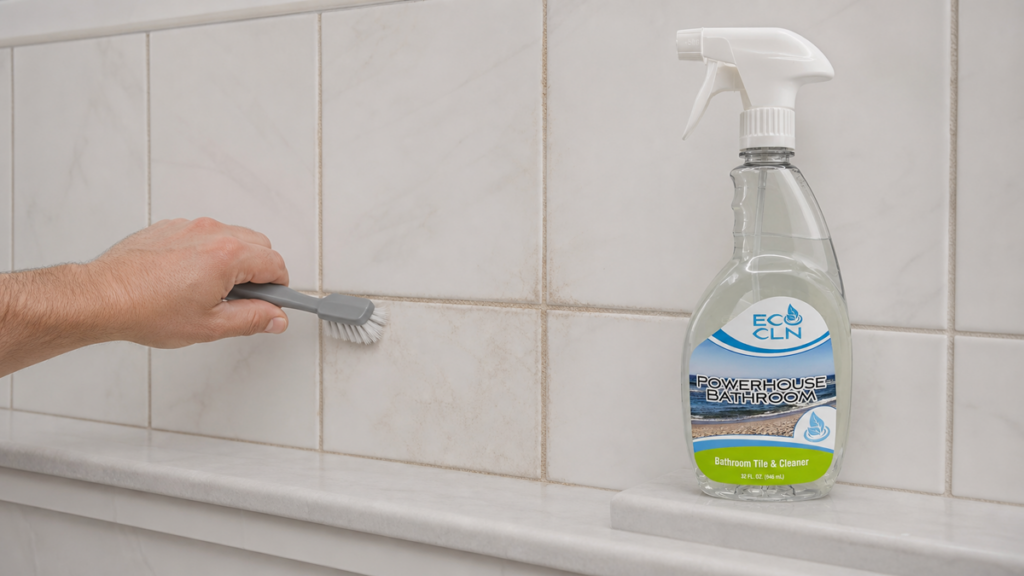
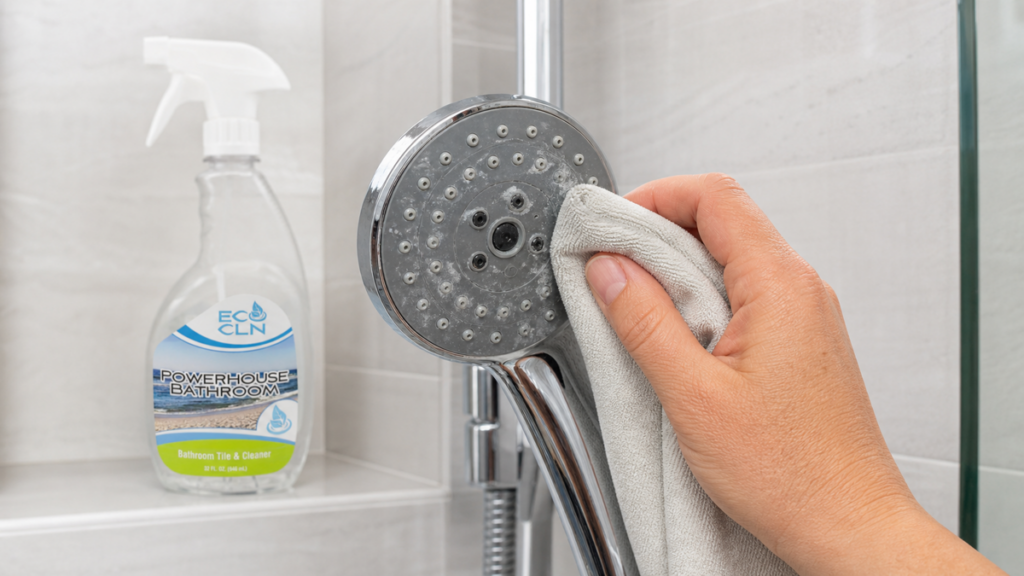
Eco Cln Powerhouse Bathroom is the brand’s bathroom cleaner for hard-water buildup on sinks, fixtures, tile, tubs, shower areas, and other listed bathroom surfaces. The current product page does not specifically list toilet bowls, so do not publish an inside-the-bowl Powerhouse claim unless the current label or Eco Cln product guidance is updated to support it.
Why Toilet Rings Form at the Waterline
Hard water leaves minerals behind wherever water repeatedly sits or evaporates. In a toilet bowl, the stable waterline creates a natural boundary where mineral deposits can accumulate and trap additional soil.
A ring may be white, tan, gray, orange-brown, or darker depending on minerals, water chemistry, and what has collected on the surface. Not every dark ring is the same material, so avoid assuming it is mold or a germ issue.
Step 1: Confirm the Bowl Material and Cleaner Compatibility
Most household toilet bowls are vitreous china, but always check the manufacturer guidance—especially for specialty finishes or unusual materials.
Kohler/Sterling toilet care guidance recommends commercial cleaners intended for hard-water deposits and following the package directions.
Step 2: Lower the Waterline Enough to Reach the Ring
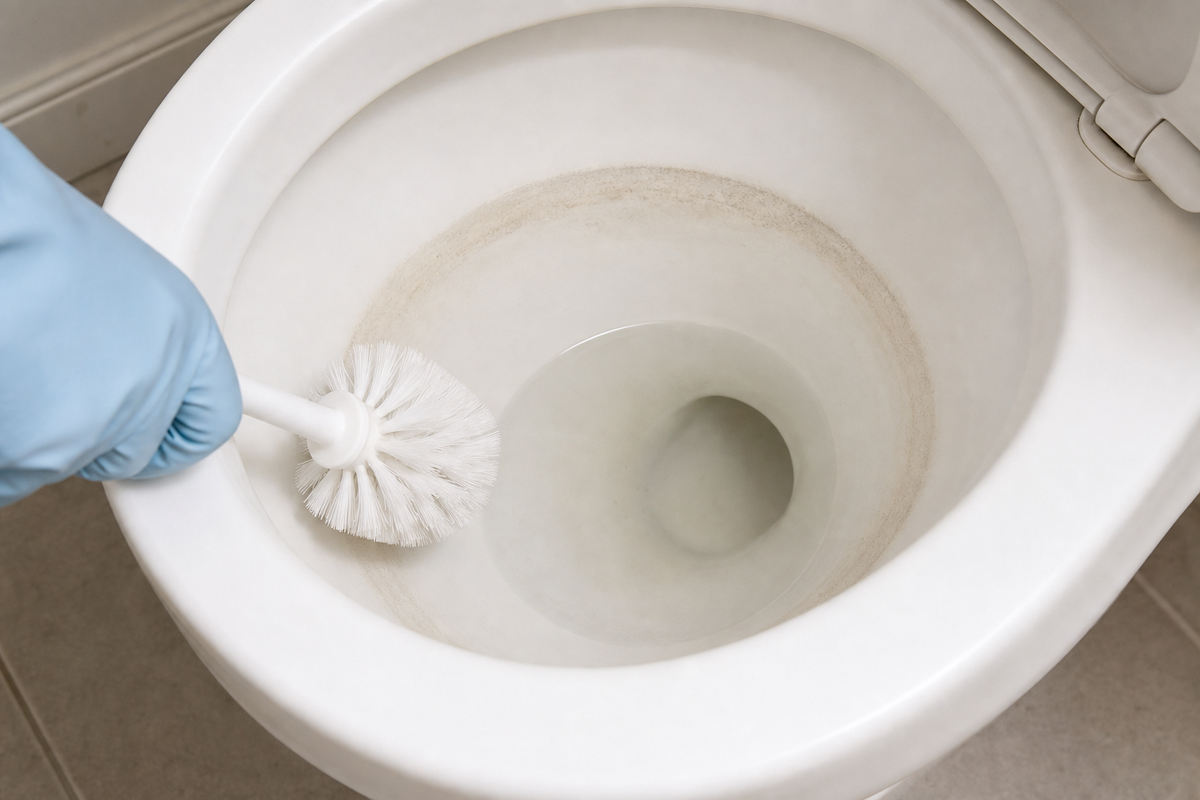
Turn off the toilet water supply if needed and flush to reduce the water level. The goal is simply to expose more of the mineral ring to the labeled cleaner.
Do not disassemble the toilet, alter flush components, or pour cleaner into the tank unless the toilet manufacturer and cleaner label specifically support it. In-tank cleaners can damage components on some toilets.
Step 3: Use a Toilet-Safe Hard-Water Cleaner
Apply a commercial hard-water deposit or toilet-bowl cleaner that is labeled for the bowl. Follow the required dwell time and ventilation instructions on that product.
Do not mix toilet cleaners with bleach, ammonia, acids, vinegar, or other household cleaners. Mixing products can create dangerous reactions.
Step 4: Brush Gently Instead of Attacking the Glaze
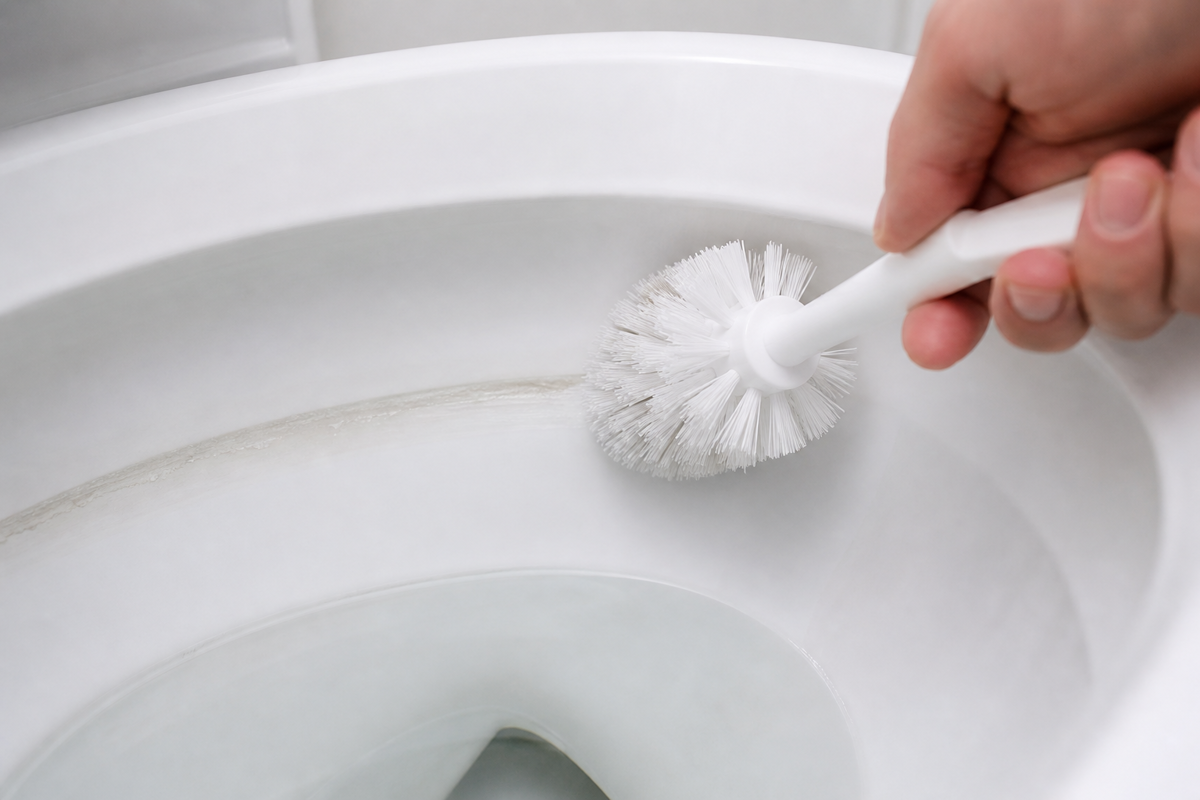
Use a toilet brush or other tool the manufacturer approves. Work the ring without grinding the bowl with strong abrasive powders or metal tools.
Kohler vitreous-china care notes that strong abrasives can scratch and dull vitreous china.
Step 5: Flush, Rinse, and Reassess
Flush or rinse the cleaner away completely according to the label. Wipe any splashes from the seat, hinges, plated trim, or surrounding surfaces immediately.
If a mineral ring remains, repeat the labeled process rather than jumping straight to harsher abrasives. Very old deposits may need a product specifically formulated for scale removal or professional attention.
Where Powerhouse Bathroom Fits
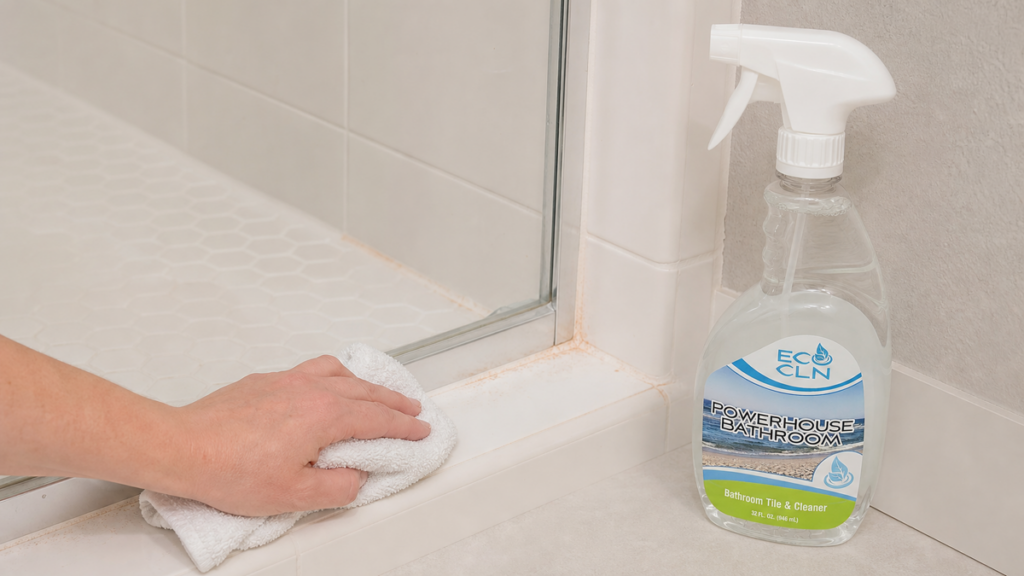
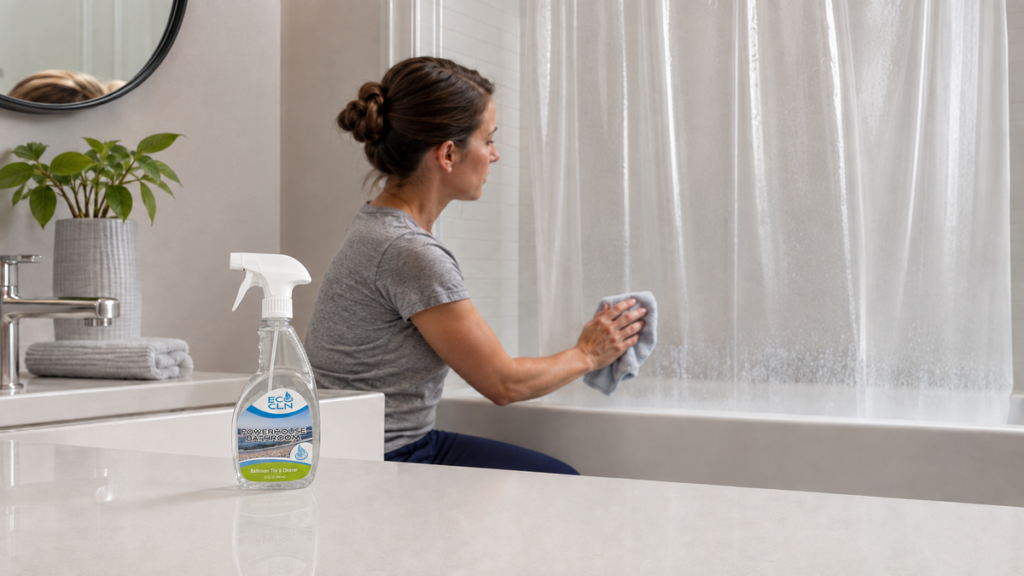
Eco Cln Powerhouse Bathroom is positioned for hard-water buildup, soap scum, sinks, fixtures, tile, tubs, shower doors, and everyday bathroom grime. It is a strong related product for the hard-water problem throughout the bathroom.
Before recommending Powerhouse inside a toilet bowl, verify that the current product label or product page explicitly adds toilet-bowl use. The present product page does not.
Why We Are Not Recommending the Old “Use Anything Abrasive” Trick
Old toilet advice often jumps to pumice stones, scouring powders, steel wool, or improvised abrasives. Those methods can damage glaze when used incorrectly, and specialty toilets can have different restrictions.
A surface that has been scratched can become harder to keep clean because deposits catch in the damaged area. Start with the toilet manufacturer’s care instructions and a labeled hard-water cleaner.
Common Hard-Water Ring Mistakes
- Mixing multiple toilet cleaners or DIY acids.
- Using strong abrasives or metal tools without manufacturer approval.
- Leaving cleaner sitting longer than the label permits.
- Letting bowl cleaner splash and remain on seats, hinges, or plated surfaces.
- Using in-tank cleaners when the toilet manufacturer warns against them.
- Calling every dark waterline ring mold or bacteria without evidence.
Related Eco Cln Bathroom Content
For a broader explanation of mineral buildup versus soap film, see the Soap Scum vs. Hard Water Stains guide. The existing vinegar and baking soda toilet article also explains why a fizzing DIY mixture is not a universal fix for heavier mineral buildup.
FAQ
What causes a hard-water ring in a toilet?
Minerals in hard water can accumulate where the bowl water sits, especially at the waterline. Soil can collect on the mineral layer and make it darker.
Can I use Powerhouse Bathroom inside the toilet bowl?
Do not publish that use based only on the current product page. It currently lists hard-water buildup on sinks, fixtures, tile, tubs, shower areas, and bathroom surfaces, but does not specifically list toilet bowls.
Can I scrub a toilet ring with steel wool?
Avoid strong abrasives or metal tools unless the toilet manufacturer specifically approves them. They can scratch or dull vitreous china and specialty finishes.
Are in-tank toilet cleaners safe?
Not universally. Kohler/Sterling warns that in-tank cleaners can damage flush valves and other parts on some toilets. Follow your toilet manufacturer.
What if the ring will not come off?
Use a toilet-safe hard-water deposit cleaner according to its label, repeat if permitted, and consider professional help for severe scale rather than continuously increasing abrasion.
The Bottom Line
For a hard-water ring inside a vitreous-china toilet bowl, lower the waterline enough to expose the ring, then use a commercial hard-water or toilet-bowl cleaner specifically labeled for that bowl material. Let it work only as long as the label permits, brush with a toilet brush rather than a harsh abrasive, flush or rinse completely, and inspect the waterline before repeating. Work in short passes instead of trying to grind through heavy mineral scale at once. Stop if the glaze begins to look dull or scratched, never mix toilet cleaners, and check the toilet manufacturer’s care guidance before using any stronger deposit remover or in-tank product.
Hard-water rings in the bowl need a cleaner specifically approved for the toilet. For the same mineral buildup around sinks, fixtures, tile, tubs, and shower areas, Eco Cln Powerhouse Bathroom is the Eco Cln product built for bathroom hard-water and soap-scum cleanup.