Soap Scum vs Hard Water Stains: What Bathroom Cleaner Should You Use?

Soap Scum vs Hard Water Stains: Quick Answer
Soap scum vs hard water stains starts with the cause: soap scum is a filmy buildup from soap, body oils, shampoo, and minerals. It often feels waxy or cloudy on shower glass, tub walls, tile, and the lower part of a shower curtain or door. Hard water stains are mineral deposits from water that dries on fixtures, glass, tile, and sink surfaces. They often look like chalky white spots, rings, or crusty buildup around faucets and drains.
For both problems, start with the right bathroom cleaner, give it time to work, scrub gently with a non-scratch pad or brush, rinse well, and dry the surface. Do not use abrasive tools on glass, chrome, acrylic tubs, coated fixtures, or delicate stone. The U.S. Geological Survey explains that hard water is high in dissolved minerals such as calcium and magnesium, which is why dried water can leave mineral residue instead of acting like ordinary surface dirt.
Reference: USGS hardness of water guide.
Why Soap Scum and Hard Water Stains Get Confused
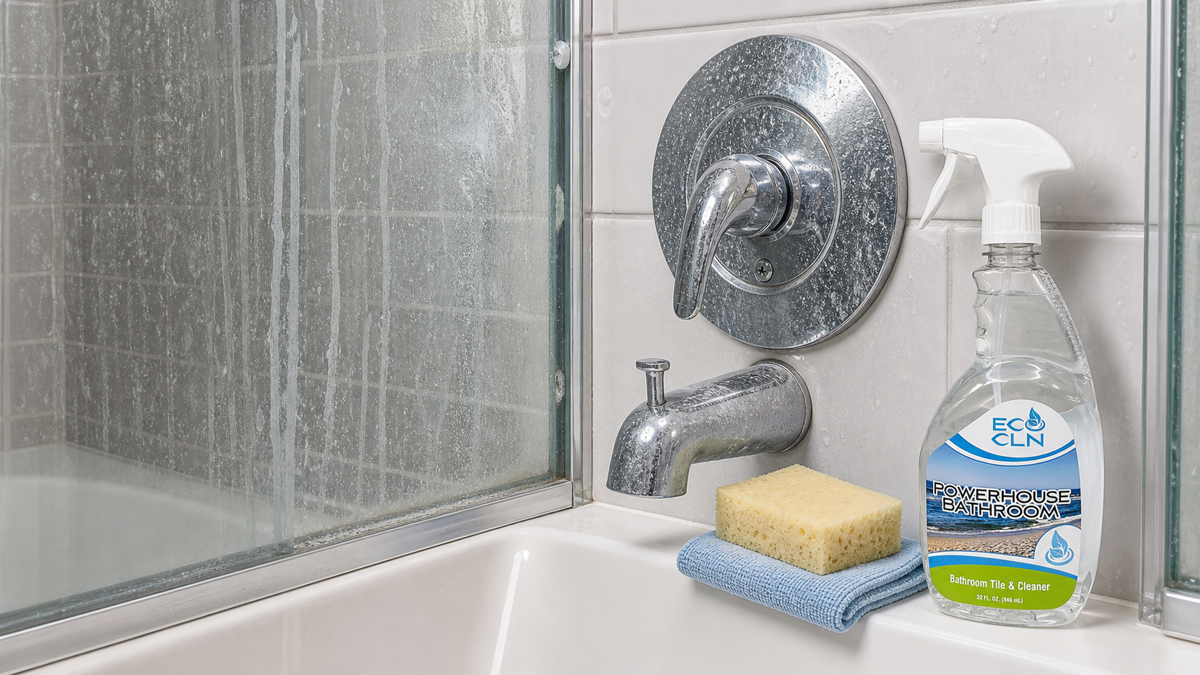
Soap scum and hard water stains often show up in the same bathroom, sometimes on the same shower door. A glass shower panel can have a gray film from soap scum and white spots from mineral-heavy water. Tile can look dull from soap residue while the faucet has crusty mineral deposits around the base.
The cleaning method overlaps, but the cause matters. Soap scum is partly oily and filmy. Hard water buildup is mineral-based. If you treat every cloudy bathroom mark the same way, you may scrub too hard, use the wrong tool, or leave half the problem behind.
How to Tell Soap Scum vs Hard Water Stains
Soap scum usually appears where soap and body products land: shower walls, tub sides, shower glass, tile ledges, soap dishes, and the bottom of shower doors. It may feel slick, waxy, or dull when you rub it with a damp finger.
Hard water stains usually appear where water sits and dries: around faucet bases, showerheads, glass doors, drain edges, sink bowls, and the lower edge of fixtures. They may look white, chalky, spotty, or crusted.
If the mark is near shampoo, soap, and body wash splatter, think soap scum. If it follows drip lines, water spots, faucet edges, or standing water rings, think hard water.
How to Clean Soap Scum on Showers, Tubs, and Tile
- Clear bottles and loose items first. Remove shampoo bottles, razors, soap dishes, bath toys, and mats so you can reach the ledges, corners, and tub wall behind them.
- Wet the buildup lightly. A damp surface helps loosen the top layer of residue, especially on shower walls and tub sides.
- Apply bathroom cleaner to the filmy areas. Focus on the lower half of the shower wall, tub ledge, soap dish area, door track, and glass where body wash and shampoo collect.
- Let the cleaner sit briefly. Give the cleaner time to soften residue instead of immediately attacking the surface with pressure.
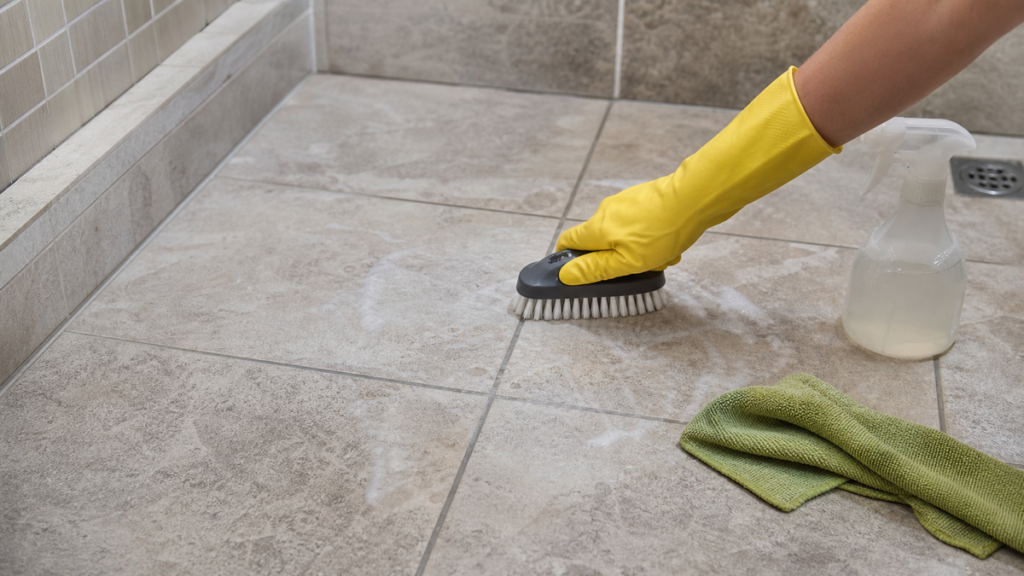
- Scrub with a non-scratch tool. Use a soft brush, sponge, or non-scratch pad. Avoid steel wool or abrasive pads that can damage acrylic, fiberglass, chrome, or glass.
- Rinse and dry. Rinse away loosened film and cleaner residue, then dry the glass, tile, or fixture to reduce new spotting.
How to Clean Hard Water Spots Around Fixtures and Glass
- Identify the mineral-heavy areas. Look around faucet bases, showerheads, handles, glass doors, sink edges, and drain rings.
- Use a bathroom cleaner suited to buildup. Apply it to the spot or to a cloth, depending on the surface and label directions.
- Give buildup time to loosen. Mineral deposits often need dwell time. Scrubbing immediately can waste effort and risk scratching the finish.
- Agitate gently around edges. Use a soft brush around faucet bases, tile corners, and drain edges where mineral deposits collect.
- Rinse thoroughly. Leftover cleaner and loosened minerals can dry into a dull film.
- Dry the fixture or glass. Drying is especially important for chrome, glass, and shiny fixtures because new water spots form when droplets evaporate.
Where Eco Cln Powerhouse Bathroom Fits
Eco Cln Powerhouse Bathroom is positioned for soap scum, hard water-related bathroom buildup, tile, tubs, sinks, fixtures, and everyday bathroom grime. That makes it a practical fit for the kind of mixed bathroom buildup most people actually see: cloudy shower walls, dull tub ledges, spotty fixtures, and residue around sink edges.
Use it after you identify the surface and buildup type. For delicate stone, damaged finishes, specialty coatings, or manufacturer-specific bathroom fixtures, test first and follow the surface instructions.
How to Keep Soap Scum and Hard Water From Coming Back Fast
Drying is boring, but it works. Wiping shower glass, chrome fixtures, and faucet bases after use reduces the water droplets that become mineral spots.
A weekly bathroom wipe-down also prevents soap scum from hardening into a stubborn layer. Pay attention to the lower shower wall, tub rim, faucet base, shower door track, and sink drain edge. Those are the areas where residue usually starts and where it comes back fastest.
When Bathroom Buildup Needs More Than Routine Cleaning
Routine bathroom cleaner may not fully remove etched glass, damaged chrome, old mineral crust, stained grout, mold behind caulk, or worn tub surfaces. Cleaning removes residue on top of the surface; it does not restore a finish that has already been damaged.
If grout is cracked, caulk is peeling, or a fixture finish is flaking, clean gently and consider repair. Hard scrubbing damaged material usually makes it look worse.
FAQ
Is soap scum the same as hard water stains?
No. Soap scum is a filmy mix of soap residue, body oils, and minerals. Hard water stains are mineral deposits left after water dries.
What does soap scum look like?
Soap scum often looks cloudy, gray, dull, or waxy. It commonly appears on shower glass, tub walls, tile, soap dishes, and lower shower areas.
What do hard water stains look like?
Hard water stains often look white, chalky, spotty, or crusty. They usually appear around faucets, showerheads, glass doors, sink edges, and drains.
Can one bathroom cleaner handle both soap scum and hard water?
A good bathroom cleaner may help with both, especially for routine buildup. Heavy mineral deposits, delicate surfaces, or old damage may need special care.
How do I prevent hard water spots on bathroom fixtures?
Dry fixtures after use, especially chrome faucets, shower handles, and glass doors. Removing standing droplets helps prevent mineral spots from forming.
The Bottom Line
Soap scum and hard water stains are different problems that often overlap in the same bathroom. Identify whether you are dealing with filmy soap residue, chalky mineral spots, or both, then clean gently, rinse well, and dry the surface. Eco Cln Powerhouse Bathroom is a practical fit for routine soap scum, hard water-related buildup, tile, tubs, sinks, fixtures, and everyday bathroom grime when used as directed.