Why Soap Scum Keeps Coming Back — and How to Slow It Down

Quick Answer
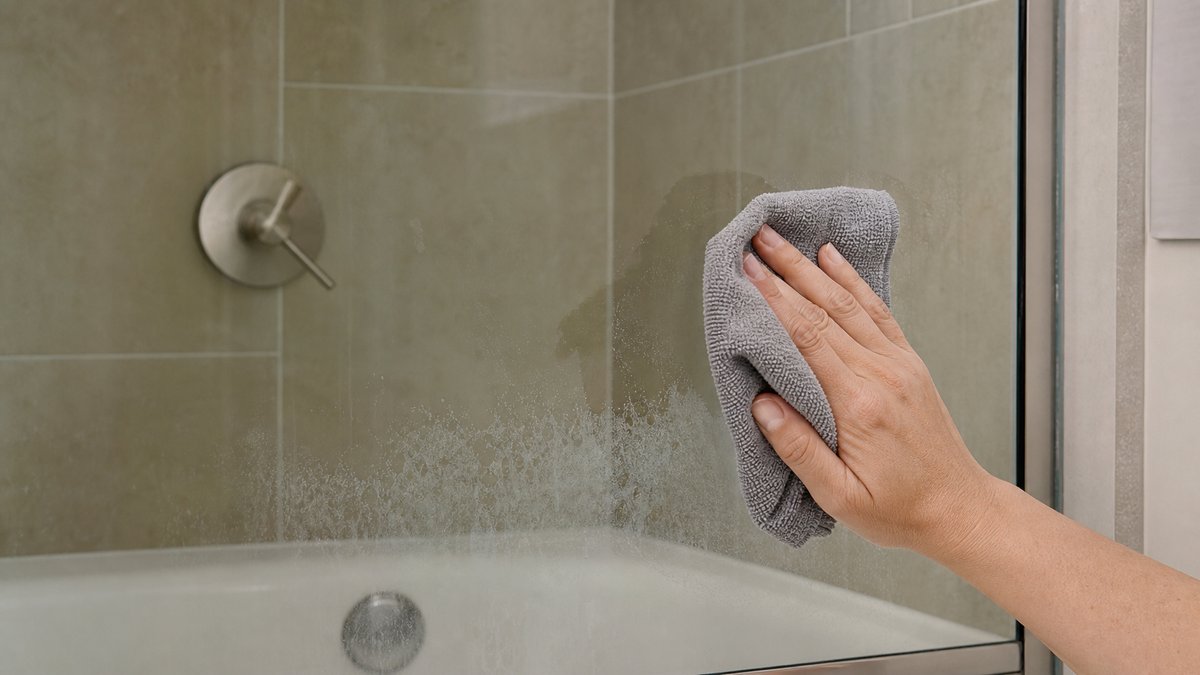
Soap scum keeps coming back because the shower keeps producing the ingredients that create it: soap and personal-care residue, body oils, minerals in water, and repeated wet-dry cycles. Cleaning removes the existing film, but the next shower starts depositing a new layer.
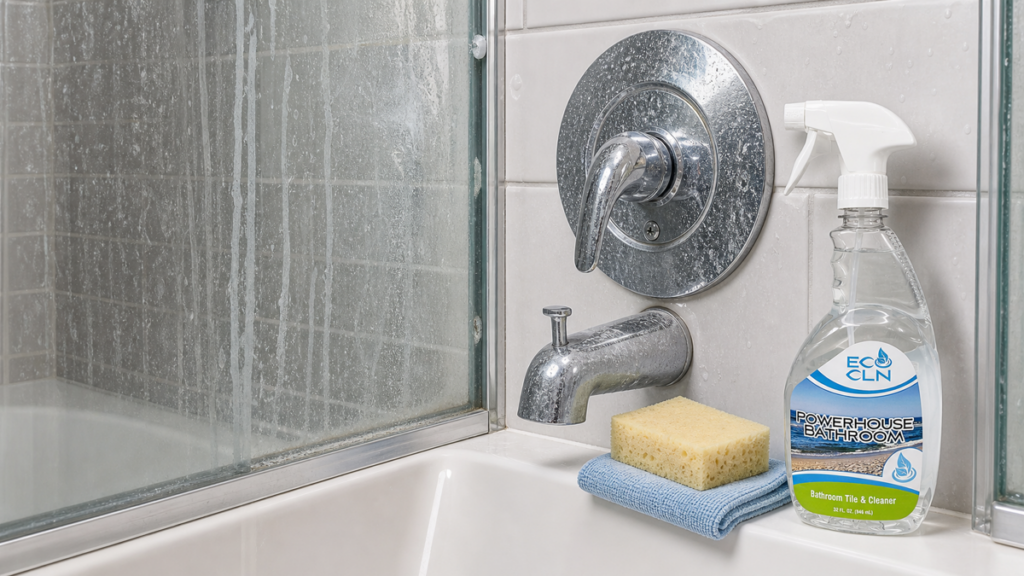
To slow the cycle, remove the current buildup with a bathroom cleaner such as Eco Cln Powerhouse Bathroom when the surface is compatible, rinse or wipe away loosened residue, dry the surface, improve bathroom ventilation, and do quick maintenance before the film becomes thick again.
What Soap Scum Actually Is
Soap scum is the cloudy, waxy, or dull film that builds on shower doors, tub walls, tile, fixtures, ledges, and other splash-zone surfaces. It can include soap, shampoo and conditioner residue, skin oils, and minerals from water.
Hard-water spots are related but not identical. Mineral deposits tend to look chalkier or crustier, while soap scum is often more filmy. Many bathrooms have both at the same time. See our soap scum vs. hard water stains guide for the difference.
Reason 1: The Shower Recreates the Buildup Every Day
A shower is a repeating deposit system. Water carries soap and product residue across glass, tile, tub walls, fixtures, and ledges. When that water evaporates, some residue remains. The next shower adds another thin layer.
That is why a shower can look clean after a deep cleaning and then start looking hazy again within days or weeks. The cleaning did not necessarily fail; the process that created the film simply started over.
Reason 2: Water Is Being Allowed to Dry on the Surface
Every droplet that dries on glass, tile, or a fixture can leave behind minerals and whatever residue was suspended in the water. Drying the shower after use removes much of that liquid before it has time to become a spot or film.
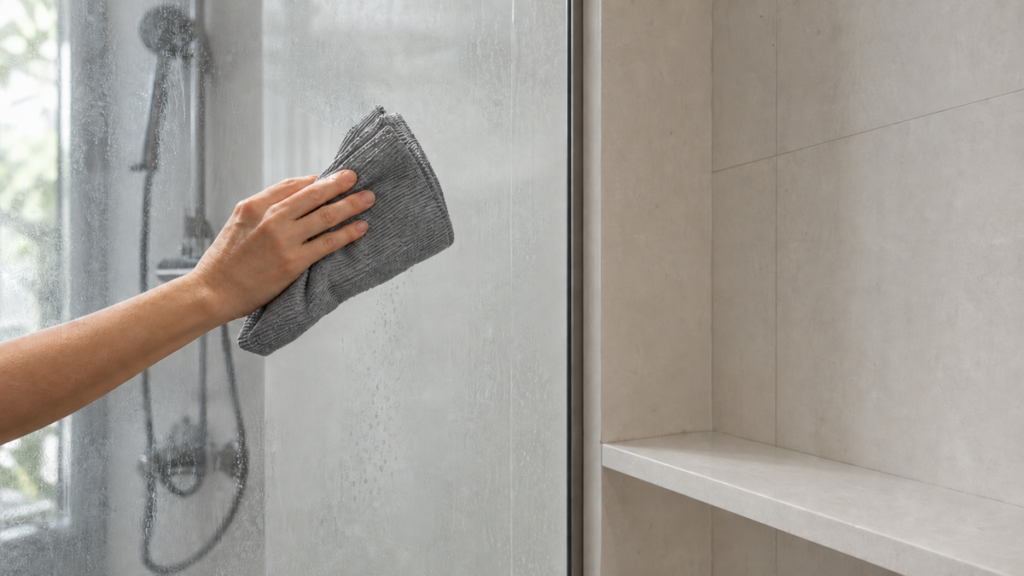
For glass shower doors, manufacturer guidance commonly recommends a soft squeegee and non-abrasive routine care. Kohler shower-door care guidance is one example.
Reason 3: The Bathroom Stays Damp for Too Long
A bathroom that stays humid dries more slowly. That gives water more time to sit on surfaces and can make existing residue feel tacky or visible longer. Run the exhaust fan during and after showers when appropriate, open the door after bathing if privacy and ventilation allow, and let wet surfaces dry.
Ventilation does not “clean” soap scum, but it supports faster drying, which makes maintenance easier.
Reason 4: You Are Cleaning the Glass but Not the Source Zones
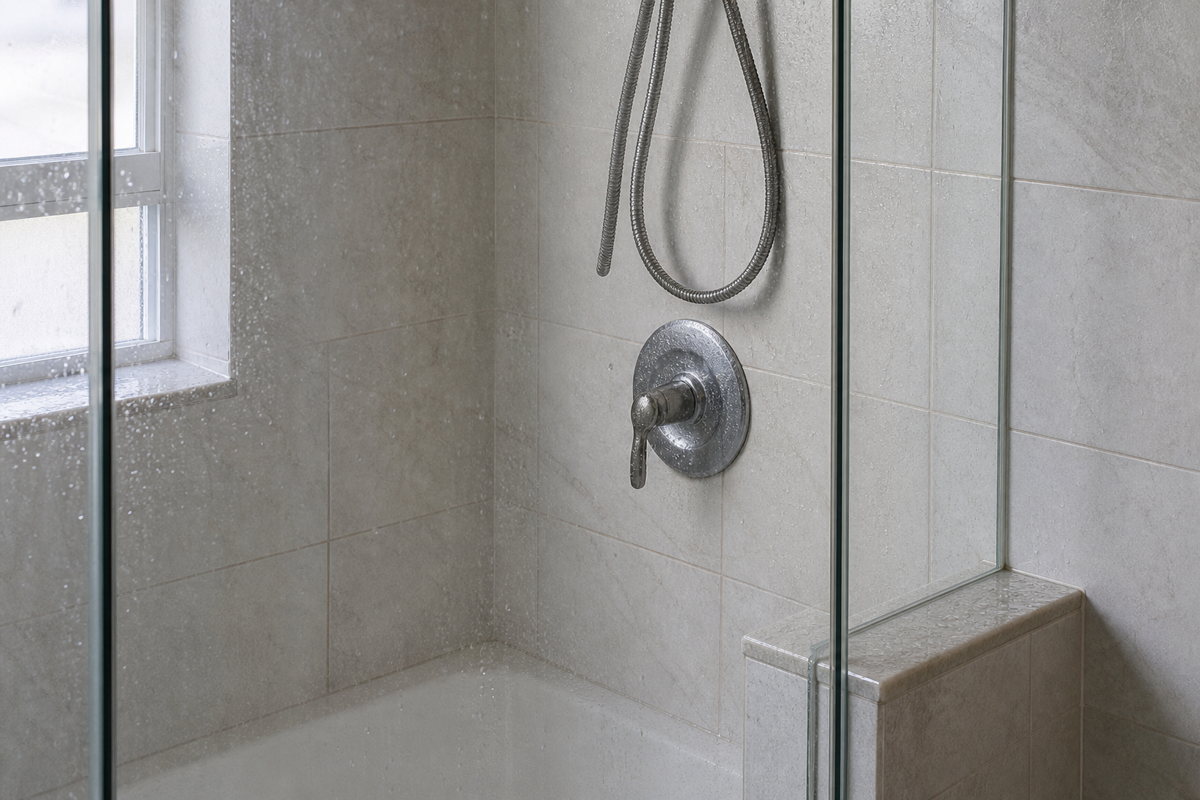
If the shower walls, ledges, fixtures, tub rim, and door tracks are coated in residue, cleaning only the glass leaves the rest of the shower ready to redeposit grime. A full maintenance pass should include the areas where water and products repeatedly collect.
Reason 5: Cleaner or Loosened Residue Is Drying Back on the Surface
A surface can look cloudy after cleaning because soap film was loosened but not fully removed. Too much cleaner can create its own film, and dirty rinse water can move residue from one section to another.
Use clean cloth surfaces, rinse or wipe away the loosened material when the surface instructions call for it, and dry the area so you can see what actually remains.
How to Remove the Existing Soap Scum
Use Powerhouse Bathroom according to the current product directions on compatible bathroom surfaces. The product is positioned for soap scum, hard water buildup, tubs, tile, sinks, fixtures, shower areas, and everyday bathroom grime.
- Test first on delicate, coated, painted, natural-stone, or unknown finishes.
- Apply the cleaner to the affected area in a controlled layer.
- Allow brief contact according to the product directions instead of immediately scrubbing harder.
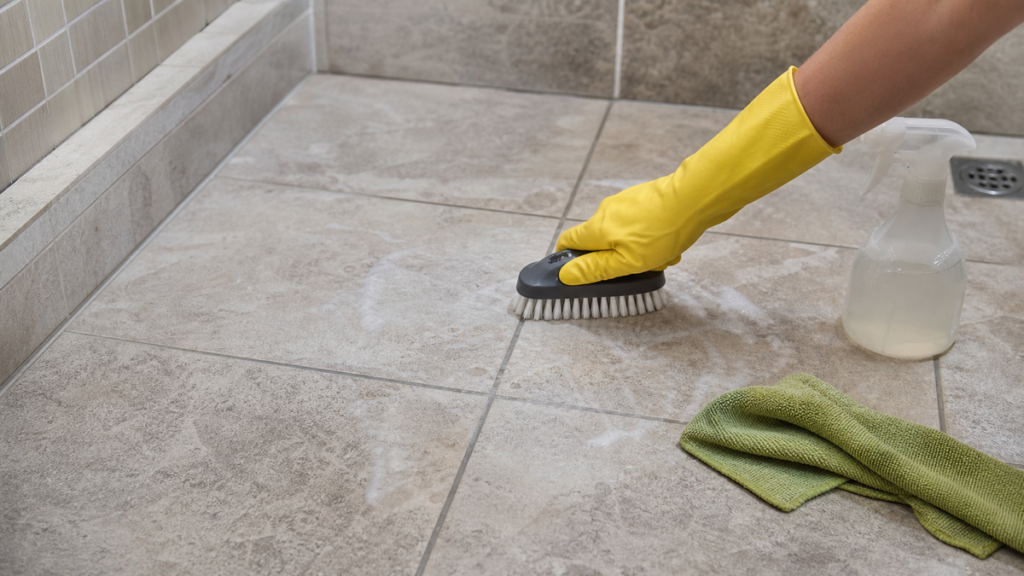
- Use a clean cloth, sponge, or appropriate non-scratch tool.
- Rinse or wipe away loosened residue when the surface guidance calls for it.
- Dry the surface completely.
How to Slow Soap Scum Between Deep Cleans
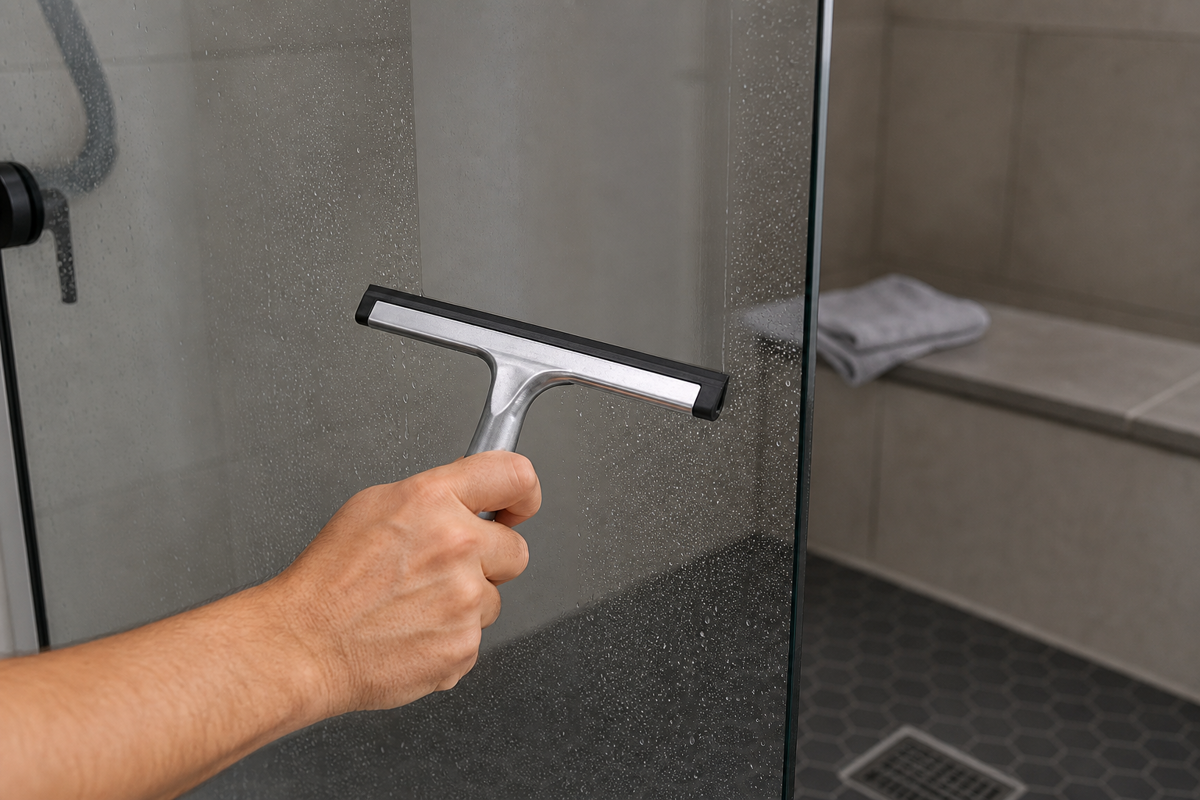
- Squeegee shower glass after use.
- Wipe obvious soap or shampoo splashes before they dry.
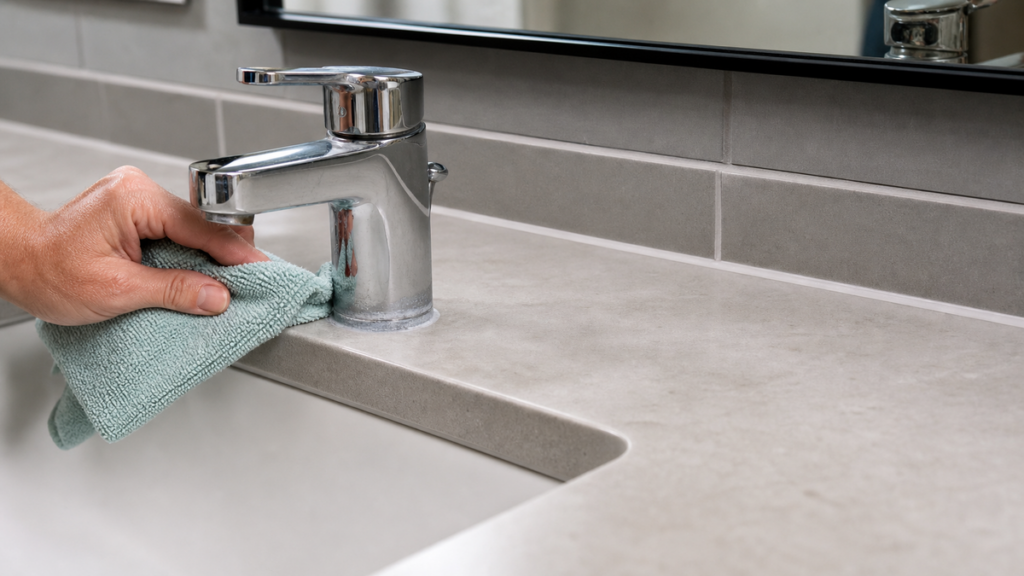
- Dry faucet and fixture surfaces that repeatedly spot.
- Run bathroom ventilation long enough to help the room dry.
- Clean high-buildup zones more frequently than low-contact areas.
- Use clean cloths instead of moving old residue around the shower.
Should You Switch Soap Products?
Some soaps and personal-care products leave more visible film than others, and local water hardness changes how quickly mineral residue appears. But switching products is not the only answer. Even with a different soap, water and body-care residue still hit the same surfaces.
If buildup is a constant problem, the bigger win is a maintenance routine that removes water and light film before it becomes a thick layer.
When the “Soap Scum” Is Actually Hard Water
If the marks are white, chalky, or crusty—especially around faucet bases, drains, or showerhead nozzles—hard-water minerals may be the bigger part of the problem. Do not respond by scrubbing harder; first identify the surface and buildup type.
Use the soap scum vs. hard water guide to separate the two problems and adjust the cleaning approach.
Common Mistakes That Make Soap Scum Worse
- Waiting until the shower is heavily coated before cleaning anything.
- Using abrasive pads on glass, acrylic, chrome, coated fixtures, or delicate surfaces.
- Letting bathroom cleaner dry into the surface.
- Cleaning one area with a cloth already loaded with soap residue.
- Skipping the rinse/wipe-away step and leaving loosened buildup behind.
- Ignoring ventilation and drying after the clean.
Where Powerhouse Bathroom Fits
Eco Cln Powerhouse Bathroom is the focused Eco Cln cleaner for soap scum, hard water buildup, tubs, tile, sinks, fixtures, shower areas, and everyday bathroom grime. It is a better product lane for recurring shower film than a kitchen degreaser, carpet stain remover, or general glass cleaner.
FAQ
Why does soap scum return so quickly after I clean the shower?
Each shower deposits a new thin layer of soap, body-care residue, oils, minerals, and water. Deep cleaning removes the old film but does not stop new deposits.
Does drying the shower really help?
Yes. Removing water before it evaporates reduces the droplets that can leave minerals and dissolved residue behind.
Is soap scum the same as hard water buildup?
No. Soap scum is usually a film from soap, oils, products, and minerals. Hard-water buildup is mineral residue left when water dries. Many showers have both.
Can I use a rough scrub pad to remove stubborn soap scum?
Only if the surface manufacturer approves it. Rough pads can scratch glass, acrylic, coated fixtures, chrome, and other finishes.
Can Powerhouse Bathroom be used for recurring soap scum?
Yes, it is positioned for soap scum, hard water buildup, tubs, tile, sinks, fixtures, shower areas, and everyday bathroom grime when used as directed.
The Bottom Line
Soap scum returns because every shower adds a new layer of soap residue, body oils, product film, and minerals. Remove the existing buildup with a surface-compatible bathroom cleaner, clear away loosened residue, dry the high-splash areas, and keep ventilation running long enough to reduce the wet-dry cycle. That routine will not prevent soap scum forever, but it can keep a light maintenance job from becoming another heavy scrub.
If shower film keeps returning, use a bathroom cleaner built for that lane. Eco Cln Powerhouse Bathroom targets soap scum, hard water buildup, and everyday bathroom grime so routine maintenance does not have to become an aggressive scrub session.