How to Clean Bathroom Grout Without Damaging It

Quick Answer
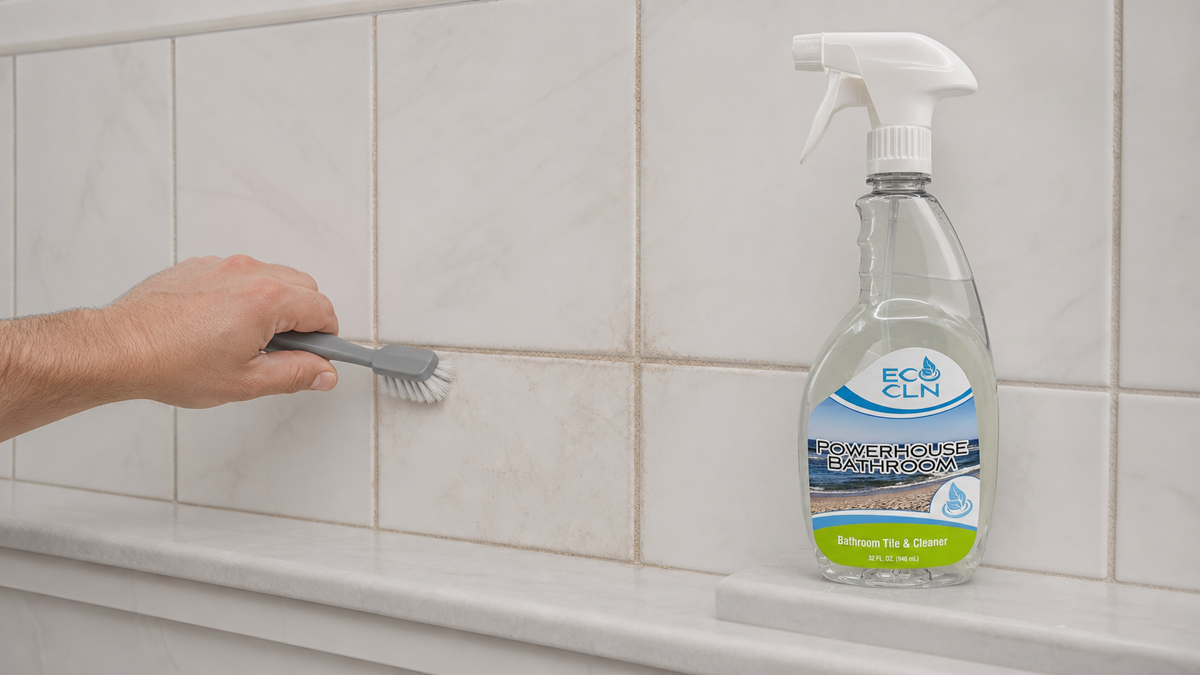
Start by identifying the tile, grout type, and sealer. Remove loose hair and debris, then test a small hidden section. On compatible bathroom tile and grout, apply Eco Cln Powerhouse Bathroom according to the product directions, allow brief contact with bathroom buildup, and use a soft nylon grout brush or other non-abrasive tool. Wipe or rinse away loosened residue and dry the area.
Do not make routine grout cleaning an acid or bleach treatment. Cement-based grout can weaken or discolor with repeated harsh chemical exposure, and acidic cleaners can damage natural stone.
Why Bathroom Grout Gets Dark
Grout lines sit slightly below the tile surface, so they collect soap residue, skin oils, dust, hair products, mineral film, and damp grime. Cement-based grout is also more porous than glazed tile unless it is properly sealed.
A dark grout line may be surface soil, absorbed staining, missing sealer, cracked grout, or permanent discoloration. Cleaning can remove soil; it cannot rebuild failing grout.
Step 1: Identify the Tile, Grout, and Sealer
Determine whether the tile is porcelain, ceramic, glass, natural stone, or another specialty material. Then determine whether the grout is cement-based, epoxy, premixed, or unknown.
MAPEI notes that grout types need different maintenance and recommends compatible routine cleaners rather than defaulting to harsh chemicals. Review MAPEI grout-maintenance guidance.
Step 2: Remove Loose Hair and Surface Debris
Use a dry cloth, soft brush, or vacuum attachment to remove loose hair, lint, and debris before spraying cleaner.
This keeps dry grit from becoming muddy paste and gives the cleaner direct contact with the residue actually stuck to the grout.
Step 3: Test Powerhouse on a Small Area
The current Powerhouse Bathroom product page specifically lists bathroom tile and grout among its uses and calls for hidden-area testing on specialty surfaces, natural stone, delicate finishes, and unknown materials.
Apply a small amount to an inconspicuous area, wipe and dry it, then check for color or finish changes before doing a larger section.
Step 4: Use Controlled Dwell Time
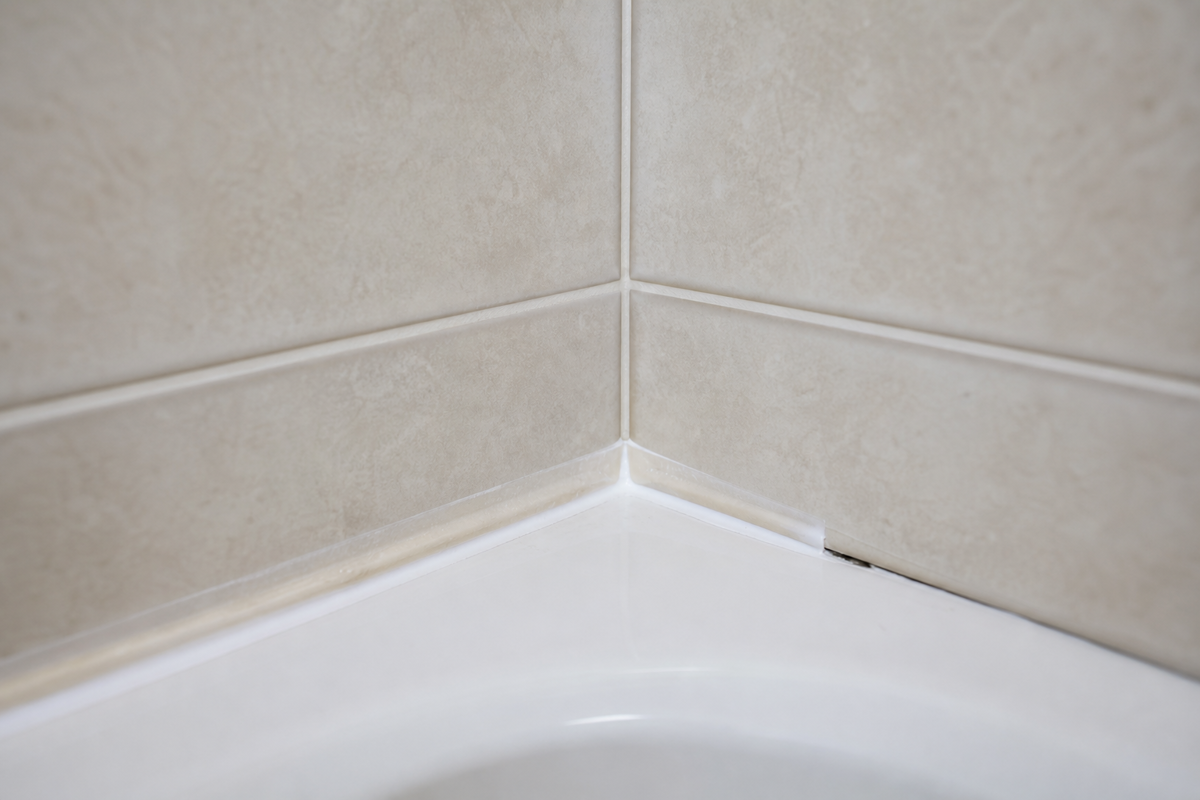
Apply Powerhouse to a manageable section instead of spraying the entire shower or floor at once. Let it sit briefly according to the product directions so the cleaner can work on soap scum, hard-water-related residue, and bathroom grime.
Do not allow cleaner to dry on the grout or pool in cracked joints.
Step 5: Scrub Gently With the Right Tool
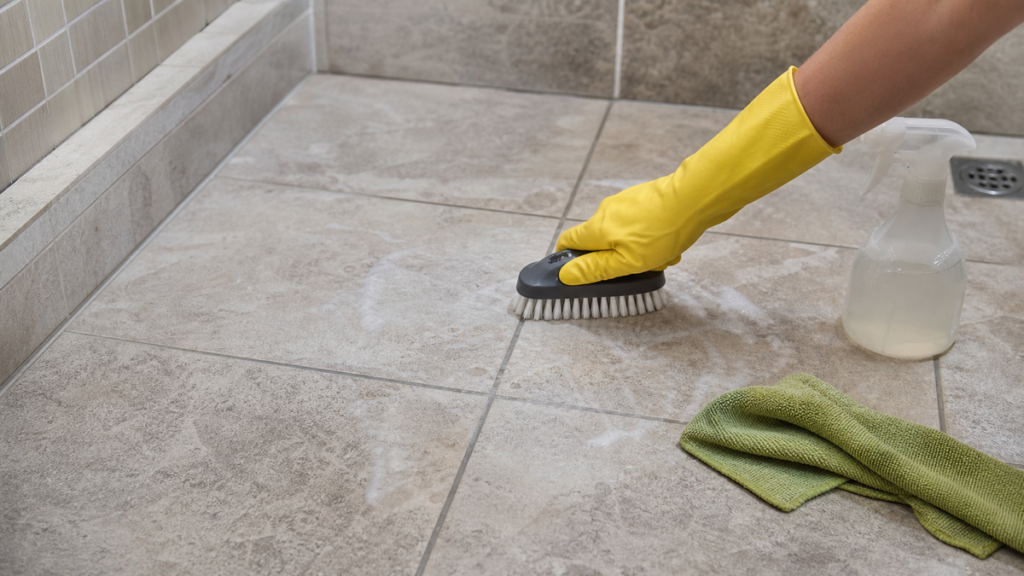
Use a soft nylon grout brush or a non-scratch tool approved for the tile. Work along the joint instead of using extreme downward force.
Wire brushes, metal picks, and overly stiff bristles can erode grout, scratch tile, or damage adjacent caulk.
Step 6: Remove the Dirty Solution
Rinse or wipe away loosened grime according to the tile and grout instructions. Change cloths or rinse tools frequently so you are removing dirty solution instead of spreading it into the next grout line.
Dry the surface after cleaning so you can see the real grout color and avoid leaving mineral-rich water sitting in the joint.
Why Vinegar Is Not a Great Routine Grout Plan
MAPEI explains that regular vinegar use can discolor and weaken cement-based grout and can etch natural stones such as marble, travertine, and limestone. See MAPEI acid/grout guidance.
An occasional specialty acidic treatment may have a legitimate place on certain compatible materials, but that is different from telling every homeowner to spray vinegar on every grout line.
What About Bleach?
MAPEI says bleach should not be a routine maintenance cleaner for stone, tile, and grout because repeated use can weaken or discolor grout. Review MAPEI routine-maintenance guidance.
This Eco Cln article should stay focused on cleaning bathroom residue. Do not turn Powerhouse into a disinfecting, whitening, or mold-killing claim.
When Cleaning Will Not Fix the Grout
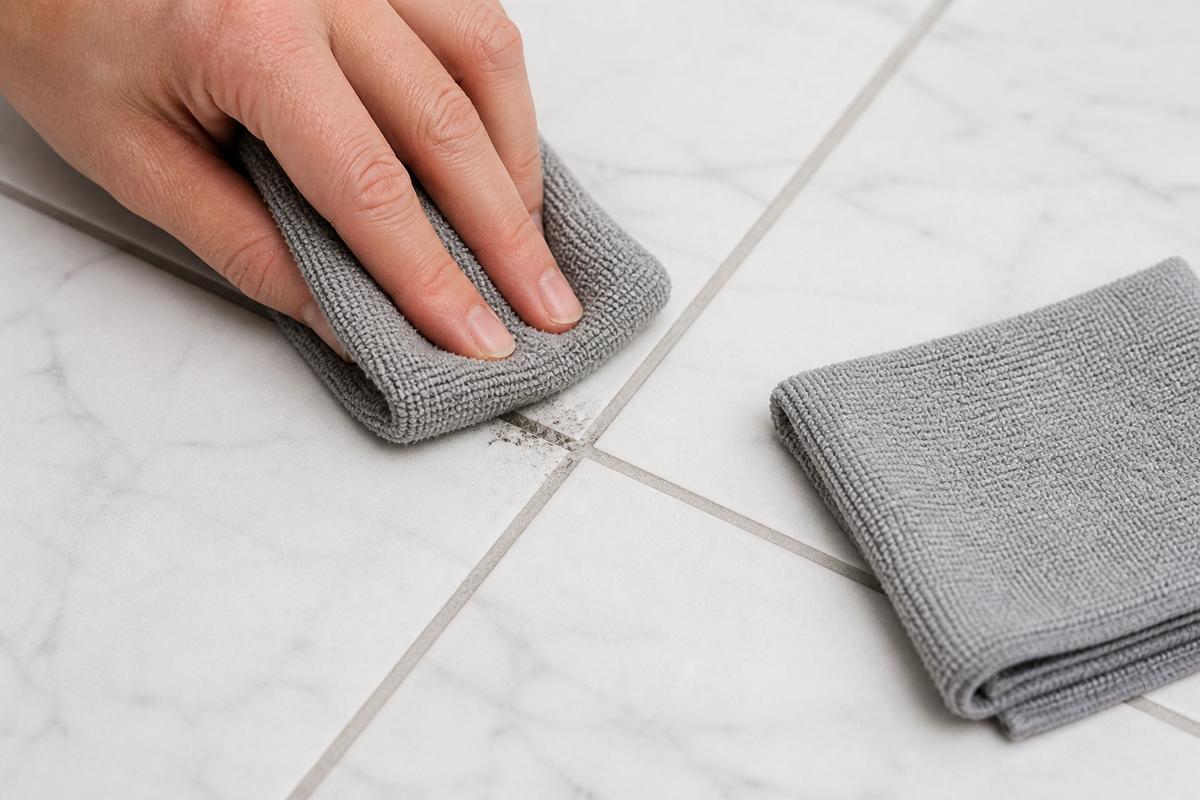
Cracked, crumbling, missing, permanently stained, or repeatedly wet grout may need repair or replacement rather than stronger cleaning.
If dark residue appears to be coming from behind tile, caulk, or wall materials, investigate the moisture source instead of repeatedly soaking the same joint.
Common Grout-Cleaning Mistakes
- Using vinegar or acidic DIY cleaners as routine maintenance on every grout type.
- Using bleach repeatedly because the grout is dark.
- Scrubbing with wire brushes, metal picks, or harsh abrasive tools.
- Flooding cracked grout or allowing cleaner to sit in failed joints.
- Assuming natural stone can be cleaned the same way as porcelain tile.
- Calling every dark grout line mold without confirming the cause.
- Trying to clean away structural grout failure.
Where Powerhouse Bathroom Fits
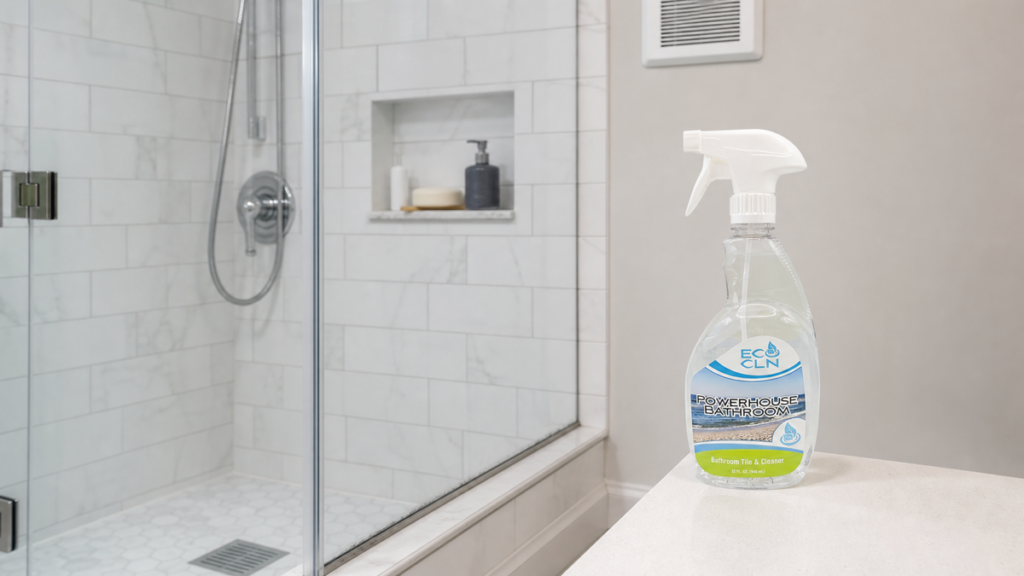
Eco Cln Powerhouse Bathroom is the targeted bathroom cleaner for soap scum, hard-water buildup, tile, grout, tubs, sinks, fixtures, shower areas, and everyday bathroom grime. Use it with surface-specific care, moderate agitation, and complete residue removal.
FAQ
Can I use Powerhouse Bathroom on grout?
Yes. The current Eco Cln product page lists bathroom tile and grout. Test first and follow the tile and grout manufacturer’s care instructions.
Should I use vinegar on bathroom grout?
Not as a universal routine. Frequent acidic cleaning can weaken or discolor cement grout and can etch natural stone.
Can I use a wire brush on grout?
Avoid metal brushes as a general method. Use a soft grout brush or tool approved for the tile and grout.
Why does grout stay dark after cleaning?
The remaining color may be absorbed staining, worn sealer, permanent discoloration, or damaged grout rather than removable surface soil.
Does Powerhouse disinfect grout?
This article should not make that claim. Powerhouse is positioned for bathroom buildup and grime, not as a disinfectant or germ-killing product.
The Bottom Line
Start by identifying the tile, grout type, and sealer, then vacuum or wipe away loose hair and grit. Test a small section and use Powerhouse Bathroom only where the tile and grout care instructions allow it. Give the cleaner brief contact with the buildup, agitate with a soft nylon grout brush, remove the loosened residue, and dry the joint so you can judge the actual color. Stop if natural stone etches, grout powder transfers to the cloth, joints crack or crumble, or dark areas remain below the surface. Those signs point to material damage, failed sealer, absorbed staining, or moisture—not a need for harder scrubbing.
Continue with this related Eco Cln guide: Soap scum vs. hard-water stains.
For soap residue, hard-water-related buildup, and everyday grime on compatible bathroom tile and grout, Eco Cln Powerhouse Bathroom gives you the bathroom-specific cleaner. The win is controlled cleaning – not maximum chemical strength or maximum scrubbing.