How to Clean Stainless Steel Appliance Smudges Without Ammonia or Abrasives

Stainless Steel Appliance Smudges: Quick Answer
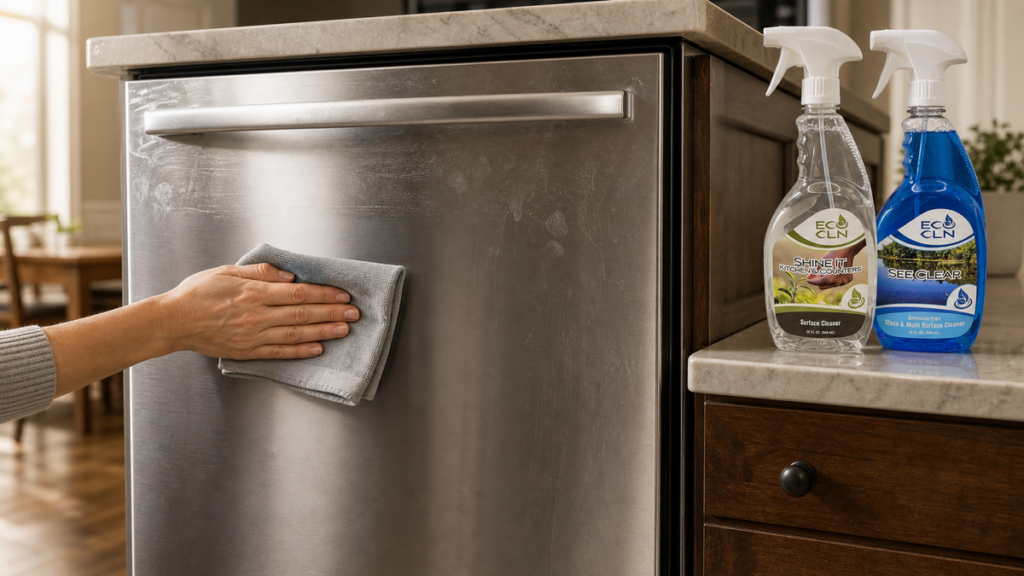
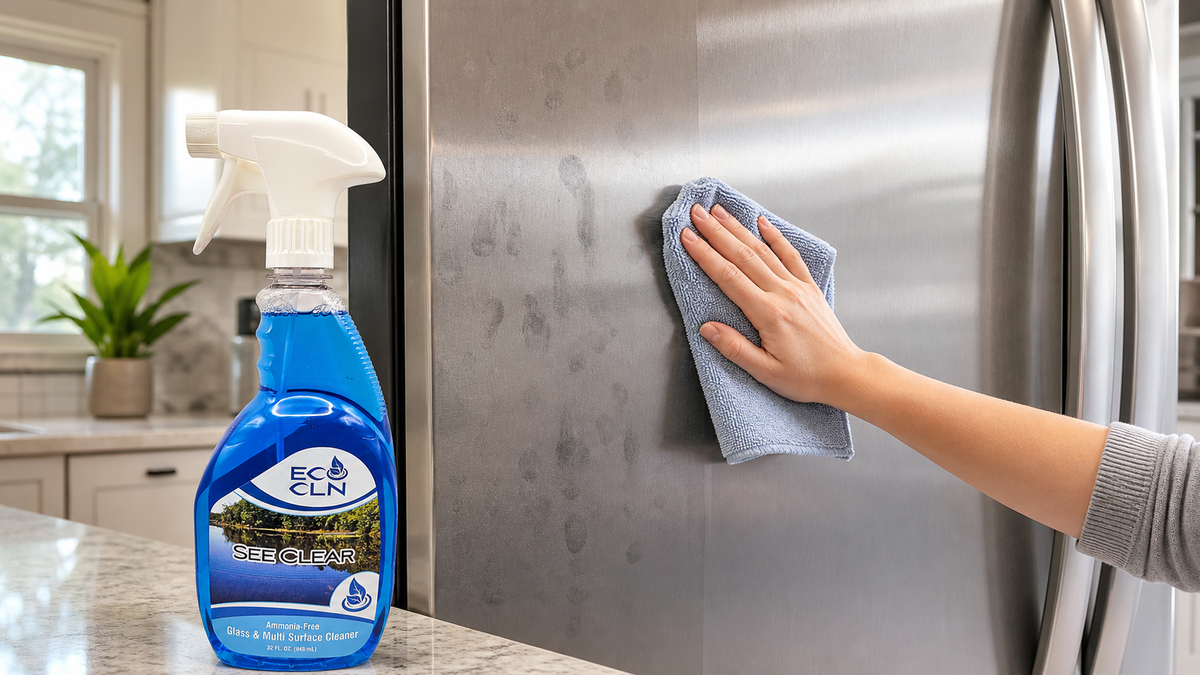
To clean stainless steel appliance smudges, start with a soft microfiber cloth and wipe in the direction of the grain. For light fingerprints, a cloth dampened with water may be enough. For heavier smudges, use a cleaner only if the appliance manual and cleaner label allow it, then wipe dry right away.
Avoid ammonia, bleach, steel wool, abrasive pads, powder cleansers, and aggressive scrubbing. Stainless steel finishes can vary, especially fingerprint-resistant finishes, so test any cleaner in a hidden spot before using it across the front of a refrigerator, dishwasher, microwave, or range.
Why Stainless Steel Appliance Smudges Need Gentle Cleaning
Stainless steel appliances show fingerprints fast because oils from hands sit on top of the brushed metal finish. Refrigerator handles, dishwasher fronts, microwave doors, range control panels, and the area around pull handles usually collect the most visible smudges.
The tricky part is that stainless steel is not just one universal surface. A traditional brushed stainless refrigerator door may tolerate a different cleaning routine than a fingerprint-resistant stainless finish, black stainless finish, coated panel, or stainless-look appliance. That is why the safest routine starts with the appliance manual, a soft cloth, and a small hidden test area. Whirlpool product guidance for traditional stainless steel cleaning gives the same kind of cautious baseline: warm soapy water, non-abrasive tools, wiping with the grain, rinsing, and drying.
What Not to Use on Stainless Steel Appliances
Do not use steel wool, scouring pads, abrasive powders, bleach, oven cleaner, or rough paper towels on stainless appliance fronts. These can scratch, dull, or mark the finish.
Be careful with ammonia-based glass cleaners too. Many appliance-care guides warn against ammonia on stainless steel because it can damage or dull some finishes. That does not mean every ammonia-free shiny-surface cleaner is automatically wrong, but it does mean the label and appliance manual matter. Stainless steel is a surface where testing first and using a light touch are worth the extra minute.
How to Clean Stainless Steel Appliance Smudges
- Find the direction of the grain. Look closely at the refrigerator door, dishwasher panel, or microwave trim. Most stainless steel has fine lines running vertically or horizontally. Wipe in that same direction to reduce streaks.
- Start with a dry microfiber cloth. For fresh fingerprints on handles or door edges, a clean dry microfiber cloth may lift enough oil without any cleaner.
- Use a lightly damp cloth for basic smudges. Dampen a microfiber cloth with water, wring it out well, and wipe the smudged area with the grain. Avoid soaking seams, control panels, logos, trim, or gaps around handles.
- Add a mild cleaner only when needed. If water does not remove greasy fingerprints or cooking film, use a cleaner that the appliance manual and cleaner label allow for that surface. Apply it to the cloth first instead of flooding the appliance front.
- Wipe again with a clean damp cloth if residue remains. Cleaner residue can make stainless steel look cloudy or streaky. A second pass with a lightly damp cloth helps remove leftover film.
- Dry and buff with the grain. Use a clean dry microfiber cloth and follow the grain again. Drying matters because minerals in water can leave spots, especially near refrigerator water dispensers and dishwasher fronts.
Where Eco Cln See-Clear Fits
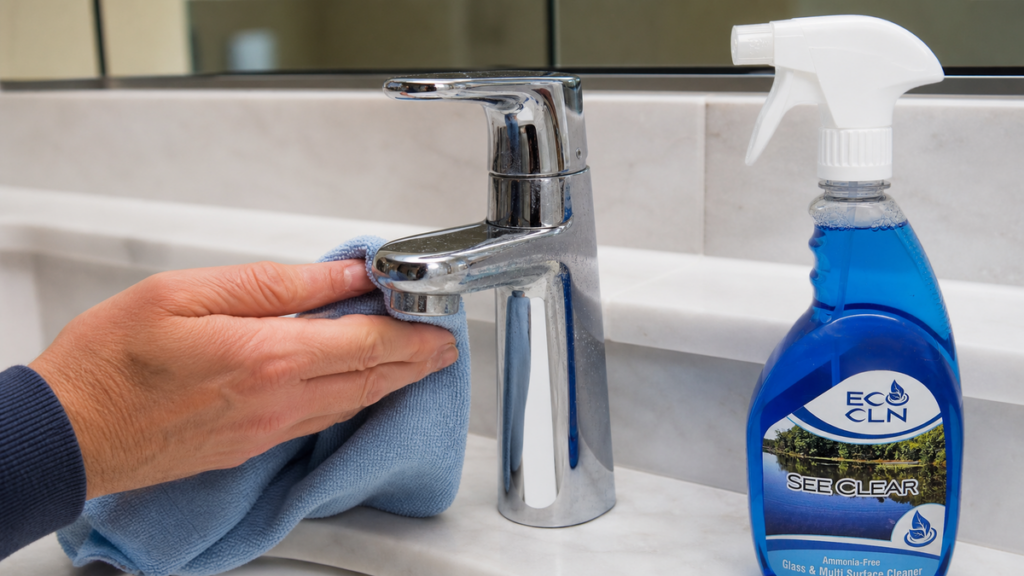
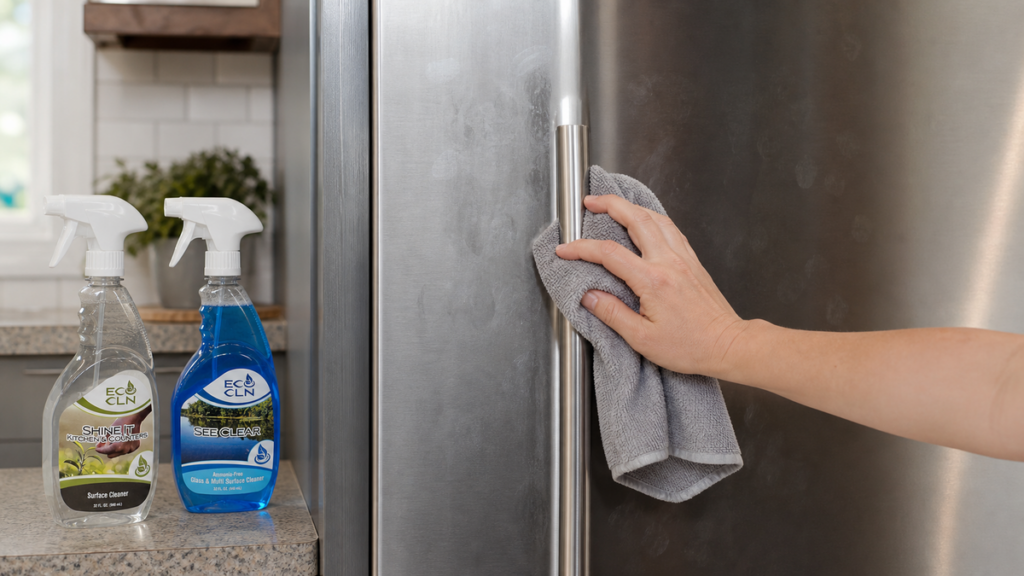
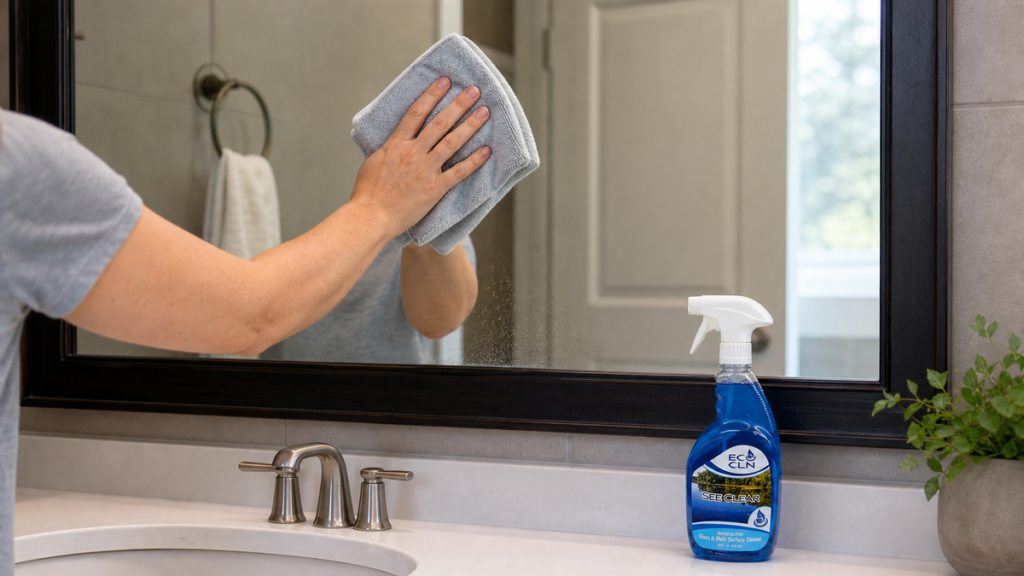
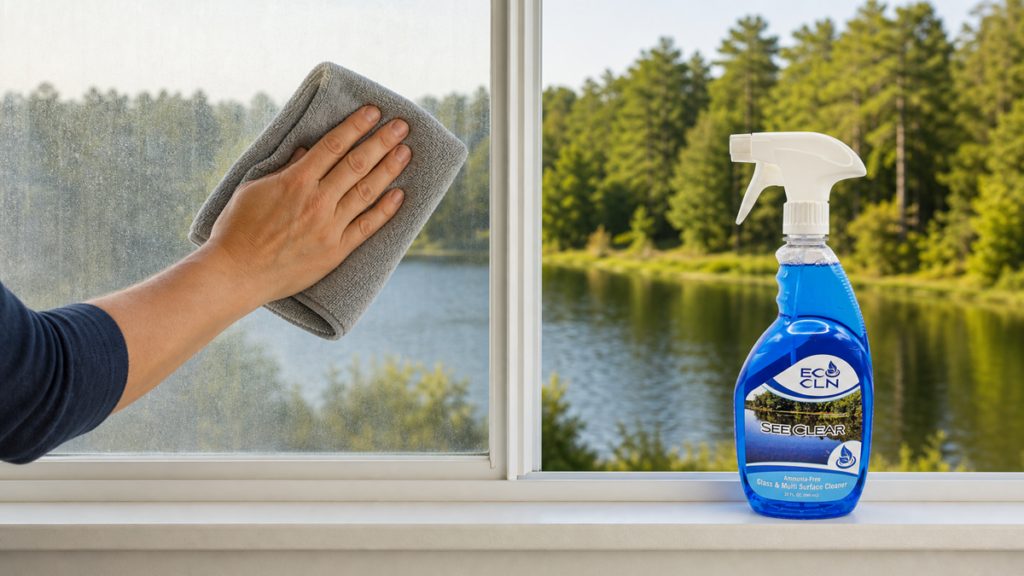
Eco Cln See-Clear is an ammonia-free glass and shiny-surface cleaner listed by Eco Cln for windows, mirrors, chrome, stainless steel, appliances, and shiny surfaces. For stainless steel appliances, the cautious approach is still the right one: check the appliance manual, test in a hidden area, spray the cloth instead of soaking the panel, and dry with a microfiber cloth.
See-Clear is a better fit for light smudges, shiny trim, chrome, appliance touch marks, and streak-prone areas than for burned-on food, rust, deep scratches, or damaged coatings. If the appliance manual says to use only warm soapy water or a dedicated stainless steel cleaner, follow that manual.
Stainless Steel Areas That Need Extra Care
Refrigerator handles and dishwasher handles collect the most hand oil, so they often need a little more wiping than flat door panels. Clean handles separately so you are not dragging oily residue across the whole appliance.
Control panels, digital displays, logos, vents, and seams should stay lightly damp, not wet. Spray cleaner directly onto the cloth and keep liquid away from buttons, screen edges, and the gaps around trim.
For black stainless or fingerprint-resistant stainless, be even more conservative. Many of those finishes are coated, and aggressive cleaners can damage the coating. Use the appliance manual as the final rule.
Common Mistakes That Leave Stainless Steel Streaky
The biggest mistake is wiping in circles across a brushed stainless panel. Circular wiping fights the grain and can leave marks that catch the light from every angle.
Another common mistake is using too much cleaner. More liquid does not mean more clean. It often means more residue, more streaks, and more buffing.
The third mistake is using paper towels or rough cloths that shed lint or scratch. A soft microfiber cloth is usually the better tool for stainless appliance fronts.
When Cleaning Is Not Enough
Cleaning can remove fingerprints, light grease, water spots, and surface smudges. It may not fix scratches, pitting, rust, heat discoloration, worn coating, or etched marks from harsh chemicals.
If a stainless appliance already has cloudy patches or finish damage, stop testing cleaners across the full surface. Check the manual or contact the manufacturer before making the damage worse.
FAQ
Can you use glass cleaner on stainless steel appliances?
Be careful. Many glass cleaners contain ammonia, and ammonia is commonly discouraged for stainless steel appliances. If using an ammonia-free cleaner, check the appliance manual and cleaner label first, test in a hidden area, and wipe dry.
What is the safest first step for stainless steel fingerprints?
Start with a clean microfiber cloth. Try it dry first, then lightly dampened with water if needed. Wipe with the grain and dry right away.
Should stainless steel be wiped with or against the grain?
Wipe with the grain. Following the fine brushed lines helps reduce streaks and visible wipe marks.
Can stainless steel appliances be cleaned with bleach?
No. Avoid bleach on stainless steel appliance fronts. It can damage or discolor the finish.
Why does my stainless steel look streaky after cleaning?
Streaks usually come from cleaner residue, too much liquid, hard water minerals, wiping against the grain, or using the wrong cloth. Buff with a dry microfiber cloth in the direction of the grain.
The Bottom Line
The best way to clean stainless steel appliance smudges is to stay gentle: microfiber cloth, light moisture, wipe with the grain, dry completely, and avoid ammonia, bleach, abrasive pads, and heavy scrubbing. Eco Cln See-Clear can be a practical ammonia-free option for shiny-surface touchups when the appliance manual and cleaner label support that use, but stainless steel always deserves a hidden-area test first.