How to Clean Dog Vomit From Carpet and Upholstery

Quick Answer
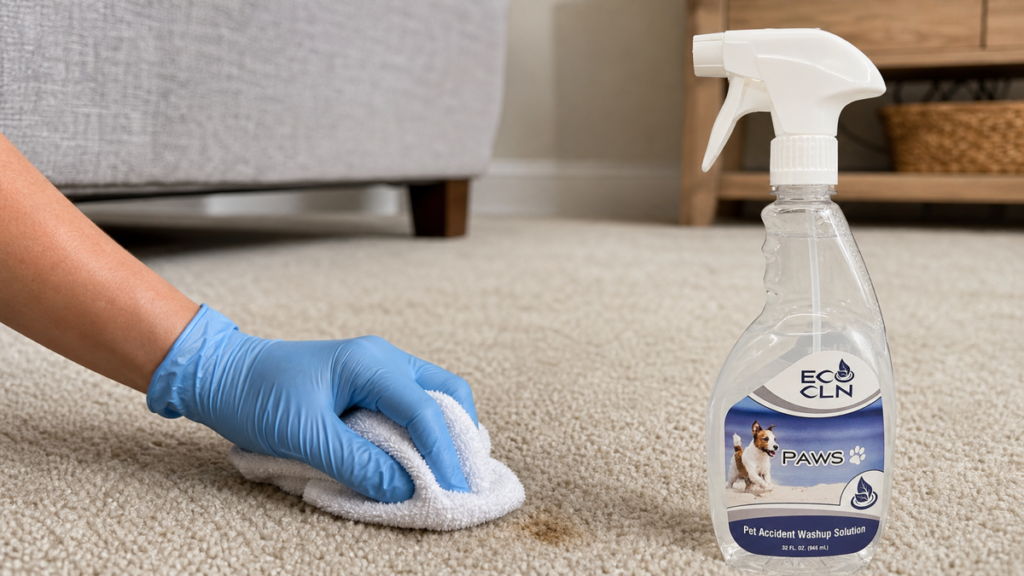
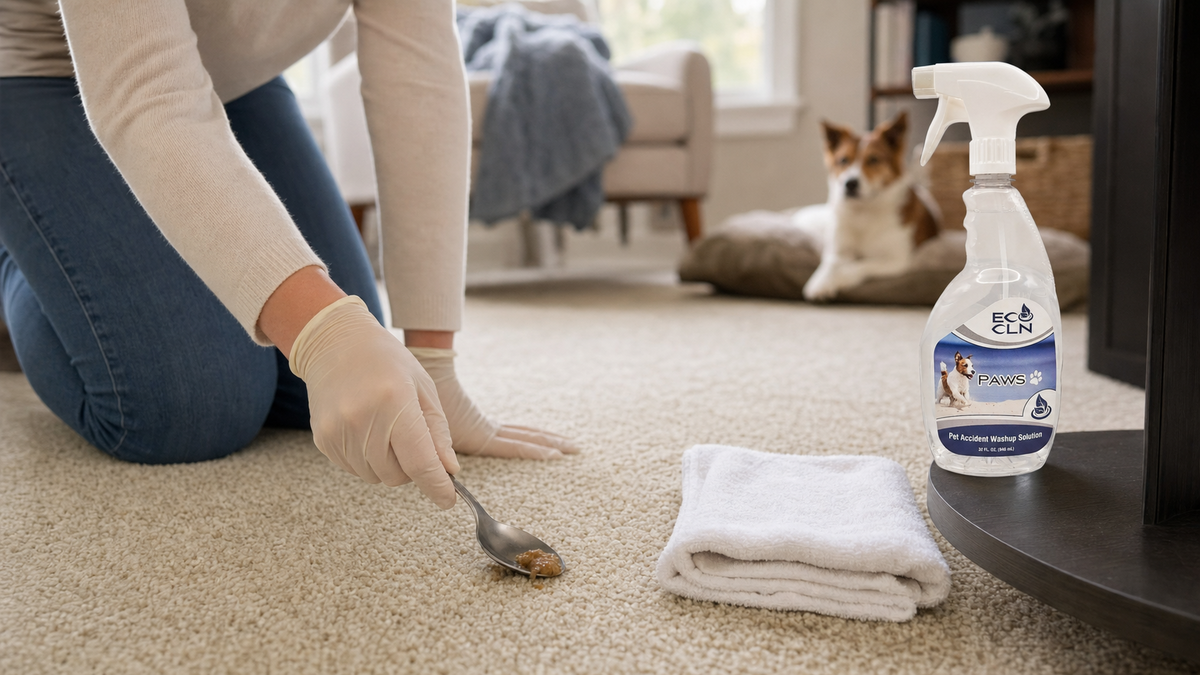
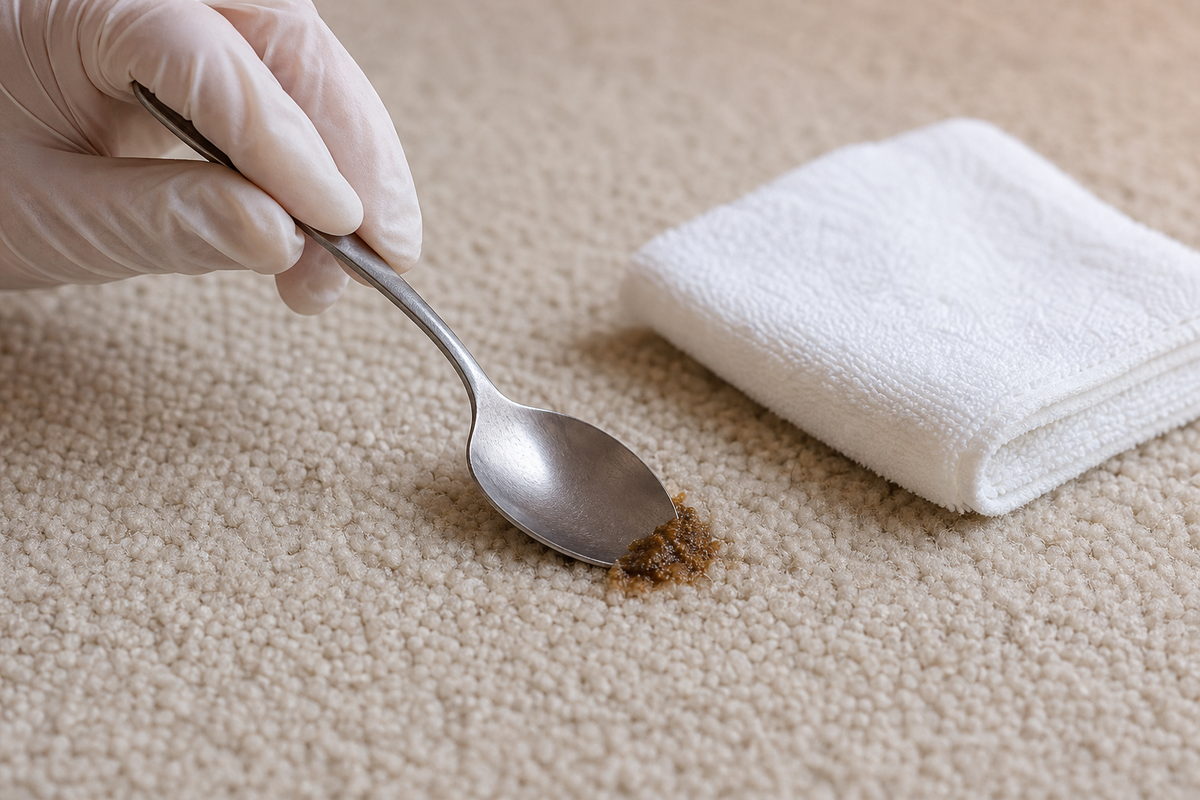
Use gloves, lift solid or semi-solid material with a spoon or dull disposable edge, and blot remaining moisture with clean white towels. Check the carpet or upholstery care instructions and spot-test first.
The current PAWS product page positions PAWS for organic pet stains, carpet, rugs, upholstery, pet beds, and pet accident areas. The page does not specifically name vomit, so use it as a compatible organic pet-mess spot treatment only after a hidden-area test. Apply a controlled amount, blot or wipe, and let the area dry completely.
Do not scrub aggressively. Rubbing can spread colored stomach contents and push residue deeper into carpet pile or upholstery fill.
Why Dog Vomit Can Leave a Stubborn Spot
Vomit can contain partially digested food, bile, grass, dyes from treats, oils, stomach fluid, and solids. That mix can leave both color and organic residue.
On upholstery, the mess can also move into seams, foam, or cushion fill if too much liquid is added during cleanup.
Step 1: Remove Solids Before Adding Cleaner
Lift food pieces and semi-solid material with a spoon, spatula, or dull disposable edge. Work upward, not sideways.
Bag and discard the material. Do not grind it into carpet or fabric with towels.
Step 2: Blot the Moisture
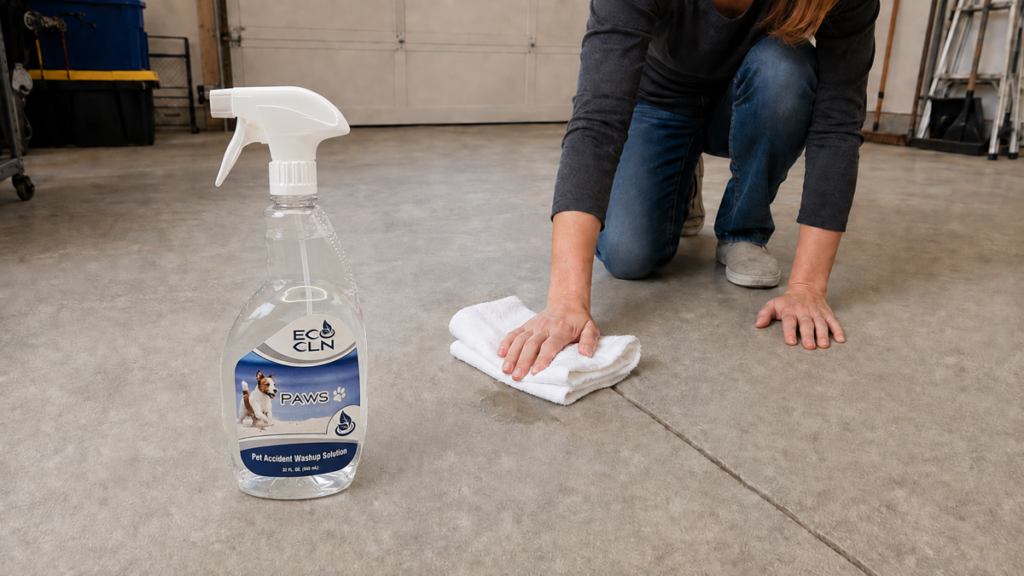
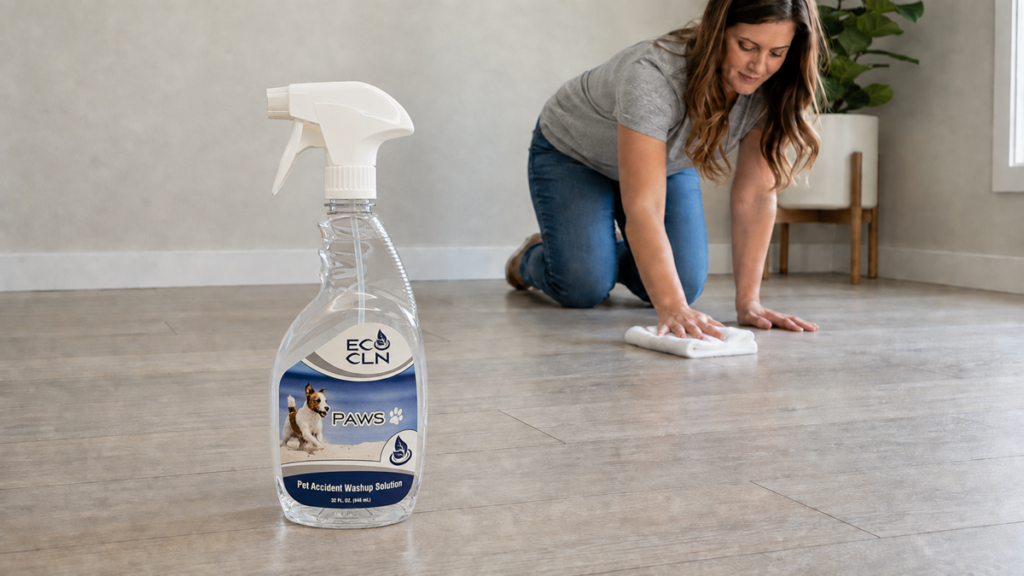
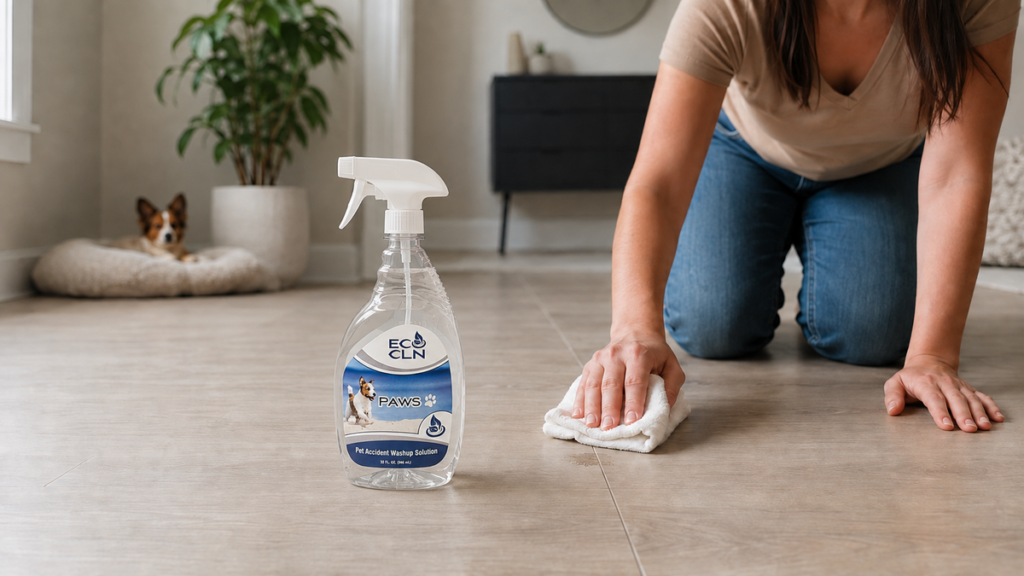
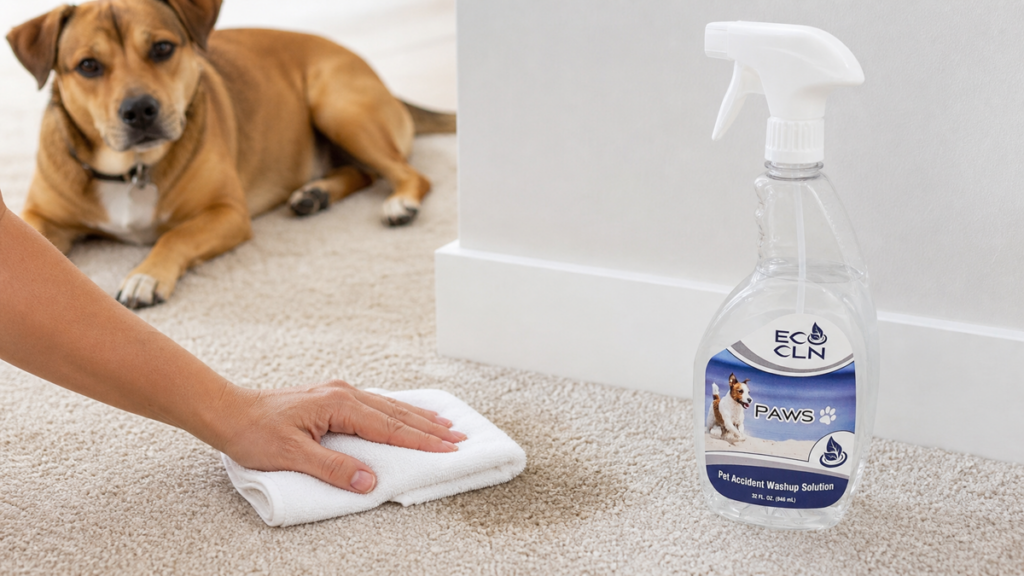
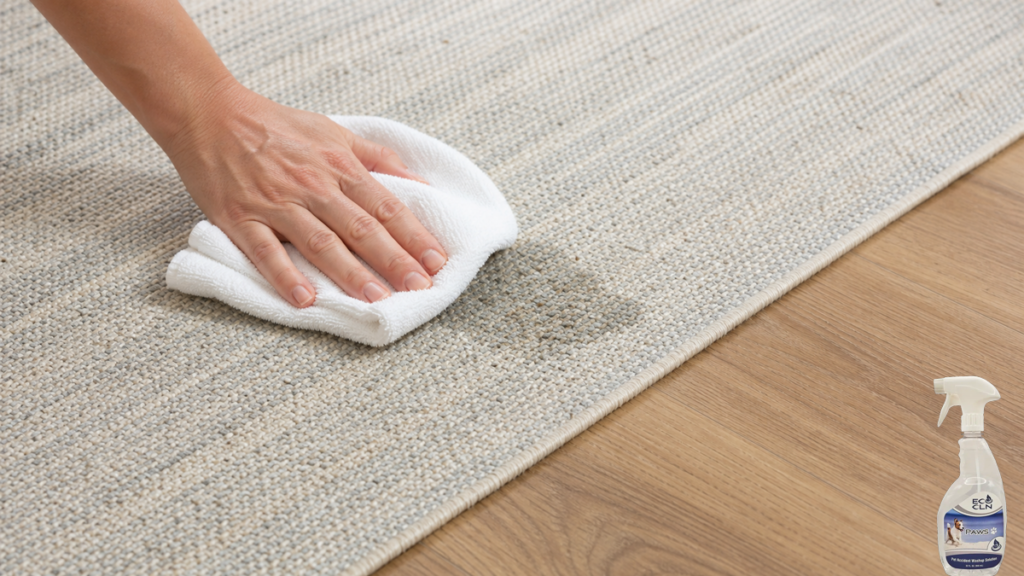
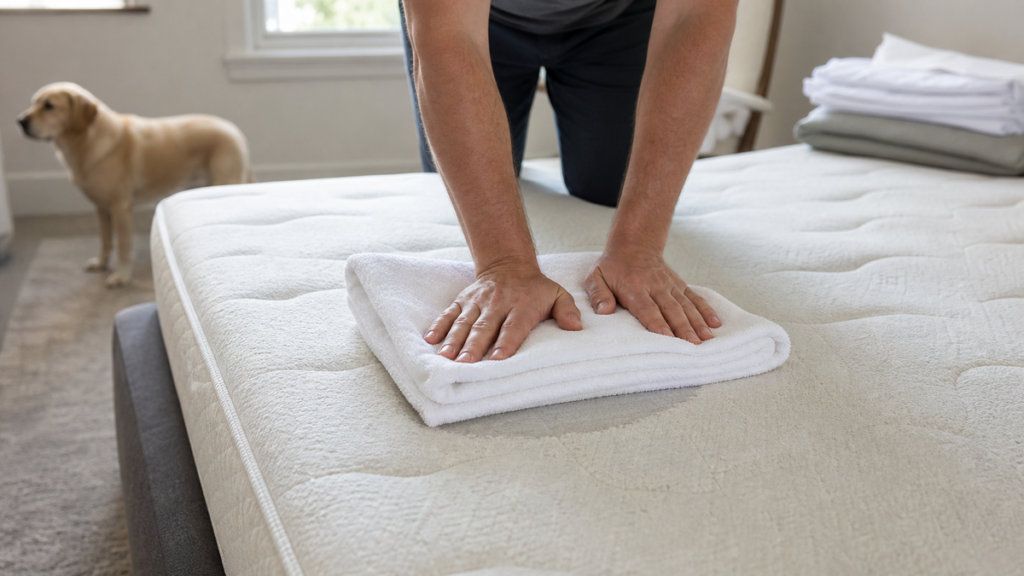
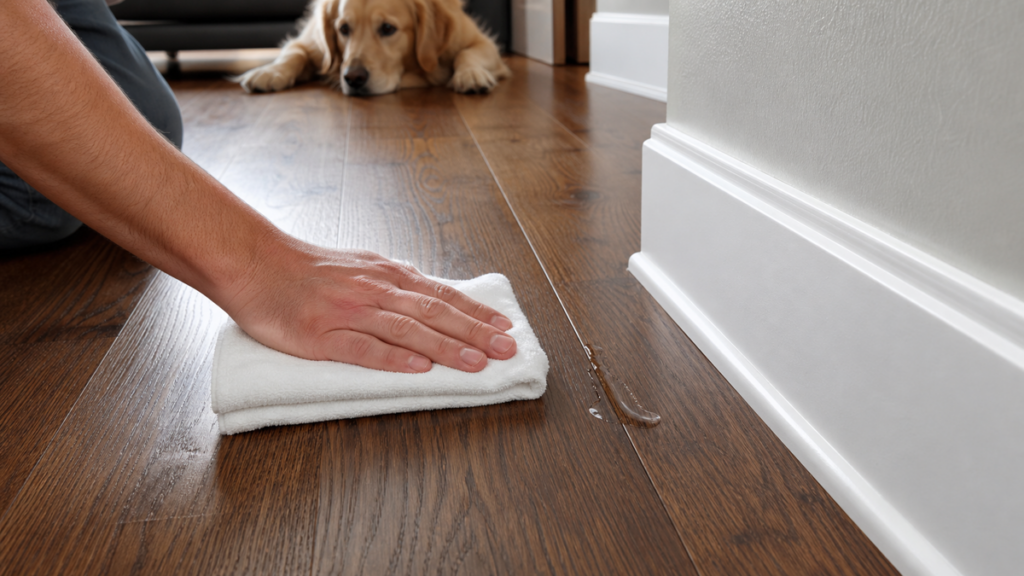
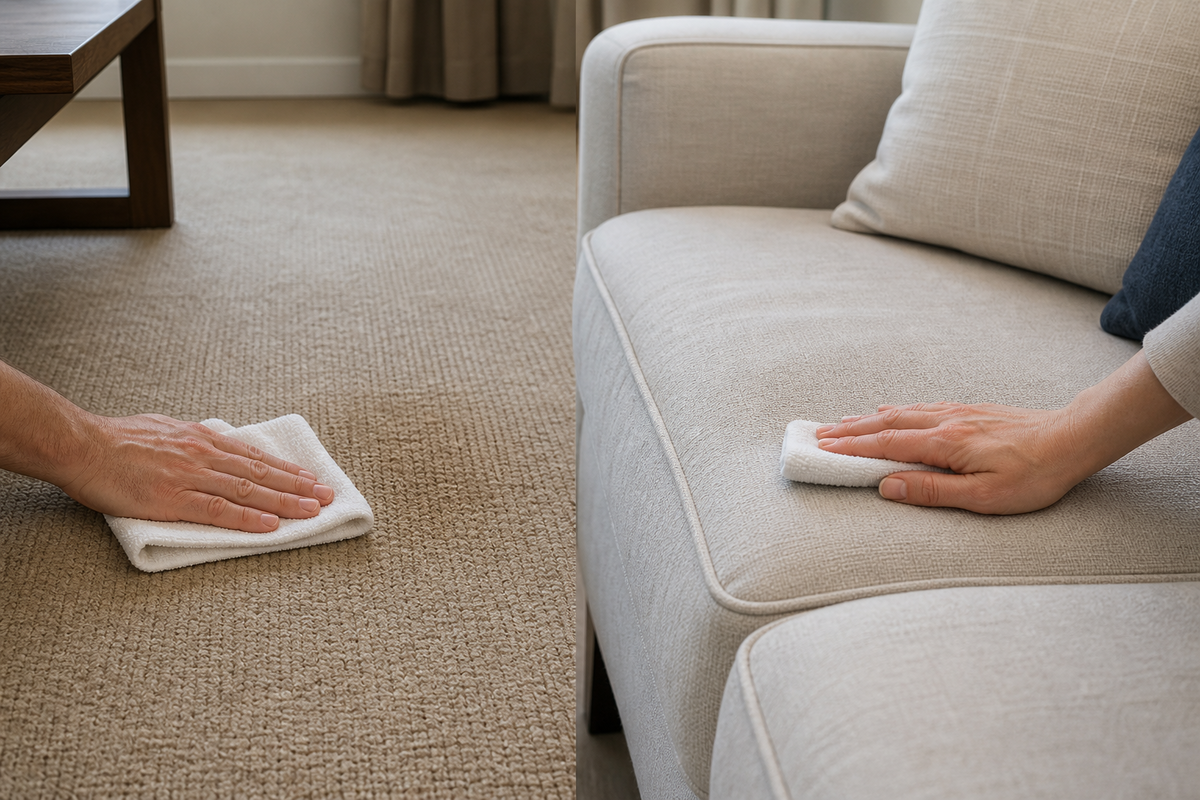
Press clean white towels into the damp area. Rotate to fresh towel sections and repeat.
General carpet-care guidance from the Carpet and Rug Institute recommends blotting liquids, lifting semisolids, and avoiding rubbing. Review CRI carpet spot-care guidance.
Step 3: Check Carpet or Upholstery Care Instructions
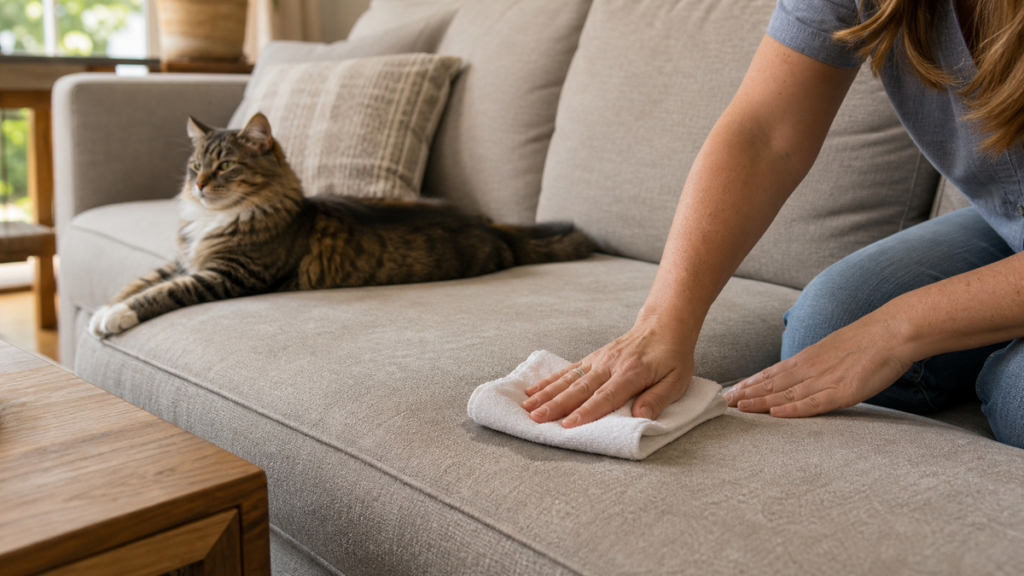
Upholstery may have wet-cleaning restrictions, removable covers, special dyes, or foam that should not be saturated.
Valuable rugs, wool, silk, viscose, antique upholstery, and unknown fabrics may be safer with a professional cleaner.
Step 4: Spot-Test PAWS
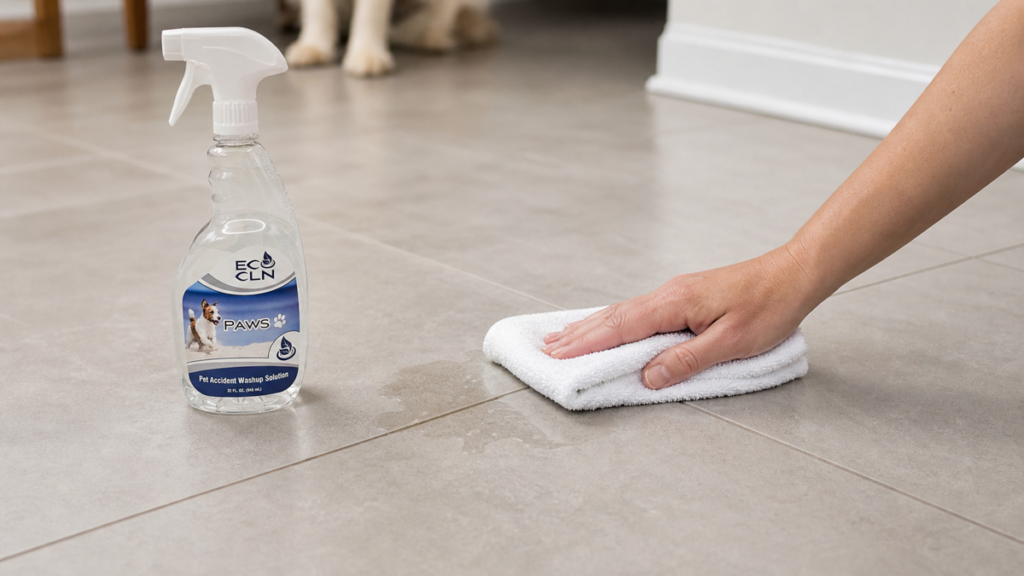
PAWS is designed for pet urine odors, organic stains, carpets, rugs, upholstery, pet beds, and repeat pet mess areas. See current PAWS directions.
Test a hidden section and let it dry. Watch for dye transfer, watermarking, texture change, or backing/fabric changes.
Step 5: Apply a Small Controlled Amount
Treat the actual affected fibers according to the product instructions. On upholstery, applying product to a cloth can offer more control when direct spraying would add too much moisture.
Do not soak the cushion or carpet backing trying to reach a smell immediately.
Step 6: Blot and Remove Loosened Residue
Blot from the perimeter toward the center. Continue with clean towel sections while material transfers.
For a strong or old spot, a second controlled application after partial drying is usually safer than one large soak.
Step 7: Remove Cleaner Residue and Dry
Remove remaining cleaner as the carpet/upholstery instructions allow and dry the area thoroughly with normal airflow.
ASPCA notes that carpet-cleaning products used in pet homes should be allowed to dry before pets return to the area. Review ASPCA cleaning-product guidance.
What If the Vomit Is Bright Yellow, Red, Black or Repeated?
Cleaning the carpet does not answer why the dog vomited.
If vomiting is repeated, severe, accompanied by other concerning signs, or the dog may have eaten something toxic, contact a veterinarian. AKC dog-vomiting overview.
Do not put medical diagnosis or treatment advice into the cleaning instructions.
What If the Odor Comes Back?
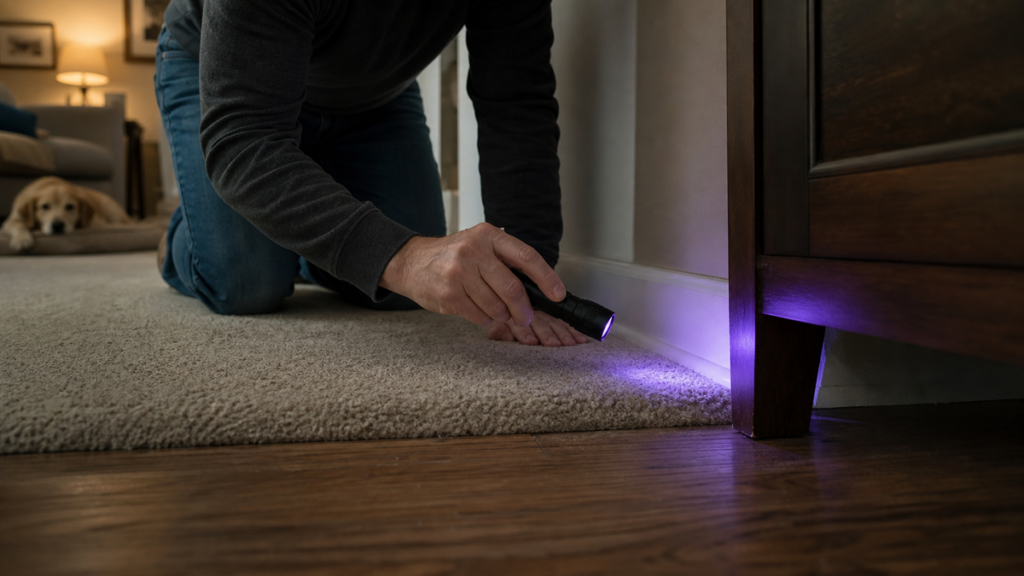
Recheck the backing, cushion seams, rug pad, floor below, and any hidden area the liquid may have reached.
Repeatedly flooding the top surface can make drying harder without reaching the actual source.
Common Dog-Vomit Cleanup Mistakes
- Scrubbing solid material into carpet or upholstery.
- Using a colored towel that can transfer dye.
- Oversaturating carpet backing or cushion foam.
- Skipping the hidden-area colorfastness test.
- Mixing multiple cleaners or DIY chemicals.
- Allowing pets back onto the treated area while it is still wet.
- Treating repeated vomiting only as a carpet problem instead of seeking veterinary advice when appropriate.
Where PAWS Fits
Eco Cln PAWS is the pet-focused Eco Cln cleaner for organic pet stains, urine odors, carpets, rugs, upholstery, pet beds, and repeat accident zones. The current page does not explicitly list vomit, so keep the claim careful: PAWS may fit a compatible organic pet-mess spot after testing, without a guaranteed vomit-removal claim.
FAQ
Can I use PAWS on dog vomit?
PAWS is positioned for organic pet stains and pet mess areas on carpet, rugs, upholstery, and pet bedding. The current page does not specifically name vomit, so test the surface and avoid guaranteed removal claims.
Should I scrub dog vomit out of carpet?
No. Lift solids and blot liquids instead of grinding them into the fibers.
Can I use PAWS on a sofa?
PAWS is positioned for upholstery, but check the upholstery care instructions and hidden-area test before adding moisture.
When can my dog go back on the cleaned area?
Wait until the treated carpet or upholstery is completely dry.
When should I call a vet instead of just cleaning up?
If vomiting is repeated, severe, accompanied by other symptoms, or you suspect toxin or foreign-object ingestion, contact a veterinarian.
The Bottom Line
Use gloves and keep pets away while you remove the mess. Lift solid or semi-solid material upward with a spoon or dull disposable edge, bag it, and blot remaining moisture with clean white towels until transfer slows. Check the carpet or upholstery care instructions before adding cleaner, and test a hidden area for dye movement, texture change, water rings, or backing damage. Where the material and current product directions allow it, use PAWS as a controlled treatment for the compatible organic pet-mess spot; the product page does not promise vomit removal, so keep the claim and the application modest. Work from the perimeter toward the center, use clean towel sections, remove remaining cleaner as the material instructions permit, and let the face, backing, seams, cushion fill, or pad dry completely. Keep pets off the treated area until it is dry. Stop and call a qualified cleaner if the mess reached deep fill, a valuable rug, or a material with restrictive care codes, or if color continues transferring. Cleaning the surface is separate from checking the dog’s health: repeated vomiting, blood, severe symptoms, or possible toxin or foreign-object ingestion belongs with a veterinarian, not another cleaning pass.
Continue with this related Eco Cln guide: Spot Gone stain-remover guide.
For a compatible organic pet mess on carpet, rug, upholstery, or pet bedding, Eco Cln PAWS is the pet-focused Eco Cln option. Lift solids first, keep the treatment controlled, and let the area dry completely.