Pet Accident Cleanup on Hard Floors vs. Carpet: What Changes?

Pet Accident Cleanup: Quick Answer
Pet accident cleanup on hard floors is usually about fast removal, edge control, and preventing liquid from reaching seams, baseboards, grout, or gaps. Pet accidents on carpet, rugs, and upholstery are about blotting, controlling moisture, treating fibers, and preventing residue or odor from settling deeper.
The first move is the same: remove solids, blot liquid, and avoid rubbing. What changes is the surface. Hard floors need careful wiping and drying. Carpet and fabric need controlled blotting, light application, and enough drying time. Humane World also emphasizes pet stain and odor cleanup that starts with removing as much mess as possible before deeper treatment, which supports a blot-first approach for absorbent surfaces.
Reference: Humane World pet stains and odors guide.
Why This Is Different From a Baseboard Urine Cleanup
Cleaning dog urine smell from baseboards is a narrow edge-and-trim problem. This article is broader: it compares how pet accident cleanup changes across hard floors, carpet, rugs, upholstery, seams, and floor transitions.
That distinction matters because a puddle on sealed tile is not the same as urine in carpet pile, a rug edge, a sofa cushion seam, or the gap where flooring meets baseboard trim. Same pet. Different cleanup problem, and the cleanup method should match the material.
What to Do First for Pet Accident Cleanup
- Remove solids carefully. Use a disposable towel, scraper, or bag to lift solids without smearing them into grout lines, carpet fibers, or rug fringe.
- Blot liquid instead of rubbing. Press a clean absorbent towel into the wet area and lift. Rubbing spreads urine, vomit, or tracked mess into a larger area.
- Work from the outside inward. This keeps the mess from spreading across carpet, under rug edges, or toward baseboards.
- Keep pets away from the spot. Repeated sniffing, stepping, or re-marking can make cleanup harder.
- Choose the method based on the surface. Hard floor, carpet, rug, upholstery, grout, and baseboard edges all need slightly different handling.
Pet Accidents on Hard Floors
Hard floors look simple because the mess sits on top, but edges are the risk. Urine can move into plank seams, under baseboards, around floor vents, into grout lines, or under an area rug before you notice it.
On sealed tile, vinyl, laminate, sealed hardwood, or other washable hard floors, blot or wipe up liquid quickly. Clean the visible area, then pay attention to the perimeter: wall edges, baseboard gaps, transition strips, grout lines, and the underside of nearby mats.
Do not flood wood, laminate, plank seams, or floor edges. Too much liquid can push the problem where a towel cannot reach. Dry the area completely after cleaning.
Pet Accidents on Carpet
Carpet holds liquid in fibers and sometimes deeper in the backing or pad. That is why rubbing and soaking are the two big mistakes.
Blot first with a clean towel. Apply pet cleaner according to the label and keep it focused on the affected area. Work from the outside of the spot toward the center. After treatment, blot again and allow the area to dry fully before judging whether odor remains.
If the accident was large, repeated, or old, the problem may be below the carpet surface. Surface cleaning may improve the top fibers but not fully address padding or subfloor odor.
Pet Accidents on Rugs and Upholstery
Rugs need caution because dyes, fringe, backing, and edge binding can react differently from wall-to-wall carpet. Test in a hidden corner first. Avoid soaking rug edges, fringe, and backing.
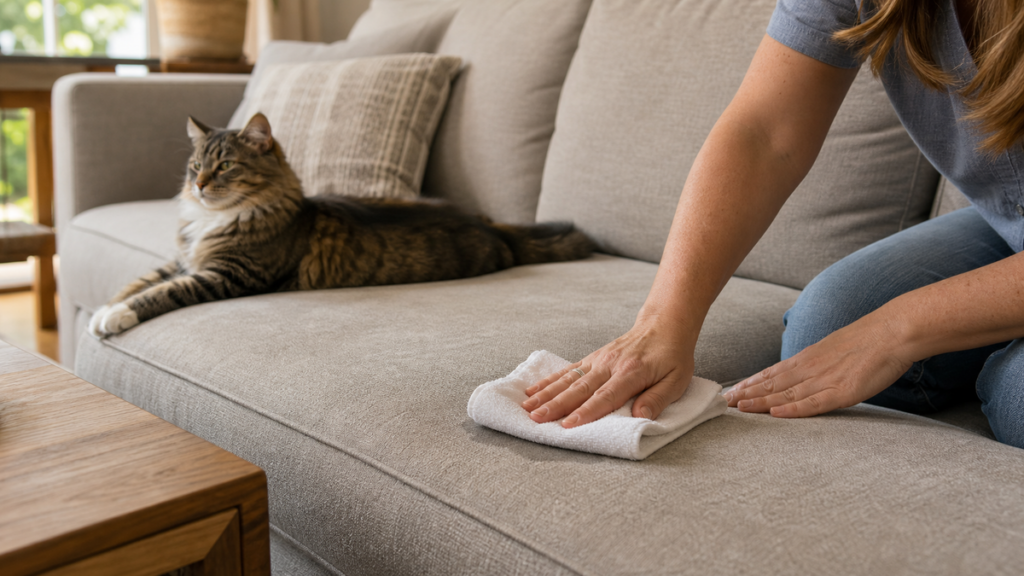
Upholstery adds another problem: cushions can hold moisture. Blot the fabric, avoid over-application, and keep cleaner out of deep seams unless the care label supports wet cleaning. If a cushion has absorbed urine deeply, surface cleaning may not solve the odor.
Where Eco Cln PAWS Fits
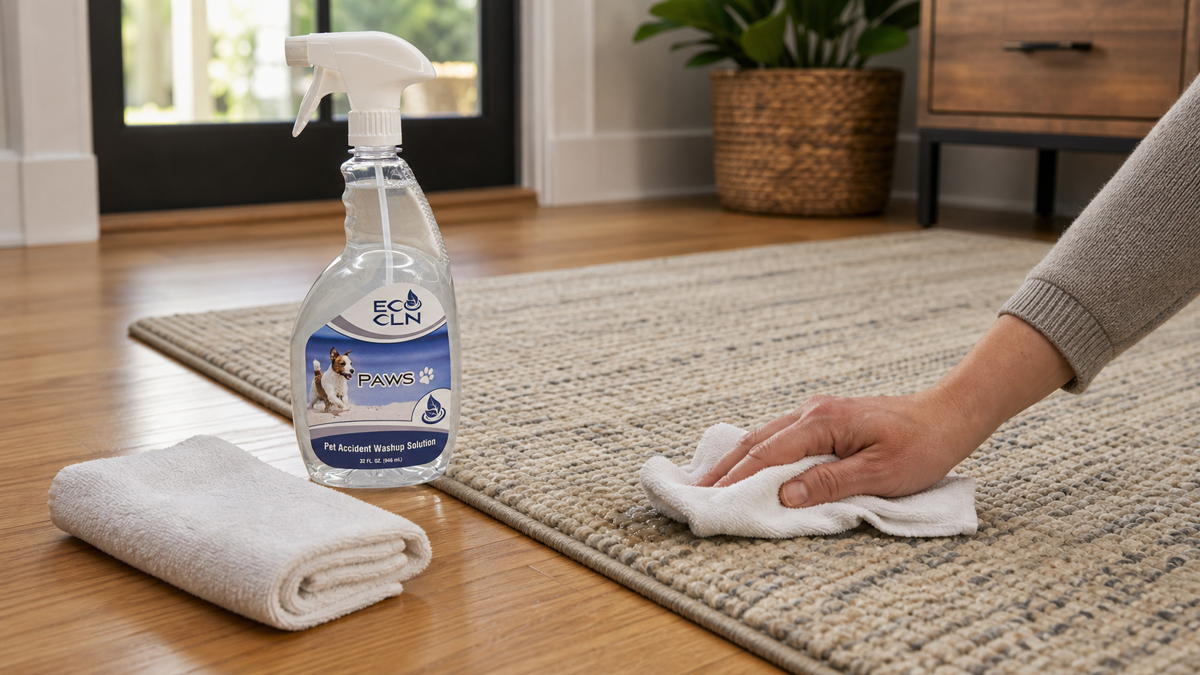
Eco Cln PAWS is the practical product fit for pet accident and urine odor cleanup. Use it after the first blotting step, not before removing as much liquid or solid mess as possible.
PAWS fits fresh pet messes, targeted odor areas, and repeat spots where a general surface wipe is not enough. Use it with the surface in mind: controlled application on carpet and fabric, careful edge handling on hard floors, and hidden-area testing on rugs or upholstery.
How to Avoid Spreading Pet Odor
Do not use one towel across the whole area until it is soaked. Switch to a clean section often. A saturated towel stops absorbing and starts moving the mess around.
Do not push liquid toward baseboards, rug edges, or flooring seams. Those are the areas most likely to trap odor.
Do not judge odor while the spot is still wet. Let the area dry fully, then check again. Damp carpet and upholstery can hide what remains.
When Pet Accident Cleanup Needs More Help
Repeated accidents in the same spot may mean odor has reached carpet padding, floor seams, grout, or subfloor material. Old urine problems can also become harder to remove because residue dries and concentrates.
If the area still smells after careful cleaning and drying, inspect nearby baseboards, rug pads, carpet backing, and floor gaps. The visible stain may not be the only location holding odor.
FAQ
Are pet accidents easier to clean on hard floors or carpet?
Fresh accidents are usually easier to remove from hard floors, but only if the liquid has not reached seams, grout, baseboards, or rug edges. Carpet can hold liquid deeper in fibers and backing.
Should I rub a pet accident on carpet?
No. Blot instead. Rubbing spreads the mess, distorts fibers, and can push residue deeper into the carpet.
Can pet urine get under baseboards?
Yes. Liquid can move along floor edges and under trim, especially if the accident sits for a while or is wiped toward the wall.
Can I use the same pet cleaner on rugs and upholstery?
Only if the label and fabric care instructions support it. Always test rugs and upholstery in a hidden area first.
Why does pet odor come back after cleaning?
Odor can return when residue remains in carpet backing, padding, seams, baseboard edges, or absorbent materials. The surface may look clean while deeper residue remains.
The Bottom Line
Pet accident cleanup changes by surface. Hard floors need quick removal, edge control, and drying. Carpet, rugs, and upholstery need blotting, controlled moisture, and patience. Eco Cln PAWS is a practical fit for targeted pet accident and urine odor cleanup when used after blotting and matched carefully to the surface.