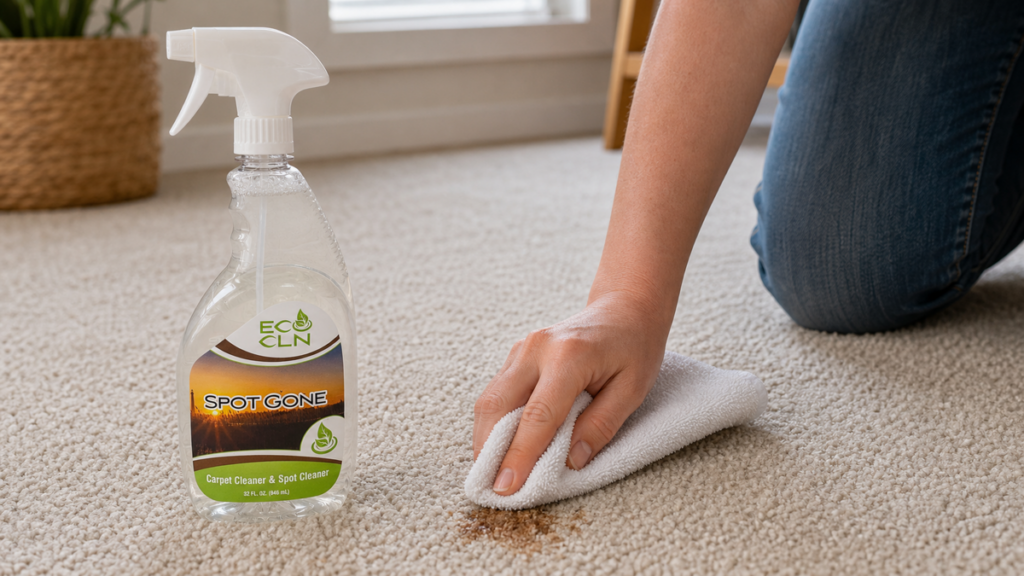
How to get tomato sauce out of carpet starts with one rule: lift and blot before you treat. Tomato sauce is one of those carpet stains that looks dramatic fast, and pizza sauce, spaghetti sauce, marinara, ketchup, salsa, and red sauce all have the same basic problem: color, thickness, and sometimes oil. If you rub too hard, you can push the stain deeper into the carpet and turn a small dinner accident into a bigger project.
The better move is simple: lift the extra sauce, blot carefully, treat the spot, and let the carpet dry before deciding whether it needs another pass.
How to Get Tomato Sauce Out of Carpet: Quick Answer
For a fresh tomato sauce spill, lift away the excess sauce with a spoon, then blot from the outside edge toward the center with a clean white cloth. Apply a carpet-appropriate spot cleaner according to its label, blot again, and let the carpet dry before judging the result. Do not scrub or flood the spot.
For a dried stain, gently loosen crusted residue first, lightly dampen the fibers with cool water, treat the spot, and blot in controlled passes. Repeat only after the carpet dries.
The same basic method applies to pizza sauce, marinara, spaghetti or pasta sauce, ketchup, tomato soup, and most red sauce spills. Oilier sauces may need extra blotting after the red color starts to lift.
Why Tomato Sauce Is Tough on Carpet
Tomato sauce stains are annoying because they usually bring more than one problem:
- Red or orange tomato color that can cling to carpet fibers.
- Thick sauce that can sit on top of the carpet and sink in when pressed.
- Oil, seasoning, or food residue that may remain after the color starts to fade.
That is why the first step is not cleaner. The first step is removing the extra mess without spreading it.
What to Do First
Before you spray or blot with water, remove as much loose sauce as possible.
Use a spoon, dull butter knife, or clean paper towel to gently lift sauce off the carpet. Work from the outside edge of the stain toward the center so the sauce does not spread into a wider mark.
Avoid rubbing, grinding, or pressing hard. Rubbing can push tomato sauce into the fibers and padding. Blotting is slower, but it gives you much more control.
If the carpet is wool, delicate, vintage, specialty dyed, or covered by a carpet warranty, check the carpet manufacturer guidance and cleaner label first.
Fresh Spill or Dried Stain? Choose the Right Path
If the spill is fresh
Lift the loose sauce immediately, blot outside-in, apply a carpet-safe spot cleaner as directed, blot again, and let the area dry. Fresh sauce is easier to remove before its color and oily residue settle into the fibers.
If the stain is already dry
Remove crusted residue with a spoon or dull edge, soften the remaining spot with a small amount of cool water, then treat and blot. Avoid soaking the carpet; dried stains often improve through two light treatments rather than one aggressive pass.
How to Get Fresh Tomato Sauce Out of Carpet
Fresh sauce is usually easier to handle than dried sauce. Move quickly, but do not panic-scrub.
- Lift the extra sauce.
Remove the loose tomato sauce with a spoon or dull edge. Do not press it deeper into the carpet.
- Blot with a clean white cloth.
Use a white cloth or white paper towel so you do not transfer dye from a colored towel. Blot from the outside of the stain toward the center.
- Add a small amount of clean water if needed.
If the spot is thick or sticky, lightly dampen the area. Do not soak it. Too much liquid can spread the stain or push residue lower into the carpet.
- Treat the stained area.
Apply Eco Cln Spot Gone according to the label directions. Focus on the stained area instead of flooding the surrounding carpet.
- Give the cleaner short contact time.
Let the product sit briefly as directed so it can work on the spot.
- Blot again.
Press with a clean cloth and lift. Rotate to a clean part of the cloth as residue transfers.
- Let the area dry.
Check the carpet after it dries in normal lighting. Some red sauce stains look different while damp.
If a faint orange or red tint remains, repeat the process carefully. Red sauce stains often improve in stages.
The short version of how to get tomato sauce out of carpet is not to chase the stain with more pressure. Lift what you can, use controlled moisture, blot patiently, and let the cleaner work before deciding whether the carpet needs another careful pass.
How to Get Pizza Sauce Out of Carpet
Pizza sauce is usually thicker than plain tomato sauce, and it often has oil from cheese, meat, or crust. That means you should spend extra time lifting the sauce before treating the stain.
Start by removing any solids or thick sauce with a spoon. Blot the spot with a clean white cloth, then treat it with Spot Gone as directed. If the spot feels greasy after the color fades, blot again with a fresh cloth rather than adding more liquid right away.
Do not scrub dried cheese, crust, or sauce into the carpet. Lift what you can first, then treat the stain that is left.
How to Get Ketchup Out of Carpet
Ketchup stains can be sticky because of sugar and tomato concentrate. The cleaning method is similar, but patience matters.
Lift the ketchup from the carpet first. Blot gently with a clean white cloth. If the spot is sticky, use a lightly damp cloth to loosen the residue before applying a spot cleaner. Then treat the area with Spot Gone according to the label and blot again.
Avoid using hot water first. Heat can make some food stains harder to manage, especially if the stain has already started to settle.
How to Treat Dried Tomato Sauce Stains
Dried sauce takes more patience because the residue has had time to cling to the carpet fibers.
- Loosen dried residue gently.
Use a spoon or dull edge to remove crusted sauce from the surface. Do not scrape harshly.
- Lightly dampen the stain.
Use a clean cloth with a small amount of cool water to soften the dried sauce. Avoid oversoaking.
- Apply Spot Gone as directed.
Treat the stain, not the whole carpet section.
- Blot and lift.
Press with a clean cloth. Do not scrub.
- Let it dry before repeating.
If the stain is lighter but still visible, repeat after the area dries.
Old red sauce stains may not disappear in one pass, especially if they have been scrubbed, heat-treated, or treated with multiple products already. If the carpet changes texture, the spot spreads, or the stain gets worse, stop and consider a professional carpet cleaner.
Where Spot Gone Fits
Eco Cln Spot Gone is designed for targeted spots on carpets, rugs, upholstery, and fabric surfaces. For red sauce carpet stains, it fits after you remove the loose sauce and blot the area.
Use it as the treatment step, not as a replacement for removing the extra mess first. The less loose sauce sitting on the carpet, the better chance a spot cleaner has to work on the stain that is actually stuck in the fibers.
Always follow the product label and test first in a hidden area, especially on delicate fabrics, specialty rugs, older carpets, and materials with unknown dye stability.
For more product-use context, see the Spot Gone fabric and surface cleaner page.
Shop Eco Cln Spot Gone
Mistakes to Avoid
Do not rub the stain hard
Rubbing can spread tomato sauce and push it deeper into the carpet. Blot instead.
Do not oversoak the carpet
Too much liquid can spread the stain outward or carry residue into the padding. Use enough cleaner to treat the spot, but do not flood it.
Do not use hot water first
Cool or room-temperature water is safer for food stains. Hot water can make some stains harder to manage.
Do not mix random cleaners
Mixing cleaning products can damage materials or create unwanted reactions. Use one method at a time and follow label directions.
Do not skip the test spot
Carpets and upholstery do not all react the same way. A hidden test spot can help prevent discoloration, texture changes, or a larger repair problem.
Which Sauce Stain Do You Have?
Tomato sauce
Usually red, acidic, and sometimes oily. Lift the extra sauce, blot, treat, and dry.
Spaghetti or pasta sauce
Often thicker and oilier than plain tomato sauce. Remove solids first and avoid spreading the stain.
Pizza sauce
May include oil from cheese or toppings. Lift solids first, blot carefully, and check for greasy residue after drying.
Ketchup
Sticky and concentrated. Light dampening may help loosen residue before treatment.
Marinara or red sauce
Treat like tomato sauce, but expect oil and seasoning residue to need careful blotting.
Special Cases: White Carpet, Rugs, and Oily Sauces
White or light-colored carpet
Use clean white cloths so dye does not transfer, test the cleaner in a hidden area, and check the result only after the carpet dries. Avoid bleach unless the carpet manufacturer specifically permits it.
Area rugs and specialty fibers
Check the care label before adding moisture. Wool, vintage, hand-dyed, or unknown-fiber rugs may need a professional cleaner because colors can bleed and backing materials can react differently from wall-to-wall carpet.
Spaghetti sauce, marinara, and other oily red sauces
Lift solids first and expect a greasy shadow to remain after the red color fades. Use controlled applications and fresh sections of cloth so oil is lifted instead of spread.
A stain that returns after drying
Recurring color can mean sauce or cleaning residue reached deeper carpet fibers or padding. Stop adding liquid, allow full drying, and inspect the backing or padding if the spot repeatedly wicks back to the surface.
When to Repeat the Steps
Repeat only after the carpet has dried enough to judge the stain. Damp carpet can make a stain look darker, lighter, or more spread out than it really is.
If the stain is improving, a second careful treatment may help. If the stain is spreading, the carpet texture is changing, or the spot keeps coming back after drying, stop and reassess. There may be residue deeper in the carpet or padding.
For recurring spots, see why carpet stains come back.
For broader carpet cleanup basics, see eco-friendly carpet cleaning tips.
FAQ: Tomato Sauce Carpet Stains
How do you get tomato sauce out of carpet?
Lift away loose sauce, blot from the outside edge toward the center with a clean white cloth, apply a carpet-appropriate spot cleaner as directed, and blot again. Let the carpet dry before repeating so you can see what remains.
How do you get pizza sauce out of carpet?
Remove cheese, toppings, and thick sauce first. Blot outside-in, treat the spot with a carpet-appropriate cleaner, and use fresh sections of cloth as oily residue lifts. Avoid scrubbing or oversoaking the carpet.
How do you get ketchup out of carpet?
Lift the ketchup without smearing it, lightly dampen sticky residue with cool water if needed, apply a carpet-safe spot cleaner according to its label, and blot with a clean white cloth. Repeat only after drying.
Can dried tomato sauce come out of carpet?
Dried tomato sauce can often improve. Gently remove crusted residue, lightly dampen the remaining stain with cool water, treat it, and blot. Two controlled passes with drying time between them are safer than soaking or hard scrubbing.
How do you clean tomato sauce from white carpet?
Use white cloths, test the cleaner in a hidden area, and work outside-in with small amounts of product. Do not automatically use bleach; follow the carpet manufacturer care instructions and judge the color only after full drying.
Can I use the same method on an area rug?
Only when the rug care label and cleaner label allow it. Test first and use very little moisture. Wool, vintage, hand-dyed, or unknown-fiber rugs are safer in the hands of a rug-cleaning professional.
Should I use hot water on tomato sauce carpet stains?
Use cool or room-temperature water first. Hot water can make some food stains harder to manage and may not be suitable for every carpet fiber or backing.
Does Spot Gone work on tomato sauce stains?
Eco Cln Spot Gone is designed for targeted carpet, rug, upholstery, and fabric spots, including many everyday food-related spots. Remove the loose sauce first, test a hidden area, and use Spot Gone according to its label directions.
Why does a tomato sauce stain come back after cleaning?
Sauce or cleaner may remain deeper in the carpet, backing, or padding and wick upward as the area dries. Stop flooding the spot, let it dry fully, and inspect below the carpet if the color repeatedly returns after controlled cleaning.
Final Tip
Tomato sauce, pizza sauce, ketchup, and marinara stains are easier to handle when you move quickly and avoid rubbing. Lift the extra sauce, blot with a clean cloth, treat the spot carefully, and give the carpet time to dry before deciding whether it needs another round.
For targeted red sauce stains and everyday carpet spots, Eco Cln Spot Gone is the product to connect with this cleanup.
Shop Eco Cln Spot Gone
Browse all Eco Cln cleaning products.