Why Bathroom Floor Tile Feels Slippery or Filmy After Cleaning

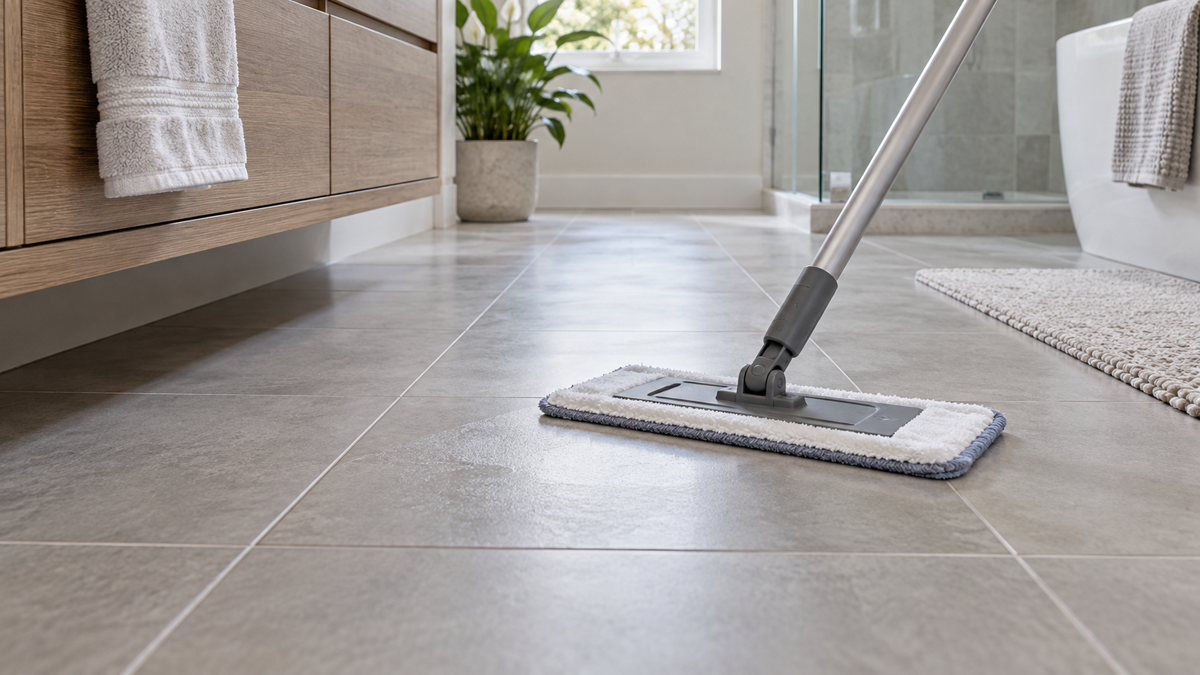
Bathroom floor tile often feels slippery after cleaning because cleaner, body-care products or dirty mop water dried on the tile instead of being removed. Let the floor dry, keep people off the affected area and inspect a small section before adding another product.
Use the tile and grout manufacturer’s approved method to lift the film with clean material. If the tile remains unusually slick after residue is gone, stop treating it as dirt: worn texture, a topical coating, damaged sealer or another installation condition may need professional evaluation.
Quick Answer
• Keep the bathroom floor out of use until it is dry and evaluated.
• Identify ceramic, porcelain, natural stone, grout and caulk separately.
• Check for soap, conditioner, oil, cleaner haze or a floor coating.
• Review the tile, grout and cleaner directions before re-cleaning.
• Test a small section with a clean pad and minimal solution.
• Pick up the loosened film instead of spreading it with dirty water.
• Use a clean follow-pass only when the directions call for one.
• Dry the test section and compare its feel and appearance with the rest.
Why Bathroom Floor Tile Develops a Slippery Film
Too much cleaner is one cause, but not the only one. A loaded mop pad can redeposit skin oils, hair products and soil across the room. Rinse water that is already cloudy leaves those materials behind. Shower overspray can add shampoo, conditioner and soap to the floor outside the enclosure, especially around the door track and bath mat.
Textured tile complicates pickup because residue settles into low points. Grout joints sit below the tile face and hold dirty solution. The Tile Council of North America explains that detergent residue can combine with soil to form a sticky film on tile and grout and notes that very small amounts of cleaner may be enough for many tile floors.
A new polish, “shine” treatment or topical sealer can also change traction. If the problem began immediately after a coating was applied, identify that product before trying to strip it with another chemical.
Identify the Floor Before Removing Residue
Ceramic and porcelain tile
Glazed ceramic and porcelain faces may tolerate routine damp cleaning, but decorative surfaces, worn glaze and printed texture still need a gentle test. The grout and caulk between tiles can be more vulnerable than the tile itself.
Natural stone
Marble, limestone, travertine and other stone require stone-specific guidance. A bathroom cleaner suitable for ceramic tile may dull or etch stone. Do not diagnose a changed finish as removable film without confirming the material.
Grout, caulk and open joints
Cement-based grout can hold cleaner below the tile face; epoxy grout behaves differently. Cracked grout, separated caulk and loose tile are repair conditions. Avoid forcing more liquid through an open joint.
Slip-resistant texture or coating
Some floors have a factory texture, applied treatment or finish intended to affect traction. Abrasive scrubbing or an incompatible product can change it. Follow the manufacturer or installer rather than trying to “polish away” the problem.
Step-by-Step: Remove Cleaner Film From Bathroom Tile
1. Restrict the area and let it dry. Do not evaluate slipperiness while rinse water is still present. Use another bathroom if practical until the floor is dry and the cause is understood.
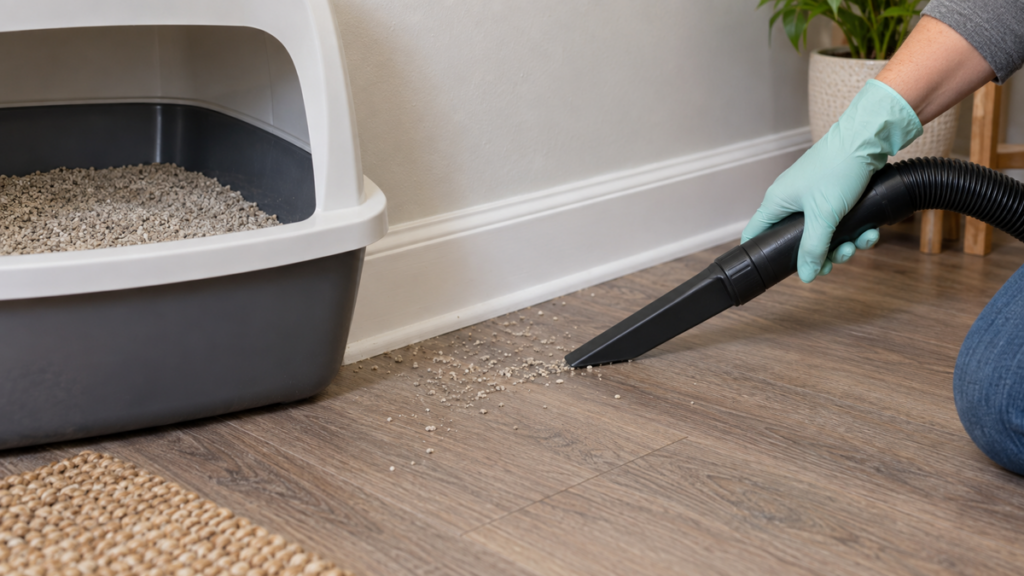
2. Remove mats and loose debris. Lift bath mats instead of dragging them. Vacuum hair, lint and grit with a hard-floor-safe tool so wet cleaning does not turn them into slurry.
3. Inspect the installation. Note stone accents, grout condition, caulk lines, floor transitions, drains and textured areas. Stop around loose tile or open joints.
4. Review the previous cleaning mix. Confirm whether a concentrate was measured, whether a ready-to-use product was diluted incorrectly, and whether polish or another coating was added.
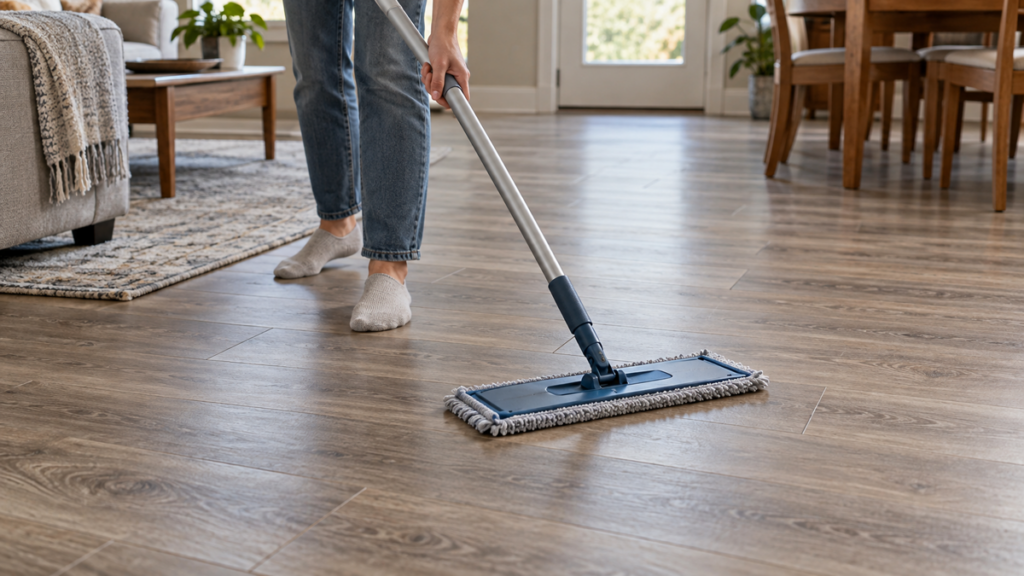
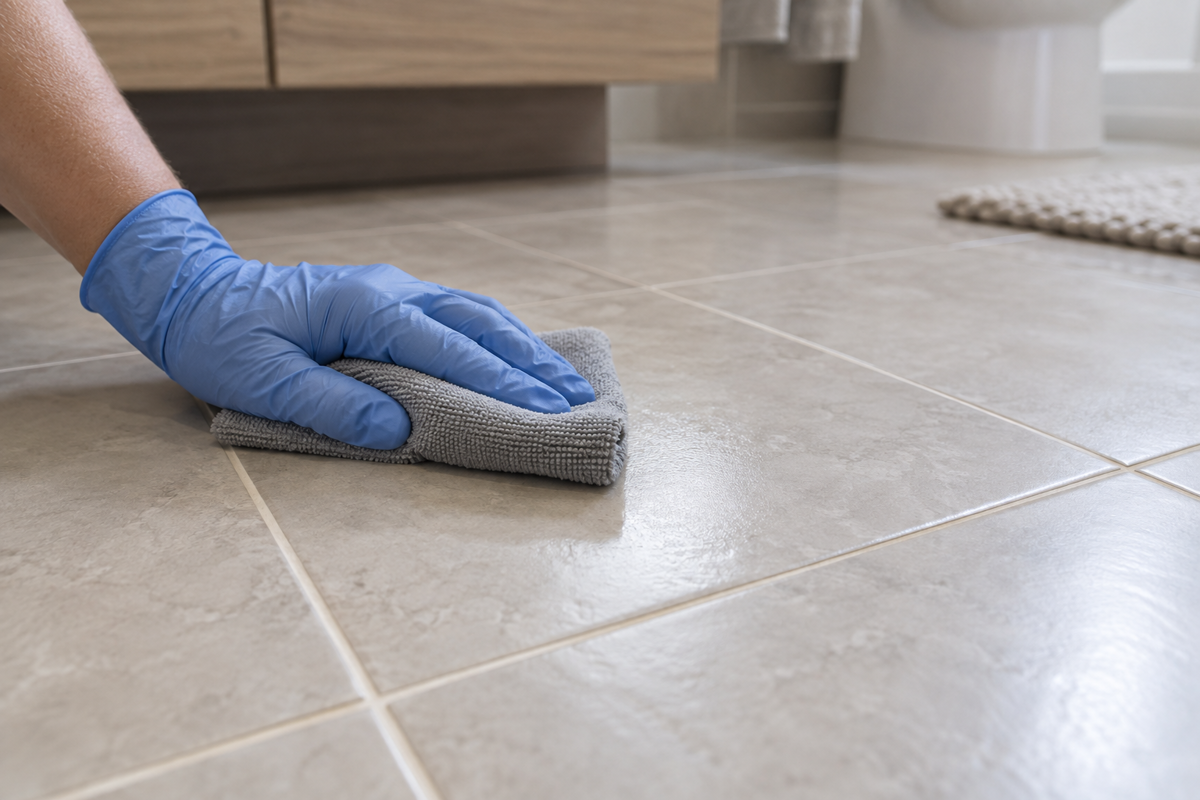
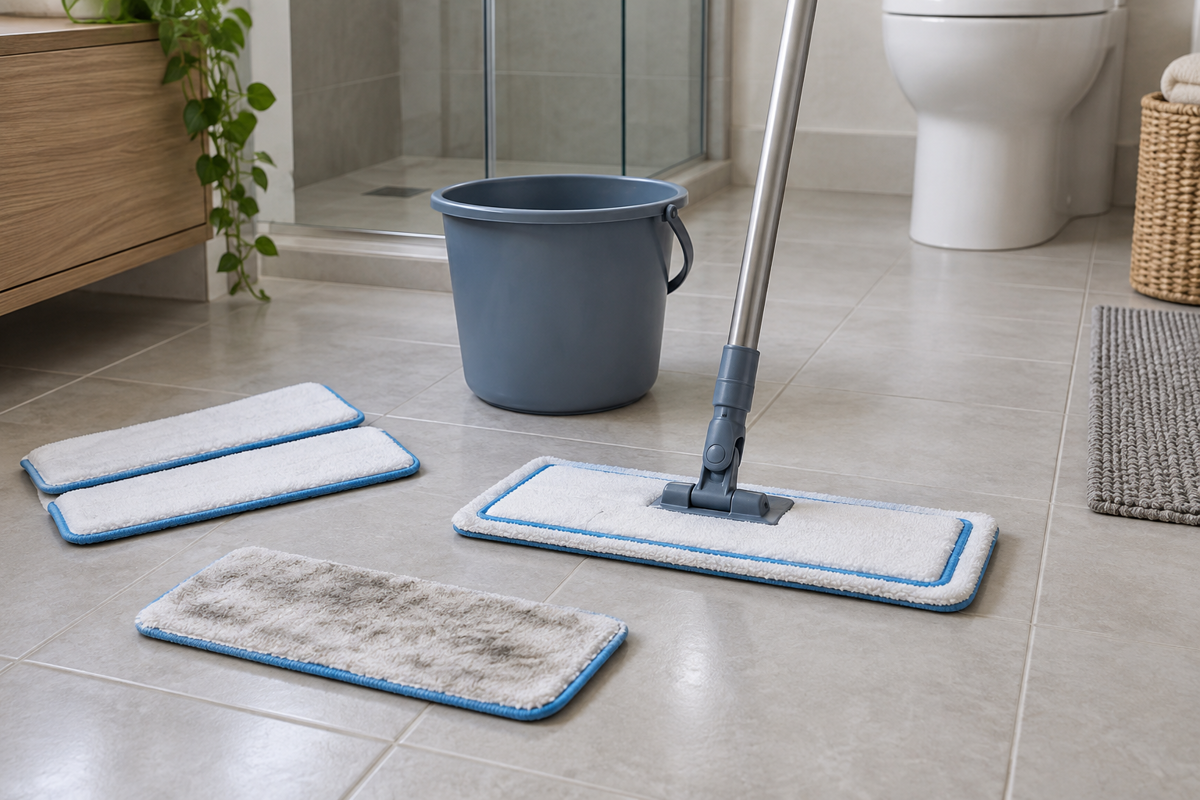
5. Prepare fresh tools. Use a clean bucket, clean water and a clean microfiber pad or other approved applicator. A pad carrying yesterday’s residue cannot diagnose today’s floor.
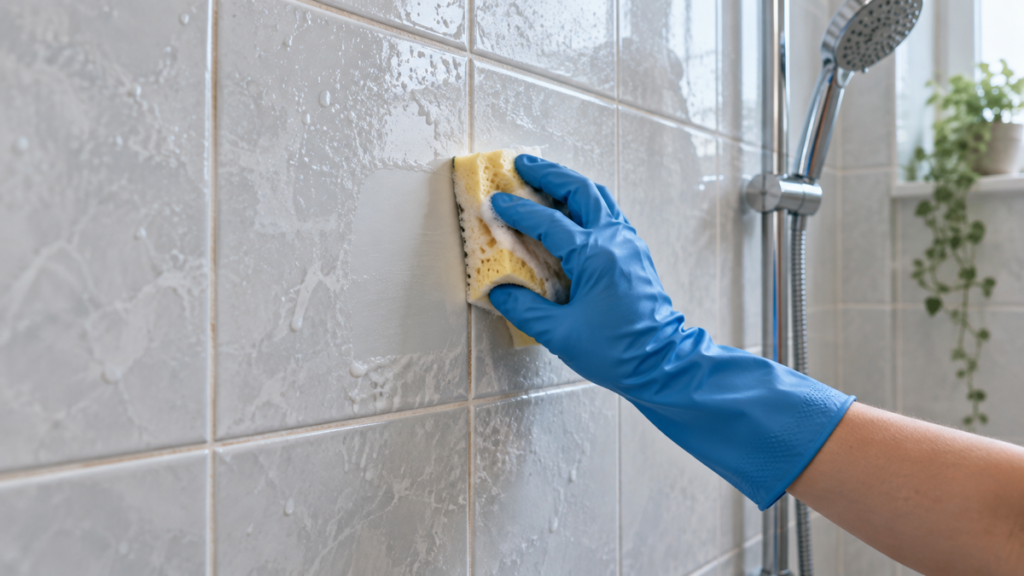
6. Test one small tile section. Use the lightest manufacturer-approved residue-removal method. Keep the liquid controlled and work it across both the tile face and the grout edge without flooding the joint.
7. Lift the dirty solution. Turn to a clean cloth face, replace the pad or use approved extraction. The goal is to transfer film off the floor rather than move it to the next tile.
8. Make the required follow-pass. If the cleaner or tile directions call for a clean-water wipe, use a fresh lightly damp pad. Do not flood the floor in the name of rinsing.
9. Dry and compare. Promote normal airflow, then inspect the test section from a low angle and feel it with clean dry footwear. Look for tackiness, haze and difference in texture.
10. Expand only if the test worked. Clean the remaining floor in small zones, changing pads and water before they become loaded. If the test did not help, identify coating or finish damage before continuing.
Match the Cleaner to the Actual Bathroom Mess
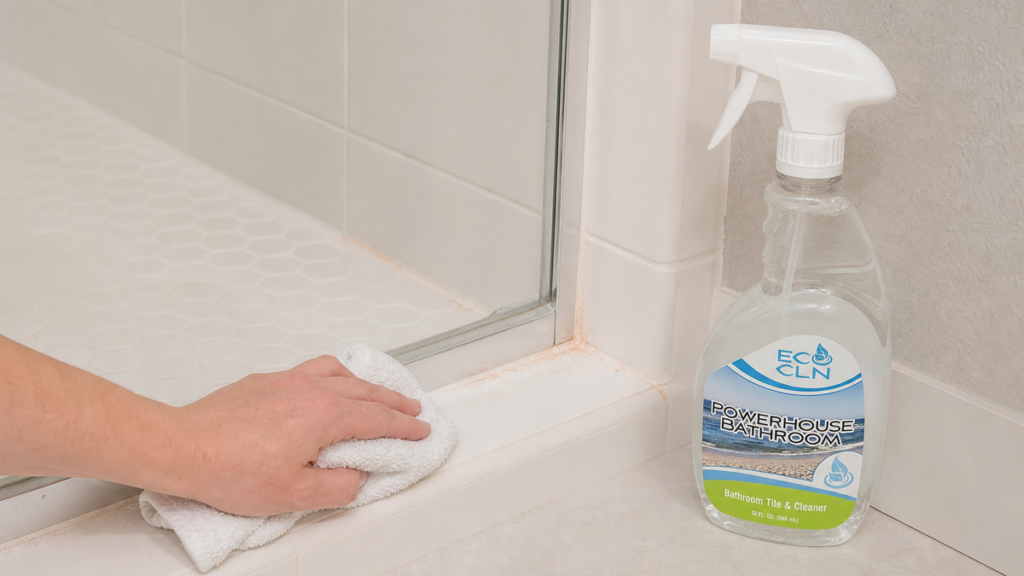
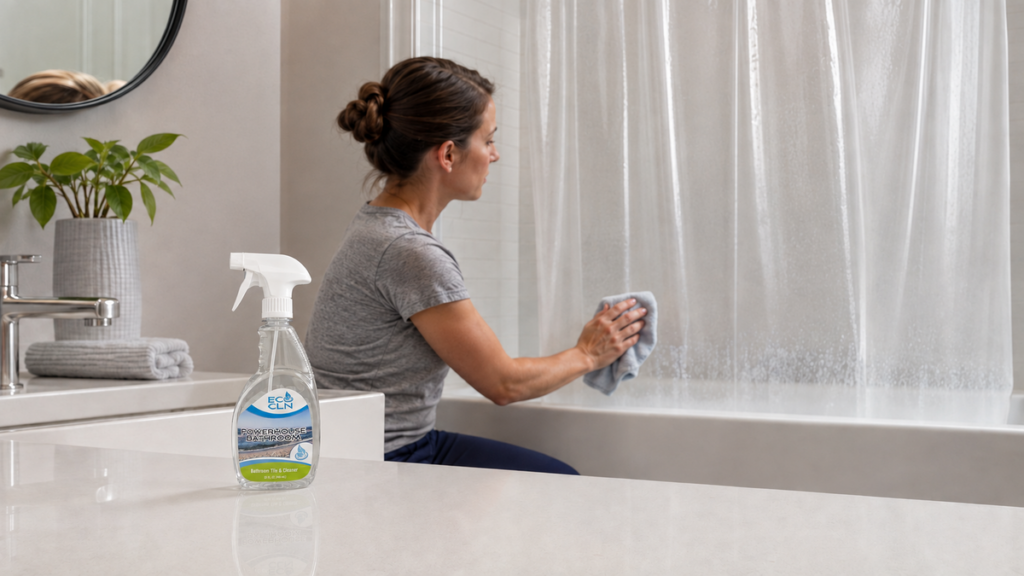
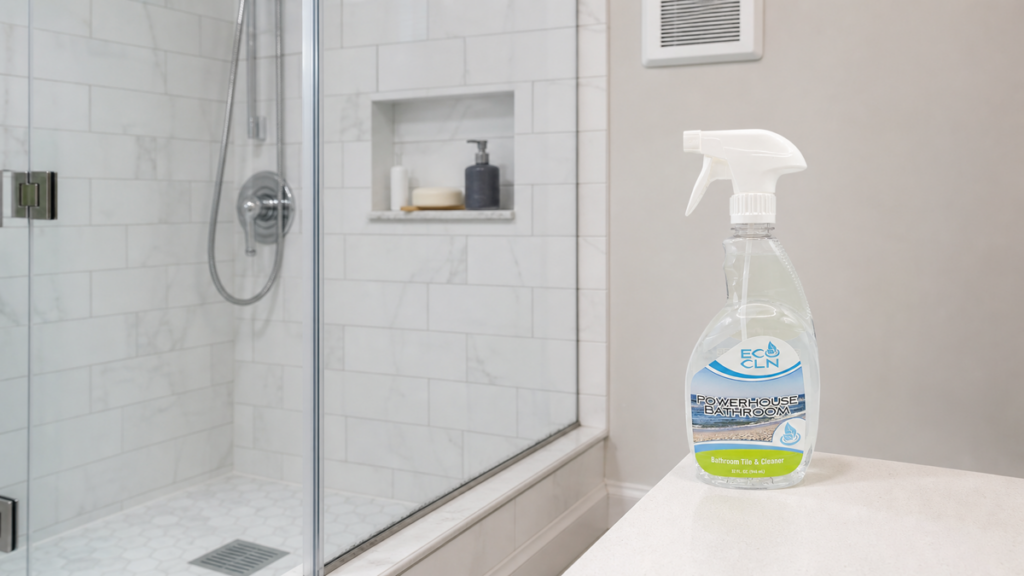
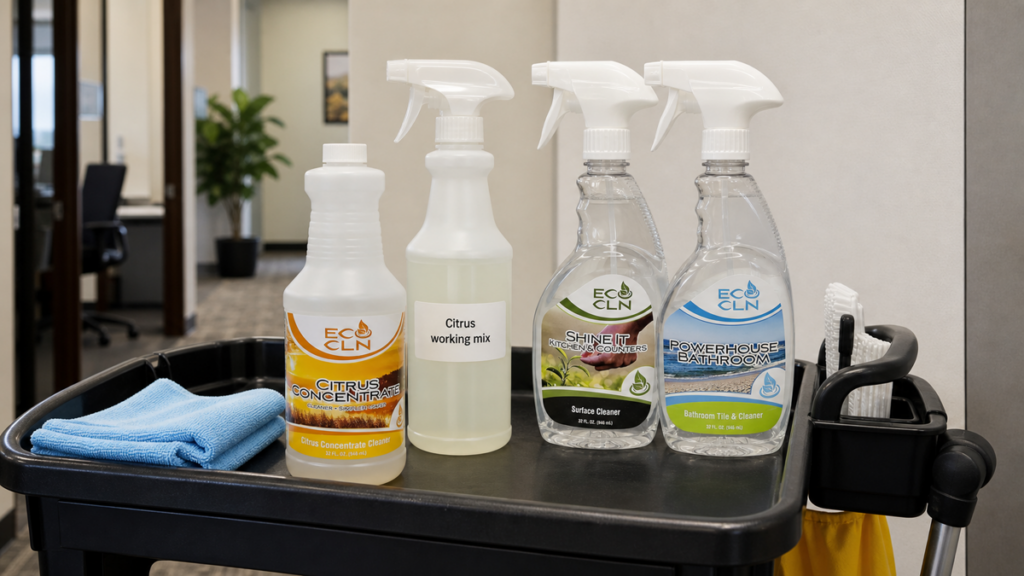
Eco Cln Powerhouse Bathroom is the focused option for compatible soap scum, hard-water buildup, tile and everyday bathroom grime. It may fit a film coming from bathroom use, provided the tile, grout, finish and current directions allow it.
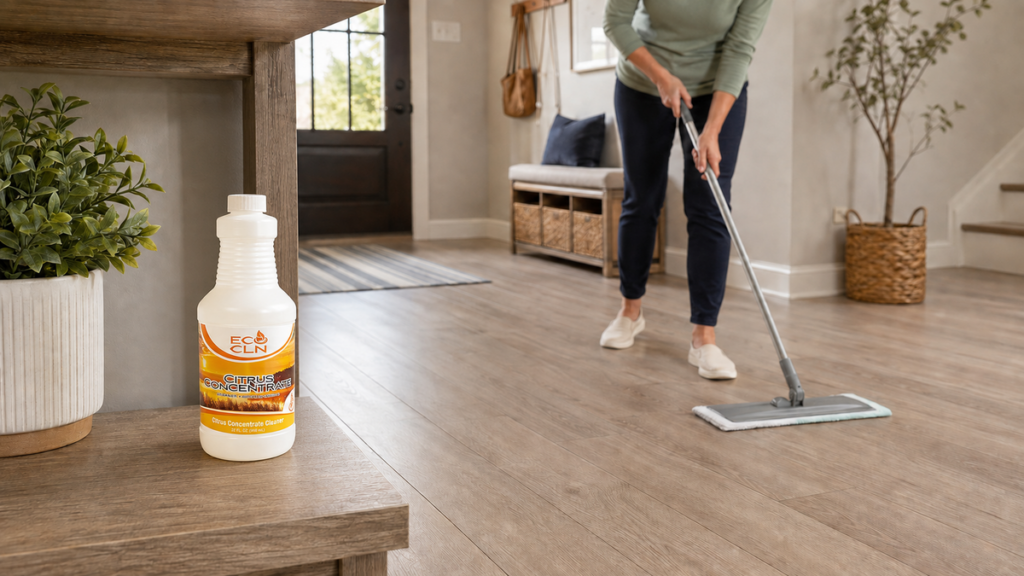
Eco Cln Citrus Concentrate fits compatible everyday washable surfaces where dilution-based all-purpose cleaning is appropriate. Current Citrus directions are 1 ounce per quart of water for light-duty cleaning, 2 ounces per quart for all-purpose cleaning and 8 ounces per quart for heavy-duty cleaning. “Heavy duty” is not automatic permission for a bathroom floor; use only the concentration allowed by the product and floor instructions.
If the floor became filmy after a measurement error, review the cleaner dilution mistakes before making another batch.
Common Reasons the Film Keeps Returning
• Pouring concentrate by eye instead of measuring it.
• Using a ready-to-use product as though it were a concentrate.
• Mopping through shower-product overspray with one loaded pad.
• Leaving dirty solution in recessed grout lines.
• Letting a heavy cleaner layer dry instead of picking it up.
• Mixing products or applying polish over unidentified residue.
• Treating natural stone like glazed porcelain.
• Walking on the floor before the final pass is dry.
The broader guide to sticky floors after mopping helps distinguish excess product, dirty water and incomplete pickup across other floor types. For dark joints that remain after the tile face is clean, use the separate bathroom grout guide.
When Cleaning Is Not the Fix
Stop escalating when the dry tile has worn texture, etched stone, damaged glaze, loose pieces, failed grout or a coating that is peeling or soft. A persistent slick condition may require the tile maker, coating manufacturer, installer or a qualified flooring professional. Cleaning removes accessible residue; it does not restore a physically altered walking surface.
Frequently Asked Questions
Why is my bathroom tile slippery only after it gets wet?
Soap or detergent residue can become noticeable again when water reaches it. A coating or texture issue is also possible, so identify the floor and test a controlled residue-removal pass.
Should I use more bathroom cleaner on the film?
Not before checking the previous dose and pickup method. More product can add another layer when excess cleaner caused the problem.
Can I rinse a tile floor with lots of water?
Follow the tile, grout and installation directions. Excess water can enter open joints, wall gaps or neighboring materials and may not improve residue pickup.
Is white residue on grout always cleaner film?
No. Mineral movement, grout additives and topical sealer conditions can also look white. The pattern and installation history matter.
Which Eco Cln product fits bathroom floor residue?
Powerhouse fits compatible bathroom buildup; Citrus fits compatible dilution-based general cleaning. The actual soil and floor instructions determine the choice.
The bottom line
A slippery bathroom tile floor usually needs better diagnosis and cleaner pickup, not a stronger mystery mixture. Use fresh tools, test a small section, remove the loosened film and judge the floor only when dry. If its texture or coating has physically changed, stop cleaning and get material-specific guidance.