Why Pet Urine Smell Comes Back After Cleaning


Quick Answer
Pet urine smell can come back after cleaning when the visible surface was cleaned but some of the accident remains in carpet backing, padding, grout, floor seams, baseboard edges, upholstery filling, rug backing, or another nearby spot. It can also seem stronger again when humidity or fresh moisture reactivates odors in an old accident area.
The fix is not automatically “use more cleaner.” First identify where the smell is actually coming from, then match the cleanup method to the material. Use controlled moisture, allow the treated area to dry completely, and stop repeated surface soaking if the problem appears to be below the surface.
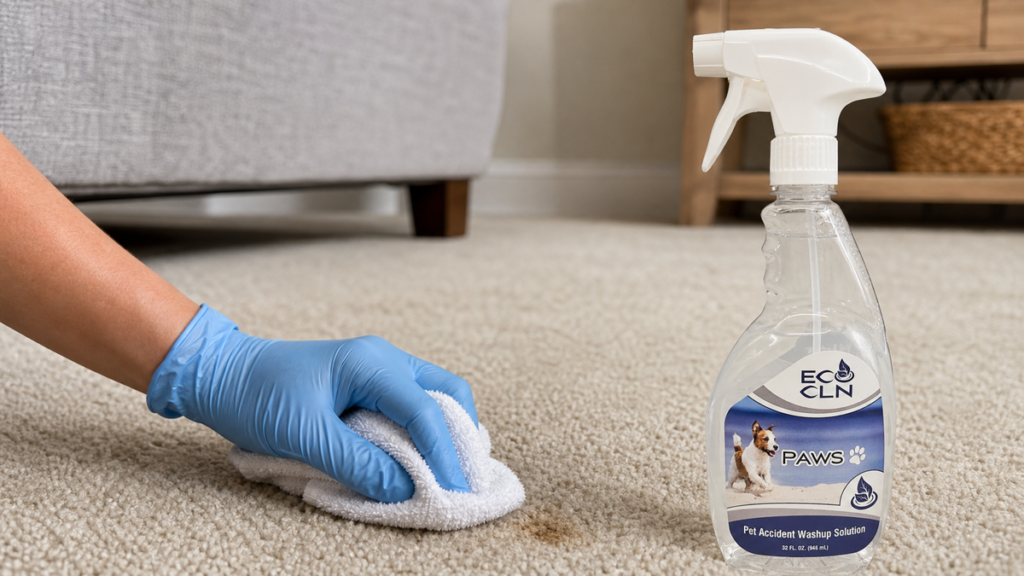
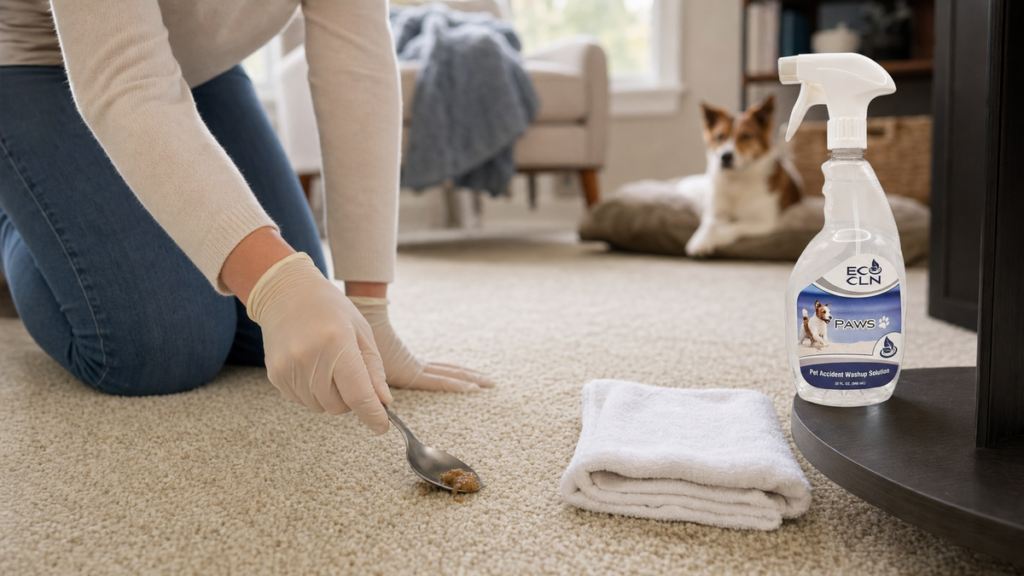
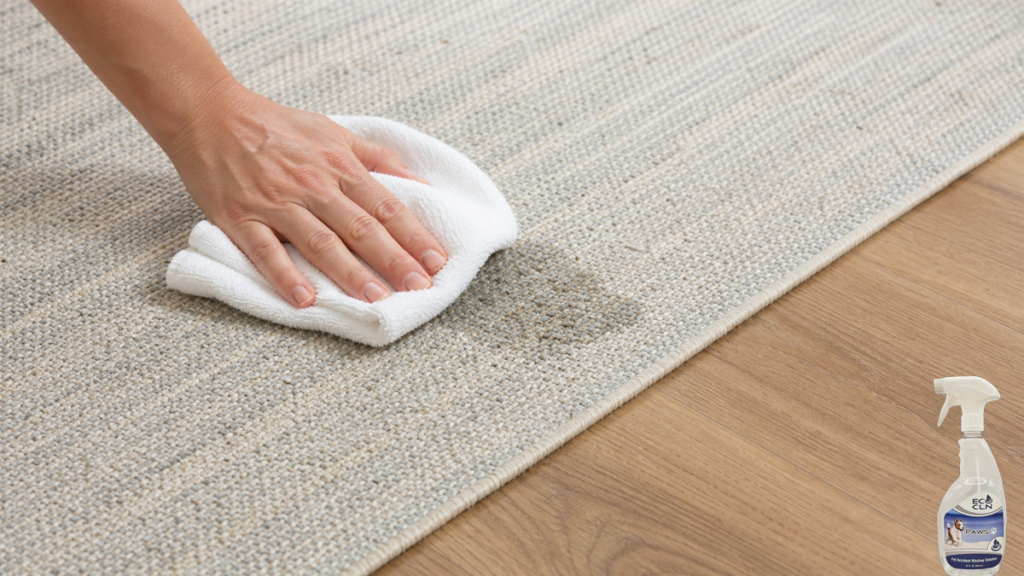
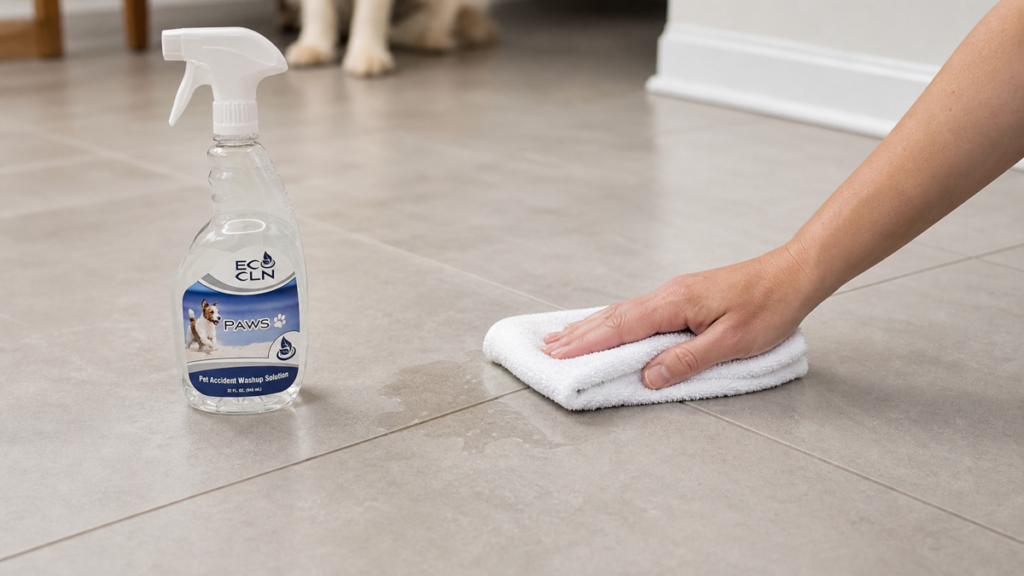
Eco Cln PAWS is the pet-focused cleaner in the Eco Cln lineup for urine odors, organic stains, carpets, rugs, upholstery, hard floors, pet beds, and repeat pet accident areas when used as directed.
Reason 1: The Accident Was Bigger Than the Visible Spot
A pet accident spreads.
On carpet, liquid can move sideways through the pile before it moves downward into the backing. On a hard floor, it can follow grout lines, plank seams, floor transitions, and the narrow gap at a baseboard. On upholstery, it can wick into seams or cushion filling.
That means a six-inch visible mark does not necessarily represent a six-inch accident zone.
If you cleaned only the center, residue around the perimeter may still be there.
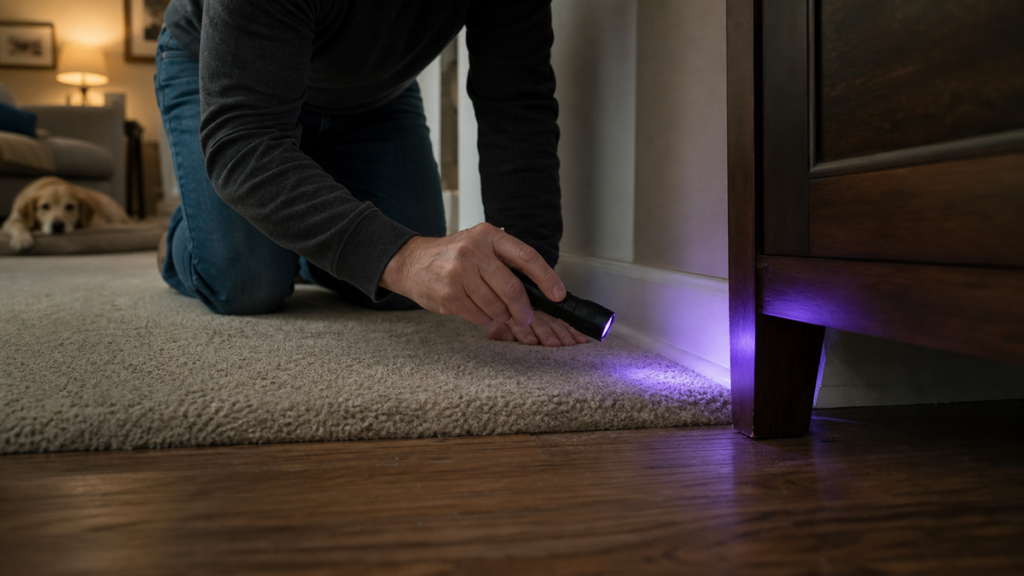
What to do: Re-check the entire area around the original spot. Work outward slowly. Smell near the carpet edge, baseboard, underside of a nearby rug, furniture legs, and transition strips. On hard floors, pay close attention to seams and edges rather than flooding the center again.
Reason 2: The Urine Reached Carpet Padding or Upholstery Filling
Carpet is a layered material. What you touch with your hand is only the top layer.
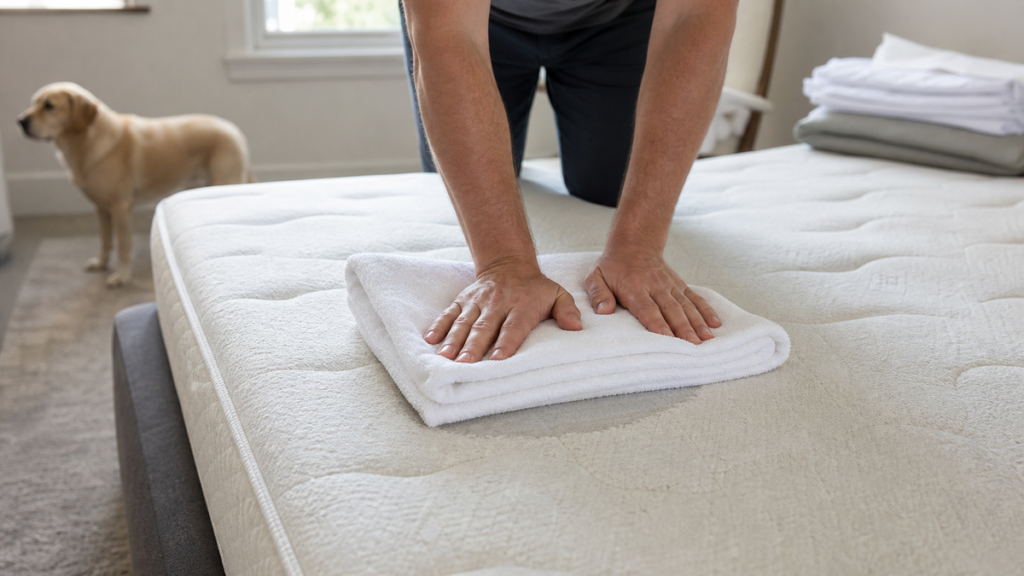
If enough liquid reached the backing or pad, cleaning the carpet fibers can improve the surface while deeper residue remains. The same issue can happen in a sofa cushion or mattress: the cover looks clean, but the inside stayed wet longer.
Repeatedly soaking the top does not guarantee the cleaner is reaching the same depth as the original accident. It may simply add more moisture.
What to do: Treat the surface carefully and let it dry completely. If the odor keeps returning from a deeply soaked area, consider a professional carpet or upholstery cleaner who can evaluate what is happening below the surface. Severe, repeated contamination may require access to the pad or other underlying material.
Reason 3: The Floor Edge or Baseboard Was Missed
Pet urine frequently travels to edges.
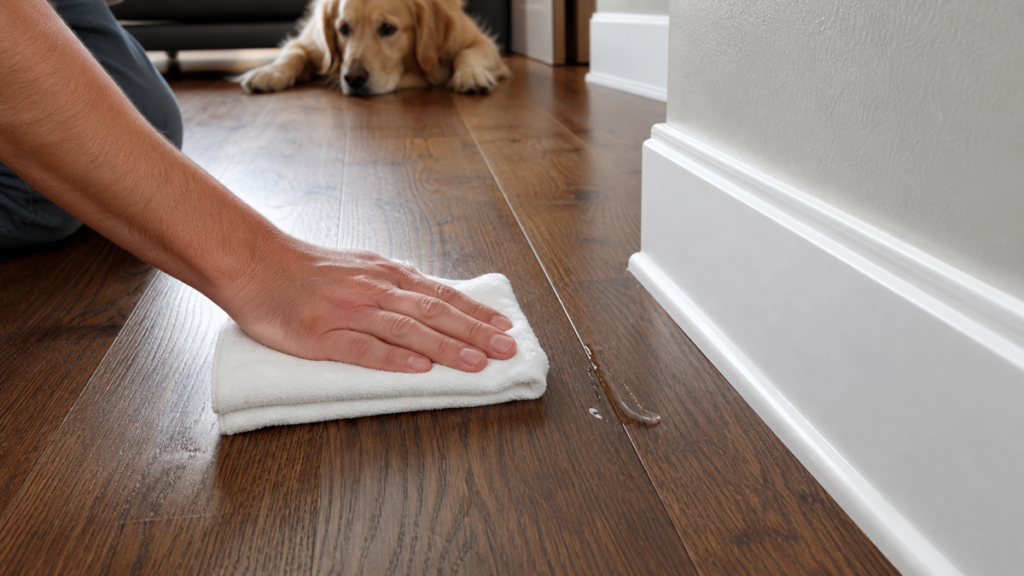
A dog may mark a vertical baseboard or furniture leg. A puddle on hard flooring may reach the wall before you notice it. Carpet near a baseboard can hold moisture where a standard vacuum or quick surface wipe does not reach.
That makes the room smell like “the carpet” when the actual source is along the wall.
What to do: Check the baseboard face, the joint where it meets the floor, the carpet edge, and the nearby floor seams. Use a controlled cleanup and avoid saturating unfinished edges or gaps. For a detailed method, link to the Eco Cln baseboard urine guide.
Reason 4: The Area Was Not Fully Dry When You Judged the Result
A damp carpet or cushion has its own smell. Cleaning can also temporarily move odor around while material is wet.
If you keep adding product before the area has dried, it becomes difficult to tell whether the urine residue remains, the carpet is simply damp, or cleaner residue is building up.
What to do: After cleaning, improve airflow and leave the area alone until it is completely dry. Keep pets and foot traffic off the spot. Evaluate the odor only after the material returns to normal dryness.
Reason 5: Humidity Makes the Old Spot Noticeable Again
Many people notice old pet odors on humid days or after another round of damp cleaning.
Moisture can make an old accident area more noticeable again, especially when residue remains in absorbent material. That does not mean the urine magically returned. It is a clue that the source may not have been completely reached or removed.
What to do: Use the humid-day odor as a location clue. Re-check the room rather than automatically soaking the same visible spot.
Reason 6: There Is More Than One Accident
This is common in repeat-marking areas.
You may successfully clean one spot and still smell another accident behind furniture, under a rug edge, near a door, or along a wall. In multi-pet homes, the problem can be even harder to isolate.
What to do: Search systematically. Divide the room into zones and check one at a time. Do not assume the strongest visible stain is the only source.
Reason 7: The Wrong Cleaner Was Used for the Mess
A general surface spray may make a pet accident look cleaner without being intended for urine odor or organic pet messes.
Likewise, a carpet stain remover designed for food or dirt is not automatically the best choice for pet urine.
Eco Cln separates those jobs. PAWS is the pet-accident product for urine odors and organic stains. Spot Gone is the carpet and upholstery stain remover for non-pet spots such as food, grease, dirt, and everyday household stains.
Matching the cleaner to the problem helps keep the process clear.
How to Re-Clean a Spot Without Making It Worse
Start by confirming the source. If the smell is coming from the same accessible surface area, remove loose debris and spot-test the cleaner if needed.
Apply PAWS according to the product directions without flooding the material. Give it the listed contact time. Blot carpet, rugs, or upholstery instead of scrubbing aggressively. Wipe washable hard surfaces and dry them thoroughly.
Work from the outside inward when dealing with a localized spot. Use clean towel sections as they become damp or dirty.
Then stop and let the area dry.
A second controlled treatment can make sense for an older or repeat spot. Five wet treatments in a row usually do not.
When to Stop Surface Cleaning

If the odor returns from the same place after proper cleaning and complete drying, the source may be inaccessible from the surface.
Warning signs include a history of repeated accidents in one location, a large original puddle, odor concentrated at a floor seam or wall edge, a cushion or mattress that was deeply soaked, or carpet odor that becomes strong every time the area is humid.
At that point, more product on top can become a cycle. A professional may need to inspect the carpet pad, subfloor, upholstery fill, rug backing, or damaged trim.
Do Not Use Odor as a Reason to Mix Products
When a smell is stubborn, it is tempting to combine cleaners, deodorizers, bleach products, acids, or other chemicals.
Do not mix cleaning products unless the labels specifically say the products are intended to be combined. Besides creating unnecessary risk, mixing products makes it harder to tell what is actually working and can damage carpet, finishes, or dyes.
Why Heat Is Not the First Move for Urine Odor
Humane World for Animals advises avoiding steam cleaners on urine odors in carpet or upholstery because heat can set the stain and odor into the fibers.
For an older pet accident, start with a pet-accident cleaning process, controlled moisture, blotting, and full drying before considering any hot extraction method. If deeper professional cleaning is needed, tell the cleaner that the problem is pet urine so they can choose an appropriate process.
FAQ

Why does my carpet smell like dog pee again after it dries?
The original accident may have spread deeper or wider than the section you cleaned, or another nearby accident may be contributing to the odor. Check backing, padding, edges, baseboards, and surrounding areas.
Why does pet urine smell worse when it is humid?
Humidity can make old accident residue more noticeable. Treat it as a clue that the source may still be present in an absorbent or hidden area.
Can I just keep spraying the same spot?
Repeatedly soaking the surface can push moisture deeper and make drying harder. Use controlled application, let the area dry fully, and reassess before treating it again.
What if the smell is strongest near the wall?
Check the floor edge, carpet edge, baseboard, plank seams, grout, and any nearby furniture. Pet urine often travels or is deposited directly along vertical surfaces.
Does recurring odor mean the cleaner did not work?
Not necessarily. The cleaner may have improved the portion it reached while deeper or adjacent residue remains. Location and depth matter as much as the product.
The Bottom Line
Pet urine smell can come back after cleaning when the visible surface was cleaned but some of the accident remains in carpet backing, padding, grout, floor seams, baseboard edges, upholstery filling, rug backing, or another nearby spot. Correct the cause before repeating the same cleaning pass, then use the matching Eco Cln product only where its current directions fit.
Continue with this related Eco Cln guide: Why carpet stains come back after cleaning.
For additional material or process limits, review the Humane World pet-stain guidance.
When the mess is pet urine, use a cleaner meant for the pet-accident lane. Eco Cln PAWS is designed for urine odors, organic stains, carpets, rugs, upholstery, hard floors, pet beds, and repeat accident areas when used as directed.