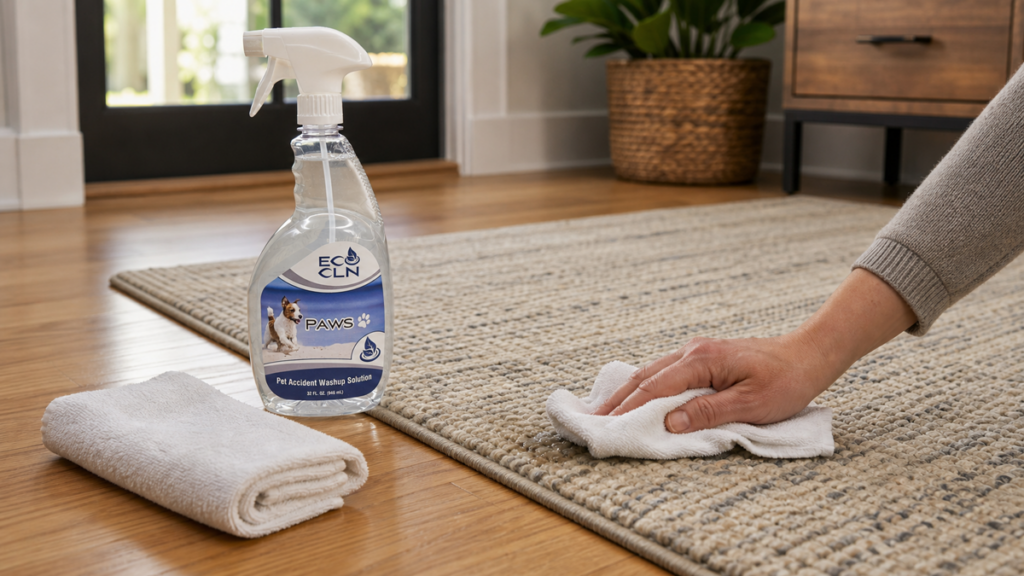
How to Clean a Repeat Pet Accident Spot Without Making It Worse

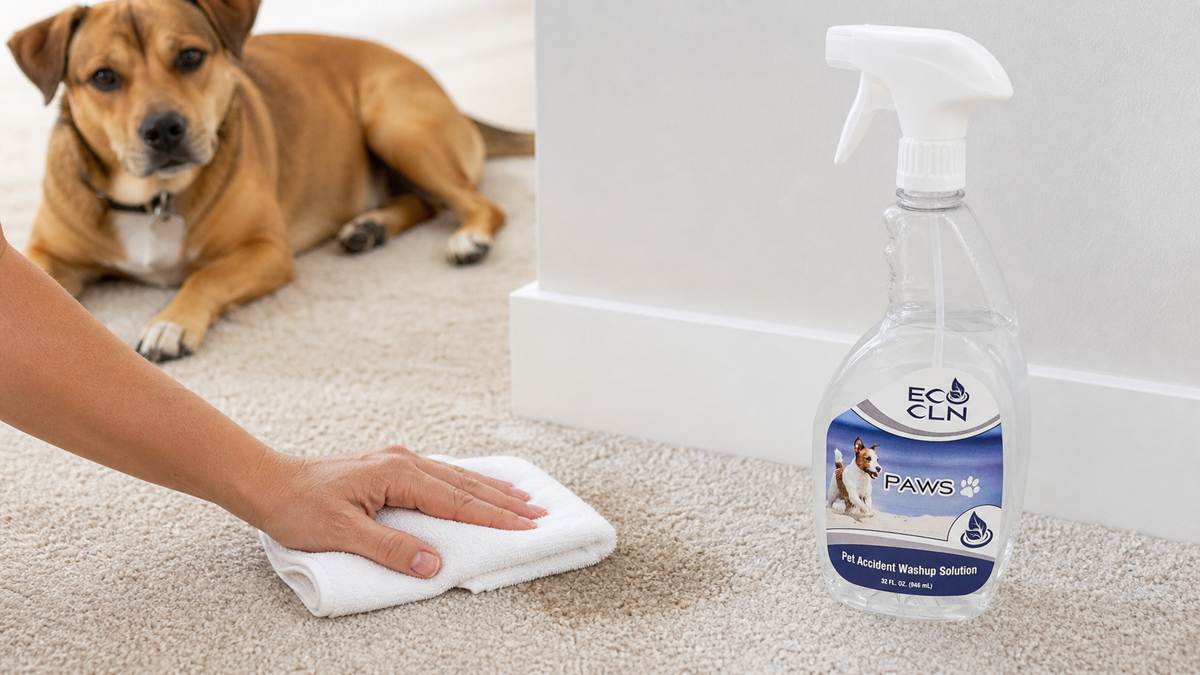
Quick Answer
Blot the newest accident immediately, then inspect beyond the visible wet spot for older residue. Check the surface and hidden layers before adding more liquid.
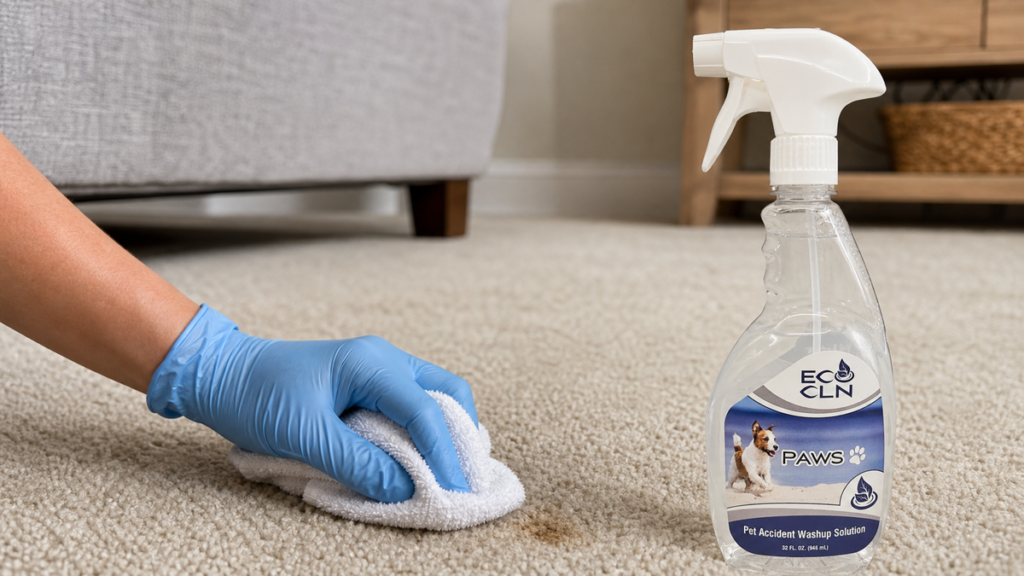
On compatible pet-accident surfaces, use Eco Cln PAWS according to its directions. Treat the actual accident zone, blot or wipe clean, and let the area dry completely before deciding whether it needs a second application.
Do not repeatedly soak the same carpet, rug, upholstery, wood seam, or grout line. If odor returns after drying, the source may be deeper than the surface.
Humane World notes that pets may continue returning to a soiled area while they can still detect their scent there, so thorough cleanup matters. Review Humane World pet-stain guidance.
Why Repeat Accident Spots Are Harder
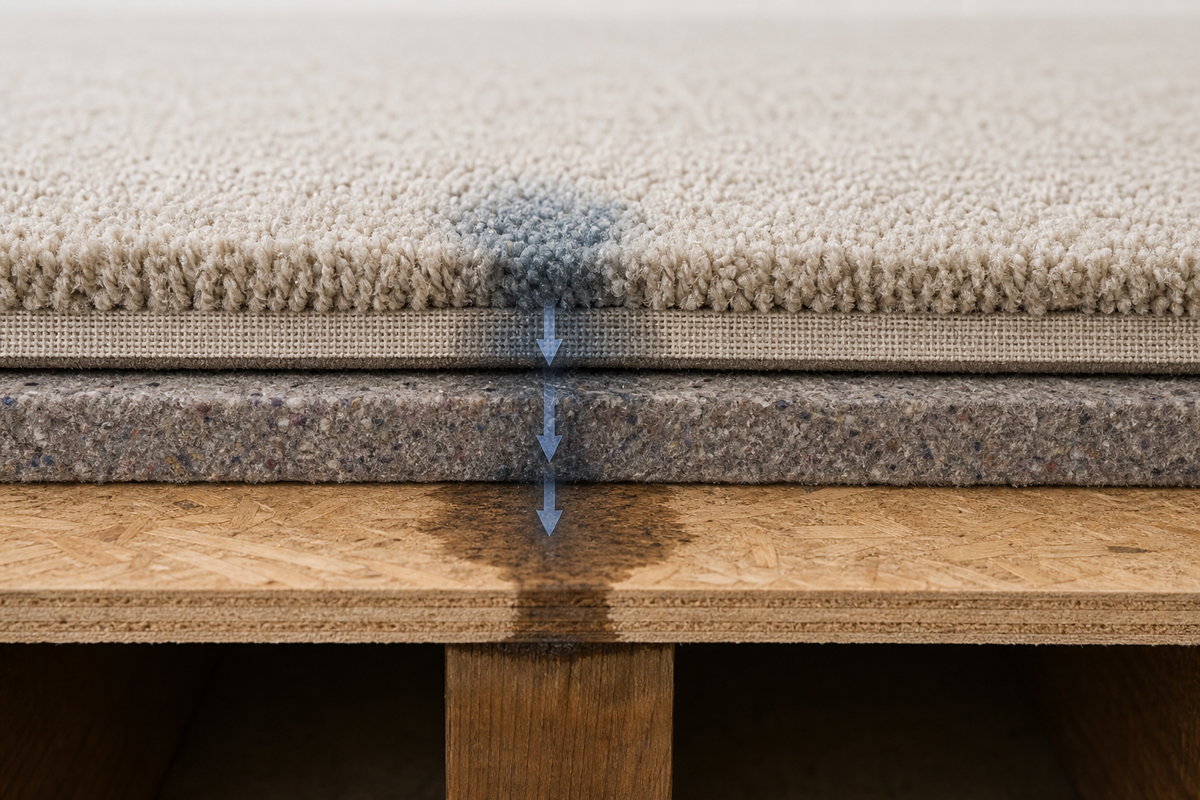
A first accident may stay near the surface. Repeated accidents can move into carpet backing, pad, rug backing, floor seams, grout, baseboards, cushion fill, or unfinished edges.
The newest visible spot may be only part of the actual contaminated zone.
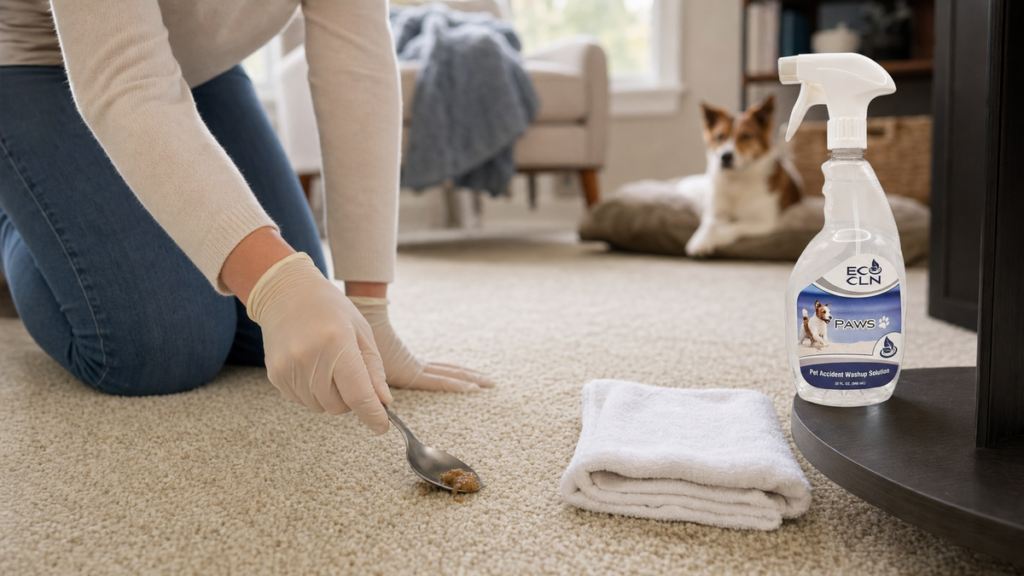
Step 1: Blot the Fresh Accident First
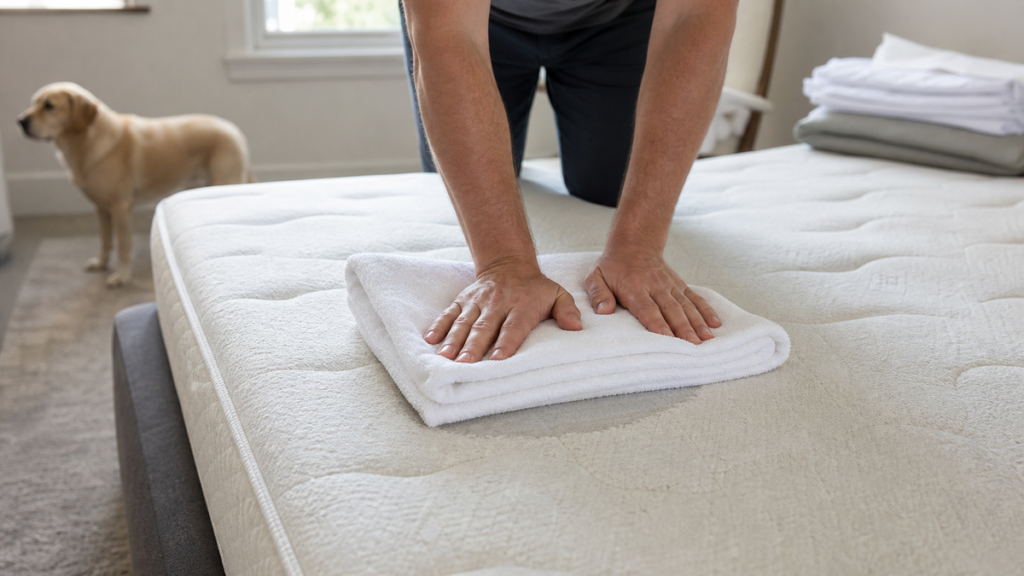
Use clean absorbent towels and press straight down. Do not scrub the wet area outward.
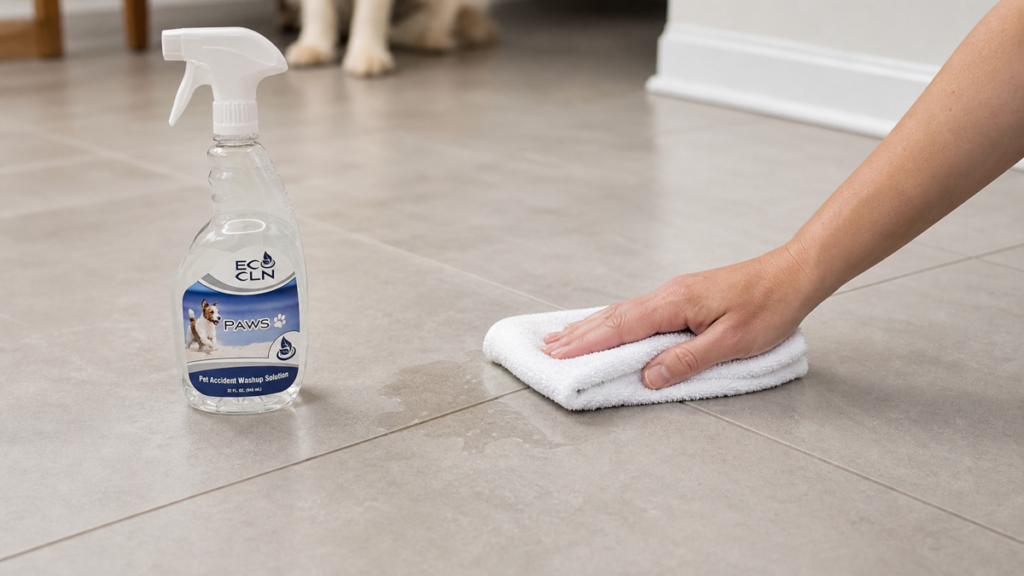
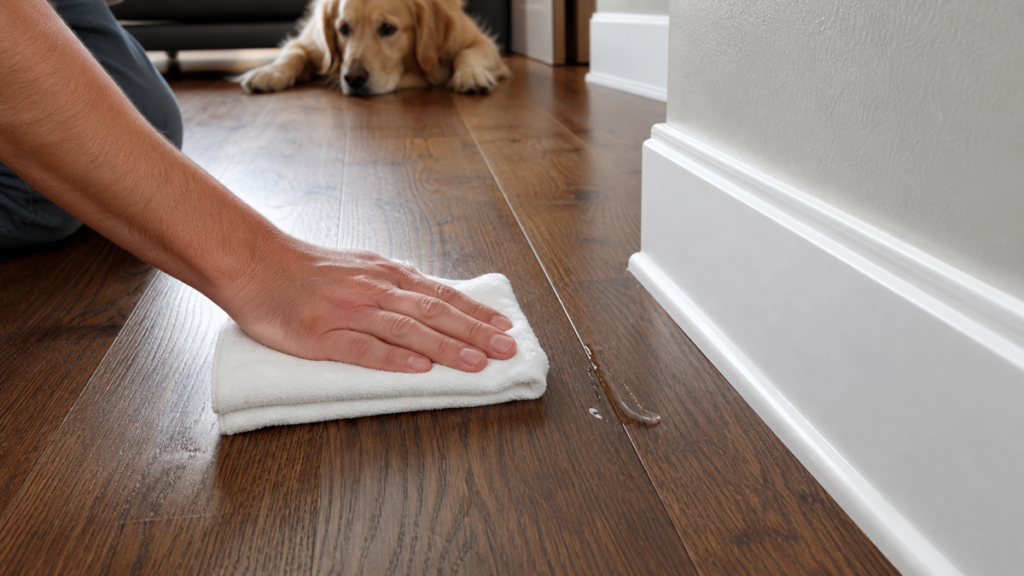
On hard floors, blot seams and edges instead of pushing liquid across a wider area.
Step 2: Map the Whole Accident Zone
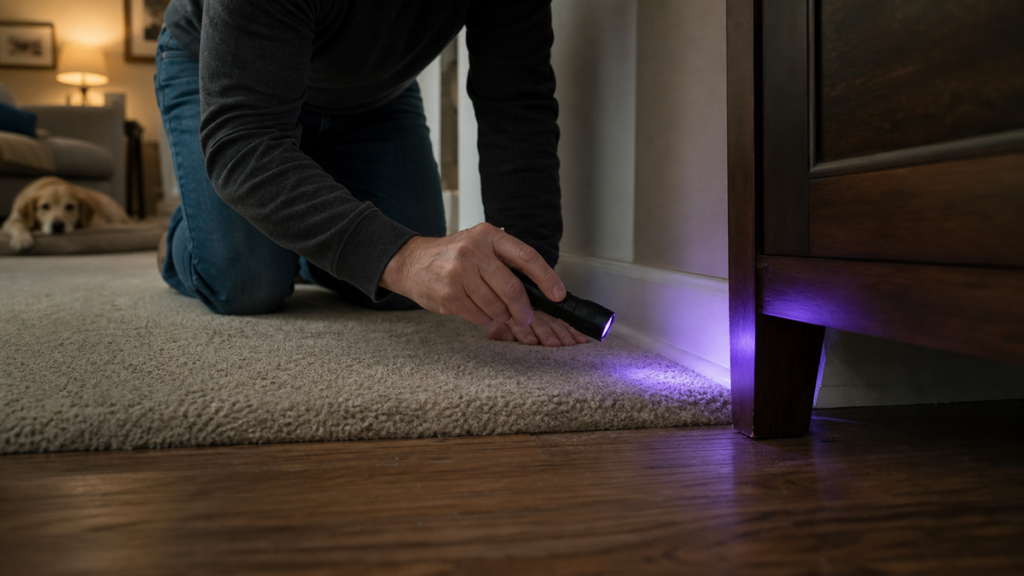
Check carpet edges, rug backing, floor transitions, baseboards, furniture legs, nearby upholstery, grout, and any location the pet repeatedly targets.
A black light can sometimes reveal fluorescence, but it is only a clue: detergents and other residues can fluoresce too. Confirm suspected spots with smell, history, and physical inspection.
Step 3: Identify What Is Under the Surface
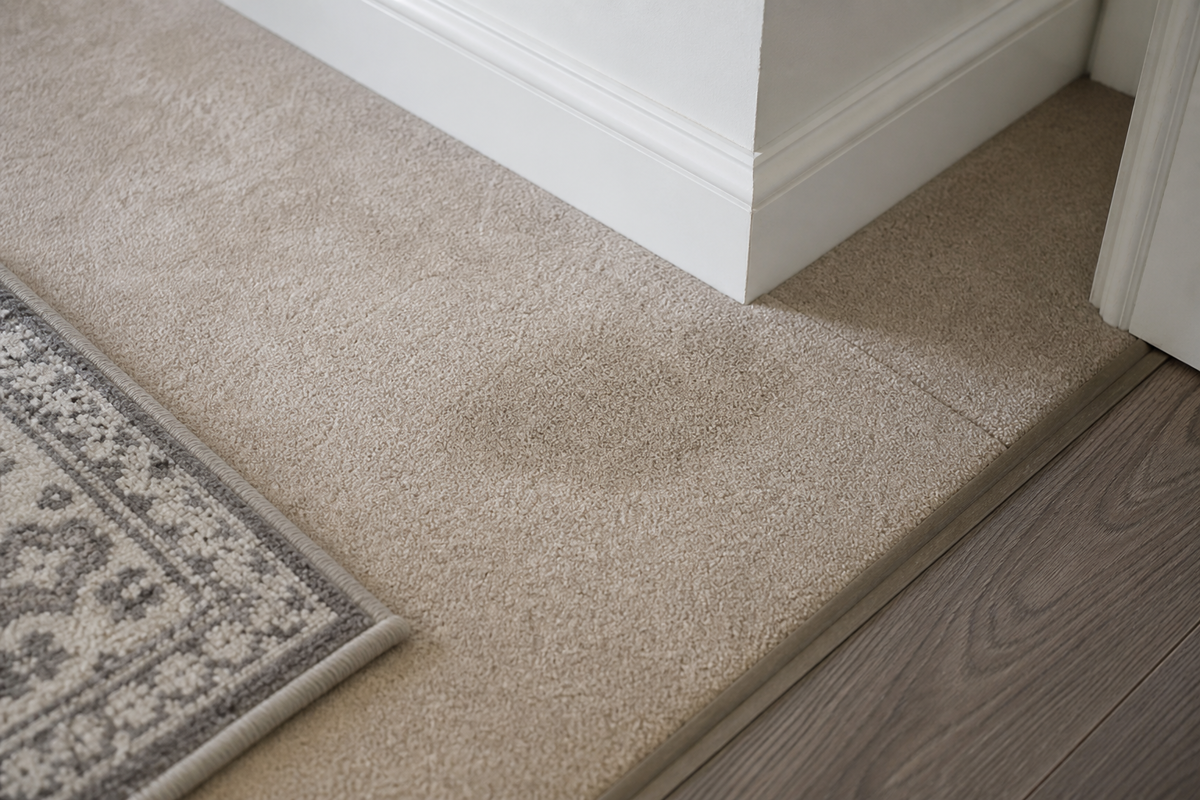
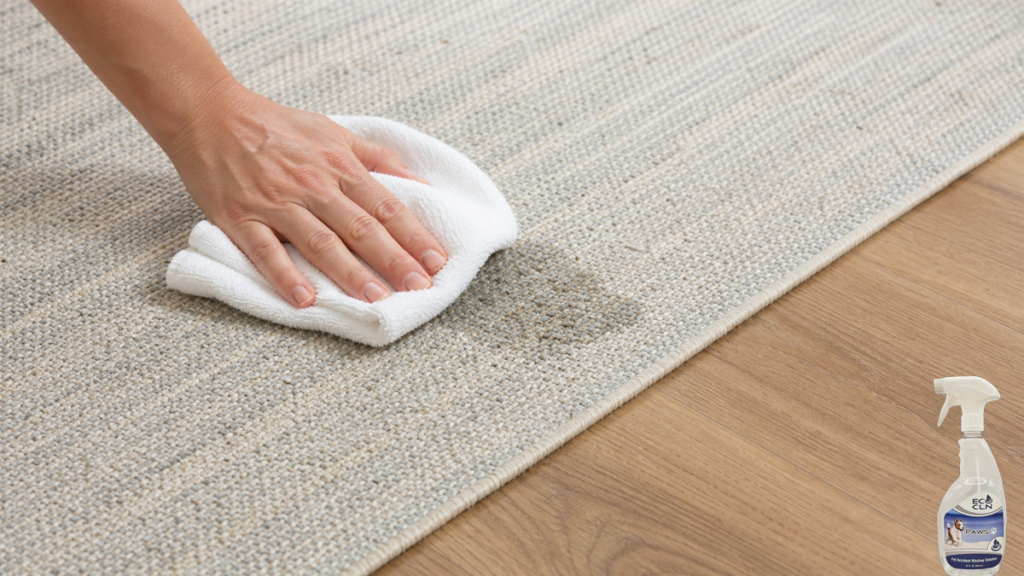
Carpet has backing and pad. Area rugs may have backing plus a separate floor underneath. Upholstery may have foam and batting. Wood and laminate have seams. Tile has grout and perimeter joints.
If the source is beneath a surface you cannot safely wet or extract, repeated top-down spraying may never reach it.
Step 4: Spot-Test PAWS
The current PAWS product page positions PAWS for urine odors, organic stains, carpets, rugs, upholstery, hard floors, pet beds, kennels, and repeat accident spots.
Test first on delicate fabrics, specialty rugs, natural stone, painted surfaces, unfinished wood, or any material with unknown compatibility.
Step 5: Use Controlled Product, Not a Flood
Apply enough cleaner to contact the affected surface according to the product directions, but avoid turning the area into a saturated zone.
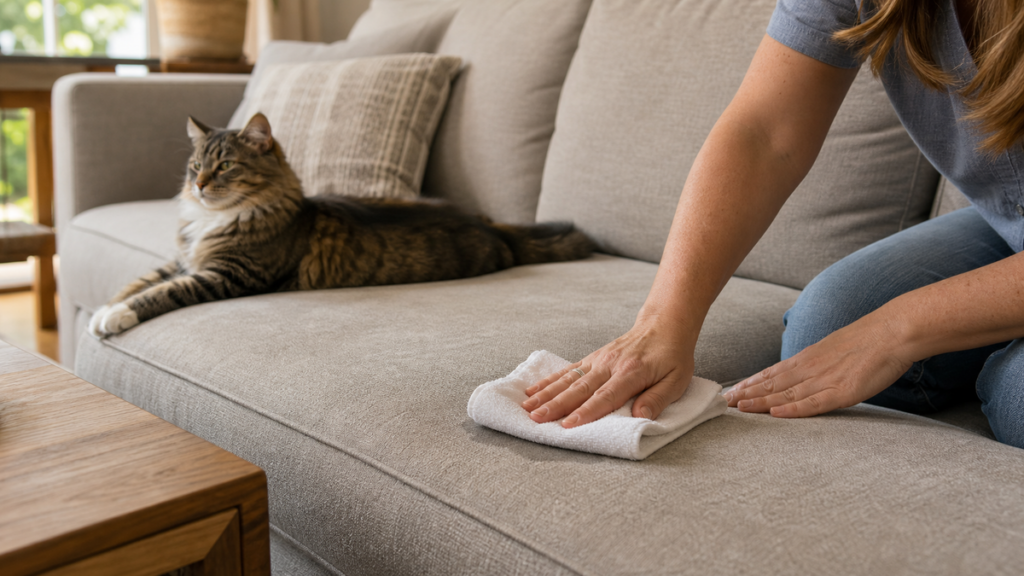
For carpet and upholstery, blot after contact and rotate to clean towel sections. For hard floors, wipe the treated area and dry edges and seams.
Step 6: Let It Dry Before Re-Treating
PAWS directions specifically call for full air drying and note that older odors or repeat spots may require a second application.
Do not stack one wet application on top of another because the odor seems stronger while the area is still damp.
Step 7: Recheck the Source After Drying
If odor returns, inspect deeper or adjacent materials before adding more cleaner.
Carpet pad, subfloor, rug pad, baseboard edges, unfinished wood, cushion fill, or cracks may need professional cleaning, repair, sealing, or replacement depending on the material and severity.
Cleaning the Spot Is Only Half the Repeat-Accident Problem
Humane World recommends cleaning soiled areas thoroughly with a cleaner designed to eliminate urine odor when addressing repeat indoor urination. See repeat-urination guidance.
If the pet is suddenly having more accidents, straining, drinking unusually, showing diarrhea, or changing bathroom habits, discuss the behavior with a veterinarian rather than assuming it is only a cleaning issue.
Common Repeat-Spot Mistakes
- Treating only the newest visible wet mark.
- Flooding the area repeatedly before it dries.
- Scrubbing carpet or upholstery outward.
- Ignoring rug pads, carpet pads, baseboards, seams, or grout.
- Using Spot Gone instead of PAWS for urine/organic pet accidents.
- Assuming a black-light glow proves urine.
- Making disinfecting or permanent odor-elimination guarantees.
Where PAWS Fits
Eco Cln PAWS is the targeted Eco Cln cleaner for urine odors, organic stains, carpets, rugs, upholstery, hard floors, pet beds, kennels, and repeat accident spots. Its job is cleaning the affected pet-mess area; it cannot repair damaged flooring, contaminated subfloor, or failing finishes.
FAQ
Why does my pet keep going back to the same spot?
Residual scent can be one reason pets return to a previously soiled area. Thorough cleanup helps, but repeated accidents can also have behavioral or medical causes.
Should I soak the carpet so PAWS reaches the old urine?
Avoid broad oversaturation. Carpet pad or subfloor contamination may require extraction or professional treatment rather than repeated surface soaking.
Can I use PAWS twice?
The current PAWS directions say older odors, heavy stains, or repeat accident spots may need a second application. Let the first treatment dry fully before reassessing.
Can a black light find every urine spot?
No. It can be a useful clue, but other residues can fluoresce. Confirm suspected areas before treating them.
What if the odor comes back after everything dries?
Inspect deeper materials such as carpet pad, subfloor, rug backing, baseboards, seams, grout, or cushion fill. Surface cleaning may not reach the entire source.
The Bottom Line
Blot the newest accident immediately with clean absorbent towels, then map the entire repeat zone instead of treating only the newest visible mark. Check carpet edges, rug backing, pad, floor transitions, baseboards, grout, seams, upholstery fill, and nearby hard surfaces that may hold older residue. Identify the surface and the layers beneath it before adding liquid, spot-test PAWS where the material is compatible, and use controlled product rather than flooding carpet, upholstery, wood joints, or grout. Blot or wipe as the material allows, protect adjacent finishes, and let the treatment air-dry completely before deciding whether the older spot needs the second application allowed by the current PAWS directions. If odor returns after drying, investigate pad, subfloor, rug backing, cushion fill, unfinished edges, or cracks before stacking another wet pass on the surface. Stop if dye transfers, texture changes, seams swell, finish softens, or the affected area extends into material that cannot be safely reached or extracted. Large or recurring subsurface contamination may need professional cleaning, repair, sealing, or replacement. If a pet suddenly has repeated accidents or other behavior or health changes, contact a veterinarian rather than assuming the problem is only cleaning. PAWS addresses compatible pet-accident soil and odor; it cannot repair damaged materials or guarantee permanent odor removal.
Continue with this related Eco Cln guide: Pet accident cleaner: seven steps.
For repeat urine odors and organic pet-accident zones on compatible surfaces, Eco Cln PAWS is the focused Eco Cln cleaner. Blot the new accident, treat the full zone carefully, let it dry, then investigate deeper materials before simply adding more liquid.