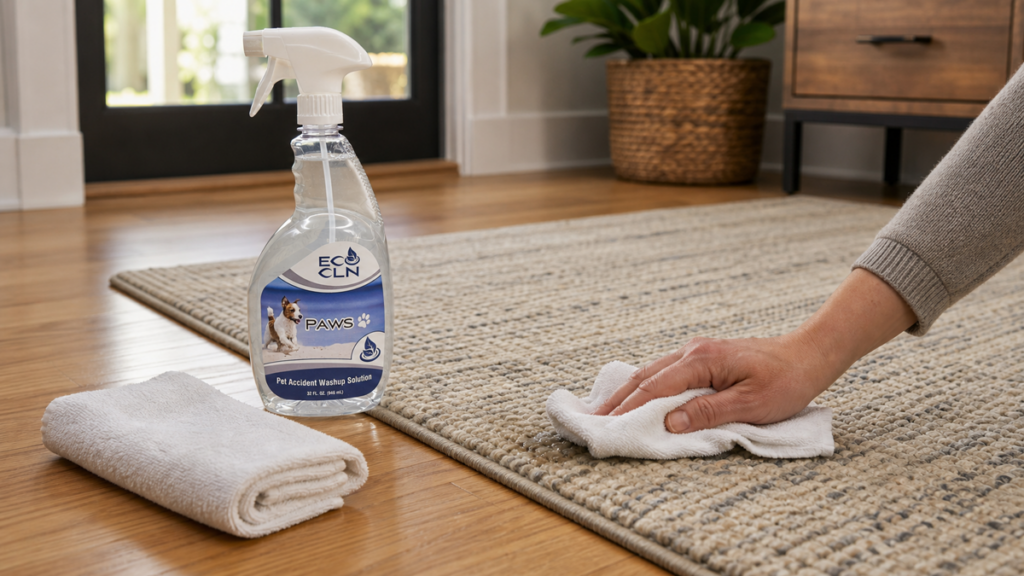
How to Clean Pet Accidents From Area Rugs

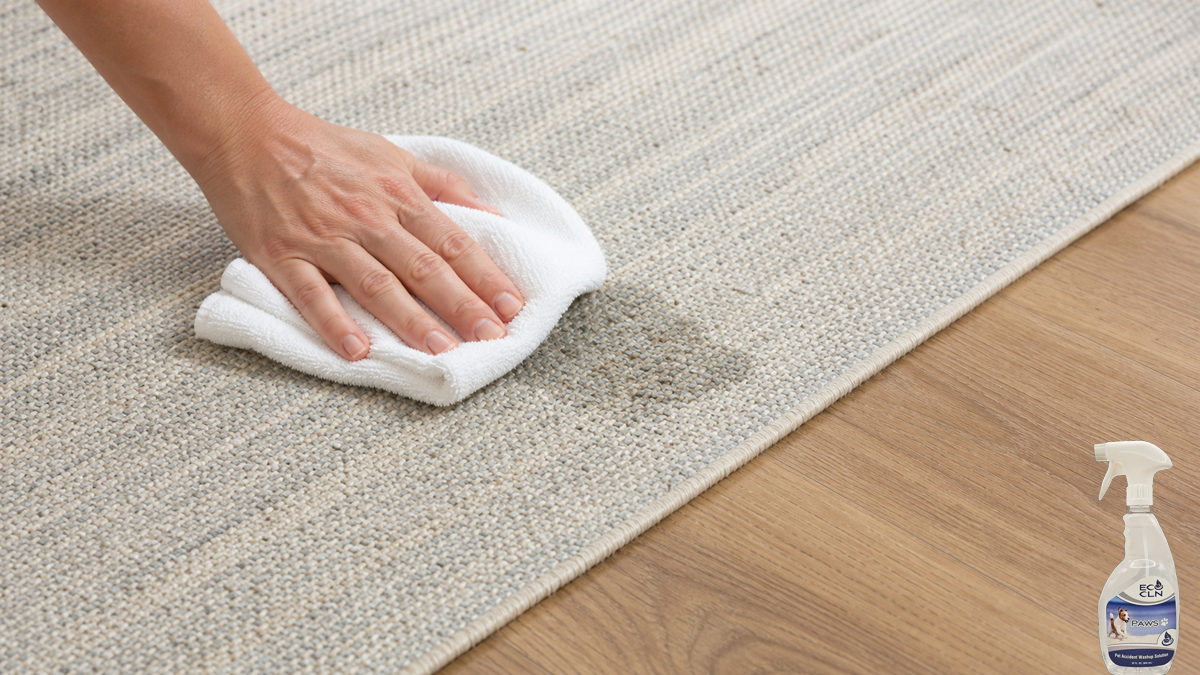
Quick Answer
Blot fresh liquid immediately with clean white towels, then check the rug care label and fiber/backing instructions. Protect the floor underneath. Test Eco Cln PAWS in a hidden corner, then apply a controlled amount to the affected rug fibers according to the product directions. Blot again, treat the underside only if the rug construction and care instructions allow it, and dry the rug completely before placing it back over a floor or pad.
Do not soak an area rug just because the accident reached through it. Rug dyes, backing, edge binding, fringe, and the floor underneath can all react differently to moisture.
Why Area Rugs Need a Different Cleanup Plan
Wall-to-wall carpet stays in place. An area rug has a face, backing, edges, sometimes fringe, often a rug pad, and a separate flooring surface underneath.
A urine spot that looks small on top can spread wider in the backing or reach hardwood, laminate, tile, or another floor below.
Step 1: Blot the Top Surface Immediately
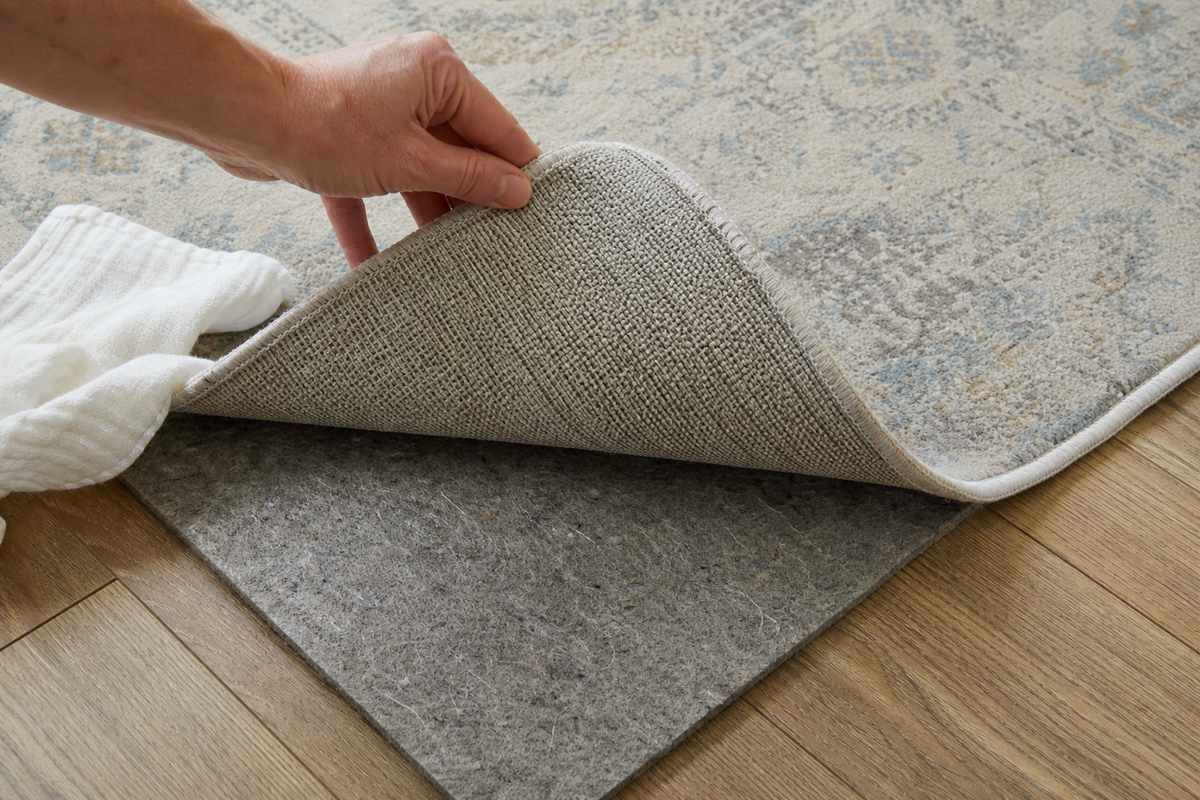
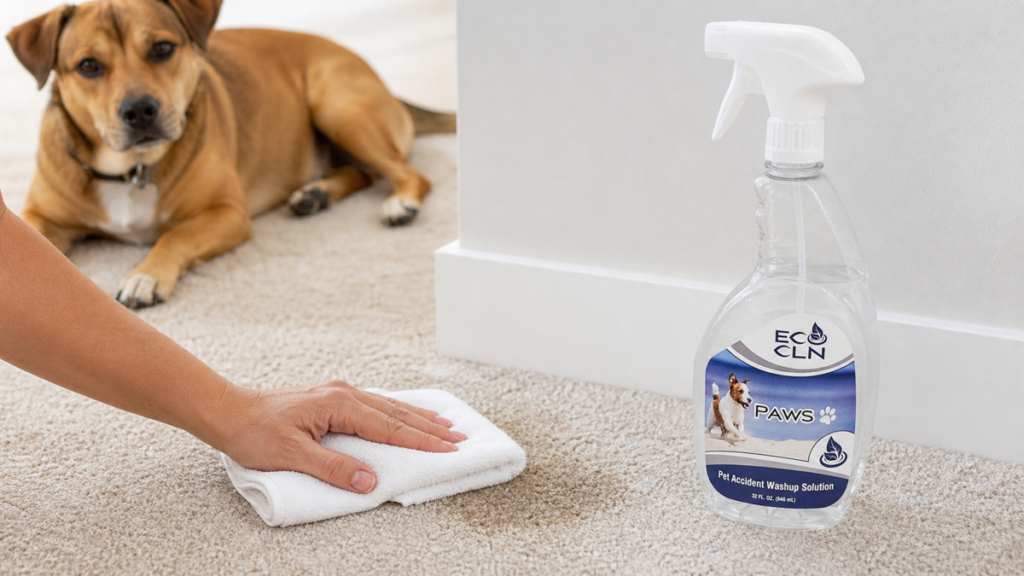
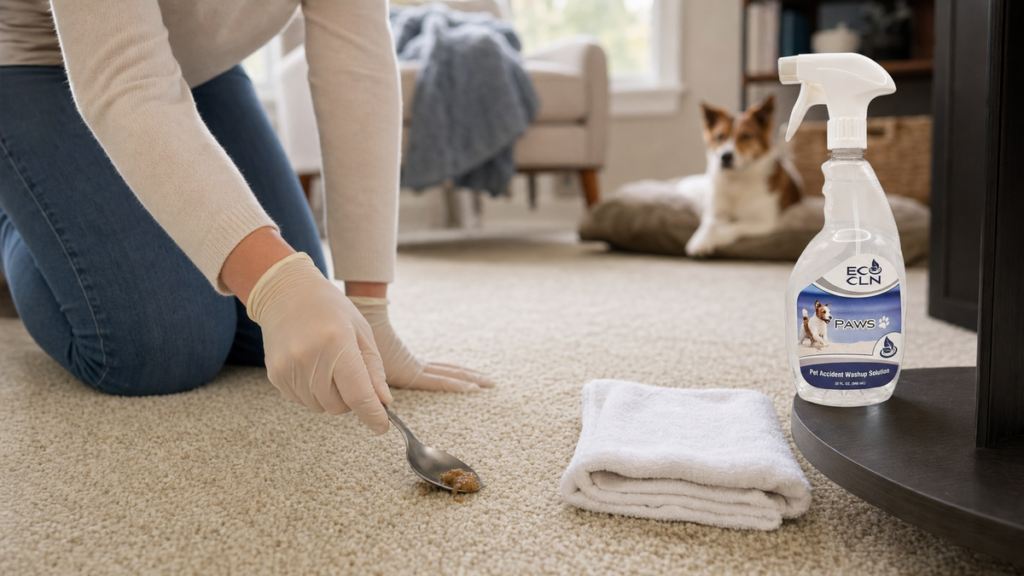
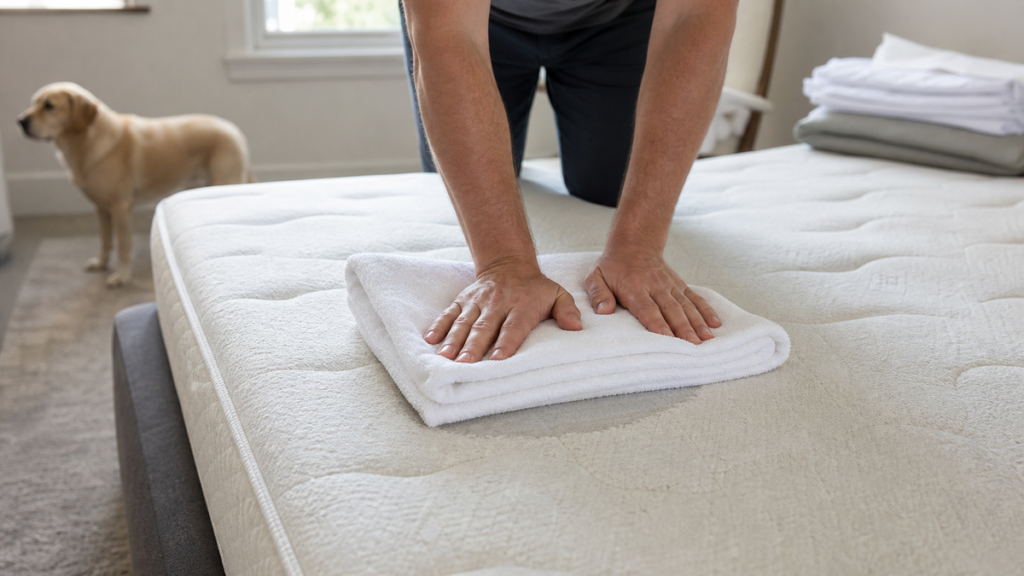
Use white absorbent towels and press straight down. Rotate to a dry towel section and repeat.
Do not rub the pile. Rubbing can spread the liquid and distort fibers, especially on wool, looped, shag, or specialty rugs.
Step 2: Check the Rug Care Label
Mohawk Home advises following the care label on the back of the rug and notes that larger rugs are often spot-cleaned or professionally cleaned rather than machine washed. Review Mohawk area-rug care.
Handmade rugs, wool, viscose, silk, natural-fiber rugs, antiques, and rugs with specialty backing may need professional care.
Step 3: Protect and Inspect the Floor Underneath
Lift the rug only as much as you safely can and check whether moisture reached the rug pad or flooring.
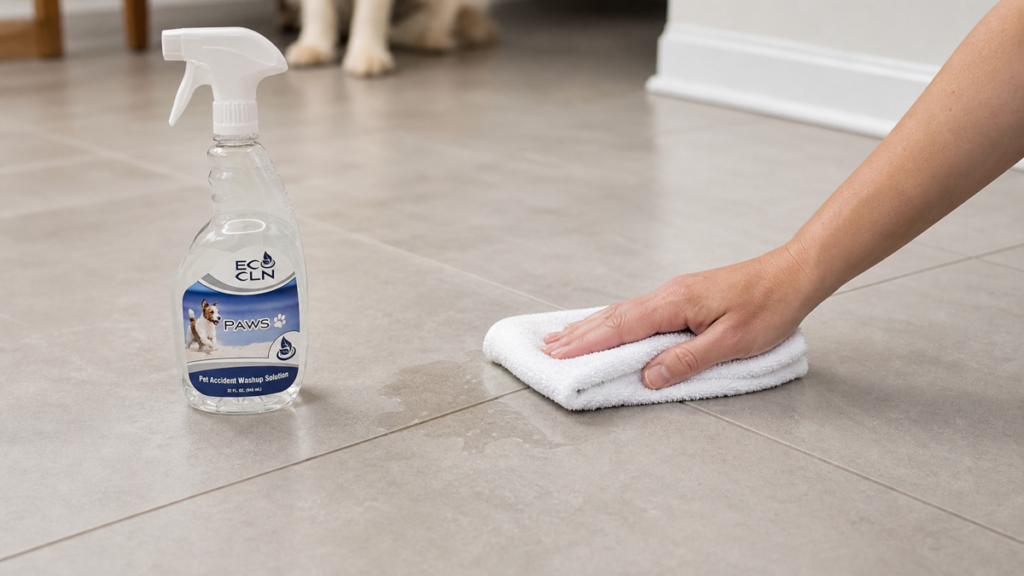
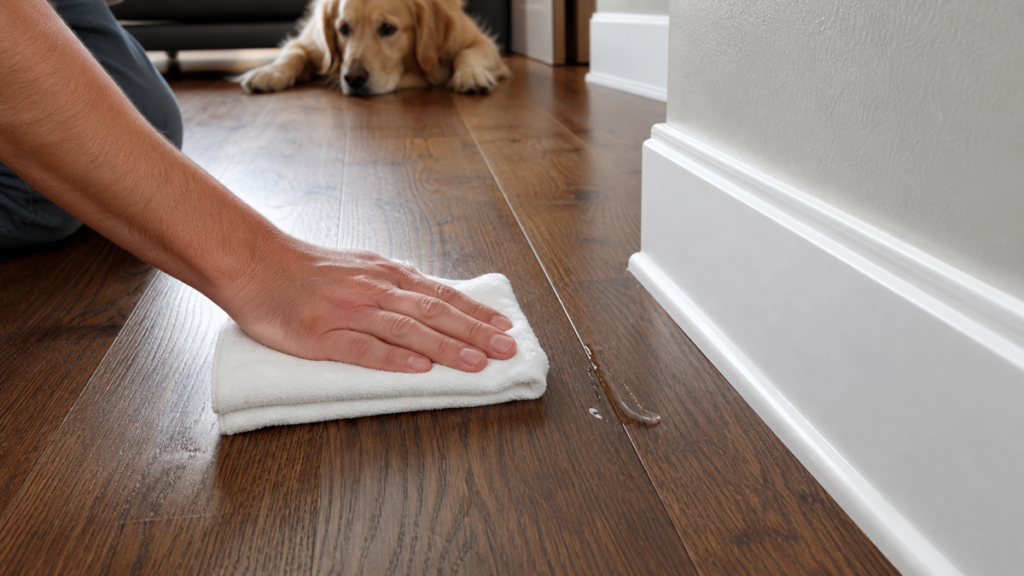
Blot the floor separately with a surface-compatible method. Do not let a wet rug sit on hardwood, laminate, or another moisture-sensitive floor while you work.
Step 4: Hidden-Area Test PAWS
The current PAWS product page lists rugs among its intended pet-accident surfaces and tells users to test specialty fabrics and moisture-sensitive materials first.
Test an inconspicuous rug corner or edge and let it dry. Watch for dye transfer, texture change, backing change, or watermarking.
Step 5: Treat the Actual Accident Zone
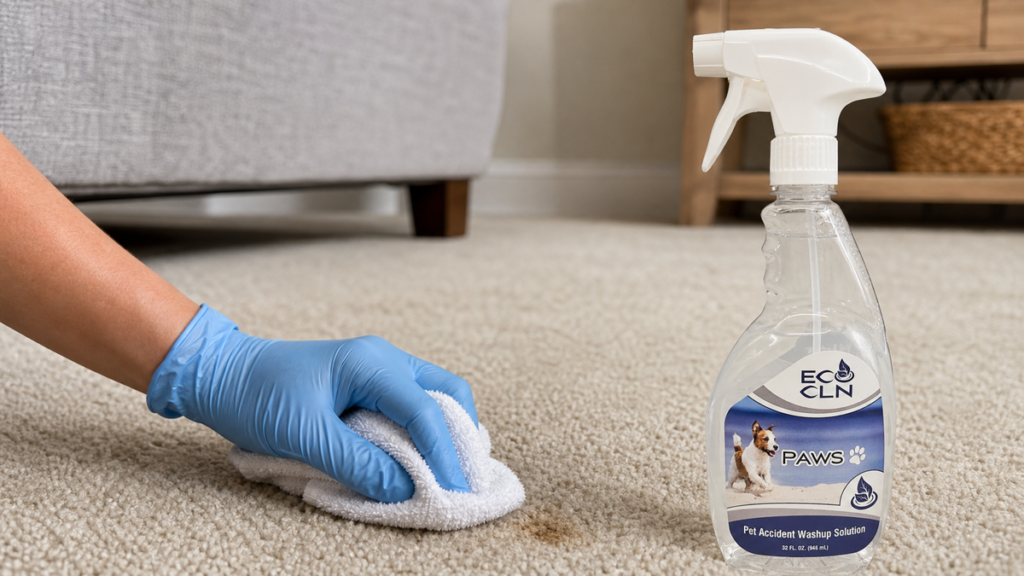
Apply PAWS according to the product directions to the affected fibers. Keep the application close to the accident rather than spraying a huge circle around it.
If the rug is thick, repeated controlled treatments are safer than one large soak.
Step 6: Blot Again – Do Not Scrub
Press clean white towels into the treated area to pull out loosened residue and moisture. Work from the outside toward the center.
Shaw’s area-rug care guidance also recommends working from outer edges toward the center, rinsing residue when appropriate, and absorbing remaining moisture thoroughly. See Shaw area-rug care.
Step 7: Check the Backing and Rug Pad
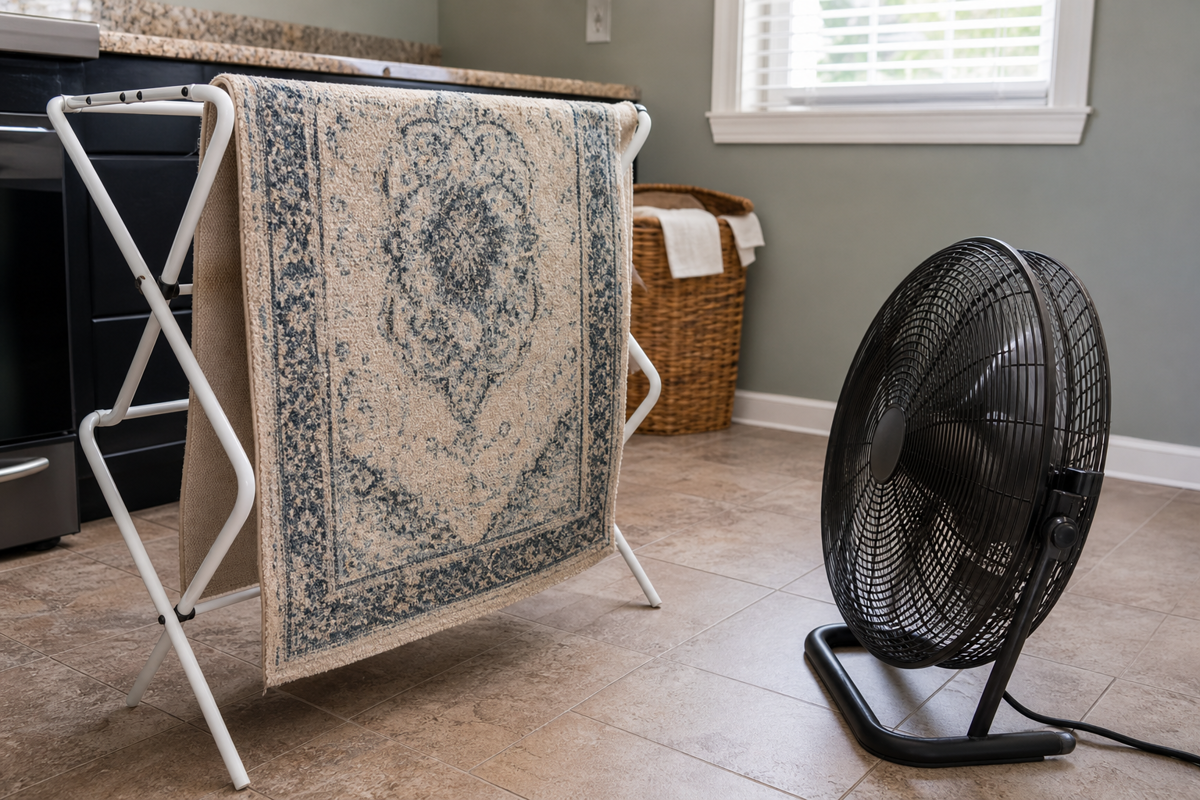
If the odor or moisture reached the underside, follow the rug manufacturer’s instructions before wet-treating the backing. Some backing materials do not tolerate the same cleaner or amount of moisture as the face fiber.
A saturated rug pad may need separate cleaning or replacement. Do not trap a damp pad underneath a cleaned rug.
Step 8: Dry Both Sides Completely
Improve airflow and keep the rug off the floor until the face, backing, and pad are fully dry.
Do not use high heat unless the rug manufacturer approves it. Heat can affect dyes, adhesives, backing, and fibers.
What About Fringe?
Fringe can be a different fiber and construction from the main rug. Avoid dragging cleaner and dirty liquid into fringe if the accident did not reach it.
Specialty fringe, hand-knotted edges, or dye-sensitive rugs are a good reason to stop and call a rug-cleaning professional.
When Surface Cleaning Is Not Enough
Repeated accidents, strong odor from the backing, urine in a thick rug pad, dye bleeding, or contamination in a valuable rug may need professional washing or specialty rug care.
Do not promise that a surface treatment can reach urine trapped deep in backing, pads, or floor joints.
Common Area-Rug Pet Accident Mistakes
- Scrubbing instead of blotting.
- Soaking the rug without checking the backing or care label.
- Leaving the wet rug on top of hardwood or laminate.
- Ignoring the rug pad and floor underneath.
- Treating fringe like the main rug fiber.
- Using heat before the rug is safely cleaned.
- Putting the rug back down before both sides are completely dry.
Where PAWS Fits
Eco Cln PAWS is the targeted Eco Cln cleaner for pet urine odors, organic stains, carpets, rugs, upholstery, hard floors, pet beds, and repeat accident areas. Area rugs are a supported PAWS use, but rug construction and dye stability still determine how much moisture the rug can safely handle.
FAQ
Can I use PAWS on an area rug?
Yes. PAWS is positioned for rugs and pet accidents. Test a hidden corner first and follow the rug’s care label.
Should I clean the floor under the rug too?
If urine reached through the rug or pad, yes. Blot and clean the floor using a method appropriate for that flooring material.
Can I soak the rug to reach the backing?
Not as a default. Check the care label and backing construction. Oversoaking can affect dyes, adhesives, fringe, backing, and the floor below.
What if the rug still smells after it dries?
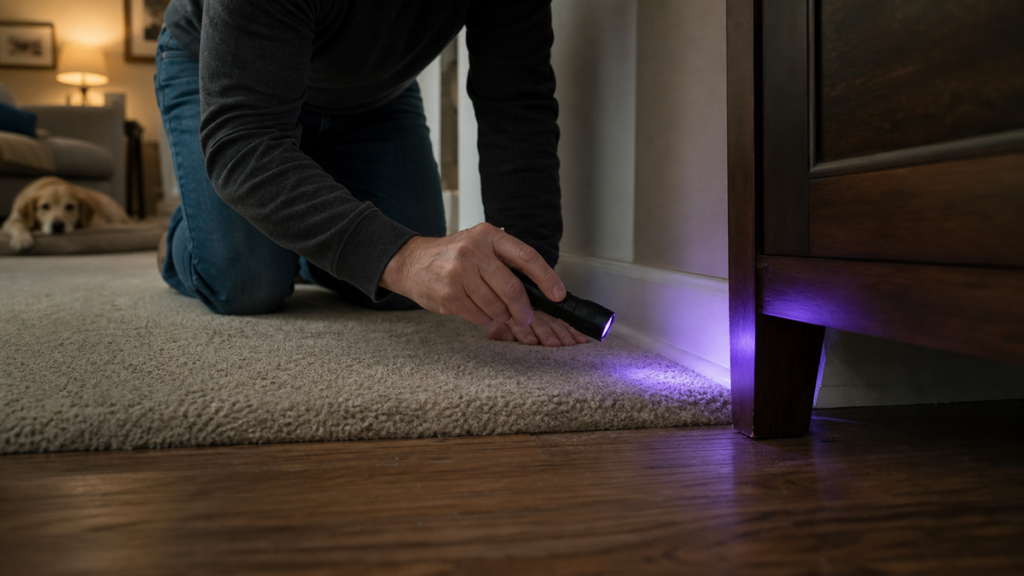
Check the underside, rug pad, floor beneath, edges, and nearby baseboards. The source may be deeper than the visible top-fiber spot.
When should I use a professional rug cleaner?
For valuable, handmade, wool, silk, viscose, antique, dye-unstable, heavily soaked, or repeatedly contaminated rugs.
The Bottom Line
Blot fresh liquid immediately with clean white towels, then check the rug care label, fiber, backing, edge binding, and floor below. Test PAWS in a hidden corner and treat the smallest verified accident zone with controlled moisture. Blot from the face, inspect the underside and pad when accessible, and clean the underlying floor with a method appropriate for that material. Keep the rug elevated with airflow until the face, backing, pad, and floor are completely dry. Stop if dye transfers, the backing softens, fringe distorts, a water ring expands, or odor remains after full drying; valuable or heavily soaked rugs belong with a qualified rug cleaner.
Continue with this related Eco Cln guide: Cleaning cat accidents.
For pet urine and organic accidents on a compatible area rug, Eco Cln PAWS gives you the targeted cleaner. Blot first, protect the floor below, test the rug, treat only the affected zone, and dry both sides before the rug goes back down.