How to Clean Pet Feces Stains From Carpet

Quick Answer
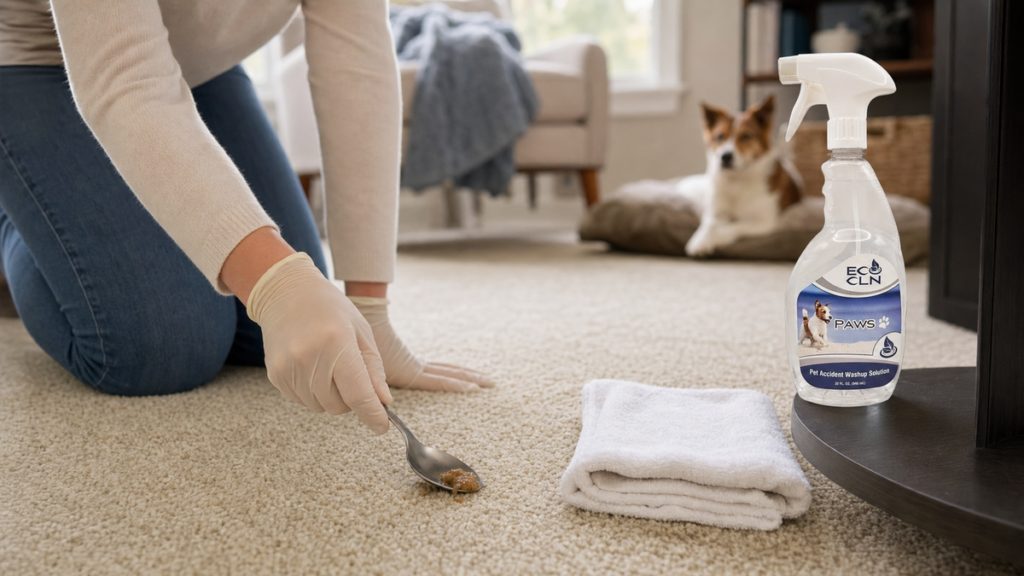
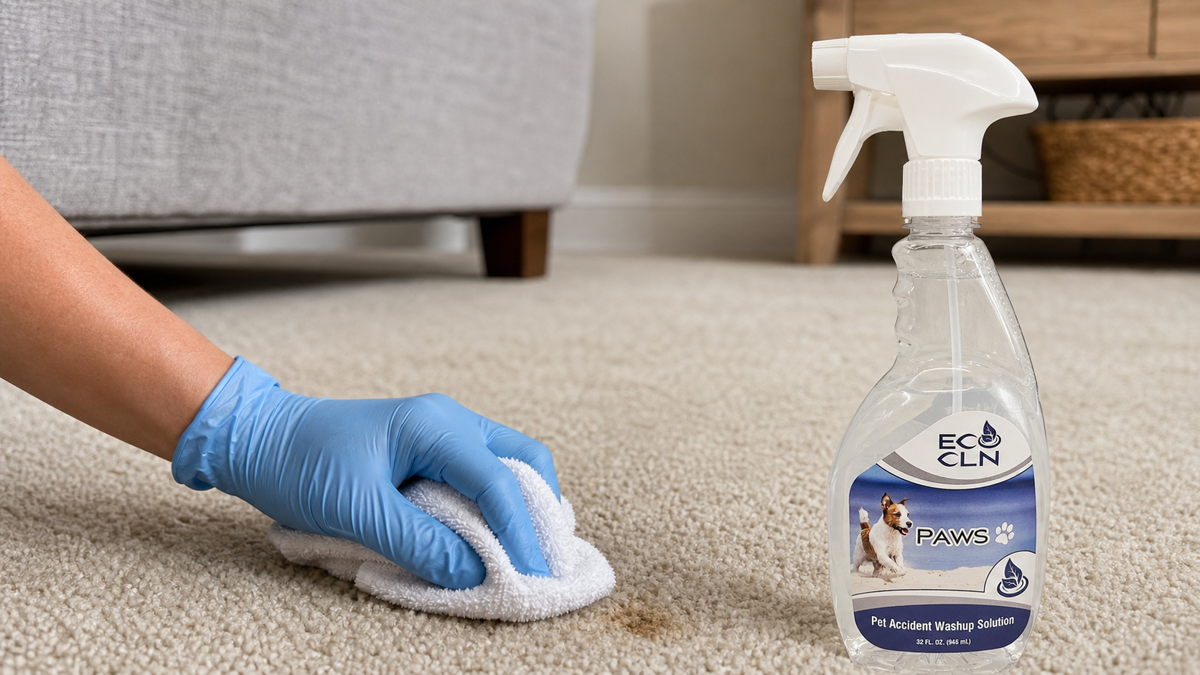
Put on disposable or household cleaning gloves, remove solid material with a spoon or dull disposable edge, and bag it. Blot remaining moisture or residue with clean white towels. Then check the carpet care instructions and spot-test Eco Cln PAWS in a hidden area.
On compatible carpet, apply a controlled amount of PAWS to the actual organic pet-mess zone according to the product directions. Blot rather than scrub, remove remaining cleaner as appropriate, dry the area completely, then wash your hands after removing gloves.
CDC recommends protecting skin from direct contact with pet urine or feces by wearing cleaning gloves and washing hands afterward. Review CDC pet-waste hygiene guidance.
Why Feces Stains Need a Remove-First Approach
Pet feces can leave solid material, moisture, food pigments, bile, mucus, grass, or other organic residue. If you begin by scrubbing with a wet cloth, you can spread that mixture across a larger carpet area.
Removing the bulk material first reduces how much residue the cleaner has to handle.
Step 1: Protect Yourself and the Area
Keep children and pets away from the cleanup zone. Put on gloves before touching the waste or contaminated towels.
Use disposable paper towels or washable white cloths you can handle appropriately afterward. Bag the removed waste promptly.
Step 2: Lift Solids Without Grinding Them In
Use a spoon, dull plastic scraper, or folded paper towel to lift material upward. Work from the outside toward the center.
Do not use a stiff brush or rub the mess sideways through the carpet pile.
Step 3: Blot Remaining Moisture
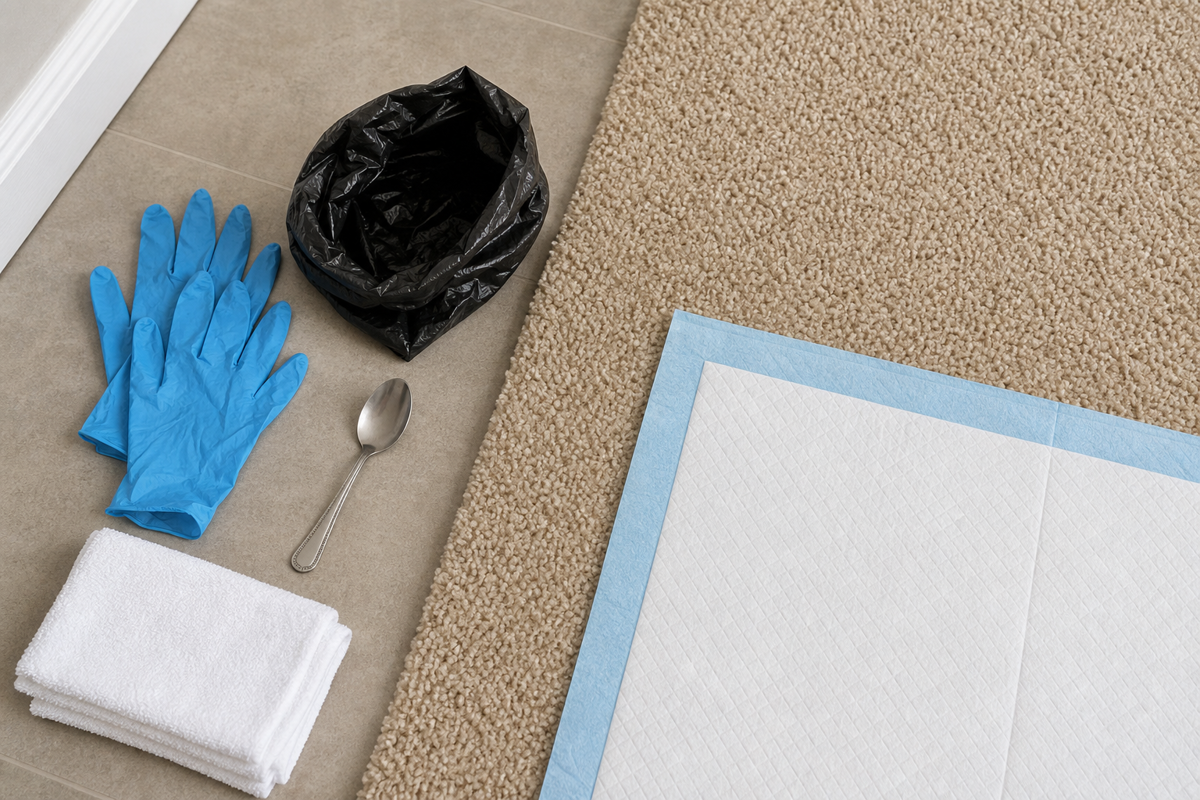
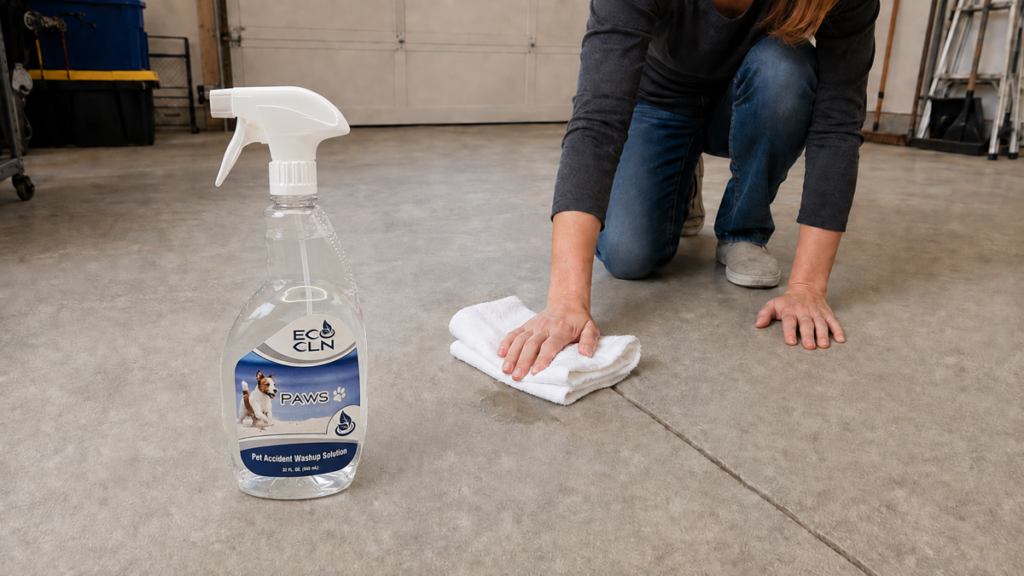
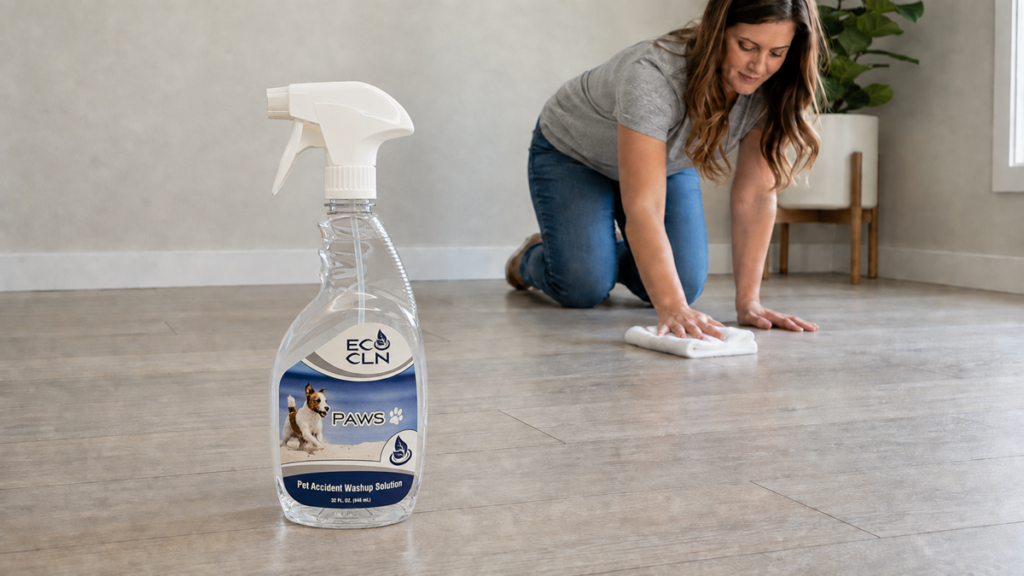
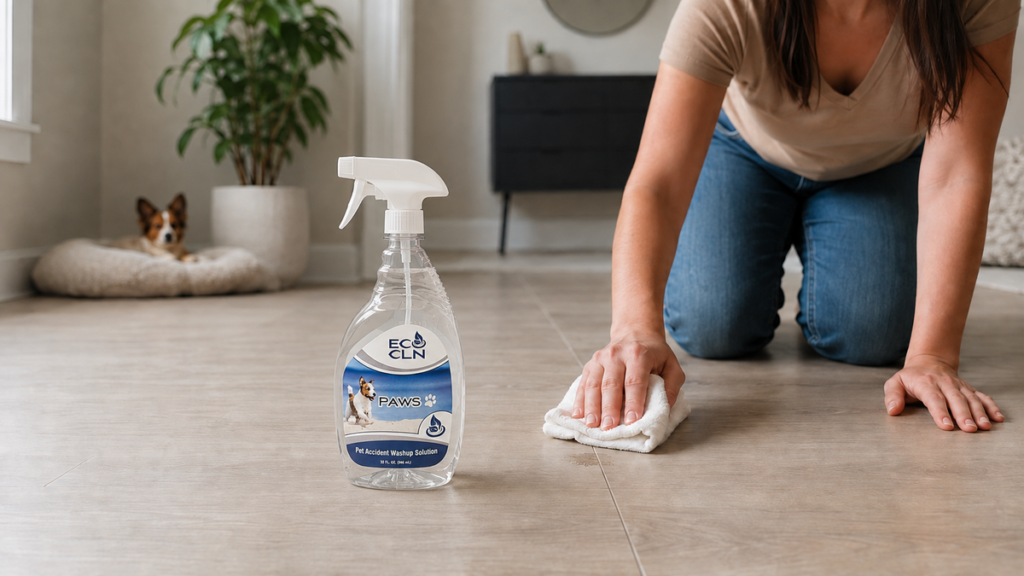
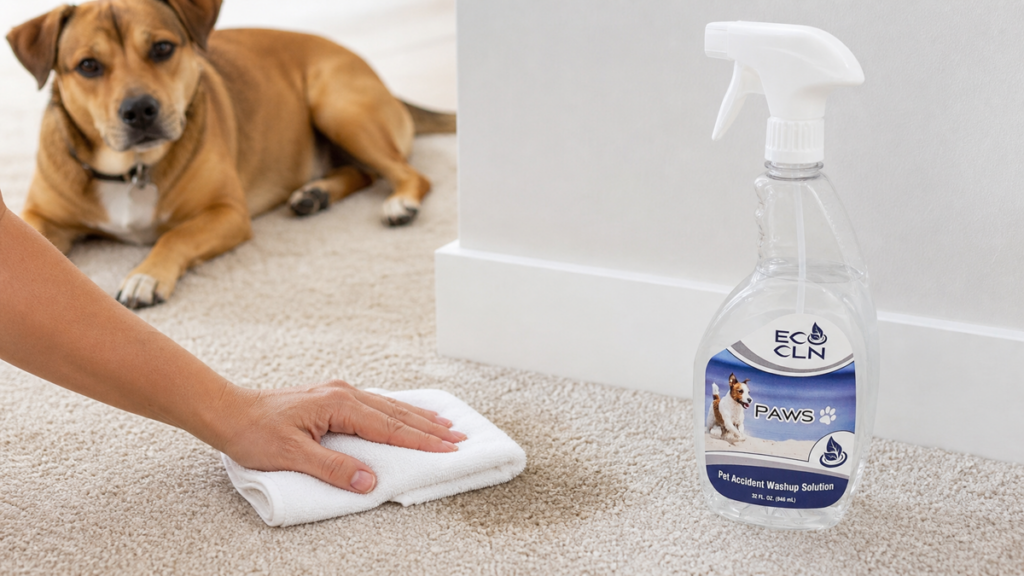
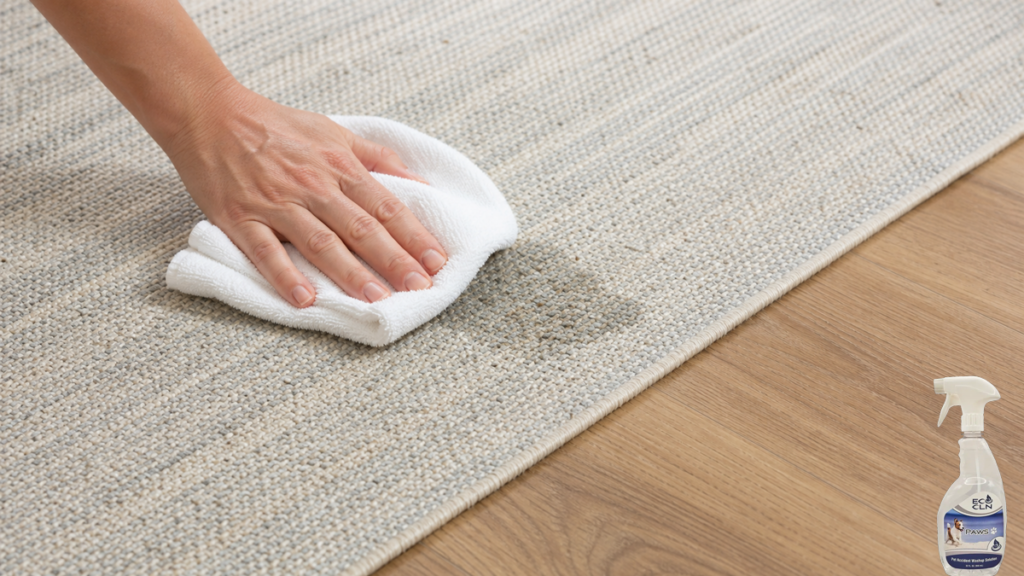
Press clean white absorbent towels into the spot. Lift and rotate to a clean section until very little transfers.
The Carpet and Rug Institute recommends blotting liquids and lifting semisolids rather than scrubbing carpet spots. See CRI carpet spot-care guidance.
Step 4: Check the Carpet and Spot-Test PAWS
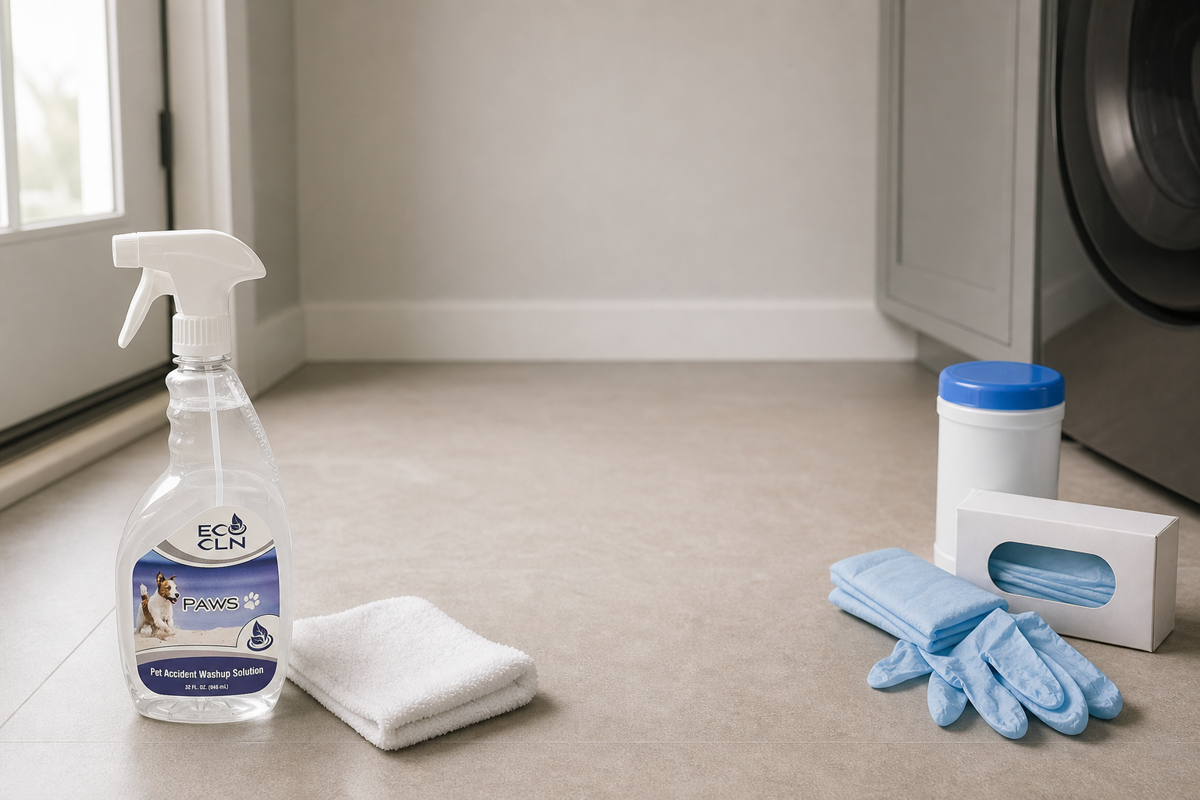
PAWS is positioned by Eco Cln for organic stains, carpet accident spots, rugs, upholstery, pet bedding, and repeat pet mess areas. See current PAWS directions.
Test a hidden area and let it dry. Stop if the carpet dye, texture, or backing changes.
Step 5: Treat the Actual Accident Zone
Apply only enough PAWS to contact the affected fibers according to the label directions. Avoid soaking a broad area around the stain.
Give the cleaner brief contact time, then blot with fresh white towels from the edges inward.
Step 6: Remove Residue and Dry Completely
Once the visible residue has improved, remove remaining cleaner in the manner the carpet instructions allow. Use controlled moisture and blot it back out.
Increase normal airflow and keep foot traffic and pets off the area until it is fully dry.
Cleaning Is Not the Same as Disinfecting
PAWS is a pet-accident cleaner for organic stains and odors. This article should not describe it as a disinfectant, sanitizer, antimicrobial treatment, or germ killer.
If the pet has diarrhea, parasites, an infectious illness, or a veterinarian has given special sanitation instructions, follow that guidance separately. Do not mix PAWS with disinfectants or other chemicals.
What If the Stain Returns After Drying?
Residue may have wicked upward from deeper in the pile or backing, or cleaner may remain in the fibers.
Let the area dry fully before another controlled pass. Repeated flooding can make a small carpet problem larger.
Common Pet-Feces Carpet Mistakes
- Cleaning bare-handed.
- Scrubbing solid waste into the carpet.
- Using a colored towel that can transfer dye.
- Oversaturating the backing or pad.
- Mixing pet cleaner with bleach, disinfectant, or other chemicals.
- Calling PAWS a disinfectant or sanitizer.
- Letting pets or children back onto a damp treated area.
Where PAWS Fits
Eco Cln PAWS is the Eco Cln product for organic pet stains, urine odors, carpet accident spots, rugs, upholstery, pet beds, and repeat pet mess areas. Use it after the solid waste has been physically removed and the carpet has passed a hidden-area test.
FAQ
Can I use PAWS on a pet feces stain?
PAWS is positioned for organic pet stains and carpet accident spots. Remove solids first, test the carpet, and use it as directed without making disinfecting claims.
Should I scrub the stain?
No. Lift solid material and blot residue. Scrubbing can spread the mess and distort carpet fibers.
Do I need gloves?
Yes. CDC guidance recommends gloves when cleaning pet urine or feces and handwashing afterward.
What if my pet has diarrhea?
Clean the carpet, but also address the pet’s health. Repeated or concerning diarrhea should be discussed with a veterinarian, and any special sanitation directions should be followed separately.
Why did the stain come back?
Material can wick upward from deeper carpet layers during drying, or cleaner residue can attract soil.
The Bottom Line
Keep children and pets away from the cleanup zone, put on cleaning gloves, and lift solid material upward with a spoon, dull plastic edge, or folded disposable towel before adding cleaner. Bag the waste and contaminated disposable material promptly, then blot remaining moisture with clean white towels while working from the outside toward the center. Check the carpet care instructions and test a hidden area before treating the main spot. Where the carpet and current product directions allow it, use PAWS as a controlled pet-accident treatment on the affected fibers, not as a disinfectant, sanitizer, antimicrobial product, or guaranteed germ killer. Use clean towel sections while residue transfers, remove remaining cleaner using only the minimal method the carpet maker permits, and dry the face, backing, and pad completely. Wash hands after removing gloves and keep traffic and pets off the area until it is dry. Stop if carpet dye transfers, the pile changes, contamination reached a large pad area, or the carpet is valuable or difficult to identify. Repeated diarrhea, blood, illness, parasites, or special sanitation instructions belong with a veterinarian and appropriate public-health guidance. Compatible surface spot cleaning may address visible soil and odor, but it cannot replace animal-health care or a separate sanitation plan. Keep those jobs clearly separated.
Continue with this related Eco Cln guide: Eco-friendly carpet cleaning tips.
After the solid pet waste is removed, Eco Cln PAWS is the targeted Eco Cln cleaner for compatible organic pet stains and carpet accident areas. Keep the treatment controlled, blot instead of scrub, and let the carpet dry completely.