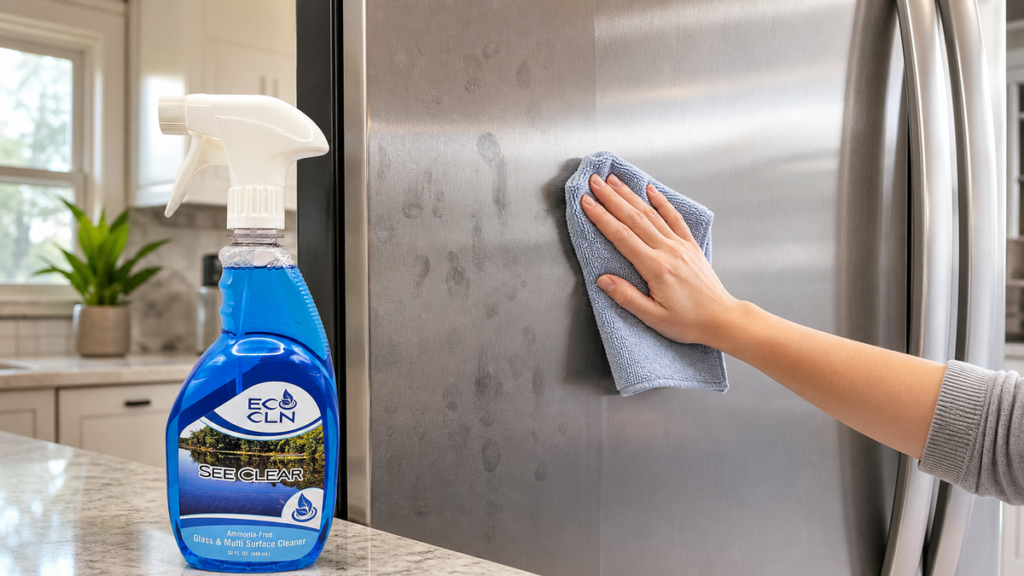
How to Clean Greasy Kitchen Counters and Appliance Smudges

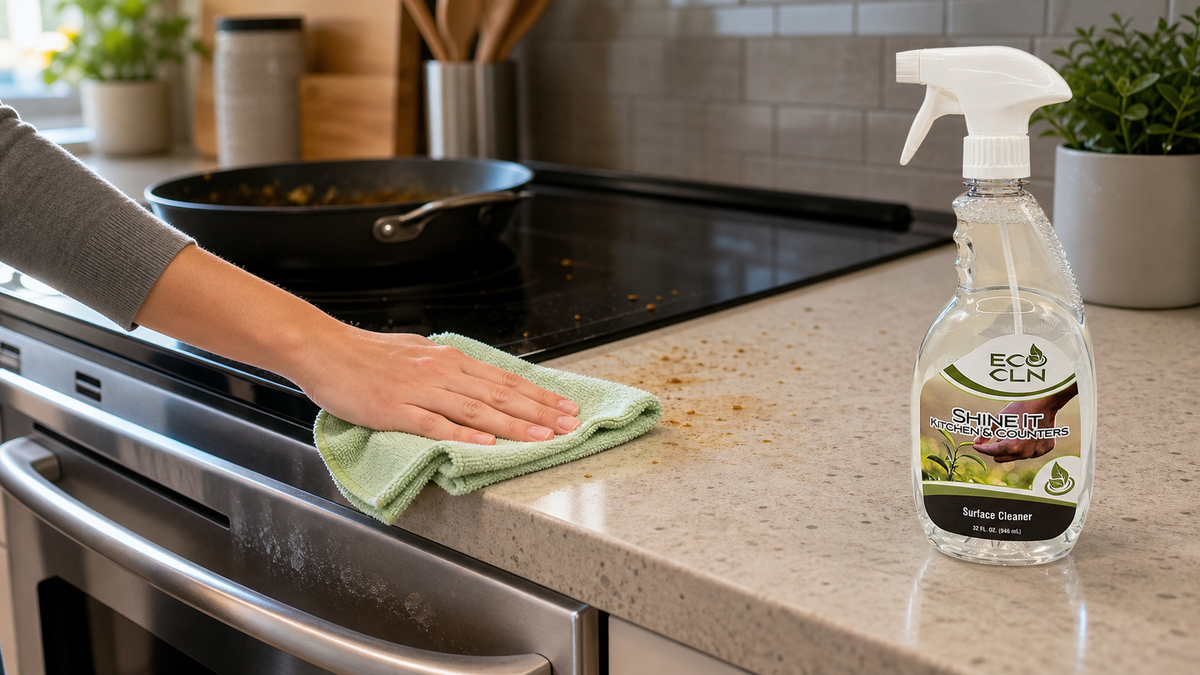
Greasy Kitchen Counters: Quick Answer
To clean greasy kitchen counters, remove crumbs first, wipe cooking residue with a damp cloth, then use a kitchen surface cleaner on the greasy zones around the stove, counter edges, appliance handles, and backsplash lip. Spray the cloth or the counter lightly, wipe in small sections, and follow with a clean damp cloth if residue remains.
Do not flood seams, control panels, unsealed stone, raw wood, or appliance displays. Grease spreads when you use too much liquid or one dirty cloth across the whole kitchen, so change cloth sides often.
Why Kitchen Grease Spreads Instead of Wiping Away
Kitchen grease usually starts near the cooktop, but it does not stay politely in one place. Oil mist from cooking lands on counters, stovetop edges, microwave handles, refrigerator pulls, cabinet fronts near the range, and the backsplash ledge behind the stove.
If you wipe that grease with a wet cloth and no plan, it can smear into a thin film. That film catches dust, crumbs, flour, and fingerprints, which makes the counter feel sticky even after you technically "cleaned" it. That is common on busy kitchen counters, especially around cooking zones.
What to Clean First on Greasy Kitchen Counters
Start with dry debris. Wipe crumbs, coffee grounds, seasoning flakes, and food bits into the trash before using cleaner. If you spray cleaner over crumbs, you create a paste that gets pushed into counter seams and appliance edges.
Then separate the kitchen into zones: counter around the stove, appliance handles, backsplash, sink-side counter, and food-prep area. This keeps grease from the stove area away from cleaner zones where you prepare food. FoodSafety.gov separately recommends washing countertops with hot, soapy water, especially after raw meat, poultry, seafood, or eggs, which is a useful reminder that routine grease cleanup and food-safety cleanup are related but not identical jobs.
Reference: FoodSafety.gov 4 steps to food safety.
How to Clean Greasy Kitchen Counters and Appliance Smudges
- Clear the counter and remove loose crumbs. Move small appliances, cutting boards, mail, and bottles out of the way. Dry-wipe crumbs before adding liquid.
- Wipe fresh spills before they dry. Sauce splatter, oil dots, coffee rings, and sticky drink drips are easier to remove before they bond with dust or dry into a film.
- Spray the greasy area lightly. Apply kitchen cleaner to the counter or cloth without soaking seams, caulk lines, backsplash gaps, or appliance trim.
- Work in small sections near the stove. Focus on the counter edge beside the range, the backsplash lip, the front counter edge, and the area where pans or utensils rest during cooking.
- Clean handles separately. Refrigerator handles, oven pulls, microwave buttons, and dishwasher handles collect hand oil plus cooking residue. Use a fresh side of the cloth so you are not smearing counter grease onto the handle.
- Rinse or follow-wipe if the counter feels tacky. A clean damp cloth helps remove leftover residue from laminate, sealed stone, quartz, stainless trim, and other washable surfaces when the label allows it.
- Dry the surface. Drying prevents water spots and helps you see whether grease is actually gone or just spread thinner.
Where Eco Cln Shine-It Fits
Eco Cln Shine-It is positioned as a kitchen surface cleaner for counters, cooking residue, grease spots, stainless steel, appliances, and everyday kitchen messes. It is a strong fit when plain water is not enough for greasy counter edges, appliance smudges, and cooking-film cleanup.
Use it as part of a controlled wipe-down, not as an excuse to soak the kitchen. For appliance displays, raw wood, unsealed stone, or any surface with special care instructions, check the surface or appliance guidance first.
Countertop and Appliance Areas That Need Different Care
Laminate counters usually handle routine wipe-downs well, but seams and edges can swell if they are repeatedly soaked. Quartz and sealed stone should be cleaned according to the fabricator or manufacturer instructions, especially if the surface has special sealers.
Stainless appliance fronts need a softer touch. Wipe with the grain, avoid abrasive pads, and do not soak control panels or trim. For glass cooktop areas, follow the appliance manual because cooked-on residue may need a dedicated cooktop method.
Painted cabinet fronts near the stove can collect grease too, but paint finishes vary. Use a damp cloth first, avoid scrubbing corners aggressively, and test cleaner on a hidden area before cleaning a full cabinet face.
Common Kitchen Grease Cleaning Mistakes
One mistake is using the same cloth for the stovetop edge, refrigerator handle, counter, and table. That just turns the cloth into a grease delivery system.
Another mistake is skipping the dry crumb pass. Cleaner works better when it is not fighting toast crumbs, flour dust, and coffee grounds.
A third mistake is leaving cleaner residue behind. If the counter feels slick, sticky, or tacky after wiping, use a clean damp cloth and dry it.
When a Basic Wipe-Down Is Not Enough
A routine kitchen surface cleaner is not meant to fix burned-on stovetop buildup, oven grime, damaged countertop sealers, stained grout, or deep scratches in stainless steel. Those problems need surface-specific care.
If grease has built up for weeks around a range hood, cabinet tops, or backsplash grout, clean gradually and test first. Heavy buildup often needs repeated passes rather than one aggressive scrub.
FAQ
What is the best way to clean greasy kitchen counters?
Remove crumbs first, clean the greasy zone in small sections, change cloth sides often, and dry the counter afterward. Use a kitchen surface cleaner when water alone leaves an oily film.
Why do my kitchen counters feel sticky after cleaning?
Sticky counters usually mean grease or cleaner residue is still on the surface. Follow with a clean damp cloth, then dry with a separate cloth.
Can I use the same cleaner on counters and appliance handles?
Sometimes, but check the appliance and surface care instructions first. Handles usually need lighter moisture and a soft cloth, especially if they are stainless, coated, or near electronic controls.
Should I spray cleaner directly on appliances?
It is usually better to spray the cloth first. That helps keep liquid away from buttons, screens, seams, and trim.
How often should kitchen grease areas be cleaned?
Wipe cooking zones after messy meals and do a more complete counter, handle, and backsplash wipe-down weekly or whenever the surfaces feel tacky.
The Bottom Line
Greasy kitchen counters and appliance smudges clean best when you work in zones: crumbs first, grease second, handles separately, residue removed, and surfaces dried. Eco Cln Shine-It is a practical fit for cooking residue, grease spots, counter messes, and appliance smudges when the surface instructions support that use.