Post-Party Cleanup: Carpet Spots, Sticky Floors, Greasy Counters and Glass

Quick Answer
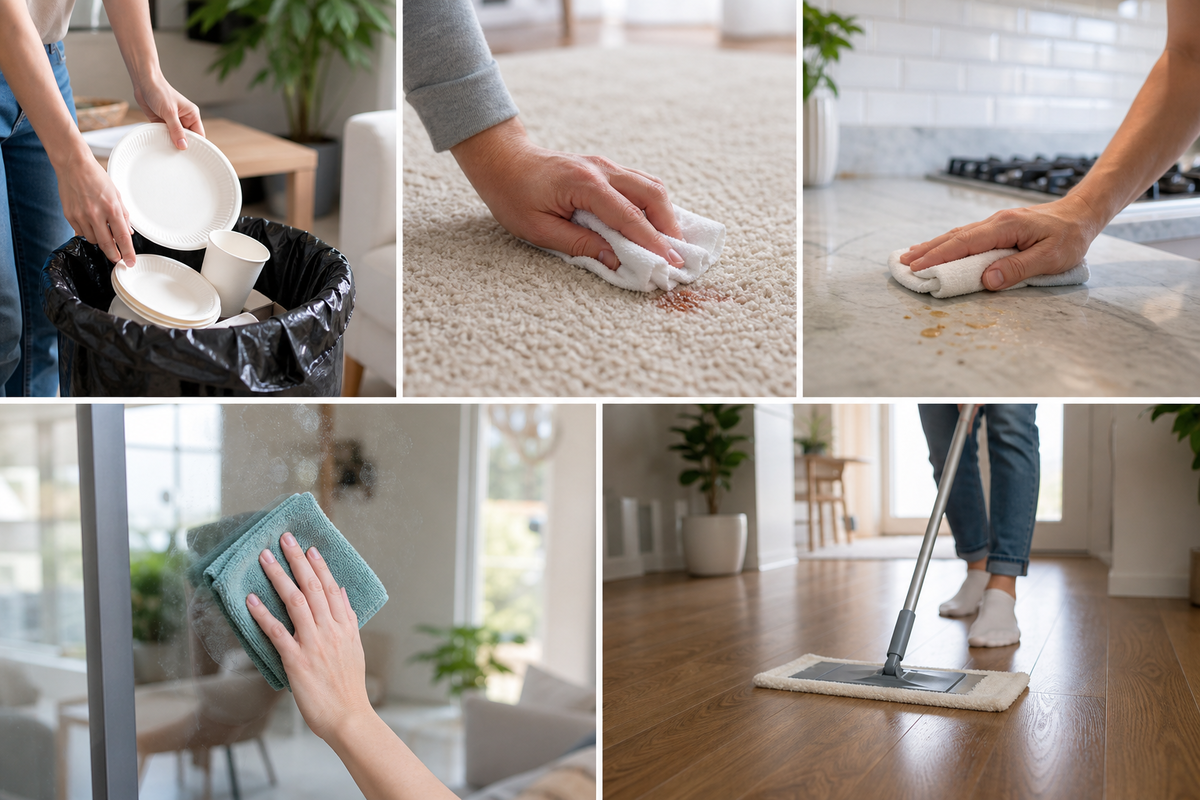
Party cleanup is easier when you collect loose items first, then address active spills before routine surface cleaning. Start by collecting trash, glassware, dishes, and loose food before any wet cleaning. Blot active carpet or upholstery spills immediately, then move through greasy kitchen surfaces, sticky hard-surface residue, glass and mirrors, and finally floors.
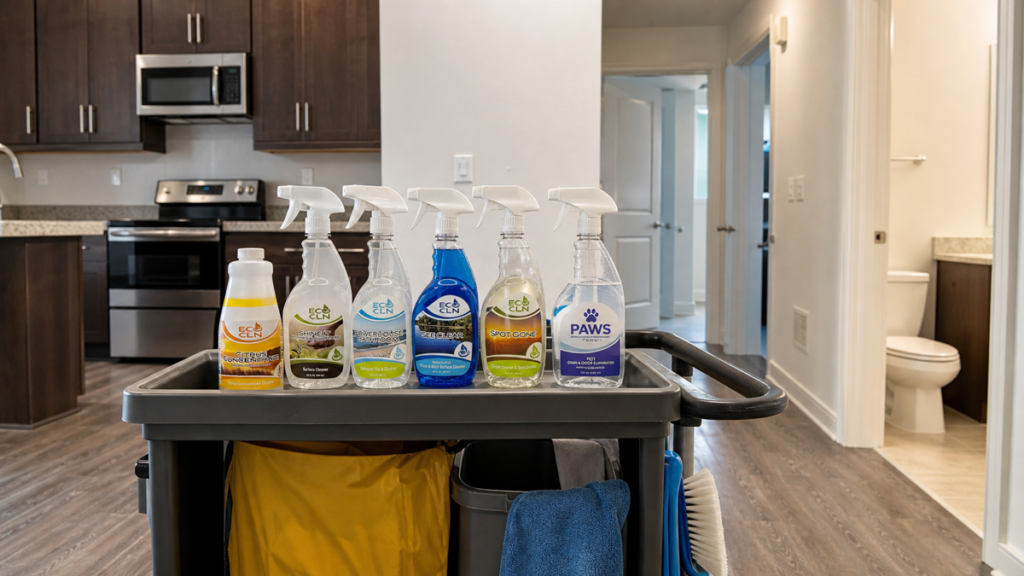
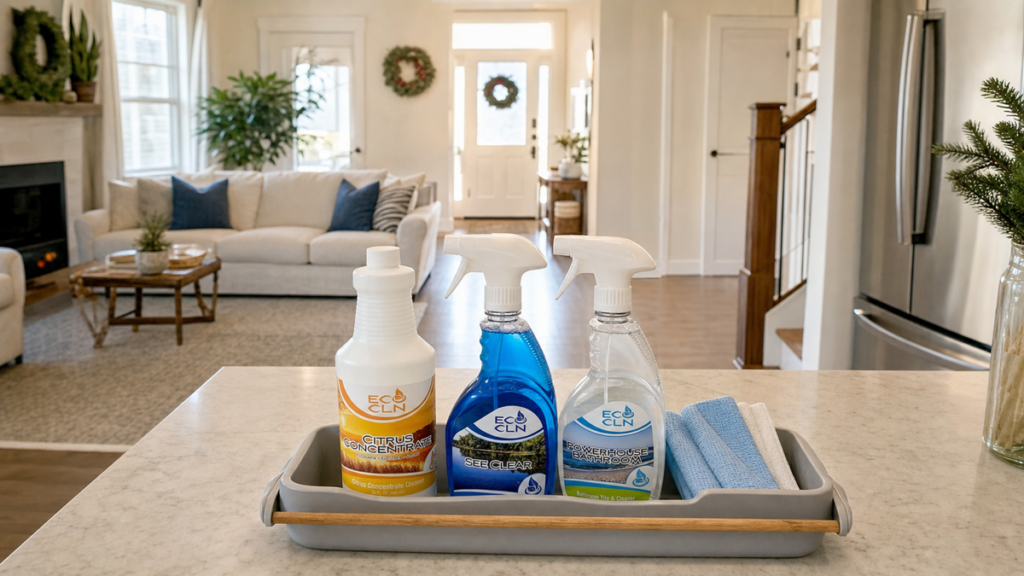
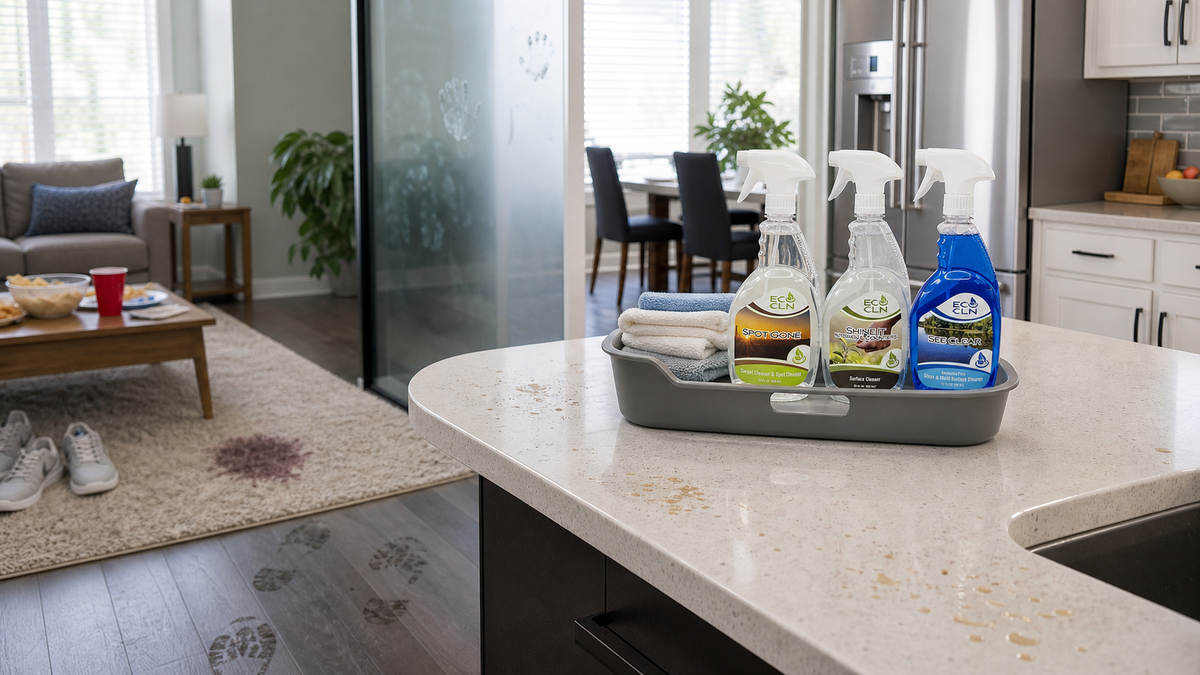
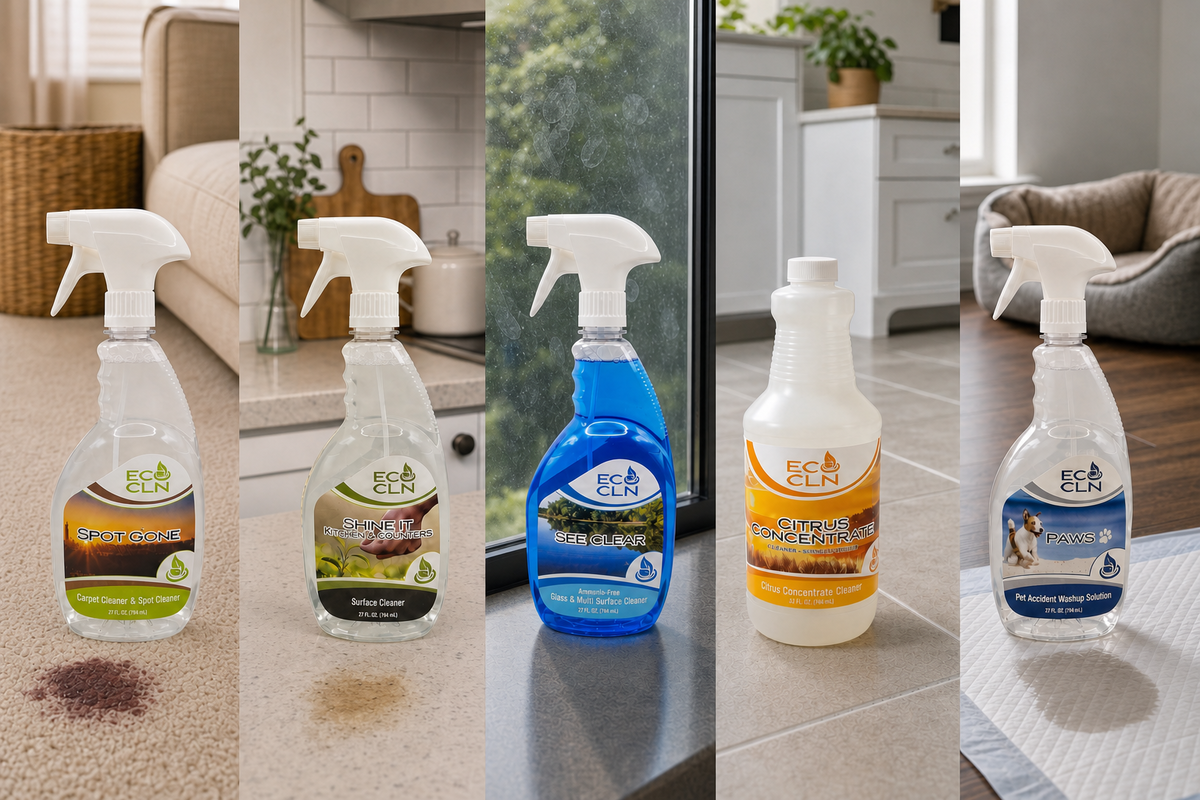
Match the Eco Cln product to the mess: Spot Gone for non-pet carpet and upholstery stains; PAWS for pet accidents; Shine-It for kitchen grease; See-Clear for glass and shiny-surface smudges; and Citrus Concentrate for compatible washable hard surfaces and larger floor-cleaning jobs.
The biggest time-saving rule: do not mop first. Everything else you clean can drip, shed crumbs, or move dirt onto the floor.
Phase 1: Remove Trash, Food and Dry Debris
Collect bottles, cans, disposable plates, napkins, food scraps, and decorations. Put dishes near the sink and move washable textiles to the laundry area.
Vacuum or sweep loose crumbs before spraying cleaner. Wet cleaner plus dry crumbs creates paste and spreads debris across counters and floors.
Phase 2: Hit Carpet and Upholstery Spots Before They Set
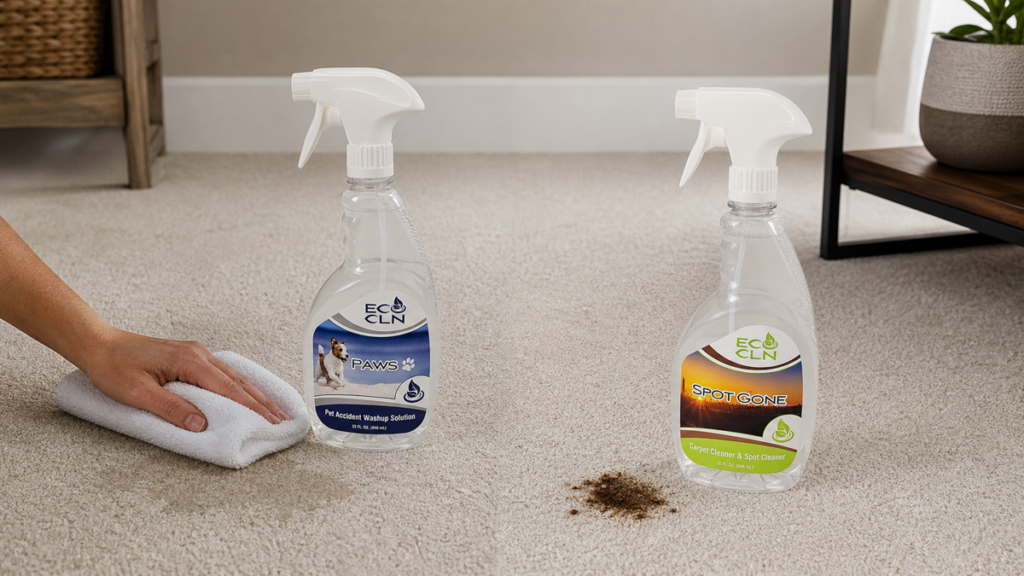
Blot fresh drink or food spills with clean white towels. Lift solid food first instead of rubbing it into the fibers.
Eco Cln Spot Gone is the targeted product for food and beverage spots, grease, dirt, mud, carpet, rugs, upholstery, and fabric surfaces. Test first and keep moisture controlled.
If a stain is actually a pet accident, use PAWS instead of treating urine or organic pet residue as an ordinary beverage stain.
Phase 3: Separate Pet Accidents From Party Spills
PAWS is the Eco Cln lane for urine odors, organic stains, carpets, rugs, upholstery, hard floors, pet beds, and repeat accident areas.
Blot excess moisture first, treat the affected zone, and let the area dry completely before pets return.
Phase 4: Clean Kitchen Grease and Food Film
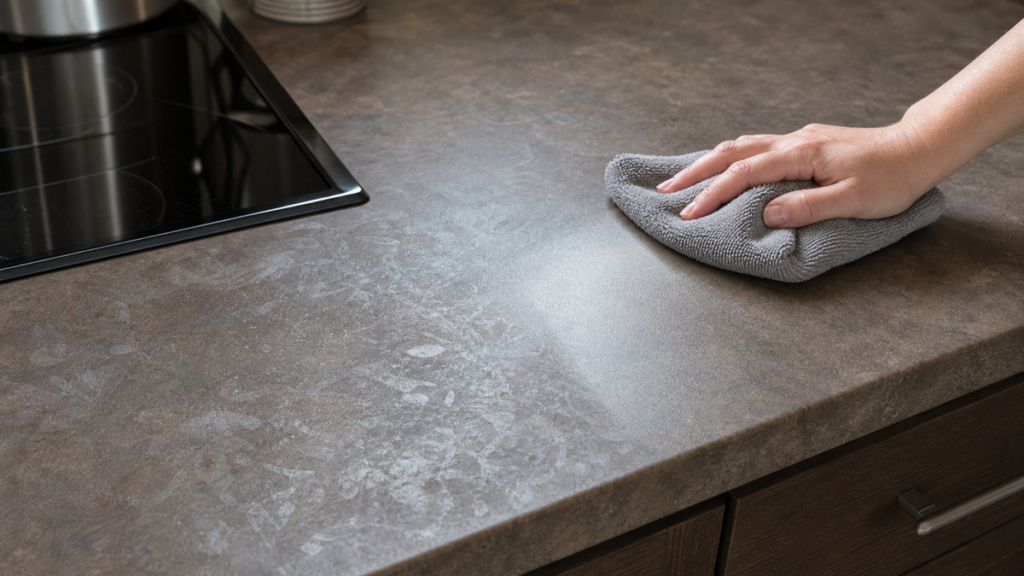
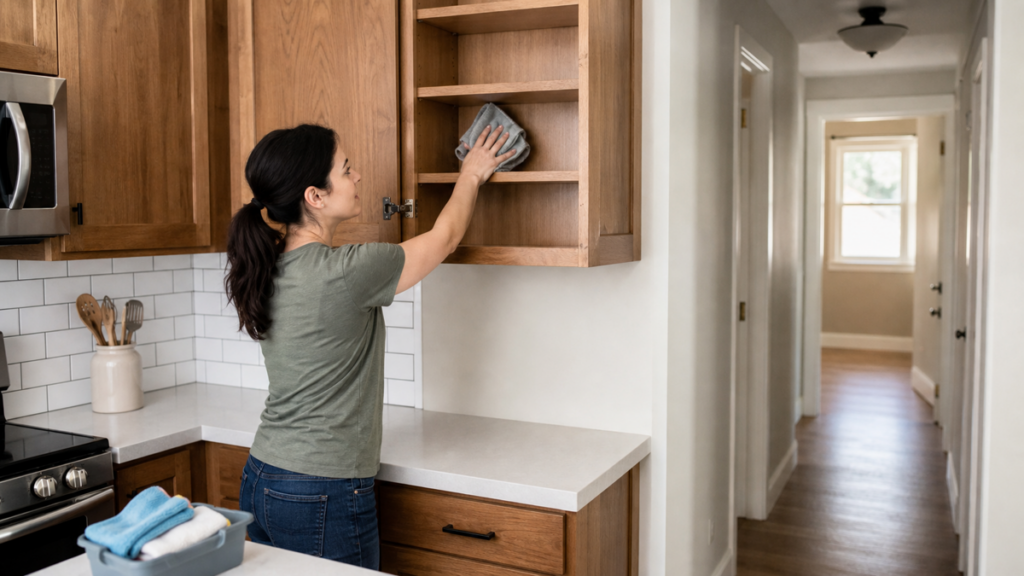
Clear the counters and remove crumbs before tackling sticky grease around serving areas, stovetops, backsplashes, cabinet pulls, and appliance handles.
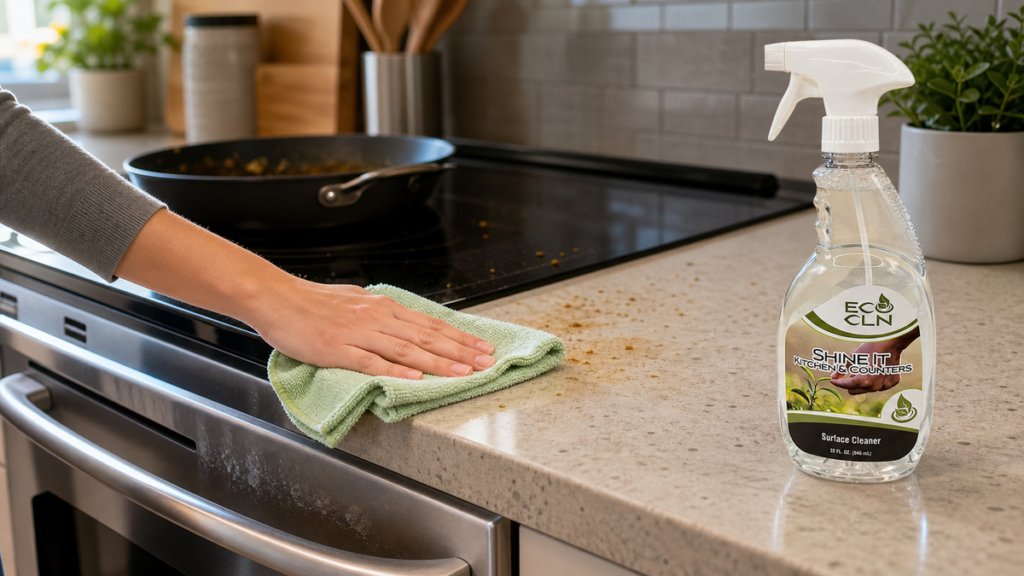
Shine-It fits compatible kitchen counters, grease spots, cooking residue, stainless steel appliance exteriors, cabinet fronts, handles, tables, and washable kitchen surfaces.
Use separate cloths for greasy kitchen work and glass. A grease-loaded microfiber towel will make glass look worse.
Phase 5: Remove Sticky Hard-Surface Residue
Soda drips, juice, syrup, cocktail mixers, and food residue can make hard surfaces tacky even after the visible spill is gone.
For compatible washable hard surfaces and larger cleanup zones, use Citrus Concentrate at the appropriate dilution. Current ratios are 1 oz per quart for light duty, 2 oz per quart for all-purpose, and 8 oz per quart for heavy duty.
Use the lowest strength that fits the mess, and do not apply Citrus dilution ratios to any other Eco Cln product.
Phase 6: Polish Glass After the Messy Work
Once counters, sinks, and serving areas are finished, clean fingerprints and drink splatter from mirrors, glass doors, glass tables, stainless, and chrome.
See-Clear is Eco Cln’s ammonia-free cleaner for compatible glass, mirrors, chrome, stainless steel, appliances, and shiny surfaces. Use light passes and buff dry.
Cleaning glass late prevents you from polishing a surface only to splash it again while doing the sink or counter.
Phase 7: Floors Last
Vacuum or sweep first, then wet-clean the floor according to the flooring manufacturer’s instructions.
Sticky floors often need residue removal, not simply more cleaner. Use controlled moisture and a clean mop or cloth.
Keep people and pets off wet floors until they are fully dry.
The Best Post-Party Order
- Collect trash, dishes, food, and decorations.
- Blot active carpet, rug, upholstery, or pet spots.
- Vacuum or sweep dry crumbs and debris.
- Clean greasy kitchen surfaces.
- Remove sticky residue from compatible hard surfaces.
- Clean bathrooms if guests used them heavily.
- Polish mirrors, glass doors, glass tables, chrome, and stainless.
- Vacuum or sweep floors again if needed.
- Wet-clean compatible hard floors last.
- Do a final dry walk-through for streaks, rings, and missed sticky spots.
Common Post-Party Cleanup Mistakes
- Mopping before cleaning counters and tables.
- Scrubbing carpet spills instead of blotting.
- Using Spot Gone on pet urine instead of PAWS.
- Using one greasy microfiber cloth on mirrors or glass.
- Making every Citrus bottle heavy-duty.
- Putting rugs or furniture back onto damp floors.
- Trying to clean damaged finishes, broken glass, or structural moisture instead of repairing them.
Product-by-Problem Cheat Sheet
- Spot Gone: food, drink, grease, mud, dirt, carpet, rug, upholstery, and fabric spots.
- PAWS: pet urine odors, organic pet accidents, repeat pet mess areas, hard floors, carpet, rugs, upholstery, and pet beds.
- Shine-It: kitchen grease, cooking residue, counters, appliance exteriors, stainless steel, cabinets, handles, and kitchen tables.
- See-Clear: ammonia-free glass, mirrors, chrome, stainless steel, appliances, fingerprints, haze, and shiny surfaces.
- Citrus Concentrate: dilution-based all-purpose cleaning on compatible washable surfaces and larger floor or whole-home cleanup jobs.
FAQ
What should I clean first after a party?
Remove trash and food first, then blot carpet or upholstery spills while they are still fresh. Floors should be near the end.
What do I use for a red drink spill on carpet?
For a non-pet food or beverage stain, Spot Gone is the targeted Eco Cln option after a hidden-area test.
What if the floor is sticky after mopping?
Cleaner or sugary residue may remain. Use clean water or a compatible low-residue cleaning pass as the floor instructions allow instead of automatically adding more cleaner.
Should I use the same cloth for counters and glass?
No. Keep separate clean microfiber cloths for greasy kitchen work and glass so oil is not transferred onto shiny surfaces.
What if a pet had an accident during the party?
Use PAWS for pet urine or organic pet accidents rather than Spot Gone, and keep the treated area off-limits until it dries.
The Bottom Line
Start by collecting trash, glassware, dishes, and loose food before wet cleaning begins. Separate broken glass, sharp objects, food that must be discarded, and any spill that presents a health or electrical risk. Blot fresh carpet spots before they spread, clear greasy counters before washing them, and remove sticky floor debris without tracking it into another room. Match the cleaner to the verified surface and mess, change cloths between food, bathroom, floor, glass, and pet zones, and work from higher surfaces downward. Clean floors last and finish toward an exit so the same traffic path is not cleaned twice. Allow treated carpet, upholstery, counters, glass, and floors to dry completely before judging the result or reopening the space. Stop and isolate any area involving broken glass, electrical equipment, unknown chemicals, bodily fluids requiring special handling, unstable furniture, or damage that needs repair. A deliberate recovery sequence prevents the post-party cleanup from becoming a second mess.
For additional material or process limits, review the Carpet and Rug Institute stain-removal guidance.
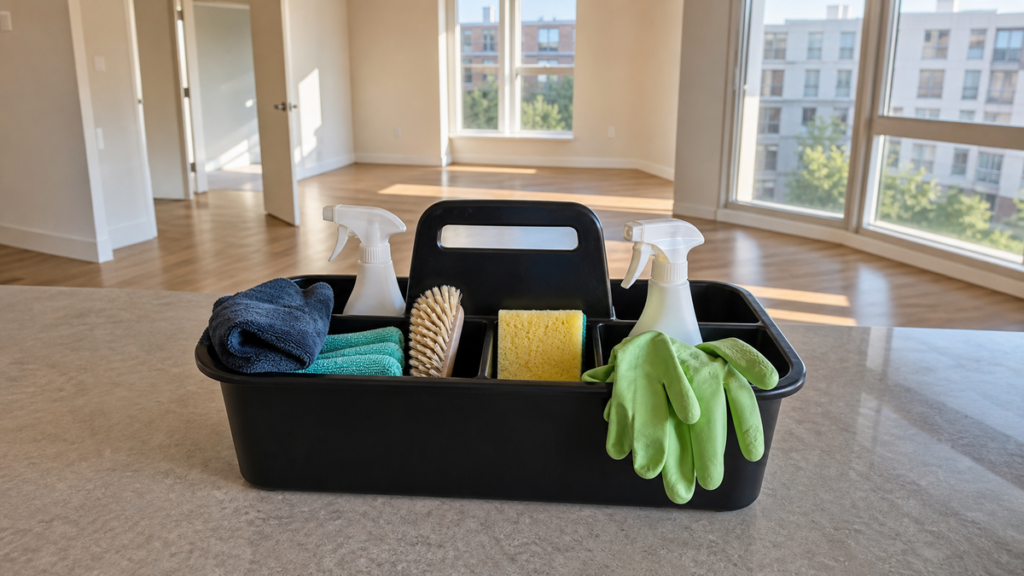
The easiest post-party cleanup is a product-by-problem kit instead of one cleaner for everything. Shop Eco Cln for Spot Gone, PAWS, Shine-It, See-Clear, and Citrus Concentrate, then clean in the order that prevents backtracking.