How to Clean Dog Urine Smell From Baseboards | Eco Cln PAWS

How to clean dog urine smell from baseboards starts with a careful, controlled cleanup. Dog urine on the floor is frustrating enough, but when it reaches the baseboards, floor edge, or corner of a room, the smell can hang around long after the visible spot is gone.
That is because baseboards create a tricky cleaning zone. Liquid can sit along the line where the floor meets the wall. It can touch painted trim, grout lines, flooring edges, and tiny gaps that are easy to miss.
A quick wipe across the floor may clean the surface, but it may not reach the source of the odor.
The goal is not to soak the area or attack it with harsh-smelling chemicals. The better approach is to blot, clean the affected floor edge, treat the baseboard carefully, and give the area time to dry.
Quick Answer
If dog urine soaked into baseboards, cleaning is usually enough when the accident is recent and the trim is sealed, firm, and undamaged. Blot first, clean the baseboard and floor edge without flooding the gap, let everything dry fully, and then check for remaining odor.
Inspect behind the trim or consider replacement when MDF or wood is swollen or soft, paint is peeling, staining keeps spreading, or the odor returns after one or two controlled cleanings. If urine reached carpet padding or the subfloor, surface cleaning alone may not remove the source.
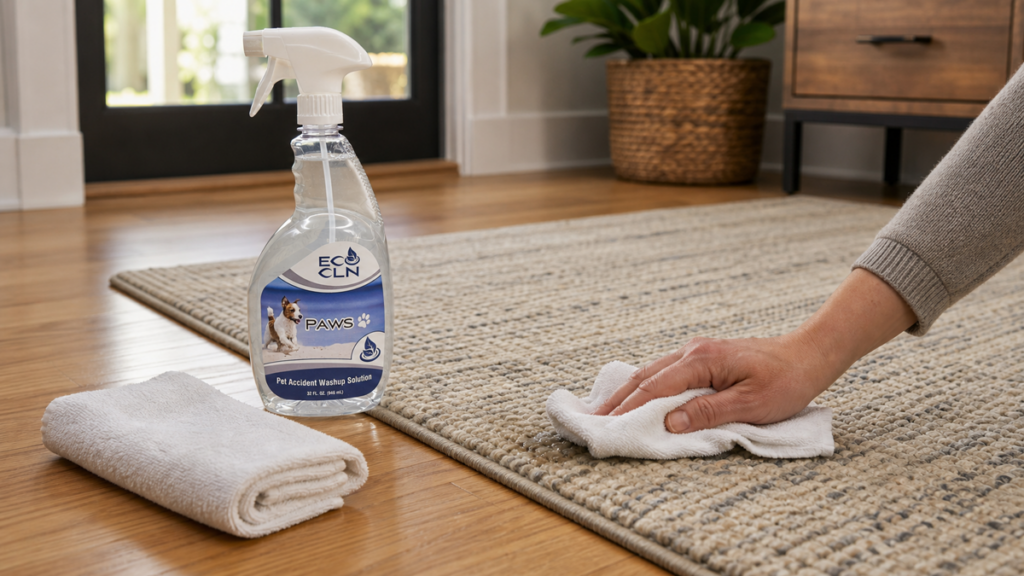
Eco Cln PAWS is designed for pet accidents, urine odors, and organic stains when used as directed. Always test first on painted trim, wood, flooring, or specialty surfaces.
Why dog urine smell sticks around near baseboards
Dog urine often spreads farther than it looks. On hard floors, it can run toward the lowest point in the room or collect against trim.
On tile, it can settle near grout. On laminate, vinyl, or wood-look flooring, it may sit along edges. On carpeted rooms, it can reach the tack strip or edge where the carpet meets the wall.
That is why the smell may seem to come back even after you cleaned the obvious puddle. The visible mess may be gone, but residue along the baseboard area may still be there.
Baseboards also collect dust, hair, and old floor cleaner residue. When pet urine mixes with that buildup, the odor can seem stronger and harder to remove.
Before You Start
Check what kind of baseboard and floor you are cleaning. Painted trim, stained wood, laminate, hardwood, vinyl, tile, sealed concrete, and carpet edges all behave differently.
Before applying any cleaner, test a small hidden area first. This matters especially for painted trim, unfinished wood, older baseboards, specialty flooring, or surfaces that may discolor when wet.
You will need:
- Paper towels or clean absorbent cloths
- A microfiber cloth
- Eco Cln PAWS or another pet accident cleaner suitable for the surface
- A soft brush or old toothbrush for tight edges, if needed
- Fresh water for a light final wipe, if the surface allows it
Step 1: Blot First, Do Not Scrub First
If the accident is fresh, start by blotting. Press a clean towel or paper towel over the urine and lift straight up. Repeat until you are no longer pulling much moisture.
Do not start by scrubbing back and forth. Scrubbing can spread the urine farther along the wall edge or push it into small gaps.
If the urine has already dried, lightly wipe away dust, pet hair, and surface debris before applying cleaner. This keeps you from turning the area into a dirty paste.
Step 2: Treat the Floor Edge and Baseboard Separately
Spray or apply Eco Cln PAWS to the affected floor edge first. Then apply it carefully to the baseboard surface.
Do not flood the gap between the baseboard and the floor. More liquid is not always better. Excess moisture can move into cracks, under trim, or under flooring depending on the surface.
Apply enough product to contact the soiled area, let it work briefly, then wipe and blot according to the surface condition.
Step 3: Pay Attention to the Floor-Baseboard Line
The line where the floor meets the baseboard is the key spot. That is where odor-causing residue can remain.
Use a microfiber cloth wrapped around your finger, a cotton swab, or a soft brush to gently clean that line. Keep your movement controlled. Work from the outside of the affected area toward the center so you are not spreading residue into a larger zone.
If the area is tile, pay attention to grout. If the area is carpet, avoid soaking the carpet edge. If the area is painted trim, wipe gently and do not use abrasive pads.
Step 4: Blot and Dry the Area
After the cleaner has had brief contact time, blot the area with a clean dry cloth. Flip the cloth often so you are lifting residue instead of smearing it.
Good drying matters. Odor problems often feel worse when moisture stays trapped near trim or flooring edges. Leave the area open to air. If practical, use a fan nearby to improve airflow.
Do not cover the spot with a rug or pet bed until it is fully dry.
Step 5: Repeat Only Where the Odor Remains
If the odor is still noticeable after drying, repeat the process on the specific problem area. Do not keep soaking the entire wall edge.
For stubborn or older accidents, multiple light treatments are better than one heavy, soaking treatment.
If the smell is coming from under flooring, behind trim, or from carpet padding, surface cleaning may not fully solve the problem. In that case, you may need to inspect the trim, carpet edge, or flooring more closely.
When Cleaning Is Enough vs. When to Replace the Baseboard
The condition of the trim matters more than the size of the visible spot. Let the area dry completely before deciding whether another light cleaning will work.
Cleaning is usually enough when:
- The accident is fresh or limited to the surface.
- Painted or sealed trim remains firm, smooth, and attached.
- There is no swelling, crumbling, peeling finish, or deep discoloration.
- The odor disappears after careful cleaning and full drying.
Inspect or replace the baseboard when:
- MDF has swollen, softened, bubbled, or started to crumble.
- Wood trim is warped, stained through, or stays odorous after drying.
- Paint is lifting or the smell returns after one or two controlled treatments.
- Urine appears to have reached behind the trim, carpet padding, drywall, or subfloor.
Do not simply paint or caulk over a contaminated area. Remove the odor source and allow the materials to dry first. Widespread or recurring contamination behind walls or under flooring may require help from a flooring, trim, or odor-remediation professional.
Mistakes to Avoid
Do not use heavy bleach fumes around pet accident areas. Do not soak wood trim or laminate flooring. Do not scrub painted baseboards with abrasive pads. Do not cover the spot before it is dry. Do not mix cleaning chemicals.
And do not assume the smell is only on the floor. With male dogs especially, urine can hit the side of the baseboard or wall surface, not just the floor.
Related Pet-Accident Guides
For broader cleanup guidance, compare pet accidents on hard floors versus carpet, follow the seven-step fresh pet accident cleanup method, or read the PAWS pet odor and stain cleaner guide.
When PAWS Is the Right Product
Eco Cln PAWS is made for pet accident cleanup, urine odors, and organic stains. It is a strong fit for targeted cleanup around baseboards, floor edges, pet areas, and accident-prone rooms when used as directed.
Use PAWS as part of a controlled cleanup: blot first, apply carefully, wipe, dry, and repeat only if needed. For homes with pets and kids, let the area dry before contact.
For non-urine carpet and upholstery spots, use Eco Cln Spot Gone, which is the targeted cleaner for food stains, grease, dirt, and everyday household spots.
If you want a pet-home cleaning bundle, the Pets Package includes PAWS, Powerhouse Bathroom, and Spot Gone for pet accident cleanup, urine odors, carpet and upholstery spots, bathroom buildup, and everyday pet-home messes.
For more details about PAWS, see the PAWS pet odor and stain cleaner guide or browse Eco Cln products on the Shop page.
FAQ
What is the best cleaner for dog urine smell on baseboards?
Use a cleaner designed for pet accidents and urine odors, and make sure it is suitable for the trim and flooring. Eco Cln PAWS is designed for pet accidents, urine odors, and organic stains when used as directed. Test a hidden spot first and avoid flooding seams or unfinished materials.
Can dog urine soak into MDF baseboards?
Yes. MDF can absorb liquid through unsealed edges, seams, chips, or damaged paint. If it swells, bubbles, softens, or keeps smelling after the area dries, replacement is usually more reliable than repeatedly soaking it with cleaner.
Why does the urine smell come back after I clean?
Residue may remain in the floor-baseboard seam, behind the trim, in grout, carpet padding, or the subfloor. Let the area dry fully before judging the result. If odor repeatedly returns, inspect the adjacent materials instead of continuing to wet the surface.
When should I remove or replace a urine-damaged baseboard?
Remove or replace it when the material is swollen, soft, warped, crumbling, deeply stained, or still odorous after one or two careful cleanings and full drying. Removal may also be needed to inspect contamination behind the trim.
Can I use the same method for cat urine on baseboards?
Yes, the same blot-clean-dry-inspect approach applies. Cat urine odor can be especially persistent, so check seams, wall edges, and nearby flooring carefully. Use a surface-compatible pet accident cleaner, avoid flooding, and inspect behind damaged trim if the odor returns.
Is Eco Cln PAWS safe around pets?
Eco Cln PAWS is intended for pet accident cleanup and can be used in homes with pets when used as directed. Keep pets away during cleaning and let the area dry before they return to the spot.