Pet Accident Cleaner: 7 Steps for Cleaning Fresh Pet Messes


Quick Answer
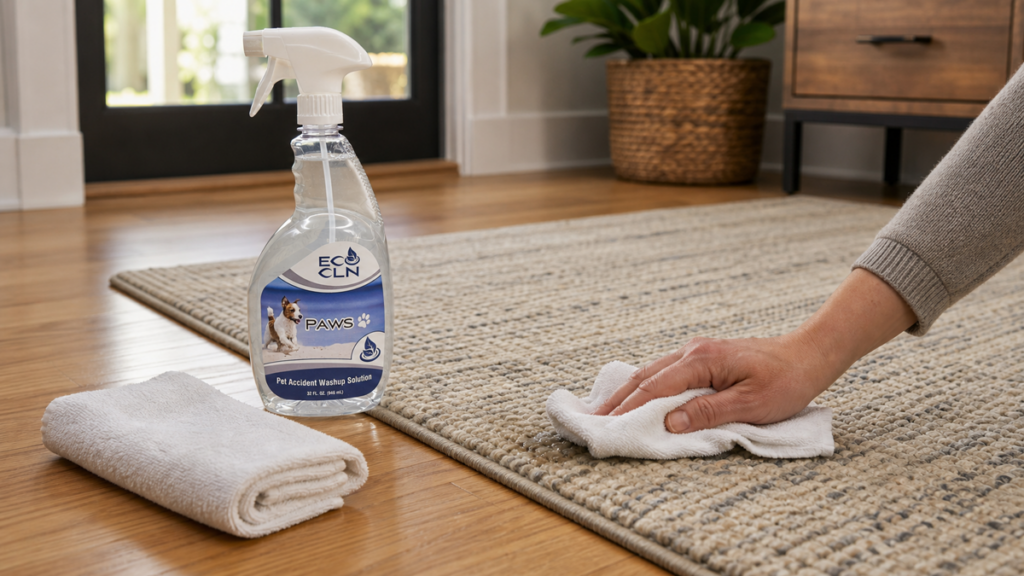
A pet accident cleaner is useful when you need to clean urine odors, organic stains, carpet spots, rugs, upholstery, hard floors, pet beds, or repeat accident areas without using a random all-purpose cleaner for the wrong job. For Eco Cln customers, PAWS is the focused pet accident cleaner for pet urine odors, organic stains, carpets, rugs, upholstery, hard floors, pet beds, kennels, and repeat accident spots when used as directed.
Table of Contents
- Why pet accidents need a focused cleaner
- 7 steps for cleaning fresh pet messes
- When to use PAWS instead of Spot Gone
- Mistakes to avoid
- FAQs
Pet Accident Cleaner: Why It Needs a Different Process
A pet accident cleaner is not just another bottle under the sink. Pet accidents can involve moisture, odor-causing residue, organic material, and repeat spots where the smell seems to come back. Treating that kind of mess like a normal surface spill can leave residue behind or push the mess deeper into carpet, fabric, or bedding.
Eco Cln describes PAWS as a ready-to-use pet accident cleaner for urine odors, organic stains, carpets, rugs, upholstery, hard floors, pet beds, and repeat accident spots without harsh chemical fumes. That product lane is clear: PAWS is for pet-related messes, not general kitchen grease, bathroom buildup, or glass cleaning.
The goal is practical cleanup. Do not promise guaranteed odor removal, medical benefits, behavior correction, or permanent stain removal. The right claim is that PAWS helps clean the affected spot and target odor-causing residue so the surface can smell fresher and look cleaner when used as directed.
7 Steps for Cleaning Fresh Pet Messes
1. Act quickly, but do not panic-clean
Fresh pet messes are easier to manage before moisture spreads or dries into the surface. Move quickly, but do not start scrubbing aggressively. Hard scrubbing can spread the mess, damage fibers, or push residue deeper.
Start by keeping the area contained. If the mess is on carpet, rug, upholstery, or bedding, avoid stepping on it or pressing it outward.
2. Blot first
Blot excess moisture with a clean cloth or towel. Press down gently and lift. Repeat with a fresh section of towel until you remove as much moisture as practical.
Do not rub in circles. Rubbing can enlarge the spot and make the cleanup harder. For upholstery or carpet, blotting is usually safer than scrubbing.
3. Test the cleaner in a hidden area
Before applying PAWS broadly, test it in a hidden area. This matters on delicate fabrics, specialty rugs, antique materials, painted surfaces, unsealed natural stone, unfinished wood, or anything with unknown compatibility.
A hidden-area test is boring, yes. It is also cheaper than discovering a finish problem in the middle of the room.
4. Apply PAWS to the affected spot
Apply PAWS to the affected area and allow it to reach the odor-causing residue. The product needs contact with the mess to do its job. Use enough to treat the spot, but do not flood the area.
Oversoaking is one of the biggest mistakes with pet accident cleanup. Too much moisture can spread into padding, seams, backing, or materials that are harder to dry.
5. Give it a little time
Let the product sit briefly so it can work into the affected spot. The exact dwell time should follow the product directions. For older odors, heavy stains, or repeat accident spots, a second application may be needed.
Do not turn this into a soaking project. More liquid does not automatically mean better cleaning.
6. Blot or wipe clean
After the cleaner has had contact time, blot or wipe the area with a clean cloth. For hard floors, wipe the area clean and avoid leaving standing moisture. For fabric, carpet, rugs, or bedding, blot carefully and lift residue out of the material.
Use fresh cloth sections as they become damp or dirty. A dirty cloth can redeposit residue.
7. Let the area dry completely
Allow the treated area to air dry fully before letting pets back onto the surface. Drying matters because damp carpet, bedding, or upholstery can hold odor and attract attention back to the same spot.
If the area is carpet or upholstery, increase airflow if appropriate. Do not cover the spot while it is still damp.
When to Use PAWS Instead of Spot Gone
Use PAWS for pet urine odors, organic stains, pet bedding, litter box areas, kennels, carpet accident spots, upholstery, and repeat pet mess areas.
Use Spot Gone for targeted carpet, rug, upholstery, and fabric spots from food stains, grease, mud, dirt, and everyday household messes.
That distinction matters because the search intent is different. Someone searching pet accident cleaner is not just looking for any stain remover. They want help with a pet-specific mess, often involving odor and repeat areas.
Use Shine-It for kitchen counters, cooking residue, grease spots, and washable kitchen surfaces.
Use See-Clear for glass, mirrors, chrome, stainless steel, appliances, and shiny surfaces.
Use Powerhouse Bathroom for soap scum, hard water buildup, tubs, tile, sinks, and bathroom grime.
Mistakes to Avoid
Do not scrub aggressively. It can spread the mess or push residue deeper into carpet and fabric.
Do not oversoak carpet, upholstery, pet beds, or bedding. Too much moisture can create a drying problem.
Do not skip the hidden-area test on delicate materials.
Do not let pets back onto a wet treated area. Let it dry fully first.
Do not claim any cleaner prevents future accidents. Cleaning can help address residue and odor, but pet behavior can involve training, health, routine, stress, or access issues.
Do not mix cleaning products. The ASPCA notes that cleaning products should be used according to labeled directions around pets. Keep product use controlled and store cleaners out of reach.
Older or Repeat Accident Spots
Older pet accident spots may need more patience. Dried residue can sit deeper in carpet, rugs, upholstery, pet beds, or floor seams. PAWS may need a second application when the spot is older, heavier, or part of a repeat accident area.
The key is controlled treatment. Apply product to the affected area, let it reach the residue, blot or wipe clean, and allow the area to dry completely. If the surface keeps holding odor, inspect whether moisture has reached padding, backing, bedding fill, floor seams, or another layer that is harder to clean from the top.
For ongoing repeat accidents, cleaning is only one part of the problem. The area may need more drying time, more complete residue removal, or a change in pet access. If the issue is sudden or unusual, customers should consider whether training, routine, or health factors are involved.
FAQs
What is a pet accident cleaner used for?
A pet accident cleaner is used for urine odors, organic stains, pet bedding, litter box areas, kennels, carpet accident spots, upholstery, hard floors, and repeat pet mess areas.
Can I use PAWS on carpet?
PAWS is positioned for carpets, rugs, upholstery, hard floors, pet beds, kennels, and repeat accident spots when used as directed. Always test first and avoid oversoaking.
Should I scrub a pet accident spot?
No. Blot first. Aggressive scrubbing can spread the mess or push residue deeper into carpet, rugs, fabric, or upholstery.
Why does pet odor come back after cleaning?
Odor can return if residue remains deeper in carpet, padding, upholstery, bedding, seams, or floor materials. Older or repeat spots may need a second controlled application and complete drying.
Is PAWS the same as Spot Gone?
No. PAWS is for pet urine odors, organic stains, and pet accident areas. Spot Gone is better for targeted carpet, rug, upholstery, and fabric spots from food stains, grease, mud, dirt, and everyday household messes.
When can pets go back on the cleaned area?
Let the area dry completely before letting pets back onto the surface. This is especially important for carpet, upholstery, pet beds, and bedding.
Choose the Right Eco Cln Cleaner
For pet urine odors, organic stains, carpet accident spots, upholstery, pet beds, and repeat pet mess areas, see Eco Cln PAWS Pet Accident & Urine Odor Cleaner. You can also read the PAWS guide page or compare Spot Gone for non-pet household spots.