How to Clean Pet Accidents From Pet Beds and Washable Bedding

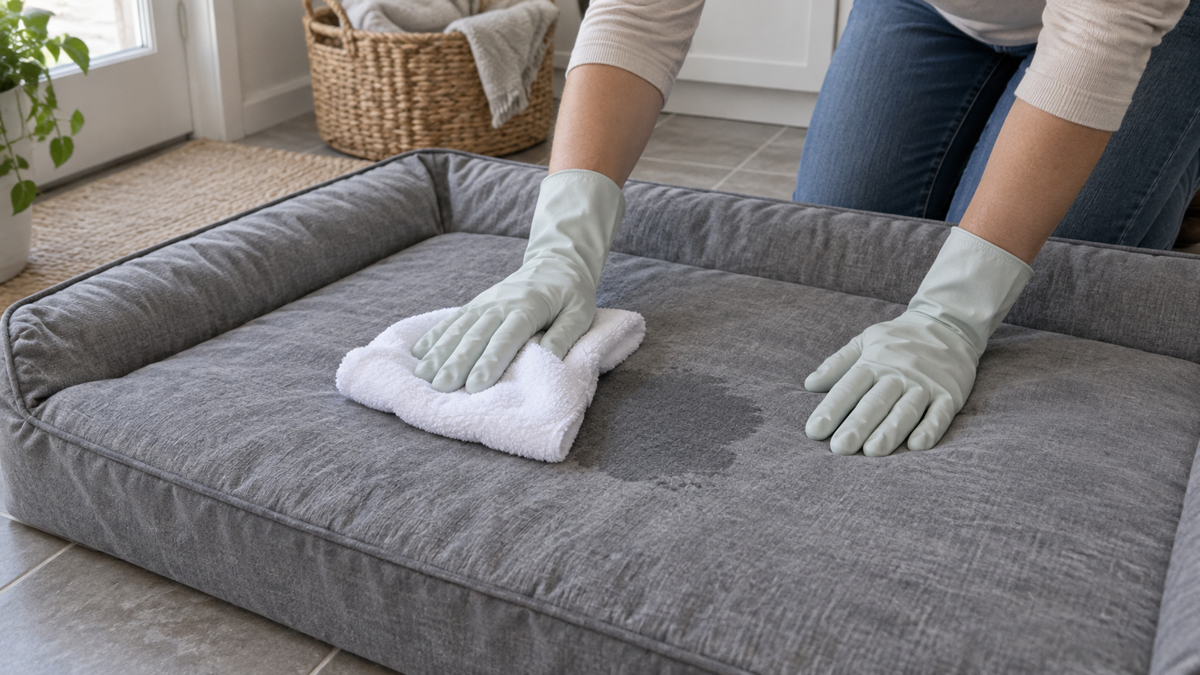
Clean a pet accident from a bed by dealing with the wet spot before loading anything into the washer. Blot liquid, lift solids, remove loose hair and check the care label for the cover, liner and filling. A removable cover may be washable even when the foam or stuffed insert is not.
Treat PAWS as a compatible pretreatment for the accident area, not as laundry detergent. Use only where the current product directions and textile care label agree, then wash or hand-clean the item by its own instructions and dry every layer fully.
Quick Answer
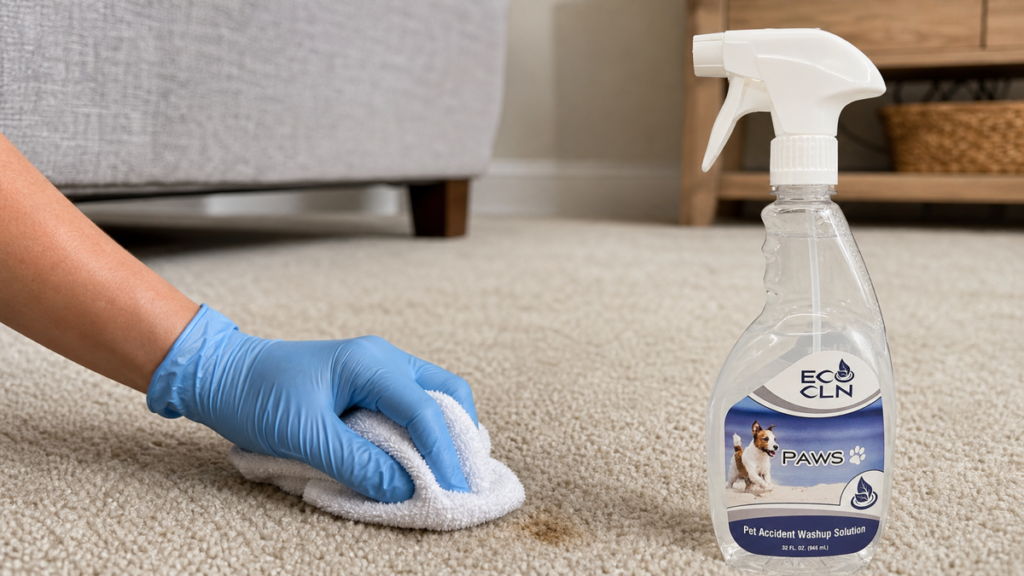
• Remove the pet from the area and put on household cleaning gloves.
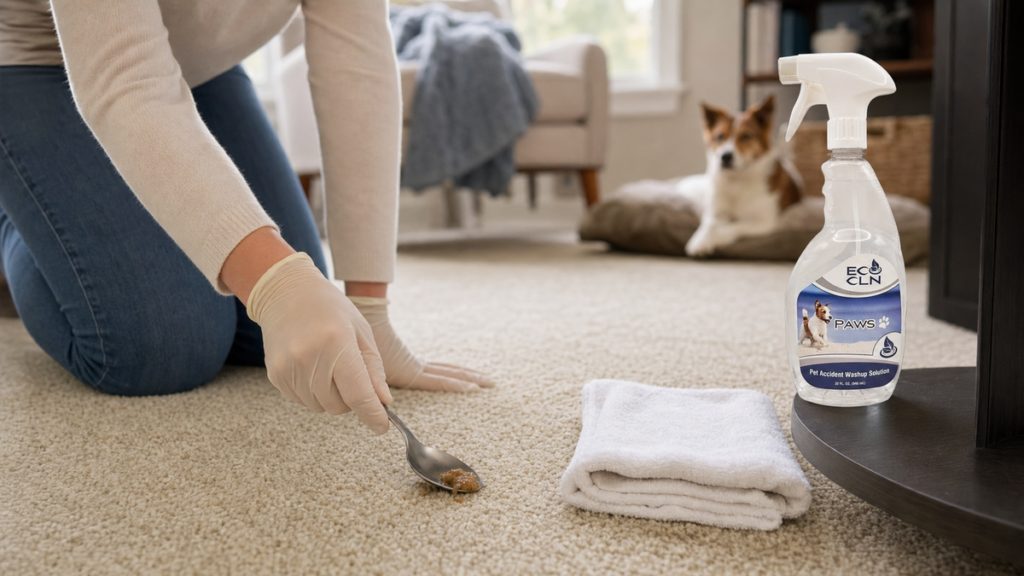
• Pick up solids and blot urine without rubbing it across dry fabric.
• Photograph the care label before separating the cover and insert.
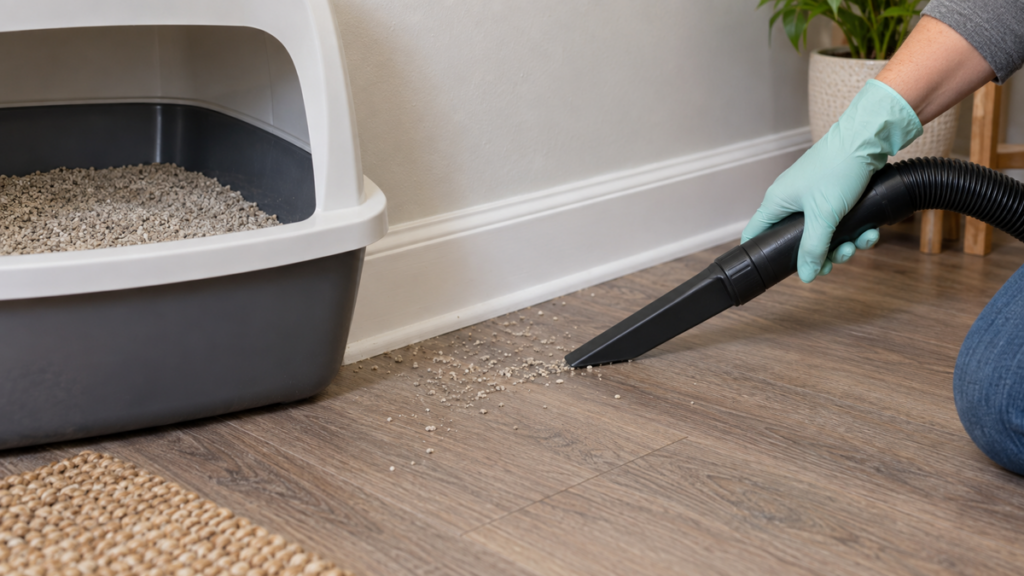
• Vacuum loose fur and litter after the wet mess has been contained.
• Spot-test the cleaner on a hidden part of the same fabric.
• Pretreat only the affected compatible area; do not soak foam or batting.
• Wash the cover or bedding at the label-approved setting.
• Air-dry or machine-dry only as directed, then reassemble when every layer is dry.
Separate the Cover, Liner and Filling Before Cleaning
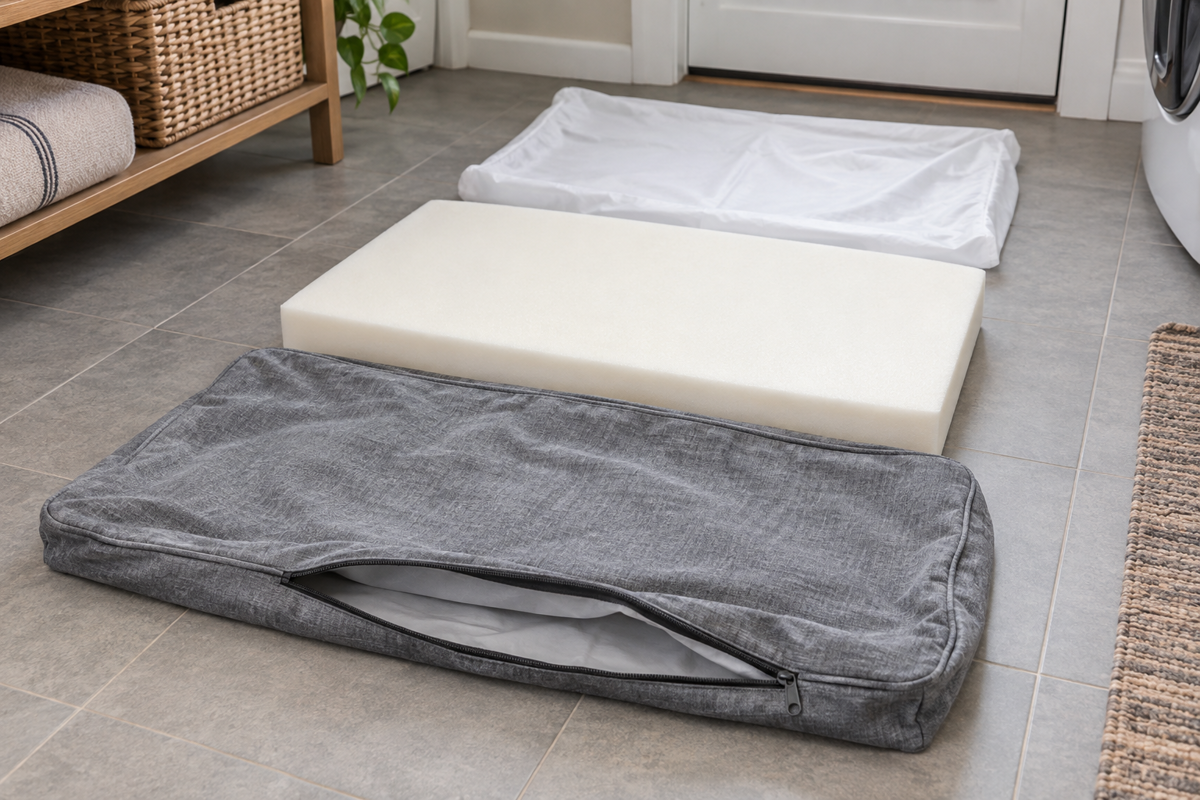
Pet beds are built in several ways. A zippered outer cover may surround shredded foam, a solid foam slab, polyester fill or a waterproof liner. Bolsters can be sewn into the cover, and small crate pads may have no removable parts at all. The wash symbol on one piece does not automatically apply to the others.
Unzip the bed over an easy-to-clean floor and note which side of the insert faced the accident. If liquid passed through the cover, inspect the liner, zipper tape, piping, seams and insert. Do not pull wet foam through a narrow zipper opening; support it so the material does not tear.
The American Kennel Club’s guide to cleaning a dog bed recommends removing excess hair first and using a washing machine only when the item fits and the care label allows it. That distinction matters more after an accident because trapped moisture can remain inside thick filling long after the outside feels dry.
Step-by-Step: Clean Pet Urine From a Pet Bed
1. Contain the accident. Move the pet away, lift any solids with disposable material and place the bed on a washable floor or protective layer. Avoid carrying a dripping bed through the house.
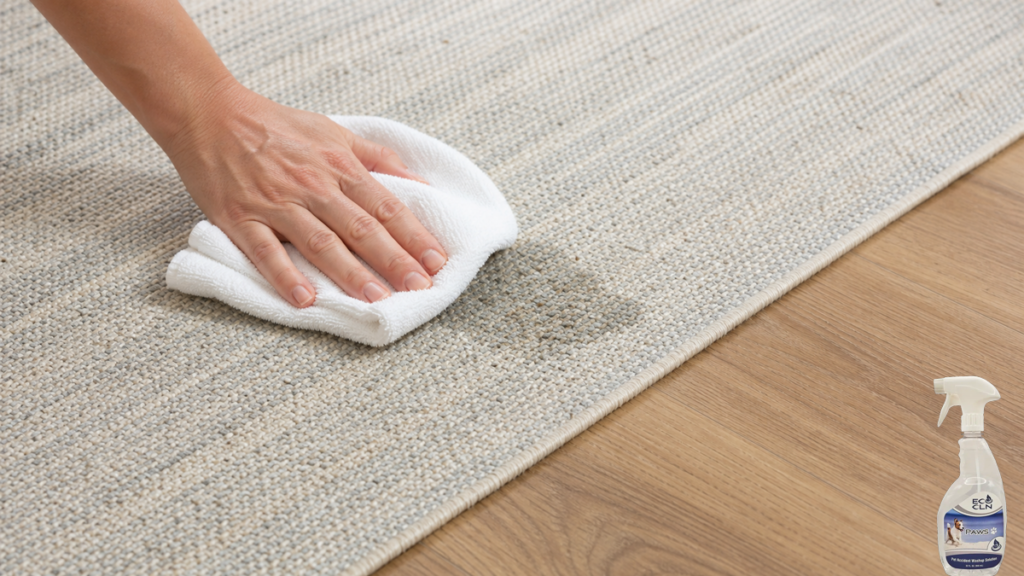
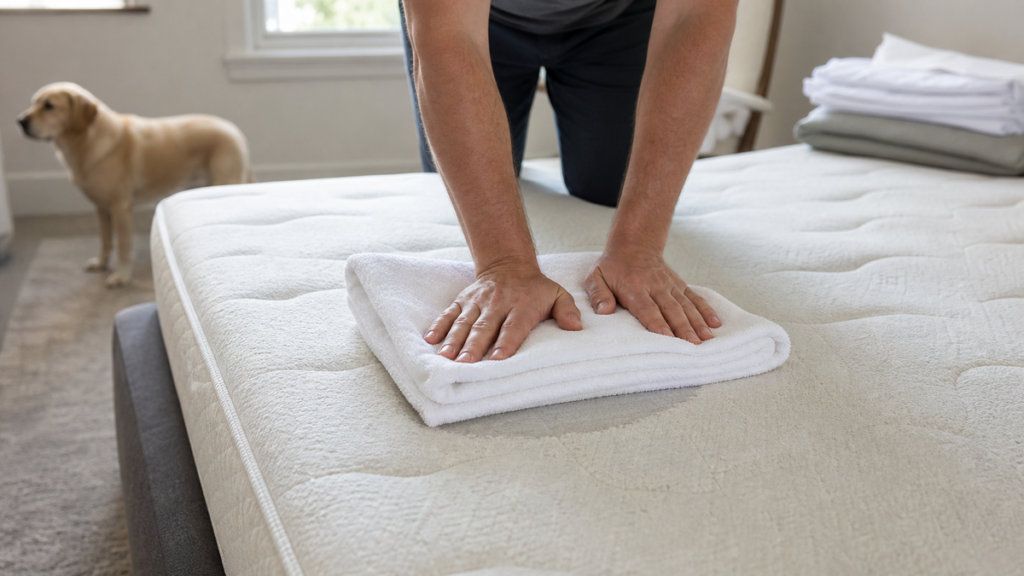
2. Blot free liquid. Press white absorbent towels into the affected fabric. Work from the outside edge toward the center and change towel sections until little moisture transfers.
3. Check how far the urine traveled. Open the cover and inspect the reverse side, liner, zipper seam, bolster and filling. Mark the affected section with a safety pin placed outside the wet zone if the spot will be hard to find later.
4. Read every care label. Check the cover, insert and blanket separately. Note water temperature, cycle, drying and bleaching restrictions. If a label is missing, identify the manufacturer before guessing.
5. Remove loose hair. Once the accident is contained, vacuum or lint-roll dry portions of the cover. Fur can clump in the washer, stick to damp fabric and collect in the door seal or filter.
6. Test the pretreatment. Apply a small amount to a hidden part of the same textile, blot and let it dry. Stop if dye transfers, the backing softens or the texture changes.
7. Pretreat the accident zone. Apply a controlled amount of compatible pet-accident cleaner to the accessible affected fabric. Keep liquid from flooding foam, batting, glued layers or a zipper channel.
8. Wash as the label directs. Launder the removable cover, blanket or crate liner at the approved load size, cycle and temperature. Do not add an unapproved product to the machine or combine cleaners.
9. Clean a non-washable insert separately. Blot and spot-clean only the accessible compatible area. A solid foam slab, dense bolster or glued insert may need professional textile care if urine traveled deeply.
10. Dry the pieces completely. Use the approved dryer setting or air-dry with normal airflow. Turn thick items so both sides dry, and do not put a damp cover back over the insert.
11. Inspect before reassembly. Check the dry cover, seams and filling for discoloration, odor and remaining dampness. Repeated surface wetting will not solve urine trapped deep inside an insert.
Washable Blankets, Crate Pads and Foam Beds Need Different Handling
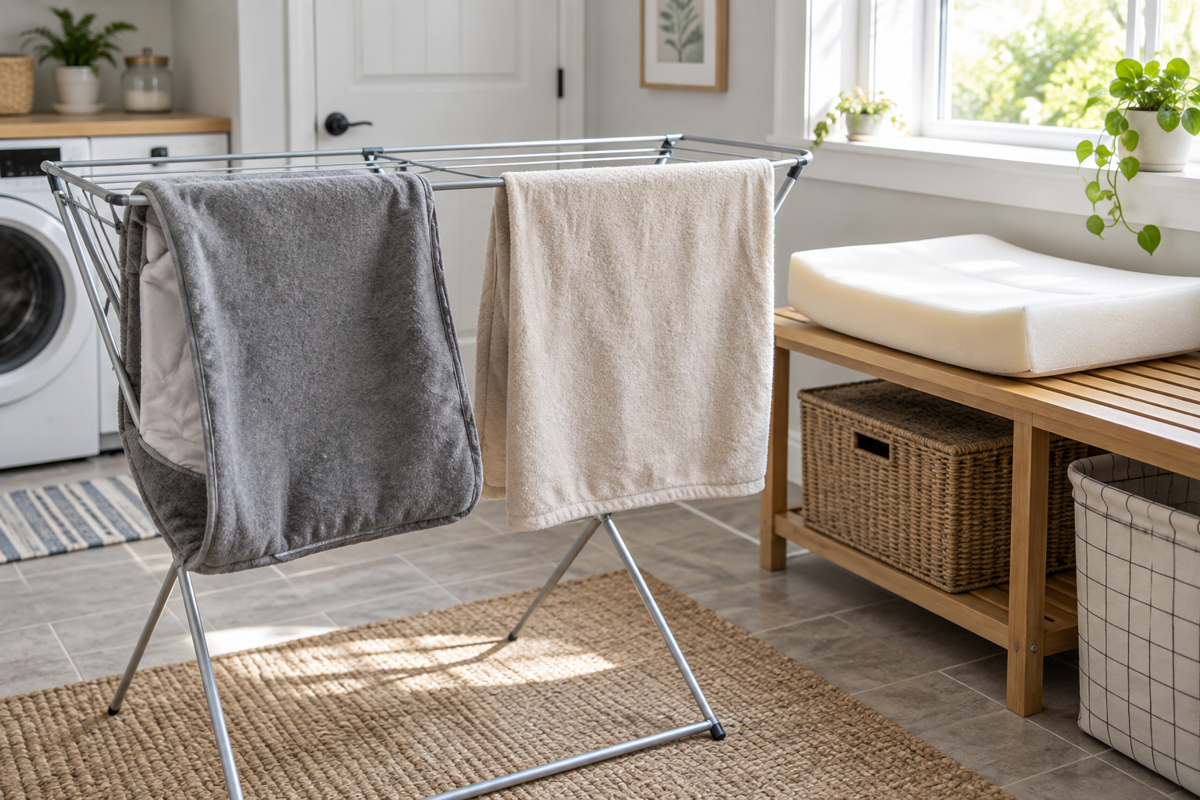
A flat washable blanket is usually the simplest item because there is no thick center to trap liquid. Blot first, read the label and keep it separate from unrelated household laundry when practical. Clean the washer seal and filter afterward if hair or debris collected there.
A one-piece crate pad can take much longer to dry than a blanket. Press around tufting and edge binding to find damp zones. Do not assume “machine washable” also means that a bulky pad fits safely in a home washer; the item needs room to move without overloading the machine.
Foam requires restraint. Urine can enter open cells, layers and adhesive seams. Avoid twisting or wringing a slab, which can split it. If the insert remains wet or smells after full drying, replacement may be more practical than another soaking.
Where Eco Cln PAWS Fits
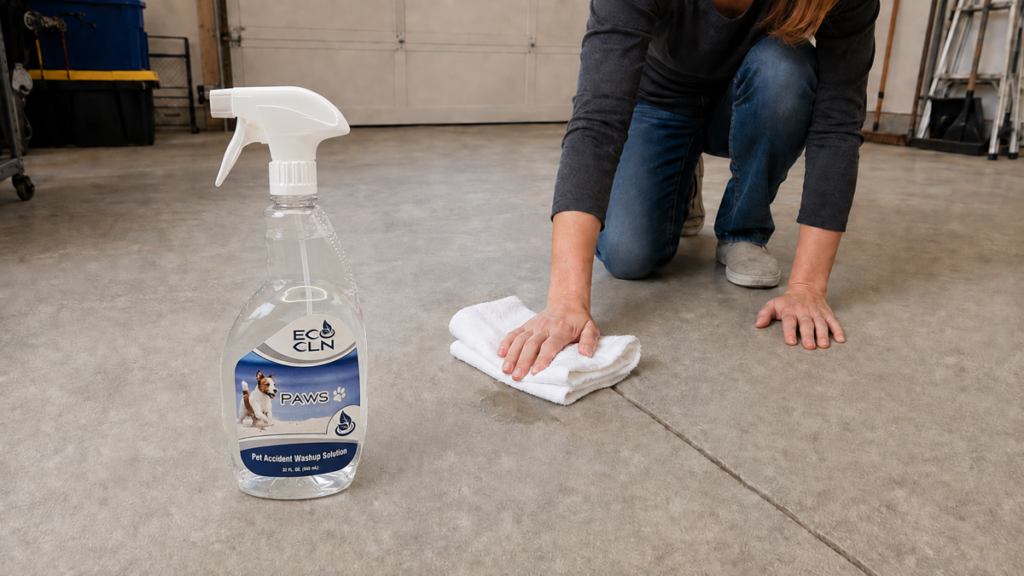
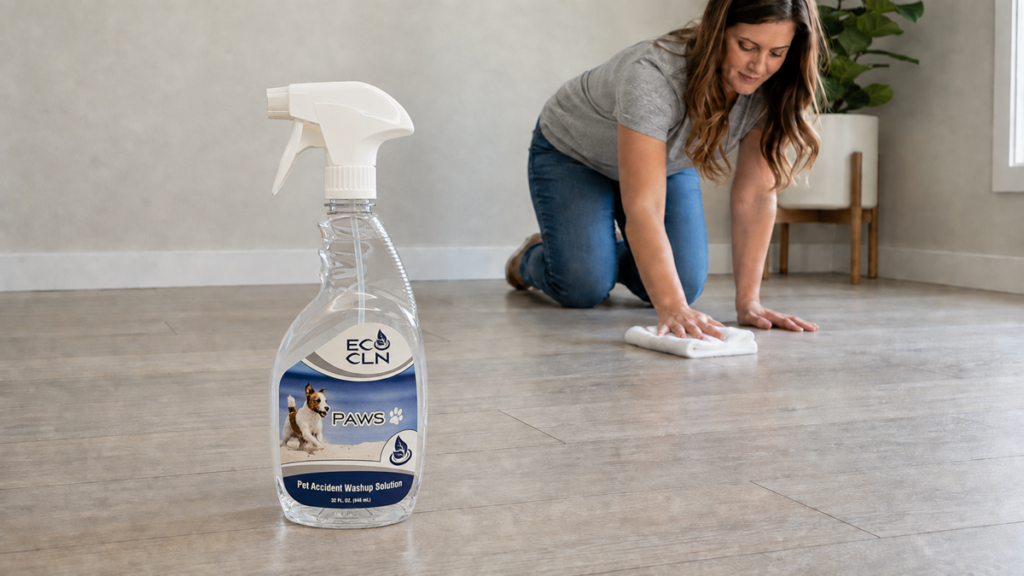
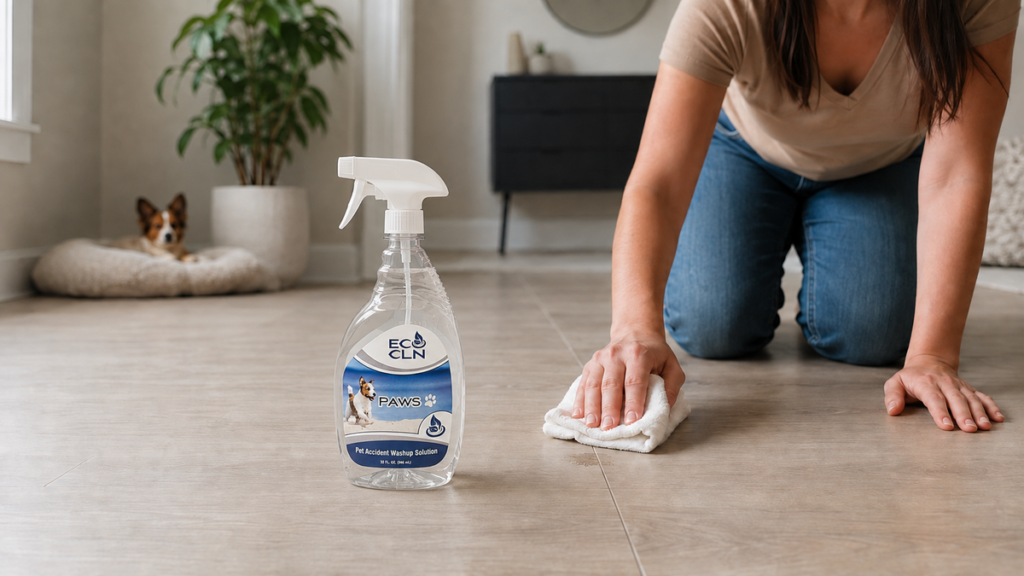
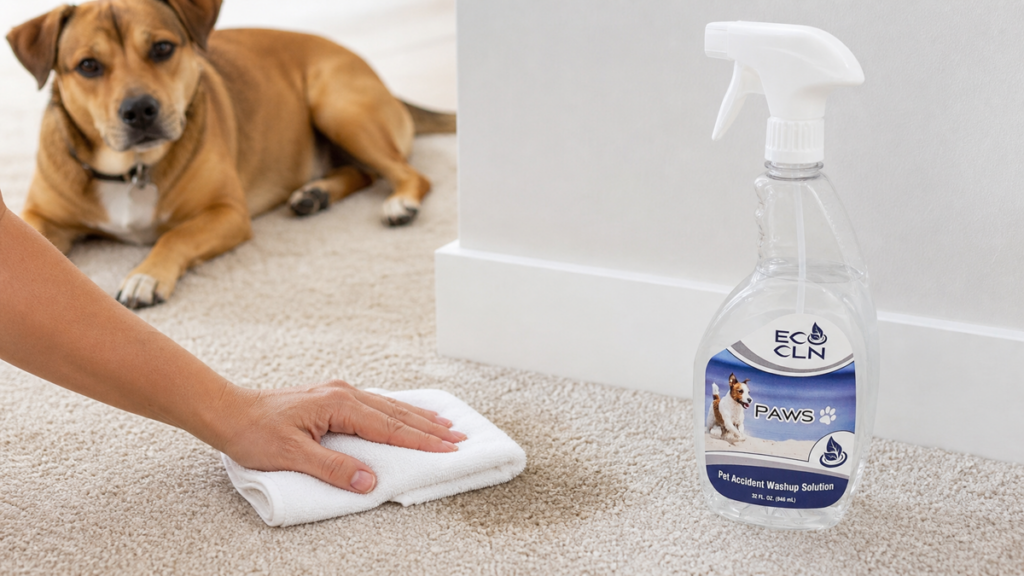
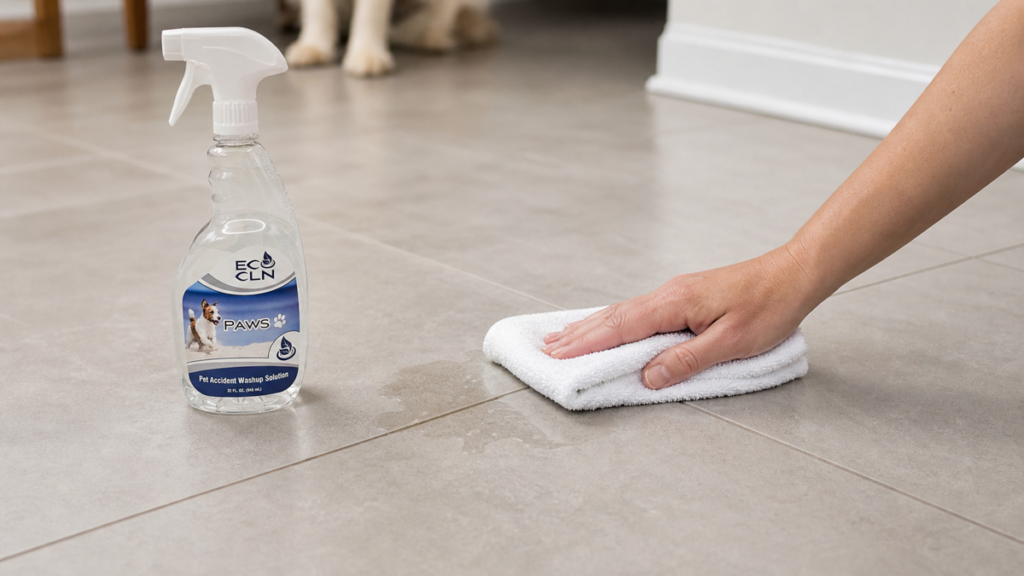
Eco Cln PAWS is the ready-to-use Eco Cln option for compatible pet urine, organic stains, pet beds and accident zones. On washable bedding, its role is targeted pretreatment of the affected compatible fabric before the label-directed washing step.
PAWS does not replace laundry detergent, the textile care label or the bed manufacturer’s instructions. Apply it with enough control to reach the fabric residue without saturating foam or batting. For the broader first-response sequence, see the pet accident cleaner guide.
Common Pet-Bedding Cleanup Mistakes
• Putting a urine-soaked bed directly into the washer without blotting.
• Washing a removable cover while ignoring the damp insert.
• Treating the care label for the cover as permission to wash the foam.
• Loading a bulky bed into a machine that cannot move it properly.
• Rubbing the spot outward into clean fabric.
• Mixing cleaners or improvising a stronger pretreatment.
• Reassembling the bed while the seam, bolster or filling is damp.
• Using heat that the textile or foam maker does not permit.
When Washing the Cover Is Not Enough
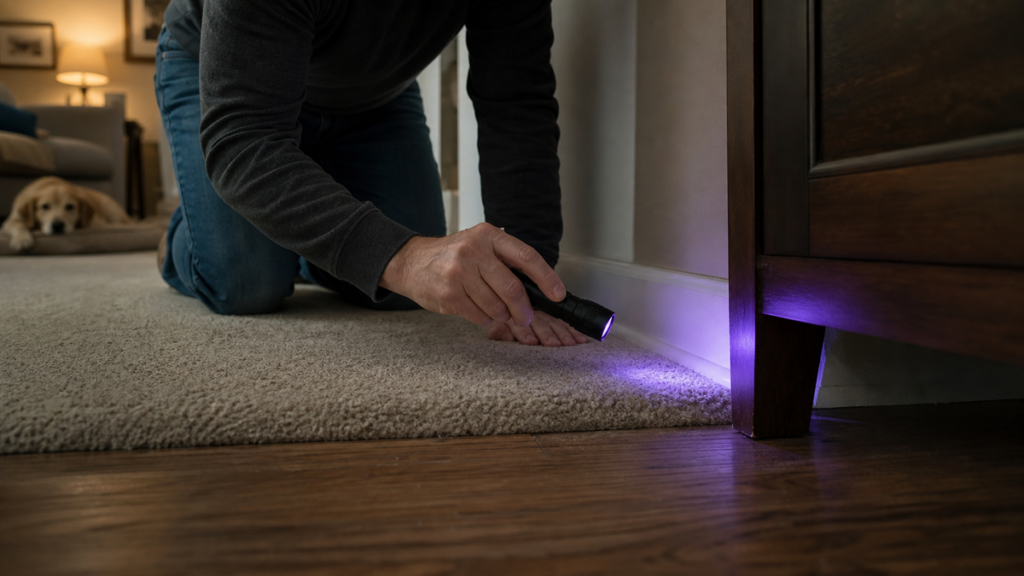
Odor that returns after complete drying often points to urine in foam, batting, a waterproof liner seam or the floor below the bed. Open the bed again and inspect each layer. The moisture-control approach in the guide to pet urine on a mattress is useful when the insert behaves like thick upholstery rather than ordinary laundry.
Replace or seek professional help for an insert that stays damp, has damaged foam, releases dye, cannot be separated safely or has contamination beyond accessible material. Cleaning cannot restore crumbling foam, failed waterproof backing or a permanently changed dye.
Frequently Asked Questions
Can I put a whole pet bed in the washing machine?
Only when the manufacturer’s label says the complete bed is machine washable and the bed fits without overloading the machine. A washable cover does not make the insert washable.
Should I wash pet urine with hot water?
Use only the temperature allowed by the care label. Do not choose heat by instinct, because fabric, backing, foam and adhesives can have different limits.
Can I use PAWS as laundry detergent?
No. Use PAWS only as a compatible targeted pretreatment according to its current directions; use the laundry product and cycle specified for the bedding.
Why does the bed still smell after the cover is clean?
Urine may have reached the liner, zipper tape, bolster, foam or floor beneath the bed. Let everything dry, then inspect those layers instead of rewashing only the cover.
How long should a pet bed dry before my pet uses it?
Until the center, seams and filling are completely dry, not merely cool on the outside. Thick foam and stuffed edges may need substantially longer than the cover.
The bottom line
Blot first, separate the pieces and let each care label control the method. Pretreat only compatible affected fabric, keep foam and batting from becoming saturated, and rebuild the bed only after every layer is dry. PAWS fits the targeted accident step; it is not a shortcut around proper laundering or deep-insert moisture.